Showing posts with label Henry Fonda. Show all posts

Sunday, 19 April 2026

Movie Review: The Long Night (1947)


Genre: Crime Drama  
Director: Anatole Litvak  
Starring: Henry Fonda, Barbara Del Geddes, Vincent Price, Ann Dvorak, Elisha Cook, Jr.  
Running Time: 101 minutes  

Synopsis: A man is shot dead on the top landing of an apartment building. The suspect Joe Adams (Henry Fonda) barricades himself inside his apartment, resisting police attempts to flush him out as a crowd gathers on the street. Flashbacks reveal that factory worker Joe met and fell in love with greenhouse employee Jo Ann (Barbara Bel Geddes), but was crushed to discover that she is already in another complex relationship with smarmy magician Maximilian (Vincent Price). Joe seeks emotional refuge with the brassy Charlene (Ann Dvorak), but cannot shake his feelings towards Jo Ann.

What Works Well: A remake of Marcel Carné's Le Jour Se Lève (1939), this is a story about the descent from optimism to cynicism. A well-meaning and initially cheerful steel mill factory worker, Joe represents every man victimized by layers of lies and overlooked by women of similar class seeking upward mobility with slimy exploitive sophisticates. And when confronted by authority, Joe does not even expect due process. His tiny apartment is riddled with police bullets before he is even charged, and Joe's detached reaction confirms his lack of surprise. Henry Fonda brings thoughtful rage into the showdown with bleakness. 
 
What Does Not Work As Well: While Barbara Bel Geddes is fine in her screen debut, the script saddles Jo Ann with inconsistent emotions, including a frantic and shouty climactic outburst that misses the mark. Maximilian's character is cartoonish rather than real, his goading unbecoming of a celebrity who already has the girl. Finally, the light piercing the darkness is supposed to be solidarity with Joe from the crowd gathered in the street, but this element is weak due to underinvestment in neighbourhood characters.

Key Quote:
Maximilian (to Joe): You know, I always find it rather amusing, these conceptions you simple men have concerning women. But the lovely creatures, they're so much more complicated, thank heaven.


All Ace Black Movie Blog reviews are here.

Saturday, 14 February 2026

Movie Review: Midway (1976)


Genre: Historical World War Two Action  
Director: Jack Smight  
Starring: Charlton Heston, Henry Fonda, Glenn Ford, Robert Mitchum, James Coburn, Hal Holbrook, Toshiro Mifune, Cliff Robertson, Robert Wagner, Edward Albert  
Running Time: 131 minutes  

Synopsis: It's 1942, and the United States Navy is weakened and reeling after the attack on Pearl Harbor. Admiral Yamamoto (Toshiro Mifune) wants to press Japan's advantage and plots an attack on the Midway Atoll in the Pacific. A cryptographic unit led by Commander Rochefort (Hal Holbrook) breaks enough of the Japanese code to allow Admiral Nimitz (Henry Fonda) to plan a high-risk ambush, committing all of the Navy's aircraft carriers. The trusted Captain Matthew Garth (Charlton Heston) is assigned to the USS Yorktown, along with his son Lieutenant Thomas Garth (Edward Albert). With both countries holding nothing back, tense surveillance maneuvers precede an epic battle, with the fate of the Pacific War at stake.

What Works Well: This is a grim-faced and square-jawed recreation of the seminal World War Two naval battle, filled with star presence and impressive hardware. The storytelling represents both sides and seeks the small details that shape history, including a broken radio preventing a crucial transmission, malfunctioning electronics resulting in lost torpedo bombs, and crucial battlefield decisions made within the fog of war and riding on gut instinct. Director Jack Smight admirably translates unfolding battle tactics into comprehensible plot points.

What Does Not Work As Well: A wedged-in romance between Lieutenant Garth and his interned Japanese-American lover is a clunky distraction. Equally clumsy is a hodgepodge of ineloquently inserted historical footage borrowed from other Hollywood productions and unrelated battles. Some stars like Robert Mitchum and particularly James Coburn lend their presence to just a few scenes before cashing their cheques.

Key Quote:
Admiral Nimitz (to Captain Garth): We can't trade them carrier for carrier, Matt.


All Ace Black Movie Blog reviews are here.

Saturday, 18 October 2025

Movie Review: City On Fire (1979)


Genre: Disaster Thriller  
Director: Alvin Rakoff  
Starring: Barry Newman, Susan Clark, Shelley Winters, Leslie Nielsen, Ava Gardner, Henry Fonda, James Franciscus  
Running Time: 106 minutes  

Synopsis: A disgruntled ex-employee sabotages an oil refinery, causing a massive firestorm that consumes the adjacent city. Mass casualties ensue, and among those caught in the flames are a heroic doctor (Barry Newman), the corrupt Mayor (Leslie Neilsen), a wealthy benefactor (Susan Clark) who has a relationship with both, a dedicated nurse (Shelley Winters), an alcoholic television news personality (Ava Gardner), her producer (James Franciscus), and the city's Fire Chief (Henry Fonda). Evacuating the main hospital becomes a focal point of rescue efforts.

What Works Well: The opening scenes are standard and inoffensive in attempting to set the context, and the set-on-fire stunt performers are excellent.

What Does Not Work As Well: This Canadian production is a dreadful attempt to join the tail end of the 1970s disaster movie parade. Almost hilariously bad but often just painful, the writing and acting are atrocious, with numerous lines of dialogue quotable as tone-deaf treasures. Leslie Neilsen unintentionally practices for his impending niche, but Henry Fonda (reciting his lines with a dead-eyed lack of conviction) and Ava Gardner (overplaying the drunken schtick) jointly win the most embarrassing prize. The production values and special effects betray a limited budget, while the final hospital evacuation sequence takes forever, and mostly features extras.

Key Quote:
Fire Chief: All it takes is one man, could be anybody... your neighbor, my neighbor... one man to destroy a city.


All Ace Black Movie Blog reviews are here.

Wednesday, 9 July 2025

Movie Review: Meteor (1979)


Genre: Disaster Thriller  
Director: Ronald Neame  
Starring: Sean Connery, Natalie Wood, Karl Malden, Henry Fonda, Brian Keith, Martin Landau, Trevor Howard  
Running Time: 107 minutes  

Synopsis: A huge meteor is discovered hurtling towards Earth, with seven days to impact. Head of NASA Harry Sherwood (Karl Malden) recalls retired scientist Dr. Paul Bradley (Sean Connery) to duty, and the US President (Henry Fonda) places Bradley in control of Hercules, a satellite-based nuclear missile system that can target the meteor. Bradley works with his Soviet counterpart Dubov (Brian Keith) to overcome Cold War tensions and add the Soviet Union's equivalent space missiles to the attack on the meteor. Bradley also tests a romance with Dubov's interpreter Tatiana Donskaya (Natalie Wood), while advance fragments of the meteor start to strike Earth.

What Works Well: The special effects (particularly the close-ups of the space-based missile systems) are sometime adequate, and the combined presence of Sean Connery, Karl Malden, Brian Keith, Natalie Wood, and (briefly) Henry Fonda elevates the material. The imperative for the US and the USSR to pause the Cold War and join forces to save Earth is a good subtext.

What Does Not Work As Well: The repetitive scenes of a rock trundling through space are accompanied by a laughable music soundtrack that alternates between bewildering faux triumphalism and befuddling synth horror. Martin Landau as the obstructionist military commander marches into over-the-top territory, and when the special effects are bad, they are really bad: the avalanche in the Alps and the milkshake sewage in New York are particular lowlights. Sean Connery's clumsy attempts to woo Natalie Wood in the midst of an annihilation event are just cringey.

Key Quote:
Bradley (sarcastically trying to impress Tatiana about life in the United States): You'd like it here, you know. We've got everything. Power cuts, strikes, unemployment, race riots, and a terrific crime rate.


All Ace Black Movie Blog reviews are here.

Saturday, 6 January 2024

Movie Review: The Swarm (1978)


Genre: Disaster Thriller  
Director: Irwin Allen  
Starring: Michael Caine, Richard Widmark, Katharine Ross, Henry Fonda, Richard Chamberlain, Lee Grant, Olivia de Havilland  
Running Time: 155 minutes  

Synopsis: A swarm of killer bees originating from Africa kills most personnel at an Intercontinental Ballistic Missile Base in the United States. The President appoints scientist Dr. Crane (Michael Caine) to lead the response, and he immediately clashes with the military's General Slater (Richard Widmark). Crane finds an ally in the base's medical officer Dr. Anderson (Katharine Ross), then recruits scientists Dr. Krim (Henry Fonda) and Dr. Hubbard (Richard Chamberlain) to try and develop a bee-defeating strategy. Meanwhile, the swarm attacks the nearby small town community of Marysville, then heads towards Houston.

What Works Well: The scenes of bees swarming fallen victims are impressively yucky.

What Does Not Work As Well: An inept and laughable script combines with plastic performances to contend for the title of worst 1970s-era disaster movie. The science is bad, the military response is worse, and most of the special effects are childish. Michael Caine and Richard Widmark embarrass themselves with frequent shouting matches, but Olivia De Havilland, Ben Johnson, and Fred MacMurray are also awful as participants in the cringiest of love triangles. Ross collapses and recovers multiple times, but still stumbles through a wedged-in romance with Caine. Lee Grant as a television journalist suddenly disappears, and only Henry Fonda as a wheelchair-bound scientist salvages a modicum of dignity.

Conclusion: As an unintended parody, The Swarm is pathetically funny.


All Ace Black Movie Blog reviews are here.

Friday, 4 February 2022

Movie Review: The Best Man (1964)

A political drama, The Best Man infiltrates the back rooms for an unfiltered look at the machinations of high-stakes party politics.

In Los Angeles, a major political party convention is underway with state delegates from across the country gathering to select their presidential nominee. The successful candidate is expected to sweep into the White House at the next election. The perceived front-runner is cerebral former Secretary of State William Russell (Henry Fonda), although he faces tough competition from fiery senator Joe Cantwell (Cliff Robertson).

Also at the convention with the potential to play kingmaker is former President Art Hockstader (Lee Tracy). Ahead of finalizing his endorsement, Hockstader meets separately with Russell then Cantwell. Both men have flaws: Russell may be indecisive at key moments and has a reputation as a womanizer. Cantwell is abrasive, obsessed with communists, and will do anything to win. With the race too close to call, both campaigns have the opportunity to resort to dirty tricks, although Russell is reluctant to compromise his principles.

An often rollicking deep dive into the world of bare-knuckle politics, The Best Man exposes hard truths. A busy Gore Vidal script (based on his play) and restless directing by Franklin J. Schaffner combine for a whirlwind tour of the ugly sausage-making factory, where lofty ideals are the first casualties in the battle for power. 

Of course this is a cinematic drama and some elements are stretched beyond credibility to make a point. The candidates are directly involved in sordid details, including the arsenal of toxic mud available to be hurled. They meet directly with gossip mongers and face off against each other in secret meetings to trade threats and insults. The climax finds both Russell and Cantwell invading the convention floor to personally engage in old-fashioned arm-twisting. It all makes for good if far-fetched fun.

Although Fonda and Robertson are equally committed to their characters, Vidal parks his loyalties early with Fonda's William Russell, robbing the drama of a battle-among-equals edge. Other candidates are also in the race, and could have been afforded more screen time. But the front-runner status does sharpen the narrative focus on Russell's suitability for the role of President, his wavering on whether or not to engage in character assassinations either exemplifying a moral and dignified stance, or underlining a lack of necessary spine. 

Stylistically, the film breaks well clear of its stage origins and actively searches for visual variety. Schaffner moves his cameras briskly from the circus atmosphere of the convention floor to the intimacy of hotel suites and tense meetings convened on the neutral turf of basements and nondescript utility rooms.

In addition to Hockstader wielding his authority, the supporting cast features two campaign managers (Kevin McCarthy and Gene Raymond) entrusted with keeping their candidates on-track, as well as the two spouses. Alice Russell (Margaret Leighton) is willing to patch-up her marriage for a shot at the First Lady title, while Mabel Cantwell (Edie Adams) matches her husband's drive and determination but in better clothes. Ann Sothern buzzes around everyone as the self-appointed voice of all women voters.

The Best Man asks the right questions about the qualities of leadership, and despite a cacophonous process, commendably navigates towards surprisingly astute answers.


All Ace Black Movie Blog reviews are here.

Thursday, 11 November 2021

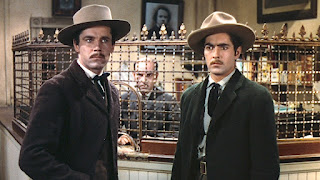
Movie Review: Jesse James (1939)

A western loosely based on the notorious outlaw's exploits, Jesse James is a flamboyant and action-packed frontier adventure and romance.

After the end of the Civil War, the railroads expand west. In Missouri, unscrupulous agents intimidate farmers out of their land to clear the way for the train's arrival. Jesse James (Tyrone Power) and his brother Frank (Henry Fonda) support their mother (Jane Darwell) when she refuses to sell the family farm. In the ensuing fracas she is killed, Jesse exacts revenge, and the brothers go on the run.

As he evades the law Jesse maintains a romance with the love of his life Zerelda "Zee" Mimms (Nancy Kelly), the daughter of the Major (Henry Hull), a crusty Liberty City newspaper publisher. Will Wright (Randolph Scott) is the Marshal in town, and sympathetic to Jesse's anti-railroad cause. After Jesse and Frank commit a string of robberies targeting the rail companies, Will negotiates leniency if Jesse turns himself in. When the deal goes sour, the James brothers become notorious outlaws, attempting ever more dangerous heists and jeapardizing Jesse and Zee's dreams of domestic bliss.

While undoubtedly entertaining, the Nunnally Johnson script holds only the most tenuous connection with historical truth. For the most part Jesse James romantacizes a criminal and Confederate cause sympathizer into a folk hero fighting the good fight against evil corporate types. This is the Hollywood machine selling tickets by creating a mythology that caters to the American psyche, and doing so with brilliant craftsmanship.

Setting aside truth and fiction, Jesse James is a technicolour joy. The pacing is brisk, director Henry King intermingling scenes of action (some featuring audacious stunts) with romance and character interactions, and pausing when necessary at some powerful milestones. The tense night with Jesse in captivity and Frank plotting a breakout from under the noses of rail company executives is a highlight, as is the final chapter, Jesse's two possible destinies engaged in a battle for his soul as traitors gather. Humour is sprinkled in careful doses to liven the mood.

King does trace Jesse's descent from laudable defender of personal family property to hardened gang leader, and on a couple of occasions the soul-destroying realities of his criminal pursuits are brought to the fore. Tyrone Power's natural charm ensures a generally jovial portrayal, but he also brings a soullessness to the darkest hours dominated by an insatiable thirst to pull off the next big robbery.

Making excellent use of stunts, King's directing is kinetic energy in motion. A tracking shot of Jesse in silhouette making his way back-to-front atop a moving train is breathtaking. A seemingly impossible jump off a cliff is both controversial and stunning. And several chases and narrow escapes are punctuated by character improvisation captured by multiple careful camera placements.

Henry Fonda as older brother Frank shines in a couple of scenes, lacking Jesse's charisma but making up for it with cool guile. In addition to a sage Randolph Scott, the supporting cast also includes John Carradine as a sweaty Bob Ford, Brian Donlevy as the oily land expropriator, and Ernest Whitman as loyal servant Pinky.

Jesse James detaches from facts, but still finds spectacular success.


All Ace Black Movie Blog reviews are here.

Saturday, 16 October 2021

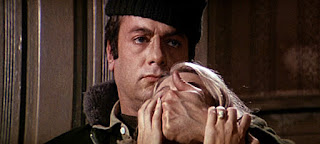
Movie Review: The Boston Strangler (1968)

A crime drama based on real events, The Boston Strangler recreates the horrific actions of a deeply disturbed evil perpetrator who assaulted and strangled 13 women in the early to mid 1960s.

Opening text introduces the film as the story of Albert DeSalvo, the self-confessed Boston Strangler. Starting in 1962, an unknown assailant later revealed to be DeSalvo (Tony Curtis) embarks on a murder spree in Boston and the surrounding towns, sexually assaulting and strangling to death single women in their homes. Initially the victims are elderly, but eventually women of all ages are murdered. The killer talks his way into his victims' apartments, avoiding forced entry and leaving no clues.

With the murders gaining national attention, Detective Phil DiNatale (George Kennedy) and Sergeant Frank McAfee (Murray Hamilton) are among the investigators assigned to the case. They interrogate all known violent offenders and sexual perverts, but the murders continue. Assistant Attorney General John Bottomly (Henry Fonda) is appointed to coordinate across jurisdictions, but the killer remains frustratingly elusive.

With DeSalvo's identity revealed from the start and his fate commonly known, The Boston Strangler lacks narrative tension. Edward Anhalt wrote the script as an adaptation of the Gerold Frank book, and director Richard Fleischer uses split screens and a documentary-style grittiness to recreate a few of the murders, the police response, and the public reaction. The film achieves decent engagement more through style than content.

The murderer is not fully shown on the screen until about halfway through the film, leaving the generic representations of detectives DiNatale and McAfee as the rather dull main characters for long stretches. With the strangler not making mistakes, Anhalt and Fleischer invest in the arduous work of identifying, tracking down, and interrogating numerous persons of interest. The public is keen to help, and soon phone calls are flooding in about every creepy guy in town.

Perhaps sensing the investigation is floundering, the bookish Bottomly is reluctant to get involved. Henry Fonda is equally rather listless in a hesitant role, meandering from lawyer to detective then psychologist without much explanation. Tony Curtis stretches in a serious role as DeSalvo, an intriguing and not unsuccessful experiment.

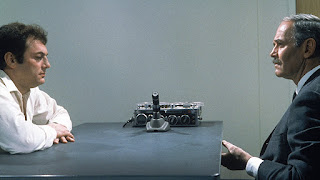
Most of the acting showcase moments arrive in a final chapter staged almost entirely in a sparse white hospital room, DeSalvo now a captive and Bottomly eager to get into the mind of a murderer. The drama is stripped down to cerebral levels, lacking excitement but striving for insight.


All Ace Black Movie Blog reviews are here.

Monday, 19 October 2020

Movie Review: Madigan (1968)

A tough police procedural, Madigan tackles multiple storylines but is more successful as a television series template than a cohesive film.

In New York City, detectives Daniel Madigan (Richard Widmark) and Rocco Bonaro (Harry Guardino) are humiliated when fugitive Barney Benesch (Steve Ihnay) slips from their grasp and steals their guns during what should have been a routine arrest. They set out to make amends, contacting Benesch's known associates to track him down. 

Meanwhile Police Commissioner Anthony Russell (Henry Fonda) has other problems: he receives proof his long time friend and deputy Chief Inspector Charles Kane (James Whitmore) is on the take, while the distinguished Dr. Taylor (Raymond St. Jacques) is accusing the police department of harassing his Black son.

Madigan is finding it increasingly difficult to manage the expectations of his wife Julia (Inger Stevens), who resents his frequent absences and low salary. Russell is single, but is having an affair with the married Tricia (Susan Clark). Through bookie Castiglione (Michael Dunn) and then part-time pimp Hughie (Don Stroud), Madigan and Bonaro close in on Benesch, but he is determined to evade arrest.

An adaptation of Richard Dougherty's book The Commissioner with a script by Howard Rodman and Abraham Polonsky, Madigan deserves credit for attempting to round the two principal characters into people who have private lives and frustrations beyond solving the crime at hand. And the concurrent stories add a dose of realism, a Commissioner like Russell not afforded the luxury of solving one problem at a time. 

While the change in title from book to film suggests an increased focus on top-billed Richard Widmark's detective, director Don Siegel still tilts the screen time more towards Henry Fonda's commissioner. In this case, this is not necessarily a good thing, Fonda appearing dour and vaguely disinterested throughout. His multiple worries surrounding the evidence against Inspector Kane, Dr. Taylor's allegations of brutality and racism, and his illicit relationship with Tricia spread the movie too thin. Madigan threatens to drop to the level of a television pilot where future episodes will pick up the many loose threads (a short-lived network series did follow).

Siegel does better foreshadowing 1970s urban grittiness and loose-cannon detectives. Madigan deglamourizes New York City into yellows and browns, the action playing out in back alleys, narrow hallways and nondescript motel rooms. And with Widmark relishing his character's joy at operating just slightly over the line, the film starts and ends with short and sharp bangs, taut encounters with the dangerous Benesch making up for some of the flab in the middle. The police officers may have romantic partners to appease and cocktail parties to attend, but nothing replaces the thrill of the chase.


All Ace Black Movie Blog reviews are here.

Saturday, 26 September 2020

Movie Review: Sex And The Single Girl (1964)

A romantic comedy, Sex And The Single Girl draws inspiration from the unfolding rearrangement of gender roles to search for incongruous love and subversive laughs.

Bob Weston (Tony Curtis) is the star writer for trashy tabloid magazine STOP. For his next assignment he sets out to sully the reputation of celebrity author and psychologist Dr. Helen Gurley Brown (Natalie Wood). Just 23 years old, she gained fame for writing the bestseller Sex And The Single Girl, a must-read book empowering women to gain control of their careers and sexuality. Bob thinks she may be a virgin and actually knows nothing about relationships. 

Bob has a girlfriend Gretchen (Fran Jeffries) and frolics with his secretary Susan (Leslie Parrish), but he steals the persona of his next door neighbour Frank Broderick (Henry Fonda), a women's stockings salesperson always one argument away from divorcing his wife Sylvia (Lauren Bacall), and approaches Helen pretending to be in need of marital counselling. Soon Bob and Helen are really falling in love, jeopardizing his standing as the king of sleaze.

Helen Gurley Brown's 1962 book Sex And The Single Girl was one of the sparks that helped ignite the 1960s as the decade of women's liberation and new attitudes towards sex, and both her name and the book are borrowed to create a fictional romantic comedy. Joseph Hoffman wrote the bouncy script, and it's certainly a meandering effort featuring multiple mix-ups, trash journalism, pop psychology, and a battle of the sexes redrawn along new front lines. The numerous plot points are eventually all but abandoned in favour of good-natured farce.

None of it should really work, but in the hands of director Richard Quine and thanks to a wicked sense of humour willing to poke fun at all targets, Sex And The Single Girl somehow only gains momentum. The script never misses an opportunity to fire a sharp arrow, the popped balloons including the fields of psychology, gutter dwelling reporters, and penny-pinching corporate committees. On the margins Hoffman looks for laughs with an irreverent intervention by a waterfront hobo, a wacky trip to the zoo featuring role-reversal monkees, and an over-the-top representation of Broderick's stocking business. Plenty of references to Some Like It Hot confirm the film's heightened self-awareness.

A strong cast helps. Tony Curtis and Natalie Wood both exude confident sex appeal, and their duel sparkles. In supporting roles Henry Fonda and Lauren Bacall as Bob's bickering neighbours are both miscast, but anyway bring depth to the battling Brodericks. Fran Jeffries gets to sing a couple of sultry numbers, Leslie Parrish is the secretary on the prowl, and Mel Ferrer appears as Rudy, Helen's dance-loving psychiatrist colleague. 

The final 30 minutes of Sex And The Single Girl are dedicated to an epic multiple car chase, Hoffman and Quine steering the plot towards a massively irrelevant but ridiculously enjoyable high speed drive to the airport, a couple of taxi drivers and one motorcycle cop getting in on the bonkers action. All the characters are involved and somehow contrive to swap cars and partners, with some pretzels thrown in for good measure. The sequence is a marvellous cinematic achievement, and while Sex And The Single Girl may not really care to know where the sex revolution is going, it swerves all over the highway trying to avoid finding out. 


All Ace Black Movie Blog reviews are here.

Thursday, 20 August 2020

Movie Review: The Rounders (1965)

A comedy western, The Rounders is the shallow story of two contemporary bronco busters and one stubborn horse.

In rural Arizona, best friends Ben Jones (Glenn Ford) and Howdy Lewis (Henry Fonda) break wild horses for a living. Despite creeping age they love what they do and accept another job from shrewd businessman Jim Ed Love (Chill Wills) to break in his latest batch of horses. Included among them is an ornery and unpredictable roan horse that resists all of Ben's attempts.

The next assignment is to spend the winter on a high plain rounding up hundreds of stray cattle heads. Along the way Ben and Howdy reconnect with moonshiner Vince Moore (Edgar Buchanan) and his two daughters (Kathleen and Joan Freeman). Try as they might to get rid of the roan, the horse always ends up back with Ben and Howdy, and although Ben continues to talk about his wish to destroy his nemesis, an affinity develops between man and untamed beast.

A laid back modern-day western, The Rounders is more about lifestyle, landscapes and a love of the great outdoors than any specific plot. Written and directed by Burt Kennedy as an adaptation of a Max Evans book, the film starts slowly and maintains a disinterested attitude towards anything resembling narrative momentum. Instead, Kennedy captures impressive vistas of wide open landscapes, the type of terrain men like Ben and Howdy will always call home.

Too many scenes feature bucking wild horses with cowboys hanging on before being thrown off, and the overdependence on stuntmen is obvious and distracting. Colours, light levels, textures and horses constantly switch as Kennedy intercuts distant shots of professionals riding bucking horses and close-ups of movie stars landing in the dust. Many other shots zoom in on the mischievous roan, giving the horse some personality but in a mystifying move, not a name.

Glenn Ford is the more animated and hot-headed of the two men, Henry Fonda agreeably taking a back seat, his passivity almost transporting him to the distant mountains. The men exchange easy banter, but plenty of the attempted humour is utterly juvenile, including the late arrival of a couple of dimwit party girls (Sue Ane Langdon and Hope Holiday) used for mid-1960s era cheap shock value derived from partial nudity.

The Rounders metaphorically compares Ben and Howdy adhering to their rustic way of life with one horse equally resisting any forced domestication. It's a simple message, delivered in lackadaisical packaging.


All Ace Black Movie Blog reviews are here.

Friday, 14 August 2020

Movie Review: The Wrong Man (1956)

A drama based on real events, The Wrong Man recounts the infuriating story of a life disrupted by a case of mistaken identity.

In New York City, Christopher "Manny" Balestrero (Henry Fonda) is a family man who works nights as the band bass player at the popular Stork Club. Manny and his wife Rose (Vera Miles) have two young sons and plenty of financial pressures. With Rose in need of expensive dental work Manny heads to their insurance agency office to request a loan against Rose's life insurance policy. The employees mistakenly identify him as a wanted criminal who held up the same office months earlier.

Manny is questioned by police detectives and then arrested and charged with multiple counts of armed robbery and assault. After he is released on bail with help from his brother-in-law, Manny and Rose approach lawyer Frank O'Connor (Anthony Quayle) for help, but after more setbacks Rose's mental health starts to suffer.

Director Alfred Hitchcock takes a temporary detour away from any vestiges of suspense or horror and tackles a straightforward docudrama. Based on the book The True Story of Christopher Emmanuel Balestrero by Maxwell Anderson, The Wrong Man delves into the minutiae of Manny's ordeal, and while a strong sense of injustice permeates the film, as a drama the material is limited. 

Hitchcock chronicles Manny's arrest, questioning and journey through the court and prison systems in excruciating detail. While Henry Fonda stoically (and mostly silently) subjects himself to the indignities unleashed by misfiring judicial machinery, the film keeps digging the same emotionally stagnant patch of earth long after the point is made that the system can fail and turn against the innocent.

Once Manny is released on bail the narrative momentum improves, and Anthony Quayle's introduction as smooth lawyer Frank O'Connor is a ray of positive light piercing the gloom, although his character is underused. Mary's descent into a severe depression is a heartbreaking overlay of agony, a strong and affectionate wife replaced by a shell of woman destroyed by guilt and a wave of misfortune. Manny has to not only defend against false criminal charges, but also arrange the care Rose needs.

Stylistically Hitchcock relies on crisp close-ups, some excellent moody nighttime shots, and a couple of camera gimmicks. In search of witnesses who can provide essential alibis Manny and Rose visit some seedy parts of town, adding a whiff of murky grit to the Balestreros' torment. The visual artistry helps, but while The Wrong Man is an important story, the film carries only a modest cinematic punch.


All Ace Black Movie Blog reviews are here.

Thursday, 30 July 2020

Movie Review: The Lady Eve (1941)


A screwball comedy and romance, The Lady Eve rides the energy of a dynamic Barbara Stanwyck performance but is an otherwise sputtering effort.

On a cross-ocean voyage returning to the United States, snake scientist Charles Pike (Henry Fonda), who just completed a year of research deep in the Amazon jungle, is a magnet for the ladies. He stands to inherit his family's brewing fortune, but Charles is a clumsy and socially timid introvert. Professional card sharps Colonel Harrington and his daughter Jean (Charles Coburn and Stanwyck) target Charles for a big score, and they lure him towards a substantial loss at their gambling table.

But Jean and Charles start to genuinely fall in love, and she tries to convince her more ruthless father to back off. Before she can be honest with Charles he uncovers the Harringtons as scammers and the burgeoning romance ends badly. Back on land, Jean does not forgive nor forget and plots an elaborate ruse involving impersonating a British aristocrat to achieve revenge, love or both.

Carrying strong echoes of 1938's Bringing Up Baby complete with the socially inept scientist and his wild animal fixation, The Lady Eve checks off screwball fundamentals. Writer and director Preston Sturges builds his narrative around the talented, seductive, determined, smart and edgy character of Jean Harrington, and Barbara Stanwyck responds with a glowing performance, radiating heat and connivance and easily dominating the film's core. Henry Fonda's bumbling victim is likeable enough, but borders on a spineless non-entity, an almost too-easy target for swindlers and cheap laughs.  

The first half on the luxurious ship is an enjoyable and breezy mix of comedy, romance and collusion. Sturges nurtures a light seafaring mood and allows Charles' well-dressed ineptitude to bounce off the Harrington's buzzsaw machinations. Jean's shoe-change seduction, followed by her breathy and handsy recovery from a snake encounter, are both timeless highlights.

But the second half stumbles both in intention and execution. Jean's follow-up pursuit of Charles' heart and money is a muddled combination of humiliation and outlandish hide-in-plain-sight subterfuge. Her haughty yet jovial British "Lady Eve" persona tries too hard and talks too much, and the bumpy tone is made worse by an overabundance of physical slapstick moments featuring Charles making a fool of himself every five minutes.

The climactic confrontation on a train is initially funny but Sturges stretches the one joke too far and the scene buckles under both unwieldy length and heavy-handed symbolism.

The supporting cast is strong, with Charles Coburn delightful as a veteran con artist. The film is notably poorer when he disappears and Eugene Pallette steps forth in the less interesting role of the Pike patriarch. William Demarest has a more constant presence as Charles' frequently flustered guardian.

Mixing winning and losing hands, The Lady Eve rides choppy seas.  


All Ace Black Blog Movie Reviews are here.
 

Monday, 25 May 2020

Movie Review: On Golden Pond (1981)


A family drama about aging, On Golden Pond examines the twilight of life through the twin lenses of enduring love and difficult forgiveness.

In New England, elderly couple Norman and Ethel Thayer (Henry Fonda and Katharine Hepburn) reopen their summer cottage on the shores of an idyllic lake known as Golden Pond. A retired professor approaching 80 years old, Norman suffers from heart palpitations and declining mental sharpness. He maintains an abrasive personality compounded by an obsession with death. Ethel is 10 years younger and in better health. They remain deeply in love and she helps smooth over his sharp edges.

Their daughter Chelsea (Jane Fonda) arrives for Norman's birthday along with her new boyfriend Bill Ray (Dabney Coleman) and his 13 year old son Billy (Doug McKeon). Chelsea and Norman have a strained relationship and cannot mend it before she leaves for Europe with Bill, leaving Billy in the care of Norman and Ethel for a month. The young teenager and old man bond over fishing, but dangers lurk in the lake and Chelsea's return will prompt more difficult conversations.

Remarkably, On Golden Pond was the first on-screen collaboration between legends Henry Fonda and Katherine Hepburn. And with Jane Fonda adding a layer of realism to the strained dynamic between father and daughter, the film's casting is near-mythical. And the stars do not disappoint. An otherwise simple story is elevated by Hepburn and Henry Fonda (in his final appearance) defining the dusk of life as a time of uncertainty, reflection, pride, impatience and plenty of love. Both deservedly won Academy Awards for their performances.

Ernest Thompson adapted his own play into a witty script and director Mark Rydell respects the theatrical origins but also displays nimbleness to keep the cameras moving. Cinematographer Billy Williams makes the most of the serene filming location at Squam Lake, New Hampshire.

Thompson invests in the aching emotional dependencies between long-term partners, and the bond of marriage between Norman and Ethel resides at the core of the story. Both know he is in declining health but he remains her lifelong rock and she refuses to partake in his incessant death talk, coaxing him to engage and at least minimize the antagonizing behaviour. 

The second key relationship develops between Norman and young Billy, and indeed they take centre stage for the entire middle act. Norman finds a fishing companion and willing learner; Billy discovers adventure on the lake, including the thrills of operating a speed boat and catching elusive trout. They make an unlikely partnership and uncover the reciprocal joys of mentorship.

Ironically the weakest subplot is between Chelsea and her father. Their dysfunctionality is superficially introduced and summarily resolved, Jane Fonda overacting and unconvincing at both ends of Chelsea's arc.

But whenever the humans stumble On Golden Pond can turn to the graceful loons, majestically swimming as couples across the lake, all the hard work of togetherness hidden below the surface.


All Ace Black Blog Movie Reviews are here.


Tuesday, 27 August 2019

Movie Review: My Name Is Nobody (1973)


A comedy spaghetti western, My Name Is Nobody explores the passing of the old west through the story of an old gunslinger being helped into a legendary retirement by a mysterious admirer.

Jack Beauregard (Henry Fonda) is the undisputed fastest gun in the west, but tired of all the killing and seeking to sail to Europe and a quiet retirement. After fending off killers from the Wild Bunch gang, he meets a stranger calling himself Nobody (Terence Hill) who claims to idolize Jack and wants him to confront and kill all 150 Wild Bunch members in an epic showdown as a career exclamation point.

Beauregard is not interested, but Nobody persists, shadowing the older man's every move and demonstrating knowledge of Jack's gunfight history. Meanwhile, the Wild Bunch are the enforcement arm for a criminal money laundering operation centred on a fake golf mine managed by Sullivan (Jean Martin), who used to be partners with Jack's now-dead brother Nevada. Fearing revenge, Sullivan wants to either kill or buy-off Jack.

Among the final batch of decent spaghetti westerns, My Name Is Nobody bolts together the sub-genre's late-cycle penchant for slapstick-level comedy with more serious epoch-defining themes. The results are decidedly mixed. The quest for a definitive showdown to draw the line under the era of hard men taming the land and each other is admirable. But between defining the goal and achieving it the film spends an inordinate amount of time in childish prank territory, and some of the jokey scenes are interminable.

The concept was devised by Sergio Leone, who also directed a few scenes, although the bulk of the film was helmed by his former assistant Tonino Valerii. My Name Is Nobody often looks gorgeous, and Valerii achieves some astounding shots of the 150 Wild Bunch riders galloping across the terrain, in wide angle and towards the camera. With Ennio Morricone providing a playful music score featuring the rousing theme from Wagner's Ride of the Valkyries, these scenes are spine tingling in their beauty, but also repeated often in an admission of the minimal narrative content besetting the film.

The money laundering fake gold mine scheme is supposed to underpin the plot, but is mysteriously under changed. Between bouts of sometimes admittedly funny comedy (Nobody having fun with a town fair rotating statue is an on-point literal re-interpretation of slapstick), Fonda and Hill debate the destiny of the old men of the west and gradually converge to a time and place where legends are confirmed then confined to history. Both actors are fully invested in their roles, and the film works best in the scenes when Fonda and Hill as the past and future share the screen with no distractions.

Both in the name of the outlaw riders and in a reference to a graveyard headstone, My Name Is Nobody tips its hat to Sam Peckinpah's The Wild Bunch, one of cinema's ultimate references to the west's transition. Once the legends ride (or sail) away, only the nobodys are left to succeed them.


All Ace Black Blog Movie Reviews are here.


Saturday, 24 February 2018

Movie Review: Jezebel (1938)


A melodrama and romance set in the deep south, Jezebel features a captivating story and an unforgettable central character.

New Orleans, 1852. Julie Marsden (Bette Davis) is a young and headstrong woman from a rich family, engaged to banker Preston Dillard (Henry Fonda). Julie is not beyond using eligible bachelor Buck Cantrell (George Brent) to make Preston jealous. When Preston misses a date due to a business meeting Julie feels particularly snubbed. She plots to cause a scandal at a social event to force him to prove his commitment. Preston calls her bluff, causing her great embarrassment. Tired of her antics he breaks off the engagement and leaves New Orleans to New York.

A year later an epidemic of yellow fever is sweeping through New Orleans, while talk of an impending civil war begins to dominate social circles. Julie is delighted to hear that Preston is coming back to town, and she plans to apologize for her past behaviour and win back his love. She organizes a welcome party at the family's Halcyon Plantation, but when Preston arrives, a bitter surprise awaits Julie.

Directed by William Wyler and co-written by John Huston, Jezebel is based on the 1933 Owen Davis play. The film is a compelling cinematic experience, Wyler comprehensively breaking free of any stage constraints and delivering a visually rich 103 minutes. The pacing is brisk and the energy level high, thanks in large measure to the main character of Julie Marsden. She is substantively ahead of her time, extending the feisty southern belle convention towards a streak of rebellious female independence that would only emerge in broader society more than 100 years after the film's setting.

And Julie is brought to life by Bette Davis in one of her defining performances. Davis earned the Best Actress Academy Award as she runs across the full spectrum of emotions. Julie is never far from cold, conniving and calculating, but she can also be anxious, giddy, playful, excited, seductive and crestfallen. Helped by Wyler's clever shot selection, Davis nails every transition, perfectly marrying her passions to the story's shifting societal and personal dynamics.

The plot is filled to the brim with issues and events. In addition to the romance, Jezebel features helpings of business, politics, and even a pistols-at-dawn duel. The yellow fever epidemic emerges as a major sub-plot in the final third, and Wyler does not shy away from showing the impact of a rampant deadly virus in an urban area.

The dialogue is crisp, and the exchanges short and sharp. The lavish sets are complemented by a series of stunning gowns worn by Davis. Many of the secondary characters make meaningful contributions, including Donald Crisp as a doctor and Preston's friend and mentor, Richard Cromwell as Preston's brother, and Fay Bainter as Julie's aunt.

Julie's stubborn impulsiveness is both her charm and her flaw, and her unique spirit propels Jezebel into a captivating orbit.


All Ace Black Blog Movie Reviews are here.

Saturday, 25 February 2017

Movie Review: A Big Hand For The Little Lady (1966)


A comedy western, A Big Hand For The Little Lady is a fun and sweaty adventure that stays well within itself and plays a strong game.

Five rich men, including the gruff Henry P.G. Drummond (Jason Robards), gather in Laredo for their annual high stakes game of poker in the back room of a local saloon. Soon after the game starts, the humble family of Meredith (Henry Fonda), his wife Mary (Joanne Woodward) and their young son Jackie wander into town.

Meredith is a recovering gambling addict and perpetual loser who had promised Mary he will never play again. But the lure of the game draws him in, first to watch, then to join in. Before long Meredith is on a long losing streak, and has risked the family's $4,000 in savings. Things get a lot worse when Meredith collapses at the table while holding the strongest hand of his life. To the horror of Drummond and the other men, Mary takes over.

Produced and directed by Fielder Cook, who was better known for television productions, A Big Hand For The Little Lady is a tightly focused 95 minutes of solid entertainment. With a willing cast enjoying the theatre-like setting of just a couple of key locations, the film builds up its premise, sketches in the main characters with admirable efficiency, and stokes the fire of a family's future riding on a single poker hand.

Most of the action takes place around the poker table, and Fielder makes the most of a confined macho ambiance invaded first by the anxious and clearly emotionally fragile Meredith and then by the incredulous Mary. Meredith has the stamp of a loser on his moist forehead, Mary then has to display grim yet clueless determination to rescue their modest fortune.

Drummond leads the brusque howls of objection as a man who interrupted his daughter's wedding to attend a game now seemingly descending into farce. Meanwhile Habershaw (Kevin McCarthy), another of the rich men around the table, finds Mary attractive and is the only one of the players to extend her some sympathy.

Fonda excels in a relatively small role, exaggerating his worried eyes and luxuriating in gallons of sweat as the losses mount. Woodward is the perfect prim and proper wife, exasperated by her husband's addiction then holding her cards very close to her chest. Secondary characters become prominent as the film progresses, with the town doctor (Burgess Meredeith) then the local banker C.P. Ballinger (Paul Ford), a tycoon who despises poker, finding themselves sucked into the drama.

With plenty of humour and some added spice, A Big Hand For The Little Lady works its way to a moment of realization and growth for the rich men of Laredo. Drummond in particular gains new perspective on what matters in life as he returns to his daughter's wedding, even if the true identity of the sucker at the table remains a mystery.


All Ace Black Movie Blog reviews are here.

Sunday, 19 February 2017

Movie Review: The Return Of Frank James (1940)


A colourful western with a nuanced revenge theme, The Return Of Frank James is a proficient adventure with a balanced mix of action and dilemmas for the central character to grapple with.

With a huge reward on his head set by the railway company, notorious outlaw Jesse James is shot in the back and killed by the Ford brothers Bob (John Carradine) and Charlie (Charles Tannen). Upon hearing that the Fords were pardoned, Jesse's brother Frank (Henry Fonda) decides to emerge from his peaceful life as a farmer to seek justice for his brother. Along with his young sidekick Clem (Jackie Cooper) they go looking for the Fords, leaving loyal farmhand Pinky (Ernest Whitman) behind.

Frank is intrinsically a peaceful man who eschews violence, and yet has to find a way to avenge his brother while himself avoiding the long arm of the law. He robs a railway company office to raise money for his quest, a heist that ends with him being wrongly accused of murder. He uses naive reporter Eleanor Stone (Gene Tierney) to spread false rumours of his death while continuing to track down the Fords. But then Pinky is arrested and Frank develops feelings for Eleanor, forcing him to reassess his priorities.

Directed by Fritz Lang and only loosely inspired by real events, The Return Of Frank James is an entertaining sequel to 1939's Jesse James. Filmed in rich colour and featuring Henry Fonda in fine form and Gene Tierney's screen debut, the film draws its energy from a conflicted central character seeking vengeance but also uncomfortable with violence. The Sam Hellman script perhaps tilts too far towards sanitizing Frank's character, but Fonda does the most with the role, building his screen persona as the morally upright man who nevertheless wants to ensure justice is served.

The Return Of Frank James sets itself apart from many westerns by having Frank stop and pause at a couple of key junctures. He is initially content to let the justice system deal with the Fords, and only after they are pardoned does he struggle with the decision to abandon his quiet life as a farmer. Later Frank reaches another crossroads and has to decide whether to continue his pursuit or rescue Pinky from an undeserved fate and explore a potential relationship with Eleanor. Fonda excels at exploiting such predicaments, elevating the film from the routine towards the cerebral.

Lang and Hellman do a good job of demonizing the Fords with subtle jabs, as the brothers aim to profit from their infamy by staging a cheesy play twisting their assassination of Jesse into fictional heroics. Further colour is added around the edges with Eleanor fighting to gain the respect of her father (a Denver newspaper owner).

The film's final chapter includes plenty of attempts at humour as the action shifts to the court room (this part of the story very much inspired by real events), as Frank defends himself against accusations of robbery and murder.

The Return Of Frank James is a pleasingly textured western, finding the gloss of human conflict in the legendary stories of outlaws and villains.


All Ace Black Blog Movie Reviews are here.


Friday, 9 September 2016

Movie Review: The Ox-Bow Incident (1943)


A sharp Western with ominous overtones The Ox-Bow Incident is unapologetic in its bleak assessment of the enticing mentality to apply simple solutions to complex problems.

Nevada, 1885. Gil Carter (Henry Fonda) and Art Croft (Harry Morgan) ride into the small town of Bridger's Wells. Although not exactly strangers, Carter and Croft have been away long enough to be treated with some suspicion by the men at Darby's Saloon, where the talk of the town is about cattle rustlers. Carter is disappointed to hear that his girl Rose (Mary Beth Hughes) has left town during his absence. The townsfolk are enraged when word arrives that Kincaid, a local cattleman, has been shot dead by the rustlers.

A bloodthirsty posse is formed despite the absence of the local sheriff. The elderly Davies (Harry Davenport) and the local judge try to talk sense into the men, but the self-styled Major Tetley (Frank Conroy) appoints himself as posse leader. Gil and Art reluctantly join in. Soon the posse catches up with three men traveling together: rancher Donald Martin (Dana Andrews), Mexican Juan Martínez (Anthony Quinn) and a confused old man (Francis Ford). With Tetley leading the on-the-spot interrogation, the trio are accused of being the rustlers and Kincaid's murderers, despite Donald's well-reasoned protestations. Carter and Croft have to decide where they stand as an instantaneous triple hanging looms.

An adaptation of the novel by Walter Van Tilburg Clark directed by William A. Wellman, The Ox-Bow Incident is a kick in the gut. A searing commentary on the human condition, the film is limited to about 4 sets and 75 minutes of running time, but packs a profound impact in its grim portrayal of group think, blind lust for revenge, and justice shortcuts exercised for convenience.

Wellman signals early that this is no ordinary Western. In the opening scene Gil Carter enters Darby's Saloon and is immediately captivated by the large painting above the bar, showing a dippy man emerging from behind a curtain, approaching an attractive woman reclining in the foreground. That guy'’s awful slow getting there, comments Gil, followed by I feel sorry for him. Always in reach and never able to do anything about it.” and then I got a feeling she could do better. Gil's not done: later he adds “Ain'’t that guy got there yet?”

Rarely has a seemingly incidental painting attracted so much attention in a film script, but of course the painting is about much more than a man and a woman. It's about reaching a better state of evolution where men find their status of civility, and in this dusty little town on the western edge of civilization, it ain't happening any quicker than the painted man is moving towards the woman. As soon as word reaches the Saloon that Kincaid is dead a lynch mob is assembled, and most of the men plus the gun-happy "Ma" Jenny Grier (Jane Darwell) are eager to ride and carve out a rudimentary version of justice. The old timers who protest are shouted down, while Gil and Art go along, not through any sense of conviction but because it is the expected thing to do.

When the mob comes face to face with Donald Martin's group, there is an attempt at due process. After all, the man is halfway emerging from the curtain. But by dawn the posse is restless. The delay tactics have run their course and the business of revenge needs to be looked after.

Despite the efficient duration and seemingly simple story, Wellman bundles an enormous amount into the film, with a theme of injustice feeding on egotistical quests. Major Tetley perceives his son Gerald (William Eythe) to be weak, and part of Tetley's motivation in leading the posse is to create a test environment for his offspring. Ironically, Gerald's unease with violence emerges as one of the few bright spots for a better future. Meanwhile, the deputy sheriff is also motivated by his desire to exert unearned authority, and oversteps his powers to deputize all the men.

Donald, Juan and the old coot in their company are not exactly squeaky clean. Their story keeps changing, Juan carries mischievous tendencies and the old man is quick to sell his soul for cheap. And finally Gil is on his own journey to better understand his destiny: on a teetering trail edge he will bump into Rose, once his future and now his past, but never to be his present: again, the lady is beyond reach, this time more literally. The multiple character-driven plot threads give The Ox-Bow Incident plenty of somber avenues to explore.

Fourteen years later Fonda would find himself in a similar on-screen situation, as The Ox-Bow Incident pairs remarkably well with 1957's Twelve Angry Men. In both cases men rush to justice for all the wrong reasons, lives hang in the balance, and Fonda is the outsider wielding some influence. The Ox-Bow Incident is darker and more visceral, the human desire for vengeance and retribution a powerful force on the bitterly cold nights of the frontier.


All Ace Black Blog Movie Reviews are here.