Showing posts with label Tony Curtis. Show all posts

Sunday, 19 April 2026

Movie Review: The Mirror Crack'd (1980)


Genre: Crime Mystery  
Director: Guy Hamilton  
Starring: Angela Lansbury, Rock Hudson, Elizabeth Taylor, Kim Novak, Tony Curtis, Edward Fox, Geraldine Chaplin  
Running Time: 105 minutes  

Synopsis: It's 1953 in rural England. American film director Jason Rudd (Rock Hudson) is in town to prepare for his next movie, featuring a big comeback role for his troubled wife Marina (Elizabeth Taylor). Marty Fenn (Tony Curtis) is the producer, and his wife Lola (Kim Novak) is Marina's nemesis. When a local woman is murdered by poison at the estate where Jason and Marina are residing, local woman Jane Marple (Angela Lansbury) and her nephew Inspector Craddock (Edward Fox) investigate.

What Works Well: In her few scenes, Angela Lansbury is a dotty delight, and Rock Hudson brings a welcome sturdiness to the otherwise over-animated cast. The quaint English village setting is idyllic, while Elizabeth Taylor and Kim Novak exchange sharp barbs as lifelong rival actresses not afraid to wish each other the worst.

What Does Not Work As Well: The murder victim is an annoying nobody, and Miss Marple is sidelined in her own movie, the bland Craddock leading most of the detective work. Taylor, Novak, and Tony Curtis, all near their career twilights, lean towards exaggerated theatricality. Director Guy Hamilton errs on the side of too many red herrings and not enough real clues, but regardless, the murderer is not hard to guess. This is a weaker Agatha Christie story (despite being based on an actual tragedy that befell actress Gene Tierney), and translates to a limp cinematic effort.

Key Quote:
Lola (to Marina): And I'm so glad to see that you've not only kept your GORGEOUS figure, but you've added SO MUCH to it!


All Ace Black Movie Blog reviews are here.

Friday, 28 October 2022

Movie Review: You Can't Win' Em All (1970)

An adventure set in Turkey, You Can't Win 'Em All offers impressive scenery and two willing stars, but a hopelessly confused plot and lackadaisical pacing.

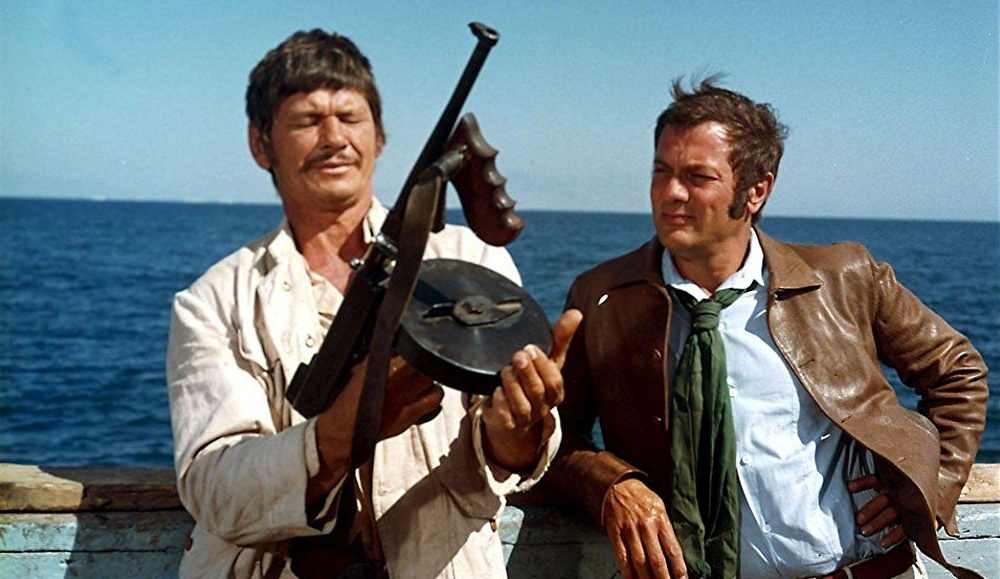
In 1922, American adventurers Adam Dyer (Tony Curtis) and Josh Corey (Charles Bronson) meet in the Aegean Sea. Josh is looking to profit from the ongoing Greco-Turkish War and internal Turkish strife by selling the services of his well-armed mercenary unit. Adam wants to reclaim a ship seized from his family during the Great War. 

Colonel Elci (Fikret Hakan), acting on behalf of local governor Osman Bey (Gregoire Aslan), hires the two men to escort a train carrying undisclosed precious cargo, with Adam hoping to secure the release of his ship as part of the deal. Adam and Josh soon learn they are helping to transport the governor's daughters along with their guardian Aila (Michele Mercier), plus gold bars and precious jewels. Numerous skirmishes with various enemies await.

You Can't Win 'Em All is a series of highlights in search of a cause. The set-pieces are well-staged and reasonably rousing, including an old fashioned bar brawl, a noisy battle around a train enhanced by machine-guns, another shooting free-for-all on a boat, plus the bonus of an air raid on an army camp.

The problem for director Peter Collinson is all the bits in-between. Intended as an old-fashioned buddy adventure in foreign lands, the Leo V. Gordon script proceeds in fits and starts, contains long stretches of nothingness, and quickly unravels into incomprehensible territory. The myriad factions competing for cheap labour in the form of uniformed extras include the Turkish army, Turkish rebels, Greek invaders, and American meddlers. Combined with multiple shifting personal agendas and everyone lying all the time, it's never clear who is trying to do what to whom or why. 

Collinson does not help matters by wasting endless shots on travelogue-style Turkish scenery. A train moving through the countryside, mounted armies galloping through the terrain, and colourful grand halls full of festive food and belly dancers are all very pretty, but ultimately betray the lack of content. Bronson (proficient profiteer) and Curtis (weasley womanizer) appear interested, share decent rapport, trade one-liners, and exude well-earned charisma, but they are defeated by the wayward plotting. You Can't Win' Em All can't fill the empty spaces between punctuations.


All Ace Black Movie Blog reviews are here.

Saturday, 16 October 2021

Movie Review: The Boston Strangler (1968)

A crime drama based on real events, The Boston Strangler recreates the horrific actions of a deeply disturbed evil perpetrator who assaulted and strangled 13 women in the early to mid 1960s.

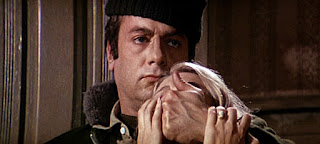
Opening text introduces the film as the story of Albert DeSalvo, the self-confessed Boston Strangler. Starting in 1962, an unknown assailant later revealed to be DeSalvo (Tony Curtis) embarks on a murder spree in Boston and the surrounding towns, sexually assaulting and strangling to death single women in their homes. Initially the victims are elderly, but eventually women of all ages are murdered. The killer talks his way into his victims' apartments, avoiding forced entry and leaving no clues.

With the murders gaining national attention, Detective Phil DiNatale (George Kennedy) and Sergeant Frank McAfee (Murray Hamilton) are among the investigators assigned to the case. They interrogate all known violent offenders and sexual perverts, but the murders continue. Assistant Attorney General John Bottomly (Henry Fonda) is appointed to coordinate across jurisdictions, but the killer remains frustratingly elusive.

With DeSalvo's identity revealed from the start and his fate commonly known, The Boston Strangler lacks narrative tension. Edward Anhalt wrote the script as an adaptation of the Gerold Frank book, and director Richard Fleischer uses split screens and a documentary-style grittiness to recreate a few of the murders, the police response, and the public reaction. The film achieves decent engagement more through style than content.

The murderer is not fully shown on the screen until about halfway through the film, leaving the generic representations of detectives DiNatale and McAfee as the rather dull main characters for long stretches. With the strangler not making mistakes, Anhalt and Fleischer invest in the arduous work of identifying, tracking down, and interrogating numerous persons of interest. The public is keen to help, and soon phone calls are flooding in about every creepy guy in town.

Perhaps sensing the investigation is floundering, the bookish Bottomly is reluctant to get involved. Henry Fonda is equally rather listless in a hesitant role, meandering from lawyer to detective then psychologist without much explanation. Tony Curtis stretches in a serious role as DeSalvo, an intriguing and not unsuccessful experiment.

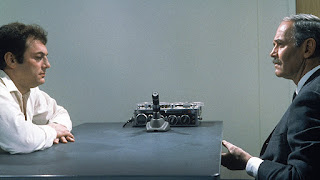
Most of the acting showcase moments arrive in a final chapter staged almost entirely in a sparse white hospital room, DeSalvo now a captive and Bottomly eager to get into the mind of a murderer. The drama is stripped down to cerebral levels, lacking excitement but striving for insight.


All Ace Black Movie Blog reviews are here.

Wednesday, 3 March 2021

Movie Review: Insignificance (1985)

A drama imagining a hypothetical meeting of four icons from the 1950s, Insignificance poses a speculative question then flounders in search of an interesting answer.

The setting is New York, and although the four main characters are never named, the representations are obvious. On the night Marilyn Monroe (Theresa Russell) shoots the blowing-skirt-above-the-grate scene for The Seven Year Itch witnessed by a mass of onlookers, Albert Einstein (Michael Emil) is holed up in a hotel room preparing for a conference. Senator Joseph McCarthy (Tony Curtis) is in town trying to pressure Einstein into admitting he is a communist sympathizer. And Marilyn's husband Joe DiMaggio (Gary Busey) is despondent, watching the world ogle his wife.

Over one long night the four characters meet in pairs in Einstein's room, engaging in conversations on a variety of topics. An elevator attendant (Will Sampson) interacts with a few of them.

Writer Terry Johnson adapts his stage play to the screen, and admittedly, Albert Einstein, Marilyn Monroe, Joe McCarthy and Joe DiMaggio walk into a hotel...is a potentially compelling introduction to a joke or a skit. But despite oodles of style, director Nicolas Roeg cannot hide the subsequent lack of substance. Beyond the initial what if curiosity, Insignificance fizzles.

So Marilyn is not a dumb blonde and can take a (clumsy) crack at explaining the theory of relativity. Reciprocating the role reversal, Einstein responds by revealing his legs, and is not beyond considering a sexual escapade, although he is resolute in refusing to humour McCarthy's accusations. Meanwhile the Senator's frolic with a prostitute is compromised by his erectile dysfunction. And Joe DiMaggio is exactly who he is, a gum-chewing ballplayer deeply in love with his wife, but tired of her prolonged absences and forced to share her with millions of fans.

Roeg scatters flashback snippets to the childhoods of the four characters in a superficial attempt to explain what shaped their psyche, and makes an effort to infuse some visual splendour as an antidote to the nondescript hotel room hosting most of the dialogue. The ending attempts to layer Einstein's worst nightmare on top of the already imagined drama, and by this stage the film is gasping for any oxygen to relieve the tedium.

With four character sharing the screen time, the actors are unable to meaningfully delve beneath the make-up. Insignificance is a compelling set-up with a limp punchline.


All Ace Black Movie Blog reviews are here.

Saturday, 20 February 2021

Movie Review: Don't Make Waves (1967)

A comedy with plenty of romantic entanglements, Don't Make Waves is frivolous and rarely funny.

Carlo Cofield (Tony Curtis) is driving across the United States to a new start in California. On the outskirts of Los Angeles he accidentally tangles with aspiring artist Laura (Claudia Cardinale) and loses all his possessions. Out of pity she invites him to sleep at her beach house, where Carlo finds out Laura is the mistress of swimming pool company executive Rod Prescott (Robert Webber).

An enterprising type, Carlo quickly finagles a job with Prescott and meets his wife Diane (Joanna Barnes). He mingles with the beach community of muscle heads and beach bunnies, and is immediately smitten by Malibu (Sharon Tate), a sky diver and the girlfriend of bodybuilder Harry (David Draper). Carlo also secures a suspiciously cheap dream beach house of his own and a Rolls Royce as he sets out to win Malibu's heart, but much trouble lies ahead.

A flimsy celebration and satire of the Los Angeles beach community, Don't Make Waves features plenty of talent engaged in embarrassing antics. Tony Curtis, Claudia Cardinale and director Alexander Mackendrick are all much better than this dross, and they don't come close to saving an inert script (somehow three writers are involved) adapting the Ira Wallach book Muscle Beach.

The attempts at humour include the excitable Laura frequently breaking into frantic Italian, and Carlo demonstrating a remarkable ability to sell swimming pools to whoever does not need one. But he is still dumb enough to swim among a gaggle of surf boards, earning a deserved bonk on the head, and he does not think to ask any questions when an idyllic house falls into his lap at seemingly no cost (the house later reveals its faults in a non sequitur climax).

Meanwhile Sharon Tate, in the first of her films to be released, is reduced to a bikini-clad sex pot with hardly any lines of dialogue. Mackendrick repeatedly lingers on her body in a distasteful display of juvenile salaciousness, although almost everyone here is shirtless for long stretches.

Rod is possessive of Laura, who imagines a romance with Carlo, who lusts after Malibu and uses an astrologer to convince her dim boyfriend Harry sex is bad for his bodybuilding. And with this level of ineptitude, Don't Make Waves sinks without a trace.


All Ace Black Movie Blog reviews are here.

Saturday, 26 September 2020

Movie Review: Sex And The Single Girl (1964)

A romantic comedy, Sex And The Single Girl draws inspiration from the unfolding rearrangement of gender roles to search for incongruous love and subversive laughs.

Bob Weston (Tony Curtis) is the star writer for trashy tabloid magazine STOP. For his next assignment he sets out to sully the reputation of celebrity author and psychologist Dr. Helen Gurley Brown (Natalie Wood). Just 23 years old, she gained fame for writing the bestseller Sex And The Single Girl, a must-read book empowering women to gain control of their careers and sexuality. Bob thinks she may be a virgin and actually knows nothing about relationships. 

Bob has a girlfriend Gretchen (Fran Jeffries) and frolics with his secretary Susan (Leslie Parrish), but he steals the persona of his next door neighbour Frank Broderick (Henry Fonda), a women's stockings salesperson always one argument away from divorcing his wife Sylvia (Lauren Bacall), and approaches Helen pretending to be in need of marital counselling. Soon Bob and Helen are really falling in love, jeopardizing his standing as the king of sleaze.

Helen Gurley Brown's 1962 book Sex And The Single Girl was one of the sparks that helped ignite the 1960s as the decade of women's liberation and new attitudes towards sex, and both her name and the book are borrowed to create a fictional romantic comedy. Joseph Hoffman wrote the bouncy script, and it's certainly a meandering effort featuring multiple mix-ups, trash journalism, pop psychology, and a battle of the sexes redrawn along new front lines. The numerous plot points are eventually all but abandoned in favour of good-natured farce.

None of it should really work, but in the hands of director Richard Quine and thanks to a wicked sense of humour willing to poke fun at all targets, Sex And The Single Girl somehow only gains momentum. The script never misses an opportunity to fire a sharp arrow, the popped balloons including the fields of psychology, gutter dwelling reporters, and penny-pinching corporate committees. On the margins Hoffman looks for laughs with an irreverent intervention by a waterfront hobo, a wacky trip to the zoo featuring role-reversal monkees, and an over-the-top representation of Broderick's stocking business. Plenty of references to Some Like It Hot confirm the film's heightened self-awareness.

A strong cast helps. Tony Curtis and Natalie Wood both exude confident sex appeal, and their duel sparkles. In supporting roles Henry Fonda and Lauren Bacall as Bob's bickering neighbours are both miscast, but anyway bring depth to the battling Brodericks. Fran Jeffries gets to sing a couple of sultry numbers, Leslie Parrish is the secretary on the prowl, and Mel Ferrer appears as Rudy, Helen's dance-loving psychiatrist colleague. 

The final 30 minutes of Sex And The Single Girl are dedicated to an epic multiple car chase, Hoffman and Quine steering the plot towards a massively irrelevant but ridiculously enjoyable high speed drive to the airport, a couple of taxi drivers and one motorcycle cop getting in on the bonkers action. All the characters are involved and somehow contrive to swap cars and partners, with some pretzels thrown in for good measure. The sequence is a marvellous cinematic achievement, and while Sex And The Single Girl may not really care to know where the sex revolution is going, it swerves all over the highway trying to avoid finding out. 


All Ace Black Movie Blog reviews are here.

Friday, 19 June 2020

Movie Review: The Perfect Furlough (1958)


A romantic comedy about a dream vacation turning to farce, The Perfect Furlough (also known as Strictly For Pleasure) delivers flighty entertainment.

Army psychologist Lieutenant Vicki Loren (Janet Leigh) conceives of a vacation competition for one soldier to boost the morale of all 104 batchelors stationed for a long year at a remote army base in the Arctic. After some clever scheming and fast talking Corporal Paul Hodges (Tony Curtis) wins the draw to enjoy three weeks in Paris with Argentinian Hollywood actress Sandra Roca (Linda Cristal), who was convinced to participate by her agent Harvey Franklin (Keenan Wynn). 

Hodges is a rampant womanizer, and even before they arrive in Paris he sets his sights on seducing Sandra. With the army terrified of bad publicity Vicki clamps down, placing Hodges under guard and denying him opportunities to engage in romance. He does not stop trying, leading to unintended escapades with both Sandra and Vicki.

A standard romance-in-the-military comedy, The Perfect Furlough has modest ambitions and rides the magnetism of star Tony Curtis to expected laughs. The Stanley Shapiro script draws predictable lines around a stuffy and somewhat incompetent military establishment clashing with fun-loving sex-starved troops, and Blake Edwards hustles the action along with a combination of deadpan humour and wide-eyed farce.

Despite the CinemaScope production The Perfect Furlough does not exude high budget aspirations. Many of the scenes in Paris are painfully flat backscreen jobs, and most of the action is confined to multiple hotel rooms, complete with the usual window ledge escapades.

Edwards builds his way up to farce-level misunderstandings and packs in a French magistrate, a doctor, an elderly winemaker, his more elderly father, and a few surprise revelations into the mix. And recognizing the delicately thin extent of the premise, all the antics are wrapped up in 93 minutes.

The film treats a woman in military leadership with surprising matter-of-fact respect, but without fully avoiding moments of sexism. Janet Leigh owns the pioneering role and walks a fine line between exerting authority and melting into romance on cue. Curtis aces his lothario persona, bending but not quite breaking the rules and not beyond manhandling a superior to prove a point. Linda Cristal is full of vitality as the exotic Hollywood beauty wringing exposure from the army publicity machine but also hiding a few secrets.

Colourful and charismatic, The Perfect Furlough is frivolous fun.


All Ace Black Blog Movie Reviews are here.

Monday, 24 June 2019

Movie Review: Sweet Smell Of Success (1957)


A drama about the power of the press deployed for all the wrong reasons, Sweet Smell Of Success is a messy but still potent treatise on misplaced priorities.

In New York City, Sidney Falco (Tony Curtis) is a sleazy publicist who has been frozen out by influential show business newspaper columnist J. J. Hunsecker (Burt Lancaster). The cold-hearted Hunsecker is unhappy that Sidney has been unable to break up the budding romance between J.J.'s sister Susan (Susan Harrison) and jazz musician Steve Dallas (Martin Milner).

Berated by his clients, almost broke and desperate to get back into Hunsecker's good books, Sidney pulls out all the stops and plants a false rumour about Steve with a rival newspaper columnist. This triggers a confrontation between Steve and J.J., with unexpected consequences.

Sweet Smell Of Success features a free-wheeling, always-on-the-move style riding the energy of New York City after dark, a city that never sleeps because vile men spend the night plotting. An adaptation of an Ernest Lehman novella with the character of J.J. Hunsecker inspired by the real-life columnist Walter Winchell, the film boasts dialogue rich with insults, put-downs, threats and sarcasm as dark-hearted rivals outmaneuver each other in a sordid world of their own making.

While the story's essence of a wicked man attempting to derail his sister's romance is relatively lightweight, crazed dynamism is derived from a chaotic production which had filming start before the script was ready. Pages of the Clifford Odets screenplay went instantaneously from typewriter to set, and the result is a torrent of characters and factoids, some relevant and others not so much, drifting in and out of scenes, adding plenty of ambience and realism but also disorienting narrative dizziness.

Director Alexander Mackendrick makes the most of the anarchy and maintains focus on two men utterly lacking in scruples. Falco and Hunsecker are obsessed with their own self-interest, the publicist a say-anything hustler and the columnist a power broker in a business built on his whispers and innuendo. Neither men should matter at all in a rational society, but this is show business in New York City, where careers are made or destroyed with a few words published in the right column.

The unattached Hunsecker's incestuous obsession with his sister is strongly hinted at, and Lancaster brings to the role a chilling empathetic blankness highlighted by the most perfectly fitting browline glasses. Tony Curtis enjoys a dramatic role, losing his morality in the sudoriferous sewers as Falco prostitutes a cigarette girl, arranges a blackmail sting, then peddles career-destroying drugs-and-communism lies, all within a couple of nights.

The lovers Susan and Steve are the pure couple, and unsurprisingly, the most boring characters in this story. Nor should they expect any noble help from the authorities: Lt. Harry Kello (Emile Meyer) of the New York police is not much more than a freelancing goon-for-hire.

Sweet Smell Of Success condemns malevolent journalism and the men who enable it, but does so with undisguised relish.


All Ace Black Blog Movie Reviews are here.

Sunday, 17 July 2016

Movie Review: Some Like It Hot (1959)


A madcap comedy and romance, Some Like It Hot is a brilliantly constructed celebration of romance at its most complicated, incorporating gender politics, criminals on the loose, and an audacious anything goes, nothing to lose attitude.

It's 1929 in Chicago. Penniless friends and musicians Joe (Tony Curtis), a risk-taking saxophonist, and Jerry (Jack Lemmon), a more cautious double bass player, narrowly escape a police raid on an illicit nightclub run by mobster "Spats" Colombo (George Raft). Still reeling, Joe and Jerry are next unwilling witnesses to a St. Valentine's Day-type massacre perpetuated by Spats on informant "Toothpick" Charlie (George E. Stone) and his men. Desperate to leave town to avoid Spats' wrath, Joe and Jerry dress up as women, adopt the personas of Josephine (Joe) and Daphne (Jerry), and join an all-girls music band heading to Miami.

Jerry: [in high heels] How do they walk in these things, huh? How do they keep their balance?
Joe: It must be the way the weight is distributed. Now, come on.
Jerry: It's so drafty. They must be catching cold all the time, huh?
Joe: Will you quit stalling? We're gonna miss the train.
Jerry: I feel naked. I feel like everybody's staring at me!
Joe: With those legs, are you crazy? Now, come on.
[They see Sugar Kane]
Jerry: Look at that! Look how she moves. That's just like Jell-O on springs. She must have some sort of built-in motors. I tell you, it's a whole different sex!
Joe: What are you afraid of? Nobody's asking you to have a baby.

On the train, they meet singer and ukulele player Sugar Kane (Marilyn Monroe), and both men fall madly in love with her. Sugar confides in Josephine and reveals all her hopes and aspirations, including exactly what she desires in a man. Joe uses the information to take on the new persona of young intellectual millionaire Junior, heir to the Shell Oil fortune, and starts a serious pursuit of Sugar. Meanwhile Jerry (as Daphne) finds himself the target of lecherous eldery millionaire Osgood Fielding III (Joe E. Brown). With Spats still seeking to eliminate witnesses to the Chicago killings, Joe and Jerry frantically try to sort out their increasingly complex romantic entanglements and save their lives.

Jerry: Dirty old man...I just got pinched in the elevator.
Joe: Now you know how the other half lives.
Jerry: Look at that. I'm not even pretty.
Joe: They don't care. Just so long as you're wearing a skirt. It's like waving a red flag in front of a bull.
Jerry: Really. Well I'm sick of being the flag. I want to be a bull again.

Directed by Billy Wilder, who also co-wrote the script with I.A.L. Diamond, Some Like It Hot is one of Hollywood's perfect comedies. The laughs are derived from the ridiculous situations, the wild pacing and lust made troublesome by mixed-up genders. The dialogue is filled with zingers, the cast is deep with talent, and the script finds a loony groove and does not stop. The two hours are filled with frantic moments, and the antics of Joe and Jerry keep piling up. By the end of the film Joe has three personas, Jerry is still pining for Sugar but being pursued by both a millionaire and a bellboy, gangsters are at war with each other, and somehow it still all makes sense.

Osgood: You must be quite a girl.
Daphne: Wanna bet?

With the 1950s about to turn into the 1960s, Wilder and Diamond push the boundaries of sexual innuendo well past typical expectations for the era. With the plot device of an all-girls band providing the excuse for plenty of barely-dressed women to parade past Joe and Jerry in drag, Wilder deploys Marilyn Monroe as his weapon of mass distraction. Although apparently a horror on the set due to pill addiction, Monroe has never looked or acted better as the explosively innocent woman unaware of her impact on men. As an added bonus she also performs three songs at her breathiest best. For most of the second half of the film Wilder dresses her in daring possibly see-through dresses (impossible to tell in black and white) with just enough coverage to get past the censors.

Sugar: Water polo? Isn't that terribly dangerous?
Junior: I'll say. I had two ponies drowned under me.

And with Joe-as-Junior pretending to have lost interest in women and daring Sugar to cure him on Osgood's yacht, she needs no further invitation to unleash all her expertise to get a rise out of the millionaire of her dreams. Meanwhile, back on shore Jerry-as-Daphne and Osgood dance up a storm all the way until dawn to the tango tune of La Cumparsita, and in the morning Jerry is quite convinced that he will be marrying Osgood.

Jerry: Have I got things to tell you!
Joe: What happened?
Jerry: I'm engaged.
Joe: Congratulations. Who's the lucky girl?
Jerry: I am!
Joe: WHAT?!
Jerry: Osgood proposed to me! We're planning a June wedding.
Joe: What are you talking about? You can't marry Osgood.
Jerry: Why, you think he's too old for me?

Tony Curtis and Jack Lemon have rarely been better and perfectly complement each other. Curtis as Joe is more cerebral, more adventurous and much more likely to get the pair into trouble, while Lemon as Jerry is more of a worrier but also more willing to follow along and complain about it. George Raft provides the counterbalance by playing it straight as mobster Spats, and Wilder again breaks ground by mixing comedy with brutal massacres and Tommy gun violence.

Some Like It Hot has fun at the expense of both genders and all ages. The film ends with a classic exasperated admission that while love can be hot and messy, no relationship and no one sex is perfect, which is exactly why there is so much fun to be had.


All Ace Black Blog Movie Reviews are here.

Wednesday, 16 September 2015

Movie Review: Trapeze (1956)


A big tent drama and romance, Trapeze creates an impressive canvas but gets hopelessly bogged down in a distasteful and seemingly interminable love triangle.

Mike Ribble (Burt Lancaster) was a legendary trapeze artist who permanently damaged his leg in a fall while attempting the near-impossible triple somersault in mid-air. Now reduced to working as a rigger in a Paris-based circus, Mike is approached by the young and enthusiastic Tino Orsini (Tony Curtis). Blessed with an abundance of raw talent as a trapeze artist, Tino eventually convinces Mike to return to performing as his catcher with the aim of perfecting the triple.

Mike and Tino train hard and make good progress as the big opening day approaches. Meanwhile, the glamorous Lola (Gina Lollobrigida) is a member of a middling acrobatics show at the same circus. Overly ambitious and blindingly egotistical, Lola is looking only at self-preservation and her own career advancement. She dumps her fellow acrobats and attempts to weasel her way into the Mike and Tino act. Mike is vehemently opposed to the duo becoming a trio, believing Lola to be a distraction, but she is not an easy lady to dissuade, and will use every weapon at her disposal.

Directed by Carol Reed in CinemaScope, Trapeze aims for a busy, boisterous vibe with something happening in every corner to animate the large screen. The film is only partially successful. While Burt Lancaster (an actual circus acrobat in his younger days until forced to quit due to injury) and Tony Curtis provide good star power and committed performances, the script offers them sub-par material to work with. A gaggle of writers were involved trying to wrangle the Max Catto novel The Killing Frost into a movie, and the lack of a single strong vision is apparent.

The film is an uneasy mix of disjointed grand spectacle and nasty personal feuds. The final hour is fully consumed by Lola's disruptive influence on Mike and Tino, and Trapeze slips down a slippery slope of obnoxious behaviour. Reed is unable to find level ground to steady the drama, as Lola's conniving is matched by Mike's plotting. Lola pretends to love Tino because she wants into the show, Mike pretends to love Lola because he wants her out of the show, and Tino is buffeted by emotional waves propagated by a presumed lover and an essential performance partner. Lola is presented as a wholly unsympathetic character, helping to push the whole love triangle into sordid television soap opera territory, leaving behind a circus context struggling for relevance.

The surrounding backstories are mediocre and rarely liven up the film. There is the gruff circus owner, the New York-based rival circus tycoon who promises a better paycheque, the midget who is growing too tall and is supposed to provide comic relief but doesn't, and an underdeveloped subplot involving Mike's former lover Rosa (Katy Jurado). None of them really register.

Better are the actual trapeze performance scenes, and Reed uses these sequences sparingly to maintain their effectiveness and impact. The quest for the elusive triple is presented as an almost spiritual obsession, and gives the film some positive purpose. Star close-ups are seamlessly woven into long-shots for the stunt trapeze artists, and the film is in its element delving into the rigours of training and the stress of performing in front of a large tent full of expectant spectators. Trapeze has a few tricks and performers worth watching, but the show rarely soars.


All Ace Black Blog Movie Reviews are here.

Tuesday, 15 September 2015

Movie Review: Kansas Raiders (1950)


A tone-deaf western, Kansas Raiders focuses on Jesse James falling under the influence of Civil War mercenary William Quantrill. In portraying one outlaw murderer as horrified by the actions of a bloodthirsty lunatic, the film has all the subtlety of a sledgehammer.

With the Civil War raging, Jesse James (Audie Murphy), his brother Frank, the Younger brothers and Kit Dalton (Tony Curtis) are drifting through Kansas, looking for the headquarters of renegade paramilitary leader William Quantrill (Brian Donlevy). Jesse is seeking revenge against the Union side for burning his home and killing his family, while his men are just looking for steady work and income. Near Lawrence, Jesse and the gang finally find and join the Quantrill Raiders, who are running an indiscriminate campaign of terror.

Quantrill likes what he sees in Jesse and gives him a leadership position. Jesse falls hard under the influence of Quantrill, believing all his self-aggrandizing hokum about military strategy and winning the war for the Confederates. But Jesse is soon exposed to what Quantrill really is: a deluded old man leading his ragtag band of killers on raids to murder innocent farmers and pillage their belongings. Jesse also meets and starts to fall in love with Kate Clark (Marguerite Chapman), Quantrill's maybe former lover, and she tries to persuade him to break ranks. But Jesse remains part of the raiders as the war grinds on, Quantrill's troop strength is degraded, and a showdown looms.

Directed by Ray Enright, Kansas Raiders is a low budget, low talent western loosely inspired by real events, trading on Audie Murphy's celebrity status and little else. The colours are rich and some of the scenery is not bad, and there may be a germ of a good story about the power of wily despicable charlatans to wield influence over impressionable young men. But the movie has neither the smarts nor the inclination to delve into substantive topics with any conviction. Instead the dialogue is clipped and superficial, the execution rudimentary, and the character motivations singularly basic.

Even when Jesse questions his allegiance to Quantrill, the Robert L. Richards script gives up on any interesting evolutions. Jesse and his gang stick with the Raiders but allow themselves to grumble about his methods, and that's the end of any dilemma. The rest is just about rudimentary killing and circular talk until there are no more men to kill and nothing left to say. The action set-pieces are awkward, but the romance elements between Jesse and the barely defined character of Kate Clark are even worse.

Audie Murphy gives no indication of any actual acting talent, and goes through the movie wearing the one expression of a young man trying to act older than he is. Brian Donlevy is a bit better but teeters on the edge of caricature. Marguerite Chapman provides ample evidence to vindicate her failure to successfully transition from serials to more serious roles. Tony Curtis gets a few lines in one of his many forgettable early screen appearances.

Kansas Raiders is a film as useless as William Quantrill's imaginary cause.


All Ace Black Blog Movie Reviews are here.

Saturday, 12 September 2015

Movie Review: Sierra (1950)


A basic B-grade western, Sierra looks good but is an otherwise stiff and by-the-numbers adventure about family redemption.

Ring Hassard (Audie Murphy) lives with his father Jeff (Dean Jagger) in seclusion, deep in the Sierra mountains. They break wild horses for a living, and their only contact with the nearest town is through local drifter Lonesome (Burl Ives). Trouble starts when independent-minded tough girl Riley Martin (Wanda Hendrix) stumbles onto the Hassards, and uncovers the family secret: Jeff is a fugitive from justice, and Ring has been raised in isolation and never seen a woman up close. Nevertheless, Riley and Ring start to fall in love.

When Jeff hurts himself trying to tame a wild horse, Ring, Lonesome and Riley try to help by getting a doctor to his side, but their efforts only reveal the Hassard hideout to the local sheriff. Riley wants to be a lawyer and believes that she can help prove Jeff's innocence. But convincing a town full of angry folks that the long-wanted fugitive was wrongly convicted will be no easy task, especially when Riley's suitor Duke (Elliott Reid) decides that Ring is an inconvenient threat.

Directed by Alfred E. Green, Sierra has a few decent ideas scattered over its shortish 83 minutes of running time, but the movie is otherwise barely above the level of a television western episode. The characters are wooden, the action routine, the dialogue stilted and the set-pieces contrived. The film does look good thanks to rich colours, and the locations around the Hassard household evoke a sense of solitude and provide plenty of ambush opportunities.

Green occupies quite a few minutes with scenes of galloping wide horses, and appears particularly taken with the dominant black mare that leads the rest of the herd. The horses are supposed to represent the Hassards' embrace of freedom and their tenuous remaining connections to civilization, but the thundering hooves eventually just get boring.

The cast is interesting, but underperforms. Audie Murphy's idea of acting here is to stand rigidly and stare into the distance, oblivious that he is unable to convey neither intensity nor thoughtfulness. Burl Ives is saddled with an old guitar and a mule, and is forced to sing a few godawful songs. Dean Jagger is the only character with a backstory, but while Jeff Hassard spends most of the film on his back, his old tale of being wrongly accused of murder is underdeveloped.

And Wanda Hendrix (Mrs. Audie Murphy at the time) never gains traction as a credible person, and cannot be taken seriously whether she is pretending to be a woman lost in the wilderness, a lawyer, or the love interest. James Arness and Tony Curtis appear in small early roles as members of the Coulter family, also hiding out from the law.

The mountains are high and the colours vivid, but Sierra is just too meager to matter.


All Ace Black Blog Movie Reviews are here.


Monday, 24 August 2015

Movie Review: Operation Petticoat (1959)


A wartime comedy featuring the misadventures of a stricken submarine and her crew, Operation Petticoat offers some mild laughs but quickly becomes an exercise in routine waters.

It's December 1941, the US has just entered the war and somewhere in the South Pacific, the USS Sea Tiger is sunk in a Japanese air raid while still tied to the dock, having never experienced any action. Captain Matt Sherman (Cary Grant) is eager to get his submarine back to the surface, patched up and into the war. But the US military is still in a state of disarray and unable to fulfill Sherman's requisitions for essential replacement parts and supplies. Lieutenant Nick Holden (Tony Curtis), a suave fixer and ladies' man, arrives as a replacement officer with no real interest in the war but plenty of ideas on how to get things done. Sherman appoints Holden as the new supplies officer, and soon Holden is efficiently securing all that the submarine needs through ingenious scavenging adventures.

Somewhat repaired but still with plenty of mechanical and operational problems, the Sea Tiger sets sail, and at a port of call Holden finds five stranded US military nurses and brings them on-board, ostensibly as a rescue mission and to transport them to a safer harbour. With five beautiful single women now living within the sub's tight confines, the crew members are understandably sent into a tizzy. Mishaps are accompanied by unlikely romances as Sherman evades Japanese raids, tries to keep his sub in a semi-functional state, and deals with accident-prone women and Holden's neverending scheming.

Directed by Blake Edwards and later adapted into a television show, Operation Petticoat is a lighthearted look at the frolicking that takes place within the less than perfect margins of war. This is a colourful, sun-drenched corner of a global conflict where a ton of effort is applied for not very much gain. Men improvise just to create a semblance of a mission, nothing works as it should and anything that does work is stolen, modified and pressed into action.

Edwards finds plenty of opportunities to have fun in the war's backwaters, up to and including painting the submarine a bright pink and contriving to stage a climax where the American Navy unwittingly engages in battle against itself. And somewhere within the mayhem is the subplot of a large abducted pig, that starts out funny but is stretched to tedium once the wronged farmer invades the submarine seeking compensation.

But the film essentially starts and ends with two flimsy premises: the contrast between the rather stodgy Sherman and the freewheeling Holden; and the theoretically hilarious conflict created by women on a submarine. While there is enough substance to make the friendly stand-off between the two men worth exploring, the final third of the film deteriorates quickly as all but one of the women are treated with disdain, with a focus on their breasts getting in the way of everything, their inability to operate a shower, and their propensity for touching every dial at the worst possible time.

Rather overlong at more than two hours, ultimately the film fades due to a lack of significant investment in most of the major characters. While a little bit of Holden's background is brought to the fore, all the other men and women are left to flounder in the sea of stereotypical characters, devoid of any humanizing context, motivation or ambition.

Cary Grant and Tony Curtis supply adequate star power. They occasionally bounce well off each other, but mostly stay within themselves. Grant goes through the movie with a mostly bamboozled expression, as Sherman is befuddled first by the Japanese raids, then by the incompetence of the supply chain, then by Holden's audacity, and finally by the buxom nurses invading his submarine. Curtis is a bit more engaging as he expresses stony faced determination with a twinkle in the eye, as Holden works hard to stay as far away as possible from anything resembling a war while maximizing his pleasure and fun quotient. The rest of the rather thin cast includes Joan O'Brien, Dina Merrill, and Gavin MacLeod.

Operation Petticoat is amusing and offers bright moments; it's also as obvious as a bright pink submarine on a bright sunny day, sailing on the surface and belching black smoke.


All Ace Black Blog Movie Reviews are here.

Sunday, 9 August 2015

Movie Review: The Defiant Ones (1958)


A potent drama about race relations packaged into an escape thriller, The Defiant Ones is an enthralling film. The intimate story of two tough men forced to survive together blossoms into an acute commentary about the ties that underpin a diverse society.

When a prison transfer bus crashes on a rural road, two inmates are presented with an unexpected opportunity to make their escape. Cullen (Sidney Poitier) is black and proud of it, Joker (Tony Curtis) is white and an ignorant racist, and they are chained together. Despite their best efforts, they are unable to break their shackles, and so their wrists remain attached to each other as they trundle through the countryside on foot, running for hours to stay ahead of their pursuers. They are chased by a growing posse under the unconventional leadership of Sheriff Max Muller (Theodore Bikel), whose team includes sniffer dogs and muzzled dobermans.

Cullen and Joker move from mutual hate to grudging dependence. When they fall into a muddy pit at a remote mine operation, they have to cooperate to clamber out. They then barely survive a lynching at a rough work camp where they try to steal supplies. Finally, they stumble onto the remote farm run by an attractive lonely woman (Cara Williams) and her young son Billy (Kevin Coughlin). By this time, the convicts are close to becoming friends. With the search party closing in, Cullen and Joker face tough choices that will test their unlikely partnership.

Produced and directed by Stanley Kramer, The Defiant Ones is a seminal achievement. The story of Cullen and Joker represents the reality of race relations between whites and blacks in the United States, stuck together and struggling to get along despite the obvious benefits of working together. Without ever descending into preachiness, the film confronts and acknowledges the tension born of ignorance, and then celebrates the strength and respect that come from combining forces towards a common goal. The initial antagonism directed at an unplanned union never quite goes away; but crucially, it fades into insignificance in the face of burgeoning humanity.

Filming in black and white and concisely editing the drama into 97 gripping minutes, Kramer assembles the film in alternating scenes of escape, pursuit and reflection. Cullen and Joker are given plenty of opportunities to develop into real people with lives, ambitions, dreams and backgrounds. They start out as stereotypes in each others' eyes, and gradually grow into individuals worthy of respect, friendship, and trust. For the scenes on the run, the film provides no shortage of tense hide-and-seek thrills, as the two men stay just hours ahead of the law, navigating the bush, pursuing freedom and dodging the curiosity of strangers, all while hampered by their stubborn chain.

The Defiant Ones won the Academy Awards for cinematography, editing and original screenplay, and received a host of additional nominations, including for Best Film and Best Director. Both Curtis and Poitier were nominated as Best Actor, and while neither won (David Niven triumphed for Separate Tables), they are both stellar. Curtis in particular has rarely been better. He reveals a hardened edge to his persona, leaning his charisma towards the selfish dark side. Poitier plays to his strengths as the proud man occupying the moral centre and confronting bigotry head on, while working to reverse it with a combination of words and actions. Theodore Bikel and Cara Williams were also nominated for their supporting roles, and the cast also includes Claude Akins and Lon Chaney, Jr. as work camp men on opposite sides of the sympathy spectrum.

The movie builds to an enthralling climax at a remote farmhouse, where opportunities arise for a fresh start, Billy' mother unveils a new level of desperation, hallucinatory dreams appear within reach, an alliance forged by the chain is severely tested, and a swamp and a train offer sanctuary, danger and maybe a final lunge towards coveted freedom. Weaker apart and stronger together, black and white are destined to learn to live with each other, but the terrain is tough and the tests unforgiving.


All Ace Black Blog Movie Reviews are here.