Showing posts with label Jason Robards. Show all posts

Sunday, 1 March 2026

Movie Review: The St. Valentine's Day Massacre (1967)


Genre: Historical Gangster Action  
Director: Roger Corman  
Starring: Jason Robards, George Segal, Ralph Meeker  
Running Time: 100 minutes  

Synopsis: It's 1929, and rival gangs vie for control of the lucrative illegal alcohol trade in Chicago. Al Capone (Jason Robards) is convinced his rival George "Bugs" Moran (Ralph Meeker) cannot be trusted, and flashbacks reveal the history of reprisal attacks between their syndicates. Capone now orders his henchman Jack McGurn (Clint Ritchie) to organize a hit on Moran, who is equally intent on eliminating Capone. The levels of violence increase as St. Valentine's Day approaches. 

What Works Well: Using a narration-heavy docudrama style, the plot is faithful to the known facts leading to the notorious abolition-era bloodbath. Working with a decent budget and for a major studio, director Roger Corman still adheres to an economical no-wasted-scenes ethos, and recreates the late 1920s with crisp sets filled with vintage cars and wardrobes. A drawn-out fight between gangster Peter Gusenberg (George Segal) and his moll (Jean Hale) is a treat, while Bruce Dern and Jack Nicholson appear in small roles.

What Does Not Work As Well: The story is limited in scope to violent gangsters intent on killing other violent gangsters, and boredom sets in early. Every character receives a dry staccato introduction (birth year, birth city, arrest record, marital status, gang role, cause and date of death), but none of them are afforded a soul or emotional depth. Jason Robards chews the scenery in several sputtering over-the-top scenes, while most of the other goons are interchangeable villains in suits. Despite the sparkling aesthetics, the visuals never escape the studio backlot. 

Key Quote:
"Bugs" Moran: I say it's time we put Capone and his bums out of business...for good.


All Ace Black Movie Blog reviews are here.

Sunday, 27 July 2025

Movie Review: Raise The Titanic (1980)


Genre: Adventure  
Director: Jerry Jameson  
Starring: Jason Robards, Richard Jordan, David Selby, Anne Archer, Alec Guinness  
Running Time: 114 minutes  

Synopsis: The American Navy's Admiral Sandecker (Jason Robards) concludes that the Titanic's cargo included stockpiles of a rare mineral needed for advanced weapon systems. Sandecker works with scientist Gene Seagram (David Selby) and ex-military adventurer Dirk Pitt (Richard Jordan) on a risky plan to recover the cargo by finding the famous wreck and lifting it to the surface. Seagram and Pitt both have romantic feelings for reporter Dana Archibald (Anne Archer), while members of the Russian military hierarchy take an interest in what their Cold War adversaries are up to.

What Works Well: A Lew Grade production based on a Clive Cussler novel, this is an ambitious adventure combining Cold War tensions, the search for the most famous marine wreck, and the innovative if far-fetched idea of refloating the doomed ship. John Barry's music score is majestic, and several sequences achieve a level of grandeur: the Titanic rising from the ocean, Dirk Pitt exploring its once-luxurious hallways; and the ship arriving in New York. In his one scene, Alec Guinness shines as crusty Titanic survivor John Bigalow.

What Does Not Work As Well: The strains of a troubled and over-budget production are on plain view. With all the money spent on special effects (including a 17-metre long Titanic replica that did not fit into any available water tank), the cast is underpowered, and the script alternates between patchy and clunky. Momentum is lost in the second act as submersibles endlessly search the dark ocean depths, Anne Archer's love interest role is at first clumsy then just discarded, and the attempts to insert Russian villainy are amateurish. The rudimentary scientific explanations of the methods deployed to float the massive ship result in a debris field of implausibilities.

Key Quote:
Bigalow: It's an odd thing, you know. I've had a few ships shot out from under me. More than my share. Three in the 1914-18 fracas, and two in 39-45. But all anybody ever asks me about is the Titanic.


All Ace Black Movie Blog reviews are here.

Tuesday, 7 September 2021

Movie Review: Cabo Blanco (1980)

A mystery thriller, Cabo Blanco (also presented as Caboblanco) offers decent ideas but never comes close to recreating the coveted Casablanca vibe.

It's 1948 in the coastal Peruvian town of Cabo Blanco. American fugitive Gifford "Giff" Hoyt (Charles Bronson) operates the town's hotel and bar, the local authorities are represented by the corrupt Captain Terredo (Fernando Rey), while reclusive and wealthy Nazi official Gunther Beckdorff (Jason Robards) wields his influence from a hilltop mansion. Off shore, a British intelligence ship encounters sabotage while searching for the wreck of the Brittany, which sank with a cargo of Nazi treasure worth millions.

Mysterious French woman Marie Claire Allesandri (Dominique Sanda) arrives in town to inquire about her lover, a French wartime resistance fighter who may have uncovered the wreck's location. British agent Lewis Clarkson (Simon MacCorkindale) comes ashore to investigate the sabotage. Marie and Gunther start to suspect Giff may know the secret of the coveted coordinates, but he's not telling.

From the title to the setting and the collection of characters, Cabo Blanco does not try to hide it's source of inspiration. The elements may be familiar and promising, but the script by Morton S. Fine and Milton S. Gelman is clunky and often logic-challenged. J. Lee Thompson directs with general disinterest and the production design struggles to convey the 1940s, with Bronson's wardrobe and mannerisms stubbornly holding onto the 1970s.

Some scenes and actions are simply confounding. Mysterious murderous divers appear twice but the killings are never properly explained, since no one appears to have yet discovered the location of the Brittany. Clarkson goes on an ill-advised solo exploration of Beckdorff's compound, a misadventure made more puzzling by Giff's sudden appearance and intervention out of nowhere. Dominique Sanda is asked to either climb or descend the stairs every 15 minutes, an appropriate representation of a character who does not know whether she is coming or going. In fact, it's never clear what leverage Marie has over any of the men she tries to negotiate with. 

A good chunk of the final third is occupied with Bronson making fools out of Captain Terredo's men, doubtless to satisfy the star's action-demanding fans. But after all the cheap running around, the climax is decent, Thompson finally conjuring up a rain-soaked mood as the principals convene for a final showdown. A parrot and a gargoylian jukebox are pressed into service, but alas, without the talent to start a beautiful friendship.


All Ace Black Movie Blog reviews are here.

Tuesday, 30 July 2019

Movie Review: Pat Garrett And Billy The Kid (1973)


A languid pursuit western, Pat Garrett And Billy The Kid celebrates the end of the wild west through the eloquent story of former friends clashing from opposite sides of the law.

In 1909, ex-lawman Pat Garrett (James Coburn) is gunned down in an ambush. In his final moments he flashes back to his quest from years earlier to capture Billy The Kid (Kris Kristofferson).

Back in 1881, Garrett is elected Sheriff of Lincoln County and mandated by powerful cattlemen and business interests to bring his old friend William "Billy The Kid" Bonney to justice. Billy refuses to leave the territory and is soon captured by Garrett and sentenced to death by hanging. But he escapes by killing deputies Bell (Matt Clark) and Olinger (R.G. Armstrong), then meanders his way to Mexico.

Governor Lew Wallace (Jason Robards) and cattleman John Chisum (Barry Sullivan) apply pressure on Garrett to get the job done. He restarts the pursuit and recruits new deputy Alamosa Bill Kermit (Jack Elam). Garrett also seeks help from Sheriff Baker (Slim Pickens) and his wife (Katy Jurado) and is joined by lawman John Poe (John Beck). Meanwhile a mysterious knifeman known only as Alias (Bob Dylan) joins Billy's men, and a showdown at the gang's Fort Sumner hideout looms.

A troubled and chaotic production that suffered from Peckinpah's excessive drinking, under-funding and faulty equipment, Pat Garrett And Billy The Kid culminated in the studio butchering the released version. In 1988, Peckinpah's rough "Preview" version was released, and in 2005 a restored "Special Edition" (the subject of this review) was prepared under the supervision of editor Paul Seydor. The 2005 version salvages a beautiful mess out of the debacle.

The script by Rudy Wurlitzer is based on true events, but Peckinpah clashed with his writer and conjured up a more lyrical western centred on a friendship and rivalry echoing the classic theme of transformation from wilderness to civilization. And while the violence of the transitioning west is still bloody, Peckinpah avoids excess, sprinkling the action scenes in service of the narrative instead of using gore as a frequent shock device.

Ironically, it is the older Garrett who represents business interests and a future dominated by commerce ahead of individual spirit, while the much younger Billy carries the torch for the fearless and arrogant attitudes of the past. And given most of the film's component parts, it's remarkable that Pat Garrett And Billy The Kid gels as well as it does.

Events are intermittently explained or narrated in song by a warbling Bob Dylan, a device that somehow succeeds in the context of the film's dreamy construct. Dylan wrote Knocking On Heaven's Door for a poignant scene capturing the shock of meaningless death leaving life-long love behind. As evidence of the anarchic production, both the original release version and Peckinpah's own rough Preview left the song out, only for Seydor to rescue it in the Special Edition.

In addition to providing the soundtrack, Dylan wanders through the background of the film visibly and understandably unsure about the poorly defined role of his character Alias. Meanwhile, a perpetually smiling Kristofferson, aged 37, captures Billy's cockiness but otherwise struggles to convince as a 21 year old.

Peckinpah's pacing is sometimes erratic. A few scenes are stretched well beyond any added value, Garrett's smug interrogation of one of Billy's men in a canteena while Alias reads bean can labels a prime example. And the film is littered with numerous secondary characters, most of them contributing a single scene before disappearing.

Despite all the film's peculiarities, Peckinpah does get the overall ambiance right. With James Coburn delivering one of his most grizzled and world-weary performances, Pat Garrett And Billy The Kid oozes resignation. Neither Garrett nor Billy are in any hurry to end their chase, both aware the future will arrive soon enough, and once present glories are lost there is no getting them back.


All Ace Black Blog Movie Reviews are here.


Saturday, 5 August 2017

Movie Review: Crimson Tide (1995)


A post-Cold War submarine thriller, Crimson Tide expertly explores a tense scenario involving a high-stakes conflict among commanders.

Hunter (Denzel Washington) is the new Executive Officer (XO) on the USS Alabama, a submarine armed with nuclear missiles and commanded by Captain Ramsey (Gene Hackman). Ramsey is a cigar-chomping old school leader who creates his own rules but is respected by his men. Hunter is younger, more cerebral and willing to think through situations before pulling the trigger. When a rebel faction of the Russian army takes control of a nuclear facility and threatens to launch nukes at the United States, the Alabama sets sail in readiness for a potential war. The boat's officers include Zimmer (Matt Craven), Cob (George Dzundza), Weps (Viggo Mortensen) and Dougherty (James Gandolfini).

Hunter and Ramsey clash frequently as the sub approaches waters off Asia. Then an enemy sub is spotted, and at the same time orders are received to prepare for the launch of nuclear weapons against Russian targets. But after the Alabama sustains damage, including a breakdown of the communications system, another incomplete message is received, potentially canceling the missile launch orders. Ramsey insists on pressing ahead with the potentially world-altering launch of nukes, but Hunter demands a delay to verify the orders. A tense stand-off ensues, testing the loyalty of the the men on board.

Directed by Tony Scott and produced by the Don Simpson and Jerry Bruckheimer power duo, Crimson Tide is a better example of what the glitzy 1990s could deliver in terms of cerebral-oriented thrillers. Mostly aiming for tension, mental strain and building drama instead of cheap thrillers and explosions, Scott makes good use of an original Michael Schiffer screenplay, and Crimson Tide is a fine example of the submarine war drama sub-genre, carrying echoes of classic command conflict dramas such as Run Silent, Run Deep and The Caine Mutiny.

The film's premise worms its way into a real but unlikely scenario. United States nuclear submarine commanders used to have a certain level of autonomy to launch nukes independent of final confirmation from the President. And the on-board situation conjured up by Schiffer was theoretically possible: both Hunter and Ramsey were correct in their opposing positions. With communications lost Ramsey was justified in following the last received orders and unleashing a holocaust. Hunter had enough reason to refuse to second that command. It's a compelling set-up and cleverly exploits the generational gap between the scar-tested Ramsey and the more circumspect Hunter.

But this is a Tony Scott film, and after a careful build-up the balance occasionally tips towards contrived thrills. Opposing forces are formed, guns are drawn, threats are made, there is a frantic race to fix damaged equipment and of course an artificial countdown clock provides a backdrop to a just-in-time climax.

The weaker moments are more than tolerable thanks to the fine form of the two leading stars. Denzel Washington and Gene Hackman are perfectly cast and expertly play off each other, Hackman comfortable as the seen-it-all crusty veteran confident in his own judgement, and Washington nailing the newcomer who has to tiptoe his way into a pre-established delicate dynamic between Captain and crew. When the two clash head to head, the screen positively sizzles. The supporting cast is disciplined, and Jason Robards makes an uncredited late appearance back on shore.

Crimson Tide streaks through the ocean on a mission to deliver taut entertainment, and the torpedoes mostly register satisfying hits.


All Ace Black Blog Movie Reviews are here.


Saturday, 25 February 2017

Movie Review: A Big Hand For The Little Lady (1966)


A comedy western, A Big Hand For The Little Lady is a fun and sweaty adventure that stays well within itself and plays a strong game.

Five rich men, including the gruff Henry P.G. Drummond (Jason Robards), gather in Laredo for their annual high stakes game of poker in the back room of a local saloon. Soon after the game starts, the humble family of Meredith (Henry Fonda), his wife Mary (Joanne Woodward) and their young son Jackie wander into town.

Meredith is a recovering gambling addict and perpetual loser who had promised Mary he will never play again. But the lure of the game draws him in, first to watch, then to join in. Before long Meredith is on a long losing streak, and has risked the family's $4,000 in savings. Things get a lot worse when Meredith collapses at the table while holding the strongest hand of his life. To the horror of Drummond and the other men, Mary takes over.

Produced and directed by Fielder Cook, who was better known for television productions, A Big Hand For The Little Lady is a tightly focused 95 minutes of solid entertainment. With a willing cast enjoying the theatre-like setting of just a couple of key locations, the film builds up its premise, sketches in the main characters with admirable efficiency, and stokes the fire of a family's future riding on a single poker hand.

Most of the action takes place around the poker table, and Fielder makes the most of a confined macho ambiance invaded first by the anxious and clearly emotionally fragile Meredith and then by the incredulous Mary. Meredith has the stamp of a loser on his moist forehead, Mary then has to display grim yet clueless determination to rescue their modest fortune.

Drummond leads the brusque howls of objection as a man who interrupted his daughter's wedding to attend a game now seemingly descending into farce. Meanwhile Habershaw (Kevin McCarthy), another of the rich men around the table, finds Mary attractive and is the only one of the players to extend her some sympathy.

Fonda excels in a relatively small role, exaggerating his worried eyes and luxuriating in gallons of sweat as the losses mount. Woodward is the perfect prim and proper wife, exasperated by her husband's addiction then holding her cards very close to her chest. Secondary characters become prominent as the film progresses, with the town doctor (Burgess Meredeith) then the local banker C.P. Ballinger (Paul Ford), a tycoon who despises poker, finding themselves sucked into the drama.

With plenty of humour and some added spice, A Big Hand For The Little Lady works its way to a moment of realization and growth for the rich men of Laredo. Drummond in particular gains new perspective on what matters in life as he returns to his daughter's wedding, even if the true identity of the sucker at the table remains a mystery.


All Ace Black Movie Blog reviews are here.

Wednesday, 31 August 2016

Movie Review: Tora! Tora! Tora! (1970)


A straightforward, fact-based dramatization of the Japanese attack on Pearl Harbor, Tora! Tora! Tora! does its job well. But the absence of character depth and individual drama reduces the film to the level of an educational documentary, a valuable piece of history but less than compelling as a cinematic experience.

It's 1941, and Japan is acting on expansionist ambitions in Asia while negotiating with the United States to avert hostilities. The Japanese Navy commanders are not aligned with their warmongering Army counterparts, and within the Navy ranks there are disagreements regarding the role of air power relative to traditional battleships. Admiral Yamamoto (Sō Yamamura) concludes that if a conflict with the United States is inevitable, a preemptive first strike on the US Navy Pacific fleet at Pearl Harbor is essential for Japan to stand any chance of success. Popular commander and ace pilot Mitsuo Fuchida (Takahiro Tamura) is tasked with leading the attack.

Meanwhile, the US Navy command and the politicians in Washington are nervously tracking negotiations and reading intercepted Japanese messages. Admiral Kimmel (Martin Balsam) is convinced that an attack is forthcoming, but he finds it difficult to convince others, while his commanders, including Lieutenant Short (Jason Robards) are caught in a cycle of indecisive double talk and botched communications. Blunders and missteps reduce Pearl Harbor's effective state of readiness despite the presence of radar technology and increasingly clear intelligence. As the Japanese preparations and training for the mission continue, the Americans fail to connect the dots and are caught complete unaware as the attack starts.

Co-directed by Richard Fleischer, Toshio Masuda and Kinji Fukasaku, Tora! Tora! Tora! offers a balanced, both-sides-of-the-conflict view leading up to the day of the attack. The final 45 minutes are then purely dedicated to recreating the attack itself. With the Japanese language used in all the scenes involving the Japanese side, and almost every scene capturing a historically accurate meeting or event, the film is a faithful look back at a seminal moment in World War Two.

Two themes emerge during the lead up to the attack. The first is conflict and uncertainty among Japan's military leadership. The Navy and the Army are not on the same page, with the Navy commanders portrayed as more pragmatic. Conflict also resides within the Navy ranks, the shift away from emphasizing battleship superiority to appreciating what aircraft can offer proving difficult. Yamamoto is portrayed as a logical and realistic strategist: knocking the American carriers out at Pearl was the centrepiece of his plan. While the attack was wildly successful, Yamamoto realized that with the carriers out of port, the prized objective was missed.

The second theme is the series of early warnings not heeded by the United States. From early in November until December 7th itself, intelligence intercepts suggested that an attack was imminent, yet a series of fumbles and a general sense of indecisiveness and hand wringing prevented US politicians and the Navy brass from drawing the correct conclusions and taking the threat seriously. The continued lurching in and out of half-hearted states of alert blunted awareness at Pearl Harbor. Tora! Tora! Tora! was the agreed code for the Japanese pilots in the first wave to report a state of complete surprise, and that was what they achieved.

Where Tora! Tora! Tora! suffers as a movie is in abject soullessness. Particularly in the American scenes, the actors rigidly go through the motions, reciting earnest lines with extreme cardboardiness. The decision to not cast any stars to allow the story to dominate backfires: the lack of star power in this instance also means an absence of charisma, empathy and depth, and the film quickly wears the cloak of a stiff documentary project. The Japanese scenes are a bit better, with Yamamura the one actor afforded the opportunity to give his character Yamamoto some introspective layers.

When the attack is finally unleashed, the machines take over completely. There is little dialogue as the harrowing and deadly efficient assault is recreated with plenty of attention to detail. The small Japanese Zeros swarm Pearl Harbor, their torpedoes and bombs wreaking havoc on the US Pacific fleet, and the film drives home both the astonishing success and outright horror of the day that will live in infamy. Tora! Tora! Tora! may be dry as dust, but it's also an admirable portrayal of an extraordinary event.


All Ace Black Movie Blog reviews are here.

Wednesday, 26 November 2014

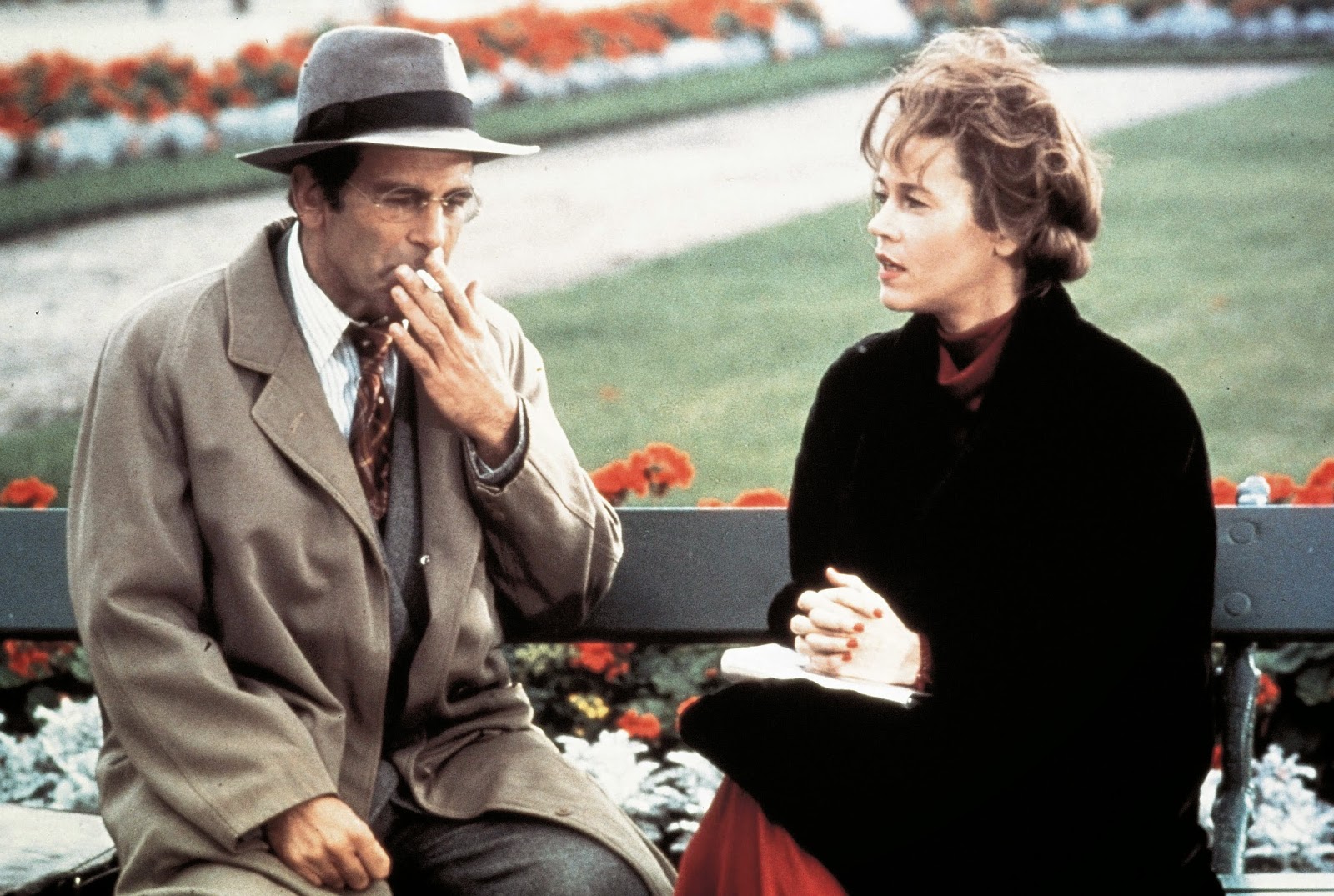
Movie Review: Julia (1977)


A pre-war drama centred on the friendship of two women who carve different paths in life, Julia is beautifully filmed and deliberately paced, but also somewhat misdirected.

It's the 1930s, and Lillian Hellman (Jane Fonda) is an aspiring writer struggling to finish her first play. Her friend and lover Dashiell Hammett (Jason Robards) is in turns encouraging and gruff, prodding her to be the best that she can be but also intolerant of her complaining. Dashiell advises Lilly to travel to Europe for some inspiration and to catch up with her childhood friend, the idealistic social justice crusader Julia (Vanessa Redgrave). Lilly settles down for a stint of writing in Paris, but rushes to Vienna when she learns that Julia has been brutalized by the authorities for her anti-fascist activism. Once Julia is released from hospital, Lilly is unable to find her.

Lilly returns to the US, completes her first play, and achieves great success. Now a celebrated playwright, she embarks on a tour of Europe with Alan Campbell (Hal Holbrook) and his wife, but before she can set off to Moscow, she is unexpectedly approached by the mysterious Johann (Maximilian Schell) with a pleading message from Julia. Lilly can help rescue hundreds of political prisoners by smuggling $50,000 into Berlin for use by an underground network of activists to bribe prison officials into releasing detainees. Lilly has to decide whether she wants to risk her own life by getting involved in a dangerous world she knows nothing about.

Based on an apparently fictional chapter from Hellman's 1973 book of memoirs Pentimento, Julia is a grand story of a friendship suddenly thrust into the turbulence of impending evil. Gorgeous to look at and filmed with rich flourishes, Julia unfolds at a leisurely pace, small gestures allowed the time to register, the thoughts, concerns and talents of the tentative Lilly unfurling in measured doses as she achieves success and is then awakened to a world about to go insane.

However, and for all the excellence and talent on display, it's difficult to escape the conclusion that Julia chose the right title but the wrong story. Of the two women, Julia is by far the more intriguing, but she disappears from the movie for long stretches. While Lilly's tangential incursion into danger as a reluctant furtive courier generates good drama and unfolds with potent tension, Lilly is simply not that interesting. For the entirety of the central trip to Berlin, Lilly is a hapless participant in a much bigger game, steered by others every step of the way, incapable of making any decisions herself. Lilly is as much along for the ride as the film's audience, while tantalizing hints reveal that the mostly unseen Julia is busy fighting for justice as fascism grabs Europe by the throat.

But director Fred Zinnemann overcomes most of the shortcomings of the Alvin Sargent script and delivers a dazzling old fashioned visual treat. Julia is all about ambitious staging, spectacular sets, and stunning use of colour, smoke and costumes. From Hammett's beach house to the train journey and various locales throughout Europe, Zinnemann creates impressive vistas that linger long in the memory.

Also effective are the frequent flashbacks of Julia and Lilly as teenaged friends (played by Lisa Pelikan and Susan Jones respectively) maturing into young adults, the vignettes serving to bring out the women's nascent personalities. The common theme is always of Julia as the passionate instigator and Lilly as the passive disciple. Their relationship blossoms into the love of deep friendship, and the film stops short of hinting at a physical connection, other than through the malicious gossip network that comes back to hurt Lilly.

Fonda and Redgrave are in top form, and deliver alluring performances. Fonda gets the screen time and has to convey more apprehension and self-doubt. Redgrave makes intermittent but telling appearances, and gives Julia an edgy commitment to global justice fuelled by large doses of self-belief. Redgrave won the Best Supporting Actress Academy Award, and Robards won the men's equivalent for his relatively traditional turn as author Hammett. Meryl Streep makes her film debut as a haughty member of Lilly's social circle.

Julia could have invested more time on its compelling title character, but the film never falters as high quality entertainment.


All Ace Black Blog Movie Reviews are here.


Wednesday, 2 October 2013

Movie Review: Melvin And Howard (1980)


Based on a true story, Melvin And Howard enjoys a magical opening 20 minutes and an engaging ending. In the middle there is prolonged stretch of trailer park Americana that tends to drag, but the film has enough authentic essence to ultimately sparkle.

While performing stunts all alone, legendary multi-billionaire Howard Hughes (Jason Robards) crashes his motorcycle in the Nevada desert. Late at night, Melvin Dummar (Paul Le Mat), an honest blue collar worker, stumbles across the battered old man by the side of the road, and helps Hughes without knowing who he is. Melvin gives Hughes a ride to Las Vegas, and on their overnight journey in a rickety pick-up truck, Melvin gets the crusty Hughes to open up a bit and sing a few songs. The two part ways and never see each other again.

For the next several years, Melvin gets on with his life, bouncing from job to job, always struggling to pay the bills, never too far ahead of the repossession companies, and doing his best to provide for his wife Lynda (Mary Steenburgen) and daughter Darcy. A frustrated Lynda gets finally fed up and leaves to become a stripper in low-life clubs, but the divorce is short lived: Melvin and Lynda re-marry. They finally stumble onto some unlikely money, but Melvin proves again that he is better at spending than making a living. Melvin and Lynda separate for good, and he marries Bonnie (Pamela Reed). When Howard Hughes dies, a mysterious will provides an absolute shock to Melvin' life.

Director Jonathan Demme conjures up an alluring opening to Melvin And Howard, a simple encounter elevated to a mystical plain. Two men from opposite ends of the social hierarchy, Melvin and Howard share the cab of a pick-up truck on an overnight trip that may as well be on a magic carpet. They connect thanks to Melvin's prodding that Howard go ahead and sing, music the universal language of humanity, and used here to bridge the enormous gulf that separates a reclusive rich man from the salt of the earth. The isolated road through the desert, a starry night sky, and two souls brought together briefly by a twist of fate: Demme delivers a sequence for the ages.

Melvin And Howard also ends with a sharp upswing, Hughes' mysterious will carrying the promise of untold riches for Melvin. The media circus and courtroom drama provide Melvin with more than 15 minutes of fame, the equivalent of a forgotten but disputed lottery ticket from years past proving to be a potential jackpot winner. Demme and screenwriter Bo Goldman hold the centre of the movie together by keeping Melvin's feet on the ground as the earth spins around him, for once the honesty of a life spent toiling for a living providing an anchor against swirling dreams.

It's the middle 45 minutes that pull the movie down a notch. Melvin's life between the encounter with Hughes and the discovery of the will is simply not that compelling. Fights and reconciliations with Lynda, a succession of jobs, constant arguments at work, and a battle to get ahead against the forces of poverty. It's all real, but also lacking the necessary sense of direction to maintain narrative momentum.

At least for this one film, Paul Le Mat fulfils the promise of American Graffiti. In a performance that is inherently likable, he gives Melvin a full heart as he hangs on to the hope required to sustain a life of hard knocks. Mary Steenburgen won the Best Supporting Actress Academy Award for her portrayal of Lynda Dummar, a woman who very much wants to believe in her husband but would rather strip naked in front of strangers rather than suffer the humiliation of yet another repossession. Jason Robards owns the opening of the movie, his gruff and unfortunately short turn as Hughes simply unforgettable, a dazed tycoon rising mythically from the desert and forced to interact with a member of the rabble - and eventually liking it.


Melvin And Howard is the story of the American dream inadvertently brushing against the American dream come true. The result is a brief wobble in the predictable continuum of life, beautifully captured along the desert road.


All Ace Black Blog Movie Reviews are here.


Wednesday, 1 May 2013

Movie Review: Parenthood (1989)


A comic drama about the joys and sorrows of parenting, Parenthood presents a rich microcosm of the challenges that come with raising kids, through many stories within five generations of one large family. Despite the sprawling narratives, director Ron Howard keeps a tight reign and allows his large cast ample opportunities to shine.

In St. Louis, Frank Buckman (Jason Robards) lives close to three of his grown children and their families. Frank's son Gil (Steve Martin) and his wife Karen (Mary Steenburgen) are doing their best to provide their three kids with a middle class upbringing. Despite Gil being an engaged and active Dad, their eldest son Kevin is tense and causing trouble at school. Gil's sister Helen (Dianne Wiest) is a single mom struggling to raise two teenagers. Her daughter Julie (Martha Plimpton) is already sexually active, much to her mother's horror, and Julie thinks that she is in love with boyfriend Tod (Keanu Reeves), who is pleasant enough but not exactly ready to support a family. Meanwhile, Helen's son Garry (Joaquin Phoenix, credited as Leaf Phoenix) is mad at the world and skulks around carrying a mysterious paper bag.

Gil's other sister Susan (Harley Kozak) is married to the nerdy Nathan (Rick Moranis), and he is an obsessive parent, insisting that their young daughter Patty should only ever be exposed to higher learning concepts beyond her years, with no fun or childlike activities. Gil's younger brother Larry (Tom Hulce) is the black sheep of the family, always looking for the next big deal, and he washes up in town broke, seeking money, and with an unplanned child called Cool in tow. With Larry having no life skills except self-delusion to fall back on, Frank has to confront the eternal duties of being a father.

Howard, screenwriters Lowell Ganz and Babaloo Mandel, and producer Brian Grazer were all dealing with fatherhood issues as Parenthood was being conceived and created, and they poured their experiences into the film. The result is a genuine movie with heartfelt emotions, filled with the humour, anxiety, unexpected drama and the delightful moments of joy and fulfilment that accompany parenting.

Of course, for comedic impact and with Steve Martin's presence, some jokes are milked to exaggerated levels, and ironically it is in the prolonged scenes when Martin is given plenty of leeway that Parenthood is at its weakest. Gil's impersonation of a party balloon cowboy is pushed to childish extremes, and there is no need for him to celebrate like a jerk when Kevin's little league baseball team finally wins a game.

But for the most part Parenthood succeeds in capturing the highs and lows of raising kids, with Steenburgen and Wiest delivering the most memorable performances. Steenburgen's Karen is happy to be the wind beneath Gil's wings as the quiet and rational force that keeps the family together. Wiest as Helen starts the movie in an utterly chaotic place, her life rapidly unravelling. Her husband has left her and she is losing influence over both Julie and Garry. But from among all the Buckmans Helen adapts the best to the ever-changing demands of parenting, and by the end of the movie she has regained the respect of her kids by taking decisions that are instinctively correct if traditionally unconventional.

Susan and especially Nathan are prototypes for parents ill-informed about what it takes to raise a well-adjusted child, pushing poor little Patty into mental adulthood at around age four. Susan snaps to reality and catches Nathan's attention just in time for him to still be able to change and rescue Patty's childhood. Susan and Nathan are the only couple in the film that have to deal with a serious wedge, and in the film's most romantic scene Moranis gets to serenade Kozak to try and salvage their relationship.

Jason Robards lends a weighty presence as the patriarch fully aware that he may not have been the greatest dad, but also perceptive enough to know that the role never really ends. The story arc between Frank and Larry is the most poignant, because Larry is most like Frank while also being the biggest failure in Frank's life, and they both know it. Tom Hulce portrays Frank as fast-talking and irresponsible, but alert to the fact that the number of people he can fool even part of the time is dwindling rapidly.

Parenthood is a classy salute to the most noble of human endeavours, celebrating all the failings and insecurities needed to make the successes that much sweeter.


All Ace Black Blog Movie Reviews are here.