Showing posts with label Lauren Bacall. Show all posts

Tuesday, 12 April 2022

Movie Review: North West Frontier (1959)

A rollicking adventure, North West Frontier (also known as Flame Over India) combines breathless chases with character depth and political discourse.

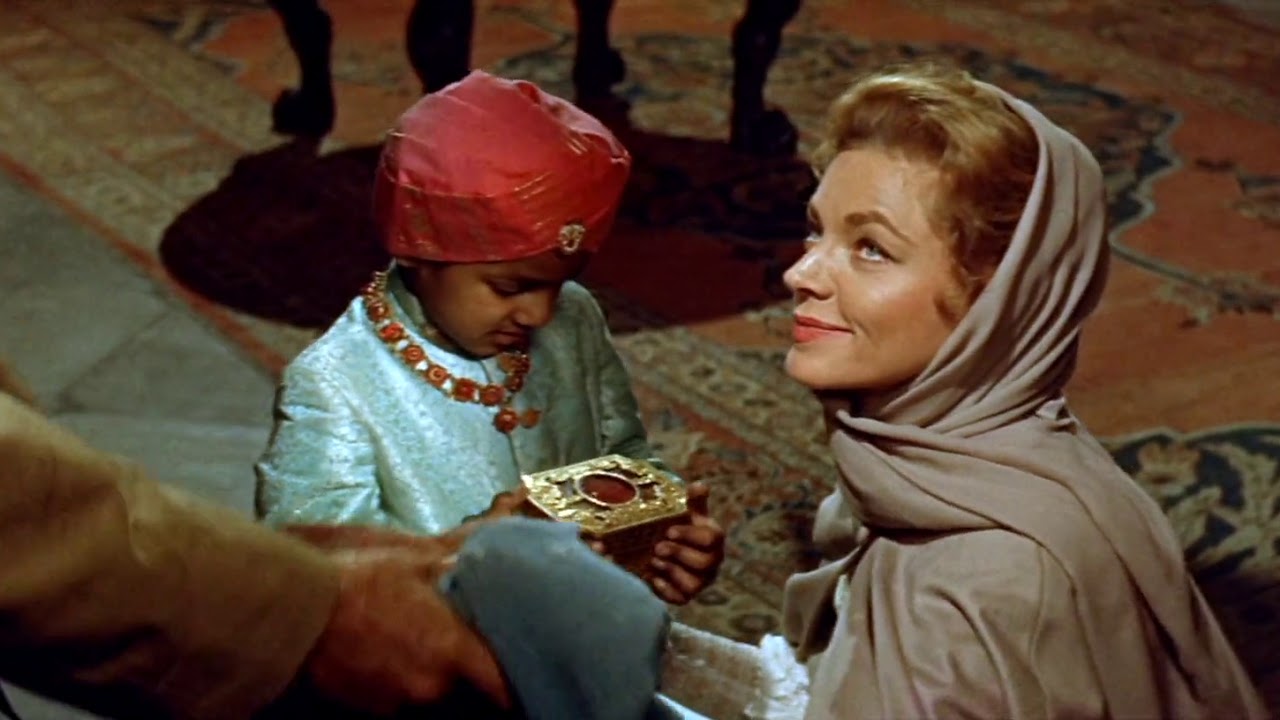
It's 1905 on the North West Frontier of British India, and a Muslim uprising is threatening peace in the region. British Army Captain Charles Willoughby Scott (Kenneth More) rescues six-year-old Prince Krashan, a great symbol to the area's Hindus, just before his Maharaja father is killed. Scott escorts the Prince and his American governess Mrs. Wyatt (Lauren Bacall) to Hasarabad, but not in time to board the last train out, and the city is soon besieged by rebels. 

Scott finds an ancient train engine operated by Gupta (I.S. Johar) to be in decent working order, and organizes an audacious rail escape. Joining Scott, Wyatt, and the Prince are journalist Peter van Leyden (Herbert Lom), arms dealer Peters (Eugene Deckers), and British aristocrats Mr. Bridie (Wilfrid Hyde-White) and Lady Windham (Ursula Jeans). With the rebels in pursuit, the equipment in bad shape, and a potential traitor among the passengers, Scott has to keep the escape train on-track towards the British stronghold of Kalapur.

Filmed on location in lavish CinemaScope with magnanimous Geoffrey Unsworth cinematography, North West Frontier is a remarkably well-balanced adventure. Writer Robin Estridge (adapting a Frank S. Nugent script) finds a pleasing rhythm between thrills and characters, and director J. Lee Thompson crafts an engrossing and agile package, just over two hours in length but with a fleeting energy.

Excellent special effects enliven some memorable highlights, none better than a damaged rail bridge high above a ravine. The characters have to walk a short section along a track suspended over the void by nothing, then Scott has to drive the train across, and Thompson's camera angles extract every drop of tension out of the scene. Other heart-stopping moments include the child Prince Kashan prodded too close to a large flywheel, and an attack on the stranded train by hundreds of rebels while Scott frantically leads the replacement of damaged tracks.

In the quiet pauses between heroics and close calls, the character interactions demonstrate surprising substance, and open gateways to several topics spiced by opposing viewpoints. The British as colonialists, the definition of home, arms dealers as enablers of violence, the thin line between journalism and agitation, religious tensions, contrasts between British and American attitudes, and even the sense of guilt for escaping a conflict zone all get a good workout from well-rounded perspectives. The small group of characters forced together on the train come to life through the conversations, creating intimacy at the heart of a sprawling adventure.

As can be expected, logic gaps make an appearance, several character actions only make sense as contrived plot devices, and the rebels' cause is shortchanged. But North West Frontier also knows how to pack a punch. The aftermath of a massacre is graphically presented, and even the moment of triumph hints ominously at more dark days to come. In this adventure, astute awareness adds zest to spectacular thrills.


All Ace Black Movie Blog reviews are here.

Saturday, 26 September 2020

Movie Review: Sex And The Single Girl (1964)

A romantic comedy, Sex And The Single Girl draws inspiration from the unfolding rearrangement of gender roles to search for incongruous love and subversive laughs.

Bob Weston (Tony Curtis) is the star writer for trashy tabloid magazine STOP. For his next assignment he sets out to sully the reputation of celebrity author and psychologist Dr. Helen Gurley Brown (Natalie Wood). Just 23 years old, she gained fame for writing the bestseller Sex And The Single Girl, a must-read book empowering women to gain control of their careers and sexuality. Bob thinks she may be a virgin and actually knows nothing about relationships. 

Bob has a girlfriend Gretchen (Fran Jeffries) and frolics with his secretary Susan (Leslie Parrish), but he steals the persona of his next door neighbour Frank Broderick (Henry Fonda), a women's stockings salesperson always one argument away from divorcing his wife Sylvia (Lauren Bacall), and approaches Helen pretending to be in need of marital counselling. Soon Bob and Helen are really falling in love, jeopardizing his standing as the king of sleaze.

Helen Gurley Brown's 1962 book Sex And The Single Girl was one of the sparks that helped ignite the 1960s as the decade of women's liberation and new attitudes towards sex, and both her name and the book are borrowed to create a fictional romantic comedy. Joseph Hoffman wrote the bouncy script, and it's certainly a meandering effort featuring multiple mix-ups, trash journalism, pop psychology, and a battle of the sexes redrawn along new front lines. The numerous plot points are eventually all but abandoned in favour of good-natured farce.

None of it should really work, but in the hands of director Richard Quine and thanks to a wicked sense of humour willing to poke fun at all targets, Sex And The Single Girl somehow only gains momentum. The script never misses an opportunity to fire a sharp arrow, the popped balloons including the fields of psychology, gutter dwelling reporters, and penny-pinching corporate committees. On the margins Hoffman looks for laughs with an irreverent intervention by a waterfront hobo, a wacky trip to the zoo featuring role-reversal monkees, and an over-the-top representation of Broderick's stocking business. Plenty of references to Some Like It Hot confirm the film's heightened self-awareness.

A strong cast helps. Tony Curtis and Natalie Wood both exude confident sex appeal, and their duel sparkles. In supporting roles Henry Fonda and Lauren Bacall as Bob's bickering neighbours are both miscast, but anyway bring depth to the battling Brodericks. Fran Jeffries gets to sing a couple of sultry numbers, Leslie Parrish is the secretary on the prowl, and Mel Ferrer appears as Rudy, Helen's dance-loving psychiatrist colleague. 

The final 30 minutes of Sex And The Single Girl are dedicated to an epic multiple car chase, Hoffman and Quine steering the plot towards a massively irrelevant but ridiculously enjoyable high speed drive to the airport, a couple of taxi drivers and one motorcycle cop getting in on the bonkers action. All the characters are involved and somehow contrive to swap cars and partners, with some pretzels thrown in for good measure. The sequence is a marvellous cinematic achievement, and while Sex And The Single Girl may not really care to know where the sex revolution is going, it swerves all over the highway trying to avoid finding out. 


All Ace Black Movie Blog reviews are here.

Sunday, 13 January 2019

Movie Review: Written On The Wind (1956)


A four-way romantic drama smoldering within an oil tycoon family, Written On The Wind offers up love and lust among the idle rich.

Kyle Hadley (Robert Stack) is the hard-drinking playboy and scion of the Texas-based Hadley oil empire, founded by his father Jasper (Brian Keith). Kyle's best friend since childhood is Mitch Wayne (Rock Hudson), a geologist and stand-up guy, and son of salt-of-the-earth farmer Hoak (Harry Shannon). Kyle's sister Marylee (Dorothy Malone) is the conniving town tart, sleeping with any willing guy while still hoping to attract Mitch's attention.

While on a business trip to New York City Kyle and Mitch meet executive secretary Lucy Moore (Lauren Bacall). Both fall in love with her, but Mitch stands aside and allows Kyle to instigate an immediate courtship followed by a quick marriage. Lucy helps Kyle settle down and stop drinking, but within a year he receives unwelcome news, rocking his new-found stability.

A melodramatic and over-clocked drama, Written On The Wind is one of the templates for what would become standard television prime-time fare a couple of decades later: lust, love, jealousy, miscellaneous between-the-sheets shenanigans and the all-round bad behaviour of the rich and famous, all presented in glossy imagery, vivid colours and with photogenic stars.

The book by Robert Wilder receives a script treatment by George Zuckerman, and director Douglas Sirk delivers a grandiose, sappy-music infused film. Sirk is either taking the drama with utmost seriousness or making complete fun of his characters with a straight face, and in a good way the film works in both contexts. Fans of sordid romantic entanglements can enjoy the overflowing emotional showdowns just as much as jaded viewers can laugh at the whole lot of them.

Missing from the lives of the characters is any sense of purpose or working for a living. Mitch gets one scene with a pencil behind his ear to pretend he is a geologist taking his career seriously. Otherwise, the lives on display are devoid of any responsibility other than drinking, partying, fighting and plotting the next romantic conquest.

The cast do what is required. Rock Hudson and Lauren Bacall are generally stand-offish, their would-be romance on ice for the duration of the film as Lucy foolishly falls for the deeply flawed Kyle.

Robert Stack and Dorothy Malone get the showier roles. Stack fires blades from his eyes and sweat from every alcohol-clogged pore as the highly-strung and disrespected but stupidly rich son of a tycoon. Malone gives an uninhibited and dynamically aggressive performance, breaking out into wild dancing on a couple of occasions, Sirk intercutting her explosive gyrations in red with a sudden and tragic family death. When it's Written On The Wind, it's always bold and brash.


All Ace Black Movie Blog Reviews are here.

Sunday, 14 January 2018

Movie Review: Designing Woman (1957)


A classy romantic comedy bordering on farce, Designing Woman delivers both romantic imbroglios and big laughs.

During a trip to California, sports journalist Mike Hagen (Gregory Peck) meets, falls in love, and quickly gets married to fellow New Yorker Marilla Brown (Lauren Bacall). They arrive back in New York City and realize they really don't know each other. Mike attempts to hide a past relationship with actress Lori Shannon (Dolores Gray), and is also stunned to find out that Marilla is independent, wealthy and runs a fashion design business.

Things get worse when they meet each other's friends. Mike's poker buddies include dense former boxer Maxi Stultz (Mickey Shaughnessy), while Marilla's social circle consists of sophisticated members of the arts community, including former boyfriend Zachary Wilde (Tom Helmore). Life becomes even more complicated when Mike's editor Ned Hammerstein (Sam Levene) warns him that mobster Martin J. Daylor (Edward Platt) has unleashed his henchmen to silence Mike's expose of boxing corruption.

Written by George Wells and directed by Vincente Minnelli, Designing Woman manages the difficult feat of being smart and preposterous at the same time. This is a romance with an abundance of madcap comedy, Minnelli surrounding his lovers with enough insanity to keep the energy level at extreme while maintaining narrative control. The film's lush aesthetic adds to the intensity, with bright colours, attentive set design, and lavish costumes providing a vivid and always animated backdrop.

Peck and Bacall play to their straight strengths. He is the confident square-jawed investigative sportswriter who always expects to get the girl, and she is the urban independent sophisticate with plenty of fire under the cool exterior. When they are alone together, they click, but otherwise they have little in common other than a willingness to take risks. She joins him at a boxing bout dressed for a night out at the theatre. He accompanies her to a women's fashion show. None of it goes well.

With the central characters in good hands, Minnelli is free to surround them with plenty of absurdity. Lori and Zachary provide a double dose of suddenly jilted ex-lovers. Marilla's friends include a hyperactive acrobatic stage performer who cannot help but unleash his gymnast moves. Mike's ex-boxer buddy Maxi is a malfunctioning wrecking machine with hard fists and a harder head. And Lori's large pet poodle has a distinctive personality and an insatiable appetite for chewing on shoes. As the story progresses the supporting cast grows in stature and the film shines with kookiness.

The highlights are many. Mike, Lori and a plate of ravioli at an Italian restaurant is a cinematic masterpiece. The convergence of Marilla's artistic friends and Mike's poker buddies on the same night at the same apartment sets up an epic social catastrophe. And Mike's attempt to navigate around town with a fragile gift from his editor Ned is a fine example of on-the-margins comedy.

Designing Woman is funny and fearless, an elegant romance overflowing with wacky vitality.


All Ace Black Blog Movie Reviews are here.

Monday, 30 January 2017

Movie Review: Bright Leaf (1950)


A potent mix of business manoeuvring and romantic entanglements, Bright Leaf is a drama filled with fierce characters seeking fortunes and confronting flaws.

It's the 1890s, and Brant Royle (Gary Cooper) returns to Kingsmont, North Carolina to establish a tobacco business. Years earlier the Royles were driven off their land by the powerful tobacco mogul Major Singleton (Donald Crisp). Now Brant wants revenge, although he still lusts after the Major's feisty daughter Margaret (Patricia Neal). She has grown up to be as conniving as her father, and as interested in causing trouble. Meanwhile, businesswoman and brothel owner Sonia Kovac (Lauren Bacall) always loved Brant and is happy to see him back in town, but he never reciprocated her affection.

With financial help from Sonia, Brant teams up with inventor John Barton (Jeff Corey) and colourful promoter Chris "Dr. Monaco" Malley (Jack Carson). Using a production machine invented by Barton and Malley's promotional savvy, they corner the market by automating cigarette manufacturing and launching a catchy marketing campaign. With Brant on the ascendancy he makes his move on Margaret and tries to buy out the Major, but both business and romance are about to get a lot more complicated.

Directed by Michael Curtiz and possibly inspired by real events, Bright Leaf is a rich broth of corporate machinations, personal greed, cold revenge and hot romance. Clocking in at 110 minutes, the film is packed with grim emotion and multiple struggles for self-definition through destroying others rather than nurturing personal growth. Curtiz maintains interest by quickly cycling through the various threads of Brants life, and efficiently moving through the passing years.

Aesthetically Curtiz creates an enjoyable environment of a bustling town built on the tobacco industry before the product was associated with any health threats, with every frame populated by activity in all corners. From the prostitutes tempting their customers to the frenzied auctioneer selling the latest tobacco leaf bundles to the tycoons fretting over their business prospects, Bright Leaf is a dynamic experience.

The film is distinguished by colouring all the main characters an interesting shade of grey, and avoiding simplistic good and bad definitions. As Brant claws his way from a penniless man driven by revenge to the top of the tobacco heap, the lines of distinction between him and the Major begin to blur. Brant is blinded by a mission to reclaim his family's heritage, destroy the Major, and conquer the Singleton estate and Margaret as two ultimate prizes. His focus blinds him to the victims he creates along the way, and they are all ready to help bring him down when his turn comes.

Margaret Singleton and Sonia Kovac stand out as women true to their intentions, but at diametrically opposite ends of the spectrum. Margaret is her father's daughter from her first introduction, a fact that makes her irresistible to Brant. She plays his need to subjugate her for all its worth. Meanwhile Sonia remains true to her genuine love for Brant, her heart persisting in the belief that someday he will awaken to what she has to offer, while her head says otherwise.

Gary Cooper is freed from his typical good-guy persona and presents a dour, single-minded man. His aggressive intensity creates a hard shell at the heart of the film. Patricia Neal is all conniving sass, and Lauren Bacall conveys the struggle between passion and pragmatism. Donald Crisp, Jeff Corey and Jack Carson add plenty of animation to the other supporting roles.

Engaging and entertaining, Bright Leaf glows with the heat of sweltering determination colliding with human failings.


All Ace Black Blog Movie Reviews are here.


Friday, 16 May 2014

Movie Review: The Shootist (1976)


John Wayne's last film, The Shootist is a glittering final curtain on a gigantic career. The story of a terminally ill but still grizzly gunslinger planning for his own death provides impeccable closure to the man and his epoch.

It's 1901, and Queen Victoria has just died. Aging gunslinger J.B. Brooks (Wayne) has killed 30 men in his lifetime, and claims that they all deserved it. Suffering from severe and continuous back pain, he arrives in Carson City, Nevada to be examined by his old friend "Doc" Hostetler (Jimmy Stewart). The doctor diagnoses terminal cancer. Brooks has at most two months to live, and his very final days will be exceedingly painful.

To prepare for his demise Brooks rents a room at the boarding house managed by the widow Bond Rogers (Lauren Bacall) and her teenage son Gillom (Ron Howard). Once Rogers realizes who her new guest is, she wants him gone, but he refuses. Marshal Walter J. Thibido (Harry Morgan) also tries and fails to convince Brooks to depart. Vultures like the local newspaper man (Rick Lenz), an old lover (Sheree North), and the local undertaker (John Carradine) try to figure out ways to profit from Brooks' impending death. But Brooks is making plans of his own. He can't cheat death, but he will face it according to his own code.

The Shootist unfolds over just a few days, as Brooks comes to terms with the certainty of his end, ties up loose ends and turns out the lights with dignity. He finds in Bond and Gillom suitable companions to accompany and tolerate him on his final days, and director Don Siegel allows the movie to flourish as Brooks opens his soul for the first and last time to a widow and her fatherless teenager. Siegel centres the film on Brooks and deploys the pace of a smooth character study, a few scenes of jolting action and witty humour punctuating the journey to the final climax.

Contrary to some popular myths, when filming The Shootist Wayne was not yet diagnosed with the cancer that eventually killed him in 1979. He also did not intend The Shootist to be his final screen performance. That this proved to be his final film and foreshadowed his ultimate struggle with terminal cancer was a turn of fate, an exclamation mark on a career that started in 1926 and ended exactly 50 years later.

And what a performance to end on. Wayne portrays J. B. Brooks as singularly uncompromising, his intentions and methods stringent, his values untouched. Brooks may be dying, but he will define the day, time, place and method, and Wayne closes his filmography with a towering show of inner strength, Brooks' resolve undermined only by his failing health.

And it's not just J.B. Books who is dying. As represented by the death of Queen Victoria and the turn of the century, his whole era is coming to an end, the world is moving on, and gunslingers who live by a rigid and ruthless code are turning into fossils from the past.

By now the glorious era of Westerns was also a distant memory, Spaghetti Westerns had come and gone and spoofed the genre into the ground. Violence-drenched odes to the old men of the west like The Wild Bunch (1969) had pushed the genre to its limit, and there was little new territory to explore. The Shootist writes the final chapter with more reflection than violence, allowing the hero who symbolized an era and the genre to exit on his own terms.

James Stewart (in a relatively small role) and Lauren Bacall join Wayne as stalwarts from a bygone era. Ron Howard's Gillom represents the next generation, and he is the only character thrilled to have Books around. Gillom overlooks all of Books' lethal tendencies and simply considers him a legend, a man to admire and emulate, in an apt metaphor of how the present views the Western past. In addition to John Carradine, there are key appearances by the likes of Richard Boone, Hugh O'Brian and Scatman Crothers.

Not many acting careers end at the top. In The Shootist John Wayne was able to ride off into the sunset with his head held high, unbowed by the changing times and still in charge of his destiny.


All Ace Black Blog Movie Reviews are here.


Saturday, 22 December 2012

Movie Review: Harper (1966)


An attempted homage to 1940s detective movies, Harper falls quite flat. Despite the presence of Paul Newman and Lauren Bacall, the convoluted story and the derivative characters never come close to their intended target, while stylistically the film is simply bland.

Private detective Lew Harper (Newman), struggling to reunite with his wife Susan (Janet Leigh), is summoned to the house of wealthy socialite Elaine Sampson (Bacall). She hires him to find her missing husband Ralph, although Elaine seems unperturbed that Ralph is missing and would be quite pleased if he were to turn up dead so she could outlive him. The characters swirling around Elaine include free-spirited daughter Miranda (Pamela Tiffin), her boyfriend and the Sampsons' private pilot Allan Taggert (Robert Wagner), and the family lawyer and Harper's friend Albert Graves (Arthur Hill).

Harper follows a trail leading to an assortment of distasteful characters: Ralph Sampson's possible lover, overweight former starlet Fay Estabrook (Shelley Winters); her husband Dwight Troy (Robert Webber); drug-addicted lounge singer Betty Fraley (Julie Harris); and phony cult leader Claude (Strother Martin). Harper uncovers multiple tangled plots involving kidnapping, blackmail, illicit affairs, unrequited love, the smuggling of illegal immigrants, and bad guys turning on each other. With $500,000 in ransom money at stake and Ralph Sampson still missing, Harper is frequently at gun-point or being beaten-up as the body count begins to mount.

Trying to borrow heavily from the plot of The Big Sleep, even Bacall's resonant presence cannot liven up the William Goldman screenplay (an adaptation of the Ross MacDonald book A Moving Target, with Lew Archer changed to Harper). A significant shortfall is the lack of any charm, charisma or genuine evil among the large assortment of unsavoury plotters scheming to profit from Ralph Sampson's disappearance. They all come across as low level riff-raff, more likely to intimidate each other than to harm their intended victims, lowering the movie down to an uninteresting level of scuzziness.

Director Jack Smight fails to add any panache to the battle of the low lifes, the film's look and style pedestrian at best.

With Bacall's role marginally above the level of a cameo, it is left to Newman to grapple with the inferior material. While he enjoys a few solid wisecracks, for the most part Newman appears ill-suited to the role of a private investigator bumbling around the lives of the rich and poking at the scum gathered in the corners. Newman almost comically overacts his more puzzled moments, and when it's time to stop chewing and kick ass, he simply does not bring enough intensity. The overriding theme of the movie is of Newman being heavily pushed around by others, not a good premise to hang any film on.

Pamela Tiffin almost saves the day with a dazzling portrayal of Miranda as the spoiled 1960s rich girl, certain that she could not care less about her father but almost oblivious to the carnage that her mere presence is causing among the crooks around her. While Janet Leigh is underused in an interesting role, Robert Wagner, Arthur Hill, Robert Webber, Shelley Winters, Julie Harris and Strother Martin are an example of quantity over quality resulting in so much wasted talent, limited and poorly defined roles sinking Harper ever faster with each additional unconvincing snarl.


All Ace Black Movie Blog reviews are here.

Wednesday, 28 November 2012

Movie Review: How To Marry A Millionaire (1953)


With three beautiful but broke women desperate to snag ultra rich husbands, How To Marry A Millionaire finds all the right kinds of comedic trouble. Betty Grable, Marilyn Monroe and Lauren Bacall are the devious but frantic instigators of the husband hunting game, and ultimately face the farcical consequences when the best laid plans go awry.

Schatze (Bacall) is a fashion model, Pola (Monroe) is a stunning blonde but blind as a bat without her glasses, and Loco (Grable) is true to her name and just a little nutty. Together they are close to penniless, but nevertheless they rent a swanky furnished New York apartment, pretending to be wealthy to attract rich men. The apartment actually belongs to Freddie (David Wayne), who is apparently on the run to avoid tax evasion charges. The three women survive by gradually selling off the apartment furniture, but the days pass without any of them finding suitably rich husbands. Schatze repeatedly fends off the advances of the persistent Tom Brookman (Cameron Mitchell) because she believes him to be a gas jockey.

But the ladies finally strike it lucky when they are invited to a cocktail party for out-of-town oil tycoons. Schatze is soon enjoying the company of the gentlemanly but much older J.D. Hanley (William Powell), Loco is accompanying a two-timing businessman to a lodge in Maine where she contracts the measles but also meets the hunky Eben (Rory Calhoun), and Pola falls for a one-eyed man who may be only pretending to be extremely wealthy. Although everything looks promising, nothing will proceed as anticipated on the way to finding the right match.

A mix of comedy, romance, and some farce, How To Marry A Millionaire is bright, cheerful, colourful and breezy. The trio of Bacall, Monroe, and Grable keep the screen filled with a bubbly froth of men-seeking hormones, and the three actresses quickly establish memorable and distinct characters.

Bacall's Schatze holds the group together and appears the most mature, but she is catastrophically error-prone in her assessment of men's qualities. Monroe goes to town as Pola in a role full of understated comedy. Pola refuses to wear her glasses, believing they make her ugly, and as a result Monroe gets to walk slowly into walls and carries on conversations with people she does not recognize. Monroe demonstrates excellent timing and self-control, Pola fighting against herself to place beauty ahead of elegance and basic functionality.

Loco is perhaps none too bight but has an uncanny talent to pick up men while shopping, getting them to pay for whatever she was buying, and then bringing them home for a look-over by Schatze and Pola. Grable mixes adorable naivete with a lust for riches, a combination that misfires with a spectacular bang when she meets Eben and his trees in the wilderness of a Maine park.

How To Marry A Millionaire was the first film shot in CinemaScope. Director Jean Negulesco demonstrates the breadth of all that the technology has to offer, the movie opening with wide-screen shots of the 20th Century Fox Orchestra performing Street Scene, followed by a sparkling montage of New York landmarks. Negulesco then keeps his ladies bathed in glamour regardless of their declining financial fortunes. The Nunnally Johnson script even finds its way to a private fashion show scene with Schatze, Pola and Loco among a bevy of beauties modelling for Tom Brookman as he insists on a private showing of the latest fashions simply to get close to Schatze.

How To Marry A Millionaire is of course useless as a how-to guide, but rather than helping to find millionaire husbands, the film offers priceless fun.


All Ace Black Blog Movie reviews are here.


Tuesday, 16 October 2012

Movie Review: Dark Passage (1947)


A film noir in intent but more grey in execution, Dark Passage cruises in patches and sputters in others. The third teaming of Lauren Bacall and Humphrey Bogart radiates comfortable heat, but the overall story is limp, filled with far-fetched coincidences, and generally beneath the acting talent.

Vincent Parry (Bogart) has been wrongly convicted of killing his wife. Serving his time in Alcatraz, he escapes on the back of a truck, then attempts to hitch a ride to San Francisco with a passing motorist named Baker (Clifton Young). When Baker becomes suspicious, Parry knocks him out, just as landscape artist Irene Jansen (Bacall) comes driving by to offer Parry a refuge. She stashes him in her apartment, where he learns that she attended his trial and always believed him to be innocent. Irene's annoying friend Madge (Agnes Moorehead) also has a history with Parry: he had rejected her as a lover and her testimony helped to convict him.

With the police out in force looking for Parry, sympathetic cab driver Sam (Tom D'Andrea) connects him with back-lane plastic surgeon Dr. Coley (Houseley Stevenson), who changes Parry's appearance. Parry's friend George Fellsinger (Rory Mallinson) also offers to help, but he soon runs into trouble, and Parry is accused of another serious crime. With his choices narrowing by the hour, Parry has to decide who to trust, and untangle what plans Irene, Madge and Baker have in store for him.

Dark Passage deploys a crafty first-person perspective for its first half, with all the action viewed from Parry's perspective, Bogart narrating the action but never seen. After the plastic surgery Parry is shown with his head fully bandaged, and it's only when the bandages come off a full 65 minutes into the movie, that Bogart finally makes his full appearance. It's a clever device, sharply delivered by writer/director Delmer Daves. Not only does the perspective add dramatic flair, it immediately generates sympathy for Parry by giving the audience his eyes. Daves also makes good use of San Francisco's dramatic streets and vistas, the city proving effective as the backdrop to the drama and third star of the movie.

With Bogart off-screen for a large portion of the film, it's left to Bacall to interact with the camera, and she has the magnetism to pull it off. Irene is a strong willed and independent woman not afraid to harbour a fugitive, a role that Bacall nails from her first scene, picking Parry up from the side of the road and smuggling him into her apartment.

Unfortunately, the rest of Dark Passage lacks the intensity and intellect to match the innovative visual style and available star charisma. The story is disappointingly pedestrian, limited to personal jealousies, jilted domestic lovers and opportunistic low-life crooks, a far cry from the kind of intrigue that the Bogart and Bacall personas are more used to dealing with. There are no evil minds in Dark Passage that are worth Bogart's time, and indeed once Parry sorts out who's who, he slaps the necessary undesirables around and wraps things up within minutes.

To compound the lack of compelling characters, Dark Passage is built on a series of fantastic coincidences, starting with Irene just happening to drive by Baker's car; Madge inexplicably being friends with Irene; Sam being the one cab driver in San Francisco to have an illegal plastic surgeon as a friend; and Baker being just the kind of guy to try and exploit Parry's misfortune. Even Parry's tense encounter with an eagle-eyed cop at a midnight diner smacks of a script assembling events too tidily in favour of amplifying its own drama.

The stars shine bright, but Dark Passage needed a few more glowing lights to fully find its way.


All Ace Black Blog Movie Reviews are here.


Monday, 4 June 2012

Movie Review: Misery (1990)


An exceptionally well made psychological suspense film, Misery is a nightmare of captivity, the return of the fanatic in the fan, and adulation meeting derangement with nasty outcomes.

Best selling author Paul Sheldon (James Caan) finishes writing his latest book at a secluded cottage in Colorado. Driving back to civilization on a narrow mountain road, he is caught in a severe snow storm and crashes through a barrier and down an embankment. Severely injured with two broken legs and a dislocated shoulder, Sheldon is rescued by Annie Wilkes (Kathy Bates), a recluse living alone in a remote house near the crash site. Annie claims to be a nurse, and gradually helps Sheldon back to health, all while professing to be his biggest fan. Meanwhile, Buster (Richard Farnsworth), the local sheriff, starts to search for the missing author at the request of Sheldon's New York-based publisher Marcia (Lauren Bacall).

Still bedridden but slowly regaining his strength, Sheldon begins to notice Annie's weird, erratic and sometimes dangerous mood swings. Soon he realizes that he is not a patient, but rather her captive: Annie will not let him leave. She reads his latest manuscript and hates it, then forces Sheldon to start writing a sequel to his most famous romantic series, insisting that he bring back to life the deceased heroine. As Annie becomes more physically violent, Sheldon discovers her horrific past and has to plot his escape despite being bound to a wheelchair.

William Goldman adapted Stephen King's novel into a tightly wound screenplay. There is no relief in the compact running time of 107 minutes, as the tension simply mounts and nerves get openly frayed. Director Rob Reiner embarks on his first and only adventure into suspense and scores an immediate hit. Essentially a two character battle of wits predominantly set in a single house, Reiner livens up Misery with clever touches. He frequently fills the screen with Kathy Bates' passive aggressive face as seen from Sheldon's prostrate perspective, forcing the camera to share in Sheldon's suffocating horror. And when Paul finally gains some mobility on a wheelchair, Reiner has fun with awkward narrow doorways and locked doors, amplifying Sheldon's navigation clumsiness within Annie's house as he desperately tries to understand his foe and plan an escape.

The two leads are marvellous to watch. Bates deservedly won a Best Actress Academy Award for her performance as the deeply disturbed Annie. With unnerving timing Bates effortlessly switches between caring nurse, manic oppressor and self-pitying victim, Annie clearly tormented by internal demons that prevent her from functioning within society's norms. Bates captures all that resides within Annie behind a tense mouth and eyes that pretend at affection while burning with a desire to control and destroy, seeking vengeance on some unspoken injustice that exists in her damaged mind.

While Bates shines in a role of layered psychological complexity, James Caan has a less showy and more transitional portrayal: a man who is at first grateful that Annie saved his life first has to come to terms with inexplicably being a captive, and then has to simultaneously endure physical suffering from a mentally unstable captor, write a novel to keep her satisfied, and think of a means of escape. Caan uses his veteran skills to good effect, projecting a calm maturity in the face of adversity and a character who thinks through difficult situations and uses limited means to best effect.

Misery of course loves company, and Annie longs to keep Paul as a permanent companion. Except that he refuses to submit to her miserable world, which makes for a grand conflict between two memorable adversaries.


All Ace Black Blog Movie Reviews are here.


Friday, 23 December 2011

Movie Review: To Have And Have Not (1944)


The debut of Lauren Bacall and her first teaming with Humphrey Bogart are the highlights of To Have And Have Not, a story of romance and intrigue during the early days of the Second World War. Almost a remake of Casablanca, To Have And Have Not is distinguished and enlivened by the sharp sparring between Bogart and Bacall playing two self-centred characters unable to resist falling in love in a foreign land.

It's 1940, and the French Caribbean island of Martinique is feeling the shockwaves of the war in Europe. The Nazi-friendly Vichy government is in control, and looking for skulking Free France agents. American Harry Morgan (Bogart) minds his own business running a fishing boat while living at the Hotel Martinique, but in one day his neutral life is severely disrupted: Marie Browning (Bacall), a young American travelling alone, arrives in Martinique and moves into the room next door, and Frenchy, the hotel owner, seeks Morgan's help to smuggle some Free France activists.

Morgan calls Marie "Slim", she calls him "Steve". Sparks fly between them. Initially reluctant to help Frenchy, Morgan finally agrees to undertake the smuggling mission, primarily to make enough money to help Slim leave Martinique. But she decides to stay with him and they both become involved in helping Free France agents, as the local authorities close in.

Director Howard Hawks and screenwriters Jules Furthman and William Faulkner did not leave much of Ernest Hemingway's novel intact, which is likely a good thing, Hawks claiming that Hemingway himself said that the book, set in Cuba, was "a bunch of junk" .

Instead, Hawks sets out to recreate as much of Casablanca as he could. Fort de France, Martinique is a fine alternative setting for an exotic port city during the war, and most of the other To Have And Have Not plot elements are not-so-subtle imitations of the legendary story of Rick's Cafe Americain. From the busy lounge to the piano player to the French resistance seeking Bogart's help all the way down to the local French lawman's name (Renard as opposed to Renault), To Have And Have Not aims for flattery by close imitation.

Despite lacking in freshness, fortunately this retelling of essentially the same story does stand strongly on its own thanks to the talent involved, and the strength of the one main original component: the relationship between Bogart's Captain Morgan and Bacall's Slim. Bogart was 44 at the time of filming, Bacall was 19, and remarkably, Slim became the first female screen character to equal the cool arrogance and inexhaustible self-belief of the Bogart persona, and Bacall the first actress to match Bogart's sheer captivating screen presence.

The two were made for each other on and off the screen, and in To Have And Have Not, it does not take their characters long to find this out. The film sparkles during the many scenes in which Morgan and Slim match wits, as they jointly arrive at the conclusion they belong to each other despite both possessing forceful streaks of individualism.

The rest of To Have And Have Not gallops along with a well-rehearsed agility, Bogart's magnetism overcoming secondary characters that are game but not as sharply defined or as memorable as their Casablanca counterparts. There is too much of Walter Brennan's drink-obsessed Eddie and not enough of Dan Seymour's sturdy Renard, nor does Dolores Moran (as the wife of a key Resistance member) get enough to do, several of her scenes apparently excised in favour of shining a brighter spotlight on Bacall, despite Moran carrying on an affair with Hawks during filming.

To Have And Have Not is Casablanca through a funky mirror, a simmering wartime love story between a young ingenue and a grizzled legend that both overshadows and elevates the film that spawned it.


All Ace Black Blog Movie Reviews are here.