Showing posts with label Cliff Robertson. Show all posts

Saturday, 8 February 2025

Movie Review: Gidget (1959)


Genre: Coming Of Age Beach Dramedy  
Director: Paul Wendkos  
Starring: Sandra Dee, James Darren, Cliff Robertson  
Running Time: 95 minutes  

Synopsis: In the Malibu area of Los Angeles, Francine (Sandra Dee) is about to turn 17, but worried that she is physically underdeveloped compared to her girlfriends and still not romantically interested in boys. But all that changes when she discovers a passion for surfing and develops a crush on "Moondoggie" (James Darren), who is part of a surfer group led by aging beach bum "The Big Kahuna" (Cliff Robertson). The surfers assign her the nickname Gidget, and she tries to use jealousy to win Moondoggie's heart, resulting in complications with Kahuna.

What Works Well: One of the earliest movies to move away from portraying teenagers as dangerous outcasts, here both the girls and the guys are more interested in having wholesome fun, flirting, and grappling with hormones. Summer is all about frolicking on the beach, surfing is cool, and Sandra Dee is a winning presence navigating the seemingly impossible path from girlhood to adulthood. Gabrielle Upton's script (based on Frederick Kohner's book) surprisingly also explores some dark manhood issues through Kahuna, who is hiding from himself as a professional beach bum.

What Does Not Work As Well: This roughly edited low-budget production is confined to a few filming locations, with plenty of screen time consumed by distant silhouetted surfers filmed from the beach. Although the romance does find a clever resolution, the third act is particularly clumsy, and a late-in-the-day fistfight injects traditional macho posturing in direct contradiction of hang loose surfer ethos.

Key Quote:
Gidget: What'll happen to your future? I mean, doesn't everybody have to have a goal or something?
Kahuna: Who said? There's your answer, little one. Who said?


All Ace Black Movie Blog reviews are here.

Saturday, 27 August 2022

Movie Review: Three Days Of The Condor (1975)

A spy thriller and romance, Three Days Of The Condor uses slick energy and a conspiratorial attitude to fly over a bumpy plot.

In New York City, a quiet CIA station is attacked by a murderous team led by the shadowy Joubert (Max von Sydow). The only survivor is Joe Turner (Robert Redford), nicknamed Condor, who escapes the mayhem because he was out picking up lunch. Turner is a bookish researcher, with a job to read espionage books and feed knowledge to the CIA's computers. Now he is on the run and unsure who to trust.

The CIA's Higgins (Cliff Robertson) arranges for Turner to reach safety, but unknown to Higgins, this turns out to be a trap, and Turner barely survives another assassination attempt. Desperate for cover he randomly abducts Kathy Hale (Faye Dunaway) at a boutique, and forces her at gunpoint to provide him with refuge at her apartment. As Turner tries to piece together the motivations and perpetrators behind the station hit, his relationship with Kathy evolves towards a romance.

An adaptation of a James Grady novel written for the screen with dark cynicism by Lorenzo Semple Jr. and David Rayfiel, Three Days Of The Condor springs into action with an explosive first act. Director Sydney Pollack sets the stage at a sleepy CIA research station occupied by bookworms rather than spies, then unleashes the fury of assassins. Turner loses all his anchors, including girlfriend/co-worker Janice (Tina Chen), and suddenly has to dredge up and apply basic agent training just to stay alive.

As Turner uses Kathy's apartment as a base and works hard to outhink his foes, Pollack maintains quick pacing and a sense of coiled tension. Redford and Dunaway do their part as a dream photogenic couple. But all the good thriller intentions and attractive visuals cannot quite conceal a potholed plot unravelling into a mess of grey men engaging in internecine warfare and conspiracies to cover conspiracies. It all has something to do with Turner stumbling upon a mysteriously published book exposing a secret CIA plan to control Middle East oil fields, but the nefarious scheme is barely explained and ultimately irrelevant.

The affair between Turner and Kathy smolders with pent-up sexuality but strains credibility and ultimately leaves a sour taste. She is forcibly abducted, held hostage, and roughed up by an agitated, almost incoherent man, but within a hours they are making passionate love (not to mention he is being pursued by assassins and just recently stumbled upon the bullet-riddled corpse of his girlfriend). Kathy is well-defined as a lonely amateur photographer with a different perspective on life, but her uniqueness does not nearly justify the narrative rush to wedged-in passion. Equally befuddling is Turner's seamless transition to a smooth field agent capable of outsmarting and overcoming seasoned veterans.

And yet Three Days Of The Condor is never less than gripping. The New York locations provide an organic backdrop to an unyielding battle of wits, the action never dawdles, and Turner's trenchcoat-and-raised-collar look exudes effortless dominance. This big bird has some clumsy proportions, but still soars.


All Ace Black Movie Blog reviews are here.

Friday, 15 April 2022

Movie Review: Too Late The Hero (1970)

A World War Two action adventure, Too Late The Hero tries to tap into anti-war sentiment but succumbs to self-inflicted wounds.

It's 1942 in the South Pacific. Lieutenant Sam Lawson (Cliff Robertson) of the US Navy is a Japanese language expert content to sit out the war away from any battles. But his commander Captain John Nolan (Henry Fonda) presses Lawson into a mission to help British troops attack a critical Japanese communications station on the New Hebrides Islands.

Lawson finds the British soldiers unmotivated and ill-disciplined, and the access route to their base a poorly defended turkey shoot gallery frequently targeted by Japanese patrols. The unit's medic Private Tosh Hearne (Michael Caine) agitates insubordination, while Private Campbell (Ronald Fraser) fakes injury to try and avoid service. Lawson joins a ragtag commando group led by the bumbling Captain Hornsby (Denholm Elliott) for the mission to traverse the island and take out the Japanese target, but reaching the objective is only the first of many challenges to come.

Produced, directed, and co-written by Robert Aldrich, Too Late The Hero shoots itself in the foot early and often, caught in no-man's land between the director's celebrated The Dirty Dozen and growing audience intolerance for celebrating war heroics. The on-location setting (filmed in the Philippines) and a humidity-dominated aesthetic offer a decent backdrop. But the "war is hell" message is simplified into a collection of soldiers uninterested in being soldiers and witlessly conceiving methods to avoid their duties for the entire 134 minutes of running time.

No joy can be found in a toxic intent to fail, a desire to undermine the mission, blatantly unprofessional conduct, and an eagerness to bail or surrender, all compounded by utter incompetence. Everyone here acts as foolishly as possible as often as possible. The base defense strategies deployed by both sides are beyond inept. The level of marksmanship is most proficient at hitting friendly targets. Soldiers sing and argue loudly in enemy territory. And a Japanese commander wastes precious time engaging in loudspeaker-in-the-jungle games. 

The overall context is no better. Aldrich is unable to create tension and misses every opportunity to leverage a sense of time or space. The plot meanders from the raid on the communications hub to the commando team's remnants stumbling upon a secret airfield before embarking on a long trek back to base. Any remaining momentum then dissipates in an endless and toothless cat-and-mouse surrender-or-die duel, with no overarching theme holding the elements together.

Michael Cain and Cliff Robertson are capable of so much better, and very late in the final act their sweaty commitment hints at the potential for better character dynamics. But by then it's too little and definitely too late for any hero to salvage this mess.


All Ace Black Movie Blog reviews are here.

Friday, 4 February 2022

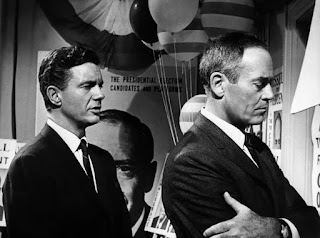
Movie Review: The Best Man (1964)

A political drama, The Best Man infiltrates the back rooms for an unfiltered look at the machinations of high-stakes party politics.

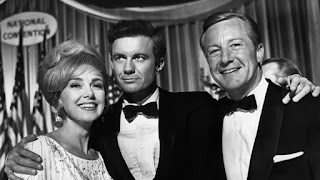
In Los Angeles, a major political party convention is underway with state delegates from across the country gathering to select their presidential nominee. The successful candidate is expected to sweep into the White House at the next election. The perceived front-runner is cerebral former Secretary of State William Russell (Henry Fonda), although he faces tough competition from fiery senator Joe Cantwell (Cliff Robertson).

Also at the convention with the potential to play kingmaker is former President Art Hockstader (Lee Tracy). Ahead of finalizing his endorsement, Hockstader meets separately with Russell then Cantwell. Both men have flaws: Russell may be indecisive at key moments and has a reputation as a womanizer. Cantwell is abrasive, obsessed with communists, and will do anything to win. With the race too close to call, both campaigns have the opportunity to resort to dirty tricks, although Russell is reluctant to compromise his principles.

An often rollicking deep dive into the world of bare-knuckle politics, The Best Man exposes hard truths. A busy Gore Vidal script (based on his play) and restless directing by Franklin J. Schaffner combine for a whirlwind tour of the ugly sausage-making factory, where lofty ideals are the first casualties in the battle for power. 

Of course this is a cinematic drama and some elements are stretched beyond credibility to make a point. The candidates are directly involved in sordid details, including the arsenal of toxic mud available to be hurled. They meet directly with gossip mongers and face off against each other in secret meetings to trade threats and insults. The climax finds both Russell and Cantwell invading the convention floor to personally engage in old-fashioned arm-twisting. It all makes for good if far-fetched fun.

Although Fonda and Robertson are equally committed to their characters, Vidal parks his loyalties early with Fonda's William Russell, robbing the drama of a battle-among-equals edge. Other candidates are also in the race, and could have been afforded more screen time. But the front-runner status does sharpen the narrative focus on Russell's suitability for the role of President, his wavering on whether or not to engage in character assassinations either exemplifying a moral and dignified stance, or underlining a lack of necessary spine. 

Stylistically, the film breaks well clear of its stage origins and actively searches for visual variety. Schaffner moves his cameras briskly from the circus atmosphere of the convention floor to the intimacy of hotel suites and tense meetings convened on the neutral turf of basements and nondescript utility rooms.

In addition to Hockstader wielding his authority, the supporting cast features two campaign managers (Kevin McCarthy and Gene Raymond) entrusted with keeping their candidates on-track, as well as the two spouses. Alice Russell (Margaret Leighton) is willing to patch-up her marriage for a shot at the First Lady title, while Mabel Cantwell (Edie Adams) matches her husband's drive and determination but in better clothes. Ann Sothern buzzes around everyone as the self-appointed voice of all women voters.

The Best Man asks the right questions about the qualities of leadership, and despite a cacophonous process, commendably navigates towards surprisingly astute answers.


All Ace Black Movie Blog reviews are here.

Monday, 16 April 2018

Movie Review: Malone (1987)


A modernization of Shane, Malone features a stoic Burt Reynolds performance but is an otherwise mindless low-budget action flick.

CIA-trained assassin Malone (Reynolds) is tired of killing and attempts to disappear into rural Oregon. At a remote gas station operated by Paul Barlow (Scott Wilson) and his daughter Jo (Cynthia Gibb) Malone learns that the entire nearby town is being intimidated by henchmen working for shady political operative Delaney (Cliff Robertson), who wants to buy and control the valley for nefarious reasons.

Malone tangles with Delaney's goons, including Madrid (Alex Diakun) and dim-witted brothers Calvin and Dan Bollard (Tracey Walter and Dennis Burkley). The local Sheriff Hawkins (Kenneth McMillan) is also on Delaney's payroll. Word of Malone's violent interventions reaches Delaney, who orders Malone killed. Meanwhile, the CIA track down Malone's whereabouts and dispatch agent Jamie (Lauren Hutton) to clean up the mess.

Directed by Harley Cokeliss and based on the book Shotgun by William P. Wingate, Malone is an unashamed but uncredited update of the Alan Ladd western classic. The story of a mysterious man trying to walk away from a violent past finding himself in the middle of a land dispute between settlers and profiteers carries sufficient weight to maintain a basic level of interest. Meanwhile, star Burt Reynolds abandons any remaining vestiges of good ol' boy charm and instead generates solid intensity by sticking closely to steely-eyed assassin mannerisms.

Unfortunately, not much else in Malone works, and the film has a strong whiff of being a decade late and a few dollars short. Malone cannot shake a relatively witless script and utterly predictable Chuck Norris-calibre set-pieces previously seen in better movies, including a barber shop showdown lifted straight from High Plains Drifter.

Although definitely older than Shane's Joey, it's never quite clear how old Malone's Jo is supposed to be (Cynthia Gibb was 24 at the time, but portraying a curious teen). This starts to present a problem, as Jo develops a crush on the assassin and the film edges towards icky and borderline exploitive territory (Reynolds was 51).

Other than the dependable Scott Wilson, the rest of the cast is made up of countless hissing villain and doofus redneck types, all responding to the commands of Cliff Robertson's Delaney. His heinous plot, something about establishing white supremacist enclaves across the country, is half-heartedly explained a couple of times, but still does not make much sense. If the intent is to quietly create command centres through strategic land acquisition, running around and killing people in broad daylight is not the way to avoid attention.

Malone at least often looks great, Vancouver and various small-town rural British Columbia locations (standing in for Oregon) giving the film a scenic shine. The story may be old and the budget limited, but the lush northwest mountains and valleys are always spectacular.


All Ace Black Blog Movie Reviews are here.


Saturday, 14 April 2018

Movie Review: 633 Squadron (1964)


A World War Two aviation mission drama, 633 Squadron consists of entirely familiar elements but flies with earnest intentions.

In Britain of 1944, the British 633 Squadron flies De Havilland Mosquitos and carries out bombing missions across Europe against German target. Under the leadership of Wing Commander Roy Grant (Cliff Robertson), an American volunteer pilot, the squadron has established a stellar reputation for getting the job done. Grant and his other pilots are recruited to train for a secret and difficult bombing mission in Norway. They are to destroy a heavily fortified Nazi fuel factory by toppling a protruding mountain ridge onto the enemy facility with a sustained bombing run.

Norwegian resistance leader Lieutenant Erik Bergman (George Chakiris) provides the intelligence and works with Grant on planning the mission. Grant also meets and starts a relationship with Erik's sister Hilde (Maria Perschy). The intense mission training runs claim casualties, and preparations are further interrupted by a German attack on the British base. As the designated day of the attack approaches, Erik gets into trouble back in Norway and little goes according to plan.

A British Mirisch Films production directed by Walter Grauman and loosely inspired by actual events, 633 Squadron is as basic as war movies get. Despite the plastic characters, wooden acting, inane dialogue, predictable heroics, implausible mission, and contrived romance, it's extremely difficult to not like the film: this is standard fare war action, honest in purpose, modest in scope and competent in execution.

The film is enhanced by an above-average music score by Ron Goodwin, and the flying sequences, featuring a combination of real aircraft and model work, are for the most part accomplished. The in-cockpit scenes feature cringe-worthy backscreen projections, but otherwise Grauman frequently captures the majesty of the nimble Mosquito. As the first combat aviation film produced in colour and Panavision widescreen, 633 Squadron set the new standard for what is possible, and the visuals rarely disappoint.

The pacing is also good. On-the-ground resistance action in Norway, the German attack on the British airfield, the dangerous training flights in Scotland and a precision bombing strike on a Gestapo building provide regular doses of action prior to the final bombing raid on the heavily fortified factory. The stirring attack includes Grant and his fellow pilots running a gauntlet of anti-aircraft batteries at low altitude, and served as inspiration for no less than George Lucas and the legendary ending of the first Star Wars movie. 633 Squadron also deserves credit for accepting a higher than typical casualty rate among the allied forces.

Matching the reality of pilots during the war being drawn from throughout the Commonwealth, Grant's team is a diverse and multi-ethnic group, notably including a Sikh pilot. Cliff Robertson provides the volunteer American presence to increase the film's international appeal, but in general the characters are purely stock.

Lacking in finesse but not in spirit, 633 Squadron gets the job done.


All Ace Black Movie Blog reviews are here.

Wednesday, 13 September 2017

Sunday, 4 December 2016

Movie Review: Sunday In New York (1963)


A romantic comedy exploring the changing rules of sex and relationships, Sunday In New York has enough courage to tackle its subject matter with a good degree of frankness, and a cast in fine form to tease out effective moments of comedy.

Eileen (Jane Fonda) comes to New York to visit her brother Adam (Cliff Robertson), a dashing airline pilot enjoying the bachelor life. Eileen has just broken up with her long-time boyfriend Russ (Robert Culp), because she refused his advances to have sex before marriage. She is now wondering if her old-fashioned attitudes need an overhaul. Adam goes out on a date with Mona (Jo Morrow), one of his girlfriends, while Eileen has a chance encounter on a Fifth Avenue bus with the handsome Mike (Rod Taylor). Their first attempt at a chat over coffee is a disaster.

But fate brings Eileen and Mike together again, and a rainstorm means that they end up soaking wet back at Adam's apartment. Eileen decides this is her opportunity to finally lose her virginity, but her plans will meet an unexpected hurdle. Meanwhile, Adam and Mona face troubles of their own, with his on-call pilot duty severely disrupting their romantic pursuits. The day in New York gets much wilder when the oblivious Russ shows up, wanting to win his girl back.

Directed by Peter Tewksbury and written by Norman Krasna (adapting his play), Sunday In New York reflects its era: an airline pilot as a magnet for women, a tide of sexual liberation challenging long-held attitudes, and feminism taking hold and allowing women to ask previously unthinkable questions about relationship rules. The film leans towards lauding more conservative views, but earns points for airing out emerging topics.

Tewksbury does well in breaking out the story from its stage confines, and finds reasons for his characters to go out and about in a vibrant New York. Despite the generally sharp dialogue, some scenes are talky and go on longer than necessary. But for the most part the film achieves the requisite balance between idealized romance and screwball comedy.

And the laughs do register. Once Russ shows up in New York to reclaim Eileen's affections and propose to her, an intentional mess of mistaken identities sparks the film into some excellent comic moments. Cliff Robertson, Rod Taylor and Robert Culp create a watchable trio of men uncomfortably pushed outside their normal boundaries. The side story of the airline pilot Adam and his would-be lover-of-the-day Mona contriving to always end up apart - far apart - also creates some good manic moments.

The romance also works well within the confines of the genre, and the two leads quickly find the requisite chemistry. Jane Fonda shines in an early role, and succeeds in portraying a confident yet searching 22 year old charting a new course on the fly. What Eileen needs most is a navigator for a brave new world filled with untested rules for relationships between men and women, and Rod Taylor creates in Mike the ideal man, handsome, assured, vaguely available, world-wise but still chivalrous.

Sunday In New York is a day to relax, laugh and try to disentangle the increasingly convoluted guidelines for courtship.


All Ace Black Movie Blog reviews are here.

Saturday, 22 October 2016

Movie Review: My Six Loves (1963)


A family drama and romantic comedy, My Six Loves is a fluffy career-versus-family story with attempts at humour but lacking any edge or substance.

Janice Courtney (Debbie Reynolds) is a Broadway star who has just wrapped up her first Hollywood role. Extremely popular but very single, Janice wonders if she has made the right choice dedicating her life to her career and never getting married. Driven to exhaustion by her agent Marty Bliss (David Janssen), Janice is ordered to rest and retreats to her Connecticut country home for a few weeks of recuperation in the company of her loyal assistant Ethel (Eileen Heckart).

In the nearby woods, Janice stumbles on six kids and a dog living on their own after being abandoned by their parents. She takes them in and starts to care for them. She also meets local Reverend Jim Larkin (Cliff Robertson), and they start to fall in love. Janice is attracted to the life of domesticity and considers adopting the children, but then she is offered an opportunity of a lifetime to star in the latest play by celebrated playwright Kinsley Kross (Hans Conried).

The first feature film to be directed by stage legend Gower Champion, My Six Loves is a lame affair suffering from an outdated societal message and a feeble script (despite the involvement of four writers). Every moment of conflict is immediately resolved, every emotion is obvious, and all the characters are superficial. The laughs are often juvenile, sometime descending to the let's-all-run-around-the-bus-after-the-dog variety, targeting eight year olds.

As a pure family film aiming to entertain pre-teens My Six Loves may be relatively harmless, but the film sells an infantile solution to the serious debate about finding balance between professional fulfilment and family life. The choice offered to Janice is to give up her career entirely to adopt and look after six children she barely knows. That the domestic option comes with the love of a man of the church makes the premise more troublesome. The film avoids any astute discussion: Janice is presented with a forceful, often guilt-laden binary decision, and the film disintegrates under the weight of seeking a simplistic solution to a profoundly complex dilemma.

Debbie Reynolds does her best to capture some semblance of an internal conflict. She looks great and even gets to sing one song. The scruffy dog is adorable and emerges as the only other thing worth watching. The rest of the supporting cast members, including a too-serious Cliff Robertson and a too-glib David Janssen, are wooden, predictable and overtly theatrical. The children are saddled with an overdose of doe-eyed cutesiness and no depth.

My Six Loves has little to say, and even that comes out all wrong.


All Ace Black Movie Blog Reviews are here.

Monday, 13 July 2015

Movie Review: Class (1983)


A high school sex comedy, Class boasts a remarkable cast and appears intent on exploring some serious issues before getting lost in a tonal no-man's land.

Jonathan (Andrew McCarthy) is a new senior student at the exclusive all-boys Vernon Academy somewhere in New England. His roommate is the fun-loving "Skip" (Rob Lowe), who comes from a rich and established family. After trading painfully embarrassing pranks, Jonathan and Skip become good friends.

Skip encourages the tentative Jonathan to take a weekend trip to Chicago to gain confidence in his dealings with women. Jonathan does so, and to his surprise meets and starts a torrid sexual affair with the much older Ellen (Jacqueline Bisset). Having a mature woman as a lover changes Jonathan, as he gains immeasurably in confidence and becomes one of the most popular boys at Vernon. But when Christmas break arrives and Jonathan heads off to meet Skip's family, he is in for a huge shock.

Directed by Lewis John Carlino, Class struggles to define itself. The film spends a lot of time on routine campus high-jinx inspired by Animal House and its countless imitators. But gradually the narrative shifts uncomfortably towards the complications stemming from a sex drenched relationship between a younger man and an older woman. Serious themes are suddenly scattered across the screen. Lust is confused with love, troublesome stalking phone calls are introduced, and the loneliness of the emotionally abandoned rich wife emerges as a potential interesting plot line.

But the script by Jim Kouf and David Greenwalt is capable of introducing weighty matters but proves clueless in dealing with them once hatched. Class stumbles into awkward territory where a host of unresolved ideas run headlong into a rudimentary comedy, and the mess ends with an embarrassing fist fight that reveals nothing except the limitation of the writing.

Andrew McCarthy (in his debut) and Rob Lowe do establish a credible rapport of friendship that builds during the film and adds a dose of interest. Jacqueline Bisset plays off her screen persona as a sexpot, here becoming the dream mature woman capable of transforming an adolescent into adulthood in one night.

The three principals are supported by a talented supporting crew, with John Cusack (also in his debut), Alan Ruck, Casey Siemaszko, Virginia Madsen and Joan Cusack appearing as students. Stuart Margolin is the mysterious mustached investigator who descends on the school late in the proceedings to uncover wrong-doings, and Cliff Robertson is Skip's father. It's an unusually deep cast for what is ultimately an underdeveloped and lightweight high school romp, and the surprisingly good acting talent set against the bumpy script adds to the film's identity crisis.

Class is not without its merits, but the curriculum is a most messy muddle.


All Ace Black Blog Movie Reviews are here.


Saturday, 1 September 2012

Movie Review: Spider-Man (2002)


A comic book adaptation with heart, Spider-Man combines eye-popping special effects with a human-centred focus on love and loss. Some of the acting is cringe-inducing and the dialogue echoes the juvenile source material, but there is plenty of thrilling action and honest emotion to cover the film's shortfalls.

Nerdy New York high school student Peter Parker (Tobey Maguire) has a crush on Mary Jane Watson (Kirsten Dunst), literally the girl-next-door, but she barely acknowledges his existence. Peter lives with his aunt May (Rosemary Harris) and uncle Ben (Cliff Robertson), and his only friend at school is Harry (James Franco), the son of wealthy military industrialist Norman Osborn (Willem Dafoe).

On a school field-trip to a genetics laboratory, Peter is bitten by a genetically modified spider, providing him with dramatically enhanced senses, incredible reactions, overpowering strength and the ability to create and swing from spider web-like threads. After the tragic demise of Ben in a car-jacking incident, Peter gradually learns to control his new powers and adopts the persona of Spider-Man, a crime-fighting super-hero.

Meanwhile, Norman's company Oscorp is about to lose a key military contract. Under pressure, Norman subjects himself to an experiment that goes horribly wrong, and he develops the evil powers of the Green Goblin, a monstrous alter-ego bent on destruction. As Peter struggles to balance his new life as Spider-Man with trying to win the love of Mary Jane, she starts a relationship with Harry, as a showdown looms between the Green Goblin and Spider-Man.

With director Sam Raimi consciously crafting a superhero film with emphasis on the people behind the costumes, Tobey Maguire's performance as Peter Parker is the hinge on which the movie rests, and for the most part it's a precarious balancing act. Maguire is either appropriately naive and thoughtfully working through his issues as the bookish Peter is unexpectedly thrust into the role of superhero, or as an actor he is overwhelmed by the role and caught like a black spider against a white background. The suspicion is never confirmed either way, and Spider-Man eventually thrives on the strength of the other cast members and Raimi's visual flair.

Willem Dafoe leads the way, his smarmy business executive the perfect gateway to the Green Goblin monstrosity created by his subconscious. Kirsten Dunst is engaging as Mary Jane, her off-beat beauty perfect as a girl seeking any escape from a horrible home environment but for the longest time overlooking the one relationship that will save her soul.

The romantic sub-plot between Mary Jane and Peter keeps the characters ahead of the chases, but does not avoid a fair number of sappy moments as the David Koepp screenplay struggles to force its way into the world that adults inhabit. However, the justifiably famous upside kiss in the rain that Peter and Mary Jane share more than makes up for most of the rest of the clunkiness in their relationship.

Cliff Robertson as Uncle Ben Parker adds the welcome acumen of grizzled veterans, injecting just enough wisdom at the start of Peter's adventure to guide his heroics. J. K. Simmons is given free reign to add over-the-top humour as the old-fashioned, highly-strung editor of The Daily Bugle, a tabloid that latches on to Spider-Man's antics.

Raimi effectively integrates the computer-generated visual special effects into the narrative, Spider-Man's impressive speed of travelling from building to building in Manhattan a genuine joy to watch, and the climactic battles between Spider-Man and the Green Goblin causing satisfying carnage amongst the high-rises and bridges of the city. The Goblin is a worthy adversary, but Spider-Man has an effective bite back.


All Ace Black Blog Movie Reviews are here.