Showing posts with label Dustin Hoffman. Show all posts

Saturday, 25 January 2025

Movie Review: Ishtar (1987)


Genre: Musical Comedy  
Director: Elaine May  
Starring: Warren Beatty, Dustin Hoffman, Isabelle Adjani, Charles Grodin  
Running Time: 107 minutes  

Synopsis: In New York, Chuck and Lyle (Dustin Hoffman and Warren Beatty) are a pair of hapless, dimwitted, and talentless songwriters. Their bottom-of-the-barrel agent (Jack Weston) offers them a gig at a hotel in Morocco. The pair land at the adjacent desert kingdom of Ishtar, where they are immediately sucked into Cold War intrigue featuring a history-changing map, left-wing revolutionary Shirra (Isabelle Adjani), and CIA Agent Jim Harrison (Charles Grodin).

What Works Well: The blind camel and the vultures deliver excellent performances.

What Does Not Work As Well: About half the running time is consumed by atrocious song snippets being performed badly; the other half features Hoffman and Beatty lost in the desert with a blind camel, repeating the same dialogue about wasting their lives. Both leading men are miscast and too old for their roles, Beatty in particular floating through the movie with a singular expression of stunned idiocy. Elaine May's writing (witless) and directing (flat) infuse every scene with the awkwardness of bad improvisation. The political context and plot details are sketched-in afterthoughts; none of the characters offer anything resembling depth or evolution; and the comedy moments are either devastatingly unfunny or conspicuously absent.

Key Quote:
Song lyrics co-written by Chuck and Lyle: Telling the truth can be dangerous business / Honest and popular don’t go hand in hand / If you admit that you can play the accordion / No one will hire you for a rock and roll band.


All Ace Black Movie Blog reviews are here.

Saturday, 2 December 2023

Movie Review: Sam & Kate (2022)


Genre: Romantic Dramedy
Director: Darren Le Gallo
Starring: Dustin Hoffman, Sissy Spacek, Jake Hoffman, Schuyler Fisk
Running Time: 110 minutes

Synopsis: Sam (Jake Hoffman) never fulfilled his potential as an artist and now lives with his elderly and widowed father Bill (Jake's real-life dad Dustin Hoffman). Sam spots bookstore owner Kate (Schuyler Fisk) and attempts to initiate a romance, but she remains distant. Kate is caring for her aging mother Tina (Schuyler's real-life mom Sissy Spacek), who has her own embarrassing secret. Sam persists in trying to impress Kate, while Bill asks Tina out for a date.

What Works Well: Veterans Dustin Hoffman and Sissy Spacek bring the necessary crustiness and vulnerability to their late-in-life roles, and the parent-offspring casting radiates some natural warmth.

What Does Not Work As Well: Bogged down by largely uninteresting characters who are in turn stalled by their own failures, Darren Le Gallo's directorial debut is overlong by a good 20 minutes. The humour is low key to the point of not registering, and the romance never ignites beyond perfunctory. Meanwhile, the drama flounders on unspoken but obvious secrets (Kate's past, Tina's fondness for clutter); and adult communications defaulting to half-sentences and quick anger instead of delving into substance. 

Conclusion: Inescapably bland. 


All Ace Black Movie Blog reviews are here.

Sunday, 17 September 2023

Movie Review: Last Chance Harvey (2008)


Genre: Romantic Dramedy
Director: Joel Hopkins
Starring: Dustin Hoffman, Emma Thompson, Kathy Baker, James Brolin
Running Time: 92 minutes

Synopsis: Divorced music composer Harvey Shine (Dustin Hoffman) is struggling to save his career. He travels to London to attend his daughter's wedding, but receives another emotional blow when she selects her stepfather (James Brolin) to walk her down the aisle. Meanwhile British government worker Kate Walker (Emma Thompson) is unlucky in love, and exasperated by her over-attentive mother Maggie (Eileen Atkins). Harvey and Kate meet at the airport, and a romance blossoms.

What Works Well: The later-in-life romance benefits from Dustin Hoffman and Emma Thompson in fine form, a laid-back attitude, and crisp London locations. Both lead characters are surrounded by plenty of luggage and regrets, Harvey's sense of exclusion from his ex-family and Kate's overbearing mother providing signposts to past missteps. Director Joel Hopkins seeks touches of mild humour, including Harvey's misadventures in a white suit and Maggie's interactions with a next-door Polish neighbour.

What Does Not Work As Well: This is as vanilla and predictable as a romance can get, complete with a de rigueur third act complication. And although Hoffman hides it well, he is still 22 years older than his co-star.

Conclusion: Familiar and borderline bland content is saved by a good cast and tidy production values.


All Ace Black Movie Blog reviews are here.

Sunday, 8 January 2023

Movie Review: Straw Dogs (1971)


Genre: Psychological Suspense Thriller Drama
Director: Sam Peckinpah
Starring: Dustin Hoffman, Susan George, David Warner, Peter Vaughan
Running Time: 117 minutes

Synopsis: In rural England, American mathematical researcher David Sumner (Dustin Hoffman) and his English vixen wife Amy (Susan George) have just moved into her ancestral home in a rural English village. The local pub is ruled over by the cantankerous Tom Heddon (Peter Vaughan) and his brood, including nephew Charlie (Del Henney), who has a sexual history with Amy. Tensions rise between the Sumners as he buries himself in work and she feels neglected. The local men resent Amy marrying an outsider, and view the passive David as weak. With Charlie and his friends "helping" build the Sumners' garage, conflict is on the horizon.

What Works Well: Peckinpah invests in a long build-up to draw sharp contrasts between a seemingly meek mathematician and a rough-and-tumble blue-collar community, with Amy falling into the fissure between her past and present. The violence, once it kicks in, is brutally memorable. A cat incident is followed by a rape and finally a siege, exposing the thin veneer of civility and the boiling rage ready to erupt out of every man. The final 30 minutes feature a remarkably staged defend-the-fort epic. Afforded an elaborate role, Susan George has rarely been better, combining loyalty, boredom, flirtatiousness, and self-preservation. 

What Does Not Work As Well: The introduction, while necessary, is slow. The complex rape scene is difficult to watch, and David's transformation into a resourceful warrior is sudden. Charlie and his brethren are barely distinguishable, all surrendering to unkempt shaggy hair and overgrown sideburns. 

Conclusion: A ruthless statement on the timeless barbarity of man.


All Ace Black Movie Blog reviews are here.

Friday, 22 July 2022

Movie Review: Moonlight Mile (2002)

An unconventional drama about loss and love, Moonlight Mile finds new angles to explore and tidbits of humour in the journey from grief to recovery.

The setting is a small Massachusetts town in 1972. Diana Floss has just been shot dead at the local diner - she was in the wrong place at the wrong time when a gunman attempted to kill his wife. Diana's soft-spoken fiancé Joe Nast (Jake Gyllenhaal) is living with her parents Jojo (Susan Sarandon), a writer, and Ben (Dustin Hoffman), a commercial real estate agent. They navigate the funeral and memorial service together, and meet with prosecutor Mona Camp (Holly Hunter) in preparation for the killer's trial. 

Ben wants to move on quickly, and brings Joe in as his new business partner without much pause. They start working on a land assembly deal for big-time developer Mike Mulcahey (Dabney Coleman). But beneath his calm facade Joe is struggling with a couple of secrets: his relationship with Diana had already ended before she was killed; and he is starting to fall in love with Bertie Knox (Ellen Pompeo), who works at the post office and the local bar.

Writer and director Brad Silberling was dating actress Rebecca Schaeffer when she was murdered in 1989, and subsequently he lived for a while with her parents. Moonlight Mile is loosely inspired by his experience. The film adopts a pragmatic, almost detached, attitude towards the loss of a daughter and fiancée, avoiding histrionics but still finding patches of quiet anger, disbelief, and disorientation. Layered on top of the grief are observations about the long-term relationship between Jojo and Ben; Joe sensing entrapment within an unearned son-in-law status; and a burgeoning complex romance with Bertie, who is dealing with an unresolved loss of her own.

The uniquely reflective mood challenges norms and ironically provides the drama with an edge. Jojo becomes snappy and her prose dries up, Ben drowns his emotions in work, but their mental state remains remarkably steady, their rage at losing Diana relatively subdued. Susan Sarandon and Dustin Hoffman stay within themselves as a couple well past expressing passion about anything.

Meanwhile Jake Gyllenhaal fills the screen with silent quandary as Joe defaults to present absenteeism in response to shock, guilt, and displacement. He harbours the awful truth about a breakup that now cannot be mentioned, and tags along as Ben unilaterally charts his future, all while hopelessly developing an attraction to Bertie. 

The town with one main street is a comfortable cradle, and the 1970s setting is stealthy - the set design is unobtrusive, and only the car models and references to the Vietnam War reveal the era. More prominent is a unique music score featuring eccentric selections from the Stones, Dylan, Bowie, Jethro Tull, and Sly and the Family Stone among others. 

Moonlight Mile navigates towards a standard truth-shall-set-you-free moment, but covers the distance with a quizzical attitude set to idiosyncratic tunes.


All Ace Black Movie Blog reviews are here.

Monday, 27 December 2021

Movie Review: The Program (2015)

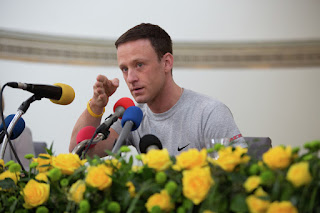
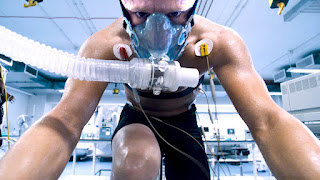
A biographical sports drama, The Program chronicles the chemically-enhanced rise of a fraud to the pinnacle of world cycling.

In the 1990s, American cyclist Lance Armstrong (Ben Foster) starts to participate in the Tour de France. He notices the top teams are under the care of Dr. Michele Ferrari (Guillaume Canet), who administers chemicals like Erythropoietin (EPO) to enhance performance. A testicular cancer diagnosis interrupts Armstrong's career and he undergoes brutal rounds of chemotherapy treatment.

Upon his return to racing, Armstrong is not considered a contender. But determined to win, he recruits Dr. Ferrari's doping services along with Johan Bruyneel (Denis Menochet) as team director, and they select teammates with the singular purpose of propelling Armstrong to a win. He is promptly victorious in 1999, crushing the field. Sunday Times reporter David Walsh (Chris O'Dowd) is suspicious of Armstrong's dramatically improved performance, but as the American proceeds to dominate the sport, proof of his doping is frustratingly difficult to secure.

Directed by Stephen Frears with a script by John Hodge, The Program adapts Walsh's book Seven Deadly Sins. The reporter is a relatively minor character in the film, with Frears focussing most of his attention on Armstrong as a headstrong phony. In a sport where not cheating means not winning, Armstrong and his crew are portrayed as perfecting doping and test evasion into an art form. His personal story of recovery from cancer provides cover from criticism, while an acquiescent media and inspired fans are happy to celebrate a feel-good story and avoid asking any questions.

The film adopts a relatively straightforward semi-documentary style, with the picturesque racing scenes adding some panache. With Walsh's investigation finding limited traction and a stone-faced liar occupying the story's centre, Frears is caught without a sympathetic protagonist. Ben Foster is in stoic form as a mechanical coldness permeates the narrative, the roboticization aided by an absence of context about Armstrong's formative years.

The Program does succeed in portraying a crass win-at-all-costs mentality devoid of sportsmanship. Armstrong builds a commercial empire on the back of his fake victories, rising to the top echelons of celebrity athletes and brand name recognition. Frears covers Armstrong's charitable work with cancer patients as the one ray of goodness within a jungle of deception.

The recruitment of Mennonite Floyd Landis (Jesse Plemons) into Armstrong's team introduces ethical tension and starts the sequence of events eventually exposing the truth. Also playing a role is professional bridge player and prize money insurance agent Bob Hamman (Dustin Hoffman, in just a couple of scenes), who smells a fraud and starts making inquiries. But the characters remain in the shadows of mendacity, and perhaps appropriately for a sport that sold its soul, The Program replaces the warmth of human achievement with bloodless efficiency.


All Ace Black Movie Blog reviews are here.

Saturday, 21 March 2020

Movie Review: Wag The Dog (1997)


A satire about the power of spin doctoring in politics, Wag The Dog is never less than over the top, but also always funny.

The United States presidential election is eleven days away. The President is running for re-election, but is suddenly facing damaging accusations of sexual misconduct. Renowned spin doctor Conrad Brean (Robert De Niro) is called in to manage the crisis. Working with presidential aid Winifred Ames (Anne Heche), he starts to conceive of a war scenario with Albania to distract the press.

Conrad and Winifred recruit Hollywood movie producer Stanley Motss (Dustin Hoffman) to help the cause. He assembles a group of creative artists to create the justification for war, complete with a made-up story of a suitcase nuclear bomb hidden in Canada, fake Albanian village vignettes, manufactured patriotic songs and imaginary victims. When CIA agents disrupt the bogus war narrative, Conrad and Stanley pivot towards a prisoner-of-war sob story featuring Sergeant William Schumann (Woody Harrelson) as a soldier in need of rescue.

In 1998 President Bill Clinton became embroiled in the sex scandal featuring White House intern Monica Lewinsky, and by 1999 the United States was bombing Yugoslavia. By 2016 the concept of fake news and alternative facts had become part of the political lexicon. But before all the jaw-dropping reality came the prescient fiction. Director Barry Levinson brought Wag The Dog to the screen with almost perfect timing, screenwriters Hilary Henkin and David Mamet adapting the 1993 book American Hero by Larry Beinhart just in time to grab an I-told-you-so front seat to history.

In turns funny, ludicrous and cutting, the film never pretends to be anything other than a broad satire. The spin doctoring to create and then capitalize upon a non-existent war is beyond any realms of reality, but Levinson runs with it as a plot device to poke fun at the extremes of both Washington DC and Hollywood. Nothing is sacred, least of all the truth, as Conrad, Stanley and their assembled entourage of talented artists allow their imaginations to run wild. They then possess and can deploy unlimited resources to turn their fantasies into a polished visual and aural reality to dominate the attention of a nation.

And even when CIA agents shine a light upon the grand ruse of a non-existent war with Albania, the subterfuge does not stop. Now the story of Sergeant William Schumann, complete with the nickname Old Shoe, is concocted. Just when it seems the film is stretching its own incredulity too thin, Woody Harrelson arrives with a hilariously edgy performance deserving its own narrative. The Schumann character proves too hot to handle even for the combined manipulative skills of Conrad and Stanley, and still they will not give up on their lofty plan to achieve mass distraction.

The lead performances are happy to yield to the enormous wackiness. Veterans Robert De Niro and Dustin Hoffman easily bounce each off other with relaxed portrayals of men good at what they do, comfortable in their own skin, and aware they are still stronger as a team. In an underwritten role, Anne Heche suffers in comparison. Willie Nelson appears as a grizzled songwriter recruited to provide the soundtrack to a crisis, although Levinson is guilty of giving all the incidental mock artefacts too much screen time, as well as a surplus of self-congratulatory moments.

Wag The Dog is happy to propose that everything perceived as fact may be an artistic creation in service of nefarious objectives. The rich and powerful not only influence history, but also bankroll the peddling of absurd alternative realities to serve selfish agendas. It's an entertaining premise, and at least in spirit, painfully close to the truth.


All Ace Black Movie Blog reviews are here.

Saturday, 18 January 2020

Movie Review: Chef (2014)


A lighthearted drama, Chef explores new beginnings in the story of a once-celebrated cuisinier rediscovering his touch and reconnecting with family.

In Los Angeles, chef Carl Casper (Jon Favreau) is being stifled by his restaurant owner Riva (Dustin Hoffman), who wants to keep the menu safe. In his personal life Carl is still on good terms with ex-wife Inez (Sofia Vergara) and tries to spend quality time with his 10 year old son Percy (Emjay Anthony). A scathing review by food critic Ramsey Michel (Oliver Platt) triggers a social media war of words, and Carl loses his job.

He agrees to join Inez and Percy on a trip to Miami to recharge. The wealthy Marvin (Robert Downey Jr.), Inez's other ex-husband, agrees to bankroll Carl's venture into the food truck business, selling Cuban sandwiches. With the help of his friend and sous-chef Martin (John Leguizamo) and with Percy tagging along, Carl launches the food truck and embarks on a multi-city cross-country trip back to California.

When early career momentum stalls and early promise buzz evolves into middle age compromise, a fork in the road offers alternatives. Writer and director Favreau places his lead character at the decision point and allows him to flounder. With plenty of close-up shots of food being prepared (tantalizing or boring, depending on appetite and food porn tolerance), Chef is a mostly buoyant study of a career reset assisted by friends and family.

Despite the potentially weighty subject matter the film sidesteps excessive displays of dramatic emotion in favour of some comic highlights, mostly stemming from Carl bumbling into a career-ending social media storm. The film otherwise rides a comfortably fun vibe, the better-than-usual relationship between Carl and ex-wife Inez adding a welcome ray of hope that not all failed relationships need to end in acrimony.

The second half is essentially a food truck summer travelogue, Carl reconnecting with Percy as they establish the Cubano business driving from Miami back to Los Angeles. While a few conflict points spark between father and son, again Favreau steers Chef towards genial fare, Carl building a strong bond by passing on his love of cooking to Percy, while the ten year old takes charge of an effective online marketing campaign.

The high-powered but small supporting cast seems to be having a good time. Scarlett Johansson features in the first half as Carl's confidant and the hostess at Riva's restaurant, but then disappears. Dustin Hoffman and Oliver Platt get two scenes each, Robert Downey Jr. just one, and overall Favreau conveys a sense of buddies pulling together to create a small but pleasant movie on both sides of the camera. No doubt they all also enjoyed good food while on set.


All Ace Black Blog Movie Reviews are here.


Sunday, 2 April 2017

Movie Review: Confidence (2003)


A stylish crime drama, Confidence is a complex sting story told with plenty of panache but not much heart.

The film is told in flashback and narrated by Jake Vig (Edward Burns), who has just been shot in Los Angeles. Three weeks earlier, Jake and his buddies Gordo (Paul Giamatti), Miles (Brian Van Holt) and Al (Louis Lombardi) run a sting inadvertently victimizing crime lord The King (Dustin Hoffman). In return The King has Al killed. Jake averts further casualties by offering to run a sting for The King to recover his losses. Corrupt banker Morgan Price (Robert Forster) is the selected mark.

Jake prepares an elaborate ruse to wire $5 million out of Price's bank to a fake company in Belize. He enlists the help of fellow con artist Lily (Rachel Weisz), and the crew target a corruptible bank Vice President to help make the transfer happen. But local crooked cops Omar Manzano (Luis Guzmán) and Lloyd Whitworth (Donal Logue) are pressured by Special Agent Gunther Butan (Andy García) into harassing Jake, massively complicating the operation.

Directed by James Foley, Confidence is a slick exercise in explaining the mechanics of high stakes cons. This is both the film's triumph and its weakness. The movie's construction is a visually compelling autopsy of how to succeed in crime, narrated by Jake as he dissects every move in detail. As a result the plot remains comprehensible despite its complexity, but because the entire movie is effectively a 97 minute learning course, the passion and character warmth are missing. It's also relatively easy to figure out who is being conned at every given stage.

Setting aside the sense of detachment. Foley focusses on style and delivers in spades. This film is bathed in neon, internal lights, colours, shadows and silhouettes, achieving an absorbing neo-noir aesthetic. There are almost no ordinary shots, as every frame is lovingly constructed from interesting angles and dynamic perspectives. The combination of convoluted plot and rich style deliver a captivating experience.

Jake Vig believes in one thing above all: confidence is the path to riches. He also understands most people's weakness in front of the promise of easy money, and exploits this feebleness to full advantage. Edward Burns internalizes the role and cruises through the film with a cool-under-pressure dogma. Dustin Hoffman sinks his teeth into a pretty insane turn as The King, a crime boss all too aware of his ADHD and exploiting the condition to full effect. There may be few more threatening conditions for crime than a murderous mobster who can't hold a thought for long enough to think. Otherwise the film's brevity is welcome, but comes at the expense of depth. Jake finds his counterpart in Lily, but overall Rachel Weisz and all the other characters have no arc and remain stock representations.

But this is a movie about process rather than people, and Confidence manipulates the cards then plays them with a bullish swagger.


All Ace Black Blog Movie Reviews are here.


Wednesday, 8 March 2017

Movie Review: Family Business (1989)


A multi-generational crime drama, Family Business is a dour exercise in stretching a simple idea well past its breaking point.

In New York City, Vito McMullen (Dustin Hoffman) works in the meat distribution industry, having distanced himself from his father Jessie (Sean Connery), a life-long thief. Vito has worked hard to ensure that his son Adam (Matthew Broderick), now in his early twenties, gets a good education and never comes close to a life of crime.

But Adam is restless for adventure. He drops out of university and hatches a plan to break into a high-tech company headquarters to steal DNA research vials and log books worth $1 million. Jessie immediately and enthusiastically agrees to help. Vito is unable to talk his son and his father out of the heist, and so joins to try and protect Adam. The theft at first appears to go well, but then things go very wrong.

Directed by Sidney Lumet, Family Business never gets off the ground. The stellar cast features three actors at the top of their fame, Connery enjoying a late career resurrection, Hoffman at his mid-age peak and Broderick the hot young star. The actors do their best but are simply too powerful for the underdeveloped material, and the flimsy Vincent Patrick story sinks under the weight of the talent pushing against it.

Although the stars ensure a base level of watchability and the germs of some good ideas spark the occasional moment of interest, the film is overall slow and boring, the tension and drama never convince, and given the talent involved, the key characters remain surprisingly shallow. The backstories of the three men are sketched in the broadest of strokes through juvenile tales. The supporting characters, in the form of wives and mothers, are next to non-existent.

With the absence of substance embarrassingly obvious, the film is filled with bloat. There are two prolonged family dinner scenes celebrating Jewish heritage, two wakes celebrating the Irish spirit complete with two renditions of Oh Danny Boy, both equally unnecessary. Fathers and sons regularly slap or punch each other between hopelessly trite arguments about parenting methods, what really matters in life, and sons expressing disappointment in their fathers.

Lumet reaches for a theme about the sacrifice of the father not being appreciated by the son. It was the choice of Vito to try and build a respectable life for Adam and he should have known better: Jessie's fun-loving, grab-life-by-the-balls approach was always the way to go. And that's about as far as the message of the film extends, one hour and fifty minutes of tiresome fatherhood pop psychology punctuated by the single action sequence.

An unfortunate waste of talent on both sides of the camera, Family Business is a bust.


All Ace Black Blog Movie Reviews are here.

Tuesday, 24 May 2016

Movie Review: Midnight Cowboy (1969)


A quintessential character drama, Midnight Cowboy is the story of two down-and-almost-out men forging an unlikely friendship.

Handsome, sturdy and dim dishwasher Joe Buck (Jon Voight) leaves his life in rural Texas behind and heads to New York City. In flashback, snippets of Joe's troubled childhood are revealed, including a disturbing relationship with his grandmother and a passionate affair with a girlfriend that ends badly. Now Joe's intention is to sell his services as a male prostitute with a cowboy persona to the wealthy women of New York. But his early and clumsy attempts to establish a career as a stud are a miserable failure, including an early session with socialite Cass (Sylvia Miles) that ends with him paying her.

Joe stumbles across Rico Rizzo (Dustin Hoffman), known to all as Ratso, a suitable nickname but one that he hates. Ratso is a penniless gutter rat and petty thief with a bum leg and a persistent cough. He promptly swindles Joe out of $20 by sending him to see a religious zealot on the pretext of arranging to find him a manager. Eventually, with Joe quickly running out of money and getting ever more desperate, Ratso takes him into his derelict apartment in a condemned building. The two men establish a spiky friendship as they attempt to find ways to make enough money to eat, stay warm and take care of Ratso's worsening health.

Directed by John Schlesinger and written by Waldo Salt adapting the James Leo Herlihy novel, Midnight Cowboy is a slice of societal anthropology set in corners often ignored. The story of the pathetic gigolo and the pitiful tramp finds the human spirit fighting for survival and small moments of joy against the forces of poverty, rejection, hunger, cold and despair. The film is absorbing in its depiction of the struggle for dignity, the pace surprisingly brisk and the misadventures of Joe and Ratso always offering ever newer levels of desperation.

Midnight Cowboy is paradoxically filled with elegance, beauty and the essence of companionship. Schlesinger constructs an affecting, deeply involving narrative filled with poignant moments, made all the more enduring by the certainty that Buck and Ratso do not have the capacity to actually succeed at anything. Their lives and hopes will forever be a series of disappointments, and they will nevertheless not give up. Even from the bottom of the sewer, hope persists that tomorrow will be a better day.

The affecting soundtrack by John Barry perfectly complements the film, and includes Fred Neil's song Everybody's Talkin' and the soulful, legendary main harmonica theme by Toots Thielemans. The cinematography by Adam Holender captures life from the perspective of two men at the bottom looking up, the tonier districts of New York City offering a cold, unwelcoming shoulder while the seedier streets tantalize with nighttime lights, blurry neon colours and the promise of cash earned the dirty way.

In a career-making role, Jon Voight embodies Joe Buck and creates an enduring image of a strong but slow man buffeted by life yet determined to make something out of his limited skill set. In his first role after The Graduate, Dustin Hoffman announces his outstanding range and reinvents himself from clean-cut college kid to street scoundrel persevering on society's left-overs. Rico Rizzo persists only in the dumps and condemned margins of the city, yet when he roars I'm walkin' here! at an errant taxi, he owns the street, ever so briefly.

Midnight Cowboy starts with a long bus ride and ends with another. In a testament to both the human spirit and the film's unique viewpoint, both are journeys incredibly propelled by unbridled optimism.


All Ace Black Movie Blog reviews are here.

Thursday, 26 November 2015

Movie Review: The Graduate (1967)


A drama and romance about generational rifts, The Graduate is a sharp examination of youth bumping up against the rules of their parents.

Benjamin Braddock (Dustin Hoffman) has returned home to Los Angeles after finishing his college degree. A top student, Benjamin does not know what he wants to do in life, and his parents (William Daniels and Elizabeth Wilson) are no help. Mrs. Robinson (Anne Bancroft) is the bored, alcoholic wife of the business partner of Benjamin's father, and she relentlessly pursues and seduces Benjamin. They start and sustain a prolonged affair behind the back of Mr. Robinson (Murray Hamilton). While the sex is great, Mrs. Robinson is not too interested in ever actually talking to Benjamin.

The Robinsons' daughter Elaine (Katharine Ross) is a Berkeley student, and Benjamin's parents and Mr. Robinson believe she is a perfect fit for him. But Mrs. Robinson wants to keep Benjamin for herself, and warns him away from getting close to her daughter. Benjamin is initially happy to oblige, but when he reconnects with Elaine, a spark ignites. Benjamin finds his life getting exceedingly complicated as he gets caught between loving one woman while being held emotionally hostage by her mother.

Directed by Mike Nichols and set to the magical tunes of Simon and Garfunkel, The Graduate defines an era. The screenplay by Calder Willingham and Buck Henry (adapting the Charles Webb novel) perfectly captures the angst shrouding the journey from youth to adult, and made all the more hazardous in a time of societal turmoil. Members of the greatest generation are at their economic and sexual peak, and the baby boomers are tentatively seeking their way in a changing world and challenging rules they don't respect. The conflict is filled with transformational moments.

The genius of The Graduate is in capturing a generational shift through the simple story of Benjamin's search for a purpose. The narrative is always intimate, personal and singularly concentrated on one man. But the broader seismic shift of the next generation bedazzled by the fantasy of their elders while seeking to break free is the silent yet dominant backdrop to Benjamin's post-graduate summer. The first half of the film consists of none too subtle coercion and seduction, the men in his life throwing thoughtless career advice his way, sometimes literally reduced to one word ("Plastics!"), while his dad parades him in a scuba diving suit supposed to represent scientific achievement but only serving to heighten Ben's sense of isolation.

Mrs. Robinson is more persistent and more successful in her attempts to lure Benjamin into her bed. With Anne Bancroft enjoying the role of her life, Mrs. Robinson expertly snags Benjamin like a prized fish and reels him in with a combination of hints, seduction, flattery, and ultimately insults that demand his physical response. And once she lands her trophy, Mrs. Robinson will not let go. Benjamin represents her fountain of youth, a reason for her to believe she is still relevant, the older generation emotionally and physically dominating the upstarts, a strategy that works fine as long as the youth keep their mouth shut.

Once Benjamin demands they start talking he is not happy with what he hears, her possessiveness sowing doubts in his mind and triggering an encounter with Elaine that will finally start to define a purpose. Still under Mrs. Robinson's influence Benjamin is initially aloof and cruel with Elaine, but her calm frailty wins him over, and soon he learns what true love can offer his life. Untangling himself from Mrs. Robinson's clutches will not be easy, but it is never easy for any generation to emerge from the shadows, cast off the burden of its elders, and aim for new horizons.

Few films are as closely associated with their soundtracks as The Graduate. The songs include Mrs. Robinson, The Sound Of Silence and Scarborough Fair, with Paul Simon's fragile yet intense singing and the soulful melodies adding immeasurably to the film's impact. Nichols directs with audacity, using jump cuts, playing with focus and perspective and sprinkling touches of humour to portray the tentative first steps of a young man into adulthood. Benjamin's initial foray into the surreptitious world of booking upscale hotel rooms for sexual encounters, under the suspicious gaze of the stern desk clerk, is turned into a deliciously awkward misadventure.

In his first major screen role, Dustin Hoffman shows remarkable talent and uncommon maturity, holding the film together with a mixture of unease, drift, and finally intent. The film launched his stellar career and rewarded him with his first Academy Award nomination for Best Actor. Bancroft (Best Actress) and Ross (Best Supporting Actress) were also nominated, as was the film, the script and the cinematography. Nichols won the Oscar for Best Director.

The Graduate crosses the stage with confidence, passion and humour, leaving behind a lasting legacy.


All Ace Black Movie Blog reviews are here.

Saturday, 4 October 2014

Movie Review: Stranger Than Fiction (2006)


A dramedy with serious themes of mental stagnation and death weaved into a comic structure, Stranger Than Fiction tackles writers block, mid-life angst and the value of life within a refreshing package.

In New York City, Internal Revenue Service auditor Harold Crick (Will Ferrell) is lonely, bored and boring. He lives his life metronomically and according to strict routine. Without warning Harold starts to hear a woman's voice in his head narrating his life. Although Harold does not know this, the voice belongs to celebrated author Karen Eiffel (Emma Thompson), and Harold is the main character in her latest attempt to write a book. Once the darling of the literary world, Karen is now suffering a serious case of writer's block and has not published for 10 years. She is struggling to find a way to kill Harold, as she does with all her main characters at the end of each book.

Harold is tasked with auditing the bakery business of Ana Pascal (Maggie Gyllenhaal), and finds himself helplessly falling in love with Ana. But he is driven to distraction by Karen's constant stream of narration, and gets no relief from a couple of doctors (Tom Hulce and Linda Hunt). He finally turns to literature professor Jules Hilbert (Dustin Hoffman) for help. Together Harold and Jules start to piece together the mystery of Harold's predicament. They have to figure out if he is a character in an unfolding comedy or tragedy, and how to influence the ending.

Directed by Marc Forster, Stranger Than Fiction is smart, funny and creative, as the Lindsay Doran script deploys an innovative premise to get into the head of two intriguing characters grappling with endings and beginnings. Harold, for all practical purposes, is already dead. His life is passive and he has no meaningful connections with other people. Lacking ambition and not feeling passionate about anything, Harold is marching to an inevitable and inconspicuous ending; when and how he actually dies will be generally immaterial.

Once Harold becomes keenly aware of his own impending end, thanks to Karen's interventive narration, he is pushed out of his middle-age malaise and starts to live, and suddenly dying is a big and scary deal. Harold pursues a relationship with Ana and is forced into a friendship with a co-worker. He starts to pursue a long dormant guitar passion, changes his clothes, and stumbles onto a life mentor in Jules. Now with multiple purposes driving his existence, Harold is eager to prevent his premature death.

Karen is also going through a painful mid-life crisis and is professionally dying a slow death. Now fading from memory as a once-famous author, Karen needs to unblock her creativity, and finding a meaningful way to kill Harold will spark her revival. His death will breathe life into her career, but Karen is also struggling with the perversity of her success riding on the shoulders of the demise of all her main characters. The death that used to come easily on the written page is now a struggle, forcing Karen to ponder whether the value of life comes only at the price of death.

Will Ferrell puts his frat boy humour to one side and delivers an affecting performance as Harold. Containing himself and delivering soft humour through pathos, Ferrell demonstrates appreciated depth. Emma Thompson plays Karen as anguished and borderline depressed, while Maggie Gyllenhaal presents Ana as the anti-Harold, full of life, impulsiveness and not afraid to break the rules in small demonstrations of personal anarchy.

A bright treatment of death's place in emphasizing life, Stranger Than Fiction is an adroit confirmation of enduring human realities.


All Ace Black Blog Movie Reviews are here.


Sunday, 1 June 2014

Movie Review: Runaway Jury (2003)


A courtroom drama with a focus on ruthless jury manipulation, Runaway Jury is smart, tech-savvy and boasts a stellar cast, but is also just a bit too righteous.

In New Orleans, the Vicksburg Firearms company is being sued for damages by the widow of a mass shooting victim. The idealistic prosecuting attorney Wendall Rohr (Dustin Hoffman) intends to build his case on the premise that Vicksburg knowingly allowed their guns to be sold to criminals. The gun industry recruits high profile jury consultant Rankin Fitch (Gene Hackman) and his shadowy team of technical geeks and musclemen to help ensure that citizens sympathetic to the gun lobby are selected as jurors. But the mysterious and charismatic Nicholas Easter (John Cusack) still manages to make his way onto the jury.

The trial gets underway and Easter starts to endear himself to the other jurors, while his outside partner Marlee (Rachel Weisz) makes contact with both Fitch and Rohr, offering them the verdict that they desire in exchange for $10 million. Fitch is not used to being manipulated or outsmarted, and resorts to dirty tricks and brutish tactics to try and maintain control of his jury. Meanwhile, Rohr has to struggle with his conscience. A victory for his client would be a landmark event in the history of justice, but obtaining a guilty verdict through foul means runs contrary to his principles. As the battle of wills intensifies and the time for a verdict approaches, Fitch and his men frantically delve into Easter's background to try and uncover his motives.

Based on the John Grisham novel, Runaway Jury is a fast-paced and original thriller. The focus is less on the machinations of the trial than the attempts to predetermine the verdict, and the film offers a chilling, if exaggerated, vision of justice for sale. Director Gary Fleder creates a convincing premise where jury consultancy has crossed the line into a tech-enabled military-style operation, and in Rankin Fitch the film has a delectable villain operating in a shadowy world of data mining, surveillance and arm-twisting.

Gene Hackman builds upon the Jon Voight role from Enemy Of The State (1998), mastering the powerful man striving for personal glory while commanding a team of young computer wizards. Hackman gives Runaway Jury its frightfully rotten core, his Fitch a beady-eyed profiteer, logically extending the principles of capitalism to the buying, selling and profiting from verdicts.

For the first time Fitch's well-oiled operation meets two flies in the ointment, as Easter and Marlee surprise him with a counter move. Initially the young couple do not appear to be a real match for Fitch, and the film gains momentum as the battle for the soul of the jury erupts on the sidelines of the trial. Easter deploys charisma to gain influence, finding the weaknesses within the jury members and pushing their buttons at the right time. Meanwhile Marlee has to stand up to the much more powerful Fitch in a display of potentially disastrous courage. John Cusack and Rachel Weisz are appealing as the underdogs, and the film only gradually reveals the motives behind their passion.

Dustin Hoffman gets the most static role, Wendall Rohr's reflection on the moral higher ground almost too easy for the veteran actor.

Runaway Jury does veer towards a full embrace of its noble cause, and late in the court proceedings almost skips past Easter's most difficult jury room task. While the ending is too black and white, the shadows of grey doubt about the sanctity of the justice system are what makes the film a provocative romp through the sickbed of idealism.


All Ace Black Blog Movie Reviews are here.


Monday, 17 March 2014

Movie Review: Billy Bathgate (1991)


An adaptation of the E.L. Doctorow novel, Billy Bathgate is crime fiction inspired by real characters. The film enjoys a stellar cast, but the story of a starry eyed teenager sucked into a mobster's inner circle receives generally superficial treatment.

In New York City of the 1930s, mobster Dutch Schultz (Dustin Hoffman) is a local hero to the street kids of the Bronx. Scrappy teenager Billy Bathgate (Loren Dean) is spotted by Dutch, and becomes an informal member of the gang. Dutch and his accountant Otto Berman (Steven Hill) are facing a range of problems, including an apparent betrayal by leading assassin Bo Weinberg (Bruce Willis), and a tax evasion charge that can threaten their criminal empire.

Dutch provides Bo with concrete shoes and drops him in the river, witnessed by Billy and Bo's flame Drew Preston (Nicole Kidman). Dutch wants Drew to become his girl, but she is aloof and independent. The gang relocates to a rural community in upstate New York to fight the tax evasion case, but Dutch's erratic and violent tendencies just add to his mounting problems. As Billy gets infatuated with Drew, rival mobster Lucky Luciano (Stanley Tucci) hovers to take advantage of Dutch's crumbling empire.

A competent but curiously unengaging film, Billy Bathgate never gets under the skin of its characters. Dutch, Drew and Billy are colourful but uninspired, behaving within limited parameters and without much depth.

Dustin Hoffman and Loren Dean are not given complex subtexts to work with, while Kidman takes Drew to a below freezing level of iciness, the moll who thinks that she can control her mobster boyfriend with an over abundance of cool. It's a magnetically mysterious turn by Kidman, but the mystery is not backed up by substance.

Ironically, the short-lived character of Bo Weinberg, as brought to life (and death) by an intense Bruce Willis, resonates more loudly than the principals.

Steven Hill as the grizzled accountant who has seen it all, and Steve Buscemi as one of Dutch's loyal gunmen, enhance the supporting cast with confident presence.

Director Robert Benton assembles a visually arresting aesthetic in recreating the New York of the 1930s, and maintains brisk pacing, bringing Billy Bathgate in at an economical 106 minutes. The film is never less than watchable, the characters making up for the absent backstories with total commitment to the cause at hand. The brief explosions of jarring violence are effective punctuation marks.

Presentably pleasing, Billy Bathgate is proficient but far from profound.


All Ace Black Blog Movie Reviews are here.


Sunday, 20 October 2013

Movie Review: Marathon Man (1976)


A dark action thriller with an old Nazi unleashing new evil, Marathon Man unspools a tale of conspiracy laced with torture, brought to life by a phenomenal cast in top form.

A fatal traffic accident forces the notorious Nazi Dr. Christian Szell (Laurence Olivier) to come out of his hiding place in a South American jungle. In New York, Thomas "Babe" Levy (Dustin Hoffman) is a university graduate student of history, and also a long-distance runner training for the marathon. His brother Henry "Doc" Levy (Roy Scheider) pretends to be an oil company businessman but actually works for a secretive government "Division" headed by Peter Janeway (William Devane), responsible for collaborating with surviving Nazis. The father of Babe and Doc, a distinguished historian, killed himself when his sons were children after being hounded by Senator McCarthy's communist witch hunt.

Szell travels to New York to try and retrieve a fortune in diamonds. Meanwhile, Babe starts a relationship with foreign student Elsa (Marthe Keller), while Doc runs into a series of strange murders and finds himself the target of assassination. Szell is paranoid about his safety, and attempts to eliminate everyone who may threaten him and his hidden treasure. This sets him on a collision course with Doc, and ultimately Szell kidnaps Babe to try and uncover Doc's intentions. Thrust into a world he knows nothing about, Babe can only rely on himself, and unexpectedly calls on his running skills to survive a one-man wave of Nazi terror in the heart of New York City.

While on close examination the plot of Marathon Man is full of some rather large holes, director John Schlesinger assembles a bleak film filled with a growing sense of purely corrupted villainy. The William Goldman script, based on his own book, maintains a strong focus on the characters of Babe, Doc and Szell. The scenes of violence and confrontation, when they arrive, carry a high potency factor due to the elevated blood and gore quotient, but also thanks to the hard investment in character development.

Laurence Olivier and Dustin Hoffman elevate Marathon Man from a potentially hokey thriller to a superior, engrossing experience. Olivier is eerie as Dr. Szell, a surviving Nazi with expertise in dental torture. Olivier's performance is cold, emotionless and mechanical in its intensity, an old man incongruously conveying single-minded determination to get his hands on his treasure. Everything that made the holocaust a terrifying travesty is packed into his eyes, including the callous disregard for any amount of human suffering.

Hoffman, in his last performance as a student-type, is all about the fragility that resides in a scarred soul. Babe (the nickname an obvious reference to a man-child) has never really moved past his father's suicide, and Hoffman's performance is a complex condensation of a growing up process that now has to catch up with history. Hoffman tentatively unleashes Babe to chase his first romance, and he will soon have to deal with learning the true identity of his brother and just how much evil lurks out in the real, non-academic world.

Roy Scheider rounds out the principal cast, and he gets a James Bond-type role, an agent in the shadowy world of obscure government departments but here toiling on unglamourous and distasteful files. Doc has dealt with his father's death by embroiling himself into a world of subterfuge, and Scheider exudes a world weariness emanating from a life of too much lying to himself. William Devane is perfect as the distastefully oily head of the "Division", Janeway thoroughly committed to his job, having long since lost the edge between right and wrong.

Marathon Man is most famous for elevating the dentists chair to a full-on torture experience, Dr. Szell repeatedly asking the cabalistic question "Is it safe?" as he readies his dainty dentist tools to inflict unimaginable pain. The unspoken horror is that no city with a rampaging and tenacious Dr. Szell can possibly be safe.


All Ace Black Blog Movie Reviews are here.


Monday, 17 June 2013

Movie Review: Tootsie (1982)


A comedy about gender politics, Tootsie delivers excellent laughs with sharp social commentary, propelled by a virtuoso Dustin Hoffman performance.

Michael Dorsey (Hoffman) is a struggling actor based in New York City. Passionate about his craft but with a reputation for being difficult to work with, Michael's career is slipping away into low-key suburban theatre productions. Desperate for a last chance at stardom, and much to the horror of his agent George (Sydney Pollack, who also directed) and room mate Jeff (Bill Murray), Michael dresses up as a woman, adopts the persona of Dorothy Michaels, and lands the part of a hospital administrator on Southwest General a tawdry but popular daytime television hospital drama.

Michael gives Dorothy an independent, feminist edge, shaking up the show and quickly becoming the toast of the town. But Michael's love life starts to get really complicated. As Dorothy places more demands on his time, he neglects potential girlfriend Sandy (Teri Garr). Meanwhile, Julie Nichols (Jessica Lange), who plays the resident tarty nurse on Southwest General, finds herself strangely attracted to Dorothy, and Julie's widower dad Les (Charles Durning) is also quite smitten with the new star. Finally, the lecherous but semi-senile John Van Horn (George Gaynes), who portrays the senior doctor on the show, sets his sights on Dorothy as his next sexual conquest.

The unusually rich screenplay (co-written by Barry Levinson and Elaine May, among others) is able to maintain focus on the hearts of three characters, as Michael, Julie and Les all undergo journeys of discovery about what really matters in their lives. With a light touch but deliberate steering by Pollack, Tootsie delves into the skirmishes between the sexes, uncovering plenty of new angles to explore.

Michael thought that transforming into Dorothy would provide a superficial career boost. Instead, Dorothy became the change agent through which Michael gains a new perspective on his relationships. Michael becomes a better human being as Dorothy, with unexpected consequences.

While Michael's dour intensity and serious mannerisms mostly turned everyone off, Dorothy demands and provides R.E.S.P.E.C.T., and as it turns out, love and affection flow smoothly and in all directions when mutual respect is a common foundation. It becomes only normal that Dorothy's honest, open, playful and forthcoming personality attracts both Julie and Les. In Julie's case the purity of the relationship almost overcomes traditional gender boundaries, while for Les, Dorothy's virtue proves to be an immediate attraction to a widower.

Dustin Hoffman delivers an extraordinary performance, measured by how quickly the make-up is forgotten, and how powerfully Dorothy's presence as a woman is established and maintained. Michael's occasional stumbles in Dorothy's heels serve not only as comic touches, but also as a reminder that there is an actor beneath all those womanly clothes.

Jessica Lange, coming off career-making but highly intense roles in The Postman Always Rings Twice and Frances, demonstrates a glow for serious humour, Julie a much more interesting role than most comedies accommodate. Julie is allowing herself to be belittled in front of the camera as the airhead nurse, and off-camera by the show's director (Dabney Coleman). Dorothy proves to be an inspiration, and maybe more, prompting Julie to change her attitude towards relationships and more importantly, towards herself. Lange won the Best Supporting Actress Academy Award, the only win from 10 nominations received by Tootsie.

Terrific depth is provided by Durning, Garr, Coleman, Pollack, and Geena Davis making her screen début in a small, barely dressed, role. Durning, in particular, finds the sadness within a jovial but lonely man looking to fill the void left by the loss of a life-long love. Bill Murray pops up unannounced as Michael's laid-back room mate, providing acrid commentary on a pantomime spiralling into an unintended life experiment.

As it turns out, sometimes a man needs to walk in the heels of a woman to better understand what being a man really means.


All Ace Black Blog Movie Reviews are here.