Showing posts with label Woody Harrelson. Show all posts

Sunday, 4 May 2025

Movie Review: Midway (2019)


Genre: Historical War Action  
Director: Roland Emmerich  
Starring: Ed Skrein, Luke Evans, Dennis Quaid, Aaron Eckhart, Woody Harrelson, Patrick Wilson  
Running Time: 138 minutes  

Synopsis: Japan attacks Pearl Harbor in December 1941, but fails to destroy American aircraft carriers. The United States enters the war and Japan's Admiral Yamamoto starts planning an attack on Midway Island to achieve dominance over the Pacific. The US intelligence team headed by Lieutenant Commander Edwin Layton (Patrick Wilson) intercepts enemy communications and starts to piece together the Japanese attack plan, allowing Admiral Nimitz (Woody Harrelson) to mobilize a defence. Meanwhile, Lieutenant Colonel Jimmy Doolittle (Aaron Eckhart) leads an air raid on Tokyo to unsettle the enemy, while Vice Admiral William "Bull" Halsey (Dennis Quaid) and ace Navy pilots Dick Best (Ed Skrein) and Wade McClusky (Luke Evans) are involved in the escalating war in the Pacific. 

What Works Well: This is an unapologetically old-fashioned World War 2 action movie, faithful to historical fact and dedicated to celebrating heroism, sacrifice, and determination under fire. Despite an ambitious scope covering several major battles and culminating at Midway, writer Wes Tooke admirably maintains cohesion in melding strategic Yamamoto and Nimitz-level maneuverings with the front-line exploits of Best and McClusky, among many others, effectively capturing the critical strategic decisions and in-the-heat of the moment actions upon which history turned. Director Roland Emmerich delivers several stirring naval combat scenes, and maintains focus on individual sub-stories within the chaos of attack, defense, and counter-attack at sea. 

What Does Not Work As Well: The CGI effects are impressive but predictably over-done, and the out-of-uniform lives of the characters are essentially non-existent. The cast members do their job with minimum fuss, but quantity defeats quality and none are provided the opportunity to rise above basic representations.

Key Quote:
Edwin Layton (to Nimitz, in reference to Pearl Harbor): Sir, I'm the intelligence officer responsible for overseeing the greatest intelligence failure in American history.


All Ace Black Movie Blog reviews are here.

Saturday, 9 December 2023

Movie Review: Triangle Of Sadness (2022)


Genre: Satirical Comedy Drama
Director: Ruben Östlund
Starring: Harris Dickinson, Charlbi Dean, Woody Harrelson
Running Time: 147 minutes

Synopsis: Fashion models Carl and Yaya (Harris Dickinson and Charlbi Dean) are a photogenic couple, although their relationship is beset by quarrels about finance, jealousy, and mis-matched expectations. Yaya's influencer status earns them a luxury yacht cruise, where the other passengers include Russian oligarch Dimitry and his family, a lonely businessman, an elderly British couple, and a wheelchair-bound German stroke victim. The Captain (Woody Harrelson) is more drunk than competent, leaving head-of-staff Paula (Vicki Berlin) to manage the cruise. Alcohol, rough seas, and other unexpected interventions thrust the cruise into turmoil.

What Works Well: Swedish director and writer Ruben Östlund steers a wild - and wildly funny - eat-the-rich voyage, exposing obvious but still impressive discrepancies between wealth, talent, and ability. The surprise-filled narrative proceeds through three chapters, from intimately introducing Carl and Yaya's strained cocoon all the way to upturning the societal pyramid. The commentary is never less than biting as gender and ethnic roles are both confirmed and challenged, and the hazards of the rough seas catalyze dramatic changes in fortune. The long running length is well-earned through brisk and bold storytelling, punctuated by an unforgettable Captain's Dinner sequence.

What Does Not Work As Well: One character zooms to prominence in the final act. Her prior obscurity is probably the point, but also robs her of depth and context.

Conclusion: The fragility of vacuous success is best shattered with a smile.


All Ace Black Movie Blog reviews are here.

Saturday, 25 June 2022

Movie Review: Now You See Me (2013)

A lightweight crime caper, Now You See Me mixes magic and revenge-most-elaborate in a glitzy package, with frills overpowering content.

Four magicians are brought together by a mysterious benefactor for a show in Las Vegas. Illusionist Danny (Jesse Eisenberg), mentalist Merritt (Woody Harrelson), escapist Henley (Isla Fisher), and sleight-of-hand artist Jack (Dave Franco) perform as the Four Horsemen then shock their audience by seemingly stealing money from a French bank to conclude the show.

The FBI's Dylan Rhodes (Mark Ruffalo) teams up with the Interpol's Alma Dray (Melanie Laurent) to investigate, but they are forced to release the magicians due to lack of evidence. Dylan consults with magician debunker Thaddeus Bradley (Morgan Freeman), who believes the Four Horsemen have planned multiple heists. Sure enough, at their next show in New Orleans they deliver a financial shock to their sponsor, insurance magnate Arthur Tressler (Michael Caine), and humiliate Dylan in the process. He doggedly pursues them to try and stop further audacious criminal acts.

A none-too-serious affair, Now You See Me bounces off the energy generated by magic deployed to even the score. Director Louis Leterrier maintains rapid pacing and infuses the aesthetics with jazzy special effects and light shows. The Four Horsemen's performances are less about magic and more about throwing cinematic CGI and hair-raising stunts onto the screen, the outcome frivolous if never boring.

The script (by Ed Solomon, Boaz Yakin, and Edward Ricourt) introduces mystical elements related to a secret society of magicians established in ancient Egypt, but of course has no idea where to go with the hokum. Instead, Now You See Me plays fast and loose with logic while looking for traditional thrill rides like the big fight and the big car chase. Essential plot elements pop up purely to maximize the mindless entertainment quotient; hence, a massive safe containing untold millions is introduced out of nowhere moments before it becomes central to the climax. It's fairly easy to trace the outline of the big final twist, which, in retrospect, makes little sense.

The talented cast members add plenty of star power but are mostly pulled along by the wild antics, all the characters remaining at the sketch level while trading spiky barbs. Woody Harrelson best manages to infuse some wicked personality traits into the mentalist Merritt, while veterans Morgan Freeman and Michael Caine add weight in relatively minor roles. 

Now You See Me pulls off an old trick: dazzling with style to distract from limited substance.


All Ace Black Movie Blog reviews are here.

Saturday, 9 April 2022

Movie Review: The Messenger (2009)

A drama about war's ravages on the homefront, The Messenger is a study of two characters consigned to the difficult margins of conflict.

Decorated US Army staff sergeant Will Montgomery (Ben Foster) was wounded in the Iraq War while heroically saving the lives of other soldiers. Now back in the US with three months to go before the end of his service, he is assigned to partner Captain Tony Stone (Woody Harrelson) on casualty notification duty.

Will is tending to eye and leg injuries, and emotionally still attached to ex-girlfriend Kelly (Jena Malone), although she is now with another man. The jaded and older Tony, a recovering alcoholic, teaches him the strict script-based rules of informing next-of-kin that their loved one has died on duty. Will gets to grips with the job and slowly forms a connection with newly-widowed Olivia (Samantha Morton) after notifying her of her husband's death.

Soldiers conveying a catastrophic message to family members are backdrops in many war movies. Here director Oren Moverman and co-writer Alessandro Camon place the notifiers front and centre in a subdued story of losses lapping up on the shores of army homes. It's a perspective worth exploring: delivering the worst possible news and repeatedly witnessing real-time emotional breakdowns takes an immense toll.

Moverman derives strength from the hold-your-breath nature of the doorway scenes. These are familiar, similar but different, unpredictable, and never short of impact. The suitably named Tony Stone has developed grim-faced stoicism in the face of grief, but inside he is seething from never having experienced combat (he was deployed but not needed in Desert Storm), his military career reduced to a bearer of bad news. The lure of the bottle is never far.

Will is younger, fresh from battlefield horrors, and more willing to interpret rules according to the situation. The two men alternate between clashing and bonding, their backstories and emotional traumas emerging through evening conversations. Woody Harrelson and Ben Foster invest heartily in the roles and complement each other, but are also limited by relatively stock soldier cliches. Drunken man-child hijinks become an easy approximation of friendship.

More interesting is Will's slowly evolving relationship with Olivia. Their bond strengthens over a quite magnificent eight minute single-take scene in her kitchen, first impressions yielding to genuine understanding of hidden hurt and war's often unseen domestic impact. With understated dignity, The Messenger steps inside a world of multifaceted pain.


All Ace Black Movie Blog reviews are here.

Sunday, 9 January 2022

Movie Review: Indecent Proposal (1993)

A romantic drama, Indecent Proposal posits an interesting dilemma but proceeds to bungle the premise.

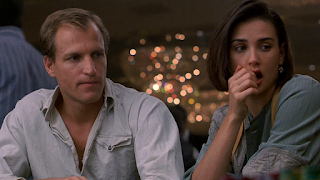
Los Angeles high school sweethearts Dave and Diana Murphy (Woody Harrelson and Demi Moore) married young and are still deeply in love. He is an architect and she is a real estate agent. But they overextend financially, and when a recession hits, they find themselves near bankruptcy and about to lose everything.

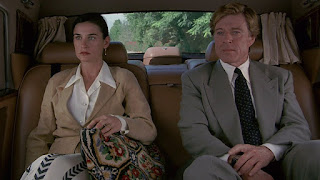
In a desperate attempt to raise cash they head to Las Vegas, where billionaire tycoon John Gage (Robert Redford) spots Diana and is immediately infatuated. After the couple's gambit to make money at the tables fails, John makes them an extraordinary offer: one night of intimacy with Diana in exchange for a million dollars. The couple have to decide if the money is worth the risk to their marriage, but John's agenda extends beyond just the one night.

Indecent Proposal is more of a cocktail party conversation starter than a movie. Directed with magazine glossiness by Adrian Lyne from a truistic script by Amy Holden Jones, the narrative peaks when the billionaire pops the question. What follows is a quick decent to the land of Dave's jealousy and John's stalking, Diana caught between two men demonstrating juvenile and entitled behaviour within a distastefully warped love triangle.

Which is all unfortunate. The three photogenic stars deserve better material to work with, the script leaving them stranded without basic definitions. As the one night stand develops into a longer pursuit and relationship, Diane never questions what John sees in her, nor when he will discard her in favour of the next ingenue he spots at a boutique. Nor does she express any concerns about jumping from a scrappy life to the elite circle of billionaires.

Hubby Dave switches in an instant from go-along to manically possessive, while John Gage is the blandest of billionaires. Redford affixes a condescending smile and glides through the movie with a laughably unconvincing justification for Gage's exercise in home-wrecking - something about not finding the courage to speak to a stranger on a subway car when he was a teenager.

Boosted by a radiant Demi Moore, the earlier scenes of Dave and Diana as a young couple in love carry an attractive innocence, and Lyne knows his way around a good sex scene. The passionate details of Diana's night with John are omitted, a clever creative decision to capture Dave's state of mind. But despite the occasional spark, Indecent Proposal is a decent idea wasted.


All Ace Black Movie Blog reviews are here.

Friday, 31 December 2021

Movie Review: Transsiberian (2008)

A crime thriller, Transsiberian is full of good ideas percolating in unique locales, but is hampered by too many coincidences and some conveniently poor character judgments.

In eastern Russia, detective Grinko (Ben Kingsley) investigates a murder scene and determines criminals are muscling-in on the established drug trade routes. In the meantime, American married couple Roy and Jessie (Woody Harrelson and Emily Mortimer) finish a missionary assignment in Beijing and board the trans-Siberian train for a seven day trip to Moscow. Roy is wholesome and a fan of all things trains; Jessie suffered a wild upbringing, and is now a recovering alcoholic and amateur photographer. 

On the train Roy and Jessie meet another traveling couple, Carlos and Abby (Eduardo Noriega and Kate Mara). Carlos is charismatic and immediately shows interest in Jessie. Abby is a younger, darker version of Jessie, and appears to be with Carlos just for the thrill. Carlos repeatedly tries to isolate Jessie, and is carrying a mysterious collection of babushka dolls. At a train stop Jessie and Roy get separated; and at the next stop she finds herself alone with Carlos in the wilderness. The trip suddenly takes a very dangerous turn.

Featuring beautiful cinematography as the titular train snakes its way through the rugged snowscapes of remote Russia, Transsiberian draws strength from sparse and less familiar thriller terrain. Director Brad Anderson co-wrote the script with Will Conroy, and invests in a small group of five characters, the two couples and one detective engaging in far-fetched but nevertheless tension-filled games of attraction, repulsion, and manipulation.

The plot is driven by a drug-smuggling pretext, enhanced by the spurious comfort of superficial normalcy. The all-is-not-what-it-seems slow reveals are satisfying, as character backgrounds and motivations come to the fore and play a critical role in defining the unfolding trip dynamics. With deliberate pacing, the opening two thirds are particularly strong, a good amount of time deployed to define the characters and start the process of building tension on board the crowded, sometimes claustrophobic train. Frustration, temptation, and the whiff of criminality seep to the surface. As the danger torques, the premise of an innocent couple quietly getting embroiled in a dangerous situation threatens to draw Hitchcockian comparisons.

But the final act is less cerebral and more routine. Although the often unpredictable narrative is always enjoyable, it also relies heavily on some wild coincidences (Roy showing up with the detective in tow; a perfectly timed train crash), and unexplained logic gaps (exactly why did Roy miss that train). Jessie's pathetic decision making does not help, as she allows herself to get sucked into a horrible situation by repeatedly abandoning all common sense.

The performances are uneven and trace the infused character depth. Emily Mortimer stands out as Jessie deals with a wild roller-coaster of events and emotions; Woody Harrelson never quite grabs hold of Roy; and Ben Kingsley munches the Russian scenery as he decorates Grinko's dialogue with folkloric idioms.

Although undoubtedly bumpy, Transsiberian is spectacularly scenic and suitably twisty.


All Ace Black Movie Blog reviews are here.

Sunday, 14 November 2021

Movie Review: The Highwaymen (2019)

A chase drama and thriller, The Highwaymen follows two enforcement officers recruited to stop the carnage caused by Bonnie and Clyde. The film is patient, rich with details, and infused with grizzled humanity.

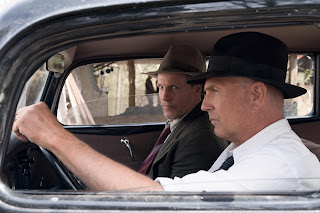
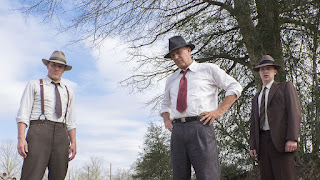
It's 1934 in Texas, and violent criminals Clyde Barrow and Bonnie Parker are folk heroes. After the pair embarrass Governor Miriam "Ma" Ferguson (Kathy Bates) by orchestrating a prison break, she reluctantly agrees to call upon retired Texas Ranger Frank Hamer (Kevin Costner) to hunt down the couple. He teams up with his ex-partner Maney Gault (Woody Harrelson) and despite advancing years and limited physical abilities they hit the road to try and intercept the elusive outlaw couple.

Working on the theory that criminals always go home, Hamer and Maney focus on the Dallas area, but the locals are protective of the famous couple and close ranks. Bonnie and Clyde's killing spree continues, with several police officers murdered and the FBI helpless. Hamer and Maney maintain a dogged pursuit and cross into neighbouring Oklahoma then Louisiana, and gradually gather enough clues to close-in on their targets.

An essential antidote to the romanticism of Bonnie And Clyde (1967), The Highwaymen is the other side of the story. Here the criminals are infrequently spotted bloodthirsty killers, ambushing and murdering police officers for fun, including Bonnie applying the final shotgun blast to the head of already fallen men. The John Fusco script demonstrates no sympathy towards any societal or economic justifications. Clyde's father (William Sadler) gets one long scene to try and explain his son's actions, and is summarily deflated by Hamer.

As for the folk hero status of the two murderers, The Highwaymen adopts an exasperated shake-of-the-head stance. For deep-seated reasons, this is a society that venerates anti-authoritarianism. Men like Frank Hamer and Maney Gault can do little other than bypass the nausea and get on with the job. 

And so director John Lee Hancock settles down to tell the story of two former Texas Rangers, themselves no strangers to bloodletting. They carry deep emotional scars, and at the start of the movie are hiding behind domesticity (Hamer is more successful) to bury the pain. Through Department of Corrections Chief Lee Simmons (John Carroll Lynch), the state calls upon them to unretire and sanctions two more killings.

Hamer and Maney are old, unable to run after suspects, and well past their sharp shooting days. What they do have is guile and experience, and gradually they recreate their partnership dynamic and make progress. Their quest is long, mistakes are made, and more people die. Through a draggy middle act, Hancock struggles to justify 132 minutes of running time, although the stark vistas of Texas and a landscape dotted with ramshackle depression-era migrant camps offer good visuals.

The two veteran actors help ride out the slow patches, the pauses for reflection well-paced to add texture without interrupting flow. Harrelson and Costner both co-produced and equally invest in their roles, Harrelson as Maney in particular showcasing a maturity to now discern the thin margins between right and wrong. 

The Highwaymen are destined to arrive at a well-known and culturally iconic climax. The joy is in the journey, and two seasoned experts ensure a worthwhile drive.


All Ace Black Movie Blog reviews are here.

Sunday, 9 May 2021

Movie Review: White Men Can't Jump (1992)

A basketball buddy movie, White Men Can't Jump features energetic streetball action but precious little else.

Basketball hustler Billy Hoyle (Woody Harrelson) arrives in Los Angeles and heads to the Venice Beach outdoor courts. Billy uses his whiteness to fool other players into thinking he is useless, and he quickly gets the better of local showboater Syd Deane (Wesley Snipes).

But Billy is incompetent at managing money, and owes several thousand dollars to loan sharks. His girlfriend Gloria (Rosie Perez) can't keep him from losing whatever money they save. Syd suggests they team up to hustle larger amounts from the tougher parts of town, and they also enter an upcoming 2v2 tournament. The two men have to guard against each other and maintain a spiky camaraderie on and off the courts, always testing the limits of their evolving friendship.

Close to two hours of repetitive trash-talking gets tiresome, but writer-director Ron Shelton persists. White Men Can't Jump is a street level sports comedy-drama idea waiting for a plot, and offers little beyond the most basic buddy movie structure and familiar sports hustle cliches. The loan shark subplot is flimsy enough to blow away in the ocean breeze, and late-in-the-day dramas involving Gloria getting her shot on Jeopardy and a sudden crisis forcing Billy to choose between Syd and Gloria appear tacked to prolong the running time.

And so endless scenes showcase basketball players insulting each other and each other's mothers in a foul-mouthed extravaganza. The ear-to-the-ground banter initially registers as gritty, but the ideas quickly run out. Shelton has to lean heavily on stars Harrelson and Snipes, and they do their best to inject life into the off-the-court scenes. But the friendship between the two men remains stalled in macho needling and juvenile one-upmanship, men behaving like boys and wondering why their women are exasperated.

When everyone shuts up and plays basketball Shelton finally finds some beauty within the urban decay, slow-motion used to good effect to highlight slick moves and bodies in elegant motion. White men may or may not be able to jump, but men and women of all colours can make better movies than this.


All Ace Black Movie Blog reviews are here.

Saturday, 3 October 2020

Movie Review: The Glass Castle (2017)

A drama about family ties, The Glass Castle explores the long shadows cast by a difficult upbringing.

In 1989, Jeannette Walls (Brie Larson) is a New York City newspaper gossip columnist engaged to financial advisor David (Max Greenfield), and trying to distance herself from an unconventional past. Her parents are squatting in an apartment building, and as she works up the courage to let them know she is marrying David, her story is revealed in flashbacks.

Jeannette's father Rex (Woody Harrelson) and mother Rose Mary (Naomi Watts) are raising four children in poverty, instability, and without formal schooling. The family is always on the move and barely one step ahead of the bill collectors. Rex is an alcoholic and cannot hold a job; he is also a big dreamer and waxes eloquent about grand plans to build an innovative glass castle for his family. He has a close and trusting relationship with Jeannette, the most astute and observant of the kids.

Rose Mary is an amateur painter and mostly stands by Rex, eventually convincing him to relocate the family back to Welch, West Virginia and settle in a ramshackle house near his mother Erma (Robin Bartlett). With the kids always near starvation and Erma's abusive personality adding further strain, Jeannette and her siblings plot a new independent path to break free from their parents.

Based on a true story adapted from Jeannette Walls' autobiographical book, The Glass Castle is complex drama carrying echoes of The Mosquito Coast and Captain Fantastic. While fathers refusing to abide by the norms of society are a stock cinematic topic, director Destin Daniel Cretton, who also co-wrote the script, overcomes familiarity with a beguiling story of familial love colliding with child maltreatment. 

At the centre of the story is Rex as the wayward father figure still influencing every aspect of Jeannette's life. His anti-authoritarian behaviour combined with natural (if wasted) charm, alcohol abuse and worrying disregard for the necessities of life create a dangerous edge. But in the flashback scenes, Cretton balances Rex with one good deed compensating for every despicable act. His failures as a traditional father are accompanied by limitless imagination, unconditional love, lessons from the school of life and encouragement to pursue dreams. His mother Erma's behaviour offers hints as to why Rex is the way he is, but ultimately Jeannette rightfully and righteously parks her resentment at her father's doorstep.

As an adult she inherently knows Rex would approve of neither her marrying a dull financial analyst nor pursuing a career as a gossip columnist. Yet he is unable to modify his boorish behaviour and embarrasses her at every opportunity. Their father-daughter bond is close to failure, but Cretton excels in several moments when the child Jeannette is the only person who can influence Rex. From convincing him to join the trek to Welch to imploring him to stop drinking, her voice resonates with him like no other.

Brie Larson is mostly dour in a thankless role full of brooding, and despite the childhood scars Jeannette steers towards snug rather than provocative resolutions. In contrast Woody Harrelson is the stand out performer and the driving energy behind the film. With a mischievous smile and a story for every occasion, he rounds Rex into a father who can be simultaneously loved and despised. 

The Glass Castle is an unattainable dream spun by a deeply flawed free spirit, and it rises to reflect his personality, cracks and all.


All Ace Black Blog Movie Reviews are here.

Saturday, 21 March 2020

Movie Review: Wag The Dog (1997)


A satire about the power of spin doctoring in politics, Wag The Dog is never less than over the top, but also always funny.

The United States presidential election is eleven days away. The President is running for re-election, but is suddenly facing damaging accusations of sexual misconduct. Renowned spin doctor Conrad Brean (Robert De Niro) is called in to manage the crisis. Working with presidential aid Winifred Ames (Anne Heche), he starts to conceive of a war scenario with Albania to distract the press.

Conrad and Winifred recruit Hollywood movie producer Stanley Motss (Dustin Hoffman) to help the cause. He assembles a group of creative artists to create the justification for war, complete with a made-up story of a suitcase nuclear bomb hidden in Canada, fake Albanian village vignettes, manufactured patriotic songs and imaginary victims. When CIA agents disrupt the bogus war narrative, Conrad and Stanley pivot towards a prisoner-of-war sob story featuring Sergeant William Schumann (Woody Harrelson) as a soldier in need of rescue.

In 1998 President Bill Clinton became embroiled in the sex scandal featuring White House intern Monica Lewinsky, and by 1999 the United States was bombing Yugoslavia. By 2016 the concept of fake news and alternative facts had become part of the political lexicon. But before all the jaw-dropping reality came the prescient fiction. Director Barry Levinson brought Wag The Dog to the screen with almost perfect timing, screenwriters Hilary Henkin and David Mamet adapting the 1993 book American Hero by Larry Beinhart just in time to grab an I-told-you-so front seat to history.

In turns funny, ludicrous and cutting, the film never pretends to be anything other than a broad satire. The spin doctoring to create and then capitalize upon a non-existent war is beyond any realms of reality, but Levinson runs with it as a plot device to poke fun at the extremes of both Washington DC and Hollywood. Nothing is sacred, least of all the truth, as Conrad, Stanley and their assembled entourage of talented artists allow their imaginations to run wild. They then possess and can deploy unlimited resources to turn their fantasies into a polished visual and aural reality to dominate the attention of a nation.

And even when CIA agents shine a light upon the grand ruse of a non-existent war with Albania, the subterfuge does not stop. Now the story of Sergeant William Schumann, complete with the nickname Old Shoe, is concocted. Just when it seems the film is stretching its own incredulity too thin, Woody Harrelson arrives with a hilariously edgy performance deserving its own narrative. The Schumann character proves too hot to handle even for the combined manipulative skills of Conrad and Stanley, and still they will not give up on their lofty plan to achieve mass distraction.

The lead performances are happy to yield to the enormous wackiness. Veterans Robert De Niro and Dustin Hoffman easily bounce each off other with relaxed portrayals of men good at what they do, comfortable in their own skin, and aware they are still stronger as a team. In an underwritten role, Anne Heche suffers in comparison. Willie Nelson appears as a grizzled songwriter recruited to provide the soundtrack to a crisis, although Levinson is guilty of giving all the incidental mock artefacts too much screen time, as well as a surplus of self-congratulatory moments.

Wag The Dog is happy to propose that everything perceived as fact may be an artistic creation in service of nefarious objectives. The rich and powerful not only influence history, but also bankroll the peddling of absurd alternative realities to serve selfish agendas. It's an entertaining premise, and at least in spirit, painfully close to the truth.


All Ace Black Movie Blog reviews are here.

Saturday, 30 November 2019

Movie Review: Triple 9 (2016)


A crime thriller, Triple 9 features stellar action set-pieces, but also a large cast struggling against a convoluted and context-free plot.

In Atlanta, Michael Atwood (Chiwetel Ejiofor) leads a gang of ex-military types conducting high-risk heists for Russian crime lord Irina Vlaslov (Kate Winslet), who holds Michael's young son as leverage. He calls upon corrupt cops Marcus (Anthony Mackie) and Franco (Clifton Collins Jr.) to join his crew to steal a bank safety deposit box. Detective Jeffrey Allen (Woody Harrelson) starts to investigate, while Irina demands Michael immediately start planning a follow-up theft of critical records from a Homeland Security building.

Jeffrey's nephew Chris (Casey Affleck) is an honest cop and Marcus' new partner. They tangle with a group of tough street gang members, including Luis Pinto (Luis Da Silva). To create a diversion for the Homeland Security heist, Michael's crew decide an "officer down, code triple 9" incident is required to draw police resources to the wrong side of town. Chris is selected as the victim to be shot, but little will go according to plan.

Triple 9 features three well-executed action set-pieces, neatly placed at the start, middle and near the end of the film. The first establishes the pace with Michael's gang pulling off the audacious bank break-in followed by an insane car chase. The second is an incidental but still impressive house search followed by a street chase and fire fight as Chris and Marcus go after a member of Pinto's gang in a hostile neighbourhood. And the finale is the double whammy of the code triple 9 incident overlapping with the Homeland Security theft.

In these scenes director John Hillcoat excels in delivering cohesive thrills, but the film struggles during all the in-between sections. The Matt Cook script drops in on all the characters essentially mid-flight and never pauses to set a meaningful context. The people, places and relationships are sketched in using the broadest of strokes, and as a result it is exceptionally difficult to care about any of them.

The central plot supposedly driving all the action involves the evil Irina attempting to free her barely-seen but highly influential husband from an overseas prison by getting her hands on some vaguely defined records, a classic example of a hastily slapped together, needlessly complicated yet still utterly flimsy MacGuffin.

The effort to portray Michael as a victim lands with an unconvincing thud, his semi-hostaged child (the mother is Irina's more chill sister Elena, played by Gal Gadot) a lame device to garner sympathy. Chris is supposed to emerge as the honest core of the story but he is dramatically under-defined, while a myriad of greasy bad guys, bad cops, and bad guys who are ex-cops, all with labyrinthine personal connections, clutter the screen. By the time it becomes clearer who is who, most of them are dead anyway.

Woody Harrelson adds his distinctive brand of caring by not caring, here as a drug-addicted detective unpeeling the rash of daring heists, while Kate Winslet's turn as a Russian mob boss borders on cartoonish.

Triple 9 does feature a triple header of accomplished highlights, but these are strung together with saggy material.


All Ace Black Blog Movie Reviews are here.


Saturday, 27 July 2019

Movie Review: The People vs. Larry Flynt (1996)


A biography of the infamous pornographer, The People vs. Larry Flynt delves into a smut peddler's unlikely influence on redefining the legal limits of free speech.

From humble childhood beginnings in Kentucky selling moonshine, by the early 1970s the brash Larry Flynt (Woody Harrelson) is the owner of strip clubs in Cincinnati. A relentless womanizer, he nevertheless falls in love with Althea (Courtney Love). To promote his strippers he starts publishing Hustler magazine with the help of his brother Jimmy (Brett Harrelson), and orients the content to the working man, pushing the boundaries of explicit sexual imagery. Flynt also lands a coup by publishing nude photos of former first lady Jacqueline Onassis, and becomes unimaginably wealthy.

The magazine incurs the wrath of self-appointed guardians of public morality, including Charles Keating (James Cromwell). Numerous lawsuits and legal charges stemming from accusations of obscenity follow. Young lawyer Alan Isaacman (Edward Norton) offers his services and defends Larry's right to free speech and to satirically mock public figures, including televangelist Jerry Falwell (Richard Paul). Then an unidentified sniper attempts to assassinate Flynt, altering his life forever.

Notable societal milestones often originate from unlikely margins. Hustler's right to publish outlandish sarcasm landed in front of the United States Supreme Court in 1988, and in The People vs. Larry Flynt the writing team of Scott Alexander and Larry Karaszewski trace an obscenity merchant's willingness to push boundaries all the way to the highest court.

Along the way, director Milos Forman crafts a baroque drama and wild romance, perhaps a pure embodiment of the American Dream. The 1960s sexual revolution and the anti-authoritarian sentiments of the early 1970s built the stage onto which Flynt strides to rewrite the rules of glossy sexual imagery for mainstream sale. That he finds a large audience and faces momentus opposition is no surprise, but Flynt uses his wealth and success to push ahead and take on his critics in various courtrooms. He wraps his empire in the flag of free expression, highlighting the hypocrisy of violent imagery depicting illegal acts being far more available and acceptable than pornography.

The People vs. Larry Flynt is also a love story, Flynt finding in Althea Leasure his perfect kindred spirit. Emotionally damaged from a difficult childhood, she loves sex as much as he does and possesses a sharp business mind to help keep pushing Hustler to new limits. Rock singer Courtney Love is exceptional in the role, starting out as a bright spark before descending to the wobbly depths of drug addiction and disease.

Along with the glitzy depiction of a rise from rags to riches, the film does spend considerable time in dark and depressing territory. Flynt takes the weirdest detour towards combining new-found Christianity with pornography, then the assassination attempt incapacitates him physically and emotionally. Addiction, depression, and mental anguish become constant companions, and Forman wades through musty territory to expose the rays of light within an unraveling mind.

The People vs. Larry Flynt depicts a real-life circus act in all its grandiose dysfunction, one man breaking barriers and paying the price in a volatile mix of pornography, love and law.


All Ace Black Blog Movie Reviews are here.


Wednesday, 5 December 2018

Movie Review: The Edge Of Seventeen (2016)


A high school drama and comedy, The Edge Of Seventeen deftly delves into the world of teenagers where every emotion and setback is heightened.

Seventeen year old high school student Nadine (Hailee Steinfeld) announces to her laid back teacher Mr. Bruner (Woody Harrelson) she is about to kill herself. In flashback, Nadine is revealed to have been an introverted child, while her older brother Darian was easygoing and popular. Nadine suffered a shock when she lost her father early in life, and never got along with her self-obsessed mother Mona (Kyra Sedgwick). But in elementary school she finally found happiness through a long-lasting friendship with classmate Krista.

Now in high school, Nadine still finds it difficult to fit in, and her one true friendship is severely tested when Krista (Haley Lu Richardson) and the hunky Darian (Blake Jenner) start a relationship. Nadine has a crush on cool kid Nick (Alexander Calvert), who probably does not know she exists. Classmate Erwin (Hayden Szeto) appears interested in Nadine, but is equally awkward and tentative. With Mona's insensitivity amplifying a really bad week, the world seems to close in on Nadine.

Written and directed by Kelly Fremon Craig and co-produced by James L. Brooks, The Edge Of Seventeen breathes fresh life into teen coming-of-age high school film. More drama than comedy, Fremon Craig strides into serious terrain for young adults, where friendships are sacrosanct, crises escalate in a hurry and viable options appear limited in the heat generated by raging hormones.

The film is light on its feet despite the weighty subject matter. Fremon Craig is able to represent and emphasize with her characters while still poking gentle fun at the hypersensitive teen world. The scenes are brisk, the dialogue sharp and bright, and the film avoids melodrama even when Nadine's world is at its darkest.

A stripped down Hailee Steinfeld effortlessly carries the film on her shoulders, playing Nadine as a teen overwhelmed by living in her brother's long shadow, still missing her father, feeling invisible when it comes to the dishy boys, and confounded by an egocentric mother (with Kyra Sedgwick delivering some career-best work). Nadine perceives Krista's relationship with Darian as the worst kind of betrayal, triggering a rapid downward spiral towards self-inflicted humiliation and despair.

To soften the often somber tone, The Edge Of Seventeen does seek out moments of wit and humour, and most of these are delivered courtesy of Mr. Bruner. In a performance so intentionally lackadaisical he often threatens to disappear into his teacher's chair, Woody Harrelson as Bruner offers a counterpoint to all of Nadine's angst, at once comforting and exasperating. Without ever lecturing or hectoring, Bruner absorbs Nadine's turmoil and nonchalantly nudges her towards exploring a new thought stream.

Nadine will have to find her own way out of the doldrums. The Edge Of Seventeen exposes the seemingly crushing pressures of growing up and fitting in, and the teenager's extraordinary resiliency and capacity to cope and finally unravel the puzzle of growing up.


All Ace Black Blog Movie Reviews are here.


Saturday, 20 October 2018

Movie Review:EDtv (1999)


A romantic comedy with a satirical edge, EDtv explores the ups and downs of day-to-day life in the era of trash reality television.

In San Francisco, television executive Cynthia Redd (Ellen DeGeneres) conceives of a new TrueTV network consisting of 24/7 live coverage of one individual's life. Ray Pekurny (Woody Harrelson) is keen to apply, but his more lackadaisical brother Ed (Matthew McConaughey) is selected instead.

The Pekurnies are a rambunctious blue collar family, with the intense Ray dreaming of opening a gym and making it rich, while Ed is happily stuck in a dead-end job as a video store clerk. Their mother Jeanette (Sally Kirkland) was abandoned by her husband Hank (Dennis Hopper) and is now in a relationship with the wheelchair-bound Al (Martin Landau).

With cameras recording Ed's every move, the show gets off to a slow start, but when Ray cheats on his girlfriend Shari (Jenna Elfman) and Ed and Shari become a couple, ratings and viewership take off. The network is renamed EDtv, and Cynthia's boss Whitaker (Rob Reiner) is thrilled. But maintaining a relationship under the constant glare of the cameras proves too much for Shari, and Ed confronts the downsides of sudden fame.

Directed by Ron Howard and written by Lowell Ganz and Babaloo Mandel, EDtv deserves credit for creating new space to explore within the romantic comedy genre. And the arena of reality television, where life becomes a show and every nobody can imagine being a celebrity, proves to be a challenging environment for love to thrive.

Howard captures the claustrophobic and bizarre freakshow of continuous filming around one individual. The camera operators and sound technicians capturing Ed's every moment are never more than a couple of feet away from him, or scrambling to catch up. The ego boost of course goes to Ed's head, and he frequently slips into playing for the cameras, often to the detriment of those around him. As real as it wants to be, reality television by its mere presence alters reality.

And Shari is understandably unable to cope. Living in a fishbowl, unsure of whether any of Ed's emotions are genuine, and judged by an entire nation of voyeurs, she seeks to disengage. Whatever could have been real between them is threatened by the freakshow of obsessive celebrity.

EDtv touches on other pertinent themes, including the pleasure Middle America takes in gawking at the unkempt lives of the unwashed, Cynthia and her team unable to resist stage-managing moments to boost ratings, television feeding on itself as Ed's life becomes fodder for late night talk show hosts, and the profits-above-all mentality of network executives.

The cast members maintain their footing amidst the unhinged reality, with McConaughey, Harrelson and DeGeneres adding the right touches of humour, while Elfman conveys the hurt confusion of a woman victimized - repeatedly - by a circus she never asked to attend.

Prescient and accurate, EDtv reflects a society regressing in real time on a diet of intellectual junk.


All Ace Black Blog Movie Reviews are here.


Saturday, 15 September 2018

Movie Review: Seven Pounds (2008)


A redemption drama and romance, Seven Pounds is fervent but structurally over complicated and slow moving.

Ben Thomas (Will Smith) phones 911 to report his own suicide. In flashbacks, Ben verbally abuses Ezra (Woody Harrelson), a blind call center operator, and uses his IRS credentials to track down multiple people who owe taxes but also appear to have serious medical or social problems. They include Emily (Rosario Dawson), who suffers from a serious heart condition, and Connie (Elpidia Carrillo), a single mom being abused by her boyfriend.

Other flashback snippets show Ben as an aeronautical engineer; enjoying the company of his girlfriend; reliving the trauma of a car crash; having tense conversations with his brother (Michael Ealy); and moving into a motel room. He refuses to give a tax break to seniors' care centre manager Stewart (Tim Kelleher), who is mistreating patients. Ben comforts Emily after a medical scare and a mutual attraction develops, but he remains mysterious and refuses to reveal too much about himself.

After 2006's The Pursuit Of Happyness, Smith reunites with director Gabriele Muccino, and the result is a thick broth of sincerity and self-sacrifice. Although undeniably thought-provoking and debate-inducing, Seven Pounds also unmistakably tries too hard. Through its convoluted structure the film hides plenty from its audience and the jumbled fragments of flashbacks are confusing for the sake of confusion. Unraveling both the why and the what of Ben's actions is a big load for the film to carry, and suggests Muccino did not believe in the inherent strength of the core material.

And maybe that's because beneath the film's well-intended message, the plot holes are massive for what is intended as a grounded soul-searching drama. Seven Pounds skips over the ease with which government agents can be impersonated; transplants administered; families relocated; and vintage machinery repaired.

When the threads of the plot finally start to make sense, the film gains some traction, but then far too much time is invested in the romance between Ben and Emily. Many of the other good deeds Ben commits are treated in almost dismissive morsels, and for a long stretch Seven Pounds transitions from a dramatic story of penance to a straightforward, old-fashioned romance between two damaged individuals.

Will Smith stretches his more serious acting muscles and is suitably dour for most of the film. Rosario Dawson emerges as the emotional centre, and radiates a joyful determination to appreciate life in the face of Emily's seemingly unalterable impending rendezvous with death.

Seven Pounds asks big questions, but though jumbled delivery comes up with only partial answers.


All Ace Black Blog Movie Reviews are here.


Friday, 30 March 2018

Movie Review: Rampart (2011)


A character drama, Rampart goes for oodles of style but is fundamentally lacking in meaningful substance.

It's 1999 in Los Angeles, and the police department is rocked by the corruption scandal named after the tough Rampart division. Veteran Officer Dave Brown (Woody Harrelson) carries a dirty reputation and emotional scars from the Vietnam War, patrolling the streets with an eye for brutality.  Brown is barely on speaking terms with his two ex-wives (who are also sisters) Barbara and Catherine (Cynthia Nixon and Anne Heche). He is also detached from the lives of his two daughters, brooding teenager Helen (Brie Larson) and the younger Sarah.

Brown roughs up a detainee and is caught on camera bludgeoning another man. He is hauled in front of disciplinary committees while Assistant District Attorney Joan Confrey (Sigourney Weaver) urges him to retire. Brown starts an affair with lawyer Linda (Robin Wright), although he is suspicious of her motives. Meanwhile retired cop Hartshorn (Ned Beatty) is sympathetic and warns Brown that he is being used as a distraction.

Directed by Oren Moverman who also co-wrote the script with James Ellroy, Rampart is caught in no-man's land. With a barely-there story, an unexplained context and wafer-thin characterizations, the film spends most of its time in close-up, observing Brown's mannerisms as he cruises the streets and lights up cigarettes.

While Woody Harrelson buys fully into the role, he has precious little to work with. Officer Brown is certainly not likable and neither is he magnetic or interesting. He is simply a disturbed thug, doing just enough to ensure the system will struggle to fire him. The post Vietnam War trauma excuse floats in and out of the film in a couple of references, and otherwise Brown is left exposed on-screen, unable to generate any reason why anyone would care about him.

Elsewhere plenty of people populate Dave Brown's universe, with a strong cast ready to bring them to life, and they are all shortchanged. Two ex-wives who are sisters may be an interesting twist, but not when they are both ill-defined. A dark affair with a seemingly troubled slick lawyer slumming it in Brown's universe offers intriguing opportunities, but Moverman and Ellroy do not appear to know what to do with the subplot.

Ned Beatty's Hartshorn shows up intermittently hinting at dirty conspiracies, and these are perhaps better explained in other movies. Ben Foster as a wheelchair-bound but rather ghostly presence shares some sit-still-and-stare moments with Harrelson, and Ice Cube pops up late as an Internal Affairs officer. Steve Buscemi and Jon Bernthal appear in brief scenes.

Rampart vaguely hints at attempts to echo the street-level grittiness of Training Day but in the end falls well short. This cop drama is absent both the compelling cop and the essential drama.


All Ace Black Blog Movie Reviews are here.


Tuesday, 16 January 2018

Movie Review: Three Billboards Outside Ebbing, Missouri (2017)


A social drama and comedy, Three Billboards Outside Ebbing, Missouri is a sharp story about grief, lashing out, and unintended consequences.

Seven months after the unsolved rape and murder of her teenaged daughter, the deeply bitter Mildred (Frances McDormand) buys advertising space on three billboards on a quiet rural road, calling out Chief Willoughby (Woody Harrelson) for the lack of any arrests. Married to Anne (Abbie Cornish) and a father of two young daughters Willoughby is well-respected by the small community. He is also suffering from terminal cancer.

The billboards cause a backlash, and Mildred's son Robbie (Lucas Hedges) and ex-husband Charlie (John Hawkes) are among many upset by her actions. Only a few friends, including the dwarf James (Peter Dinklage), stand by her. Dixon (Sam Rockwell) is one of Willoughby's officers. Still living with his mom, he is quick to lose his temper and harbours barely concealed racist tendencies. The billboards drive him to the edge, and tensions escalate. But with Mildred refusing to back down, events spiral in unexpected directions.

Written and directed by Martin McDonagh, Three Billboards provides biting commentary on life's volatility, and delights in feinting to one side before jumping to a previously unforeseen path. Just as soon as the narrative appears to settle down to a routine story of awakening and redemption, the stunningly sharp curves emerge, and the story shoots off into a succession of often jaw-dropping twists.

A dark rollercoaster tone forces humour and tragedy to brilliantly and uncomfortably rub shoulders, McDonagh tightly coupling life's absurdities with the inevitabilities of appalling human failings. Everything that can be expected to unfold does not, and everything that does happen is unexpected. And yet entrenched societal forces dig in, unmoved and not interested in yielding to any amount of grief, anger or levity.

The film plays with themes of justice deserved and demanded, hypocrisy in the face of responsibility, and the fragile layer of community civility cracking under a tenacious scratch. Ebbing is an economically depressed community aware of its faults but more than willing to overlook them for the pretense of harmony. Mildred's three billboards upset the apple cart, for a while not much will be the same, but in Ebbing nothing will fundamentally change.

The rural backwater setting ensures that there are no distinguished bright lights amongst the characters. While Mildred is the protagonist supposedly deserving of sympathy, McDonagh drops early hints that she is very much part of her blue collar community, her anger concealing but not eliminating her penchant for trouble. Mildred's billboard stunt is not an out-of-character action, but rather in keeping with a woman quite happy to punch back hard against whatever displeases her, including a mouthy daughter. The revelations about Mildred's true self arrive as painful and unsettling shocks, and provide the film with enormous power.

Mildred along with Chief Willoughby and officer Dixon create a trio of memorable and richly drawn characters as the interplay between the angry mother, the sick police chief and the racist cop creates the film's labyrinthine foundation. McDonagh succeeds in demonstrating the fallacies of first impressions and teases out the capacity for transformative change.

Frances McDormand evokes the ghost of her greatest role in Fargo and delivers an immense performance fuelled by acidic acrimony. Woody Harrelson and Sam Rockwell have rarely been better, and share screen time with help from an elegantly shocking inter-character baton handoff.

The supporting characters add plenty of colour and context. Mildred's son Robbie offers an alternative window onto his mother's life, while ex-husband Charlie and his 19 year old girlfriend Penelope (Samara Weaving) offer both menace and some of the best comic moments. The ad agency salesperson Red Welby (Caleb Landry Jones), the dwarf James, a local priest, and a potpourri of police officers with various personalities bring the community to vibrant life.

Thorny, disquieting, challenging and unforgettable, Three Billboards Outside Ebbing, Missouri is a dazzling achievement.


All Ace Black Blog Movie Reviews are here.


Wednesday, 3 January 2018

Movie Review: Money Train (1995)


A buddy cops action thriller, Money Train is overcooked and underwhelming.

John (Wesley Snipes) and Charlie (Woody Harrelson) are bickering foster brothers who both work as undercover cops for the New York City transit authority. John is confident and has his life in order. Charlie is a free spirit, always in trouble and depends on John to bail him out. They both manage to infuriate railway operations chief Donald Patterson (Robert Blake). And when fellow officer Grace (Jennifer Lopez) joins their enforcement unit, both brothers decide to romantically pursue her.

Charlie runs afoul of poker game loan sharks and finds himself $15,000 in debt. Grace becomes a wedge between the brothers, and John grows tired of saving Charlie from himself. Meanwhile a psychotic arsonist known only as Torch (Chris Cooper) is on the loose in the subway. With the world closing in on him Charlie begins to dream of hijacking the nightly money train that collects the system's fare revenue.

Directed by Joseph Ruben, Money Train is bloated yet empty. Despite decent production values, everything here is heightened to childhood levels of exaggeration. The action scenes involving Torch and the climactic train heist are wildly over-the-top, defying all laws of logic and physics. The villainy of Patterson reaches caricature levels, the bickering between the brothers is contrived, and the three-way lust triggered by Grace splatters all over the screen, based on nothing more than one woman arriving to work alongside two men.

After the success of 1992's White Men Can't Jump, this was an attempt to nurture the on-screen buddy chemistry between Wesley Snipes and Woody Harrelson. The screenplay by Doug Richardson and David Loughery overplays its hands and asks too much of the actors. John and Charlie engage in scene after scene of predictable verbal sparring lacking in wit and originality, and it all grows tired and old very quickly.

And when it comes to the action set-pieces, Ruben appears oblivious that more can be less, and much more disintegrates into nothingness. Bodies are summarily dangled off high rises, bullets fly on passenger-filled subway platforms, and in the name of seeking the next cheap on-screen thrill, every safety protocol is broken by cops who should know better. And when the climax arrives, Charlie's hairbrained idea to hijack a highly secured train is a most unconvincing screen heist in both planning (none to speak of) and rational cinematic execution (botched).

Money Train superficially looks good and makes decent use of elaborate sets recreating the New York subway system. But this is an otherwise bumbled movie, a child's clumsy fist rummaging through what could have been an elegant train set.


All Ace Black Blog Movie Reviews are here.