Showing posts with label Jessica Lange. Show all posts

Friday, 29 August 2025

Movie Review: Hush (1998)


Genre: Suspense Drama  
Director: Jonathan Darby  
Starring: Jessica Lange, Gwyneth Paltrow, Hal Holbrook, Nina Foch, Debi Mazar  
Running Time: 96 minutes  

Synopsis: New Yorker Helen (Gwyneth Paltrow) is in a serious relationship with Jackson (Jonathan Schaech). They head out to meet his widowed mother Martha (Jessica Lange), who lives at Kilronan, the family's horse breeding countryside estate. Martha is full of fake charm and displays a possessive Jocasta complex towards Jackson. Helen becomes pregnant, marries Jackson, and they move into Kilronan to help revitalize the estate. Martha's passive aggressive hostility towards Helen kicks into overdrive.

What Works Well: The overheated family dynamics are never boring, and the running time is mercifully short. Veterans Nina Foch (as Jackson's grandmother Alice, banished by Martha from interacting with the family) and Hal Holbrook (as the town doctor) add a gloss of undeserved quality.

What Does Not Work As Well: This potboiler suffers from overacting (Lange, cigarette and drink over-emphasizing every line), non-acting (Paltrow, monotonously sleep-walking through the role), and under-acting (Schaech, his Jackson seemingly oblivious as his mother devours his wife). Martha's conniving is theatrical rather than astute, the characters behave according to the whims of the script rather than with any conviction, and their evolutions are jarring.

Key Quote:
Alice (about Martha): She was a stable girl, shoveling horse shit!


All Ace Black Movie Blog reviews are here.

Saturday, 16 November 2024

Movie Review: Crimes Of The Heart (1986)


Genre: Dramedy  
Director: Bruce Beresford  
Starring: Diane Keaton, Sissy Spacek, Jessica Lange, Tess Harper, Sam Shepard  
Running Time: 105 minutes  

Synopsis: In the small town of Hazlehurst, Mississippi, the three Magrath sisters reunite. The insecure Lenny (Diane Keaton) never married and still exhibits immature behaviour. The brash Meg (Jessica Lange) moved her life to Hollywood in pursuit of a singing career. And youngest Babe (Sissy Spacek) may suffer from mental health issues and has just shot her husband. The siblings reminisce about their mother, who committed suicide when they were young, and grapple with their snooty cousin Chick (Tess Harper). Meanwhile, a young lawyer crafts Babe's defence strategy and Meg considers reigniting a romance with the now-married Doc (Sam Shepard).

What Works Well: The attempt to tackle the insidious and often poorly understood impacts of mental health issues is laudable, and Sissy Spacek's performance touches delicate heights of comic fragility. 

What Does Not Work As Well: Writer Beth Henley adapts her own play and struggles to find cinematic notes, resulting in a fairly colossal waste of a dream cast. The dialogue is weighed down by theatricality, and neither Diane Keaton (almost ridiculous in her mannerisms) nor Jessica Lange (carrying a singular jaded attitude throughout, mostly focused on lighting cigarettes) ever find their footing. With the forced acting close to the surface and the attempted funny moments registering high cringe readings, director Bruce Beresford's customary efficiency generates neither empathy nor momentum.

Key Quote:
Chick, shouting: I've just about had my fill of you...trashy McGraths! And your trashy ways!


All Ace Black Movie Blog reviews are here.

Saturday, 13 April 2024

Movie Review: Marlowe (2022)


Genre: Crime Drama Neo-Noir  
Director: Neil Jordan  
Starring: Liam Neeson, Diane Kruger, Jessica Lange, Alan Cumming, Danny Huston  
Running Time: 109 minutes  

Synopsis: In Los Angeles of 1939, private detective Philip Marlowe (Liam Neeson) is hired by the married and wealthy Clare Cavendish (Diana Kruger) to find her missing lover Nico Petersen. Marlowe's investigation leads him to Floyd Hanson (Danny Huston), manager of the exclusive Corbata Club; Clare's retired movie star mother Dorothy Quincannon (Jessica Lange); studio boss O'Reilly; mobster Lou Hendricks (Alan Cumming); and Nico's sister Lynn (Daniela Melchior). As the dead bodies start to accumulate, Marlowe is drawn into a conspiracy involving the cross-border drug trade.

What Works Well: Although the shine is artificial, the pre-war Los Angeles era is recreated with affection. The plot is suitably complicated and features the required mix of crime, cover-up, jealousy, lust, triple-crosses, and quests for elusive objects and power, all swirling around elites and wannabes who should know better.

What Does Not Work As Well: Despite borrowing Raymond Chandler's legendary creation, the milieu and people never progress beyond a sense of dress-up: neither the locations nor outfits look lived-in. The dialogue is contrived, over-extending the writing talent and leaving the characters devoid of genuineness and struggling against an empathy void. Plot twists and coincidences are more bizarre than impressive, with an apparently key influencer largely invisible and plenty of loose ends abandoned in a blizzard of unconvincing explanations.

Conclusion: The stuff that disappointments are made of.


All Ace Black Movie Blog reviews are here.

Saturday, 4 June 2022

Movie Review: Country (1984)

A life-on-the-farm drama, Country does not expand much beyond a heartfelt but basic life-is-tough message. 

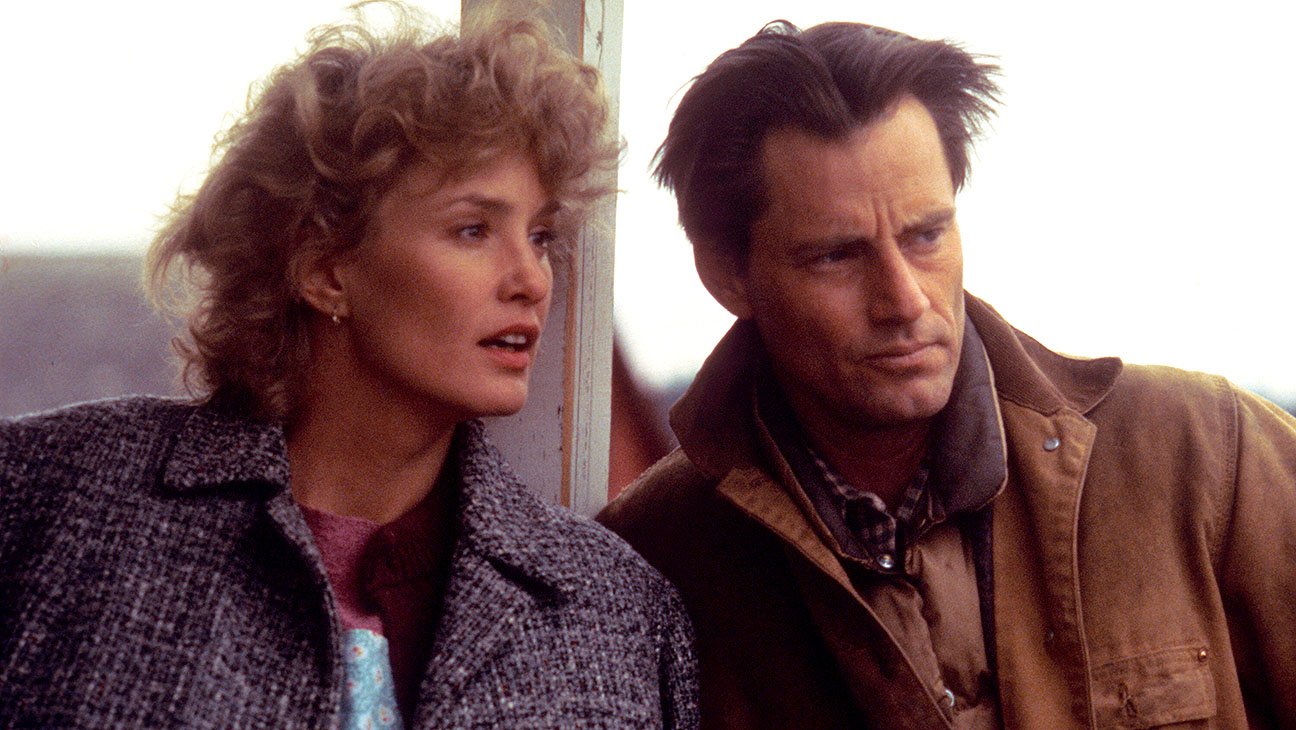
Jewel and Gil Ivey (Jessica Lange and Sam Shepard) operate an Iowa farm that has been in her family for generations. Her father Otis (Wilford Brimley) helps out, and the couple are raising teenager Carlisle, the younger Marlene, plus an infant.

Times are tough, the price of corn is low, and bankers represented by Tom McMullen (Matt Clark) apply pressure on the Iveys and adjacent farmers to start paying down debt or risk foreclosure. Gil buckles under the pressure, not helped by a drinking habit. It's left to Jewel to hold the family together and fight back to maintain control of her property.

Along with The River and Places In The Heart, Country was the third farm-based drama from 1984 featuring an A-list actress in the lead role. Jessica Lange does her part on this homestead, often looking out to the murky future somewhere in the mid-distance as she juggles an errant husband, a brooding child, a failing business, and a crusty father, all leading to drawing a line in the mud. That her final stand against evil banks is, at best, a pyrrhic victory is an apt summary of the film.

The William D. Wittliff script is more about concepts than plotting. Farming is a tough, underappreciated, and heavily leveraged way to make a living, politicians setting trade policies in faraway cities don't have a clue, and bankers are always slimy and can be downright mean in extending credit then pulling it back. The Iveys and their neighbors are plonked into these realities, and that's about it. An early tornado and later a capitulation to despair provide punch, but otherwise the family tensions arising from mounting financial pressure, exasperated by Gil's tendency to seek refuge inside beer bottles, are humdrum. 

Director Richard Pearce captures the mucky reality of life-in-boots, the sights, sounds, and almost smells of corn fields, livestock, sturdy pickup trucks, and extreme weather events jumping off the screen. Lacking dramatic thrust, Country settles for look and feel.


All Ace Black Movie Blog reviews are here.

Monday, 23 May 2022

Movie Review: Blue Sky (1994)

An army drama, Blue Sky uneasily mixes Cold War home-front military machinations with a story of a marriage compromised by mental illness and lust.

In 1962, Major Hank Marshall (Tommy Lee Jones) is a nuclear engineer working on the US Army's nuclear bomb testing program in Hawaii. His free-spirited wife Carly (Jessica Lange) suffers from severe mood swings, partially caused by her frustration at abandoning dreams of a Hollywood career to become an army wife. Their teenaged daughters Alex and Becky are used to frequent family relocations, but are exhausted by their mother's erratic behaviour.

Hank's next assignment is in Alabama, where Carly's sensuality scandalizes the army base community and attracts the attention of commander Vince Johnson (Powers Booth). Seeking to seduce Carly, Vince dispatches Hank to witness a nuclear test in Nevada, where Hank is shocked to find civilians exposed to radiation. Upon his return he has to deal with a disintegrating family and an army cover-up.

Filmed in 1991 but shelved until 1994, Blue Sky is a patchy and uneven drama. The restless, sensual, and perhaps bipolar wife provides Jessica Lange the license to thrill, and she does not disappoint with a scintillating performance. The burden her Carly places on a straightlaced military husband is an inviting mix of embarrassing episodes, awkward patience, and marriage-saving restraint. However, the second and third acts unravel in a hurry. Infidelity is quickly followed by a clumsy attempt at redemption, all in the shadow of a poorly defined cover-up and unsteady commentary about military hawks.

The title refers to the invisible hazards of radiation, but the debate about nuclear testing is limited to Marshall supporting the switch to underground tests while the establishment is gung-ho about protocols and unconcerned when civilians are exposed to danger. The topic is too serious to be consigned to the background of a libido-driven drama, and director Tony Richardson never finds the right balance between Carly's frolics and Cold War-driven tensions.

The script by Rama Laurie Stagner, Arlene Sarner and Jerry Leichtling is more at home within family dynamics, and supplements Carly's frequently unhinged behaviour with decent representations of a military family's life of continuous relocation. A unique type of love does glue Marshall and Carly together, while daughters Alex (Amy Locane) and Becky (Anna Klemp) provide a human face to the required resiliency of military kids. They confront their mother's mood swings with the pragmatism of rapidly evolving self-sufficiency.

Without ever quite achieving clarity of purpose, Blue Sky combines choppy patches with bright intervals.


All Ace Black Movie Blog reviews are here.

Wednesday, 9 September 2020

Movie Review: All That Jazz (1979)

An autobiographical musical drama from director Bob Fosse, All That Jazz explores the creative tensions and character flaws propelling a visionary artist.

Addicted to cigarettes, prescription drugs and sex, Joe Gideon (Roy Scheider) is burning himself out simultaneously conducting auditions and rehearsals for a new Broadway musical (an erotic airline show) while editing his latest film Stand-Up (about a controversial Lenny Bruce-like comedian played by Cliff Gorman). In his imagination, Gideon is also reviewing his life with the mythical Angelique (Jessica Lange, as the Angel of Death).

Ex-wife Audrey Paris (Leland Palmer) is part of the Broadway show and trying to hold on to her fading youth, while Katie Jagger (Ann Reinking) is Gideon's latest girlfriend, although he openly cheats on her. Both Audrey and Katie have a good relationship with his talented and precocious tween daughter Michelle (Erzsébet Földi). With his producers increasingly worried about their financial investments, Joe's health threatens to collapse.

Director Fosse co-wrote the script with Robert Alan Arthur, and uses All That Jazz to bare the soul and insecurities of a man stretched too thin. Motivated by a desire to never be ordinary and terrified by the prospect of failure, Gideon operates in full-speed-ahead mode, pushing past the point of exhaustion and ignoring all the danger signs until death greets him with a smile.

The film's first half is excellent, an exhilarating introduction to Gideon's chaotically creative existence. The auditions, rehearsals and editing scenes crackle with dawn to dusk intensity, Gideon always demanding more from himself and all around him. But his humanity is also revealed through tenderness towards the dancers and women in his orbit. Although unable to ever be faithful, Gideon remains a caring presence in the lives of Audrey and Katie, and is always ready with a shoulder around the arm of struggling performers.

The second half sags badly as one of the longest on-the-way-to-expiration sequences set on film. Gideon is hospitalized and does his best to ignore all medical advice and march towards his finality. This evolves into a series of mostly tepid hallucinatory musical numbers, Gideon's long goodbye playing out as the filming of a musical movie. Fosse's obsession with death quite naturally sucks the life out of the movie.

The highlights arrive in the form of three performance sequences, all packed into the front end. Soon after the opening credits, the on-stage auditions to the sounds of George Benson's On Broadway capture the sweaty desperation of a large group of dancers trying to land a coveted role in a new show. Later, Gideon jolts his Broadway producers into panic by unveiling a powerfully erotic new ensemble dance, an orgy-on-stage in everything but name, opening new possibilities for what a mile-high club may offer. The final focal point is much more personal: girlfriend Katie and daughter Michelle put on a delightful dance for Gideon in his apartment to the tune of Everything Old Is New Again.

In an inspired piece of casting non-dancer Roy Scheider is a lithe presence as Gideon, conveying an exhausted talent running on fumes but running nonetheless. Fosse's real-life partner Anne Reinking essentially plays herself, and although the role demands little, Jessica Lange is unforgettable as the welcoming spectre of death, a floaty spirit in white shrouds.

All That Jazz acknowledges living and dying as an inseparable couple, delivering a stirring if imperfect dance.


All Ace Black Blog Movie Reviews are here.

Tuesday, 5 April 2016

Movie Review: Big Fish (2003)


A heartfelt father-son drama with fantasy overtones, Big Fish goes looking for the magic ingredient that makes every man a multi-generational legend in his own family.

Journalist Will Bloom (Billy Crudup) is happily married to Josephine (Marion Cotillard) and living in Paris, as far away as he can from his elderly father Edward (Albert Finney). Will has had enough of Edward's propensity for telling tall tales at every opportunity, with the final straw arriving on Will's wedding day when Edward stole the limelight yet again by repeating an outlandish story about catching a huge fish the day Will was born using his wedding ring as a lure. When he hears from his mother Sandra (Jessica Lange) that Edward's cancer has deteriorated and he is near death, Will and the pregnant Josephine travel back to Alabama, with Will seeking a reconciliation with his dad.

Despite Will's pleadings, Edward cannot help himself: his conversation consists of repeated re-tellings of fantastical tales from his life, including as a young boy confronting a fortune-telling local witch (Helena Bonham Carter). As a young man (played by Ewan McGregor), Edward tangled with Karl the man-eating giant (Matthew McGrory), stumbled through a swamp and into a mythical and idyllic town called Spectre, and worked for a circus master with a dangerous secret (Danny DeVito). He met and doggedly pursued the love of his life Sandra (portrayed as a young woman by Alison Lohman) and teamed up with conjoined twins while on a secret military mission in North Korea. Will has to find a way to come to terms with Edward's unique perspective on a life well lived, before it's too late.

Directed by Tim Burton as a combination family drama and supernatural fairy tale, Big Fish adapts the Daniel Wallace novel and delves into the difficult waters where fathers and sons disconnect. The film is colourful, engaging and exudes a sense of wonder, all derived from Edward's unique take on his own life. The tension between father and son at life's denouement is appropriately less well developed, with both men quite stubbornly attached to their interpretation of how the stories of life should be recalled. The film does generate a warm glow from an accurate portrayal of a difficult family dynamic, and also avoids rushing towards any easy answers or pat reconciliations.

Big Fish mixes modern-day scenes of a dying dad staunchly defending his version of life in front of a disbelieving and quite frustrated son, with frequent long flashbacks to Edward's incredible life chapters. Burton is the perfect director to portray a glorified past through the lens of a fanciful imagination, with Will's inability to straddle the chasm between bland truth and embellished storytelling at the heart of his self-imposed estrangement. The film's aesthetics are beautiful, if too perfect in the way that well-polished stories scrub off all the inconvenient details and emphasize the storyteller's vivid heroics.

Billy Crudup, Albert Finney and Ewan McGregor are serviceable if all a bit theatrical in their portrayals of Will, the elder Edward and Edward as a young man respectively. Danny DeVito, Helena Bonham Carter and Steve Buscemi as a long-lost poet who turns into a Wall Street shark continue in the same vein of slight overacting for maximum effect.

Some of the stories from Edward's life are allegorical, others are amalgams, and still others are slight modifications of the truth. As an ambitious traveling salesman he lived a full life on his own terms, and ultimately his stories are his own definition of a soul on a quest for adventure and happiness. The arc of his life revolves around his deep love for Sandra, with many of his quests driven by his need to identify her, find her, win her heart, and then stay faithful despite the travails of life.

Will may or may not appreciate his dad's ability to turn the ordinary pages of life into a fabulous story of a love pursued, won and treasured, but he will never forget that big fish his dad caught on the day he was born.


All Ace Black Blog Movie Reviews are here.


Friday, 27 June 2014

Movie Review: Broken Flowers (2005)


A contemplative drama about lessons in life from lovers of the past, Broken Flowers enjoys an entrancing premise and a serenely tormented Bill Murray performance.

Don Johnston (Murray) is a rich but lonely man, having made his money in the computer industry. On the same morning that his latest girlfriend Sherry (Julie Delpy) dumps him, Don receives an unsigned letter from a woman claiming to have been his lover about 20 years ago. She wants to let Don know that she was pregnant when they broke up, and that Don has a 19 year old son who may be now looking for him.

Next door neighbour Winston (Jeffrey Wright), an amateur detective of sorts, convinces Don to head out on a trip to connect with four former lovers who may have written the letter.  Reluctantly Don agrees, and sequentially reconnects with widowed free spirit Laura (Sharon Stone), married real estate agent Dora (Frances Conroy), animal communicator Carmen (Jessica Lange), and trailer park trash Penny (Tilda Swinton). One of them may be the mother of the son he has never known, but finding out the truth will not be easy.

Directed by Jim Jarmusch with a subtle mix of pathos and humour, Broken Flowers is a wistful look at the what-may-have-beens of life. The film is an astute examination of emotional yearning through a journey to the actual present of the idyllic past. Well written with a hefty dose of sardonic realism, Broken Flowers may occasionally try a bit too hard to be an artistic amalgamation of Lost In Translation's curious style and Groundhog Day's riff on middle aged angst, but overall Jarmusch creates his own attractive life mystery tickling for a resolution.

Don knows that he has deprived himself of something better than a very empty house. What he finds on his trip are four contrasting alternate lives occupied by four women he once loved. Laura has not lost the spark of youth, despite losing a car racer husband in a fiery crash. Laura's daughter Lolita (Alexis Dziena) is doing everything possible to live up to her name in an interlude that reminds Don how old and lonely he is. Never mind his son; he could have had a daughter old enough to seduce men his age by now.

Dora is stiff, miserable, and married to Ron (Christopher McDonald), and the one woman who may still be harbouring feelings for Don. Dora has transformed from a carefree hippie teenager to a soulless adult salesperson, and Don reminds her of a life before conformance. Carmen has not sold out, but has instead veered into the pseudo new age crap of animal communication, and likely a lesbian relationship with her receptionist (Chloë Sevigny). Carmen rebuffs every attempt by Don to rekindle a connection.

And finally Penny is in the abyss, living in the ramshackle muddy middle of nowhere with a hick boyfriend. She simply can't handle any reminders of a past that actually held promise. There is a fifth woman who was also Don's lover from about 20 years ago, by Don has to visit Michelle at the cemetery: she died five years ago and could not have written the letter.

Laura, Dora, Carmen, Penny and Michelle provide a short odyssey of lust, regret, rejection, hate and death. Would Don's life have been better with any of these women? And more importantly, is one of them the mother of his son? As with any journey that seeks a definitive answer, Don returns home with plenty of new questions and the nagging certainty that the solution to the anonymous letter puzzle is just tantalizingly around the next corner. And now every young man takes on the appealing prospect of being, just maybe, his son.

Bill Murray is enormously watchable, remaining well within himself while slowly allowing Don to succumb to the gnawing doubt filling the empty spaces of his soul. The actresses portraying the four former lovers get short shifts, and they all leave an impression. Tilda Swinton, in just her one scene, portrays what it means for a life to disintegrate under the weight of what must have been some truly shocking decision making.

Understated and heartfelt, Broken Flowers is an ode to the mysteries of life's alternative destinies.


All Ace Black Blog Movie Reviews are here.


Friday, 20 December 2013

Movie Review: Cape Fear (1991)


A tense journey into unyielding terror, Cape Fear is an exceptional drama. Martin Scorsese creates an epic nightmare as one family's life is ravaged by an ex-convict hell bent on revenge.

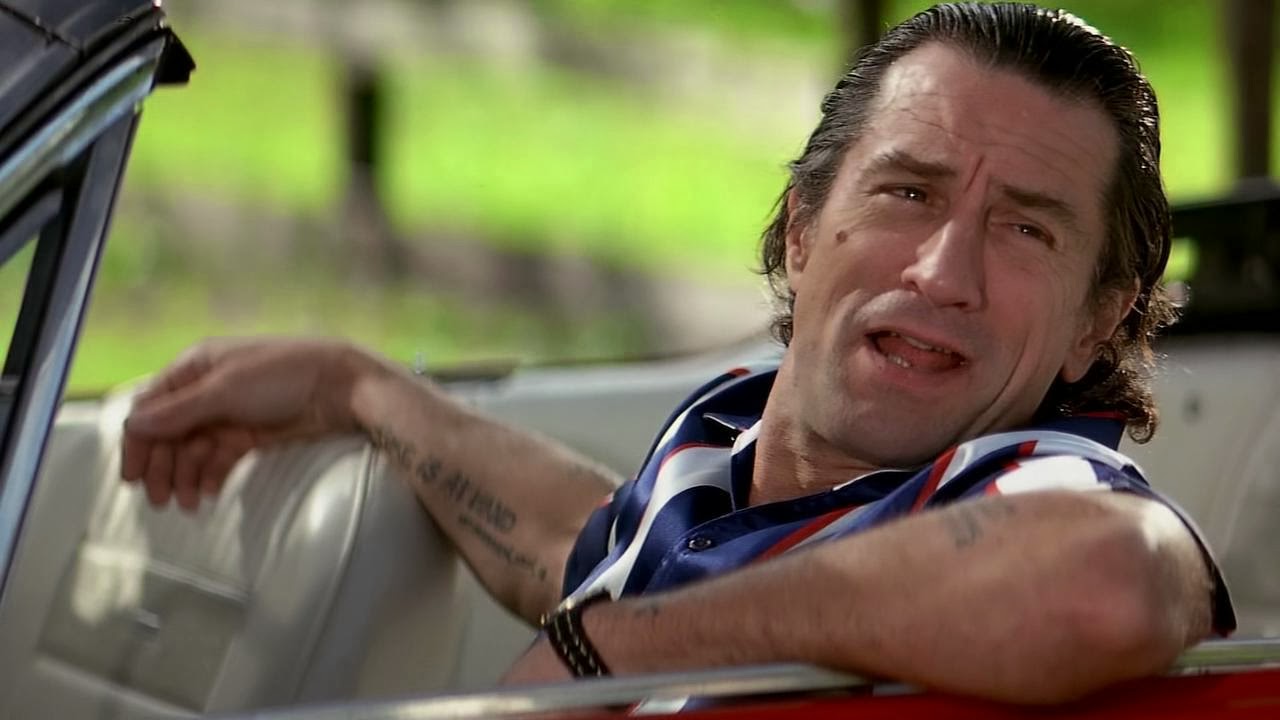
Max Cady (Robert De Niro) is released from prison after serving 14 years for viciously raping a teenager. He immediately goes to the quaint town of New Essex, North Carolina, where lawyer Sam Bowden (Nick Nolte) lives with his wife Leigh (Jessica Lange) and 15 year old daughter Danielle (Juliette Lewis). Sam was the Georgia public defendant tasked with representing Max. Convinced that Max was guilty, Sam buried an investigative report that could have helped to acquit his client. In prison, Max not only worked on achieving supreme physical fitness, but also educated himself and uncovered Sam's unethical behaviour. He now wants revenge for the lost years of his life.

Sam's marriage to Leigh is already in trouble, with Sam's eyes wandering towards court clerk Lori (Illeana Douglas), while Danielle is in rebellion against her parents. But Sam's troubles multiply when Max starts to stalk the family's every move. Leigh's dog dies suspiciously, and Lori is brutally raped by Max, but refuses to testify for fear that her relationship with Sam may be revealed. Max becomes more brazen, arranging to meet Danielle alone, showering her with flattery and attempting to turn her against her parents. Sam receives no help from the police, and in desperation turns to private investigator Claude Kersek (Joe Don Baker) for help. Kersek arranges for Max to receive a back alley beating, but the attempt at thuggery fails. Sam finds his house under siege, his family threatened, and no way to turn back a man obsessed with his own twisted brand of justice.

A remake of the 1962 film starring Robert Mitchum and Gregory Peck, Scorsese infuses his version with psycho-sexual and religious overtones that amplify the creepiness factor. Cady is not only evil and physically indestructible, he is a sexual predator on the hunt for new young victims, with Danielle his ideal target. He is also a philosopher fuelled by deviant religious fervour gained from devouring the Bible while in prison. Scorsese turns Cady into a heinous force of nature rather than a man, De Niro responding with wiry performance filled with barely restrained intensity.

Cape Fear builds tension surely and steadily. The film offers no relief, no humour, and no respite. With every scene, Scorsese nudges Sam Bowden's life closer towards the precipice, Cady's presence nibbling away at any security and comfort not already damaged by the simmering resentment between Sam and Leigh. By the time Sam packs up his family and starts the long drive to Cape Fear, fear is ironically the only thing holding Sam, Leigh and Danielle together.

The film is filled with memorable moments, including the dark alley fight with Cady taking on three goons hired by Kersek to solve Sam's problem, the game of stealth that ends with sheer bloody horror as Kersek attempts to lay a trap for Cady at Sam's house, and Cady's unique method of transportation to Cape Fear.

But the film's most hypnotizing scene is the encounter between Max and Danielle at the empty theatre, a meeting of Little Red Riding Hood and the Big Bad Wolf in man's clothing. It's a long scene, filmed by Scorsese with acute patience, as Max psychologically wraps Danielle around his figurative finger by preying on her burgeoning independence, and then literally uses his finger to dominate her by triggering her latent sexuality. It's a terrifying, asymmetrical confrontation, a demonstration of how much damage Max can deliver without even resorting to violence. Both De Niro and Lewis received deserved Academy Award acting nominations.

While Nick Nolte's Sam is more of a passive victim, Jessica Lange gives Leigh a full role in the mounting horror. Lange makes the most of the unresolved issues of betrayal harboured by Leigh towards Sam, and shines when it's time to defend her daughter at all costs, the only time that any character comes close to penetrating Cady's formidable psychological defences. Elsewhere in the cast, small roles for Peck, Mitchum and Martin Balsam provide a strong linkage back to the 1962 original.

With the blunders of the past re-emerging to haunt an imperfect present, Cape Fear is a classy experience in relentless horror.


All Ace Black Blog Movie Reviews are here.


Monday, 17 June 2013

Movie Review: Tootsie (1982)


A comedy about gender politics, Tootsie delivers excellent laughs with sharp social commentary, propelled by a virtuoso Dustin Hoffman performance.

Michael Dorsey (Hoffman) is a struggling actor based in New York City. Passionate about his craft but with a reputation for being difficult to work with, Michael's career is slipping away into low-key suburban theatre productions. Desperate for a last chance at stardom, and much to the horror of his agent George (Sydney Pollack, who also directed) and room mate Jeff (Bill Murray), Michael dresses up as a woman, adopts the persona of Dorothy Michaels, and lands the part of a hospital administrator on Southwest General a tawdry but popular daytime television hospital drama.

Michael gives Dorothy an independent, feminist edge, shaking up the show and quickly becoming the toast of the town. But Michael's love life starts to get really complicated. As Dorothy places more demands on his time, he neglects potential girlfriend Sandy (Teri Garr). Meanwhile, Julie Nichols (Jessica Lange), who plays the resident tarty nurse on Southwest General, finds herself strangely attracted to Dorothy, and Julie's widower dad Les (Charles Durning) is also quite smitten with the new star. Finally, the lecherous but semi-senile John Van Horn (George Gaynes), who portrays the senior doctor on the show, sets his sights on Dorothy as his next sexual conquest.

The unusually rich screenplay (co-written by Barry Levinson and Elaine May, among others) is able to maintain focus on the hearts of three characters, as Michael, Julie and Les all undergo journeys of discovery about what really matters in their lives. With a light touch but deliberate steering by Pollack, Tootsie delves into the skirmishes between the sexes, uncovering plenty of new angles to explore.

Michael thought that transforming into Dorothy would provide a superficial career boost. Instead, Dorothy became the change agent through which Michael gains a new perspective on his relationships. Michael becomes a better human being as Dorothy, with unexpected consequences.

While Michael's dour intensity and serious mannerisms mostly turned everyone off, Dorothy demands and provides R.E.S.P.E.C.T., and as it turns out, love and affection flow smoothly and in all directions when mutual respect is a common foundation. It becomes only normal that Dorothy's honest, open, playful and forthcoming personality attracts both Julie and Les. In Julie's case the purity of the relationship almost overcomes traditional gender boundaries, while for Les, Dorothy's virtue proves to be an immediate attraction to a widower.

Dustin Hoffman delivers an extraordinary performance, measured by how quickly the make-up is forgotten, and how powerfully Dorothy's presence as a woman is established and maintained. Michael's occasional stumbles in Dorothy's heels serve not only as comic touches, but also as a reminder that there is an actor beneath all those womanly clothes.

Jessica Lange, coming off career-making but highly intense roles in The Postman Always Rings Twice and Frances, demonstrates a glow for serious humour, Julie a much more interesting role than most comedies accommodate. Julie is allowing herself to be belittled in front of the camera as the airhead nurse, and off-camera by the show's director (Dabney Coleman). Dorothy proves to be an inspiration, and maybe more, prompting Julie to change her attitude towards relationships and more importantly, towards herself. Lange won the Best Supporting Actress Academy Award, the only win from 10 nominations received by Tootsie.

Terrific depth is provided by Durning, Garr, Coleman, Pollack, and Geena Davis making her screen début in a small, barely dressed, role. Durning, in particular, finds the sadness within a jovial but lonely man looking to fill the void left by the loss of a life-long love. Bill Murray pops up unannounced as Michael's laid-back room mate, providing acrid commentary on a pantomime spiralling into an unintended life experiment.

As it turns out, sometimes a man needs to walk in the heels of a woman to better understand what being a man really means.


All Ace Black Blog Movie Reviews are here.


Friday, 26 October 2012

Movie Review: The Vow (2012)


A sincere romance, The Vow fulfils its objective but never risks much excitement. The story of crash-induced amnesia threatening an ideal marriage is inspired by real events and told with heart, but there is no zing to energize the purposeful march towards a predictable resolution.

In Chicago, Paige (Rachel McAdams) and Leo (Channing Tatum) meet, fall in love, and get married. She's an artist and he owns a music studio, and together they are the definition of a perfect couple.  Their lives are shattered when Paige is knocked unconscious in a car crash. When she recovers from a medically induced coma, the past five years of her life are lost from her memory. Leo is a stranger, and Paige is more comfortable with her parents (Sam Neill and Jessica Lange) and still in love with former boyfriend Jeremy (Scott Speedman).

Paige and Leo gingerly try to re-establish their previous relationship, but while Leo is still madly in love, she is cool and detached, unable to find any passion in her work, and incapable of resisting the pull of her rich parents and Jeremy's re-ignited attentions. Leo does his best, but some clumsy missteps result in Paige moving back in with her parents, and the marriage teetering on the edge of extinction.

There is nothing not to like in The Vow, with a story of a fervent match made in heaven and a devoted husband fighting to re-earn the love of his wife. McAdams and Tatum have reasonable chemistry, the familial conflicts are never over-exaggerated, and Chicago provides steady support. Even the best friend characters are relatively normal rather than excessively animated. The film may lack a hot spark, but in being reasonably faithful to the essence of a true story, it probably wasn't looking for one.

Rachel McAdams is sweetness personified, her glowing personality carrying The Vow whether as the devoted wife or the confused victim of amnesia. The perkiness factor is never in doubt with McAdams, and the camera absolutely adores her, but doubts remain about the available depth behind the vivacious girl-next-door persona, and The Vow does little to challenge her.

Channing Tatum is lumpy, with a performance that is far from convincing enough to confirm his credentials as a leading man. His portrayal of the sensitive husband struggling with a fractured life is full of doe-eyed sadness, but he never threatens to dominate the screen with emotion or anguish.

Stalwarts Sam Neill and Jessica Lange provide straight-back support as Paige's parents, and Lange is afforded one dramatic scene to try and cook a stiff stand-by-your-man story. Neill never wavers from a stern Dad role straight out of the first chapter of the screenwriting handbook.

Director Michael Sucsy, in his big-screen debut, rides with the flow, wisely relying on McAdams to smooth out the rougher patches, erring on the side of over-exposing Chicago's landmarks, and generally doing little to either get in the way or enhance the narrative.

The Vow neither disappoints nor surprises, it just marches stoically down a well-worn aisle, delivering the requisite gentle tears and warm laughs.


All Ace Black Blog Movie Reviews are here.


Sunday, 1 August 2010

Movie Review: The Postman Always Rings Twice (1981)


During the Great Depression of the 1930's, drifter Frank Chambers (Jack Nicholson) enters the life of Nick (John Colicos) and his much younger wife Cora (Jessica Lange). Nick and Cora run a restaurant / gas station in rural California. Nick is a hard-working Greek immigrant; Cora is very bored; very trapped in a dead-end life; and very over-sexed. She meets her match in Frank, a small-time hustler with suitably small-time intelligence.

As soon as Nick turns his back, Cora and Frank are doing the horizontal mambo with animalistic passion on the kitchen table, after sweeping away some good-looking fresh bread and dough. Their uncontrolled lust soon drives them to thoughts of murdering Nick. They need two cracks at it, the first very botched and the second almost botched. When they do succeed in eliminating Nick, the law is quickly onto them. A legal battle, betrayal, acquittal, death in the family, pregnancy, another betrayal and a blackmail plot follow in rapid succession, before Frank learns that no matter what he does, his life will always be miserable.

This second Hollywood adaptation of James M. Cain's depression-era novel is most famous for its steamy sex scenes between Jack Nicholson and Jessica Lange. It does have a few other good points: the movie creates an excellent mood of poverty, drift and a desperate society scraping-by; the dialogue in David Mamet's screenplay is sharp; and Jessica Lange delivers a stunning performance of simmering passion knocking the lid off what is supposed to be the traditional wife's role. Michael Lerner as the lawyer Katz and Anjelica Huston as Frank's brief fling have fun and are entertaining with smallish roles.

But The Postman Always Rings Twice is also deeply flawed. The final third of the movie, after Nick is finally eliminated, careens out of control. This may be an intentional metaphor for the life of the illicit lovers, but from the trial of Cora to the ending, too many events are crammed into 45 minutes, and none are provided adequate time to breathe.

In contrast to the earlier, appreciatively slower development of the relationship between Nick, Frank and Cora, seemingly critical characters suddenly emerge out of nowhere and have a huge influence on the story: a complicated insurance company deal is given a quick hard boil; a mysterious stranger arrives unannounced and prompts Cora to leave Frank and visit her previously not mentioned but critically sick mother; Frank betrays Cora twice yet we don't understand why she forgives him; and a blackmail plot is scrambled together and resolved in a matter of minutes.

The timing of the movie goes off, leaving behind a lingering "what now" mood that reduces our level of caring for Frank and Cora, and urges an end - any end - to the ordeal.

The postman may always ring twice; but he would have been more welcome had he carried a less clumsy mailbag.


All Ace Black Blog Movie Reviews are here.