Showing posts with label George Kennedy. Show all posts

Saturday, 16 October 2021

Movie Review: The Boston Strangler (1968)

A crime drama based on real events, The Boston Strangler recreates the horrific actions of a deeply disturbed evil perpetrator who assaulted and strangled 13 women in the early to mid 1960s.

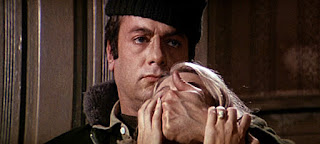
Opening text introduces the film as the story of Albert DeSalvo, the self-confessed Boston Strangler. Starting in 1962, an unknown assailant later revealed to be DeSalvo (Tony Curtis) embarks on a murder spree in Boston and the surrounding towns, sexually assaulting and strangling to death single women in their homes. Initially the victims are elderly, but eventually women of all ages are murdered. The killer talks his way into his victims' apartments, avoiding forced entry and leaving no clues.

With the murders gaining national attention, Detective Phil DiNatale (George Kennedy) and Sergeant Frank McAfee (Murray Hamilton) are among the investigators assigned to the case. They interrogate all known violent offenders and sexual perverts, but the murders continue. Assistant Attorney General John Bottomly (Henry Fonda) is appointed to coordinate across jurisdictions, but the killer remains frustratingly elusive.
With DeSalvo's identity revealed from the start and his fate commonly known, The Boston Strangler lacks narrative tension. Edward Anhalt wrote the script as an adaptation of the Gerold Frank book, and director Richard Fleischer uses split screens and a documentary-style grittiness to recreate a few of the murders, the police response, and the public reaction. The film achieves decent engagement more through style than content.

The murderer is not fully shown on the screen until about halfway through the film, leaving the generic representations of detectives DiNatale and McAfee as the rather dull main characters for long stretches. With the strangler not making mistakes, Anhalt and Fleischer invest in the arduous work of identifying, tracking down, and interrogating numerous persons of interest. The public is keen to help, and soon phone calls are flooding in about every creepy guy in town.

Perhaps sensing the investigation is floundering, the bookish Bottomly is reluctant to get involved. Henry Fonda is equally rather listless in a hesitant role, meandering from lawyer to detective then psychologist without much explanation. Tony Curtis stretches in a serious role as DeSalvo, an intriguing and not unsuccessful experiment.

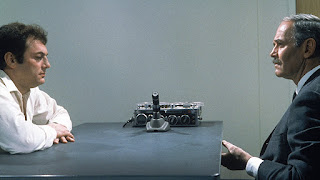
Most of the acting showcase moments arrive in a final chapter staged almost entirely in a sparse white hospital room, DeSalvo now a captive and Bottomly eager to get into the mind of a murderer. The drama is stripped down to cerebral levels, lacking excitement but striving for insight.


All Ace Black Movie Blog reviews are here.

Monday, 6 September 2021

Movie Review: Zig Zag (1970)

A crime thriller, Zig Zag (also known as False Witness) features a devilishly clever plot and frustratingly bad execution.

Insurance agent Paul Cameron (George Kennedy) believes he is going to die from a brain tumour. Determined to augment his life insurance payout and leave his wife Jean (Anne Jackson) with as much money as possible, he devises an elaborate plan to act as a shadowy informant and incriminate himself in the unsolved murder of a business executive, secretly channelling the reward-for-information money to Jean.

Paul is arrested and charged with murder. Defence lawyer Mario Gambretti (Eli Wallach) is oblivious to his client's objective and does his best to exonerate him. But when Paul ends up in hospital and undergoes emergency surgery, all his good plotting is threatened and he suddenly has to come up with an alternative, this time involving finding the real murderer.

A good example of a plot too clever for its own good, Zig Zag does not lack for smarts. The John T. Kelley script is filled with numerous twists, and allows its many fiendish secrets to seep out in small, almost casual increments. Director Richard A. Colla adds mystery by minimizing dialogue and focussing on intricate build-up, and adds disorientation with frequent jumps in time between the present and past.

The film's two halves offer distinct mysteries meshed into the ambition to maximize payout upon death. Paul first concocts a fake informant to incriminate himself and meticulously plants evidence accordingly. Then the focus switches to his frantic attempts to unveil the real culprit behind an unsolved murder, with the victim by all accounts earning his fate.

But all the narrative ingenuity is thwarted by weak delivery. Perhaps due to budget limitations, Colla focuses endlessly on needless details, and shortchanges important elements. Prolonged scenes are bogged down at the prison where Paul is admitted to await trial, and then (in flashback) at a noisy hut where he plants evidence. Meanwhile, essential plot details are barely mentioned, and the second half falls apart in fairly spectacular fashion. Paul conducts his amateur investigation of a high profile case with astonishing speed, and the antagonists remain a jumbled mess of undefined men and women. 

George Kennedy grabs a rare lead role opportunity and bulldozes his way through proceedings with appropriate inelegance. Eli Wallach is suitably animated as a lawyer sensing something is not quite right with his client's story.

Despite a surplus of intrigue, Zig Zag goes this way, then that, and unfortunately ends up lost.


All Ace Black Movie Blog reviews are here.

Thursday, 2 September 2021

Movie Review: The Naked Gun: From The Files Of Police Squad! (1988)

A crime comedy, The Naked Gun adopts a scattershot approach to humour and finds frequent hilarious highlights.

After disrupting a meeting of anti-American leaders in Beirut, detective Frank Drebin (Leslie Nielsen) returns to Los Angeles where his special Police Squad is placed in charge of security for the upcoming visit of Queen Elizabeth II. When his former partner detective Nordberg (O.J. Simpson) is almost killed investigating a drug shipment at the port, Drebin suspects wealthy shipping tycoon Vincent Ludwig (Ricardo Montalban) of involvement in an evil plot.

Supported by his supervisor Captain Ed Hocken (George Kennedy), Drebin initiates an affair with Ludwig's assistant Jane Spencer (Priscilla Presley) to find out what she knows. But Drebin and Jane fall truly in love, complicating the investigation. Ludwig redoubles his efforts to terminate both Nordberg and Drebin as the Queen's visit draws near.

The 1982 Police Squad! television show lasted a grand total of six episodes, but found a legacy as inspiration for big-screen madness. A combination of satire, slapstick and silliness, The Naked Gun is relentless. The writing team of Jerry and David Zucker, Jim Abrahams, and Pat Proft grabs every opportunity to throw in yet another joke is an exuberant display of more is better, and mostly it is. While of course a fair share of the intended laughs don't land, enough mayhem is generated to trample over the slow spots.

With David Zucker directing, the epic moments arrive at a fast and furious pace. The pre-credit sequence sets the stage with Drebin gate-crashing a summit of America's most notorious foes of the era. Then his first meeting with Ludwig in the businessman's lavish office instigates an awkward tangle with a rare and expensive fish. Nordberg's shooting and subsequent slow-motion collapse successfully spoofs over-elaborate movie death scenes.

The Queen's gala dinner sets-up the enduring image of Drebin's missionary rescue, and the prolonged climax at a baseball game is a laugh riot, starting with the immortal absconsion of opera singer Enrico Pallazzo and continuing through to the animated umpire exploits.

At the centre of the humour is Leslie Nielsen in imperious form, his deadpan delivery and clueless demeanour a worthy spiritual successor to Inspector Clouseau. Ricardo Montalban is an oily villain, and Priscilla Presley gets in on the fun as the breathy femme not-so-fatale.

As for plot, logic, physics, or common sense, none of it matters. The Naked Gun is fully loaded with madcap frivolity.


All Ace Black Movie Blog reviews are here.

Sunday, 14 February 2021

Movie Review: Lonely Are The Brave (1962)

A contemporary western eulogy, Lonely Are The Brave explores the loss of a way of life through the story of a good-natured cowboy playing by the old rules.

In New Mexico, Korean War veteran Jack Burns (Kirk Douglas) and his horse Whiskey still crave the open frontier cowboy lifestyle. Jack laments the fences, property lines and roads infringing on his freedom to move wherever he pleases. When he learns his buddy Paul (Michael Kane) is in prison for helping illegal immigrants, he visits Paul's wife Jerry (Gena Rowlands) and commits to help.

Jack: Have you ever noticed how many fences there're getting to be? And the signs they got on them: no hunting, no hiking, no admission, no trespassing, private property, closed area, start moving, go away, get lost, drop dead!

Jack welcomes a bar fight then instigates a scuffle with police to get himself arrested and thrown into the same cell as Paul. He tangles with prison guard Gutierrez (George Kennedy) before offering Paul an opportunity to escape by sawing through the prison bars. But while Paul has a wife and child to consider, Jack lives for himself and for today, and with Whiskey makes a run for the mountains. Sheriff Morey Johnson (Walter Matthau) organizes a pursuit.

Desk sergeant: Look, cowboy, you can't go around with no identification. It's against the law. How are people going to know who you are?
Jack: I don't need a card to figure out who I am. I already know.

A lyrical western, Lonely Are The Brave carries honest intentions and a clear-eyed distinction between past and present. Dalton Trumbo's script sets out to bid a fond farewell to men like Jack, and despite the bittersweet sense of loss, even Jack is under no illusions. He knows his time has come and gone, and so does everyone else, but nothing will stop him from trying to wind the clock back.

The other men have moved on and are now more circumspect than freewheeling. Jack's good buddy and rival for Jerry's heart Paul is no longer interested in jail break escapades. Sheriff Johnson brings a resigned approach to his job, recognizing men like Jack are capable of disappearing into the wilderness, and maybe that's not a bad outcome. Meanwhile Jerry is exasperated not just with Jack's carefree attitude, but with men's general dense-headed and cavalier disregard towards the benefits of domesticity. 

Jerry: Believe you me, if it didn't take men to make babies I wouldn't have anything to do with any of you!

David Miller directs with a relaxed stance, the black and white cinematography harkening back to an earlier era where only mountain ranges interrupted the landscape. And Kirk Douglas brings his impish smile and an open, approachable demeanour to the fore, convinced every fence can be cut and every problem has a straightforward common-sense solution.

Jerry: Maybe you'd be better off if they caught you.
Jack: Maybe, but I'd like to put it off for as long as possible.

Jack's escape destination is a mountain ridge easiest to cross alone and on foot, but his tradition demands a man look after his horse, despite Whiskey's intransigence. Some of the scenes featuring the horse being forced up the steep terrain make for difficult viewing, but the old west was not for the faint of heart. Of course on the other side of the mountain is another barrier, even more difficult for Jack and Whiskey. No matter, they will carry on, intent on finding a sunset now obscured by the headlights of busy traffic.

Jerry: Jack, I'm going to tell you something. The world that you and Paul live in doesn't exist. Maybe it never did. Out there is a real world. And it's got real borders and real fences, real laws and real trouble. And you either go by the rules or you lose. You lose everything.
Jack: You can always keep something.


All Ace Black Movie Blog reviews are here.

Sunday, 5 April 2020

Movie Review: Airport (1970)


A grand multi-story disaster epic, Airport helped formulate the genre template. A star-studded cast and multiple overlapping emergencies sustain the thrills over one long night.

The setting is Chicago's Lincoln International Airport during a snowstorm. Airport Manager Mel Bakersfeld (Burt Lancaster) is struggling to keep the airport functional, an objective made difficult when a taxiing airplane gets stuck in the snow and blocks the airport's main Runway 29. The alternative Runway 22 is shorter and impacts a surrounding community. Mel calls upon chief maintenance mechanic Patroni (George Kennedy) to help unwedge the Boeing 707.

Mel's brother-in-law is womanizing pilot Vernon Demerest (Dean Martin), who is about to take charge of an overnight flight to Rome. Vernon is having an affair with stewardess Gwen (Jacqueline Bisset), and she reveals her pregnancy just before departure. Mel's marriage to his wife Cindy (Dana Wynter) is falling apart, allowing him to evolve his relationship with airline customer service representative Tanya Livingston (Jean Seberg).

Meanwhile Tanya has to deal with the elderly Ada Quonsett (Helen Hayes), who is apprehended as a serial stowaway but anyway boards Vernon's flight. But most worrisome is depressed businessman D. O. Guerrero (Van Heflin), who plans to kill himself with a briefcase bomb in order for his wife Inez (Maureen Stapleton) to benefit from insurance money. As Vernon deals with in-flight emergencies, Mel and Patroni frantically work to reopen Runway 29, now an urgent matter of life and death.

The adaptation of Arthur Hailey's 1968 book is brought to the screen by director George Seaton, who also wrote the surprisingly taut screenplay. The film created the blueprint for a decade-long cycle of disaster movies, spawned three direct but lesser sequels, and inspired several parodies. Airport also heralded the blockbuster era to come, well-produced but easy-to-digest escapism loved by audiences and generating mass profits on a previously unimaginable scale.

And despite the stiff dialogue, lack of any narrative depth beyond the here and now, and some cringe-worthy corporate boosterism, there is no denying the film's appeal. The cast members are stereotyped but in good form, Lancaster, Martin, Kennedy and Heflin playing to their pre-established strengths, while Seaton fills the screen with activity, inside the terminal, on the tarmac, and on-board the flights, all in gorgeous technicolor. Frequent use of split screens, relatively accurate technical jargon, and a packed agenda of colliding personal and work emergencies easily occupy the 136 minutes of running time.

With action and events moving briskly, the memorable moments are plentiful. Helen Hayes earns many of them, and claimed a Best Supporting Actress Academy Award for a delicately funny turn as the unlikely stowaway Ada. Her repertoire of tricks to get past every checkpoint plus a disarming charm and conversational gifts are put to good use on the ground and in the air.

Dean Martin makes the most of the cocky Vernon coming to terms with Gwen's pregnancy, and gets another well-crafted highlight in his attempt to talk down Guerrero.

As the man in the middle of it all, Mel's agitation with bureaucrats and politicians comes to a satisfying boil when a clueless Commissioner chooses the worst possible time to suggest the airport's closure. And after a few rounds of bickering, Mel and Cindy as a husband and wife presiding over a wrecked marriage carve out a surprisingly adult resolution.

And finally George Kennedy creates the Patroni legend with his full-throttled attempt to prod the stranded Boeing 707 into motion, the irresistible force of one man determined to triumph over a mammoth immovable object. The night will not be over until the cigar is well and truly chomped.


All Ace Black Movie Blog Reviews are here.

Monday, 9 July 2018

Movie Review: Airport 1975 (1974)


An in-flight disaster movie, Airport 1975 is cheap, cheesy, and the birth ground for countless classic cliches.

Columbia Air Lines Flight 409 is a red eye from Washington to Los Angeles on board a Boeing 747. The head flight attendant is Nancy Pryor (Karen Black), who has a troubled relationship with her non-committal boyfriend Captain Alan Murdock (Charlton Heston), the airline's Chief Flight Instructor.

Captain Stacy (Efrem Zimbalist, Jr.) is in charge of the flight. The passengers include Mrs. Patroni (Susan Clark), who is the wife of the airline's Vice President for Operations Joe Patroni (George Kennedy), a couple of nuns (Helen Reddy and Martha Scott), a young girl being transferred for a kidney transplant (Linda Blair), a retired movie star (Gloria Swanson, playing herself), a trio of drinking buddies, and a heavy drinking older woman (Myrna Loy).

Meanwhile, businessman Scott Freeman (Dana Andrews) takes off in his small Beechcraft plane to fly to a meeting. Due to severe fog both flights are diverted to Salt Lake City. Freeman suffers a massive in-flight heart attack, and his out of control small plane strikes the cockpit of the 747. The flight deck crew are all incapacitated, and Nancy has to take over the controls. Over patchy radio communications, Murdock and Joe Patroni have to keep Nancy calm and find a way to help her.

Directed by Jack Smight, Airport 1975 is the first sequel to 1970's Airport. Featuring a large cast of mostly fading star names packed into the plane with really nothing to do, the film is most famous for giving life to most of the stereotypes later mercilessly exploited in 1980's Airplane!. The singing nun, the sick child, the drunk guys, the token black dudes, the fading movie diva: they are all here. As are the macho Charlton Heston and George Kennedy, barking away in loud voices at no one in particular and bumbling about trying to shout and shove their way to a solution.

The special effects are low quality, the characters are cardboard cutouts, the dialogue is laughably bad, and the female flight attendants are subjected to rampant sexism. And for a disaster movie the film is remarkably devoid of any sort of excitement, action or suspense. The mid-air collision literally takes place in the blink of an eye. What precedes the mishap is boring, and what follows mainly consists of Karen Black sitting in the Captain's chair, looking particularly cross-eyed as she follows mundane instructions over the radio.

Back in the passenger compartments the actors are up to nothing in particular, and even Linda Blair as the young transplant patient does not appear unduly concerned. Just when you need the devil to show up and add some head-spinning carnage and turbulence-induced vomit to a movie, he is nowhere to be found.


All Ace Black Blog Movie Reviews are here.


Tuesday, 9 May 2017

Movie Review: Airport '77 (1977)


A disaster movie with a galaxy of stars trapped on a submerged airliner, Airport '77 is as corny as can be expected but also surprisingly well produced.

Aging tycoon Philip Stevens (James Stewart) invites high profile guests to travel on his lavishly outfitted private Boeing 747 en route to the grand opening of his home-based museum. Captain Don Gallagher (Jack Lemmon) is in command of the flight, while Eve Clayton (Brenda Vaccaro) is Don's long-time lover and in charge of passenger comfort. The guests include Nicholas St. Downs III (Joseph Cotten) and Emily Livingston (Olivia de Havilland), who first met in the 1930s and are reunited on the flight. Businessman Martin Wallace (Christopher Lee) and his neglected and perpetually drunk wife Karen (Lee Grant) are also on the flight, as are Stevens' daughter Lisa (Pamela Bellwood) and her young son.

In the cargo hold is a large collection of expensive art, and this attracts a band of thieves under the leadership of co-pilot Chambers (Robert Foxworth). Over the Bermuda Triangle the criminals release a sleeping gas to knock out Gallagher and all the passengers, and Chambers changes course, flying below the radar towards an uninhabited island. But in dense fog the 747 clips an off-shore oil rig, the plane crashes into the sea and sinks to the sea bed, intact but leaking. Gallagher has to keep the passengers calm and find a way to notify rescuers of the plane's location while the Navy and Coast Guard mount a search operation.

Directed by Jerry Jameson, Airport '77 arrived relatively late in the cycle of 1970s disaster films. By now the formula is overly familiar: collect a bunch of mostly elderly Hollywood stars, place them in peril, and play a parlour game of who lives and who dies before the credits roll. While everything about the film is conventional, the production values are well above average, yielding a mixed experience where the content is tired but the packaging is slick.

Disaster movies tend to work better in confined spaces, and the coffin-under-the-sea premise is appropriately claustrophobic and generates a real sense of danger, with water slowly seeping into the plane, and the passengers threatened with both drowning and asphyxiation.

The film's ambitions are reflected in a superior cast deep in veteran talent. Lemmon and Cotten are most prominent and get to run around the bowels of the cavernous plane and play the role of heroes. The likes of Stewart, de Havilland, Grant and Lee ensure that as irritating as the passengers are, they are good at being irritating. George Kennedy makes his obligatory disaster movie appearance, but this time is limited to a more minor role as a rescue coordinator. The special effects are decent for the era and have survived the test of time.

The final act transforms into a propaganda piece for the rescue capabilities of the Navy and Coast Guard, and although again the cheese factor is odorous, the execution is polished. Jameson keeps the pacing tight, delivering the drama in under two hours, and the final acts of tactical implementation, heroism, and late-in-the-day death are completed with requisite precision.

Airport '77 is definitely all wet, but enjoys its time in the cinematic tub.


All Ace Black Blog Movie Reviews are here.


Wednesday, 12 April 2017

Movie Review: Earthquake (1974)


A big scale disaster movie, Earthquake has some effective moments of destruction but is an otherwise sloppily constructed and cheese-filled exercise in tolerating aggravating stock characters spouting horrible lines of dialogue.

In Los Angeles, building engineer Stewart Graff (Charlton Heston) is having marital problems with his depressed wife Remy (Ava Gardner). A series of minor tremors create concern at the Mulholland Dam overlooking the city. At the California Seismological Institute a young staffer crunches the numbers and concludes that a major quake will likely strike the city within 48 hours, but his methodology is unproven. Meanwhile Stewart's boss and father-in-law Sam Royce (Lorne Green) promotes Stewart to President of their engineering company, but Stewart is more interested in pursuing young widow Denise Marshall (Geneviève Bujold).

The big quake does hit, effectively destroying Los Angeles. Stewart has to help Sam save employees from their partially destroyed office tower. Remy, Denise and Denise's injured young son Corry are evacuated to the basement of a supposedly quake-proof highrise. Others caught up in the mayhem are wannabe motorcycle daredevil Miles Quade (Richard Roundtree), short-tempered police officer Lou Slade (George Kennedy) and the financially strapped Rosa Amici (Victoria Principal). But just when it appears that the worst is over, there is more shaking to come.

Produced and directed by Mark Robson, Earthquake arrived at the peak of the epic disaster movie cycle of the early 1970s, with The Towering Inferno and Airport '75 released in the same year. Unfortunately gimmickry was already creeping into the genre as productions competed for viewers' attention. Unable to secure any relevant current stars to boost the box office, Earthquake resorted to something called Sensurround, a mammoth sound system designed to literally shake theatre seats with sub-audible "infra bass" sound waves.

Which is just as well, because what is on the screen is pretty awful. Earthquake underwent extensive post-production editing to tighten up the narrative, and the outcome is notably choppy. Other than the few minutes of special effects depicting the earthquake itself, the rest of the movie is two hours of badly-acted television-level drama. Despite a script co-written by Mario Puzo, the dialogue is cringe-worthy, the characters are stiff, and the attempts at drama and conflict border perilously near laughable.

The marital strife between Stewart and Remy plays like a particularly bad daytime soap episode, while Stewart's lusting after Denise is tawdry. Miles Quade disappears entirely from the ending of the movie, after wasting plenty of set-up time with a useless story about his ambition to be the next Evel Knievel. Walter Matthau appears under a pseudonym as an oblivious barfly, while George Kennedy plays a stock angry but good-hearted cop. Victoria Principal wages battle on two fronts: she fights against a frizzy hairdo that occupies half the screen, and fends off a deranged homicidal national guardsman (Marjoe Gortner) who stumbled in from another movie.

The only bits worth watching are the prolonged earthquake strike scenes, and the special effects range from reasonably impressive to amateurish. When an elevator crash ends with cartoon blood drops childishly superimposed on the image of mangled bodies, the splatter is literally on the screen for a genre that had nowhere to go but down.


All Ace Black Blog Movie Reviews are here.


Thursday, 26 March 2015

Movie review: Charade (1963)


A stylish spy thriller with a dash of humour, Charade thrives on a hip vibe generated by a crackling mystery, a stellar cast, and a cool Parisian setting.

Regina "Reggie" Lampert (Audrey Hepburn) is trapped in a loveless marriage with a husband she barely knows. While she is on vacation, suave stranger Peter Joshua (Cary Grant) seems to make it a point to meet her. Reggie returns to her Paris apartment and is startled to learn her husband Charles is dead, having been thrown from a train, and has left her next to nothing. At Charles' funeral service, three grim strangers show up: Tex (James Coburn), Scobie (George Kennedy) and Gideon (Ned Glass). They all seem eager to confirm that Charles is indeed dead.

Joshua reappears and befriends Reggie, while in the following few days Tex, Scobie and Gideon start to make their menacing presence felt with veiled and obvious threats. American Embassy official Hamilton Bartholomew (Walter Matthau) connects with Reggie to warn her that Charles was illegally in possession of $250,000 that belonged to the United States government, and that the three henchmen are his former crime accomplices and likely won't stop at anything to find the missing money. Reggie has no idea where her ex-husband has stashed the loot, but soon realizes that even with Joshua's help her life is in grave danger, she can trust no one, and nothing is at it seems.

The premise is simple: a plucky damsel in distress is surrounded by a throng of potentially dangerous men. The bad guys are chasing a classic MacGuffin in the form of a missing cache of World War Two money stolen by four soldiers while on a mission behind enemy lines. Elegantly directed by Stanley Donen, Charade is an engaging Hitchcockian thriller handled with a light touch, the Peter Stone screenplay (based on the 1961 short story The Unsuspecting Wife) featuring a romp through Paris with romance and humour injected in just the right amounts to brighten the mood.

The Henry Mancini music score and title song, as well as the animated opening credit sequence by Maurice Binder, announce Charade as a slick example of 1960s film making. Donen aims for chic smoothness, and achieves it through personality and pacing. Even during the more serious action and danger scenes Donen leaves no doubt Reggie will emerge unscathed, and numerous hints wink at the many plot twists. Charade unfolds like a fun trip through a handsomely-trimmed maze; there are a few surprises around some corners, but never any doubt about the final destination.

On closer examination there are plot holes to be sure, as well as some incongruous character reactions as Reggie demonstrates remarkable composure and reaches for clever quips in the face of sudden danger. The flame of romance between Joshua and Reggie also has the potential to flounder on the jagged rocks of a 25 year age difference between Grant and Hepburn. That hurdle is mostly cleared by making Reggie the romantic instigator, a stance that fits in with her relief and liberation at the end of a loveless marriage. Hepburn and Grant develop an easy chemistry and glide over the rough patches on a large dose of star charisma.

The supporting cast is deep in talent. George Kennedy waves a steel claw to good effect, James Coburn does the same with a Texan accent, and Walter Matthau adds bureaucratic oiliness. Filled with unscrupulous villains chasing a cheeky heroine, Charade wins on charm.


All Ace Black Movie Blog reviews are here.

Thursday, 14 February 2013

Movie Review: The Eiger Sanction (1975)


A brooding action thriller which condemns the world of secret agents that it inhabits, The Eiger Sanction is a smart take on the Cold War's tit-for-tat assassination games. Clint Eastwood directs himself in an intricate yet taut literal cliff-hanger set against the world of mountain climbing.

Dr. Jonathan Hemlock (Eastwood) is a retired assassin for the secretive C2 US government agency. Now a university art professor, his weaknesses include an illicit fine art collection and a barely contained lust for women. A reluctant Hemlock is called back into action by his former boss "The Dragon" (Thayer David), a light-sensitive albino, to "sanction" one of two enemy assassins responsible for eliminating Hemlock's former colleague Henri Baq (Frank Redmond) in Geneva. After completing the mission, The Dragon uses the sultry charms of agent Jemima Brown (Vonetta McGee) to manipulates Hemlock into yet another assignment.

Dragon: [Hemlock has walked in while Dragon is hooked up to a transfusion device] Forgive me, Dr. Hemlock. Twice a year I have to have my blood completely replaced. 
Hemlock: [through gritted teeth] With what?

This time Hemlock has to pursue the other assassin, whose identity is vague but who is known to be part of four-man team planning to climb the treacherous Eiger mountain in the Swiss Alps. To get back into mountain-climbing shape, Hemlock trains at a resort run by old friend Ben Bowman (George Kennedy), where he tangles with slippery double agent Miles Mellough (Jack Cassidy) and the phenomenally fit but silent trainer George (Brenda Venus). In Switzerland, Bowman and Hemlock join up with Frenchman Jean-Paul Montaigne (Jean-Pierre Bernard), German Karl Freytag (Reiner Schöne) and Austrian Anderl Meyer (Michael Grimm) to climb the dangerous Eiger. One of the men is Hemlock's target; he just does not know which one.

The Eiger Sanction pours vinegar over the James Bond style secret agent mystique. For Hemlock the spy battle has long since lost its lustre, and he sees the killings and retaliatory strikes for what they are, juvenile games played by shadowy masters sacrificing the lives of others for no meaningful gain. Hemlock is a proud art snob, protective of his illegal collection, and not satisfied with one weakness, can just hardly turn down the overt advances of one his students, but nevertheless sends her on her way with a bum slap.

Hemlock: Are you busy this evening?
Art Student: No.
Hemlock: You live alone?
Art Student: My roommate's gone for the week.
Hemlock: Good. Then... go on home, break out the books and study your little ass off. That's the best way to maintain a "B" average. Don't study it all off.


Once coerced by The Dragon back into action, Hemlock pursues the missions without joy, almost botching the first sanction and demonstrating an overt tiredness in tackling Eiger and the mysterious second assassin. Eastwood brings his laid-back persona to Hemlock, but this time the relaxed approach masks a keen intent to remain uninvolved, his eagerness to complete the missions driven by the desire to return to retirement rather a belief in any cause.

[Bowman watches the climb through his telescope]
British Tourist: I say, old boy, are you using your scope? Do you mind if my wife has a peek. 
British Tourist's Wife: Darling, tell him we'll pay for it. 
British Tourist: We can pay for it, you know. 
Bowman: Get out of here. Either of you friggin' vampires ever touch this telescope, you're gonna need surgery to get it out of your ass!

The Eiger Sanction script, adapting the best-seller by Trevanian, is filled with sharp dialogue exchanges, but also dances with a string of potentially questionable attitudes that could now be deemed insulting towards albinos, blacks, gays, women, the elderly, Europeans, and Natives. In the pre-politically correct context of the mid-1970s the film is bold if perhaps also unapologetically and intentionally crass.

Woman Journalist: Tell me, Mr. Bowman, in your opinion do these men climb to prove their manhood, or is it more a matter of compensating for inferiority feelings? 
Bowman: Lady, why don't you go get yourself screwed. It would do you a lot of good.

Eastwood directs with relatively slow pacing, allowing the many characters to take shape and find their niche. At just over two hours The Eiger Sanction never rushes, and indeed builds to a majestic final forty minutes, an ill-fated but magnificently photographed assault on Eiger by four men who neither trust nor like each other. In the pre-special effects era all the breathtaking mountain climbing sequences were real and filmed on location in Grindelwald, Switzerland, with Eastwood performing all of his stunts. The filming logistics were difficult and sometimes next to impossible, with one photographer losing his life in an accident. A soaring yet poignant John Williams music score adds immeasurably to the drama unfolding on the formidable mountain.

Jemima: Is this hotel always so crowded? 
Hemlock: Only when there's a climb. Then the Eiger birds start flocking in. 
Jemima: Eiger birds? 
Hemlock: Yeah, jet setters, assorted zombies, come here to watch a climb. If they're lucky, they get to see a man die on the mountain. 
Jemima: That's grim. 
Hemlock: So's the Eiger.

The supporting cast is memorable for Thayer David's short but blood-curdling turn as The Dragon, a man without colour and without a soul controlling a global army of pawns. George Kennedy enjoys a more prominent role than usual as Ben Bowman, a mentor and confidant of sort for Hemlock. Jack Cassidy creates another enduring character as the exceedingly annoying Miles Mellough, a man aggravating enough that Hemlock has to weigh the pure pleasure of killing him against the crucial information that he may possess. Vonetta McGee as rookie agent Jemima exploits Hemlock's fondness for women but also becomes the only other foot solder who may develop a healthy distaste for Cold War bloodshed.

Miss Cerberus: I was expecting you before this. Mr. Dragon does not like to be kept waiting. 
Dr. Jonathan Hemlock: Oh, the impatient albino. 
Miss Cerberus: I don't think Mr. Dragon's affliction is a joking matter. 
Dr. Jonathan Hemlock: I thought it was rather humorous, myself. A spy network being run by a bloodless freak who can't stand light or cold. 

The Eiger Sanction is a thoughtful thriller with serious attitude and serious altitude, an overlooked peak in Eastwood's career.


All Ace Black Blog Movie Reviews are here.