Showing posts with label Naomi Watts. Show all posts

Saturday, 14 September 2024

Movie Review: Luce (2019)


Genre: Drama  
Director: Julius Onah  
Starring: Naomi Watts, Octavia Spencer, Kelvin Harrison Jr., Tim Roth  
Running Time: 109 minutes  

Synopsis: Black high school student Luce Edgar (Kelvin Harrison Jr.) was adopted as a child from war-torn Eritrea by his parents Amy and Peter (Naomi Watts and Tim Roth). He is now a model student, excelling in academics and athletics. Trouble starts brewing when his black teacher Harriet Wilson (Octavia Spencer) shares with Amy some concerns: Luce wrote an essay espousing violence, and Harriet found illegal fireworks in his locker. Amy and Peter disagree on how to confront Luce, who is also dealing with a buddy suspended from the track team and a girlfriend who may have been sexually assaulted.

What Works Well: The creeping all-is-not-well menace beneath an ideal middle class multi-racial suburban veneer energizes the adaptation of writer J.C. Lee's play. Four excellent performances feature actors exploring ambiguous realities, as Luce walks a fine line between perfect teenager and nefarious agenda, and teacher Harriet Wilson matches her student in navigating the grey zone between supporter, manipulator, and caregiver. Amy and Peter are parents caught in the middle, the sudden complexities in their adopted son's life exposing marriage fissures. Director Julius Onah succeeds in breaking out of any stage confines, while the sub-theme about the burden of striving for perfection within the black experience in America adds depth. 

What Does Not Work As Well: The plot tilts towards packing in too much drama and therefore trading in vagaries, leaving plenty of room for open-ended interpretations.

Key Quote:
Harriet: I can tell the difference between miscommunication and provocation.


All Ace Black Movie Blog reviews are here.

Monday, 26 December 2022

Movie Review: The Desperate Hour (2021)


Also Known As: Lakewood
Genre: Drama Thriller
Director: Phillip Noyce
Starring: Naomi Watts
Running Time: 84 minutes

Synopsis: In the suburban community of Lakewood, Amy (Naomi Watts) is still dealing with the loss of her husband in a car crash a year prior. Her teenaged son Noah is also brooding, and on this morning Amy finds it difficult to prod him out of bed to go to school. She goes for a run deep into the surrounding woods, but a cell phone alert indicates an unfolding crisis at the high school. Amy has no access to a car, and has to make a frantic long run back, relying on phone calls to piece together what is going on - and whether Noah is involved.

What Works Well: Director Phillip Noyce and star Naomi Watts wring every bit of tension out of Chris Sparling's one-woman-with-a-phone dramatic thriller. Watts sells a mother's sense of dread and increasing desperation with aplomb, and her emotions - uncertainty, concern, panic, denial, acceptance, gritty determination - are sometimes sequential and at other times in glorious competition. An ecosystem of over-the-phone voices, including a 911 operator and a car shop mechanic, add vibrancy. Genuine uncertainty is maintained around Noah's fate, as the multi-coloured autumnal woods are brought to life by John Brawley's often soaring cinematography.

What Does Not Work As Well: The script engages in some none-too-subtle manipulation to dispatch Amy on her full emotional tour. The final act features bold but far-fetched interventions before settling for a safe option.

Conclusion: School tragedies are pointedly distilled to the singular human experience - individually unique, but unfortunately commonly shared.


All Ace Black Movie Blog reviews are here.

Thursday, 4 November 2021

Movie Review: The Ring (2002)

A mystery with horror elements about a video condemning viewers to death, The Ring boasts a beautifully dreary northwest aesthetic. The story elements fluctuate between supernatural, ominous, and intriguing.

In Seattle, teenager Katie (Amber Tamblyn) dies violently seven days after watching a nightmarish video at a cottage sleepover. Her friend Becca (Rachael Bella) witnesses Katie's death and is institutionalized. Katie's aunt is reporter Rachel Keller (Naomi Watts), a single mom to young son Aidan. She starts investigating her niece's death, and discovers that three friends who watched the video with Katie all died at exactly the same time. 

Rachel locates and watches the video, which consists of unsettling images featuring a mysterious morose woman. As soon as the video ends the phone rings and a young girl's voice predicts Rachel's death in seven days. Worried, she seeks help from her ex-partner (and Aidan's father) Noah (Martin Henderson), a videographer. He also watches the video and together they start researching the images for clues to explain the tape's secrets.

A remake of a 1998 Japanese movie in turn based on a 1991 book, Ring oozes quality and mood. Director Gore Verbinski, working from an Ehren Kruger script, deserves credit for avoiding cheap jump scares and cliched dark settings. Instead The Ring creates a sense of dread from bland, blustery, and isolated locations, dominant dampness ensuring Rachel's ordeal unfolds in miserable greyness.

Between the slasher-inspired opening and the potent ghost-from-the-machine climax, most of the film is more mystery than horror. Rachel sets out to uncover the story behind the video, and the narrative explores past events involving horse breeder Anna Morgan (Shannon Cochran), her husband Richard (Brian Cox), a doctor (Jane Alexander) keeping secrets, a lighthouse, crazed horses, and a troubled adopted child. Hints of madness, violence, death, premonition, and disgusting creepy crawlies inject agitation at regular intervals.

The knowing themes hiding behind the imagery include a woman's desperation to become a mother, a child's potentially disruptive influence on a happy marriage, the sacrifices parents must make to nurture children, and the contagious properties of media. Not surprisingly, parallels emerge between Anna's story and Rachel's reality.

As Rachel races to prevent her own death, logic gaps remain unexplained, Verbinski and Kruger skipping some of the philosophies from the source material and allowing the supernatural elements to just sit on the screen. But beyond the shocks, The Ring finds an effective resolution featuring a clever feint, leaving the option open for sequels with a well-earned sense of proliferating gloom.


All Ace Black Movie Blog reviews are here.

Saturday, 30 October 2021

Movie Review: Fair Game (2010)

A politics-and-espionage thriller, Fair Game combines tense spy operations with the sordid world of dirty politics run by ideologues 

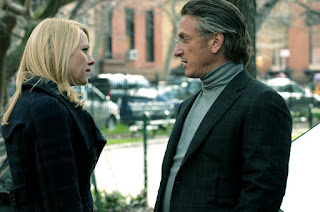
In Washington DC, CIA agent Valerie Plame (Naomi Watts) is married to Joseph Wilson (Sean Penn), a former ambassador to African countries and now a consultant. After the terrorist attacks of September 11, 2001, officials from the office of Vice President Dick Cheney pressure the CIA to find evidence of a non-existent Iraqi weapons of mass destruction (WMD) program. 

Plame helps to debunk claims that shipments of aluminium tubes to Iraq are being used to build uranium enrichment centrifuges, and the agency sends Wilson to Niger where he determines reports of a uranium yellowcake shipment to Iraq are fake. Plame also runs dangerous missions to connect with on-the-ground Iraqi scientists to get closer to the truth.

Cheney's adviser Scooter Libby (David Andrews) insists the CIA analysts are wrong and the administration proceeds to build a false case for an invasion based on willful evidence misinterpretation. Wilson is incensed his Niger findings were twisted into a justification for war, and goes public in an op-ed piece, exposing the administration's incompetence. The blowback from the White House threatens to destroy Valerie's life.

Based on real events, Fair Game is a fast-paced gallop through the dangerous dual worlds of spies and politicians, with real people caught in the middle. Doug Liman directs from a script by Jez and John Butterworth, and maintains focus on Valerie and John as a couple believing they are doing all the right things, sacrificing marital harmony to serve their country, only to be betrayed by their own government.

The pacing is brisk but always coherent. Liman covers many angles of the story in quick snippets, capturing the clash between Valerie's hectic career hopping between international hotspots and a domestic life buckling under the strain. The scenes from the White House are just as expeditious, bordering on abrupt, the film relying on historical character familiarity to avoid introducing all the buffoons. 

Liman and the Butterworths do not hide their sympathies, and rather than letting events speak for themselves, Fair Game on occasion drops into preachiness and speechifying. The CIA analysts are dedicated and thoughtful, the neo-conservatives are spectres of evil, and Wilson lectures to college students about the imperative of questioning government actions to safeguard a functioning democracy.

The final act slows down to focus on the personal impact of the crisis on Valerie and Joseph, their lives endangered, their careers and marriage in tatters. This chapter is more intimate and less freewheeling, allowing Naomi Watts and Sean Penn to shine in conveying anguish at a deeply personal level. The quality cast also includes Sam Shepard as Valerie's father, as well as Noah Emmerich and Bruce McGill.

Exposing a government capable of willfully endangering its own dedicated agents to serve crass politics, Fair Game is fair warning.


All Ace Black Movie Blog reviews are here.

Friday, 7 May 2021

Movie Review: King Kong (2005)

A mega monster adventure movie about a giant ape tangling with pesky humans, King Kong is both brilliant and bloated.

In New York City of 1933, discredited film director Carl Denham (Jack Black) plans an audacious ending to his latest cinematic project. He wants his cast and crew to sail to the uncharted Skull Island and capture unique footage. Carl ropes star Bruce Baxter (Kyle Chandler) and celebrated writer Jack Driscoll (Adrien Brody) into the project, and plucks struggling vaudevillian Ann Darrow (Naomi Watts) out of poverty to play the female lead.

They set sail on the Venture with German Captain Englehorn (Thomas Kretschmann) in charge. Once on Skull Island, violent natives immediately seize Ann and offer her as a sacrifice to King Kong (Andy Serkis, motion captured), a huge ape and the dominant beast on the island. Kong takes a liking to the feisty Ann and does not harm her, but has to engage in vicious battles with dinosaur rivals to keep her safe. Meanwhile Carl, Bruce, Jack and Englehorn need to rescue their leading lady, while Carl starts considering the financial rewards of capturing King Kong and bringing him back to New York.

Essentially the same story told in 100 minutes in the classic original is here expanded into a disorienting 188 minutes. Directed by Peter Jackson, this version of King Kong is a technological marvel, and subdues its length with engrossing visuals, a distinct sense of place, and enough scurrying people and rampaging monsters to maintain momentum. The island is a breathtaking and foreboding place, its natural balance contaminated by the arrogant new arrivals, and King Kong is a beautifully rendered beast, Andy Serkis bringing the monster to life and ever so gradually allowing emotions to surface.

King Kong achieves some stupendous and overwhelming action highlights. Rational editing seamlessly stitches the actors into the CGI-enhanced environment, even during the wildest sequences. Jackson (who also co-wrote the screenplay) injects the best shriek-inducing scenes with a mean streak of sly humour. A Brontosaurus stampede walks the thin line between plain silly and ridiculous fun, and later Kong's battle with multiple Tyrannosaurus rex is vicious and viciously funny.

For better or for worse, Jackson goes big and never goes home. His main command must have been "more", every scene and every sequence extended beyond what is necessary, computers whirring and pixels crashing onto the screen in a race to impress. The insistence on adding by addition means the monsters just keep on coming, effectiveness and shock value eroded with every new species. 

In a thankless role confined for long periods in an ape's hand, Naomi Watts manages to provide Ann with spirit and personality. The rest of the cast members trundle through the jungle with good intentions to battle mortal but virtual hazards.

The final 45 minutes take place back in New York, the 1930s lovingly recreated with romantic details as King Kong makes his final stand atop the Empire State Building. His howl is nature's fury at human hubris, loud, large, and often unheeded.


All Ace Black Movie Blog reviews are here.

Saturday, 3 October 2020

Movie Review: The Glass Castle (2017)

A drama about family ties, The Glass Castle explores the long shadows cast by a difficult upbringing.

In 1989, Jeannette Walls (Brie Larson) is a New York City newspaper gossip columnist engaged to financial advisor David (Max Greenfield), and trying to distance herself from an unconventional past. Her parents are squatting in an apartment building, and as she works up the courage to let them know she is marrying David, her story is revealed in flashbacks.

Jeannette's father Rex (Woody Harrelson) and mother Rose Mary (Naomi Watts) are raising four children in poverty, instability, and without formal schooling. The family is always on the move and barely one step ahead of the bill collectors. Rex is an alcoholic and cannot hold a job; he is also a big dreamer and waxes eloquent about grand plans to build an innovative glass castle for his family. He has a close and trusting relationship with Jeannette, the most astute and observant of the kids.

Rose Mary is an amateur painter and mostly stands by Rex, eventually convincing him to relocate the family back to Welch, West Virginia and settle in a ramshackle house near his mother Erma (Robin Bartlett). With the kids always near starvation and Erma's abusive personality adding further strain, Jeannette and her siblings plot a new independent path to break free from their parents.

Based on a true story adapted from Jeannette Walls' autobiographical book, The Glass Castle is complex drama carrying echoes of The Mosquito Coast and Captain Fantastic. While fathers refusing to abide by the norms of society are a stock cinematic topic, director Destin Daniel Cretton, who also co-wrote the script, overcomes familiarity with a beguiling story of familial love colliding with child maltreatment. 

At the centre of the story is Rex as the wayward father figure still influencing every aspect of Jeannette's life. His anti-authoritarian behaviour combined with natural (if wasted) charm, alcohol abuse and worrying disregard for the necessities of life create a dangerous edge. But in the flashback scenes, Cretton balances Rex with one good deed compensating for every despicable act. His failures as a traditional father are accompanied by limitless imagination, unconditional love, lessons from the school of life and encouragement to pursue dreams. His mother Erma's behaviour offers hints as to why Rex is the way he is, but ultimately Jeannette rightfully and righteously parks her resentment at her father's doorstep.

As an adult she inherently knows Rex would approve of neither her marrying a dull financial analyst nor pursuing a career as a gossip columnist. Yet he is unable to modify his boorish behaviour and embarrasses her at every opportunity. Their father-daughter bond is close to failure, but Cretton excels in several moments when the child Jeannette is the only person who can influence Rex. From convincing him to join the trek to Welch to imploring him to stop drinking, her voice resonates with him like no other.

Brie Larson is mostly dour in a thankless role full of brooding, and despite the childhood scars Jeannette steers towards snug rather than provocative resolutions. In contrast Woody Harrelson is the stand out performer and the driving energy behind the film. With a mischievous smile and a story for every occasion, he rounds Rex into a father who can be simultaneously loved and despised. 

The Glass Castle is an unattainable dream spun by a deeply flawed free spirit, and it rises to reflect his personality, cracks and all.


All Ace Black Blog Movie Reviews are here.

Tuesday, 29 September 2020

Movie Review: 21 Grams (2003)


A drama about life, death and atonement, 21 Grams deploys an unsettling but ultimately rewarding puzzle structure to enhance a story of three lives colliding.

Multiple plot lines unfold non-linearly from the perspective of three key characters. In simplified form:

  • Paul Rivers (Sean Penn) may die unless he receives a heart transplant. His marriage to Mary (Charlotte Gainsbourg) is strained, but she is anyway eager to get pregnant by artificial insemination before he dies. 
  • Jack Jordan (Benicio del Toro) is a petty criminal and repeat offender trying to go straight. He has embraced religion and now volunteers at the church run by Reverend John (Eddie Marsan). Jack is married to Marianne (Melissa Leo) and they have two young children. 
  • Cristina Peck (Naomi Watts) is a recovering drug addict, now happily married to Michael (Danny Huston) and raising two young daughters.
After Jack loses his job as an apprentice golf caddy because of complaints about his tattoos, a horrible car crash disrupts many lives. Paul receives a new heart, but his relationship with Mary appears unsalvageable. He makes a determined effort to get close to Cristina, who reverts back to drug use and now has retribution on her mind.

The opening 45 minutes of 21 Grams dance on the edge between maddening and exhilarating. In a hyperactive editing job, director Alejandro González Iñárritu, working from a script by Guillermo Arriaga, fragments the plot into tiny morsels across time and space, the character connections and event timelines unexplained. The structure presents a concentration and patience challenge.

The dividend is worthwhile. Once the puzzle pieces start to fit, 21 Grams (the title is a non-scientific reference to the supposed weight of the soul) offers a compelling exploration of life's fragility and the often exasperating lines between actions and consequences. Paul bounces from looming death to euphoric reprieve upon receiving his transplant only to encounter another crisis. Cristina has turned her life around and is enjoying domestic bliss when everything is snatched from her. And Jack has made a compact with God to become a better person, and yet is struck by his most massive setback yet. 

The three protagonists merge at the intersection of new starts, old scores and burning passions, their interactions again altering all prior trajectories. With lives hanging in the balance and plenty of reasons for pessimism, children represent hopes and dreams for a better future, and also active resistance against despair. Paul's wife Mary desires his child despite - or maybe because of - his impending death. Cristina's two daughters are her greatest reward for overcoming her past addiction. And Jack's children are a cause to reform and return, more than once. 

Despite sharing the screen time almost equally, Sean Penn, Naomi Watts and Benicio del Toro all bring a laudable intensity to their roles, with Watts in particular excelling in moments of crisis and uncertainty. Melissa Leo brings working class steeliness to the role of Jack's wife Marianne.

The bravura scene construction and core motifs are marginally stronger than the film's resolution, as the final act opts for a twisty road with a few too many trick turns, Arriaga hammering home the futility of seeking fulfilment through impetuous actions. But while the overall character arcs are mostly grim, 21 Grams allows rays of optimism to shine through. Few individual plans survive, but the convoluted tangle does gestate faint new pathways to a different future.


All Ace Black Blog Movie Reviews are here.

Sunday, 19 April 2020

Movie Review: J. Edgar (2011)


A biography of the legendary FBI Director, J. Edgar sparkles in patches but otherwise wallows in the greyness of a secretive personality.

In a rather clumsy narrative device, most of the film's events unfold in flashback as Hoover (Leonardo DiCaprio) recounts key events to a young agent. In 1919, Hoover's mentor Attorney General Palmer narrowly escapes an assassination attempt. Placed in charge of finding the perpetrators, Hoover establishes his reputation at the Bureau of Investigation by clamping down on criminals he perceives as anarchists and communist agitators. Even as he matures Hoover remains deeply influenced by his domineering mother Anna Marie (Judi Dench). He romantically pursues secretary Helen Gandy (Naomi Watts) but she only wants to focus on her career and becomes his permanent confidential assistant.

The 1932 kidnapping of celebrity aviator Charles Lindbergh's baby son grabs the nation's attention, and Hoover argues for increased money and resources for a politically independent national crime fighting agency. In 1935 he is appointed the first head the new Federal Bureau of Investigation, and proceeds to create a professional organization using increasingly scientific methods to combat crime. New college graduate Clyde Tolson (Armie Hammer) is one of the agents recruited by Hoover, leading to a lifelong friendship - and more - between the two men. As his career progresses Hoover builds a collection of secret files, and uses his knowledge of sordid personal details to maintain his grip on power under a succession of United States Presidents.

Hoover was in charge of the FBI and its predecessor agency from 1924 until his death in 1972, a total of 48 years. Dedicated to crime fighting and an expert at consolidating power and navigating around politicians, Hoover was an enigma, a master at keeping and using secrets, and as such a most difficult man to decipher.

Director Clint Eastwood, working from a script by Dustin Lance Black, has a go at finding the human being behind the legend. Despite a mammoth length of 140 minutes, the film is only partially successful. Eastwood bathes the screen in the grey and pale brown of government bureaucracy, and initially gives about equal time to crime fighting and personal insights. But when tackling Hoover's character, J. Edgar first suggests an overbearing mother with her claws deep in her son's psyche then sinks too far and too deep into the mud of the relationship between Hoover and Tolson.

Rumours of Hoover's homosexuality have long swirled around his legacy, and here Eastwood portrays a deep friendship and long-lasting companionship, underpinned by Hoover resisting the expression of a present love, leaving Tolson more tortured than content until it's too late.

Regardless of how much truth resides in this version of the relationship between the two men, the lovers' subplot becomes the overriding obsession of the film, dramatically detracting from any other aspect of Hoover's life. In the film's final act professional machinations at the FBI are relegated to interruptive snippets, the crime fighting almost forgotten. And overall, after the Lindbergh case Eastwood generally loses interest in the FBI's activities and how Hoover shaped them in favour of some quick and dirty arrest recreations and conversations about secret files used to cow Presidents into staying out of Hoover's hair.

The film requires Hoover, his assistant Helen Gandy and Tolson to age about half a century, with a decision made to have DiCaprio, Watts and Hammer play the characters throughout. It's a huge ask from the makeup department, and they generally fail. DiCaprio can play young but as an old man is never anything other than DiCaprio in bad old man makeup. Hammer suffers mightily, his aging transforming him into a survivor of a cinematic zombie apocalypse, and that's before a severe health crisis befalls the character. Watts emerges with the least amount damage, her aging portrayed relatively realistically and with grace.

With unmistakable quality on both sides of the camera J. Edgar sustains its weight, but not without evidence of sagging.


All Ace Black Blog Movie Reviews are here.


Wednesday, 24 April 2019

Movie Review: Mulholland Drive (2001)


A Hollywood mystery, Mulholland Drive throws plenty of style and inconsequential abstractions at the screen.

In Hollywood, an unknown woman who later adopts the name Rita (Laura Elena Harring) survives an abduction and a car crash along Mulholland Drive, but loses her memory. She takes refuge in a temporarily empty apartment, where soon the perky Betty (Naomi Watts) arrives, a newcomer to town intent on starting her Hollywood career.

Film director Adam (Justin Theroux) is having a bad day. He is forced by shadowy financiers to cast an actress he does not know as the lead in his new movie, then he catches his wife cheating with the poolman and is thrown out of his own home.

Meanwhile, Rita and Betty become friends, and find a large amount of cash and a mysterious blue key in Rita's handbag. She starts having memory flashes, which lead the pair to a grisly discovery. Betty also nails her first audition, and briefly meets Adam. But Rita and Betty's troubles are just starting, and two other women called Diane and Camilla will enter the picture.

A rejected television pilot expanded into an incomprehensible mess of a feature film, Mulholland Drive is two thirds of a decent movie. Director and writer David Lynch conjures up a Hollywood dream/nightmare combination in the story of naive but talented Betty meeting the dark and damaged Rita. The initial 90 minutes, while containing plenty of dead-ends, abandoned incidents and characters meant to be developed later in the television series, offers plenty of promise, despite the cheap amnesia plot device.

Beyond the bounds of the rejected material, Lynch slaps on a further 45 minutes of dream-like, barely coherent concepts, and takes Mulholland Drive to the land of impenetrable theory where any explanation goes and none are satisfactory. The carefully constructed plot is all but abandoned, actresses Naomi Watts and Laura Elena Harring take on new roles, and the movie wanders off into mythology of its own making.

The parts of the film that make sense are infused with a smooth vibe and play on the metaphor of Hollywood as a field of dreams with a dark underbelly. The less coherent portions are all about the distorted haze of broken dreams, shattered promises and betrayal most foul. While there is some fun to be had in kicking around diverse interpretations, the totality of the film is disrespectful in its cavalier attitude towards its own characters and events.

By the end of the seemingly endless 146 minutes the pieces of Mulholland Drive lie scattered on the boulevard of broken dreams. The puzzle can be assembled into any number of pictures, but they are all distorted by bumptious storytelling.


All Ace Black Blog Movie Reviews are here.


Sunday, 22 July 2018

Movie Review: Eastern Promises (2007)


A gangland drama, Eastern Promises delves into the shady and ultra-violent world of Russian mobsters overseas.

In London, Russian mobster Soyka's throat is slit in a barber shop chair. Around the same time, young prostitute Tatiana dies in hospital, but gives birth to a baby girl. Nurse Anna Ivanovna (Naomi Watts), who is of Russian heritage but does know the language, is intrigued by Tatiana's diary, written in Russian, and containing a card for the Trans Siberian club in London. At the club Anna meets Semyon (Armin Mueller-Stahl), who appears to be an elderly restaurateur and food aficionado, but is really the London head of the Russian mafia.

Semyon takes an exceptional interest in Tatiana's diary, and offers to translate it. His erratic son Kirill (Vincent Cassel) had ordered the Soyka hit, and Kirill's loyal driver Nikolai (Viggo Mortensen) does plenty of dirty work and is working his way into the family's trust. Anna soon realizes that she has unintentionally tangled with the dangerous underworld of cut-throat Russian criminals, Tatiana was one of their victims, and now Anna's family may be in grave danger.

Directed by David Cronenberg and written by Steve Knight, Eastern Promises is a dark and moody crime thriller. Featuring abundant amounts of Cronenberg's signature gore, the film creates a foreboding corner of London where Russian mobsters run their own affairs according to old world rules, and the hierarchy of enforcers is denoted by elaborate symbolic tattoos stemming from the homeland prison system.

Anna stumbles into this gutter and before she knows it Semyon, Kirill and Nikolai are circling her with various degrees of menace, smarm and lechery. Tatiana's diary contains information damaging to Semyon's enterprise, and Anna is thrust into the position of defending a cry for justice from the grave, as well as the future of an orphaned baby.

Despite the intensity, Eastern Promises suffers from a lack of a central anchor. Most of the plot elements are instigated by a combination of Semyon, Kirill and Nikolai, and all three are presented as despicable gangsters. Anna is the one sympathetic character and most of the story unfolds through her eyes, but she is mostly an observer and a victim. The film features one plot twist, but it is not difficult to predict. More punchy is a memorable three-way knife fight to the death at a steam bath compound, Cronenberg in his element combining brutality, carnage and a refusal to greet death with anything except extreme resistance.

Mortensen re-teams with Cronenberg after 2005's A History Of Violence, and but has less to do in Eastern Promises, grim determination replacing simmering secrets. Naomi Watts echoes Maria Bello as the woman uncovering unwelcome mysteries. Vincent Cassel is suitably unsettling as the out-of-control and useless scion, while Armin Mueller-Stahl oozes unspoken intimidation from the smallest gestures.

Eastern Promises is a bleak and gruesome story of cruelty festering in the corners of what appears to be civil society. Tatiana's diary reveals a young girl excited by hope for a better life. London is full of promise and opportunity, and old-school death.


All Ace Black Blog Movie Reviews are here.


Saturday, 6 May 2017

Movie Review: While We're Young (2014)


A dramatic comedy about generational gaps, While We're Young starts with strong ideas but meanders into mundane territory in search of bogus conflict.

Josh and Cornelia (Ben Stiller and Naomi Watts) are a childless couple drifting into middle age, and losing touch with their lifelong friends who are now all preoccupied with children. Josh is a documentary filmmaker with a bright future behind him, and his latest project is an incomprehensible sociological treatise 10 years in the making and still unfinished. Cornelia is getting tired of her husband's ineptitude and carries guilt feelings about her inability to conceive. Her dad Leslie (Charles Grodin) helped Josh early in his career, but now believes his son-in-law has failed to fulfill his potential.

Josh and Cornelia meet the much younger hipster couple Jamie and Darby (Adam Driver and Amanda Seyfried). Jamie is also an aspiring documentarian and full of admiration for Josh's early work. The two couples start to socialize, and Josh and Cornelia get a boost of energy from their new younger friends. Jamie launches a new film project to record in-person meetings with social media friends, and Josh is happy to collaborate. But a hallucinogenic episode between Cornelia and Jamie causes stress, and all relationships begin to unravel when Leslie secures financial support for Jamie's project while dismissing Josh's appeals for help.

Directed and written by Noah Baumbach, While We're Young works well as a sly commentary on the differences between Generation X and the Millennials. The first half of the film benefits from the sense of discovery experienced by Josh and Cornelia as their creativity, fitness and sex drives are all kick started after interacting with the younger, cooler and seemingly less complicated Jamie and Darby.

And there is plenty of true irony and opportunities for humour sprinkled into the dynamic between the couples, the hipsters full of admiration for the music (vinyl), technology (turntables), fitness classes and achievements (Josh's first documentary) somehow left behind by the previous generation.

But Baumbach hits a creative wall heading into the second half of his film, and the narrative stalls. The story of competing documentarians is simply not that interesting, with the subject matter of both projects particularly dreary. Jamie is revealed to be potentially less than pure in his intentions and just as capable as any other young man to bend artistic rules in favour of his career. This sets Josh off on a Quixotic quest for vindication, an overreaction that serves to prove his stunted stature. All the pokey back and forth is sophomoric and empties the charm out of the film.

The four central performers enjoy themselves, Stiller playing mostly within himself, Watts emerging with the most credit, while Driver and Seyfried capture the friendly but detached cool of hipsterdom.

While We're Young is fun for a while, but grows old quickly.


All Ace Black Blog Movie Reviews are here.


Sunday, 10 April 2016

Movie Review: Demolition (2015)


A psychological drama with comic moments, Demolition delves into a psyche dealing with the trauma of losing a spouse. The film finds fresh perspectives but also veers towards literal interpretations of the grief and recovery process.

In New York City, wealthy Wall Street investment banker Davis Mitchell (Jake Gyllenhaal) loses his wife Julia (Heather Lind) in a car crash. Davis admits that he did not know much about his wife, and he married her more out of easy convenience than any true passion. Now that she is dead, he feels a horrifying emptiness. Davis works at the firm owned by Julia's dad Phil (Chris Cooper), and as he grapples with the loss his performance starts to suffer. He also develops a penchant for dismantling anything around him that does not work perfectly, from his home fridge to the office computer and bathroom stall.

But his real coping mechanism proves to be longhand letters he writes to the customer complaints department of a vending machine company, after a minor mishap the night Julia died. Davis bares his soul in a series of letters, and eventually customer service representative and single mom Karen Moreno (Naomi Watts) contacts him and they develop a quirky friendship. Karen is dating the boorish vending machine company owner Carl (C.J. Wilson), while her 15 year old son Chris (Judah Lewis) is dealing with coping issues of his own.

Directed by Jean-Marc Vallée and written by Bryan Sipe, Demolition maintains a low-key stance, where emotions are more bottled up than exposed, and every tentative move towards recovery reveals more points of hurt. The film aims for an eccentric tone and generally achieves it, although Davis' catharsis eventually descends into quite the irresistible and overt urge to break things apart in a big way before he can find his way back to functionality.

With Davis reexamining what his imperfect marriage to Julia ever meant and desperately trying to feel anything, his search for reasons behind items not working perfectly progresses from dismantlement to the demolition of the film's title. It's a unique representation of the search for answers, but Sipe only takes it so far and then appears to abruptly reach the concept's limit.

The interaction with Karen and her son Chris is similarly curious. There is plenty of story potential as Karen grapples with an angry child struggling to fit in, and Davis ponders whether his entire white collar existence was an inappropriate turn towards the wrong colour. But there again the script pauses on the edge of commitment, and leaves the characters in the middle ground where both the future and the past start to look the same.

Jake Gyllenhaal errs towards sleepwalking through the film, his take on emotional emptiness translating into excessive droopy-eyed disinterest. Chris Cooper is more engaged but more predictable as the grieving dad, angrily wondering why it was his daughter and not his son-in-law who died in the accident. Naomi Watts provides committed support, her Julia exuding the physical and emotional exhaustion of a dead-end job, a quite less-than-perfect boyfriend/boss and a troubled teenaged kid.

Demolition is a worthwhile exploration of the space where sudden tragedy reveals more subtle failures. The emotional renovations veer from the more satisfyingly intricate to the less complete but more emphatically destructive.


All Ace Black Blog Movie Reviews are here.


Friday, 22 May 2015

Movie Review: You Will Meet A Tall Dark Stranger (2010)


A routine Woody Allen slice-of-life comedy, You Will Meet A Tall Dark Stranger offers typical vignettes on love, loss and transition, but little that is genuinely fresh.

In London, elderly couple Alfie (Anthony Hopkins) and Helena (Gemma Jones) have divorced after a long marriage. Helena is crushed, and turns to fortune teller Cristal (Pauline Collins) for advice. The easily impressed Helena is soon obsessed by Cristal, believing everything the fake clairvoyant tells her. Alfie, going through a full-fledged late-onset middle-age crisis and desperate to have a son, hooks up with voluptuous and trashy escort girl Charmain (Lucy Punch).

Sally (Naomi Watts) is Alfie and Helena's daughter, and she is stuck in a stagnant marriage with writer Roy (Josh Brolin), who has one bestseller and a string of subsequent failures to his name. Sally is eager to start a family but she and Roy are struggling financially and dependent on Helena's charity to survive. Roy's wandering eye soon turns to sexy neighbour Dia (Freida Pinto), an aspiring musician who is engaged to be married. Sally also finds herself growing increasingly attracted to her boss, suave art gallery owner Greg (Antonio Banderas).

Although the London setting provides a relatively original context for a Woody Allen movie, You Will Meet A Tall Dark Stranger rarely ventures into any other new territory. Allen himself has frequently explored the themes of relationships in trouble, disintegrating marriages, winter-spring romances, and crushes among adults. The one new idea here may be Helena easily falling under the spell of Cristal and treating all her predictions as certainties, Allen probing the tendency of the elderly to more easily want to place unfounded faith in the improbable.

The film is delivered with some annoying and utterly unnecessary narration, but otherwise the style is comfortably familiar. The stories meld, the characters are connected, the behaviour is for the most part restrained and courteous. The agitations and annoyances that creep into mature relationships happily pump through the veins of all the couples, just beneath the surface and often unspoken until the rupture happens and its too late to repair the damage. Despite the various story lines and seven principal characters, the film wraps up in an efficient 100 minutes.

Allen and his cast create characters that are intriguing because of their utter normalcy. The performances are uniformly steady, with Gemma Jones and Naomi Watts the most prominent. Sideways drift driven by restlessness and causing unintended damage is the common thread, as is the desperate need for offspring as a destabilizing force. Sally and Roy initiate flirtations with Greg and Dia respectively, and both dalliances become serious fixations more due to the neglect of their marriage than any ill intent. Alfie still wants to father a son and runs away from the idea of growing old with Helena and into the arms of a gold digging slut, and it will take him some time to realize that he has turned a bad situation into something much worse.

You Will Meet A Tall Dark Stranger is one possible outcome for adults at the crossroads of a distressed romance. Left unsaid is that the stranger may also carry a ton of trouble.


All Ace Black Blog Movie Reviews are here.