Showing posts with label Sidney Poitier. Show all posts

Thursday, 16 June 2022

Movie Review: No Way Out (1950)

A racism drama set in the world of medicine, No Way Out tackles prejudice through the story of a doctor forced to defend his reputation. 

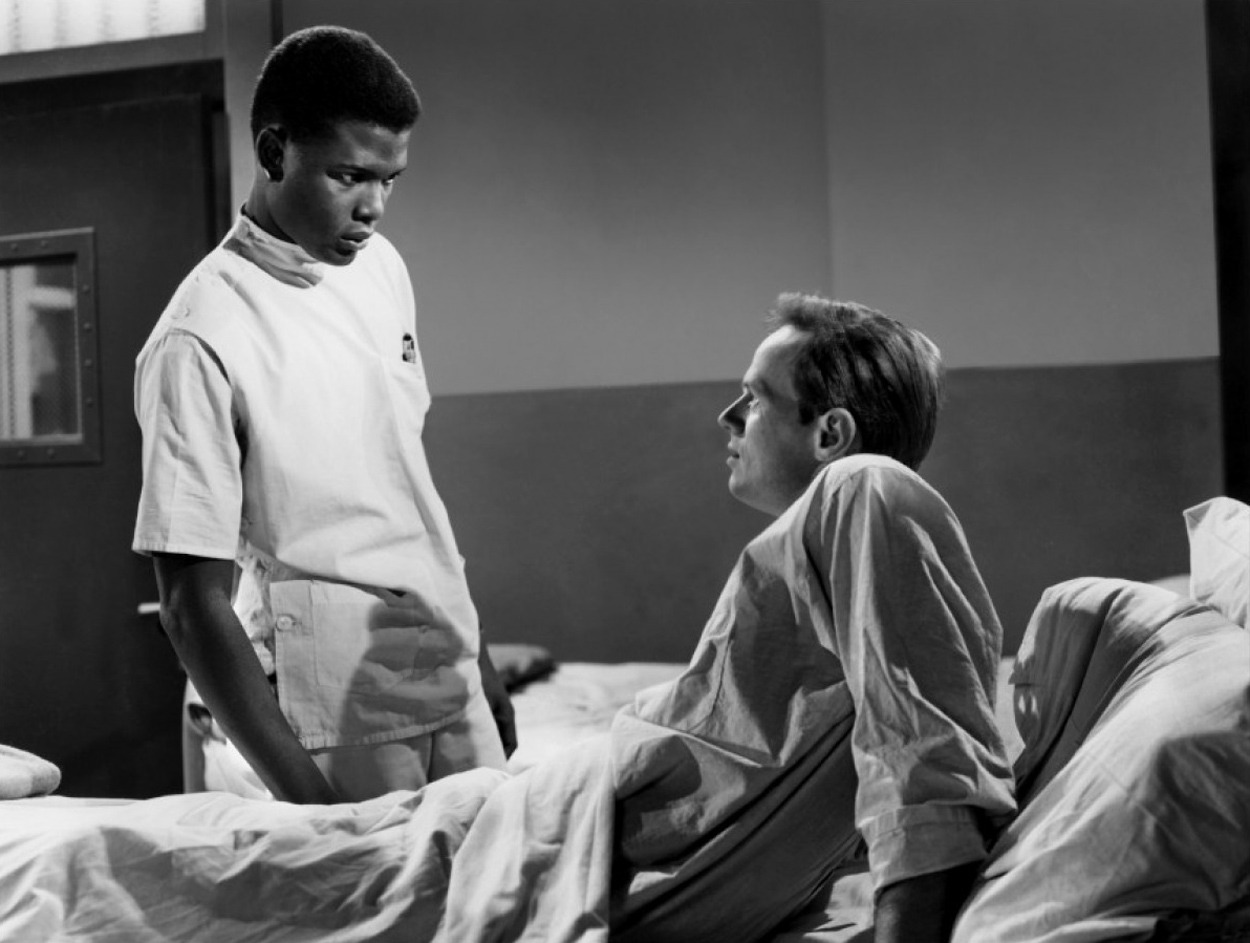
Dr. Luther Brooks (Sidney Poitier) is the first black doctor at a respectable hospital. His mentor Dr. Dan Wharton (Stephen McNally) assigns Luther to the prison ward, where the racist criminal Ray Biddle (Richard Widmark) and his brother Johnny are admitted with gunshot wounds. 

Johnny dies while Luther is trying to save his life, but Ray insists his brother was murdered by the doctor and refuses to authorize an autopsy that would prove the cause of death. Luther and Wharton turn to Johnny's ex-wife Edie (Linda Darnell) for help, but she is manipulated by Ray, who wants to spark racial riots between adjacent white and black neighbourhoods.

Sidney Poitier's first major screen role is a powerful, sometimes painful, commentary on poisonous white supremacy. Ray Biddle is a despicable character who makes no attempt to hide his blind hatred of blacks, and in the hands of director Joseph L. Mankiewicz, No Way Out becomes a searing examination of what Dr. Brooks is forced to endure. Despite the robust support of his mentor Dr. Wharton, Luther is surrounded by eyes loaded with suspicion, doubt, or outright contempt.

While always impactful, No Way Out suffers from some needless meandering. The script (by Mankiewicz and Lesse Samuels) goes searching for a larger story about inter-neighbourhood strife in an attempt to expand from the personal to the collective. Scenes of goons from adjacent communities prodded into street battles are impressively staged, but stray away from the compelling central characters and individual conflicts.

Better are the representations of Dr. Brooks' home life, and the emphasis on his family's normality. In portraying a black family striving towards the common American dream, Mankiewicz succeeds in isolating Ray Biddle as the outlier somehow expressing contempt for the nation's most admired traits.

Caught in the middle is the character of Edie Johnson, representing internal turmoil between a tainted past and a potentially better future. She intuitively knows she must distance herself from the toxicity of former brother-in-law (and illicit lover) Ray, but is still susceptible to his fake charms and false narratives. Poitier, Richard Widmark, and Linda Darnell add plenty of streetwise grit in the three central roles, investing in deeply uncomfortable and emotionally draining scenes.

Ray and Johnny Biddle have a third brother, the deaf and mute George. He is observant, conniving, and an eager enabler of prejudice, virulent bigotry thriving in the shadow of silence.


All Ace Black Movie Blog reviews are here.

Sunday, 9 January 2022

Movie Review: Lilies Of The Field (1963)

A drama with some humour, Lilies Of The Field is a warm-hearted story combining the kindness of strangers with the passion of religious belief.

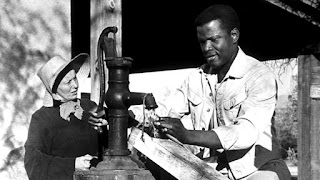
In arid Arizona, traveling independent contractor Homer Smith (Sidney Poitier) stops at the rustic farm run by the stern Mother Maria (Lilia Skala) and her four nuns from Eastern Europe. He just wants water for his car and to be on his way, by Maria believes Homer was sent by God to help her build a chapel for the community. Although the nuns have no money, no materials, and barely any food for their guest, Maria manages to convince him to stay every time he threatens to depart.

Homer helps the nuns learn English and secures a part-time job with a local contractor, and meets members of the community forced to hold their Sunday mass in a dusty parking lot. He gets to work on the chapel project, and the ragtag collection of area farmers unite to help.

It's impossible not to love the innocent charm of Lilies Of The Field. Directed by Ralph Nelson from a James Poe script (adapting a book by William Edmund Barrett), this is a simple, almost slight story that gets by on attitude and a child-like trust in positive outcomes. The black and white cinematography carries echoes of a more innocent era, Smith's skin colour is barely a topic of conversation, and the song Amen is both an ear-worm and a unifying theme between contractor and nuns.

While the proud Smith and the authoritarian Maria lock horns throughout, their low-key skirmishes can only have one outcome when God is on her side. And so the plot rides a singular rail from his arrival to the denouement, every obstacle overcome through good natured good-will. As Smith warms up to the chapel-building project, he recognizes an opportunity to deliver his life's signature project. But another spiritual lesson awaits within the power - and importance - of sharing and the community working together to own a common objective.

In a small cast otherwise filled with unknowns, Sidney Poitier dominates every scene, creating the centre of gravity with his customary dignity here mixed with humorous exasperation. It's not easy to suddenly be designated God's utility man, and Poitier gives Smith licence to push against the edges of his divine purpose. Lilies Of The Field fulfils its mission with a sly wink, the whole greater than the individual bricks.


All Ace Black Movie Blog reviews are here.

Wednesday, 1 December 2021

Movie Review: Shoot To Kill (1988)

A crime thriller, Shoot To Kill (also known as Deadly Pursuit) is a picturesque adventure chase, lacking character depth but packed with literal cliffhangers.

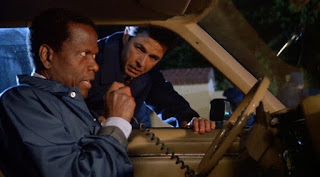
In San Francisco, FBI agent Warren Stantin (Sidney Poitier) attempts to negotiate with a ruthless criminal holding a hostage as part of a diamond theft. The incident ends badly, with the hostage dead and the suspect fleeing with the diamonds towards rural Washington State near the Canadian border. With Stantin in pursuit, the killer joins a small adventure group exploring the mountains with guide Sarah Renell (Kristie Alley).

Stantin teams up with Sarah's boyfriend Jonathan Knox (Tom Berenger), himself a rugged mountain guide, and the two men head into the wilderness to give chase. Stantin is out of his element and dependent on Knox, who would rather be on his own than dragging an FBI agent around. Meanwhile, Sarah and her group of tourists are unaware a barbarous murderer is in their midst.

The return of Sidney Poitier to the big screen after an eleven year absence enlivens Shoot To Kill. The veteran star is in good form, mixing gravitas with decent athleticism and traces of humour, bouncing off rugged co-star Tom Berenger to good effect. 

Director Roger Spottiswoode centres his attention on the two actors and uses a couple of anchor themes to ensure continuous entertainment. The partners-as-opposites buddy movie elements between Stantin (urban, Black, cars, restaurants) and Knox (rural, white, horses, marmot-on-a-stick) are sustained and well-developed. In parallel, the who-is-the-killer guessing game within Sarah's group adds a clever sub-mystery to the typical action dynamics. The antagonist's cold-blooded brutality contributes a spiky layer of venom.

With the mountains providing a majestic backdrop, Spottiswoode captures memorable scenes of endurance and danger, including a climb up a vertical cliff wall, blizzard survival in a snow cave, and a breathtaking misadventure above a steep gorge. A stubborn horse, a bear and a moose add semi-comic distractions.

Less impressive are the shallow charecterizations. 109 minutes come and ago and barely anything is revealed about Stantin, Knox, Sarah and the killer beyond the broadest superficialities. In particular, significant opportunities are missed in the interactions between the criminal and Sarah, when his survival depends on her expert know-how. And once the drama moves out of the mountains and into Vancouver on the Canadian side of the border, the run-and-shoot showdowns quickly become contrived and routine. 

Despite Sidney Poitier's preference for a suit and a city, Shoot To Kill demonstrates better aim in the crisp mountain air.


All Ace Black Movie Blog reviews are here.

Saturday, 28 September 2019

Movie Review: The Jackal (1997)


An assassination thriller, The Jackal features big star names in all the wrong roles and a plot filled with mammoth holes.

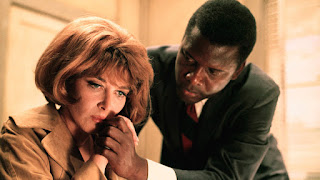
In Moscow, a joint operation between internal security services MVD and the FBI results in the death of a notorious mobster. In Helsinki, the dead man's brother Terek (David Hayman) promises revenge and hires an assassin known only as The Jackal (Bruce Willis) to kill a high profile American target. The FBI's Deputy Director Carter Preston (Sidney Poitier) and MVD's Major Valentina Koslova (Diane Venora) get wind of the contract and turn to imprisoned former IRA terrorist Declan Mulqueen (Richard Gere) for help.

Mulqueen and his former girlfriend, ex-Basque militant Isabella Zancona (Mathilda May), have a history with The Jackal, and Mulqueen joins Preston and Koslova on the manhunt from Europe to Canada and into the United States. Meanwhile The Jackal procures a high powered weapon and uses numerous fake identities and forged documents to carefully plan his audacious assassination.

A wholly unnecessary re-imagining of 1973's The Day Of The Jackal, the 1997 version manages to make everything much worse. Bruce Willis is stripped of his charisma and is utterly boring as a cold-blooded killer. It does not seem possible but Richard Gere fares even worse, saddled with an Irish accent and never coming close to convincing as an ex-IRA killer. And at seventy years old Sidney Poitier does his best, but loses the battle to engage as a senior FBI agent huffing and puffing across the globe.

Despite the casting horror show The Jackal may have been salvageable with a decent script, but the story of a barely-defined mobster seeking revenge by targeting an unspecified target loses all momentum early. The character of Terek as chief instigator carries promising menace but disappears entirely from the film, and the Chuck Pfarrer screenplay makes the wrong call by investing absolutely nothing in the intended assassination victim. Any potential for tension or mounting danger is lost, and the film disintegrates into a series of disjointed, routine and often irrelevant set-pieces.

Of course Mulqueen, a convict and ex-terrorist, is given full access to the inner sanctums of the FBI and becomes chief investigator, primary clue-finder and next-step deducer, the rest of the bumbling FBI team either following his instructions or actively compromising the investigation. Director Michael-Caton Jones does manage to deliver a few half-decent action scenes, but The Jackal falls through holes of its own making and shoots itself in the foot for added impact.


All Ace Black Blog Movie Reviews are here.


Friday, 12 April 2019

Movie Review: Band Of Angels (1957)


A Civil War drama, Band Of Angels is stranded between old and new representations of racism and eventually falls between the cracks.

In Kentucky just before the Civil War, Amantha Starr (Yvonne DeCarlo) is the daughter of a cotton plantation owner who is unusually kind to his slaves. Upon her father's death, Amantha is shocked to discover her mother was a slave, and so therefore she is half negro. Brutal slave traders holding her father's debts immediately capture and ship her to New Orleans, where wealthy businessman Hamish Bond (Clark Gable) buys her at auction for $5,000.

Hamish owns multiple properties and treats all his slaves with dignity, and indeed has raised Rau-Ru (Sidney Poitier) as a son, but Amantha remains unsure what Hamish wants from her. Eventually a romance develops between them and he offers her freedom, but she elects to stay. Hamish is hiding dark secrets about his past, while various other suitors enter Amantha's life as she struggles with her identity. The eruption of the Civil War severely disrupts Hamish's business, while Rau-Ru finds the dream of true freedom within grasp.

Based on the book by Robert Penn Warren, Band Of Angels deserves some credit for adopting a relatively enlightened stance and featuring multiple dignified black characters carving out a place in a shifting societal landscape. Sidney Poitier's outspoken Rau-Ru is the most prominent, but the intriguing Michele (Carolle Drake) is another of Hamish's slaves grappling with loosely defined captivity, the complications of freedom, and quiet infatuation.

Despite the good intentions, Band Of Angels stumbles and stalls rather than building momentum. Director Raoul Walsh is unable to ever ignite the film as it trundles from scene to scene with little passion. The intention to duplicate the grand drama of Gone With The Wind with more modern sensibilities is clear, but Band Of Angels does not come close to replicating the grandeur of the 1939 classic. Neither the writing nor the acting are at the requisite level, and indeed many scenes unfold with a stiff and artificial theatricality.

Walsh and writers Ivan Goff and Ben Roberts also manage to fumble the most pertinent discussions around racism. Amantha openly resents her blackness, Rau-Ru is angry at everything, and Hamish's relative kindness appears to stem from embers of guilt rather than any core belief. Although Gable is absent from large chunks of the film, Hamish's dark background is by far the most compelling aspect of the story, and Band Of Angels would have greatly benefited from showing samples of his formative years. Instead Walsh leans heavily on Gable, who is excellent, to recall the past, reducing the film to plenty of talking and spurning the opportunity for a more powerful cinematic experience.

Elsewhere, and between bouts of self-hate, Amantha too easily falls in love with every man who sets eyes on her. There is a fiery preacher and ardent believer in freedom, a handsome military type, the gruff Hamish, and a slimy next-door plantation owner. They take turns abusing and rescuing her, not necessarily in that order, as Band Of Angels desperately tries to define itself. In search of stability and fulfilment Amantha wastes too much time purring at the wrong targets, much like the film itself.


All Ace Black Movie Blog reviews are here.

Sunday, 21 January 2018

Movie Review: Blackboard Jungle (1955)


A classroom social drama, Blackboard Jungle takes a grim view of adolescence in sounding a loud warning about the latest inter-generational gap.

War veteran Richard Dadier (Glenn Ford) is offered his first job as an English language teacher at an inner city trade school in a tough multi-ethnic school. The students have a reputation for not caring about education, and the other teachers are generally just concerned about survival and cashing the next cheque. Richard is married to Anne (Anne Francis), who is pregnant and worried after having lost a previous child.

On the first day of classes Richard rescues fellow rookie teacher Lois Hammond (Margaret Hayes) from a rape by a student. He finds it difficult to connect with his students, but spots talent and leadership potential in Miller (Sidney Poitier) while gang leader Artie West (Vic Morrow) proves to be a handful in and out of the classroom. Richard stubbornly digs in to try and educate, but the strain of teaching starts to spill over into his personal life.

An adaptation of the Evan Hunter book directed by Richard Brooks, Blackboard Jungle is notorious for several reasons not quite related to its narrative content. The film opens with Bill Haley and His Comets' Rock Around The Clock, the first use of a rock song on a film soundtrack, at a time when rock music was still regarded with deep suspicion. The film's music and subject matter were considered near-scandalous and indeed despite plenty of censorship attempts teenage audience enthusiasm overflowed into violence and riots throughout the United Kingdom.

And in one of his earlier roles Sidney Poitier is arguably the second most important and prominent character in the film after Glenn Ford's Dadier. Yet Poitier's name is about tenth on both the opening and closing credit lists, a sad of example of Hollywood's opinion of black performers at the time, even in a film all about social upheaval.

As to the actual content of what is on the screen, Blackboard Jungle is an unrelenting and exaggerated portrayal of every parent's nightmare from the era. The schism between the Greatest Generation and their oldest children who missed out on war service but grew up with parents pre-occupied by the war is portrayed as a hostile battlefield. The bad behaviour starts as openly belligerent and quickly descends into regular and harrowing bouts of violence against teachers, including rape, back alley beatings, destruction of property, broad daylight heists and open threats of physical harm with weapons.

The episodes are multiplicative and Brooks' script becomes difficult to stomach as it paints itself into a corner. After spending the best part of 90 minutes exhibiting contemptible behaviour, the sharp turn towards partial redemption in the final 10 minutes rings hollow.

Poitier's performance is the only one that carries depth and subtlety, as he allows Miller to reveal hints of the person he could become given half a chance. Ford bulldozes his way through the role, his hard head a good match for the film's pounding message.

An undoubtedly forceful drama, Blackboard Jungle is also excessively stark and alarmist.


All Ace Black Blog Movie Reviews are here.


Sunday, 13 September 2015

Movie Review: Paris Blues (1961)


A potent human drama set amidst the Parisian jazz scene, Paris Blues explores themes of ambition, personal comfort, and unexpected love interfering with programmed journeys.

Ram Bowen (Paul Newman) and Eddie Cook (Sidney Poitier) are American jazz musicians plying their trade at a Paris nightclub. A middling trombone performer, Ram has ambitions to be taken seriously as a music writer, while sax player Eddie finds Europe more accommodating towards Blacks than his native United States. The Parisian jazz scene is abuzz with the arrival of the legendary Wild Man Moore (Louis Armstrong) and his band for a series of performances.

Americans Lillian (Joanne Woodward) and Connie (Diahann Carroll) are good friends and arrive in Paris for a dream vacation. They meet Ram and Eddie at the train station, where Ram is trying to show Wild Man a sample of his music writing. Initially Ram is more interested in Connie but eventually embarks on a torrid romance with Lillian, while Eddie and Connie fall for each other. Both relationships evolve quickly, and difficult decisions about long term commitments will be needed before vacation time is over.

A deceptively simple story directed by Martin Ritt, Paris Blues creates a sense of melancholia and traces sparks of uncertain hope attempting to penetrate the emotional gloom. The film luxuriates in a black and white aesthetic, with most of the scenes at night and many of the club sequences enlivened by jazz music puncturing through the thick haze of cigarette smoke. Ritt allows mood to speak louder than words, his characters comfortable in the shadows created by living life after hours.

Ram and Eddie are rounded into men driven by self-defined objectives. Ram will not easily give up on his dream to succeed as a music writer, and one ray of hope in his life is a forthcoming assessment of his work by a recognized jazz expert. Eddie has decided Europe is well ahead of the United States in its accommodation of Blacks, certain the struggle for civil rights in his homeland is both messy and for others to carry.

Lillian and Connie will both try to challenge and change their men, and Paris Blues, despite a compact 98 minutes of running time, refreshingly evolves beyond a trite romance and into a complex drama delving into thorny human and societal issues. Lillian offers Ram an opportunity to settle down if he gives up his personal quest and instead wins the girl of his dreams. Connie confronts Eddie's attitude, relabelling his European exile as a defeatist stance, a talented man turning his back on the seminal struggle of his people.

The film does not pretend to resolve every issue it raises, and indeed the individual decision points define the narrative struggle to land a bittersweet ending filled with the vagaries of complex lives. The terrific jazz music creates the perfect score highlighted by Wild Man's invasion of Ram's nightclub for a free-for-all jazz session, the joyous, thrilling music a welcome reprieve from pivotal personal passions.

Paul Newman and Sidney Poitier are both good without needing to stretch, while Joanne Woodward and Diahann Carroll have to evolve a bit quicker than normal to cram their characters' development and interactions into a short vacation.

The title is Paris Blues, the music is jazz, and the film is filled with soul.


All Ace Black Blog Movie Reviews are here.

Saturday, 29 August 2015

Movie Review: A Raisin In The Sun (1961)


An emotive drama about about race and class in America, A Raisin In The Sun only aims for the high notes. Staginess and an overabundance of overcharged moments hamper the film experience.

In a cramped urban apartment, the proud matriarch of a black family Lena Younger (Claudia McNeil) is trying to hold her household together. Her son Walter Lee (Sidney Poitier) is dissatisfied with his job as a chauffeur and dreams of going into the liquor store business. His wife Ruth (Ruby Dee) struggles with the family's tight finances and suffers from her husband's anger and unease. The couple also clash over the parenting of their young son Travis, who has to sleep on the sofa because the apartment is too small to accommodate the family. Meanwhile Walter Lee's younger sister Beneatha (Diana Sands) is striving to become a doctor, although her brother scoffs at her ambition, which he views as unrealistic. 

Following the recent death of her husband, Lena is about to receive a $10,000 insurance cheque. This heightens the tensions in the household. Lena wants to use the money for a bigger house, Walter Lee wants to risk the money on his liquor store business idea, and Beneatha's education is another deserving cause. Beneatha is also taking a great interest in her African heritage and culture, inspired by fellow student Joseph Asagai (Ivan Dixon), while she has another suitor in the form of George (a young Louis Gossett). With emotions reaching a boiling point, Lena has a key decision to make, and Ruth drops a new surprise on the family.

Not as much an adaptation of the Lorraine Hansberry play as a film capture of stage events, A Raisin In The Sun is directed by Daniel Petrie almost entirely in the confines of one room. With the characters and dialogue routinely over-agitated, almost every scene escalates to a heated dispute about race, ambition, God, heritage or money. The in-you-face level of intensity may work well on stage, but on the screen the absence of even a modicum of circumspection in tight quarters is at first tiresome and ultimately just strangles the breath out of the drama.

The issues tackled by the film are worthwhile and never less than engaging, revealing the spectrum of social pressures faced by a working class Black family not far removed from an oppressive past. The generational rift between Lena and Beneatha is an emerging stress point, a daughter veering into social and cultural interests deemed unthinkable by her traditional mother. For Lena the mere fact that the family has a roof of their own over their heads and can work with dignity to put food on the table is a great triumph. Beneatha wants a lot more, and now with a new decade beckoning and the influence of new friends like Asagai, she has the intellectual freedom to question fundamental assumptions while celebrating her African heritage in ways her mother could not dream of.

Walter Lee is a powder keg in the process of exploding. Disrespectful to both his wife and his mother, he is looking for a shortcut to wealth, and is obsessed by a get-rich-quick scheme that could jeopardize all that Lena has ever achieved for her family. The claustrophobia of the apartment is closing in on Walter Lee and mocking his life, which he views as a predetermined prison. He may now get paid to work for a rich white man, but he wants much more, and unlike his sister, he is unwilling to create the opportunity through self-betterment.

Most of the Broadway cast reprised their roles for the screen, and the performances are therefore not far from what would have been witnessed on the stage. The commitment is evident, but Petrie is satisfied with a room where everyone is over the top, filled with passion, and defaulting to profound moments and keynote statements. A Raisin In The Sun has plenty to say, and it's all in UPPERCASE.


All Ace Black Blog Movie Reviews are here.

Saturday, 22 August 2015

Movie Review: To Sir, With Love (1967)


A classroom drama set in a tough London neighbourhood, To Sir, With Love is a modest film that seeks and finds emotional connections thanks to a dominant Sidney Poitier performance.

Unemployed engineer Mark Thackeray (Poitier), originally from British Guyana, accepts a teaching position at North Quay Secondary School in the low-income East End of London. The other teachers have generally given up on trying to tame the wild students, who come from mostly broken homes and face bleak future prospects. The only other teacher who seems to care is Gillian Blanchard (Suzy Kendall). Thackeray's unruly group of students are led by Bert Denham (Christian Roberts), who does all he can to break every rule with the utmost disrespect. The other students include Pamela Dare (Judy Geeson), Potter (Chris Chittell) and Babs (pop singer Lulu).

Thackeray tries all he knows to engage the students in academics, but succeeds only in alienating them further. He finally discards the curriculum and transforms his class into an open discussion about social behaviour and life aspirations, revealing much about himself while insisting the students treat each other with dignity. They respond, and Thackeray starts to earn their respect, although Denham remains skeptical. But a new set of problems emerge with the increasing closeness between teacher and students, including one student developing a crush, while Thackeray risks alienating himself from the other teachers.

A British production directed by James Clavell, To Sir, With Love was part of Poitier's stellar 1967: it was released the same year as In The Heat Of The Night and Guess Who's Coming To Dinner, and helped establish Poitier as Hollywood's first black superstar. To Sir, With Love is the most modest of the three films, but also the most intimate. This is a story of one teacher and a small group of students learning to deal with each other. It's also less about race than it is about class. Thackeray's skin colour is barely mentioned; his dogged attempts to reach out to kids just logging time at school is the source of all the tension.

Most of the film is set in the classroom, and Clavell draws plenty of power from clearly drawn battle lines. Thackeray owns the front part of the room, but that is all. The students sit in a mayhem zone where flying objects, flying insults and on-the-fly plotting against the teacher rule the day, the boys and girls equally rude to each other  Thackeray's attempts to penetrate the students' own sense of despondency make for compelling viewing, and he only succeeds when he reorients his agenda to where they want to be: in real life, talking about struggles at home, career prospects, and what it means to be an adult.

Once the breakthrough is made Clavell's script does allow most of the students to transition quickly into more reasonable human beings, but that's because the film is also interested in the realities of what happens next: just as one set of challenges is hurdled, another emerges. Expectations are raised, fissures emerge within the ranks, some students start to idolize their teacher, other staff members are not on the same behavioural wavelength as Thackeray, and he ventures into troubled personal lives.

The film benefits from a swinging sixties London vibe, and even at the derelict east-side school a counter-culture revolution of the young is brewing. Dancing, mini-skirts and an attitude of overthrowing stodgy societal norms provide texture to Thackeray's adventure into the world of teaching. Lulu's hit song To Sir, With Love provides the perfect musical accompaniment.

Sidney Poitier commands the film with a performance of understated determination, and is at his best when he surprises his students with frank snippets from Thackeray's own life. Just because he is educated and wears a suit does not mean that Thackeray had an easy upbringing, and Poitier excels at presenting the teacher himself as the most inspirational lesson. To Sir, With Love is about personal change, as one man finds his calling and outlines the opportunity residing between low expectations and high potential.


All Ace Black Movie Blog reviews are here.

Sunday, 9 August 2015

Movie Review: The Defiant Ones (1958)


A potent drama about race relations packaged into an escape thriller, The Defiant Ones is an enthralling film. The intimate story of two tough men forced to survive together blossoms into an acute commentary about the ties that underpin a diverse society.

When a prison transfer bus crashes on a rural road, two inmates are presented with an unexpected opportunity to make their escape. Cullen (Sidney Poitier) is black and proud of it, Joker (Tony Curtis) is white and an ignorant racist, and they are chained together. Despite their best efforts, they are unable to break their shackles, and so their wrists remain attached to each other as they trundle through the countryside on foot, running for hours to stay ahead of their pursuers. They are chased by a growing posse under the unconventional leadership of Sheriff Max Muller (Theodore Bikel), whose team includes sniffer dogs and muzzled dobermans.

Cullen and Joker move from mutual hate to grudging dependence. When they fall into a muddy pit at a remote mine operation, they have to cooperate to clamber out. They then barely survive a lynching at a rough work camp where they try to steal supplies. Finally, they stumble onto the remote farm run by an attractive lonely woman (Cara Williams) and her young son Billy (Kevin Coughlin). By this time, the convicts are close to becoming friends. With the search party closing in, Cullen and Joker face tough choices that will test their unlikely partnership.

Produced and directed by Stanley Kramer, The Defiant Ones is a seminal achievement. The story of Cullen and Joker represents the reality of race relations between whites and blacks in the United States, stuck together and struggling to get along despite the obvious benefits of working together. Without ever descending into preachiness, the film confronts and acknowledges the tension born of ignorance, and then celebrates the strength and respect that come from combining forces towards a common goal. The initial antagonism directed at an unplanned union never quite goes away; but crucially, it fades into insignificance in the face of burgeoning humanity.

Filming in black and white and concisely editing the drama into 97 gripping minutes, Kramer assembles the film in alternating scenes of escape, pursuit and reflection. Cullen and Joker are given plenty of opportunities to develop into real people with lives, ambitions, dreams and backgrounds. They start out as stereotypes in each others' eyes, and gradually grow into individuals worthy of respect, friendship, and trust. For the scenes on the run, the film provides no shortage of tense hide-and-seek thrills, as the two men stay just hours ahead of the law, navigating the bush, pursuing freedom and dodging the curiosity of strangers, all while hampered by their stubborn chain.

The Defiant Ones won the Academy Awards for cinematography, editing and original screenplay, and received a host of additional nominations, including for Best Film and Best Director. Both Curtis and Poitier were nominated as Best Actor, and while neither won (David Niven triumphed for Separate Tables), they are both stellar. Curtis in particular has rarely been better. He reveals a hardened edge to his persona, leaning his charisma towards the selfish dark side. Poitier plays to his strengths as the proud man occupying the moral centre and confronting bigotry head on, while working to reverse it with a combination of words and actions. Theodore Bikel and Cara Williams were also nominated for their supporting roles, and the cast also includes Claude Akins and Lon Chaney, Jr. as work camp men on opposite sides of the sympathy spectrum.

The movie builds to an enthralling climax at a remote farmhouse, where opportunities arise for a fresh start, Billy' mother unveils a new level of desperation, hallucinatory dreams appear within reach, an alliance forged by the chain is severely tested, and a swamp and a train offer sanctuary, danger and maybe a final lunge towards coveted freedom. Weaker apart and stronger together, black and white are destined to learn to live with each other, but the terrain is tough and the tests unforgiving.


All Ace Black Blog Movie Reviews are here.

Sunday, 19 October 2014

Movie Review: In The Heat Of The Night (1967)


A simmering murder mystery overheated to the boiling point by racial tensions, In The Heat Of The Night is a seminal cinematic achievement, a turning point in the portrayal of blacks on the screen and a riveting small town thriller.

In the small southern backwater of Sparta, Mississippi, night patrolman Sam Wood (Warren Oates) finds wealthy businessman Mr. Colbert dead in the street, killed with a blow to the head. The local redneck police chief Bill Gillespie (Rod Steiger) orders a sweep of the town, and Wood picks up Virgil Tibbs (Sidney Poitier) at the train station. Black, well-dressed and very much a stranger, Tibbs is immediately a suspect, and Gillespie treats him with racist contempt. But Gillespie is stunned to learn that Tibbs is a Philadelphia police detective, passing through Sparta while visiting his mother.

Through a combination of pressure from his superior and his personal pride, Tibbs stays in Sparta to help solve the murder, while Gillespie is grudgingly convinced by Sparta's mayor (William Schallert) to accept Tibbs' help. Tibbs and Gillespie never really get along, but start to tolerate each other as they track down persons of interest including Mrs. Colbert (Lee Grant), small-time drifter Harvey (Scott Wilson), Colbert's business rival Endicott (Larry Gates), and late night diner counterman Ralph (Anthony James). Sam Wood also emerges as a suspect, as well as being implicated in a sordid unwanted pregnancy involving a 16 year old local girl. With Mrs. Colbert threatening to pull her late husband's investment out of town and Tibbs attracting an increasing number of enemies, the pressure mounts to catch the murderer.

Directed by Norman Jewison and written by Stirling Silliphant based on the John Ball book, In The Heat Of The Night draws one of the most distinct before-and-after lines in Hollywood movie history. Poitier's Guess Whose Coming To Dinner, also from 1967, portrayed a black man being accepted into a white liberal educated family. In The Heat Of The Night has no such acceptance: Virgil Tibbs is a qualitatively better law officer than Gillespie; and through his sheer force of conviction, Tibbs will prove to Sparta and all its bigoted residents that a black man will overcome deep-rooted racism and serve the cause of justice.

For all its redefining of racial relations, In The Heat Of The Night is also a fine, complex murder mystery. In sweltering heat made worse by prevailing hot winds of xenophobia, plenty of suspects emerge as the potential killer, and Tibbs gathers personal enemies by focusing the investigation in unexpected directions. He is convinced the drifter Harvey is innocent when plenty of evidence points to his guilt, and Tibbs rocks the town to its core by suspecting Endicott and then getting involved in the unwanted pregnancy case. The film's climax does feel rushed, and Jewison would have done better to provide some of the secondary characters a bit more room to breathe.

In The Heat Of The Night maintains its tension by not caving in to any easy moments of reconciliation. To the bitter end, Gillespie just barely finds a way to work with Tibbs, and never misses an opportunity to make Tibbs' life harder than it needs to be. The film avoids becoming a buddy movie, as Gillespie's respect grows by barely perceptible increments. It's only in the final scene that Tibbs gets the benefit of the slightest kind gesture and phrase, and even then, Gillespie wraps his gratitude with a tinge of relief that the two are finally parting ways.

Two moments from the film stand out and earn their place in movie history. In the first, when Gillespie, who has been callously referring to Tibbs as "boy", asks Tibbs what they call him in Philadelphia, he roars back "They call me MISTER Tibbs!."  And in the second, Endicott is insulted that he is considered a suspect in the Colbert murder and slaps Tibbs hard. Tibbs returns the slap, just as hard. It's a shocking, time-stands-still moment, a black man striking a respected white cotton magnate deep in the south.

The two central performances are perfect, primarily because they don't stray from the essence of the two characters. Poitier emphasizes Tibbs' pride, confidence and hints of justified arrogance. Steiger keeps Gillespie true to a small-town cop, refusing to admit he is in over his head, furiously chewing his gum to compensate for the absence of any useful detective skills, while eyeing Tibbs with a combination of suspicion and contempt.

In The Heat Of The Night the movies encountered an inflection point. A murder was committed, and race relations on the big screen changed forever.


All Ace Black Movie Blog reviews are here.

Tuesday, 15 November 2011

Movie Review: Guess Who's Coming To Dinner (1967)


The start of a new era and the end of a momentous career, Guess Who's Coming To Dinner is a milestone film. With his health failing to the point that no coverage could be secured to insure his ability to complete filming, Spencer Tracy delivers a final exclamation point to a career spanning 37 years and 75 movies. Katharine Hepburn and Sidney Poitier share the spotlight with the ailing but game Tracy to round out a stellar cast and tell the unlikely tale of evolving race relations in the United States.

Joanna Drayton (Katharine Houghton, the real-life niece of Hepburn) and Dr. John Prentice (Poitier) arrive in San Francisco, and drop in unexpectedly at the home of Joanna's parents Matt (Tracy) and Christina (Hepburn). Joanna, who is very white, and Dr. Prentice, who is very black, met while on vacation in Hawaii, fell madly in love, and after a 10 day courtship have decided to get married. Prentice, a widower with a spotless record of academic and professional achievement, wants Matt's immediate and unreserved blessing prior to committing to the marriage, while Joanna, bright eyed, energetic and idealistic, is determined to tie the knot no matter what.

Matt and Christina are proud of their liberal world views and equally proud of Joanna's colour-blind fearlessness, but they are both initially stunned by their daughter's bombshell. Christina quickly recovers her equilibrium and wholeheartedly supports Joanna's decision to get married to the man she loves. Matt's attitude and reaction are clouded by his concern for the future happiness of his daughter and his grandchildren, and he does not appreciate the need for a rushed decision.

Unexpectedly, the Draytons' long-term black housekeeper, Tillie (Isabel Sanford) is most hostile to the idea of a black man marrying Joanna. On the opposite side of the spectrum is family friend Monsignor Ryan (Cecil Kellaway), who is immediately heartily and joyfully supportive. Matters get a lot more complicated when Dr. Prentice's parents (Roy E. Glenn and Beah Richards) fly in from Los Angeles to join the dinner festivities: they are shocked to learn that their son wants to marry a white woman. By the time dinner is served, Matt needs to make a decision that will have long-lasting family implications.

Although written for the screen by William Rose, Guess Who's Coming To Dinner has the compact structure of a sharp play. Director Stanley Kramer keeps his cameras moving between the many rooms at the Draytons' home, with a few perfunctory external trips, but Kramer is fully aware that the energy resides within his cast: Tracy, Hepburn and Poitier are given ample breadth to shine, and Houghton more than holds her own in the presence of acting greatness.

Tracy and Hepburn, in their ninth and final screen pairing, portray a long-married couple and tap into their real-life relationship to demonstrate the comfort and respect that only comes when deep love renders the most basic conversations unnecessary. Matt and Christina never have to tell each other what they are thinking: instead, they take turns to warn each other about the consequences of their unstated but accurately predicted judgements.

Poitier delivers his trademark proud yet humble performance, a man at ease with himself but acutely aware of the discomfort that his skin colour causes in others. Katharine Houghton's bright performance leaves open the question as to why she did not go on to have a much more prominent career in film.

Race relations in the United States of the 1960s are the core issue that Guess Who's Coming To Dinner grapples with, and the questions from Rose and Kramer just keep on coming. How will a liberal couple react when their own daughter announces an imminent marriage to a black man? Why does a white family's black housekeeper resent the white daughter marrying a black man? How is it that the representative of the most conservative institution, the Monsignor, has the least difficulty with the issue? And why would the reaction of Prentice's black parents be any different than the reaction of Joanna's white parents?

Finally, and with the most deft of touches, Rose manages to shuffle the pieces of the puzzle so that the dividing line appears between the mothers and the fathers, and not the between the blacks and whites. He raises a whole new set of questions about the role of men and women in first instilling the proper values in their children, and then being true to them when it matters the most.

Tracy draws the curtain on Guess Who's Coming To Dinner, and his career, with a gripping monologue summarizing the day's events and delivering his verdict about his daughter's future. Seventeen days after filming ended, he died. Rarely has a distinguished actor had the opportunity to exit the stage so clearly on top of his craft.


All Ace Black Movie Blog reviews are here.