Showing posts with label Richard Gere. Show all posts

Tuesday, 24 December 2024

Movie Review: Days Of Heaven (1978)


Genre: Drama  
Director: Terrence Malick  
Starring: Richard Gere, Brooke Adams, Sam Shepard, Linda Manz  
Running Time: 94 minutes  

Synopsis: In 1916, hot-headed drifter Bill (Richard Gere) accidently kills a factory foreman in Chicago. He flees in the company of his young sister Linda (Linda Manz) and his lover Abby (Brooke Adams), although Bill and Abby pretend to be siblings to avoid gossip. In rural Texas, Bill secures a seasonal job working the grain fields of a wealthy farmer (Sam Shepard), who is soon entranced by Abby. When Bill learns the farmer may not have long to live, he conspires to inherit his riches.

What Works Well: Writer and director Terrence Malick combines an astounding eye for eloquent scenery with the artistry of epic storytelling revealed in economic, almost apologetic, short strokes. The evil-within-beauty canvass is as grand as the romantic subterfuge born out of economic desperation is intimate. Néstor Almendros' cinematography captures a slice of desolate Americana where rich and poor intermingle across invisible barriers, and opportunities for advancement by fair means or foul are limited only by the imagination. Ennio Morricone's evocative score positions human acts under nature's sometimes vengeful watch, and Linda Manz's precocious narration fills in the blanks with soulful resignation.

What Does Not Work As Well: The balance occasionally tilts towards cute animal shots to the detriment of dramatic cohesion.

Key Quote: 
Linda, narrating: Nobody's perfect. There was never a perfect person around. You just have half-angel and half-devil in you.


All Ace Black Movie Blog reviews are here.

Friday, 27 September 2024

Movie Review: The Benefactor (2015)


Genre: Drama  
Director: Andrew Renzi  
Starring: Richard Gere, Dakota Fanning, Theo James  
Running Time: 93 minutes  

Synopsis: In Philadelphia, wealthy hospital benefactor Francis "Franny" Watts (Richard Gere) is best friends with couple Bobby and Mia (Dylan Baker and Cheryl Hines), and treats their teenaged daughter Olivia (Dakota Fanning) as his own. Franny is consumed by guilt when he survives a car crash that kills Bobby and Mia. Five years later the pregnant Olivia marries Luke (Theo Wilson), a doctor, and reconnects with Franny. He starts showering the couple with expensive gifts and favours, but Franny is also suffering from physical and emotional scars.

What Works Well: Richard Gere enjoys a larger-than-life role, gregariously dancing on the seam between joyful and overbearing. Writer/director Andrew Renzi tantalizes with mysteries surrounding the origins of Franny's wealth, his ailments and addictions, the true nature of his relationship with Bobby and Mia, and what happened in the aftermath of that fateful car crash. Olivia and Luke's discomfort carries an edge as their life is overwhelmed by Franny's largesse.

What Does Not Work As Well: The narrative is much better at asking questions than answering them, and ultimately this is an unsatisfactory half-movie with a host of non-resolutions. A critical pivot point is Franny's inability to renew a morphine prescription, a highly implausible hurdle for a hospital-owning tycoon. 

Key Quote:
Luke (to Franny): Just because you give and give and give doesn't make you a part of anything.


All Ace Black Movie Blog reviews are here.

Saturday, 10 August 2024

Movie Review: The Flock (2007)


Genre: Crime Drama  
Director: Andrew Lau  
Starring: Richard Gere, Claire Danes  
Running Time: 105 minutes  

Synopsis: In New Mexico, Errol Babbage (Richard Gere) is a public safety official tasked with keeping tabs on registered sex crime offenders. Obsessive and high-strung, Errol is being forcibly retired and has to train his replacement Allison (Claire Danes). He introduces her to the world of sexual perverts living in society, and she witnesses his diligence in trying to make sure none of them re-offend. But when a young woman is abducted, Errol is convinced one of his "flock" has strayed, and he races to uncover the culprit before the victim is harmed.

What Works Well: This disturbing journey into the dark world of deviants and the agents tasked with monitoring their behaviour packs an impact. Director Andrew Lau creates a psychologically grim and seedy milieu of remote mobile homes, spooky abandoned houses, and sex dens, while Richard Gere impresses with a portrayal of a man well beyond the edge, his exposure to atrocities blunting his humanity and ability to distinguish between right and wrong. The line-up of degenerates-as-suspects is a cross-section of creepiness attracted to criminality and violence.

What Does Not Work As Well: Character backgrounds are sorely lacking, with Claire Danes suffering most and never getting to grips with Allison's role. The outcome is a flat portrayal of human carnage, and growing suspicions that atrocities are displayed for pure shock value. The plot logic is bumpy, not helped by Babbage taking on the role of police investigator while the actual detective work goes missing.

Conclusion: A cleansing shower is recommended after the credits roll.


All Ace Black Movie Blog reviews are here.

Sunday, 5 May 2024

Movie Review: Breathless (1983)


Genre: Crime Drama Romance  
Director: Jim McBride  
Starring: Richard Gere, Valerie Kaprisky  
Running Time: 97 minutes  

Synopsis: Professional car thief Jesse Lujack (Richard Gere) loves Jerry Lee Lewis, Elvis Presley, and the Silver Surfer comic book character. While driving from Las Vegas to Los Angeles in a stolen car, he inadvertently shoots a police officer. In LA he seeks out foreign student Monica (Valerie Kaprisky), who had walked out on him after a Vegas fling. With law officers closing in, Jesse trawls LA's underworld to collect some money and tries to charm Monica into fleeing to Mexico with him.

What Works Well: In this remake of Jean-Luc Godard's celebrated 1960 debut, the colours are vivid, the eroticism levels high, and both stars look good in various stages of undress. Even when clothed, Richard Gere exudes chest-always-exposed sexuality, bouncing off the walls in an all-or-nothing performance so memorably over the top that the restless thief actually starts to make sense.
 
What Does Not Work As Well: The plot is too thin to matter, the characters' actions and emotional notes quickly become repetitive, and Valerie Kaprisky's monotonous line readings are aggravating. Director and co-writer Jim McBride's attempted injections of philosophical conversations (usually while the characters are naked, of course) start and end with Jesse's live-for-today attitude conflicting with Monica's desire to actually plan for the future. Beyond the instinctive attraction of bad boys, why she spends more than a minute with him is unclear.

Conclusion: Style, vibe, and attitude layered upon an inconsequential couple.


All Ace Black Movie Blog reviews are here.

Sunday, 17 December 2023

Movie Review: Internal Affairs (1990)


Genre: Crime Thriller
Director: Mike Figgis
Starring: Richard Gere, Andy Garcia, Nancy Travis, Laurie Metcalf
Running Time: 115 minutes

Synopsis: In Los Angeles, corrupt cop Dennis Peck (Richard Gere) funnels illicit money to his pockets and doles out favours to other cops, including his cocaine-addicted partner Van Stretch (William Baldwin). When Van roughs up his wife, internal affairs agents Raymond Avilla (Andy Garcia) and Amy Wallace (Laurie Metcalf) start to investigate. Dennis and Raymond hate each other from police academy days, and as Raymond closes in on Dennis' racket, their rivalry becomes personal and violent, with Raymond's wife Kathleen (Nancy Travis) dragged into the conflict.

What Works Well: Although they both struggle against poorly defined characterizations, Richard Gere and Andy Garcia provide high-wattage and confident star power. They are complemented by Nancy Travis, who gets the best and most surprisingly effective scene, and a tragic William Baldwin. The production values are high and director Mike Figgis hustles the action along, underlining the toll of an intense investigation on Raymond's home life.

What Does Not Work As Well: After a promising start, the second half of Henry Bean's script disintegrates into a ridiculous over-the-top hissing-and-punching duel between a psychopath and a hothead, both preferring fists over wits. The narrative omits even a basic explanation of the mass corruption at the heart of the investigation (Dennis' involvement with sleazoids far from explaining his supposed wealth and influence), then detaches from reality as assaults multiply and the dead bodies pile-up.

Conclusion: The veneer of quality hides a rotting core.


All Ace Black Movie Blog reviews are here.

Friday, 10 November 2023

Movie Review: Maybe I Do (2023)


Genre: Romantic Comedy
Director: Michael Jacobs
Starring: Diane Keaton, Susan Sarandon, Richard Gere, William H. Macy, Emma Roberts, Luke Bracey
Running Time: 95 minutes

Synopsis: Michelle (Emma Roberts) gives her long-term boyfriend Allen (Luke Bracey) 24 hours to commit to marriage. Michelle's parents Howard and Grace (Richard Gere and Diane Keaton) then invite Allen's parents Sam and Monica (William H. Macy and Susan Sarandon) for dinner, exposing the four-month affair between Howard and Monica and the one-night friendship between Grace and Sam. Multiple discussions about commitments ensue.

What Works Well: The stellar cast maintains a base level of interest, with Emma Roberts and William H. Macy most engaged. The script at least dares to break away from most of the standard rom-com genre cliches.

What Does Not Work As Well: Michael Jacobs adapts his own play, but the material as presented is ill-suited to the screen. Confined to theatrical sets, the characters repetitively - and endlessly - explore the viability of long-term relationships, the courage required to leap into marriage, and the risk of familiarity yielding to staleness. The unconvincing dialogue never sounds credible and circles the same drain for 95 minutes. The wild coincidences of the parent couples' illicit liaisons ultimately add nothing of consequence.

Conclusion: Too much ardent talk, not enough genuine substance.


All Ace Black Movie Blog reviews are here.

Sunday, 19 December 2021

Movie Review: Primal Fear (1996)

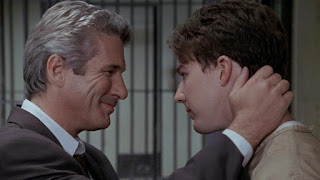
A crime and courtroom drama, Primal Fear boasts a satisfyingly convoluted case brought to life by a terrific cast and one spectacular debut.

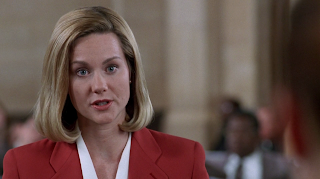
In Chicago, the respected Archbishop Rushman (Stanley Anderson) is brutally murdered. The police quickly arrest altar boy Aaron Stampler (Edward Norton) as he is escaping from the scene covered in blood. Celebrity defence lawyer Martin Vail (Richard Gere) offers his services to Aaron pro bono. Prosecutor Janet Venable (Laura Linney), one of Martin's ex-lovers, is assigned to the case, with a mandate from her boss District Attorney John Shaughnessy (John Mahoney) to secure a conviction and the death penalty.

The prosecution's case against Aaron is strong but lacks a motive. Martin interviews the stuttering, soft-spoken Aaron, and determines the simple young man from Kentucky is incapable of murder. Martin recruits psychologist Dr. Molly Arrington (Frances McDormand) to evaluate Aaron, while his team uncover several plots swirling around the Archbishop, including a politically-driven land development deal and evidence of sexual impropriety. In the courtroom of Judge Shoat (Alfre Woodard), Martin and Janet square off, but in an already complicated and high-profile case, surprises await them both. 

An adaptation of the William Diehl novel directed by Gregory Hoblit, Primal Fear is a richly textured drama. Packed with revelations, the plot finds new twists at regular intervals, and despite plenty of artistic freedoms stays just on the right side of cinematically credible. The Archbishop's murder is only the starting point, and before long sub-plots related to corrupt business deals, pedophilia, and personality disorders merge into a grand, multi-faceted mystery.

Of course some of the detours are elaborate distractions to cast doubt and open new avenues of potential guilt and innocence, prolonging the fundamental guessing game around Aaron's role. The altar boy as an innocent victim caught in the wrong place at the wrong time is Martin's thesis for the defence, but Aaron could also have been a pawn in much larger game, or holding his own difficult-to-uncover motive. 

In his big screen debut, Edward Norton's performance as the hesitant, deferential, and scared Aaron is a stunning bolt of lightning. But then Martin and Dr. Arrington delve further into the defendant's psyche and reveal much more to his character, and Norton moves to a higher level of dominance, evolving into a formidable and unpredictable presence.

The rest of the cast is packed with talent, Richard Gere infusing Martin Vail with plenty of depth and arrogant confidence in the central role. In contrast Laura Linney struggles with a choppy definition of prosecutor Janet Venable, often caught in unconvincing demonstrations of tough mannerisms.

At 130 minutes, Primal Fear goes on, and along with writers Steve Shagan and Ann Biderman, Hoblit could have tightened the pacing. A foot race involving another alter boy with something to hide is wholly unnecessary, some of the courtroom shenanigans could have been truncated, and the sexual tension between Martin and Janet is overplayed and loops in repetitive circles.

But Primal Fear is an overall gripping legal thriller. The courtroom manoeuvres maintain a pointed level of drama as intersecting battles of wits and wills play out, some plain to see, others just plain devious.


All Ace Black Movie Blog reviews are here.

Wednesday, 4 December 2019

Movie Review: The Hunting Party (2007)


A journalists-in-peril adventure, The Hunting Party has a potentially good story to tell but features an imbalance between danger and levity.

War zone journalist Simon Hunt (Richard Gere) and his cameraman and close friend Duck (Terrence Howard) enjoy an adrenaline-fuelled life covering the world's most dangerous conflicts. But in 1994, Simon suffers an on-air meltdown while covering the brutal war and ethnic cleansing atrocities in Bosnia. He is fired and his career goes into a downward spiral. Duck eventually loses track of his friend and secures a cushy job as the chief cameraman for the network's main anchor Franklin Harris (James Brolin).

In 2000, Duck and Franklin along with rookie reporter and nepotism beneficiary Benjamin Strauss (Jesse Eisenberg) arrive in Bosnia to cover the 5 year anniversary of the war-ending peace treaty. Simon re-enters Duck's life, claiming to know the whereabouts of wanted fugitive Dragoslav "The Fox" Bogdanović (Ljubomir Kerekeš), one of the main purveyors of ethnic cleansing. Duck and Benjamin join Hunt on a dangerous journey deep into Serb-controlled territory, where suspicious locals and UN peacekeepers immediately mistake the journalists as a CIA hit-squad, leading to surreal encounters.

Filmed in Croatia and loosely inspired by real events recounted in an Esquire magazine article, The Hunting Party attempts a difficult balancing act. The Bosnian conflict resulted in over 100,000 deaths and horrific acts of massacre and ethnic cleansing in the heart of Europe. While levity can be an antidote for brutality, here writer and director Richard Shepard tries to have it both ways by exposing his trio of intrepid journalists to genuine horror and danger then angling for laughs. The mix rarely works and more often leaves an unsatisfactory taste in the mouth.

In 2007 this story was a condemnation of inaction. By chronicling the misadventures of a group of bickering journalists as they get close to The Fox within a couple of days of amateurish searching, the film rightly exposes foot-dragging by an international community seemingly unwilling to seriously go after the architects of war. Since then the wheels of justice have turned, leaving The Hunting Party in mid-narrative territory.

Idea fragments, some more promising than others, are introduced on the periphery of the main plot. Simon Hunt's emotional collapse and career disintegration after repeated exposure to violence is a welcome acknowledgement of post traumatic stress disorder creeping up on the seemingly immune, but deserved more exposition. Much less successful is the hurried injection of a barely-baked romance to personalize his tragedy and turn the quest to find The Fox into a personal vendetta.

Richard Gere, Terrence Howard and Jesse Eisenberg are functional without ever departing from stock characterizations. Diane Kruger gets one scene as a mysterious informant demanding money from the CIA (as she is convinced the journalists are all undercover agents) to reveal The Fox's hideout.

Despite exposing snippets from a tragic and cinematically underexposed conflict, The Hunting Party misses its prey.


All Ace Black Blog Movie Reviews are here.


Saturday, 28 September 2019

Movie Review: The Jackal (1997)


An assassination thriller, The Jackal features big star names in all the wrong roles and a plot filled with mammoth holes.

In Moscow, a joint operation between internal security services MVD and the FBI results in the death of a notorious mobster. In Helsinki, the dead man's brother Terek (David Hayman) promises revenge and hires an assassin known only as The Jackal (Bruce Willis) to kill a high profile American target. The FBI's Deputy Director Carter Preston (Sidney Poitier) and MVD's Major Valentina Koslova (Diane Venora) get wind of the contract and turn to imprisoned former IRA terrorist Declan Mulqueen (Richard Gere) for help.

Mulqueen and his former girlfriend, ex-Basque militant Isabella Zancona (Mathilda May), have a history with The Jackal, and Mulqueen joins Preston and Koslova on the manhunt from Europe to Canada and into the United States. Meanwhile The Jackal procures a high powered weapon and uses numerous fake identities and forged documents to carefully plan his audacious assassination.

A wholly unnecessary re-imagining of 1973's The Day Of The Jackal, the 1997 version manages to make everything much worse. Bruce Willis is stripped of his charisma and is utterly boring as a cold-blooded killer. It does not seem possible but Richard Gere fares even worse, saddled with an Irish accent and never coming close to convincing as an ex-IRA killer. And at seventy years old Sidney Poitier does his best, but loses the battle to engage as a senior FBI agent huffing and puffing across the globe.

Despite the casting horror show The Jackal may have been salvageable with a decent script, but the story of a barely-defined mobster seeking revenge by targeting an unspecified target loses all momentum early. The character of Terek as chief instigator carries promising menace but disappears entirely from the film, and the Chuck Pfarrer screenplay makes the wrong call by investing absolutely nothing in the intended assassination victim. Any potential for tension or mounting danger is lost, and the film disintegrates into a series of disjointed, routine and often irrelevant set-pieces.

Of course Mulqueen, a convict and ex-terrorist, is given full access to the inner sanctums of the FBI and becomes chief investigator, primary clue-finder and next-step deducer, the rest of the bumbling FBI team either following his instructions or actively compromising the investigation. Director Michael-Caton Jones does manage to deliver a few half-decent action scenes, but The Jackal falls through holes of its own making and shoots itself in the foot for added impact.


All Ace Black Blog Movie Reviews are here.


Saturday, 24 August 2019

Movie Review: Runaway Bride (1999)


A middling romantic comedy, Runaway Bride reteams Julia Robert and Richard Gere with surprisingly lacklustre results.

Without any fact checking, New York newspaper columnist Homer "Ike" Graham (Gere) writes a dismissive piece about a woman called Maggie Carpenter who has apparently left a succession of men stranded at the altar. He is fired for sloppy reporting, but a magazine editor offers him a chance to pursue the real story.

Ike travels to the quaint small town of Hale, Maryland, and finds Maggie (Roberts) engaged to be married to football coach Bob Kelly (Christopher Meloni), her fourth attempt to get hitched. Her three previous engagements did indeed end with her fleeing the wedding ceremony. As a result of her romantic misadventures, all caught on video, Maggie is a local punchline, with her family joking about her exploits at every opportunity. After initially resenting Ike's intrusion into her life, a romance blossoms between them, much to Bob's disappointment.

After the success of 1990's Pretty Woman, reconnecting Julia Roberts with Richard Gere in another Garry Marshall-directed romantic comedy must have been considered a fail safe idea. But while the stars provide the necessary energy for Runaway Bride, the sparks just don't fly as may have been expected. The story is competent and strives for some level of originality within the confines of the genre, but overall the film just ambles along in safe and predictable territory.

The blame for the missing fireworks needs to be shared. Roberts marginally overacts her way through the film, never settling down into any kind of comfort zone as a real person. Gere oscillates awkwardly between cavalier newspaperman and dreamy romantic. The script by Josann McGibbon and Sara Parriott lacks wit and cutting edge, while Marshall allows the film to bloat to an unnecessary 116 minutes.

The secondary cast members do their best to enliven proceedings. Meloni as Maggie's latest experiment in love, using trite football coaching tactics to help her over the line, is joined by Joan Cusack as Maggie's grounded best friend and Paul Dooley as her frequently inebriated dad. Rita Wilson and Héctor Elizondo lend further depth and talent.

Runaway Bride tries to reach for some weightier conversations about knowing yourself before committing to couplehood, but any profound statements are well beyond the capabilities of all involved. This bride is just content to gallop across nondescript fields.


All Ace Black Blog Movie Reviews are here.

Saturday, 12 January 2019

Movie Review: The Mothman Prophecies (2002)


A supernatural horror movie, The Mothman Prophecies offers flashy execution of a hopelessly muddled premise.

Washington Post reporter John Klein (Richard Gere) loses his wife Mary (Debra Messing) after she succumbs to a brain tumour in the aftermath of a car crash. Before she dies, she scribbles demonic images of a winged creature. Two years later and while on a business road trip, the still-grieving John inexplicably finds himself in the small town of Point Pleasant at the border between West Virginia and Ohio. He tangles with the highly-strung Gordon (Will Patton), and meets sympathetic local police officer Connie (Laura Linney).

Connie explains the townsfolk are reporting unusual events. Gordon claims to be communicating with a supernatural presence predicting future disasters. Others report sightings of a demon-like creature. John starts receiving garbled phone messages, as well as contact from the dead Mary. He reaches out to paranormal expert Alexander Leek (Alan Bates), who warns of a dire disaster to come.

Author John Keel published his book The Mothman Prophecies in 1975, claiming to be an investigation of real events and featuring a hodgepodge of supernatural phenomena including a winged Mothman creature and UFOs. It all culminates in the real 1967 collapse of the Silver Bridge across the Ohio River.

The book is brought to the screen by director Mark Pellington with a script by Richard Hatem, who tries but fails to make some sense of the book, and at least takes out the UFO elements. The movie is all over the place and no place at the same type, literally and figuratively, playing with inexplicable time and geographic jumps. Spooky graphics and creatures make brief appearances but never quite enter the story, and strange voices issue doomsday warnings over distorted phone messages.

With the material unraveling quickly due to abject incoherence, Pellington leans heavily on style. The Mothman Prophecies at least looks good, with the supernatural elements poking in and out with pizzazz and sharp camera movement. In terms of mood the film never quite descends to all out horror, and settles more in unnerving territory.

Richard Gere is engaged enough to maintain a basic level of interest. Laura Linney is given precious little to do as the local police, and indeed hands over the investigative work to Klein, a stranger in her town. Will Patton is suitably unhinged as Gordon, always one wrong twitch away from harming someone.

The Mothman Prophecies chooses to explain almost nothing, leaving multiple interpretations available. The most likely explanation is dubious source material playing fast and loose with fact and fiction.


All Ace Black Movie Blog reviews are here.

Saturday, 17 June 2017

Movie Review: Shall We Dance? (2004)


A romantic comedy, Shall We Dance? is a gentle twirl through the turbulent waters of middle age.

In Chicago, John Clark (Richard Gere) is a well-established lawyer specializing in executing wills. Happily married to Beverly (Susan Sarandon) and the father of two teenagers, John is nevertheless hitting a full-fledged middle age emotional crisis, feeling empty inside after nearly 20 years of the same marriage and the same career. On his daily train commute he regularly spots a sad-looking Paulina (Jennifer Lopez) staring out of the window of Miss Mitzi's ballroom dance studio. On a whim John signs up for evening dance classes and keeps his new hobby a secret.

At the studio John meets fellow novice dancers Chic (Bobby Cannavale) and Vern (Omar Miller), and veteran resident dancer Bobbie (Lisa Ann Walter), who still dreams of competing to win. He also stumbles onto co-worker Link Peterson (Stanley Tucci), who leads a secret life of dancing. John learns that Paulina is recovering from a broken relationship, but she rebuffs his tentative advances. John is reinvigorated by the joy of dancing and new friendships, but Beverly starts to suspect that her husband is having an affair and hires a private detective (Richard Jenkins) to investigate.

Directed by Peter Chelsom, Shall We Dance? is a remake of a 1996 Japanese film. The Hollywood version settles down for a relaxed tone, sprinkling mild humour and melancholy in equal measures while avoiding extremes in any direction. The film is easy to like as it works its way to the predictable uplifting resolutions, but also stays at the shallow end of the pool.

Unusually for a relatively lightweight film about dance and angst, this is a male perspective. While Chelsom never quite explains why the first world problems in John Clark's privileged life are worth caring about, the numbness brought upon by a daily routine simultaneously drudgerous and frantic is familiar enough. Gere does a fine job as man quietly venturing outside his zone of comfort without knowing quite why and feeling deeply guilty about keeping any secrets.

The dance sequences are staged with a mixture of fun and flamboyance. None of the performances are meant to showcase expert dancers, and the film benefits from the self-deprecatory attitude conveyed by dance amateurs stepping out for personal reasons. Paulina is the exception, and Jennifer Lopez delivers a subdued performance as the temporarily fallen star licking her wounds as she gathers the courage to go again.

Mimicking the studio awkwardness, the relationship dynamics between the characters remain refreshingly clumsy, John never quite knowing how to say the right things to neither Beverly nor Paulina. And that may not be a bad thing. The loudmouthed Bobbie speaks her mind, causes carnage and may be the loneliest character in the film.

A simple message delivered in a fleeting package, Shall We Dance? is an invitation to refresh a stale psyche by embracing small risks.


All Ace Black Blog Movie Reviews are here.


Saturday, 3 June 2017

Movie Review: Movie 43 (2013)


A distressingly bad comedy, Movie 43 features 14 unrelated sketches, a galaxy of star names who should know better, and maybe one genuine laugh.

The one common thread is a struggling writer pitching this movie to a producer on a Hollywood lot. The sketches include a blind date between an anxious woman and an eligible bachelor with a testicle-like growth on his neck; two lovers quarreling in the supermarket while the announcements microphone is on; a young adolescent girl getting her first period while at the house of a friend; an all-black high school basketball team getting ready for their first big game against a white team; a blind date which descends into a high stakes truth or dare fiasco; two men kidnapping a leprechaun; a digital music device in the form of a full-sized naked woman with the potential to mangle male anatomical parts; and a woman competing for her man's attention against a vicious animated cat.

Some of this sounds funny in writing, but thanks to witless execution and sloppy writing, none of it is remotely funny on-screen. An army of writers and directors put this mess together, with Peter Farrelly the culprit-in-chief. The stars briefly on parade include Kate Winslet, Hugh Jackman, Gerard Butler, Emma Stone, Elizabeth Banks, Richard Gere, Dennis Quaid, Uma Thurman, Halle Berry, Naomi Watts, Liev Schreiber and Chloë Grace Moretz.

Movie 43 descends quickly to the land where cheap vulgarity and rampant offensiveness are mistaken for laughs, and while there may be an audience pathetic enough for this kind of dross, what remains incredible is that so many respected names chose to associate with this fiasco. Filmed over several years and with none of the actors having full visibility or understanding of the full project, this will remain an embarrassing blot on many resumes.

Movie 43 has a title that means nothing, and is an exercise in execrable excrement.


All Ace Black Blog Movie Reviews are here.


Thursday, 16 February 2017

Movie Review: Unfaithful (2002)


A story of lust and betrayal in an idyllic middle class suburban household, Unfaithful unfortunately abandons an ambitious exploration of human instincts and veers towards more routine and much less interesting fare.

In a tony suburb of New York City, business owner Edward Sumner (Richard Gere) lives with his wife Connie (Diane Lane) and eight year old son Charlie. The marriage appears healthy and the couple are comfortably moving into middle age. On a visit to the city on a windswept day, Connie literally bumps into handsome book dealer Paul Martel (Olivier Martinez), a much younger and irresistibly attractive man.

Unable to control her impulses, Connie arranges several follow-up meetings and soon she is carrying on a hot affair with Paul, with frequent sex sessions at his apartment. Her lies catch up to her, Edward suspects that something is wrong and hires a private detective to tail his wife. But the threat to their marriage takes an even worse turn when Edward reacts badly upon confronting Paul.

Directed by Adrian Lyne, Unfaithful boasts a promising start but a rapidly disintegrating second half. The film sets out to explore the forces that shape infidelity, and the emotional and psychological toll imposed by all the lying and deception. There is a tremendous story to be told about why a seemingly content wife decides to stray, and for a while, Unfaithful steps forward into the rich terrain of a marriage under threat of insidious erosion, with parenting as collateral damage.

Then Lyne and his screenwriters Alvin Sargent and William Broyles Jr. (adapting a Claude Chabrol film) take a left turn towards Hitchcockian suspense territory, and Unfaithful never recovers. A carpet is used to warp a body, a moody elevator breaks down just at the wrong moment, a corpse is stuffed in a car trunk then a landfill, and all the carefully built up subtle domestic tension seeps out of the screen in favour of more blatant and over-familiar thriller elements.

And in a further neck twisting change of gears, Unfaithful converts to a brooding study of a damaged couple jointly coping with cascading crises of conscience. The sharp changes in tone are disorienting, and the film appears to work extra hard to undermine its own effectiveness in any one key.

Visually Unfaithful is enriched with touches of class, and stylistically Lyne still loves to create steamy and artistic sex scenes, Olivier Martinez and Diane Lane obliging with several window-fogging private and public romps. Lane owns the first part of the film and creates a complex portrait of a happy wife and lust-seeking lover, before Gere takes over in the second and weaker half.

Unfaithful is part of a very good film, before treacherous narrative missteps betray the good intentions.


All Ace Black Blog Movie Reviews are here.

Thursday, 5 January 2017

Movie Review: Arbitrage (2012)


A drama set in the super glitzy but pressurized world of cut-throat high finance, Arbitrage explores the art of white collar money-making where ethics take a back seat and the bottom line is the only line that matters.

In New York City, respected business tycoon Robert Miller (Richard Gere) is turning 60 and desperate to close a deal to sell his family-owned private investment firm for a handsome profit. Robert is hiding a $400 million hole in the company's books due to a copper mine investment opportunity gone terribly wrong. He is also carrying on an affair with art gallery employee Julie Cote (Laetitia Casta) behind the back of his wife Ellen (Susan Sarandon).

With the deal taking longer than expected to close, Robert's daughter and the firm's chief financial officer Brooke (Brit Marling) uncovers evidence suggesting the books are cooked. Then Julie is killed in a late night car accident on a remote road after Robert dozes off behind the wheel. Robert flees the scene of the accident with the help of Jimmy Grant (Nate Parker), a young man from Harlem and the son of Robert's former loyal employee. But police detective Bryer (Tim Roth) starts to suspect Robert had something to do with Julie's death, jeopardizing everything Robert has worked for.

A slick independent production written and directed by Nicholas Jarecki, Arbitrage is a compact and fast-moving business drama. The film focuses purely on the character of Robert Miller, and adopts both his strengths and weaknesses: smooth, determined, and magnetic, Miller is also soulless. ruthless and cold. Jarecki ensures that Arbitrage makes for compelling viewing as an insider's look into the world of the very rich where money governs, arrogance dictates, and rules are for others.

Jarecki succeeds in making his loathsome main character somewhat sympathetic. Thanks to an effortlessly fluid Richard Gere performance, Robert Miller emerges as a charismatic and radiant man who immediately dominates every room he enters. He is also a liar, a fraudster and a philanderer, and attempts to cover up his role in a fatal accident by pressuring an innocent man into taking the fall. At this level of wealth the package is inseparable, and since Miller and his ilk effectively control the levers of finance, he is a character at least worth understanding.

The film's limitation as a drama reside in the lack of character development. The narrative is unapologetic in zooming in on an unscrupulous man facing multiple concurrent crises in one week. While damage will be caused and a price paid as Robert looks for the wriggle room needed to survive, there is no space in Arbitrage for growth or reflection. Indeed, the scenes where Miller tangles with his daughter Brooke and his wife Ellen are the weakest. Jarecki is more comfortable portraying Miller in his element manipulating the business environment rather than grappling with the human consequences.

Stylistically Arbitrage oozes power and wealth, the film capturing the glittering world of expensive homes, lavish parties, and snooty art galleries and fund raisers. The one percent live the life, but it's a life where the heart can also grow awfully cold.


All Ace Black Blog Movie Reviews are here.


Tuesday, 23 February 2016

Movie Review: Nights In Rodanthe (2008)


A romantic drama, Nights In Rodanthe brings two damaged souls together in an idyllic beachfront house, but the film overflows with frothy emotions at every turn.

Harried mom Adrienne Willis (Diane Lane) is separated from husband Jack (Christopher Meloni), who had an affair but now wants to get back together. Adrienne agrees to help her friend Jean (Viola Davis) look after a scenic beachfront bed and breakfast in Rodanthe, North Carolina. The only guest is handsome plastic surgeon Dr. Paul Flanner (Richard Gere), who is going through a trauma of his own. Paul had an elderly patient die on the operating table, and he is in Rodanthe to meet the deceased woman's grieving husband Robert Torrelson (Scott Glenn). Paul is also planning a trip to Ecuador to try and reconnect with his estranged son Mark (James Franco in an uncredited role).

With a storm approaching, Adrienne and Paul start to get to know each other, and then fall deeply in love. He reawakens her to life's opportunities, and she helps him to come to terms with the Torrelson tragedy. But Adrienne still has to sort out her personal life and Paul needs to embark on his South American trip, causing a painful separation.

An adaptation of a Nicholas Sparks novel directed by George C. Wolfe, Nights In Rodanthe enjoys decent production values but cannot overcome the weak source material despite a talented cast. This is a romance where characters scream at each other one moment then fall into each other's arms the next, where the storm outside mimics the histrionics inside, and all the men, women and children, from the major characters to the minor, are quick to overflow with a display of overheated fervor at every opportunity.

There are some positives. The scenery at the character waterfront house makes up for some of the runaway emoting, and the search for an ending that avoids the obvious is laudable. There are hints of good intentions in exploring a troubled but evolving relationship between Adrienne and her teenaged daughter Amanda (Mae Whitman). Viola Davis shows up as Adrienne's best friend Jean (owner of the bed and breakfast) and adds an element of flighty fun.

In the central roles Richard Gere and Diane Lane do their best with the material, but are hampered with a script that emphasizes the obvious and shuns any attempt at nuance. The moods of Nights In Rodanthe are either black and stormy or bright and sunny, in a vivid demonstration of filmmaking by thick crayons.


All Ace Black Blog Movie Reviews are here.


Saturday, 9 May 2015

Movie Review: Pretty Woman (1990)


A landmark fantasy romance, Pretty Woman borrows from Cinderella and Pygmalion and constructs an irresistible story of impossible love across the social divide. In the process, Julia Roberts becomes one the brightest movie stars on the planet.

In Los Angeles, Vivian (Roberts) is a prostitute working on Hollywood Boulevard with her friend and roommate Kit (Laura San Giacomo). New York-based businessman Edward Lewis (Richard Gere) is a handsome corporate raider who specializes in buying underperforming companies, breaking them up and selling them off for huge profits with the help of his ruthless lawyer Phillip Stuckey (Jason Alexander). In town to complete the takeover of the shipyard company owned by James Morse (Ralph Bellamy), Edward takes a wrong turn one night and stops to ask Vivian for directions. She helps him find his swanky Beverly Hills hotel, he spots something in her, and asks her to stay the night.

Edward offers Vivian $3,000 to be his companion for the week, and she accepts. He also gives her the funds to go on a shopping spree and remake her image from prostitute to stunning social companion. As the takeover negotiations start to stumble, Edward and Vivian develop feelings for each other beyond their business deal. Phillip notices a change in Edward, and uncovers the truth about his mysterious new companion, causing a rift to develop between Edward and Phillip. As the week draws to an end, Edward has to face his feelings both in his personal life and in his approach to business.

With a soundtrack featuring King of Wishful Thinking, It Must Have Been Love and of course Roy Orbison's Oh, Pretty Woman, this is a classic romance where girlhood fantasies do come true, hookers don't do drugs, don't drink alcohol, don't have pimps and do indeed have hearts of gold, and cutthroat businessmen just need love to melt their cold soul. But Pretty Woman is a sharply written, glossy and surprisingly rich feel-good romance sprinkled with comic moments. It's easy to fall in love with the movie and cheer for Vivian and Edward. This is a celebration of the power of love to not only conquer all, but to also change for the better the destiny of two people from opposite sides of the social spectrum.

While many romances go for the cheap emotions or cheaper laughs, Pretty Woman selects the much more satisfying human-centred path. Directed by Garry Marshall, the film succeeds by developing two characters who are superficially from different worlds but essentially trapped in the same vortex. Both Edward and Vivian are making money by selling assets and contributing little else to their own well-being, and both fell into their professions by pursuing the wrong relationships and misguided motives. They soon see themselves in each other and realize that they can be so much better.

Despite the focus on people rather than situations, Pretty Woman still manages to inject memorable set-pieces. Vivian's shopping escapades on Rodeo Drive have entered the lore of cinematic legend, while her interactions with hotel manager Thompson (Héctor Elizondo) reveal the thin line between authority and humanity. Elizondo's subtle performance hints at an understanding of the instinctive desire to rise above that Thompson could only have derived from personal experience.

Julia Roberts had Mystic Pizza and Steel Magnolias already under her belt, but Pretty Woman catapulted her into superstardom as the new "it" girl of romance and comedy. Her performance is slightly exaggerated throughout for effect, but she nails the clumsy deer-in-the-social-headlights stance, as Vivian frequently slips into prostitute mannerisms but also demonstrates the nascent ability to be so much better. At 40 years old Richard Gere reaches the absolute peak of his magnetic screen presence, wealth, looks and heart coming together to create in Edward Lewis the dream knight in a shining Lotus Esprit. Pretty Woman may be a fairytale, but it is, after all, the start of the 1990s.


All Ace Black Blog Movie Reviews are here.