Showing posts with label Maximilian Schell. Show all posts

Monday, 7 November 2022

Movie Review: The Odessa File (1974)

A Nazis-in-hiding thriller, The Odessa File is satisfyingly grim and carefully constructed but lacking in cohesive focus.

In 1963, Israel is worried about an Egyptian missile program powered by guidance technology being developed in West Germany. The secret Odessa group consisting of ex-Nazis and their sympathizers are believed to be supporting the program. In Munich, freelance journalist Peter Miller (Jon Voight) obtains a Holocaust survivor's diary revealing atrocities committed by SS officer Eduard Roschmann (Maximilian Schell) at the Riga ghetto during the war. 

Roschmann is still at large and was recently spotted in Hamburg. Determined to find him, Peter attends a pro-Nazi rally then connects with Israeli intelligence agents to plan an infiltration of Odessa. But getting close to Roschmann and his protectors will be dangerous for the journalist and his girlfriend Sigi (Mary Tamm).

An adaptation of a Frederick Forsyth novel, The Odessa File sustains decent intensity within a pattern of wayward targeting. What starts as a missile guidance systems threat quickly becomes a one-man quest to find the Butcher of Riga. But then both objectives are sidelined as a large chunk of the second half is occupied with details of Miller jumping through hoops to join Odessa. The final showdown reveals yet another narrative thrust, here used as a late surprise when it could have been better deployed as motivation. 

Despite a running length of 128 minutes, writers Kenneth Ross and George Markstein struggle to distill the book into a cinematic flow, their script succumbing to unnecessary details and failing to leverage the antagonist viewpoint. Roschmann and Odessa are talked about a lot, but their present-day strategic actions and plotting are omitted and only tactically represented by interchangeable faceless bureaucrats, gatekeepers, and assassins. 

But all is not lost. Director Ronald Neame builds forward momentum through a dour, evil-walks-among-us mood, and maintains narrative clarity. Jon Voight falls victim to several creaky moments of phony outrage, but otherwise overcomes his German accent to hold the core. The action scenes are well handled, including a tangle with a subway train and a close quarters battle with a henchman. A sweat-drenched prove-your-identity interrogation is gripping. Amidst the clutter, The Odessa File offers some rewarding pages.


All Ace Black Movie Blog reviews are here.

Thursday, 24 June 2021

Movie Review: Little Odessa (1994)

A crime drama, Little Odessa is a slow-burning character study overburdened by a grim mood and slow pacing.

Assassin Joshua Shapira (Tim Roth) is pressured by his employer to return to his home neighbourhood of Brighton Beach, Brooklyn, to eliminate an Iranian jeweller. Joshua has been estranged from his Russian immigrant family for years, ever since he fled the neighbourhood after killing the son of local Russian mobster Volkoff.

Now he reconnects with his younger brother Reuben (Edward Furlong), father Arkady (Maximilan Schell) and ailing mother Irina (Vanessa Redgrave). Joshua also seeks out ex-girlfriend Alla (Moira Kelly), and plans the assassination of the jeweller with a group of allies. But his prolonged stay in the neighbourhood allows Volkoff to start plotting a long-awaited revenge.

Written and directed by James Gray, Little Odessa is 98 minutes of familial bleakness interrupted by short and sharp acts of violence. Other than brief scenes of Joshua fulfilling his murderous assignments, this is a story of an immigrant family torn apart by a prodigal son, with the added strain a mother on her death bed. Head of the family Arkady is not on speaking terms with Joshua, and juggles caring for wife Irina with having an affair while pinning all hope for a better offspring on younger son Reuben.

Despite demonstrating courage by embracing the dark, avoiding over-exposition, and allowing pain points to ooze out through creaky joints of broken trust, Gray provides few reasons to specifically care about the Shapiras. Arkady's story may have been the most compelling, but here he is a side character. Instead the main focus is the brotherly bond between lost cause Joshua and potentially salvageable Reuben. Through no fault of the actors, their connection is static: Reuben secures a front row seat to his brother's crime-infested life, observing what he shouldn't. But neither brother is provided an arc towards something different, and the film strikes the same emotional tones throughout.

Little Odessa moves slowly and at low energy levels, from dour to sullen. Killing is Joshua's chosen line of business, and for his family, this business is bad. 


All Ace Black Movie Blog reviews are here.

Monday, 15 February 2021

Movie Review: The Young Lions (1958)

An epic World War Two drama spiked with notable action, The Young Lions explores the intense personal and military experiences of three memorable characters, one German and two Americans.

On New Year's Eve of 1938, German ski instructor and shoemaker Christian Diestl (Marlon Brando), an idealist seeking a better future, romances American vacationer Margaret Freemantle (Barbara Rush). She is repulsed by the growing wave of German expansionism and returns to the United States and her boyfriend Michael Whiteacre (Dean Martin), a Broadway entertainer. 

When America enters the war, Michael meets store clerk Noah Ackerman (Montgomery Clift) at the Army draft office. Michael labels himself a coward and tries to avoid service, but Noah, a Jew, calmly accepts conscription. Michael introduces Noah to Brooklyn girl Hope Plowman (Hope Lange). Their courtship starts with a commuting odyssey, then Noah has to win over her father (Vaughn Taylor), who had previously never met a Jew. 

Christian becomes a Lieutenant in the German army occupying Paris under the command of the merciless Captain Hardenberg (Maximilian Schell). He meets Parisienne Francoise (Liliane Montevecchi), then has a torrid encounter with Hardenberg's wife Gretchen (May Britt). Both Christian and Hardenberg are reassigned to the North African front lines. Meanwhile Michael and Noah go through basic training together, and Noah is exposed to bullying.

Once the liberation of Europe starts, Michael has to decide if being a coward is what he really wants, Noah will experience the chaos of combat, and Christian's idealism will be severely tested.

An adaptation of Irwin Shaw's novel, The Young Lions earns its 167 minute length with a focus on rich character development as well as a few scenes of short and sharp war action. The Edward Anhalt script is eloquent, ably maintaining control of multiple story lines from late 1938 to the end of the war in Europe. Edward Dmytryk keeps the scenes relatively short and the pacing brisk, pausing when necessary but never dragging. The result is a gourmet cinematic experience.

With abundant content comes a few weaknesses, and The Young Lions is not immune. A plausible argument can made that each of Brando, Clift and Martin (at 34, 38 and 41 years old respectively) are older than their "young" characters, with Clift perhaps visually least convincing as a budding man. Martin's character Michael Whiteacre is prominent early and late, but disappears for long stretches in the middle and is afforded relatively few scenes to navigate his arc. And a motorcycle escape sequence is kneecapped by rudimentary rear projection and flirts with unintended comedy.

But in the context of the film's scope, these are quibbles. The Young Lions soars to majestic heights of dramatic involvement by investing in people from different backgrounds, the war shaping who they are and what they stand for, the three central characters evolving into compelling men through complex growth journeys. 

Christian starts with a vision of a more equitable Europe where shoemakers can break free from the shackles of classism. His disillusionment rises as he awakens to the evils of the Nazi party and the brutal tactics employed by men like Hardenberg. Noah has the most to fight for, starting in Brooklyn where a Jew is treated with suspicion, then at training camp where survival means confronting bullying. And Michael is a man of music and cocktail parties, perhaps capable of pulling a few strings to secure a cozy desk assignment but aware of the implications to his sense of self.

Anhalt and Dmytryk are not satisfied with just the central stories and extend their focus to other fascinating characters surrounding the three men. Captain Haldenberg rides his rigid adherence to the principles of an implacable invading army from the highs of photo opportunities in Paris to unimaginable lows. And while Margaret and Hope are relatively static, Hardenberg's wife Gretchen, in just a couple of scenes, emerges as an unforgettable representative of the elite and decadent Berlin set, her behaviour and fate mirroring that of her Captain. In occupied Paris, the feisty Francoise is torn between fury at the German invaders, fear of fraternizing with the enemy, and the enticing prospects of a European project with men like the attractive Christian at the helm.

The cast sparkles with acting talent. A blond Marlon Brando brings a German accent to his sometimes mumbled internally anguished introspection. Montgomery Clift is committed as the outsider used to coping with a lowly status, instinctively aware a world war can change all societal dynamics. In one of his earliest dramatic roles Dean Martin is not in the same talent class, but is never less than serviceable. Maximilian Schell, in his first Hollywood feature, remarkably matches Brando with a dominant portrayal of regime loyalty.

The action scenes inject well-timed jolts of energy and allow the characters to further define their psyches and earn battlefield legacies. The best is a commando attack in North Africa demonstrating the double sword of ingenuity and cruelty.

Monumentally ambitious and grandly substantive, The Young Lions is an impressive roar.


All Ace Black Movie Blog reviews are here.

Wednesday, 28 August 2019

Movie Review: Cross Of Iron (1977)


A World War Two epic, Cross Of Iron examines German class warfare on the bloody front lines of the global conflict.

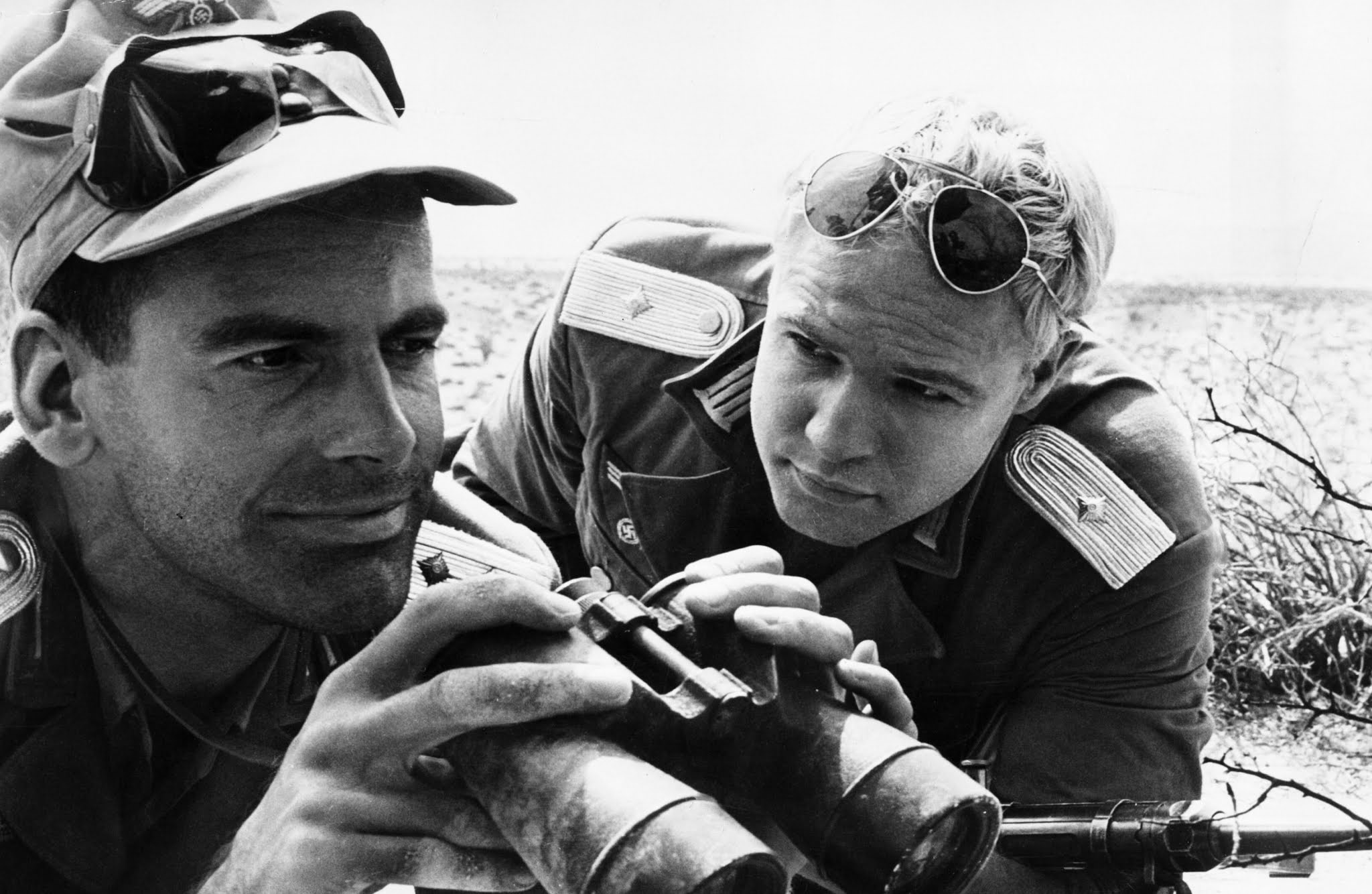
It's 1943 on the Eastern Front, and on the Crimean Peninsula the German Army is retreating under pressure from Russian forces. Sergeant Steiner (James Coburn) is a legendary and decorated platoon leader, one of the few remaining hopes for some battlefield success. His commander Colonel Brandt (James Mason) along with the jaded Captain Kiesel (David Warner) give Steiner plenty of leeway, but all this changes when Prussian Captain Stransky (Maximilian Schell) arrives at the front having requested a transfer from France.

Stransky is from a privileged background and knows nothing about combat, but covets the Iron Cross for bravery in the field. He immediately clashes with Steiner, who does not hide his disdain for the entitled officer class. A Russian assault and German counterattack end with Steiner wounded and sent to a rehabilitation hospital, while Stransky falsely lays claim to the medal, further straining the relationship between the two men. But with the German front disintegrating, personal conflicts will merge into a chaotic retreat and improvised rearguard action.

An adaptation of the 1955 Willi Heinrich book The Willing Flesh, Cross Of Iron is a stunning condemnation of war and an unrelenting front line experience. For 133 intense minutes director Sam Peckinpah recreates what it means to be under a continuous barrage, with almost every scene taking place either in forward command posts under the regular thud of landing mortar shells or right on the chaotic and gruesome front lines, the vicious battles often culminating in hand-to-hand combat.

Even when Steiner is wounded and dispatched to a hospital for recuperation, the war travels with him. His concussion and shell shock result in disturbing hallucinations, the images of war flashing through his head and distorting reality. He is surrounded by soldiers who have lost limbs and parts of their faces, and the condescending visits to the hospital by high-ranking officers only add to Steiner's sense of disgust.

Between the frequent and brilliantly conceived scenes of combat, Cross Of Iron settles down for conversations about class, politics, manipulation and the futility of war. Ironically Steiner and Stransky share a hatred for the Führer, Steiner because of his natural unease with authority while Stransky cares much more for power derived from historical privilege than race-driven nationalistic politics.

But the common ground between the two men ends there. Steiner's core belief is that men create their destiny by their own actions, while Stransky's entire being is governed by family status, and the resulting schism between the two men cannot be reconciled. Steiner defines himself with battlefield heroics and true leadership, and Stransky lives down to his reputation by quickly exploiting the secrets of men around him (in this case, homosexuality) for his own malevolent purposes.

Meanwhile Brandt is caught in the middle, a pragmatic officer all too aware of Germany's doomed near-future, and Kiesel is a would-be intellectual caught in the wrong place at the wrong time in history, duty-bound to serve but no longer able or willing to conceal his dark mood of resigned self-pity.

The performances match the grandeur of the production. In the lead role James Coburn has rarely been better, and brings to Steiner a confident arrogance flowing from steely self-belief. Maximilian Schell is the perfect foil, and ensures Stransky's inner sleaze oozes easily to the surface.

With interpersonal tension raging and a front line collapsing, Peckinpah finds poignant moments and images of despair. Steiner's platoon adopt a captured Russian boy soldier, and his fate is all the confirmation Steiner needs for the madness of war. Later, Steiner's platoon is betrayed and lost behind enemy lines, and after an arduous journey through Russian lines, including a bloody tangle with an all-female group of Russian army nurses, their worst enemy will prove to be their own army.

Steiner gets his revenge the only way he knows how, by grabbing his foe, grabbing his rifle, and marching out to "where the Iron Crosses grow". If wars have to be fought due to the delusions of the ruling class, the only alternative for men like Steiner is to join the insanity with honour intact.


All Ace Black Blog Movie Reviews are here.


Saturday, 14 April 2018

Movie Review: Topkapi (1964)


A heist thriller with strong comic elements, Topkapi features plenty of exotic style and a memorably eccentric cast of characters.

Professional thieves Elizabeth Lipp (Melina Mercouri) and Walter Harper (Maximilian Schell) team up to plot the theft of a priceless dagger encrusted with emeralds from the Topkapi museum in Istanbul. To reduce the ability of international police authorities to track the thieves, Harper decides to recruit a crew of amateurs for the job. Security expert and toymaker Cedric Page (Robert Morley), mute gymnast Giulio (Gilles Ségal) and strong man Hans (Jess Hahn) join the team.

Harper and Elizabeth also hire small-time hustler Arthur Simpson (Peter Ustinov) to drive a car full of hidden weapons and equipment from Greece to Turkey. At the border the hidden cache is uncovered, the Turkish police wrongly surmise that an assassination plot is unfolding and Simpson is pressed into service as an unwilling informant. He weasles his way into Harper's crew, where Gerven the Cook (Akim Tamiroff) also proves to be a disruptive influence.

Despite massive plot holes and some jerky transitions, Topkapi has an irresistible joie de vivre. Directed by Jules Dassin with a sly eye on snazzy visuals and an abundance of smooth style, the film uses an economy of words, relying instead on a bumbling motley crew that threatens to succeed despite itself. Both the thieves and Turkish authorities are experts at getting in the way of their own progress, and the film cleverly celebrates how far a plot can proceed when none of the pieces fit.

Indicative of where Dassin wants to take the film is the character of Arthur Simon Simpson. A sweaty and good-for-nothing tourist swindler, he moves from the margins of the story to somehow find himself in the middle of the action, an unwilling tipster for the Turks and a last-minute stand-in strong man for the thieves, except that he is not that strong and is terrified of heights while his singular heist role requires him to operate on a roof.

Peter Ustinov deservedly won the Best Supporting Actor Academy Award for bringing Simpson to life, in a film where all the performers support the eccentric action. The rest of the characters fade in and out of prominence. The instigator Elizabeth Lipp gradually disappears from the film, the mastermind Walter Harper has a marginal presence throughout, and tinkerer Cedric Page has just a couple of highlight scenes.

Topkapi is famous for a final hour featuring minimal dialogue. First the thieves give the Turkish police the slip at a bustling local festival featuring oiled-up professional street wrestlers, then the heist unfolds at a leisurely pace. The ingenious acrobatics of infiltrating an alarmed room from above without touching the walls or the floor set the standard for clever heists infused with silent tension and no shortage of canny humour.

Elsewhere Dassin injects large amounts of local colour and flavour, bringing the Istanbul streets to life with an explosion of hectic, noisy and vivid activity. Topkapi is as much about a theft as it is about the jet-set having fun in the sun, with either untold riches or imprisonment awaiting at the end of the frolic.


All Ace Black Movie Blog reviews are here.

Saturday, 2 January 2016

Movie Review: Deep Impact (1998)


An end-of-the-world disaster thriller, Deep Impact builds to impressive heights of emotion in the story of a massive comet hurtling towards Earth. The film benefits from a generally somber attitude, but also tries to cram in too many stories at once.

Teen-aged amateur sky watcher Leo Biederman (Elijah Wood) and astronomer Dr. Marcus Wolf (Charles Martin Smith) discover a new comet bigger than the Himalayan mountains on a collision course with Earth. Wolf dies in a car crash before he can publicize the discovery, and government officials keep the impending Extinction Level Event secret for months to avoid panic while a response is formulated. But when news reporter Jenny Lerner (Téa Leoni) stumbles onto the story, US President Tom Beck (Morgan Freeman) reveals the Biederman-Wolf comet's existence to the public and announces that the US and Russia have jointly constructed the Messiah spacecraft, designed to land on the comet and knock it off course by detonating nuclear warheads 100 metres below the surface.

The Messiah crew includes Captain Spurgeon "Fish" Tanner (Robert Duvall) and pilot Andrea "Andy" Baker (Mary McCormack). Despite their best efforts, the explosion only manages to split the comet into two pieces, the smaller labelled Biederman and the larger Wolf, and both remain on a collision course with Earth. The President announces a plan to safeguard one million Americans in purpose-built survival caves in Missouri. Before the day of impact, Jenny has issues to resolve with her divorced mother Robin (Vanessa Redgrave) and father Jason (Maximilian Schell), while Leo tries to save his girlfriend Sarah Hotchner (Leelee Sobieski) and her family.

Released within months of the similar Armageddon, Deep Impact is the more cerebral, less jingoistic of the two. This turns out to be both good and bad. Directed by Mimi Leder, Deep Impact tackles the end-of-the-world premise with a high degree of proficiency and from multiple angles, but fails to fully engage in any of them. The void left in the absence of simplistic heroes is filled with a rather humdrum collection of people anticipating the end, but not in any position to do anything about it.

The President addresses the public in a series of this-is-going-to-be-bad-but-we-have-a-plan speeches, Morgan Freeman at his tenderly assertive best, but with each address getting progressively less comforting until he all but says "OK, now panic". A bit better is the story of news reporter Jenny Lerner, the earth's impending annihilation bringing into sharp relief the dynamics between her and her parents. Jenny's domestic troubles are typical, and her story provides the necessary perspective on what constitutes a real crisis and whether it's ever worth nursing a grudge against loved ones. Téa Leoni is asked to carry most of the earth-based portions of the film and does well, her deer-in-the-headlights demeanour upon being thrust into the anchor's chair ringing particularly true in the be-careful-what-you-wish-for tradition.

The puppy love sub-plot between comet discoverer Leo and girlfriend Sarah is inserted to attract the younger demographic, and while Elijah Wood and Leelee Sobieski are appealing, they get little to do except run around and change their mind a lot.

Up in space, the film does gradually and almost reluctantly work its way to finding some heroes. The initial interaction between Duvall's Fish and the much younger rest of the Messiah crew is awkwardly and implausibly handled, but then Fish is allowed to hit his stride, the wise head showing the cocky youngsters how its done, and he emerges as one of the more memorable characters to confront the crisis.

As the end nears and the excellent special effects of the eastern seaboard getting destroyed ramp-up, Leder succeeds in scaling some genuinely intense emotional peaks, helped by James Horner's score. Jenny's journey to forgiveness finds a quite terrific ending on a secluded beach, while Leo and Sarah deal with a reunion, a separation and a new responsibility all at once. Meanwhile up in space the Messiah crew stumble onto an unlikely course of action, triggering a series of transmissions back to earth that fill the control room with tears. With the comet impact about to unleash the mother of all tsunamis, things do get moist all over.


All Ace Black Blog Movie Reviews are here.


Friday, 9 October 2015

Wednesday, 26 November 2014

Movie Review: Julia (1977)


A pre-war drama centred on the friendship of two women who carve different paths in life, Julia is beautifully filmed and deliberately paced, but also somewhat misdirected.

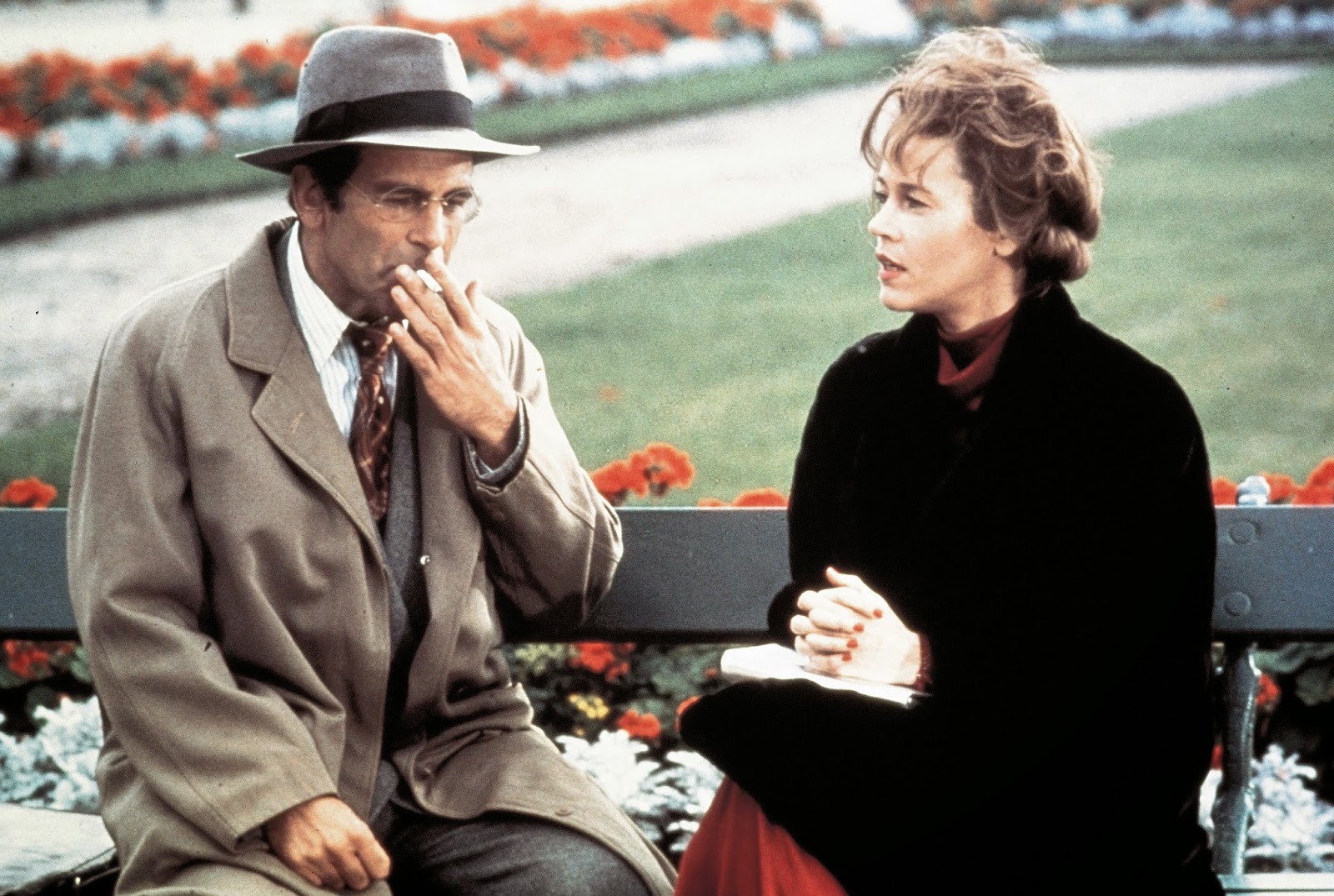
It's the 1930s, and Lillian Hellman (Jane Fonda) is an aspiring writer struggling to finish her first play. Her friend and lover Dashiell Hammett (Jason Robards) is in turns encouraging and gruff, prodding her to be the best that she can be but also intolerant of her complaining. Dashiell advises Lilly to travel to Europe for some inspiration and to catch up with her childhood friend, the idealistic social justice crusader Julia (Vanessa Redgrave). Lilly settles down for a stint of writing in Paris, but rushes to Vienna when she learns that Julia has been brutalized by the authorities for her anti-fascist activism. Once Julia is released from hospital, Lilly is unable to find her.

Lilly returns to the US, completes her first play, and achieves great success. Now a celebrated playwright, she embarks on a tour of Europe with Alan Campbell (Hal Holbrook) and his wife, but before she can set off to Moscow, she is unexpectedly approached by the mysterious Johann (Maximilian Schell) with a pleading message from Julia. Lilly can help rescue hundreds of political prisoners by smuggling $50,000 into Berlin for use by an underground network of activists to bribe prison officials into releasing detainees. Lilly has to decide whether she wants to risk her own life by getting involved in a dangerous world she knows nothing about.

Based on an apparently fictional chapter from Hellman's 1973 book of memoirs Pentimento, Julia is a grand story of a friendship suddenly thrust into the turbulence of impending evil. Gorgeous to look at and filmed with rich flourishes, Julia unfolds at a leisurely pace, small gestures allowed the time to register, the thoughts, concerns and talents of the tentative Lilly unfurling in measured doses as she achieves success and is then awakened to a world about to go insane.

However, and for all the excellence and talent on display, it's difficult to escape the conclusion that Julia chose the right title but the wrong story. Of the two women, Julia is by far the more intriguing, but she disappears from the movie for long stretches. While Lilly's tangential incursion into danger as a reluctant furtive courier generates good drama and unfolds with potent tension, Lilly is simply not that interesting. For the entirety of the central trip to Berlin, Lilly is a hapless participant in a much bigger game, steered by others every step of the way, incapable of making any decisions herself. Lilly is as much along for the ride as the film's audience, while tantalizing hints reveal that the mostly unseen Julia is busy fighting for justice as fascism grabs Europe by the throat.

But director Fred Zinnemann overcomes most of the shortcomings of the Alvin Sargent script and delivers a dazzling old fashioned visual treat. Julia is all about ambitious staging, spectacular sets, and stunning use of colour, smoke and costumes. From Hammett's beach house to the train journey and various locales throughout Europe, Zinnemann creates impressive vistas that linger long in the memory.

Also effective are the frequent flashbacks of Julia and Lilly as teenaged friends (played by Lisa Pelikan and Susan Jones respectively) maturing into young adults, the vignettes serving to bring out the women's nascent personalities. The common theme is always of Julia as the passionate instigator and Lilly as the passive disciple. Their relationship blossoms into the love of deep friendship, and the film stops short of hinting at a physical connection, other than through the malicious gossip network that comes back to hurt Lilly.

Fonda and Redgrave are in top form, and deliver alluring performances. Fonda gets the screen time and has to convey more apprehension and self-doubt. Redgrave makes intermittent but telling appearances, and gives Julia an edgy commitment to global justice fuelled by large doses of self-belief. Redgrave won the Best Supporting Actress Academy Award, and Robards won the men's equivalent for his relatively traditional turn as author Hammett. Meryl Streep makes her film debut as a haughty member of Lilly's social circle.

Julia could have invested more time on its compelling title character, but the film never falters as high quality entertainment.


All Ace Black Blog Movie Reviews are here.


Monday, 27 May 2013

Movie Review: Judgment At Nuremberg (1961)


A powerful drama examining the culpability of German society in enabling the extremism of Hitler's Nazis, Judgment At Nuremberg is thought-provoking filmmaking at its best. A star-studded cast glows as a courtroom confrontation sheds light on the insidious rise of evil.

It's 1948, and Judge Dan Haywood (Spencer Tracy) has been recruited out of retirement in the state of Maine to preside over an American-administered post-war trial in Nuremberg, Germany. The defendants are four German civilian judges accused of crimes against the population before and during the war. By not taking a stand against the Nazi laws discriminating according to race and mental competency, the judges are accused of enabling suffering, sterilization, and death.

The most prominent of the defendants is Dr. Ernst Janning (Burt Lancaster), an internationally renowned intellectual and published author on the topic of justice, with an impeccable pre-war reputation. Janning refuses to acknowledge the authority of the court and maintains a stony silence as the trial starts, not wanting to legitimize a trial of German citizens presided over by Americans on German soil. The other defendants are less prestigious, and perhaps more susceptible due to less than pristine pasts.

The American prosecutor Colonel Tad Lawson (Richard Widmark) is committed and confrontational. A veteran of the war and several prior court cases, he mounts an aggressive attack on the acquiescence of the judges. By applying and upholding the Nazi laws, the judges normalized state brutality, and Lawson draws a direct link to the resultant mass atrocities at the death camps.

In addition to presenting stacks of documents as evidence, Lawson humanizes the victims and calls to the witness stand two civilian casualties of the Nazi laws: Rudolph Peterson (Montgomery Clift) was accused of being mentally incompetent and suffered accordingly, while in an infamous case, Irene Wallner (Judy Garland) was accused of having sexual relations with a Jew named Feldenstein.

Tasked with the unenviable duty of mounting a defence is young German lawyer Hans Rolfe (Maximilian Schell). He adopts the stance that society as a whole cannot be found guilty of following the laws imposed by fanatical rulers. Rolfe holds his ground against Lawson's ferocious legal arguments, deflecting a succession of accusations and emphasizing that the defendants were fulfilling their civic duties in applying the laws of the land.

With the courtroom frequently the scene of heated exchanges between Lawson and Rolfe, Judge Haywood struggles to determine how justice can best be served. With the Berlin blockade revealing the belligerent Soviets as much more of a relevant threat than the defeated Germans, Haywood's task is not made any easier when he meets and starts to socialize with Frau Bertholt (Marlene Dietrich), the widow of a German military commander.

Inspired by actual post-war trials, Judgment At Nuremberg is a rollercoaster ride through the evolution of societal forces. Written by Abby Mann, the script maintains an exquisite balancing act as the prosecution and defence take turns to make their case, every thrust parried with a counter-thrust, the moral pendulum swinging from one side to the other.

With Tracy providing sage oversight, Widmark and Schell are well matched and both demonstrate vehement intensity as the legal battle unfolds. But Schell adds a sublime layer of fragile humanity to the role of Hans Rolfe, an intelligent man fully aware that he is representing losers in the courtroom of the victors, yet determined that the German people not be uniformly indicted for the actions of their leaders. Unexpectedly rising to the top of a stellar cast, Schell won the Best Actor Academy Award.

Montgomery Clift and Judy Garland, in her first major film role since 1954's A Star Is Born, add a large curiosity factor. Both battling personal substance abuse demons and barely able to perform, they nevertheless pull out affecting performances as tormented and damaged victims coming back to confront the men who judged them. They both deservedly received Supporting Actor nominations.

Director Stanley Kramer's cameras find plenty of energy in the grand Nuremberg courtroom. Frequently the cameras maintain fluid motion centred on the witness chair, and end their movement by unexpectedly capturing witness and defendant in the same frame, the accuser and accused caught within the same box. Kramer also elegantly resolves the obstacle of simultaneous courtroom translation without ignoring its reality.

Outside the court, Nuremberg is a dichotomy of destruction and rebirth, entire city blocks reduced to rubble by Allied bombing, but some neighbourhoods, markets and restaurants now thriving again mostly on American money. Judge Haywood finds the locals mostly differential to their American vanquishers, and struggling with deep feelings of humiliation and confusion over a dream of restoring nationalistic self-belief turned into a nightmare of devastation.

Dr. Janning finally breaks his silence and eloquently yet emotionally outlines how individual responsibility can be subjugated by the rising tide of immense pride fuelled by intoxicating power. Judgment At Nuremberg asks all the difficult questions, offers no easy answers, and delivers poignant commentary on the dilemmas inherent in a society drifting towards extremism in the name of national reawakening.


All Ace Black Blog Movie Reviews are here.
Tuesday, 15 May 2012

Movie Review: St. Ives (1976)


An attempt to create an ultra-complicated blackmail story in the style of The Big Sleep, St. Ives stumbles early and often, quickly becoming incomprehensible. There is nowhere near enough style or magnetism to rescue the hopelessly convoluted script, and despite some reasonable moments, the film eventually melts into a puddle of irrelevance.

Abner Procane (John Houseman) is old, rich, playful, and in trouble. Someone has stolen some of his important documents, and is demanding $100,000 for their return. Procane hires struggling crime writer Raymond St. Ives (Charles Bronson) as the go-between to handle the pay-out, but what was to be a straightforward swap of cash-for-documents goes immediately wrong, with a dead body twirling inside a laundromat drying machine and police officers Deal (Harry Guardino) and Oller (Harris Yulin) crawling all over St. Ives as their main suspect.

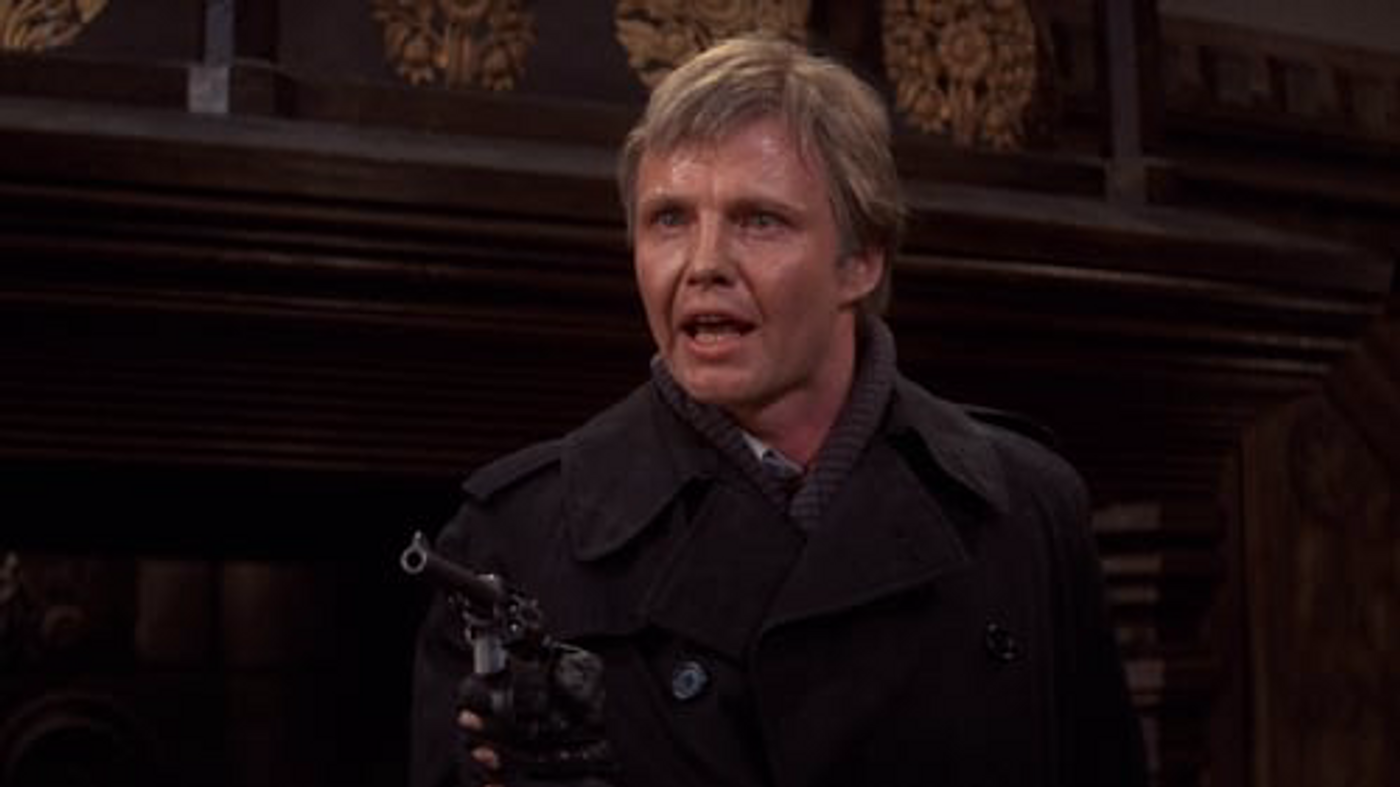
As St. Ives attempts to find the killers and uncover the importance of the missing documents, he delves deeper into Procane's business, and finds the mysterious Janet Whistler (Jacqueline Bisset) and the creepy Doctor Constable (Maximilian Schell) constantly hovering around Procane, seemingly up to no good. From then on, the body count rises, with St. Ives always arriving at the scene of each successive murder in time to be embroiled further into the growing mess.

Although Bronson never looks comfortable trying to portray a man up unwittingly up to his knees in dead bodies and dense conspiracies, he is nevertheless the best thing that St. Ives has going for it. He moves smoothly enough through the carnage while rarely being fully convincing.

Jacqueline Bisset seems fully aware that her role is "the striking beauty with something to hide", and that's all she has to go on. If Janet Whistler's actual relationship to Procane and the missing documents was ever clarified, it came too late in the knotty narrative to matter, mush less register. John Houseman and Maximilian Schell go through St. Ives trying hard to remember which characters from other movies they should be channelling, and generally failing.

Of interest are the brief appearances of Jeff Goldblum and Robert Englund (the future Freddy Kruger) as hoods hired to hunt down and murder St. Ives.

Director J. Lee Thompson, a long way removed from the glory days of The Guns Of Navarone, comes nowhere close to creating the necessary air of mystery or finding a suitable style for the movie. Thompson and Bronson would go on to collaborate eight more times, cranking out increasingly dim-witted and routine action sludge.

St. Ives is left with a few moments of Bronson charm to remind us that he is better than the material, and a reasonable tag line: He's clean. He's mean. He's the go-between. Clever, but it's always dangerous when the poster is better than the film it's trying to promote.


All Ace Black Blog Movie Reviews are here.