Showing posts with label Kevin Spacey. Show all posts

Saturday, 15 January 2022

Movie Review: Margin Call (2011)

A Wall Street drama, Margin Call digs into the triggers of the Great Recession with cold-eyed pragmatism.

In 2008, a New York City investment bank goes through a round of layoffs. On the same day, risk analyst Peter Sullivan (Zachary Quinto) uses data provided by laid-off risk manager Eric Dale (Stanley Tucci) to uncover a looming crisis of worthless investment assets about to bankrupt the bank - and the entire industry. Peter alerts his boss Will Emerson (Paul Bettany) and trading floor manager Sam Rogers (Kevin Spacey), who quickly advise their boss Jared Cohen (Simon Barker) and chief of risk management Sarah Robertson (Demi Moore).

By the middle of the night CEO John Tuld (Jeremy Irons) is convening meetings to plot out a survival strategy. Jared supports a "first out" plan to dump the toxic assets onto the unsuspecting market the very next morning, financially saving the bank but damaging its reputation and triggering a market crash. Loyal to the bank but perturbed by the immorality of ordering his team to sell soon-to-be worthless assets, Sam is less enthusiastic about the plan.

A fictional account inspired by real events and most closely resembling what may have happened at investment bank Goldman Sachs, Margin Call unfolds like a gripping play. Director and writer J.C. Chandor introduces a few outdoor scenes, but the focus is on 36 critical hours inside the bank's offices, where analysts, managers, and executives suddenly come face to face with an existential worst-case scenario. Through their actions, Chandor teases out some hard truths about capitalism.

With diverse personalities generating impressive dynamics, this is a thriller about the flow of information and the essence of grasping criticality and then acting, including meetings convened at 2am. Sullivan is no less than a rocket scientist (literally), who chose a Wall Street career because the money is better. His manager Will is a realist; his boss Sam is a motivator. Up the ladder at the level of Jared and ultimately Tuld, the whys and details don't matter: only the trends, implications, and necessary next steps.

Chandor avoids the trap of simplistically portraying Wall Street bankers as profit-hungry vultures. Self-deprecation is in evidence, as is recognition of long-term boom and bust cycles. Trading in debt-saddled assets is described as the lubrication keeping the economy afloat and juicing the dream. Will eloquently describes the ethics of economic fairness to young risk analyst Seth (Penn Badgley):

If people want to live like this, with their big cars and these houses that they haven't even paid for, then you are necessary. The only reason they can continue to live like kings is because we've got our fingers on the scale in THEIR favor. And if I were to take my finger off...then the whole world gets really fucking fair, really fucking quickly. And no one wants that, they say they do...but they don't.

Not all the elements click. Chandor could have trusted the audience with a better description of the flaws within mortgage backed securities, and he appears unsure what to do with the character of risk manager Eric Dale, whose work uncovers the crisis just as he is being escorted out of the building. Dale becomes the subject of an aimless search adding little to the drama. Demi Moore also suffers with an underwritten role as the humourless Sarah Robertson, unconvincingly stuck somewhere between conspirator and victim.

But overall the ensemble cast members share the screen time and bring their characters to animated life, benefiting from the sharp-edged script. Paul Bettany and Simon Barker leave the best impression, while Jeremy Irons adds a dash of Machiavellian leadership. The dialogue exchanges embrace increasingly cut-throat realities as the long night progresses, some careers boosted, a few lost, others damaged but left standing, at least until the next inevitable crisis.


All Ace Black Movie Blog reviews are here.

Saturday, 19 June 2021

Movie Review: The Negotiator (1998)

A hostage drama, The Negotiator promises a cerebral duel but defaults to flabby and bland thriller cliches.

Lieutenant Danny Roman (Samuel L. Jackson) is the top hostage negotiator with the Chicago Police Department, popular with his colleagues and a media celebrity. After Danny resolves yet another harrowing hostage ordeal by placing himself in danger, his wife Karen (Regina Taylor) pleads with him to take fewer risks. Danny's partner Nate then reveals knowledge of a corrupt group of officers stealing from the pension fund, including members of Internal Affairs, the supposed watchdog.

Nate is soon killed and Danny is framed, losing his badge. About to be charged and imprisoned, he barges into the office of Internal Affairs Inspector Terence Niebaum (J.T. Walsh), taking him and a group of others hostage. Danny will only talk with Lieutenant Chris Sabian (Kevin Spacey), another expert negotiator. A prolonged hostage ordeal follows, with some members of the police force loyal to Danny but others wanting him permanently silenced.

Directed by F. Gary Gray and co-written by James DeMonaco and Kevin Fox, The Negotiator sets the stage for what could have been a gripping battle of wits, but withdraws into mundane territory. After a long and patient introduction to define Danny Roman as a charismatic character worth caring about, the narrative starts to wobble with the half-baked introduction of the corruption plot. A good protagonist needs a worthy villain, but instead too many blank but possibly evil grim-faced police officers, some in suits and others in uniform, are thrown at the screen, none of them defined to any useful degree. 

The result is Danny attempting to smoke out unknown and invisible opponents, robbing the film of meaningful tension. Indeed, as the excessive 140 minutes drag on, incidental hostages Paul Giamatti (as a petty criminal) and Siobhan Fallon (as Niebaum's assistant) emerge as the next most interesting characters, which is not a good thing. 

Kevin Spacey as the other expert negotiator arrives too late into the movie and contributes little. Spacey appears curiously disinterested and is poorly served by an overcrowded command structure with multiple men trying to issue orders that are anyway ignored.

In any event writers DeMonaco and Fox don't have the courage to trust a mental showdown. The Negotiator resorts to computer clicks, procedural shootouts and flash-bang grenades. By the time the conspirators are revealed, the negotiations have long since been defeated by a lack of imagination. 


All Ace Black Movie Blog reviews are here.

Saturday, 9 January 2021

Movie Review: Swimming With Sharks (1994)

A dramatic satire set in the movie-making world, Swimming With Sharks attempts to provide commentary on the price of career success but surrenders to rampant bad behaviour and excessive shouting.

In Hollywood, despondent personal assistant Guy (Frank Whaley) finally snaps after a year of abuse at the hands of his boss, studio big-shot Buddy Ackerman (Kevin Spacey). Guy invades Buddy's house, ties him to a chair and starts to inflict torture. In flashback, the story of the two men is revealed.

Buddy has a reputation as a tough boss but also a career-maker in the tough movie business. Guy lands the coveted job as Buddy's assistant but soon realizes he has to put up with a non-stop stream of verbal abuse and humiliation. Guy meets and falls in love with producer Dawn (Michelle Forbes), which makes his life a bit more tolerable. But once Guy experiences the extent of Buddy's blatant backstabbing, he decides to extract revenge.

A sparse attempt at dark comedy, Swimming With Sharks has just the three main characters and is mostly set in a couple of offices and one house. Writer and director George Huang succumbs early and often to scene after scene of Buddy relishing his ability to admonish, abuse and belittle his underlings. Although the toxic work environment is not necessarily unrealistic and despite a typically acidic Kevin Spacey performance, after about the fourth barrage of one-way insults, the tone shifts from marginally comic to quite tiresome and obviously repetitive.

The romance between Guy and Dawn provides some relief from the foul mouthed insult-hurling, but Frank Whaley and Michelle Forbes share limited chemistry, and a producer choosing to bed a peeon assistant is far-fetched.

The tables-are-turned scenes of Guy restraining then torturing Buddy discredit Guy as a sympathetic character. While he has every right to fall off an emotional edge, Guy also accepted to work for Buddy knowing full well and from the first day the abuse that awaited.

Buddy repetitively pitches the "what do you really want?" question at Guy, attempting to conflate ambition with tolerance for shocking mistreatment, subversively egging horrid behaviour as the only pathway to success. Swimming With Sharks offers no considered debate, and earns neither the laughs nor the right to draw any conclusions.


All Ace Black Movie Blog reviews are here.

Saturday, 28 September 2019

Movie Review: See No Evil, Hear No Evil (1989)


The third big screen teaming of Gene Wilder and Richard Pryor, See No Evil, Hear No Evil is a mostly dull on-the-run crime comedy.

In New York City, Dave Lyons (Wilder) is deaf but can read lips and runs a newsstand. Wally Carew (Pryor) is blind and secures a job as Dave's assistant. Both of them refuse to allow their disabilities to slow them down. One morning assassin Eve (Joan Severance) kills a target at the newsstand as she pursues a precious coin with her partner Kirgo (Kevin Spacey). Wally smells Eve's perfume but does not see anything, Dave sees Eve's legs but does not hear anything. Wally inadvertently ends up with the coin in his pocket.

With no witnesses to the murder police Captain Braddock (Alan North) arrests Dave and Wally, but they escape and go on a wild trip to clear their name, a journey leading to the estate of master criminal Sutherland (Anthony Zerbe).

Using disabilities as crutches for comedy is suspect enough, but See No Evil, Hear No Evil also suffers from a limp script and bland execution. Five screenwriters (including Wilder) somehow contrive to create a non-story solely dependent on a couple of set-pieces, and director Arthur Hiller is unable to enliven the material.

Two scenes actually work and salvage some laughs. In the first Dave and Wally team up to engage in a comic fist fight against a boorish opponent. Wally fancies himself a boxer and Dave steers him and provides on-the-fly targeting advice. The second and only other highlight features a long and rowdy car chase, the blind Wally steering at high speed while Dave in handcuffs issues frantic instructions from the passenger seat.

Wilder and Pryor are both surprisingly lacklustre, both stars appearing distracted. Dave and Wally's insistence on marching on with life and mostly ignoring their disabilities is admirable, although in the few moments of reflection the film appears unsure whether to celebrate or criticize their stubbornness. Not that is matters; See No Evil, Hear No Evil is frivolous comedy, best left unseen and unheard.


All Ace Black Blog Movie Reviews are here.


Saturday, 15 June 2019

Movie Review: Glengarry Glen Ross (1992)


An adaptation of the David Mamet play, Glengarry Glen Ross examines the psyche of frenzied men in an ultra competitive business environment.

In New York, a group of salesmen work at a realty office, using unscrupulous tactics to peddle properties in Florida and Arizona to investors. Williamson (Kevin Spacey) is the office manager and hands out precious leads about potential buyers to the agents.

Roma (Al Pacino) has recently been achieving the best sales figures, and is now wearing down his latest client Lingk (Jonathan Pryce). In contrast the elderly Shelley (Jack Lemmon) is on a long losing streak and getting increasingly desperate, with family health issues adding to his stress. Moss (Ed Harris) is ambitious but unhappy at work, while George (Alan Arkin) feels he is losing his edge.

Blake (Alec Baldwin) arrives from head office and berates the salesmen for their recent poor performance, announcing that most of them will be fired if they don't immediately close more deals.  With Williamson safeguarding a deck of treasured new leads at the office, the men have just a few hours to prove themselves. Desperate times call for desperate measures, and an office break-in adds a new layer of tension to the already strained dynamics between the men.

Featuring a superlative all-male cast and a Mamet script, Glengarry Glen Ross (the title refers to two developments being peddled by the agents) is a profanity-filled high-energy talkfest. The film takes place over just a couple of days, but captures the trauma of alpha males growling at each other to gain every advantage and survive until the next batch of leads are distributed.

All the men are experts at deceit and underhanded sales tactics, and effortlessly flip between smooth talk, pleading and ultra aggressive put-downs depending on the immediate objective. And they are all also pathetic, Glengarry Glen Ross a study of manhood lost to the pursuit of shady profit by victimizing others.

Most of the film takes place at the office and the Chinese restaurant across the street. The theatrical origins are obvious, and some of the overclocked gestures translate poorly to the screen. But director James Foley keeps his focus on the talent-rich cast, often in close-up, and with most of the conversations walking on the edge of hostility, the film rides out the rough patches with ease.

Alec Baldwin's one scene performance as the slick downtown executive berating the sales agents for poor performance and goading them by comparing his success to their pathetic lives has entered into cinematic legend. Mamet added this scene to help extend the short play into feature film length, and while Baldwin's insults are never less than over the top, his unconstrained contempt perfectly sets the stage for the mood of desperation.

In a world where integrity and basic ethics are notably absent, Jack Lemmon shines as yesterday's man, surrendering Shelley to wounded melancholia living on past glories as he frantically seeks to catch a break by any foul means, unaware the sun has set on his career and sales tactics.

Glengarry Glen Ross is where life's dreams of success go to die, submerged in fast talking, subterfuge and self-imposed delusions.


All Ace Black Blog Movie Reviews are here.


Saturday, 8 September 2018

Movie Review: The Life Of David Gale (2003)


A mystery and drama about capital punishment, The Life Of David Gale stimulates debate, but easily manages to outsmart itself.

In a Texas prison, death row convict David Gale (Kevin Spacey) selects reporter Bitsey Bloom (Kate Winslet) for a series of exclusive interviews in the three days leading up to his execution. Sentenced to die for murdering fellow anti-capital punishment activist Constance Harraway (Laura Linney), he recounts his story in flashback. Gale was a respected university professor of philosophy, and along with Constance, a member of DeathWatch, a group advocating for the end of capital punishment.

Gale's fiery and argumentative personality made him a perfect spokesperson, and he debated capital punishment with the Governor on television. But Gale's marriage was in trouble, and he succumbs to a quickie with ex-student Berlin (Rhona Mitra), who promptly accuses him of rape. He loses his family and his career, but continues helping Constance. As Bitsey learns more about Gale, she notices a mysterious stranger in a pick-up truck tailing her every movement, and starts to suspect there is more to Gale's story than meets the eye.

Directed by Alan Parker and written by Charles Randolph, The Life Of David Gale glances off its target. Intended as a stunning winning hand to demonstrate the vulnerability of government-sanctioned killing, the story builds towards a couple of well-telegraphed twists that are nowhere near as clever as Parker and Randolph believe them to be. The Life Of David Gale ties itself up in a moral pretzel of its own making, unintentionally sparking in wild-eyed fashion distracting debates and comprehensively diluting any impact.

And yet there is no denying the craftsmanship on show. Parker constructs a solid drama, wrapping the mystery of Constance's death around a flawed man trying too hard. Spacey and Winset are in decent form, and the film does suffer from her absence in the flashback scenes. The grim rain-lashed grey aesthetics around the prison and the nearby town add to the film's appropriately dour mood, and provide a contrast with the slick academic milieu occupied by Gale in better days.

Bitsey and her sidekick, chain smoking intern Zack Stemmons (Gabriel Mann), enjoy some amateur detective moments, and stumble upon Nico (Melissa McCarthy), the wacky yet opportunistic current resident of the house where Constance died. The puzzle of the cowboy stranger in the pickup truck (an almost silent Matt Craven) adds just a touch of personal danger before weaving into the convoluted explanation of Constance's demise. Unfortunately for David Gale and all others involved, the closer The Life Of David Gale gets to the moment of death, the quicker it unravels.


All Ace Black Blog Movie Reviews are here.


Friday, 11 May 2018

Movie Review: Moon (2009)


A science fiction film, Moon sets up an intriguing premise based on isolation, but follows up with silly conspiracy elements that flounder in space.

In the future, Lunar Industries is a major company harvesting solar energy stored in rocks on the dark side of the moon and launching the resulting power-packed canisters back to Earth. The mining operation is mostly automated, and Sam Bell (Sam Rockwell) is the only technician on-site, contracted to spend three years at the moon command centre to oversee operations. Sam's only company is the robot GERTY (voice of Kevin Spacey), who controls the facility.

With his three years almost up, Sam is forlorn and starting to suffer from delusions. He is also frustrated that the main communications channel with Earth is inoperable, and the company does not seem to be in a hurry to fix it. The video transmittals back and forth with his wife Tess (Dominique McElligott) are recorded and days late, adding to his sense of loneliness. When Sam ventures out to the mining fields to inspect a harvesting machine he suffers a crash, triggering a shocking discovery about Lunar Industries' work practices.

Moon's one significant twist arrives relatively early, and revealing it would defang the little bit of interest offered by the film. Sufficient to say that the Nathan Parker script, from a story by Duncan Jones, hinges on generating outrage around the use of technology that appears to be much closer to fruition and perfection than mining the sun's energy from the dark side of the moon and zipping it back to Earth.

As Sam Bell gets to grip with what the film, breathlessly, insists is a sinister conspiracy, director Duncan Jones loses his grip and the experience becomes a tiresome exercise in misdirected indignation. The pace is slow, the running time tedious even at just 97 minutes, and Jones struggles to find new content for much of the second half before resorting to a hackneyed climax.

What remains is a well-intentioned, limited budget independent science fiction film, filled with stark imagery both inside the control centre and on the moon's surface as the gigantic machinery silently goes about its business.

From a performance perspective the film is essentially a one-man show, and Sam Rockwell fills the screen with the alienation of a man left alone for too long, with only an infuriatingly compliant robot for company. Sam is at emotional capacity dealing with a busted communications system, unresolved tension with his wife back on Earth, and separation from his young daughter. Things do get both more interesting and more dangerous for him after the extraordinary post-crash revelation, but despite the excellent central performance Moon chooses the wrong orbit to follow, and gets lost in a narrative vacuum.


All Ace Black Blog Movie Reviews are here.


Sunday, 31 December 2017

Movie Review: Dad (1989)


A family drama, Dad tackles issues of aging and the complex dynamics between fathers and sons as well as husbands and wives.

In Los Angeles, elderly couple Bette and Jake Tremont (Olympia Dukakis and Jack Lemmon) are living out their retirement, with Bette controlling every last detail of Jake's life. As a result he is  disengaged, disinterested and utterly dependent. When Bette suffers a heart attack, their son John (Ted Danson) a Wall Street executive, flies in to help his sister Annie (Kathy Baker) and her husband Mario (Kevin Spacey) care for Jake.

John has not seen his parents for a few years and is shocked at Jake's emotional deterioration. With Bette in hospital, he sets about reviving his dad's spirit and love for life. Gradually Jake perks up and starts to take a much more active role in his own well-being. But more changes will impact Jake's promising rejuvenation: Bette returns home; John's wayward son Billy (Ethan Hawke) arrives for an unexpected visit; and an unwelcome health diagnosis will all play a role in the family's happiness.

Directed and written by Gary David Goldberg and based on a book by William Wharton, Dad enjoys a committed Jack Lemmon central performance, but is otherwise emotionally all over the place. With an intimate focus on familial matters the film is not many notches above standard television fare, but Lemmon at least ensures that great big-screen acting resides at the heart of the melodrama.

The film rides a nauseating emotional rollercoaster and crams too many sudden health turnarounds in less than two hours. Jake Tremont goes through about two and a half jarring down and up cycles in his physical and psychological well-being, dragging his small family along as he navigates up the mountain from the depth of despair to the giddiness of seemingly great health only to start another descent that precedes yet another climb. As a result Goldberg loses grip on what the film is intended to convey, with obscure and complex medical and psychological issues barely described before being allowed to run loose.

And Jake's health is far from the only matter of consequence: Dad also tries to explore the dynamic between a domineering wife and a submissive husband, an issue that probably deserved more exposition that it receives in the gaps between Jake's yo-yo health. And with John for the first time experiencing the fragility of his father's health, he reassesses his relationship with his own son Billy, and the film includes some decent side-quest scenes as the next generation attempts to avoid the same mistakes.

Ted Danson provides decent support, but is not helped by a script that never explains how he can suddenly shift gears, mentally and pragmatically, to be away for so long from his high-powered Wall Street job. Danson also struggles when the script demands strong displays of emotion, which are never his forte.

Dad offers some substantive topics, but overburdens its own capabilities.


All Ace Black Blog Movie Reviews are here.


Sunday, 9 July 2017

Movie Review: Baby Driver (2017)


A stylish, artistic and hyperkinetic action film, Baby Driver excels at burning rubber to a thumping soundtrack. Humour, idealized romance and violence have rarely mixed better.

In Atlanta, an orphaned young man known as Baby (Ansel Elgort) works as the getaway driver on jobs planned by master criminal Doc (Kevin Spacey). Constantly listening to music to counteract severe tinnitus and push away the demons of his parents' death, Baby owes Doc a debt, and is working it off as the wheelman in a series of high profile armed heists. Baby lives with the elderly and deaf Joseph (CJ Jones), who is supposedly his foster father although Baby now looks after the wheelchair-bound old man.

Doc's regular gang members include the quiet but dangerous Buddy (Joe Hamm), his girlfriend Darling (Eiza González), Griff (Jon Bernthal) and the slightly unhinged Bats (Jamie Foxx). In between jobs Baby meets diner waitress Debora (Lily James), and the two start a relationship and plot a future life away from Atlanta. But Doc will not let Baby go easily, and one final job takes a dangerous turn.

Written and directed by Edgar Wright, Baby Driver exudes a sense of detached cool. The film is modern-day full length music video, largely disconnected from reality and fully embracing stylized and high revving action as its primary mission. That Wright also provides a reasonably interesting, rounded and conflicted central character in Baby is a bonus, although Baby's exceptional skills behind the wheel and his overall calm demeanour in the face of unfriendly villains and street level carnage stretches all credible limits.

But none of that really matters, as character realism is a distant objective in this narrative. Similar to 1978's sparse The Driver (and much less similar to 2011's brooding Drive), Baby Driver sets out to create insane excitement through a series of breathless urban chase scenes with an aloof protagonist in the driver's seat, and succeeds in creating some of the best sequences of grounded automotive mayhem. At once modern and old-fashioned, Wright threads the needle by keeping the action just on the right side of plausible in relative cinematic terms.

The action scenes are properly spaced out to allow the story breathing room to progress, and when they do arrive, no effort is spared to maximize the highest possible revolutions per minute.

And it's all set to the music mix playing through Baby's earbuds, Baby Driver an audio experience as much as it is a visual feast. Baby's mother was a musician, and he insists on having the right tune playing at exactly the right time even when anarchy is about to be unleashed. Wright grabs a lot of tense and fun mileage by having his young hero insist on synchronizing his life to his chosen soundtrack, no matter what is happening around him.

While Baby is an innocent among wolves, the evil doers surrounding him are not kidding around. Buddy, Darling and especially the appropriately named Bats are various degrees of crazy, and this is a violent film where obscenities, threats, shootouts, corrupt cops, blood, violence and various forms of gruesome death are thrown at the screen. The contrast with Baby's sweet budding romance with Debora is sharp, Wright giving his young hero every opportunity to differentiate himself from the sordid world created by the likes of Doc.

Hip, unflappable and built for speed, Baby Driver rocks to his own tunes.


All Ace Black Blog Movie Reviews are here.


Saturday, 4 June 2016

Movie Review: L.A. Confidential (1997)


A film noir masterpiece set in Los Angeles of the early 1950s, L.A. Confidential features a convoluted, multi-layered and character-rich story of crime, corruption and conspiracy.

The arrest and imprisonment of crime boss Mickey Cohen creates a vacuum at the top of the Los Angeles underworld. The police department tries to project a clean cut image through the sanitized television show Badge of Honor, but the reality is that the force, under the command of Captain Dudley Smith (James Cromwell), is rife with corruption.

Three officers go about their careers with very different attitudes. Jack Vincennes (Kevin Spacey) loves the glamorous life and colludes with scum journalist Sid Hudgens (Danny DeVito), who publishes the Hush- Hush tabloid, to stage high profile narcotics arrests. Ambitious Ed Exley (Guy Pearce) has a strong moral compass inherited from his father, a deceased cop, and wants to be promoted to Detective Lieutenant as quickly as possible. Bud White (Russell Crowe) is a hot head, quick to settle disputes with physical violence, but he also may be smarter than he looks. When a jail cell brawl gives the police department a black eye, Exley earns the wrath of his colleagues, and a promotion, by naming names.

Despite Cohen's arrest the department struggles to put a lid on increasing levels of street violence. Cohen's former associates are methodically gunned down, then a bloody multiple murder is committed at the Nite Owl coffee shop, with ex-cop and White's former partner Dick Stensland among the victims, as well as porn starlet Susan Lefferts (Amber Smith). A trio of Negroes is suspected of committing the Nite Owl murders and Exley becomes a hero for bringing them conclusively to justice.

But White pursues the Lefferts angle and uncovers a high-class pornography, prostitution and blackmail ring operated by businessman Pierce Patchett (David Strathairn), who forces his girls to undergo plastic surgery to resemble famous movie stars. White starts a steamy relationship with Lynn Bracken (Kim Basinger), the Patchett girl made to look like Veronica Lake. Exley starts to have doubts about the perpetrators behind the Nite Owl case, White starts to feel used by Smith, and Vincennes finally gets disgusted with his own attitude when a gay sting operation goes wrong. The three men still don't like each other but have to start cooperating to uncover what is really going on in the L.A. crime world.

Directed by Curtis Hanson, who co-wrote the the Academy Award winning script with Brian Helgeland, L.A. Confidential oozes style, substance and attitude. The adaptation of the James Ellroy book remains coherent despite the various narrative threads, multiplicity of characters, and various personal and hidden agendas. Curtis and Helgeland expertly weave together a hard-hitting story of uncompromising violence and sex that celebrates unique characters, avoids buddy movie trappings, and maximizes the value out of strong and opposing personalities forced to co-exist.

In focusing almost equally on three protagonist, none of them too likable, L.A. Confidential sets itself apart from most other crime films. Vincennes, Exley and White have quite a few more flaws than redeeming features, and it is fascinating to watch these men evolve, grapple with their own personalities and then overcome their mutual resentment just enough to cooperate, without ever giving up on who they are. Russell Crowe and Guy Pearce were relative unknowns but quickly establish a strong screen presence. Spacey is the perfect fit for the role of Vincennes, the cop possessing a perfect understanding of what Los Angeles is all about: show business and personal promotion first, everything else for sale.

Further adding to the potent mix of masculinity are Dudley Smith as the uncompromising police captain and Pierce Patchett as the shadowy businessman with a side business. Smith and Patchett are power brokers in a city intoxicated by power and sex, and they have long since learned that bending the rules under the veneer of respectability is the way to get things done.

Even minor characters prove to be important. Sleazy narrator Sid Hudgens stages and reports on arrests in equal measure, less interested in the news and much more interested in serving up scandalous headlines and photos. Former police officer Buzz Meeks and the disgraced Dick Stensland leave the force but don't leave the criminal world too far. Tough, big but dim, they both find themselves over their heads as the crime wave intensifies.

Not exactly a femme fatale but more of a willing victim with the irresistible weapon of seductiveness, Lynn Bracken is the one woman in a plot dominated by aggressive men. Kim Basinger is surprisingly effective combining unconstrained sexuality with vulnerability and was rewarded with the Best Supporting Actress Academy Award.

While it is a challenge to keep track of the many characters and plot complexities, the payoff is immense. As the threads come together, the film soars to heights of proficiency, the bodies are uncovered, the conspiracies revealed, the criminals and crime fighters emerge from the shadows and collide in an exhilarating climax.

The cinematography by Dante Spinotti captures a Los Angeles still growing into itself, baking under the sun, selling an image manufactured by the Hollywood dream factory but also consumed by corruption at every level. An evocative, jazz-infused Jerry Goldsmith score perfectly complements the ambiance.

Under the harsh sunshine and in the West Coast heat, L.A. Confidential is dark, moody, and magically compelling.


All Ace Black Blog Movie Reviews are here.
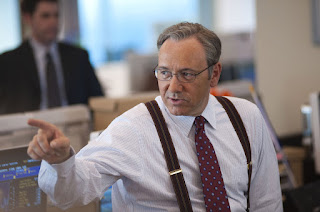


Thursday, 17 March 2016

Movie Review: American Beauty (1999)


A story of the middle class American dream lying in emotional tatters, American Beauty is a cynical drama that lifts the lid on all the rot lying just beneath the surface of suburbia.

The film is narrated by Lester Burnham (Kevin Spacey), who announces at the start that he will be dead within a year. Lester is a 42 year old media salesperson, stuck in a middle-management job he despises and equally trapped in a loveless marriage to highly-strung real estate agent Carolyn (Annette Bening). Lester is also unable to communicate with his teen-aged daughter Jane (Thora Birch). Feeling emotionally empty, he starts to harbour sexual fantasies about Jane's uppity classmate Angela (Mena Suvari).

New neighbours move in next door in the form of former Marine Colonel Fitts (Chris Cooper), his depressed wife Barbara (Allison Janney) and unsettled but magnetic son Ricky (Wes Bentley), who sees beauty in all things through his ever present viewfinder. Ricky has a troubled background, an unusual side-business, and exhibits creepy behaviour, obsessively filming Jane, but the two nevertheless start a tentative relationship. Meanwhile Lester snaps out of his funk in a dramatic way, and decides to redesign all aspects of his life. He takes charge of his career, his marriage and his physical fitness, all with unintended consequences.

Directed by Sam Mendes and written by Alan Ball, American Beauty is a masterful examination of all that is going wrong under the veneer of suburban family normalcy. Certainly there are a few exaggerations and some pushed-to-the-edges behaviour. But overall the film resonates with all that is familiar but also so rarely talked about in polite circles. An irreverent attitude, sharp dialogue, memorably erratic characters and a subtle Thomas Newman music score build up an atmosphere of mundane surroundings teetering on the edge of a multi-dimensional human catastrophe.

American Beauty tackles a myriad of thorny themes confronting the middle class. The generational divide is represented by Jane and Ricky both being detached and unable to find any comfort communicating with their parents. In Lester's case, it's not for the lack of trying, he's just hopeless at it. In contrast, Colonel Fitts sees the world in military command, control and discipline terms, principles that mean little to youth in the quaint suburbs.

Repressed and unfulfilled sexuality among married adults is on full display as an undercurrent chipping away at stale relationships. Lester and Carolyn have grown far apart to the point that he has much more fun fantasizing about the pouty Angela, while Carolyn goes seeking intimacy with the neighbourhood real estate king, Buddy Kane (Peter Gallagher). There does not seem to be any sex of any kind happening between the Colonel and Mrs. Fitts: she is reduced to a shell of a woman, and he is still fighting the last war with the added complication of some internal demons. The only happy couple in the neighbourhood appear to be gay partners Jim and Jim (Scott Bakula and Sam Robards).

The strongest theme propelling the American Beauty characters towards unintended outcomes is obsession with self-image, self-worth and a misplaced sense of self-doubt. Angela despises the idea of being ordinary, and aspires to stand out with a display of overclocked sexual confidence. Jane is saving all her money for breast enhancement surgery she doesn't need. Lester overhears Angela talking about him in physical terms; he sets about changing his life by buffing up and changing his appearance, triggering Colonel Fitts to arrive at all the wrong conclusion. And Carolyn stimulates herself with vacuous self-help from the pop-psychology school of coaching-by-tape, and not coincidentally falls under the spell of Buddy Kane, who is all about conveying a bronzed image of success, true or not.

Mendes peels away all the layers of familial intricacy with a mixture of drama and comedy, both dancing with a delicious awkwardness propelled by Kevin Spacey's performance. Spacey starts with Lester at the lowest point of despair and climbs gradually out of the abyss towards an unlikely evolution. Finding sources of inspiration in Ricky as an entrepreneur and Angela as a fantasy sex partner, Lester embarks of a devil-may-care makeover of his personal life and his career, with an unanticipated end point. Spacey plays it all with irreverent fatalism and biting humour, allowing Lester to be simultaneously detestable and irresistible.

With red roses and petals permeating many of the scenes to represent coursing passion in the colour of blood, American Beauty progresses in all the directions that can be labelled unpredictable. The American dream is caught in the cul-de-sac of suburbia, spinning relentlessly in a spiral of unmet expectations.


All Ace Black Movie Blog reviews are here.

Thursday, 20 August 2015

Movie Review: A Time To Kill (1996)


An overstuffed legal drama, A Time To Kill offers an all-star cast and plenty of incident, but quickly sprawls into too many crimes and loses touch with reality.

In rural Mississippi, two redneck white trash supremacists brutally rape Tonya, a ten year old black girl. She survives and identifies the attackers, who are summarily arrested. Before their trial can start, Tonya's dad Carl Lee (Samuel L. Jackson) approaches his friend and lawyer Jake Brigance (Matthew McConaughey) and strongly hints that he will be seeking vigilante justice and would want Jake to subsequently defend him. Sure enough, Carl Lee goes ahead and guns down the two perpetrators and seriously wounds police officer Dwayne Looney (Chris Cooper) in the process.

The case generates a media circus, with District Attorney Rufus Buckley (Kevin Spacey) seeking the death penalty. Brigance reconnects with his retired mentor Lucien Wilbanks (Donald Sutherland) and prepares a defence based on temporary insanity. Young and idealistic law student Ellen Roark (Sandra Bullock) offers her help to the defence team. Meanwhile, the black community rallies behind Carl Lee, while Freddie Lee Cobb (Kiefer Sutherland), a brother of one of the victims, reaches out to the Ku Klux Klan. They start a campaign of intimidation against Brigance, placing his wife Carla (Ashley Judd) and young daughter in harm's way. With the small town rocking with violence and protests, Jake has to find a way to defend a distraught black father in front of an all-white jury.

Another John Grisham adaptation and again directed by Joel Schumacher, A Time To Kill is a glossy production, filled with familiar faces in every role, and with enough going on to maintain interest over 150 minutes. The performances are solid within the courtroom and on the streets, and Schumacher creates a sweat-drenched Southern aesthetic where different rules apply, and deep racial divides are hidden just below the surface. The search for justice in a straightforward vigilante violence case made much more complicated by racial overtones presents a juicy social dilemma.

But the film suffers from several issues, not the least of which is the multiplicity of crimes that cascade from the original murders but seem to come and go with no consequence. In the course of the film a cross is burned on the front lawn of the Brigance house, an old man is badly beaten, a house is burned down, a woman is kidnapped and left to die tied to a tree, and a national guardsman is shot in the neck, in broad daylight, with a high powered sniper rifle. Not one of these crimes receives any follow-up attention or investigation, and the perpetrators remain free to roam the streets.

A Time To Kill also suffers from an Akiva Goldsman script that can only be called lazy. In an attempt to perhaps pack in too much of the book's content into the film, many sub-plots are casually introduced and barely developed, and characters flounder on the rocks of poor advancement. There are a couple of scenes showing the jury grappling with the case over a meal; they then disappear from view and don't even get the privilege of being seen to deliver the verdict. An entire sub-plot related to the National Association for the Advancement of Colored People insisting on replacing Brigance with a high profile hired gun consumes valuable screen time and adds very little. An informant within the Klan plays a key role; his seemingly compelling story is dangled tantalizingly and then abandoned. And the characters of Ellen Roark, Lucien Wilbanks and Jake's friend and rival Harry (Oliver Platt) vie for screen time and barely get one meaningful scene each.

But the presence of McConaughey, Jackson and Spacey ensures that the film is never less than watchable, as they whack away at the thicket of an overgrown plot and towards a final courtroom confrontation. A Time To Kill is decent, but would have greatly benefited from an old fashioned pruning.


All Ace Black Blog Movie Reviews are here.
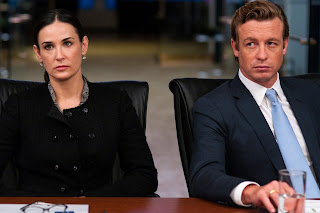

Sunday, 26 April 2015

Movie Review: Consenting Adults (1992)


A klutzy thriller with an uneven tone, Consenting Adults tries to convey a slick erotic vibe but then morphs into ridiculous murder territory and sinks under the weight of its misguided pretensions.

Richard and Priscilla Parker (Kevin Kline and Mary Elizabeth Mastrantonio) are a typical suburban couple, working in the music industry, raising their daughter, grappling with some debt issues, and dealing with a passion-reduced marriage. Eddie and Kay Otis (Kevin Spacey and Rebecca Miller) move in as the new couple next door. Eddie is a fast-talking, risk-taking bundle of energy, with a solution to every problem, no qualms about bending the law, and a pushy personality.

The two couples become friends, and Richard can't help but be attracted to the winsome Kay, an amateur blues singer with a husky voice. Eddie pulls an insurance scam to generate some quick money for the Parkers, and then starts to hint at a wife-swap, initially horrifying Richard. But sensing that Priscilla may be open to the experience, Richard warms up to the idea. Then a bloody murder is committed, turning Richard's life completely upside down.

Directed by Alan J. Pakula, the first 45 minutes of Consenting Adults is a fairly interesting exploration of close to middle age angst, and the pressures of work, kids, and finances as they attack the stability of a marriage and leave it vulnerable to outside temptations. Eddie is a catalyst to stir the Parker relationship, and stir he does. Eddie offers a window into an attractive lifestyle where, with just a bit of innovative skirting of societal laws, everything can be refreshed.

The first half of the film peaks with the promise of the Parkers succumbing to sexual experimentation as the next step in spicing up their lives towards the dark side, and then the film falls apart. Whether or not intended as a clumsy thou-shall-pay-the-price-for-coveting-thy-neighbour's-wife morality tale, Consenting Adults jettisons all its thoughtful content and disintegrates into cheap, large plot-hole filled murder and mayhem territory, culminating in asinine Ramboesque infiltrations and no less a weapon than an Uzi submachine gun making a late appearance to settle scores.

Kevin Kline delivers what must be one the worst performances of his career. He spends the first half of the film in a dumbfounded, dormant trance, before suddenly turning into an action hero with Bruce Willis capabilities. Kevin Spacey dominates with his excitable portrayal of Eddie, an infectious personality that devours life. But even Eddie falls off the cliff of sanity, along with the back-half of the film. Mary Elizabeth Mastrantonio and Rebecca Miller are fine, but also underutilized. Forest Whitaker as an insurance company investigator and E.G. Marshall as a crusty lawyer make late appearances before disappearing into irrelevance, making way for the flying bullets and swinging baseball bats.

Consenting Adults is frozen between attempted cerebral thriller and botched cretinous action, and is finally just caught with its pants down.


All Ace Black Movie Blog reviews are here.

Friday, 12 October 2012

Movie Review: Outbreak (1995)


A micro-biology scientific thriller that implodes into the worst excesses of mindless action, Outbreak is half of a good movie. A deep cast maintains interest, but the acting talent cannot overcome a script that sells out to cheap thrills.

A deadly virus called Motaba breaks out in darkest Africa, causing death within hours. Infectious disease scientist Colonel Sam Daniels (Dustin Hoffman) of the US military and his team, including Major Schuler (Kevin Spacey) and Major Salt (Cuba Gooding, Jr.) are assigned to investigate. Motaba takes a ride inside a monkey with immunity to the virus, and crosses into the United States. Thanks to an unscrupulous pet smuggler (Patrick Dempsey), a lot of people are soon infected and start to die horrible deaths, with a concentration of cases in the town of Cedar Creek, California.

Daniels is eager to help find an antidote, but his boss General Ford (Morgan Freeman), along with another military commander General McClintock (Donald Sutherland), are not so keen: they have known about Motaba since the late 1960s, and in fact the military has secretly converted it to a biological weapon and developed a cure. Not willing to reveal these secrets, Ford and McClintock delay releasing the antidote, causing more misery in the now quarantined Cedar Creek. Daniels disobeys orders and teams up with his ex-wife Robby (Rene Russo) of the Centre for Disease Control to try to help the community, setting himself up on a collision course with his military commanders.

While the first half of Outbreak is a tightly wound examination of the battle between micro-organisms and man, with a cautionary look at how a lethal new disease can easily spread and devastate lives and communities, the back end of the story fragments into a ludicrous chase movie. Daniels and Salt set off on their own to attempt and save the town by finding the disease host, while McClintock spits venom and tracks them down to protect the military's dirty secrets. With stock helicopter chases and mid-air games of chicken replacing the smart science, Outbreak suffers from a most ignominious descent into banality.

The cast deserve better. Although none of them stand out, all are uniformly good, and even the relatively minor roles are interesting in the hands of the likes of Spacey, Gooding Jr., and Dempsey. Rene Russo makes the forced sub-plot of a lost marriage between Daniels and Robby more palatable. Meanwhile, the old pros Hoffman, Freeman and Sutherland cut through the unfolding drama with practised ease. Hoffman's Colonel Daniels is the caring soul at the centre of the movie, a character suitable for Hoffman's persona although if anything, Daniels is almost annoyingly too pure in his dedication to the alleviation of human suffering.

Freeman's General Ford is always going to be the hinge that will need to turn to change the course of the military's focus, and Freeman nails the veteran soldier disciplined to a fault but with a heart deep within his military uniform. Sutherland gets the easiest assignment: McClintock is mean as mean can be, and makes no apologies for his tunnel vision. Wolfgang Petersen directs with competence rather than passion, eager to give each star sufficient screen time and sacrificing any attempts at artistry in the process.

Outbreak appeals to the brain early and the brainless brawn late, a jarring transition that splits the film in half and wounds its heart.


All Ace Black Blog Movie Reviews are here.