Showing posts with label Debra Winger. Show all posts

Saturday, 12 July 2025

Movie Review: Radio (2003)


Genre: Biographical Drama  
Director: Mike Tollin  
Starring: Ed Harris, Cuba Gooding Jr., Debra Winger, Alfre Woodard  
Running Time: 109 minutes  

Synopsis: In suburban South Carolina of the 1970s, Harold Jones (Ed Harris) is a teacher and football coach at the T. L. Hanna High School. He notices the mentally infirm James Robert "Radio" Kennedy (Cuba Gooding Jr.) hanging around the football team's practice sessions, barely able to speak and susceptible to bullying. Harold takes Radio under his wing, welcoming him to practice sessions and the school environment. Radio's social skills improve, but school Principal Daniels (Alfre Woodward) is unsure about his prospects, and the community of football parents worry that Harold is getting distracted.

What Works Well: Inspired by actual events, this is a heartfelt and feel-good story of kindness, priorities, and embracing uncertainty of outcomes. The Mike Rich script is comfortable not over-explaining everything, and respects a small-town culture where stoicism is a virtue and the community revolves around Friday night football. Both Ed Harris and Cuba Gooding Jr. provide affecting performances, well-supported by Debra Winger as Coach Jones' patient wife Linda. A well-contained running time preserves the story's humility.

What Does Not Work As Well: The sentimentality quotient is maintained at a high level, and James Horner's syrupy music score never relents. Coach Jones displays a knack for always jumping to the right conclusion.

Key Quote:
Linda: It's never a mistake to care for someone.


All Ace Black Movie Blog reviews are here.

Sunday, 29 May 2022

Movie Review: Betrayed (1988)

A crime drama, romance, and thriller, Betrayed ventures into the sub-culture of white supremacists corroding American society.

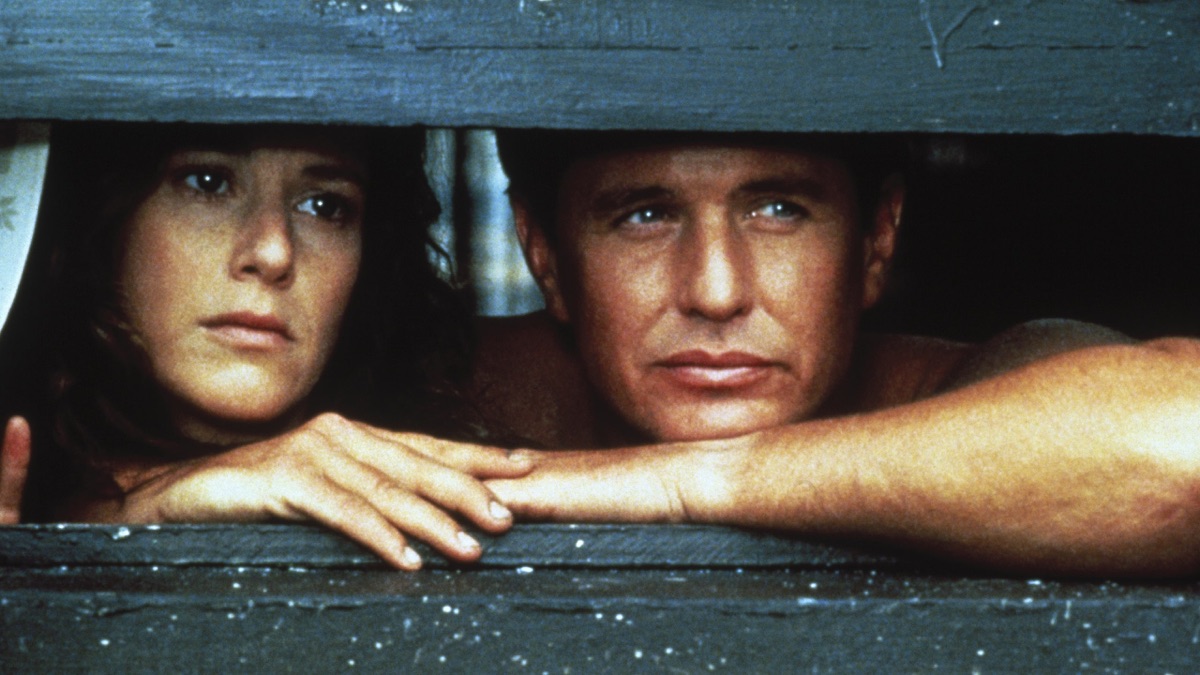
In Chicago, controversial Jewish radio talk show host Sam Kraus (Richard Libertini) is gunned down. In America's rural farmland, undercover FBI Agent Cathy Weaver (Debra Winger) gets close to farmer Gary Simmons (Tom Berenger), who is suspected of involvement in Kraus's murder. Cathy and Gary fall in love, and she insists to her boss and ex-lover Mike Carnes (John Heard) that Gary is a wholesome family man with no crime connections.

But then Gary introduces Cathy to his secret life as a white supremacist leader. He leads midnight hunts of Black men, and is plotting bank robberies and terrorist activities in the name of defending whites against Jews and Blacks. Meanwhile, a thinly veiled racist politician is running for President and seeking support from men like Gary. With Mike pressuring her to delve deeper and find more evidence, Cathy is alone and stranded with dangerous men.

Written by Joe Eszterhas and directed by Costa-Gavras, Betrayed is a remarkably prescient exploration of a toxic belief system quietly undermining a nation. But despite shining a necessary spotlight on violent racism hiding in plain sight, the film is only average. The problems reside with the investigative half of the narrative, Eszterhas paying scant attention to basic discipline and procedures. 

Cathy's assignment is reduced to being thrown into the field, left on her own, and badgered to gather more evidence, her ex-lover of a boss Mike abusing his authority like a jilted bully child. And as she uncovers a group of terrorists plotting multiple atrocities, Mike remains bizarrely fixated on the talk show host murder. The conspiracy elements are also patchy, leading to a rushed and contrived climax. Costa-Gavras holds onto secrets for too long, then fails to adequately explain why they matter or how various terrorist acts and crimes are intended to fit together. 

Which is unfortunate. The rest of the drama works well, demonstrating evil's easy charm, Cathy falling for a wholesome image and in love with a rugged man who appears to be a good father and dedicated farmer. The veil is lifted once Gary introduces her to his secret life of hunting Black men, conspiring over computer networks with other supremacist cells, indoctrinating children, and plotting violent crimes. This is the Ku Klux Klan functioning in the slightest shadows, exploiting fear of the "other" while plotting with far-reaching ambition and activating the political machine to place a white supremacist in the White House. The horror is obscene, and all too real.

Debra Winger and Tom Berenger do their parts without stretching. She buys into Cathy's naivete and he encourages Gary's singular expression to make the plot work. Sloppiness undermines the intention to deliver a taut dramatic thriller, but Betrayed is nevertheless shockingly relevant.


All Ace Black Movie Blog reviews are here.

Sunday, 28 April 2019

Movie Review: The Lovers (2017)


A romantic drama and comedy, The Lovers is a playful but sparse exploration of unexpected surprises lurking in a stale marriage.

Mary (Debra Winger) and Michael (Tracy Letts) are well into middle age and going through the motions of pretending to be married. In reality they cannot tolerate each other, and they are both having affairs and barely bothering to keep them secret. Mary's lover is writer Robert (Aidan Gillen) while Michael's mistress is Lucy (Melora Walters), a dancer and ballet teacher.

Both Mary and Michael have separately promised their lovers they will end their marriage around the time their son Joel (Tyler Ross) and his girlfriend Erin (Jessica Sula) arrive for a weekend visit. But an inadvertent morning kiss sparks passion back into the mariage, scrambling Mary and Michael's emotions and confusing their lovers.

The irony of The Lovers resides in both affairs starting to emit the same stale stench of tired relationships. Robert and Lucy appear well on the way to introducing heavy doses of irritation into the lives of Mary and Michael respectively, in a dual example of the sheets feeling silkier in a new lover's bed, but only temporarily.

And so it's no surprise when writer and director Azael Jacobs reignites the fire between Mary and Michael, the married couple rediscovering the joy of physical intimacy with each other and forced to hide the affair-within-marriage from their illicit lovers.

The Lovers deftly manoeuvres through this mixed up terrain of the heart, but the scarcity of substance is also obvious. The film is just over 90 minutes long, but the pace is slow, the pauses pregnant, and several scenes retread familiar dynamics without adding much new material. The arrival of son Joel and his girlfriend Erin is a prelude to some unnecessary histrionics.

Jacobs also has difficulty rounding out his characters. For a small film centred on four people, Mary and Michael are offered relatively little depth, while Robert and Lucy are sketched in with just the broadest of strokes. The limitations of the writing are sometimes painfully evident in the wooden dialogue, and other than stars Debra Winger and Tracy Letts, the performances and delivery border on amateurishly stiff.

But The Lovers succeeds more often than it fails thanks to a clear-eyed perspective on raw emotional eccentricity. The heart magnet between Mary and Michael rotates to alternatively push them apart and pull them together, lovers and their lovers caught in a whirlpool of amusing uncertainty.


All Ace Black Blog Movie Reviews are here.


Saturday, 19 August 2017

Movie Review: A Dangerous Woman (1993)


A peculiar romance drama, A Dangerous Woman attempts to explore some relatively original territory but fails to coalesce.

Martha (Debra Winger) is a socially and physically awkward and lonely woman, able to function by herself but suffering from some form of mental illness. She lives in a guesthouse next to her aunt Frances (Barbara Hershey), who is carrying on an affair with aspiring politician Steve (John Terry), who in turn is married to the alcoholic and potentially violent Anita (Laurie Metcalf).

Martha is fired from her job at a laundromat, wrongly accused of a petty theft actually committed by sleazy co-worker Getso (David Strathairn). Meanwhile handyman drifter Mackey (Gabriel Byrne) shows up to repair Frances' porch. Hunky but frequently drunk, Mackey forges an unusual bond with Martha, who is having trouble letting go of the injustice perpetuated by Getso.

Directed by Stephen Gyllenhaal (and featuring his kids Jake and Maggie in tiny roles), A Dangerous Woman features a terrific Debra Winger performance and little else. Martha's behaviour often falls just outside the normal range, causing her no end of grief, and Winger immerses herself into the quirky mannerisms of a woman-child who has difficulties engaging in the logic of the adult world. The performance tugs at the heartstrings of sympathy and is almost aching in its sustained intensity.

Everywhere around Winger, the film falls short. An adaptation of a novel by Mary McGarry Morris, the story meanders along irrelevant pathways and fails to set a direction. The entire subplot featuring Frances, the politician Bell and his highly-strung wife Anita drops in and out of the film and goes exactly nowhere. Character depth, motivation and evolution is fundamentally lacking, and time passes very slowly with plenty of repetitive drunken episodes featuring Byrne stumbling about. A late incident of violence is followed by an unsatisfactorily pat resolution.

The film does wade into the thorny territory where the nature of sexual consent can be debated. Multiple impairments come together to give Martha both unexpected pleasure and a downstream conundrum. It's an interesting question but arrives too late and is almost entirely bypassed by the Naomi Foner script.

Stephen Gyllenhaal has spent most of his subsequent directorial career in television territory, and A Dangerous Woman has the small-time look and truncated sophistication of an episode from the third season of tired network series. One woman gives her all, but all else is dangerously stale and familiar.


All Ace Black Blog Movie Reviews are here.


Movie Review: Black Widow (1987)


A slick psychological thriller, Black Widow entertains with a dangerous battle of wits between two damaged women.

An alluring woman who may be called Catherine (Theresa Russell) specializes in marrying older rich men and then expertly killing them with undetectable poisons, inheriting their vast wealth. After murdering the prosperous Mr. Peterson and then Dallas toy magnate Ben Dumers (Dennis Hopper), she targets Seattle museum curator William McCrory (Nicol Williamson).

Justice Department Agent Alex Barnes (Debra Winger), a workaholic with no private life, spots the pattern of aging wealthy men unexpectedly dying  after brief marriages, and starts to investigate. She tracks down McCrory but is unable to intervene. Catherine senses that she is being stalked and relocates to Hawaii, setting her sights on hotel tycoon Paul Nuytten (Sami Frey). With the help of scrappy private detective Shin (James Hong), Alex tracks down and befriends Catherine and has to try and find a way to stop the killing spree.

Although relatively lesser known, Black Widow is a welcome entry in the series of glossy and somewhat cerebral crime stories that hit the screen for about a decade starting in the early 1980s. Neo-noir in theme if not always in aesthetics, films like Body Heat, Fatal AttractionBasic Instinct and Jagged Edge played up eroticism as a key ingredient within the evil intent broth. In Black Widow sex and seduction play as much of a role as well-planned murders, and Catherine is a classic femme fatale. Her ability to ensnare a succession of powerful yet emotionally vulnerable men with purring sexuality is central to the premise.

Director Bob Rafelson had previously contributed to the revival of the eroticism-and-murder mix with his version of The Postman Always Rings Twice, and here he delivers a polished drama oozing with sensuality. As written by Ronald Bass, Black Widow skips past the violence, which happens exclusively off-screen, and instead focuses on the simmering emotions of two women circling each other in a lethal game of chess.

Catherine is beyond twisted, and Theresa Russell is excellent in providing a murderess with just the necessary hints of humanity. What may have started for her as a get-rich-quick scheme has evolved into an insatiable lust to conquer and kill. She needs to satisfy an incomprehensible urge for repeated demonstrations of domination, and Catherine herself has a limited understanding of what is driving her.

Alex's issues are relatively more mundane, and Debra Winger grounds the film with a steady performance combining determination with self-doubt. Alex is a magnet for men at the office, but swats them away with careless disdain, choosing instead to pursue Catherine and get under her skin.

Once the two women meet Rafelson injects the film with high-wattage erotic tension, conveniently starting with CPR training at a scuba diving course and an opportunity for mouth-to-mouth contact. Alex has to predict Catherine's thought process and get close enough to threaten the spider without getting herself stung, and the film deliciously hinges on whether she is maintaining or losing control.

Adding to the fun are some interesting secondary characters, most notably James Hong as a bottom-of-the-barrel private detective Shin. The other men surrounding Alex are all clumsily lustful and deserving of her disdain, while Catherine zeroes in on men too focussed on impressing her with money to notice her intent.

With the plot engaging throughout, Rafelson also creates a compelling aesthetic, contrasting with colour, fashion and set design Alex's shabby government-employee world with Catherine's jet-set life of glitz and glamour. Gradually the two meld together, and as Alex is drawn into Catherine's orbit, the style versus substance war plays out to the final scene. The ending is too abrupt, but then again, so is the sting of the Black Widow.


All Ace Black Blog Movie Reviews are here.


Saturday, 1 October 2016

Movie Review: Rachel Getting Married (2008)


A dysfunctional family drama, Rachel Getting Married is an intimate intrusion into a private weekend. The film is a witness to dark relationship dynamics that are sometimes fascinating but also spread too thin.

Recovering drug addict Kym Buchman (Anne Hathaway) is released from a rehabilitation program to attend the wedding of her sister Rachel (Rosemarie DeWitt) in Connecticut. The wedding is taking place at the Buchman family home where assorted friends and family have gathered, including many musician associates of the groom Sidney (Tunde Adebimpe). Paul Buchman (Bill Irwin) is the father of Kym and Rachel, and he is divorced from their mother Abby (Debra Winger) who lives nearby. Paul is almost trying too hard to put on a happy face and hold the family together over the weekend.

Kym is very much the black sheep of the family, and the tension rises as soon as she arrives at the house. An addict since a young age, Kym was involved in the accidental death of her younger brother Ethan years prior, and those emotional wounds never healed. Sidney's best man is Kieran (Mather Zickel), another recovering addict, and he starts a quick affair with Kym. Rachel is desperate to avoid having her big day ruined by her sister's destabilizing presence, but there are plenty of accusations and recriminations lurking in the shadows.

It may be appropriate for a film about two sisters wallowing in self indulgence to be styled as a self indulgent production, but Rachel Getting Married does test the patience. Directed by Jonathan Demme with a free flowing, almost structureless cadence riding the eternal jerkiness of handheld cameras, the film often spins off into long interludes of music and barely scripted scenes that bloat the running time close to two hours. A pre-wedding rehearsal dinner goes on forever, only for a post-wedding party to offer immediate competition for the prize of longest and least meaningful scene of the year.

That Rachel Getting Married survives Demme's unchecked flatulence is largely thanks to the two leading performances from Anne Hathaway and Rosemarie DeWitt. Hathaway creates the ultimate train wreck in the character of Kym, playing in the space where an internal battle rages between permanent damage and an eternal desperation for forgiveness and acceptance. DeWitt offers a terrific counterpart, unleashing Rachel as the principal beneficiary of Kym's black sheep status. Rachel is not only getting married, but also determined to remain the darling of her father at the expense of grinding Kym's psyche further into the muck. Debra Winger gets a short but critical role as the mother, a generous source of most of the tension that still crackles between the sisters.

Rachel Getting Married is much better when the drama cuts through the many distractions. The scenes of confrontation between family members are a visceral demonstration of a rampant me before family attitude. Even with the levels of melodrama and emotion amplified to almost theatrical levels of intensity and frequency, Rachel Getting Married is undeniably fascinating when the actors yank control and allow the sparks to fly.


All Ace Black Blog Movie Reviews are here.


Monday, 25 May 2015

Movie Review: Terms Of Endearment (1983)


A family life drama-comedy with spectacular acting performances by a dream cast, Terms Of Endearment is a masterpiece of authentic emotions.

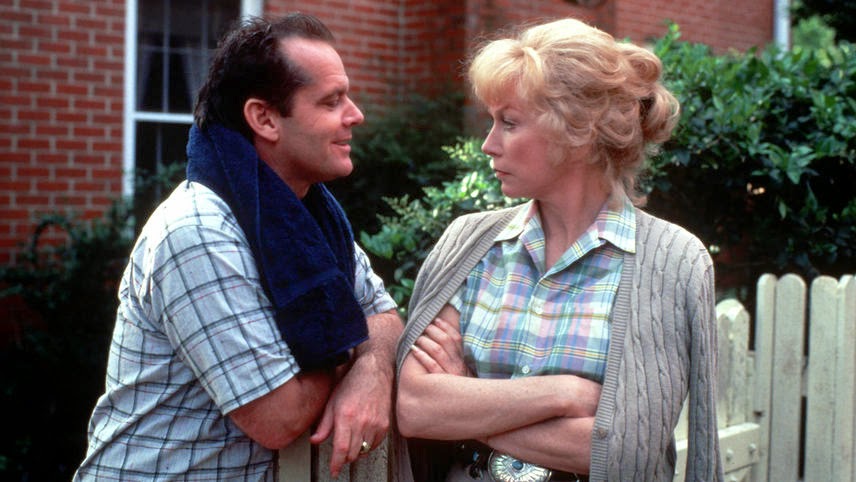
In Texas, Aurora Greenway (Shirley MacLaine) has always been slightly paranoid and definitely overprotective of her only daughter Emma. Aurora was widowed at a young age, leaving her relationship with Emma as the one true connection in her life. When Emma (Debra Winger) grows into a young woman and decides to marry school teacher Flap Horton (Jeff Daniels), Aurora certainly does not approve, believing Flap to be unworthy. Around the same time, retired astronaut Garrett Breedlove (Jack Nicholson) moves into the house next door. A party-loving, womanizing and free-spirited bachelor, Garrett is a man denying his age.

Emma and Flap push ahead and get married anyway, and eventually start a family and move to Des Moines. As the years pass Aurora remains in close touch with her daughter, the two sharing their lives over frequent phone calls, and despite plenty of arguments and no shortage of agitation, their love and commitment to each other never wavers. Seeking physical closeness, Aurora finally works up the courage to start a relationship with Garrett, about 15 years after he became her neighbour. With three kids to raise and Flap's limited earning power causing a financial burden, Emma's marriage starts to seriously fray, and both she and Flap are subjected to extramarital temptations. The threat of another relocation and a serious illness are yet to come.

Directed and written by James L. Brooks in his directorial debut, and based on the Larry McMurtry book, Terms Of Endearment is a perfectly polished gem. For the full 131 minutes, not a scene is wasted, Brooks trusting his audience to keep up as the film gallops through the years using short, often funny and frequently poignant scenes. Chronicling the bond between Aurora and Emma from birth and through about 40 years of life, Brooks nails the ups and downs that define the unique cycles of frustration and happiness between mother and daughter, with undying love providing the sturdy foundation upon which two lives are lived.

Brooks' singular achievement is in creating uniquely memorable characters and then treating them with utmost realism. Aurora, Emma and Garrett are a simply unforgettable trio, three people living life on their own stubborn terms but yet behaving fully within the normal rules where selfishness, sacrifice and life's surprises require a steady stream of critical decisions. There are no heroics in Terms Of Endearment; just happiness and heartache generated by the life's little successes and failures.

And because laughs and tears punctuate life's milestones, Brooks includes plenty of both. The emotions are always there, but even at the darkest moments they rarely veer towards exaggerated agitation. In a peak moment of frustration Aurora does let loose at a hospital nurse station, but it's a scene that is equally funny and heartbreaking, capturing a devoted mother willing to move mountains for her daughter.

Terms Of Endearment features astounding acting from the three principals. Shirley MacLaine and Jack Nicholson deliver some of their best work in their long and celebrated careers. MacLaine won the Best Actress Academy Award for what may have been her last great performance, bringing to life Aurora as a proud woman of the South dealing with the changing times and her own evolving needs. Nicholson took a step back from the madness and murderous urges that had began to define him after The Shining and The Postman Always Rings Twice, and nabbed the Best Supporting Actor Academy Award as Garrett the astronaut, a man determined to turn his past celebrity into a life of irresponsible pleasure.

And Emma was undoubtedly Debra Winger's finest on-screen moment. Winger celebrates Emma as a feisty woman full of love, laughter and a singular determination to meet life on her own terms while forging friendships, sharing every moment with Aurora and adoring and tolerating Flap in equal measures. It's a performance for the ages, and Winger was also nominated as Best Actress but lost out to MacLaine.

In addition to Daniels, Danny DeVito as Aurora's long-time admirer and John Lithgow as Emma's amorous banker round out the cast.

Towards the end of Terms Of Endearment, Emma and Aurora share a moment. It's a brief locking of the eyes, without a word being spoken, Winger and MacLaine pouring their characters into a few seconds representing a lifelong bond, a breathtaking ending, a sorrowful beginning, a heartfelt thank you, and the meaning of love itself. It's an unforgettable instant in an enduring treasure of a movie.


All Ace Black Blog Movie Reviews are here.

Tuesday, 10 July 2012

Movie Review: Legal Eagles (1986)


A clumsy legal thriller with a ham-fisted romantic triangle of sorts, Legal Eagles packs the screen with star power and little else. Robert Redford, Debra Winger and Daryl Hannah are attractive to watch, but even they cannot save a bungling story light on ideas and heavy on absurdities.

When Chelsea Deardon was a child, she survived a deliberate fire that killed her father, a famous artist. Now a young woman still living in New York City, Chelsea (Hannah) is arrested and accused of stealing artwork that used to belong to her father. To complicate matters, the theft victim is art dealer Victor Taft (Terence Stamp), her father's former business partner, and the artwork that Chelsea allegedly stole was supposed to have been destroyed in the fire.

Chelsea retains defence lawyer Laura Kelly (Winger) to represent her, and she immediately locks horns with Assistant District Attorney Tom Logan (Redford) who is prosecuting the case. Taft mysteriously drops all charges and blows up a storage warehouse in a fiery explosion, while a former police detective (Brian Dennehy) who investigated the Deardon fire pops up with all sorts of insurance fraud accusations, prompting Laura and Tom to team up and dig deeper into the case. Dead bodies soon start turning up, with Chelsea always closest to the latest crime scene. Chelsea also finds her way into Logan's bed, much to the disgust of Laura.

The few good moments in Legal Eagles revolve around Debra Winger. She brings Laura Kelly to life with sweet sincerity, an insecure woman attempting to create a tough persona to survive and compete in a man's work. Winger mixes inner tenderness and self-doubt with an awareness of the need to role-play, and delivers her performance with a sparkle sorely missing in the rest of the movie.

Robert Redford cruises through Legal Eagles playing on his irresistible charm, a man on an unimpeded path to success and capable of attracting any woman. It's a performance as predictable as it is lazy. Daryl Hannah combines the innocence of the mermaid role from Splash with her dangerous gymnast moves from Blade Runner, but she is poorly served by a script that desperately requires Chelsea Deardon to be a suspect and strains all logic to place her in peril with the law. Terence Stamp and Brian Dennehy stick to the tried and true slimy snarling of secondary characters with secrets to keep.

Other than the inflated salaries, it is hard to understand where director Ivan Reitman managed to spend the $40 million budget, a fortune by 1986 standards. The action on the screen is contrived and tepid, the romantic entanglements obvious, the attempts at comic banter uniformly flat, and the legal elements almost ridiculous. Legal Eagles should have been thrown out of court for being a frivolous waste of time and resources.


All Ace Black Blog Movie Reviews are here.

Saturday, 26 November 2011

Movie Review: An Officer And A Gentleman (1982)


A grand romance emerging from the hardship of military training and equally testing blue collar surroundings, An Officer And A Gentleman confirmed Richard Gere as a sensational heartthrob, and catapulted Debra Winger to stardom. Taylor Hackford directs a romantic drama rich with sub-texts related to personal ambition, military discipline, and the convolutions of relationships.

Zack Mayo (Gere), long neglected by his father (Robert Loggia), enlists in the Navy's Aviator Officer School in the Pugent Sound area of Washington State. The other candidates include Sid Worley (David Keith), Casey Seeger (Lisa Eilbacher) and Emiliano Della Serra (Tony Plana), and they are all soon battling through the hardship of the 13 week training program, guided by fierce drill sergeant Emil Foley (Louis Gossett, Jr.).

Mayo and Worley are class leaders and become friends. They meet two local girls who work at a nearby paper factory: Paula (Debra Winger) starts a friendship with Mayo that slowly but surely deepens into a relationship. Worley and Lynette (Lisa Blount) start with the sex and then explore the benefits of a friendship.

As the training progresses, Foley has to knock the traces of self-centred arrogance out of Mayo to turn him into an effective leader; Paula starts to wonder if she has invested too much into a man who will likely never see her again once he graduates; and Lynette ponders a plan to make sure that Worley does not leave her. Mayo uncovers some shaky foundations to Worley's determination to succeed, and these character flaws threaten the graduation prospects of both men. With the training coming to an end, Mayo, Worley, Paula and Lynette have to make the difficult choices that will determine their destinies.

It is rare for a romance to appeal equally to both sexes, but An Officer And A Gentleman successfully pushes all the right buttons for men and women. The glamour of overcoming the rigorous training regime and becoming a navy aviator resonates strongly with the male psyche. The local girl falling in love and being swept off her feet - literally, in this case - by the handsome prince (or officer in uniform, as the case may be) underpins every girl's childhood fantasy.

The script by Douglas Day Stewart weaves a simple modern day tale around the quest for man to become a warrior, and the quest for woman to secure a warrior for herself, and adds in a clever layer of demonstrated failure: anything that can go wrong does go wrong, and suddenly, in the relationship between Worley and Lynette. Not all men will become leaders, and not all women will succeed in finding a knight in shining armour.

Director Taylor Hackford, entering a peak personal era of delivering complex romances that would include Against All Odds, White Nights, and Everybody's All American, teases out five excellent performances out of his cast. Gere's Mayo displays a surprisingly respectful steely resolve to succeed, pushing aside his more rebellious nature to obey, for the most part, the punishing instructions of Foley. Winger plays the deceptively doe-eyed Paula with a tender spunkiness, her glamour downgraded to suit the local poor girl from a blue-collar family. Gere and Winger immediately find sizzling chemistry, culminating in a sex scene that has retained its crackling heat over the decades.

In support, Louis Gossett, Jr. won the Best Supporting Actor Academy Award for his Gunnery Sergeant Foley, a role that would become indelibly associated with the actor. Mercilessly spitting nails and an endless stream of insults and profanities, Gossett brings a disciplined but manic intensity to the role of transforming wannabe fighter pilots into navy officers.

David Keith and Lisa Blount play a substantial role in the success of An Officer And A Gentleman, in secondary roles that refreshingly undergo their own compelling transformations. Keith's Worley is much less certain than Mayo about why he wants to be an officer, but it takes him a tragically long time to realize this. When he finally comes to terms with his life's decisions, he is in the clutches of unforeseen trouble. Blount, in the best role of her career, is haunting as she gradually reveals Lynette as the most dangerous obstacle facing the trainees: beneath the fun and frolicking, Lynette has a deadly serious and selfish objective.

With Joe Cocker and Jennifer Warnes belting out the spine-tingling Up Where We Belong as the romance between Mayo and Paula climaxes unforgettably on the factory floor in the final scene, An Officer And A Gentleman secures its place among Hollywood's greatest love stories.


All Ace Black Blog Movie Reviews are here.