Showing posts with label Robert Duvall. Show all posts

Saturday, 25 April 2026

Movie Review: Lawman (1971)


Genre: Western  
Director: Michael Winner  
Running Time: 99 minutes  

Synopsis: Land baron Vincent Bronson (Lee J. Cobb) and five of his cattlemen go on a drunken spree in the town of Bannock, inadvertently killing an old man. Months later, Bannock marshal Jered Maddox (Burt Lancaster) arrives in the town of Sabbath, which is essentially owned by Bronson, intent on arresting the six men. Bronson offers to negotiate with help from Sabbath marshal Cotton Ryan (Robert Ryan), but Maddox is adamant that the law must be served, leading to escalating cycles of violence.

What Works Well: This revisionist western upturns traditional taming-the-frontier themes with brazenly unsettling audacity. Here the protagonist Maddox is singularly determined to apply the letter of the law, the supposed villain is open to compromise, and the resultant spiral of violence is a condemnation of rules applied in the absence of contextual judgment. The Gerald Wilson script is eminently quotable, and excels in revealing complex trade-offs by providing well-rounded views of multiple characters. Robert Ryan shines in the caught-in-between role, while Lee J. Cobb and Burt Lancaster represent opposing perspectives with rich textures, leading to a jarringly unconventional climax.

What Does Not Work As Well: Director Michael Winner's sense of visual style incorporates awkward over-deployment of zooms and bullet hole blood spurts.

Key Quote:
Vincent Bronson: It took guns to get the land, guns to keep it, guns to make things grow. The guns that pride called out... and each time we buried the cost.


All Ace Black Movie Blog reviews are here.

Monday, 6 April 2026

Movie Review: The Killer Elite (1975)


Genre: Crime Thriller  
Director: Sam Peckinpah  
Starring: James Caan, Robert Duvall, Arthur Hill, Burt Young, Bo Hopkins, Mako, Gig Young  
Running Time: 122 minutes  

Synopsis: In San Francisco, Mike and George (James Caan and Robert Duvall) work for a CIA-affiliated private company providing protection for foreign political opposition leaders. George goes rogue, assassinating a client and badly wounding Mike but choosing not to kill him. Mike's bosses Collis and Weybourne (Arthur Hill and Gig Young) want him to retire, but after recuperating he is assigned to protect a Japanese leader (Mako). Assisted by his buddies Mac and Miller (Burt Young and Bo Hopkins), Mike's mission uncovers a malicious conspiracy and leads to renewed hostilities with George.

What Works Well: A quality cast elevates this uneven conspiracy thriller, combining two popular mid-1970's cinematic themes: shadowy government machinations and martial arts. James Caan and Robert Duvall ride out the clunky parts with aplomb, the script increasingly relying on sardonic humour as the final act approaches. The investment in Mike's recuperation ordeal is worthwhile, and the climax is well-staged within a unique mothball fleet setting.

What Does Not Work As Well: Other than a basic pursuit of greed to set everyone against everyone, the motivations of the master manipulators are next to incoherent. Director Sam Peckinpah suppresses his blooder tendencies, but the resulting action scenes are clunky, with the ninjas-against-guns confrontations played for laughs in an attempt to mask the mismatched idiocy.

Key Quote:
Mac: Damn it, Mike, you're so busy doin' their dirty work, you can't tell who the bad guys are!


All Ace Black Movie Blog reviews are here.

Saturday, 21 February 2026

Movie Review: Seven Days In Utopia (2011)


Genre: Faith-Based Sports Drama  
Director: Matt Russell  
Starring: Robert Duvall, Lucas Black, Melissa Leo, Deborah Ann Woll  
Running Time: 98 minutes  

Synopsis: In Texas, amateur golfer Luke Chisholm (Lucas Black) has a meltdown in a qualifying tournament, damaging his professional prospects. Distressed and distracted, he crashes his car near the tiny community of Utopia. There he meets grizzled rancher and retired golfer Johnny Crawford (Robert Duvall), as well as local girl Sarah (Deborah Ann Woll). As they wait for the car to be repaired, Johnny works with Luke for seven days to improve his golf game. 

What Works Well: Robert Duvall is almost able to save a few scenes through his effortless presence.

What Does Not Work As Well: This is an adult version of The Karate Kid as filtered through the Bible. Lucas Black at 28-years-old is unconvincing as a fresh-faced aspiring pro golfer, and Melissa Leo is wasted in a nothing role. The faith-saves-all hokey plot points include Luke improving his mental game by spending one day painting, one day fly fishing, one day playing a version of horseshoes, and one night avoiding a charging bull while hanging on to a folding chair. It's as as bad as it sounds, and all before the villain of the piece (Luke's father) undergoes a remarkable transformation and helps his son in the corniest of tournament showdown endings.

Key Quote:
Johnny: You don't choose the game, it chooses you.


All Ace Black Movie Blog reviews are here.

Friday, 10 January 2025

Movie Review: The Paper (1994)


Genre: Dramedy  
Director: Ron Howard  
Starring: Michael Keaton, Robert Duvall, Marisa Tomei, Glenn Close, Randy Quaid, Jason Robards  
Running Time: 112 minutes  

Synopsis: In Manhattan, Henry (Michael Keaton) is the dedicated Metro editor at the scrappy Sun newspaper. He is embarrassed when his team fails to cover a late-night and seemingly racially-motivated double-murder. Nevertheless Henry is being interviewed for a role at the prestigious Sentinel paper, a career move encouraged by his pregnant wife Martha (Marisa Tomei), a former reporter. Meanwhile Henry spars with rival editor Alicia (Glenn Close), who is dealing with personal financial issues, and managing editor Bernie (Robert Duvall), who has health concerns. When two innocent black youths are arrested in the double murder case, Henry sacrifices everything to uncover the truth, but he only has a few hours before the next edition goes to press. 

What Works Well: Taking place over roughly 24 hours, this is a madcap, high-energy, multi-storyline, humour-infused celebration of newspaper office dynamics. A malfunctioning air conditioning system, complaints about office chairs, petty coverage of parking disputes, career decision points, personal and family pressures, debates about which stories to cover, and the scramble to obtain photographs, all get in the way - or provide fuel for - the business of uncovering the truth and reporting on the biggest stories of the day. Ron Howard maintains a remarkably firm grip on the barely organized chaos, and an excellent cast invests in the disparate characters inhabiting the newsroom.

What Does Not Work As Well: A few too many long tracking shots within the newsroom creep into the final cut, and some of the attempts at humour degenerate into unbecoming physical slapstick or just pure shouting.

Key Quote:
Henry: A clipboard and a confident wave will get you into any building in the world!


All Ace Black Movie Blog reviews are here.

Saturday, 11 May 2024

Movie Review: The Betsy (1978)


Genre: Drama  
Director: Daniel Petrie  
Starring: Laurence Olivier, Robert Duvall, Katharine Ross, Tommy Lee Jones, Lesley-Ann Down, Kathleen Beller  
Running Time: 125 minutes  

Synopsis: Loren Hardeman (Laurence Olivier) is the wealthy aging patriarch of an automotive dynasty. Eager to reclaim former glories, he hires racing driver Angelo Perino (Tommy Lee Jones) as chief designer for a new fuel efficient car to be named after his great grand-daughter Betsy (Kathleen Beller). Angelo clashes with company president Loren III (Robert Duvall) and has an affair with Lady Ayres (Lesley-Anne Down). Flashbacks to the 1930s reveal Loren's frustrations with his weakling son Loren II (Paul Ryan Rudd), who falls victim to a manipulator and neglects his wife Sally (Katharine Ross).

What Works Well: Saturated with bedroom and boardroom shenanigans, a "what next" fascination settles over this adaptation of Harold Robbins' novel. Both the modern day and 1930s timelines feature lavish sets and deeply flawed but powerful men and women eager to betray each other, and director Daniel Petrie hustles the drama along by keeping the characters true to their hormone-defined intentions.

What Does Not Work As Well: The stellar cast is well above the television-level soapy plot, despite the added spice of nudity, sex, and bits of violence. Given free rein, Laurence Olivier hams-up a caricature combination of cuddly grandpa and ruthless businessman. The other performances are emotionally stilted and constrained by mechanical dialogue, exposing hollowness under the glossy hood.

Conclusion: The engine revs without memorable spirit nor purpose.


All Ace Black Movie Blog reviews are here.

Saturday, 30 March 2024

Movie Review: The Handmaid's Tale (1990)


Genre: Dystopian Drama  
Director: Volker Schlöndorff  
Starring: Natasha Richardson, Faye Dunaway, Robert Duvall, Aidan Quinn, Elizabeth McGovern  
Running Time: 109 minutes  

Synopsis: In the near future, the United States has turned into the authoritarian Republic Of Gilead, a militaristic patriarchy governed by Christian fundamentalist doctrine. Pollution has rendered most of the women sterile, and fertile non-ruling class women are forced into servitude as handmaids to be impregnated by the powerful. After a failed escape attempt, Kate (Natasha Richardson) is captured and trained as a handmaid along with the feisty Moira (Elizabeth McGovern). Kate is assigned to The Commander (Robert Duvall) and his wife Serena Joy (Faye Dunaway), and meets their chauffeur Nick (Aidan Quinn). She is exposed to the hypocritical luxuries of the elite, and rumours of revolution.

What Works Well: Margaret Atwood's 1985 novel arrives to the screen with a screenplay (credited to Harold Pinter but with plenty of re-works) that admirably captures the complex story's essence. Using broad and efficient strokes, director Volker Schlöndorff crafts the societal context then focuses on Kate's nightmare abduction into sex slavery legitimized by twisted ideology. The grotesque ceremonial rape, the forced shaming of women by other women, and the public executions are punctuation marks in a narrative of religious extremism and intolerance run amok. The performances are necessarily cold, but Natasha Richardson is still able to convey Kate's repressed horror and steely inner strength.

What Does Not Work As Well: Ambitions exceed the budget, the relatively bland production design lacking uniqueness and sparks of imagination. The dialogue and acting occasionally suffer from a sense of rushed stiffness.

Conclusion: Praise be. 


All Ace Black Movie Blog reviews are here.

Sunday, 30 April 2023

Movie Review: Rambling Rose (1991)


Genre: Drama
Director: Martha Coolidge
Starring: Laura Dern, Robert Duvall, Diane Ladd, Lukas Haas, John Heard
Running Time: 112 minutes

Synopsis: During the Great Depression in rural Georgia, Rose (Laura Dern) is hired as the live-in housekeeper for Mr. and Mrs. Hillyer (Robert Duvall and Diane Ladd) and their three children, including 13-year-old Buddy (Lukas Haas). Rose is escaping a troubled background where she was forced in to prostitution. She falls in love with Mr. Hillyer, and in turn Buddy develops a crush on Rose. Mrs. Hillyer grows to admire the sexually spirited but good-at-heart Rose, and defends her through a series of misadventures.

What Works Well: The adaptation of Calder Willingham's book is enlivened by the quirks of the Hillyer family. Mrs. Hillyer is a slightly deaf early feminist studying for a Master's degree, Mr. Hillyer is stern but loving, and the kids are smarter and sassier than their age suggests. With Rose's thunderbolt sexuality a perfect catalyst, most of the family's actions and reactions are unconventional, allowing director Martha Coolidge sly access to humorous sparks amidst the undercurrents of lust and romance. Laura Dern (liberated but frazzled) and Diane Ladd (progressive but vulnerable) deliver standout performances.

What Does Not Work As Well: The structure is episodic and ultimately repetitive, the second half noticeably losing momentum with underdeveloped secondary characters rotating in and out of random shenanigans. The bookend structure featuring the grown-up Buddy (John Heard) adds nothing, and the final scene is painfully misguided.

Conclusion: This rose has both beauty and thorns.


All Ace Black Movie Blog reviews are here.

Monday, 7 March 2022

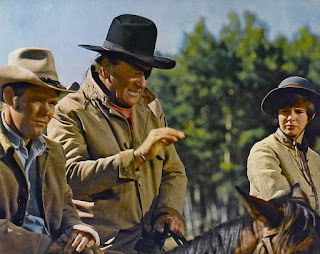
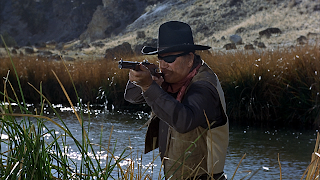
Movie Review: True Grit (1969)

A character-driven western, True Grit thrives on an unlikely bond between a grizzled veteran and a headstrong young woman.

In 1880, dairy farmer and family man Frank Ross is on a trading trip to Fort Smith when he is killed by the coward Tom Chaney, who then escapes into the wilderness. Frank's spirited daughter Mattie (Kim Darby) seeks the services of the aging and hard-drinking Marshal Rooster Cogburn (John Wayne) to bring Chaney to justice. The Marshal has a well-earned reputation for uncompromising violence, often killing fugitives instead of arresting them.

Cogburn accepts the assignment after learning Chaney is riding with wanted outlaw Ned Pepper (Robert Duvall). Texas Ranger La Boeuf (Glen Campbell) is also hunting Chaney for another crime and partners with Cogburn, while Mattie stubbornly insists on joining the manhunt. The trio set off to track down the criminals, but capturing them will not be easy.

While the basic plot of True Grit consists of a standard quest for revenge, the Marguerite Roberts script, adapting the book by Charles Portis, is more interested in people than events. The larger-than-life, shoot-first-and-ask-questions-later Marshal Rooster Cogburn is confronted by the whip-smart and unyielding Mattie, and the film is more about their connection than any fugitive hunt. Mattie repeatedly references Cogburn's true grit but displays plenty more herself, and their combined tenacity grows to formidable strength.

Director Henry Hathaway crafts the story's cadence, and dedicates about half the running time to building the foundation with character introductions. The investment is slow but also worthwhile, rounding out Mattie with an uncanny ability to negotiate every issue until she gets her way, and a propensity to display an extreme state of perpetual readiness. Meanwhile Cogburn is crusty to the point of drowning all the killings with copious amounts of alcohol, his version of one-eyed law enforcement reduced to chasing after the best available bounties. He never quite admits it, but Mattie's dogged pursuit of justice reawakens his sense of purpose. Notably, their connection evolves to the point of genuine trust and caring but also remains true to both their characters by avoiding sentimentality.

The third point in this triangle is La Boeuf, and he is less defined and suffers in comparison. His Texan ways are a target for Cogburn's steady stream of insults, and La Boeuf does not help himself with a virulently obtuse reaction to Mattie's commitment. Despite his alcohol-addled mind, Cogburn recognizes the efficacy of accommodating Mattie on the manhunt while La Boeuf is still busy spanking her with a weed.

With so much hanging on the characters, the two key actors deliver. John Wayne dominates the screen with suitably boorish presence, leveraging his persona towards setting rather than abiding by the rules of the west. It takes a special skill to avoid being steamrolled by Wayne in this form, and Kim Darby successfully emerges with an equally memorable performance. Her Mattie could have easily been irritating or overbearing; instead she is a role model of no-nonsense self confidence.

Once the chase gets going, it's a straightforward affair. Cogburn traps a couple of Pepper's associates, and soon the hunters and hunted are face to face. Give or take a snake pit and a hostage taking, the resolution is routine. The chase and shoot scenes are familiar, but True Grit resides in the people.


All Ace Black Movie Blog reviews are here.

Wednesday, 16 February 2022

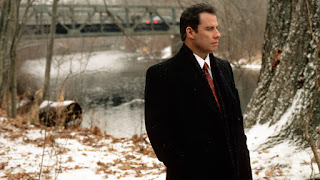
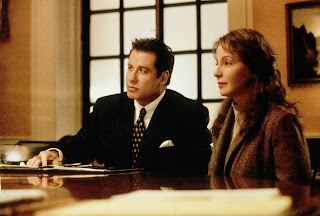
Movie Review: A Civil Action (1998)

A legal drama, A Civil Action features a pesky lawyer going after polluting industries, with mixed results.

In Boston, successful personal injury lawyer Jan Schlichtmann (John Travolta) runs a small but thriving firm with his partners Conway (Tony Shalhoub) and Gordon (William H. Macy). Residents of the small town of Woburn, Massachusetts, represented by grieving mom Anne Anderson (Kathleen Quinlan), seek his help in a poisoned water case believed to be responsible for the death of seven children. 

Initially not interested, Jan accepts the case after discovering he can sue two large firms, Grace & Company and Beatrice Foods, that are operating nearby industries. Grace's attorney is the nervous William Cheeseman (Bruce Norris), but Beatrice is represented by the wily Jerry Facher (Robert Duvall). With Judge Skinner (John Lithgow) presiding, the case drags on, placing a huge financial strain on Jan and his team. But when the defendants offer to settle, Jan surprisingly holds out, believing the families are owed more.

An adaptation of the 1995 book by Jonathan Harr, A Civil Action is based on real events. With a stellar cast, writer and director Steven Zaillian competently translates an environmental pollution case to the screen, mixing personal lawyer duels with court room tactics, investigative field work, victim statements, and the financial drain of it all. Most of the necessary ingredients are here and the film ticks along nicely, but never quite ignites. 

The problems include a rather superficial representation of Jan Schlichtmann as a jaunty man-about-town but with no private life, and equally nothing is known about the families of his partners Conway and Gordon. Their firm's dalliance with bankruptcy is therefore robbed of impact, even as it starts occupying the centre of the drama, leaving dead children and legal case strategy floundering on the sidelines. Robert Duvall as Facher is the menacing, supremely confident counterpart to Jan, but he hovers over the case like a caricaturish dark overlord, again devoid of depth.

Jan's evolution from money-grabbing personal injury lawyer to an attorney with a conscious is the drama's pivot point. John Travolta is more than capable of carrying the load of his character's complexity, and Zaillian provides multiple threads to justify the transformation. Personally, Jan feels belittled for his small-scale status by both the judge and his legal counterparts. And emotionally he starts to empathize with the suffering parents. He responds by digging in his heels and shooting for the moon.

Unfortunately, stubbornness gets in the way of both satisfying the victims and cinematic quality. With a fragmented verdict, A Civil Action limps towards a long postscript ending, a case of justice delayed eroding narrative punch.


All Ace Black Movie Blog reviews are here.

Wednesday, 26 May 2021

Movie Review: John Q (2002)

A hostage drama, John Q spotlights the medical insurance crisis in the United States through the story of a desperate father resorting to desperate measures.

With the economy in bad shape, Chicago factory worker John Quincy Archibald (Denzel Washington) and his wife Denise (Kimberly Elise) are struggling to make ends meet. Their son Mike suddenly falls ill, and Doctor Raymond Turner (James Woods) of Hope Memorial Hospital diagnoses an enlarged heart. Mike will die without priority heart transplant surgery. 

But with John's insurance coverage degraded due to his reduced working hours, hospital administrator Rebecca Payne (Anne Heche) refuses to place Mike on the transplant list unless John and Denise can come up with a $75,000 down payment for the surgery. 

When all fund-raising efforts and applications for aid come up short, John storms the hospital's emergency room with a gun, takes hostages and demands Mike be placed on the surgery list. Negotiator Lieutenant Frank Grimes (Robert Duvall) and Chief Gus Monroe (Ray Liotta) of the Chicago Police are tasked with resolving the crisis, which escalates into a media circus.

Inspired by a system providing insufficient medical coverage for already struggling blue collar workers in one of the world's wealthiest nations, John Q is part message movie and part traditional hostage drama. With Denzel Washington reliably excellent in the leading role, director Nick Cassavetes and writer James Kearns underline institutionalized failures with plenty of passion but little panache. 

The first hour is dedicated to John and Denise's home life, Mike's sudden illness, and frantic attempts to find a financial aid solution within government channels or through community outreach. An underfunded and broken bureaucracy never comes close to providing relief, John's friends and neighbours are as broke as he is, and insurance companies are experts at the run-around. 

Meanwhile the character of Rebecca Payne is the cold and calculating face of a soulless system delivering medical care only to those who can afford it, Anne Heche portraying an administrator over-accustomed to simplifying every human transaction into a balance sheet entry.

The second half is a hostage drama trying hard to recreate elements of Dog Day Afternoon, with limited success. The media bite into an underdog story, the boisterous crowd gathers to cheer a new folk hero, the hostages are a colourful cross-section of society offering irritation and some humour, and the Stockholm syndrome predictably takes hold on the inside as Robert Duvall and Ray Liotta bungle the response outside. 

But John Q. Archibald is never less than a decent man wanting to do good by his son, and carries no genuine threat. Cassavetes has to look for tension elsewhere as the ordeal drags on, and meanders into a minefield of contrived junctures. Late in the day Washington pulls off a masterful father-son moment as a reminder of what is at stake, but John Q joins the crowd of well-intentioned causes pulverized by mechanical assembly.


All Ace Black Movie Blog reviews are here.

Thursday, 24 September 2020

Movie Review: True Confessions (1981)

A neo-noir crime drama, True Confessions lines up the requisite components but misplaces all the potential.

In the early 1960s, Los Angeles police Detective Tom Spellacy (Robert Duvall) visits his brother Monsignor Desmond Spellacy (Robert De Niro) at an isolate parish in the middle of the desert. Desmond announces he is dying from a failing heart. In flashback, the brothers recall a seminal event in their relationship.

In 1947, Desmond is a powerful up-and-coming figure in the church, the right-hand man and fixer for the Cardinal (Cyril Cusack). The church has a long-standing partnership with slimy businessman Jack Amsterdam (Charles Durning), whose construction company benefits from building religious facilities for the expanding city. In his less respectable early days Jack financed a whorehouse managed by Brenda (Rose Gregorio). Now his finances are wobbling, and Desmond is eager to cut ties with Amsterdam to clean-up the church's image.

Meanwhile, Tom is building a reputation as a dogged detective working with his more seasoned partner Detective Frank Crotty (Kenneth McMillan). Tom helps Desmond cover up any scandal from the death of a reverend at Brenda's brothel. The detectives then have to deal with the gory murder of Lois Fazenda (Missy Cleveland), her body found cut in half and drained of blood. Tom's investigation into Lois' background uncovers sordid activities dangerously close to his brother Desmond.

Despite the presence of heavyweight acting talent in the form of Robert De Niro and Robert Duvall, True Confessions is a lost opportunity. The script by Joan Didion and John Gregory Dunne, adapting Dunne's book, is littered with raw material derived from the infamous Black Dahlia case by way of Chinatown, with the added moral complexity of a religious veneer cloaking corruption. But director Ulu Grosbard opts for a talky, slow and often stumbling composition, barely coherent events unfolding through scene after scene of mumbled dialogue drowned by background noise.

Seemingly more interested in frilly and inconsequential style points, at no point does Grosbard come close to achieving momentum or emotional resonance, and the misdeeds supposedly motivating murder are a muddled mess. The reverend's death at the brothel and later the demise of another secondary character are lost investments. A sub-quest involving honest monsignor Fargo (Burgess Meredith) consumes inordinate time. The business dealings between the Cardinal and Jack are explained at sketch level, and the supposedly perilous connections between the very dead Lois, Jack and Desmond are treated with tangential incompetence, robbing the film of any impact.

True Confessions is left with an elegant recreation of 1940s Los Angeles, and the two Roberts delivering understated but uneven performances. De Niro is better served by the Monsignor character, while Duvall's bull-in-a-china-shop antics are another example of a script going to a place because other scripts went there, and not because it makes any sense.

Duvall and De Niro do share thoughtful scenes together, but unfortunately their pregnant pauses best serve to expose the lack of coherent substance.


All Ace Black Blog Movie Reviews are here.

Wednesday, 16 September 2020

Movie Review: Jack Reacher (2012)

A clever action thriller, Jack Reacher unleashes an irresistible crime investigator onto a convoluted conspiracy.

In Pittsburgh, five innocent civilians are killed in a seemingly random sniper attack. Physical evidence leads Detective Emerson (David Oyelowo) to ex-army sniper and Iraq war veteran Barr (Joseph Sikora), who is summarily arrested. A stunned Barr requests help from Jack Reacher (Tom Cruise), a crime investigator who served with him in the army and now lives a nomadic off-the-grid existence.

Jack teams up with Barr's lawyer Helen (Rosamund Pike), who is also the daughter of District Attorney Rodin (Richard Jenkins). Jack is aware of Barr's unhinged behaviour in the army, but his investigation into the Pittsburgh killings suggests Barr was the fall guy for a larger conspiracy. Both Jack and Helen are soon targets of the ruthless criminal enterprise behind a sinister plot.

An adaptation of the book One Shot by Lee Child, Jack Reacher is a slick and relatively grounded crime thriller. Director Christopher McQuarrie and star Tom Cruise combine to deliver quick paced and special effects-free action with a dash of biting humour. Rational editing, glistening night-time cinematography, an involving plot, and a cheeky attitude elevate the entertainment value.

Of course with Reacher quickly established as the epitome of cool heroism, some suspension of disbelief is required to ride out his antics. Reacher can outfight any number of goons, even when he literally finds himself with only a knife in the middle of a gunfight. He out-thinks friends and enemies alike, connecting barely visible conspiracy dots with remarkable prescience. And on close inspection, the central evil plot carries the whiff of bad guys choosing the most complicated route towards achieving their objective.

But the highlights are plenty. McQuarrie stages a one-against-many street fight with panache, and follows it up with a hilarious confined quarters brawl. The car chase scene is an epic two-chases-in-one combo delivered with exceptional control. And the final showdown is suitably orchestrated at an isolated quarry, with caustic humour sustained to the bitter end.

In addition to his radiant charisma, Cruise adds to the sense of realism by performing all his own stunts, and struts through the film with brilliant arrogance. Pike struggles to match him in a marginally frantic performance. Robert Duvall rolls back the years in a crusty role as the operator of a shooting range reluctantly drawn into the mayhem, while Jenkins and Oyelowo contribute robust support. Celebrated director Werner Herzog adds cold menace in a small acting role.

Discarding gadgets and over-the-top imagery in favour of polished grit, Jack Reacher is a welcome embrace of brainy basics.


All Ace Black Blog Movie Reviews are here.

Monday, 26 August 2019

Movie Review: The Eagle Has Landed (1976)


A World War Two fictional adventure, The Eagle Has Landed imagines a far-fetched German covert mission to kidnap Britain's Prime Minister Winston Churchill.

As the war draws to a close and Germany's defeat appears inevitable, Colonel Max Radl (Robert Duvall) is asked to study the feasibility of a mission concocted by Adolf Hitler to kidnap Churchill, with the intention of suing for more favorable peace terms. Radl learns Churchill will be passing through a lightly defended Norfolk village a few miles from Britain's east coast, and Heinrich Himmler (Donald Pleasence) secures Hitler's blanket authority to proceed with the plan.

Radl recruits Colonel Kurt Steiner (Michael Caine), a maverick commander of elite paratroopers, to lead the mission. With IRA sympathizer Professor Liam Devlin (Donald Sutherland) inserted as a covert agent, Steiner and his men infiltrate the target English village disguised as Polish commandos. But the nearby presence of American troops led by Colonel Pitts (Larry Hagman) and Captain Clark (Treat Williams) will complicate the mission, as will Devlin unexpectedly falling in love with local girl Molly (Jenny Agutter).

An Anglo-American production relatively uniquely adopting a German perspective, The Eagle Has Landed is an adaptation of a Jack Higgins novel directed by John Sturges (his final film) and written by Tom Mankiewicz. Despite the production talent and a stellar cast, The Eagle Has Landed sputters and disappoints.

The better World War Two fictional mission movies like The Guns Of Navarone and Where Eagles Dare succeed because of the investment in the likelihood of success or failure in achieving an objective which could have been real. Winston Churchill is simply too prominent as a fictional target to enable the suspension of disbelief, especially when The Eagle Has Landed spends no time with the British side until late in the movie.

What remains is a messy narrative about German paratroopers descending on a quaint village, distracted by a lukewarm romance for Devlin, an unconvincing turn by Michael Caine as an independent-minded commando leader, and an ill-conceived and unnecessary comedy interlude courtesy of Larry Hagman's bumbling Colonel Pitts.

Robert Duvall disappears from long stretches of the film, and the plot's weakness is best exemplified by the notion that Churchill would continue to travel towards a town where a major firefight has erupted with enemy forces. Of course there is a twist in the end, but due to the preceding plot weaknesses it arrives with minimal impact.

Sturges handles the action scenes reasonably well, and some impressive countryside visuals entertain the eyes while Caine, Sutherland and Duvall struggle to elevate the material. Although the eagle did land, it also laid an egg.


All Ace Black Blog Movie Reviews are here.


Tuesday, 6 August 2019

Movie Review: The Great Santini (1979)


A social drama about life with a military man, The Great Santini explores the creeping agony of a warrior without a war struggling to fill the void in his life.

It's 1962, and Lieutenant Colonel Wilbur "Bull" Meechum (Robert Duvall), also known as The Great Santini, is a proud ace fighter pilot with the Marines. After completing a training mission in Spain he returns to the US and relocates his wife Lillian (Blythe Danner) and four kids, including eldest son Ben (Michael O'Keefe), to his next assignment at the Beaufort, South Carolina military base. Although he is often loving and supportive, Meechum treats his family as an extension of his career and demands authoritarian respect and strict military discipline at home.

The children are used to a life of annual uprooting, and Ben soon makes the basketball varsity team at his new school and befriends the family housekeeper's son Toomer (Stan Shaw), who stutters and suffers racist slurs from local goon Red Petus (David Keith). Meanwhile Meechum grows frustrated with the years passing him by and no war to call his own. He turns increasingly surly and violent, poisoning the family dynamic.

The Great Santini delves into the dangers of living life by a single code and no differentiation between career success and home serenity. Author Pat Conroy wrote the book partially inspired by personal experience with his own father, and director Lewis John Carlino (who also penned the screenplay) creates a reasonably engaging character study but with uneven patches.

As a hard-drinking, prankster-loving but revered pilot, Meechum comes across as a personification of Jekyll and Hyde in his home environment. The jarring transitions from loving husband and father to a man who loses all sense of perspective when beaten by his son at basketball induce whiplash, Carlino resorting to binary good or evil modes and unable to introduce nuance.

The theme of a proud man trained and educated for war struggling to thrive in a time of peace (the events are set before the Vietnam War ramp-up) is worthwhile. The military machine produces hard and cocky men like Meechum to fight and win battles, and in the absence of a real war, the home front becomes a proxy battleground.

In addition to imposing rigid expectations about his son's future in the military, Meechum is hardwired to find trouble and come out ahead. From the opening scenes he instigates chaos to disrupt the calm of diners at a swanky restaurant in Spain, and later at the Beaufort base he abuses one soldier and physically tussles with a commander.

Robert Duvall dominates the film and makes the most of what he has to work with in terms of Meechum's definition. A few too many scenes portray him succumbing to alcohol and suffering the consequences. Better are his conflicts with Ben and Lillian stemming from his declining influence and lessened ability to exert authority. Ben's subplots featuring advances into adulthood and the friendship with Toomer are cinematically flat and often appear to belong in another lesser movie.

Caught between a higher purpose and a mundane reality, The Great Santini erratically fluctuates between good and awkward.


All Ace Black Blog Movie Reviews are here.

Sunday, 19 May 2019

Movie Review: Crazy Heart (2009)


A drama and romance set in the country music world, Crazy Heart is a sincere story about second chances at love and life.

Bad Blake (Jeff Bridges) is a 57 year old washed up and broke alcoholic country music singer reduced to touring on his own in his beat-up truck and playing at bowling alleys. At a bar gig in Santa Fe he meets Jean Craddock (Maggie Gyllenhaal), a single mom to four year old Buddy. She is an aspiring music reporter and interviews Bad before and after his show. A cautious romance develops between them.

The next stop is Phoenix, where Bad accepts the humiliation of opening for country music star Tommy Sweet (Colin Farrell), who was mentored by Bad early in his career. Despite some tension between the two men Tommy encourages Bad to get back to writing as a way to earn royalties. After a mishap on the road the relationship between Bad and Jean deepens, but his excessive drinking will cause a rift.

A film that drinks deeply from the sorrows and regrets of a derailed life, Crazy Heart is a human profile about still finding hope amidst the carnage. With a monumental Jeff Bridges performance, director and writer Scott Cooper, adapting the Thomas Cobb book, jumps into Blake's pick-up truck and crafts a tender story of broken dreams and an unlikely chance at new love.

At the film's outset Blake is reduced to the loneliness level of human existence. No backing band, a lost family, hardly any friends, and just a smattering of remaining fans, he is the living embodiment of a mostly forgotten has-been, spending his days in derelict motel rooms watching porn. Even drowning his miseries is a challenge, as he cannot afford to buy alcohol and is reduced to the charity of store owners to hand him a free bottle.

From this beginning Crazy Heart charts a course towards something resembling a revival. The intervention of others is crucial. Blake's manager insists he opens for Tommy, who in return demonstrates kindness to his mentor and hints at a potential path to recovery. In the meantime Blake forges an unexpected connection with Jean and her son Buddy, stirring within him a renewed yearning for a more complete life.

The film includes plenty of country music, with soundtrack contributions from T Bone Burnett, Stephen Bruton, and Ryan Bingham. Adding to the film's authenticity Bridges and Farrell perform their in-concert songs, and the music never gets in the way of the narrative. Robert Duvall has a small role as a bartender and longtime friend.

With an aesthetic dominated by the wide open skies of mostly rural America, Cooper and Bridges manage a remarkable feat: Bad Blake, despite all his faults, is a human being worth knowing and caring about. Beneath all the flabby grime is a sensitive songwriter and a man who can be rescued. All it takes is a  Crazy Heart to point the way.


All Ace Black Blog Movie Reviews are here.


Sunday, 18 November 2018

Movie Review: Widows (2018)


A crime-and-corruption thriller, Widows offers a character-rich and intricate story mixing heist thrills with political connivance.

In Chicago, Harry Rawlings (Liam Neeson) and his gang are ambushed and annihilated after a botched heist to steal $2 million in cash from mobster and wannabe politician Jamal Manning (Brian Tyree Henry). The money went up in flames, and Harry's widow Veronica (Viola Davis) is immediately under pressure from Jamal and his vicious brother Jatemme (Daniel Kaluuya) to pay back their losses.

Jamal is competing with Jack Mulligan (Colin Farrell) for a city council seat left open by the resignation of Jack's father Tom (Robert Duvall). In a city rife with corruption the Mulligans have always held power. Now the Mannings want in, while Jack is much less interested than his father in the machinations of local politics. Meanwhile Veronica is desperate to raise money to pay back Jamal, and recruits the widows of Harry's gang, including Linda (Michelle Rodriguez) and Alice (Elizabeth Debicki), to attempt a $5 million heist using detailed plans Harry left behind.

Directed by Steve McQueen who also co-wrote the script with Gillian Flynn, Widows is an engrossing, multi-layered story overflowing with subtext. Featuring overlapping plots, the action sequences are short, sharp and sudden, injecting large boosts of energy at crucial junctures, then making way for the many compelling characters to take over and develop.

The film tackles several weighty themes.Women emerging from the shadows of their husbands is the thread carried by Veronica, Linda and Alice, and all three have powerful growth arcs triggered by the near-total loss they each suffer at the outset. The three women have plenty to prove, first and foremost to themselves. Veronica was enjoying a comfortable life in a cushy and expensive apartment. Linda unknowingly allowed her man to run her small business into the ground. Alice was accepting of a relationship filled with abuse.

Now they have to snap out of passivity and rely on their own guile to extricate themselves out of a jam created by their men. All three will find resilience and resourcefulness, often at unexpected times and places.

The intersection of corruption, racial tension, and politics is the second major motif weaving through the film. This is the domain of men seeking to preserve power in the case of the father and son Mulligan duo, or to wrest control, as pursued by the brothers Manning. Whether white privilege hanging on or black influence rising, none of the characters even pretend to work for the good of the citizenry. The superficial community speeches are a thin cloak to hide naked grabs for money and influence.

Jack Mulligan pursuing political office while barely disguising his disgust is another interesting angle explored by Widows. Here the sins of the old-school father are imposed on a slick son not nearly as comfortable with the games politicians play in public, but more than happy to partake in backroom deal making.

Grief emerges slowly as an initially invisible but ultimately hugely influential emotion propelling the narrative. Veronica and Harry are suffering through the consequences of a family devastation brought forth by their racially mixed household, and the fog of loss profoundly haunts their marriage.

Veronica's plight will collide almost head-on with the election campaign, as McQueen and Flynn introduce more than one clever twist to enrich the film's texture. By the time the women have grabbed hold of their destiny they will unknowingly but violently shake the ground below the men, and for all the careful plotting by both criminals in masks and criminals in suits, the film climaxes with a succession of unplanned real and metaphorical power shifts.

The astounding cast is in top form. Viola Davis and Colin Farrell lead the way with composed performances, ably assisted by some quietly astute and nuanced work from Elizabeth Debicki and Daniel Kaluuya's startling venom.

Widows is a masterful achievement, an intelligent film where visible and invisible crimes abound, as do the opportunities to grab and define new destinies.


All Ace Black Blog Movie Reviews are here.


Monday, 2 April 2018

Movie Review: Falling Down (1993)


A psychological drama thriller, Falling Down portrays one man's journey past the edge.

In Los Angeles, middle-aged defence industry white collar worker William Foster (Michael Douglas) finally loses patience with a slow moving traffic jam caused by roadworks. He abandons his car and walks off with his briefcase, mumbling that he is heading home. The incident is witnessed by police Sergeant Martin Prendergast (Robert Duvall), who is retiring that day, having yielded to excessive nagging by his wife Amanda (Tuesday Weld).

Foster is in the throes of a full-fledged mental meltdown. Despite a restraining order he phones his ex-wife Elizabeth (Barbara Hershey) to tell her he is on his way because it's the birthday of their young daughter. On the long walk to Elizabeth's Venice Beach house he first tangles with a Korean shopkeeper then with members of a Hispanic gang, an altercation that provides him with a gym bag full of weapons. He then causes panic at a burger joint. Prendergast and Detective Sandra Torres (Rachel Ticotin) start to connect the dots about the strange man leaving a trail of carnage in his wake.

Directed by Joel Schumacher and written by Ebbe Roe Smith, Falling Down brings to life the secret rage of men who have had enough. With just a touch of humour and plenty of barely controlled fury, Foster plays out what many in his position may wish to do. Unable to dust himself off and try again,  this is a defeated man comprehensively slipping over the sanity threshold and now looking for all the wrong answers in all the wrong places.

It's a serious mental anguish topic, and despite some exaggerated episodes the film does not shy away from the destructive consequences, both in terms of self-harm and the pain and suffering inflicted on family and innocent bystanders.

With both his career and his family life seemingly at an end, Foster's inner demons are unleashed. He uncorks bottled-up racist thoughts, violently destroys a corner store over the cost of a pop can, and refuses to accept petty restaurant schedules for when breakfast can and cannot be served. He lives out the macho dream of having an arsenal at his disposal. And rocket launcher at the ready (with a kid proving how-to instructions), he challenges construction workers to explain, why exactly, the street is being torn up.

Schumacher alternates scenes of Foster's progress towards Elizabeth's house with Prendergast's long and messy last day on the job. The Sergeant first witnesses Foster's rough start to the day and then begins to hear about strange incidents involving a man in a white shirt and necktie instigating altercations in neighbourhoods where such men are not supposed to tread. The structure balances the film, breaks the monotony and allows Michael Douglas and Robert Duvall to share the screen time despite not meeting until late.

Falling Down walks a fine line between important and exploitive. William Foster is everyman on a really bad day, giving way to worst tendencies that are sometimes, sadly, just too powerful to contain.


All Ace Black Blog Movie Reviews are here.


Saturday, 17 February 2018

Movie Review: Days Of Thunder (1990)


A sports drama and romance, Days Of Thunder is a sophomoric redux of Top Gun with fast cars replacing fast fighter jets.

Car dealership owner Tim Daland (Randy Quaid) convinces semi-retired engine builder Harry Hogge (Robert Duvall) to get back into NASCAR racing and mentor hot new driver Cole Trickle (Tom Cruise). Harry reluctantly agrees, as Cole proves to be naturally talented but clueless about car mechanics and race craft.

On-track Cole tangles frequently with aggressive driver Rowdy Burns (Michael Rooker), until he finally starts to listen to Harry and learns how to win. But a big crash sends both Cole and Rowdy into hospital, where Cole meets and starts a relationship with neurosurgeon Dr. Claire Lewicki (Nicole Kidman). With Cole temporarily out of commission, hot new rookie Russ Wheeler (Cary Elwes) gets a chance to prove himself, and soon he is challenging Cole for on-track supremacy.

Producers Jerry Bruckheimer and Don Simpson, director Tony Scott and star Tom Cruise get back together to retell an overly-family story: the naturally talented but raw and troubled young man with all the determination in the world who just needs a mentor to guide him to his true potential. Days Of Thunder of course also throws in the cheesy romance with the beautiful woman in a position of authority, this time Nicole Kidman convincing no one as a neurosurgeon.

Deprived of the opportunity to film elegant fighter jets against orange skies, Tony Scott is confined to the grittiness of the race track, and he makes all the wrong choices. NASCAR is reduced to a ridiculous jousting contest, drivers using their cars as weapons at every opportunity, dangerous manoeuvres the order of the day as the competitors routinely look to crash each other and "put him in the wall".

The characters are shallow, the emotions derived from the self-help pop-psychology bargain bin, and the final triumph as obvious as it is hollow. None other than Robert Towne wrote the banal script, which mostly consists of cliched lines.

Duvall does his best to inject undeserved gravitas, and despite the familiarity of the material Cruise exudes his special brand of star power, although here it veers towards self-parody.

Days Of Thunder is a race of blunders, going around in predictable circles.


All Ace Black Blog Movie Reviews are here.


Saturday, 28 May 2016

Movie Review: Tender Mercies (1983)


The story of a has-been country singer who hits rock bottom and has the opportunity to start climbing back up, Tender Mercies is an affecting film with its heart firmly in honest territory.

Deep in rural Texas, washed-up and divorced former country music singer and songwriter Mac Sledge (Robert Duvall) lands at the ramshackle motel owned by single mom Rosa Lee (Tess Harper) and her young son Sonny (Allan Hubbard). Mac is broke and drinking heavily, but Rosa Lee offers him a few dollars in return for helping her with odd jobs and staying sober. He sticks around, they grow attached to each other, and get married.

Mac settles uneasily into a life of sober domesticity, but the passion to write music never quite leaves him. When his ex-wife and country music star Dixie Scott (Betty Buckley) arrives on a tour stop nearby, Mac tries to reconnect with her and their teenage daughter Sue Anne (Ellen Barkin). Dixie's manager and Mac's old friend Harry (Wilford Brimley) is sympathetic, but Dixie wants nothing to do with Mac. As word of Mac's new life starts to spread to his former fans, he is drawn back to the world of music.

Directed by Bruce Beresford and written by Horton Foote, Tender Mercies is a small film with a compact story told with simple elegance. Beresford dives deep into the characters of Mac Sledge and Rosa Lee, and creates two textured characters at the crossroads of life. The film enjoys plenty of quiet moments filled with the authentic desire of life-hardened adults to get better and benefit from well-earned scars.

Making excellent use of wide open Texas scenery, Tender Mercies is beautiful to look at, and Beresford often contrasts the immense landscapes with his vulnerable characters. In this terrain there is no option not to struggle; characters like Mac and Rosa Lee will succeed or fail according to their willingness to invest in the hard work of fighting for happiness.

The film weaves in themes of religion, redemption, missing bonds between fathers and children, and the turmoil of early marriages gone wrong. None of the messages are heavy handed. Rather, Beresford allows his characters to accept the luggage on their back while looking ahead, and the film generates momentum from finding decision points where the past is either repeated or built upon. However, not all the elements quite work, and most of the scenes with young Sonny and his school friends are quite creaky.

The prevailing calm tone is best exemplified in one pivotal scene. Upset by his inability to get past Dixie's hostility, Mac goes AWOL on Rosa Lee and Sonny. They anxiously wait for him to return as he manically drives around the backroads, debating whether to drink, flee or find his way back. Should he dare go back to Rosa Lee, her reaction could determine both their futures. He does return, and the welcome he receives says everything about two adults applying life's lessons towards the potential for a better tomorrow.

Robert Duvall finally earned his Best Actor Academy Award for his understated performance as Mac Sledge. Avoiding any excess of emotions, Duvall expresses a life full of regret and a future filled with dilemmas with quiet authority, Mac emerging as a believable man not running away from neither his flaws nor his dreams. In her feature film debut, Tess Harper is a revelation, matching Duvall and portraying the resourceful and independent woman who catches a plummeting soul and tries to reset him onto an even path.

Poignant and fully respectful of its culture, Tender Mercies is as melancholy as a heartfelt country music song.


All Ace Black Blog Movie Reviews are here.