Showing posts with label John Travolta. Show all posts

Saturday, 11 April 2026

Movie Review: Domestic Disturbance (2001)


Genre: Thriller  
Director: Harold Becker  
Starring: John Travolta, Vince Vaughn, Teri Polo, Steve Buscemi  
Running Time: 89 minutes  

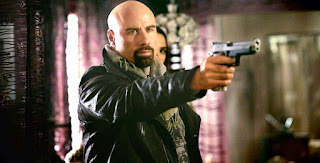
Synopsis: In New England, divorced boat builder Frank (John Travolta) is devoted to his 12-year-old son Danny (Matt O'Leary). Still dealing with the trauma of his parents' breakup, Danny is prone to running away and lying. Frank's ex-wife Susan (Teri Polo) agrees to marry the new-to-town and wealthy Rick Barnes (Vince Vaughn), but the unexpected arrival of mysterious stranger Ray (Steve Buscemi) exposes Danny to the dangerous true nature of his new step-father.

What Works Well: While this is a routine thriller, John Travolta and Vince Vaughn add solid star power and a layer of gloss. The genuine father-son bond between Frank and Danny provides a sturdy foundation of warmth built to withstand the turmoil of lies and deceit. Director Harold Becker keeps the pacing brisk and the running time short, efficiently setting the context and steadily increasing the level of menace. In a brief but welcome appearance, Steve Buscemi is the uninvited slime exposing Rick's secrets.

What Does Not Work As Well: The plot holes are glaring, including slipshod police work, murder as the worst possible means to cover criminal tracks, a stabbing committed in the open when a secure warehouse was nearby, an antagonist believing he can hide from a past splashed across the media, and a victim downshifting to stupid mode to make the crime as easy as possible. The foundational heist that triggers all the action remains a frustratingly abstract event.

Key Quote:
Rick: You may not know me, but you do know Danny.
Frank: Oh, I know. He lies. He lies to just about everybody. But you know what?
Rick: What?
Frank: He doesn't lie to me.


All Ace Black Movie Blog reviews are here.

Monday, 19 January 2026

Movie Review: Moment By Moment (1978)


Genre: Romance  
Director: Jane Wagner  
Starring: Lily Tomlin, John Travolta  
Running Time: 105 minutes  

Synopsis: In Los Angeles, socialite Trisha (Lily Tomlins) is pursued by beach bum Strip (John Travolta). She is lonely, going through a divorce, and staying at a beach house. Strip comes around frequently, and eventually they start an affair. Strip is a low-level drug dealer, younger than Trisha, and a misfit among her friends, resulting in predictable relationship problems.

What Works Well:  A couple of dogs hang around Trisha's beach house, and they are cute. For fans of ogling, Travolta spends most of the movie shirtless, and is often only wearing tight black bikini briefs.

What Does Not Work As Well: A leading contender for worst romance ever made, this is an excruciatingly bad example of tone-deaf writing colliding with shallow and unlikeable characters. The script by writer and director Jane Wagner grinds away with fingernails-on-chalkboard subtlety, Strip's pursuit of Trisha much closer to stalking than romancing. His child-man behaviour underlines the age difference, resulting in her imbecilic embrace of an affair with an annoying, homeless, and immature vagrant. Their chemistry-free, charisma-free, and charm-free relationship unfolds to a generic midnight jazz score, without any character contexts outside the claustrophobia of their dumbfounding interactions. 

Key Quote:
Strip: See, the thing is, most of my friends are undependable. Except for Gregg, and Gregg is in jail now.


All Ace Black Movie Blog reviews are here.

Thursday, 17 March 2022

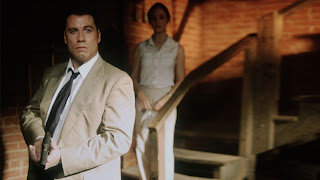
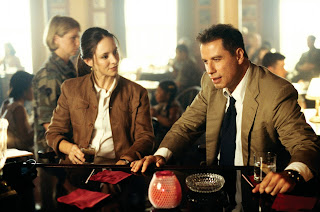
Movie Review: The General's Daughter (1999)

A murder mystery and thriller set in a military milieu, The General's Daughter offers slick production values but suffers from over-convoluted plotting.

On an army base in Georgia, Chief Warrant Officer Paul Brenner (John Travolta) of the Army's Criminal Investigation Division wraps up a sting operation. His next case is the murder of Captain Elisabeth Campbell (Leslie Stefanson), found naked and tied-up on the ground at an urban combat training facility. Elisabeth was an instructor in psychological operations, and also the daughter of celebrated General Joe Campbell (James Cromwell), who is about to retire and enter politics.

Assisting Brenner is his former romantic partner, rape investigator and Chief Warrant Officer Sarah Sunhill (Madeleine Stowe). They initially focus on Elisabeth's shifty commander Colonel Bob Moore (James Woods) as a prime suspect. But soon the investigation becomes more complex, and secrets are revealed about Elisabeth's kinky sex life and her turbulent time at the West Point training academy.

A sordid sex-and-violence crime mystery complicated by honour-bound military traditions, The General's Daughter is polished but overstuffed. The Nelson DeMille novel is transferred to the screen with handsome visuals by cinematographer Peter Menzies Jr., and director Simon West maintains a brisk pace and decorates with military hardware. But the investigative elements are overburdened by motivations straining credibility before devolving into a frantic whodunnit guessing game.

Christopher Bertolini and William Goldman collaborated on the script, and after a bright start they settle down to spraying suspicion on every character in turn, Agatha Christie style. Everyone has a motive and a secret to hide, and Brenner tosses accusations with limited evidence. The truth, once revealed, is bizarre enough to draw groans rather than admiration. The plot tends to wave at moral issues without properly engaging, just as it leaves murder investigation threads dangling. 

But the cross-cutting personal agendas maintain positive energy levels, and The General's Daughter is an effective conversation starter, posing difficult questions about toxicity and inertia within established institutions. At the heart of the drama are serious topics of rape, psychological damage, women in the military, personal sacrifice weighed against reputational damage, political ambitions, and a damaged father-daughter relationship. 

John Travolta is a robust presence at the heart of the action, and Madeleine Stowe is steady but could have benefited from more involvement. Best of all is James Woods, who injects an unsettling beady intensity into his few scenes. To maximize the number of suspects, the cast also finds space for Timothy Hutton, Clarence Williams III, Mark Boone Jr., and two redneck police officers named Yardley.

Eager and capable, The General's Daughter also favours excess over control.


All Ace Black Movie Blog reviews are here.

Wednesday, 16 February 2022

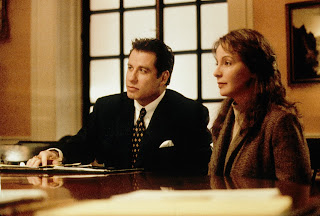
Movie Review: A Civil Action (1998)

A legal drama, A Civil Action features a pesky lawyer going after polluting industries, with mixed results.

In Boston, successful personal injury lawyer Jan Schlichtmann (John Travolta) runs a small but thriving firm with his partners Conway (Tony Shalhoub) and Gordon (William H. Macy). Residents of the small town of Woburn, Massachusetts, represented by grieving mom Anne Anderson (Kathleen Quinlan), seek his help in a poisoned water case believed to be responsible for the death of seven children. 

Initially not interested, Jan accepts the case after discovering he can sue two large firms, Grace & Company and Beatrice Foods, that are operating nearby industries. Grace's attorney is the nervous William Cheeseman (Bruce Norris), but Beatrice is represented by the wily Jerry Facher (Robert Duvall). With Judge Skinner (John Lithgow) presiding, the case drags on, placing a huge financial strain on Jan and his team. But when the defendants offer to settle, Jan surprisingly holds out, believing the families are owed more.

An adaptation of the 1995 book by Jonathan Harr, A Civil Action is based on real events. With a stellar cast, writer and director Steven Zaillian competently translates an environmental pollution case to the screen, mixing personal lawyer duels with court room tactics, investigative field work, victim statements, and the financial drain of it all. Most of the necessary ingredients are here and the film ticks along nicely, but never quite ignites. 

The problems include a rather superficial representation of Jan Schlichtmann as a jaunty man-about-town but with no private life, and equally nothing is known about the families of his partners Conway and Gordon. Their firm's dalliance with bankruptcy is therefore robbed of impact, even as it starts occupying the centre of the drama, leaving dead children and legal case strategy floundering on the sidelines. Robert Duvall as Facher is the menacing, supremely confident counterpart to Jan, but he hovers over the case like a caricaturish dark overlord, again devoid of depth.

Jan's evolution from money-grabbing personal injury lawyer to an attorney with a conscious is the drama's pivot point. John Travolta is more than capable of carrying the load of his character's complexity, and Zaillian provides multiple threads to justify the transformation. Personally, Jan feels belittled for his small-scale status by both the judge and his legal counterparts. And emotionally he starts to empathize with the suffering parents. He responds by digging in his heels and shooting for the moon.

Unfortunately, stubbornness gets in the way of both satisfying the victims and cinematic quality. With a fragmented verdict, A Civil Action limps towards a long postscript ending, a case of justice delayed eroding narrative punch.


All Ace Black Movie Blog reviews are here.

Saturday, 27 November 2021

Movie Review: From Paris With Love (2010)

A wild action thriller, From Paris With Love rides the manic energy of an untamed John Travolta performance to several satisfying if brain-free highlights.

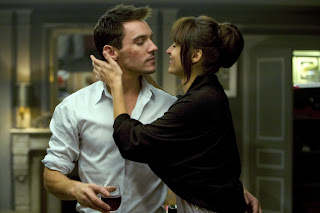
In Paris, James Reese (Johnathan Rhys Meyers) is an aid to American Ambassador Bennington (Richard Durden), and also a low-level CIA agent eager to get involved in more elaborate operations. His relationship with French girlfriend Caroline (Kasia Smutniak) is going well, and after James successfully bugs the French Foreign Minister's office, he is rewarded with an assignment to assist new-in-town agent Charlie Wax (Travolta).

The bold and brash Wax utilizes unconventional methods involving plenty of firepower, and arrives in Paris seemingly to disrupt a cocaine supply chain. James finds himself cradling a coke-filled vase in the middle of several free-fire zones as Wax bulldozes his way through the criminal underworld, uncovering a dangerous conspiracy.

Once John Travolta enters From Paris With Love about a third of the way into the movie, director Pierre Morel discover a new gear and the action takes off, never to slow down. The initially serious introduction gives way to levity, the Luc Besson story defaulting to a buddy movie with Meyers playing straight man to Travolta's force of nature. Although the messaging is uneven, the frequent noisy shootouts are well staged and Charlie Wax's larger than life presence easily fills the vacuum created by a script not bothering with any sense of credibility.

The bad guys are poorly defined and the conspiracy barely sketched in, and neither Besson nor Morel appear too sure how the story jumps from large quantities of drugs to terrorists plotting suicide bombings. The sketched plot outline only serves as a hanger for charisma-packed action scenes, mostly featuring Wax taking on and mowing down a large number of baddies as Reese tries to stay out of the way.

Highlights include carnage in a restaurant, a street gang caught in the wrong place at the wrong time, and an ascent up a building staircase with frequent falling hazards. By the time the large tank-busting missile launcher comes out to play on the freeway, the ambassador's aid is close to learning that even in Paris, love has no place amongst the big guns.


All Ace Black Movie Blog reviews are here.

Saturday, 23 October 2021

Movie Review: Perfect (1985)

A drama and romance, Perfect awkwardly attempts to wedge two unrelated and underdeveloped stories into the same narrative. Predictably, both fail.

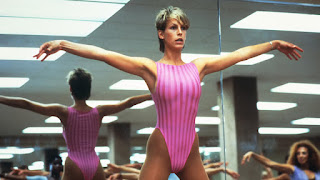
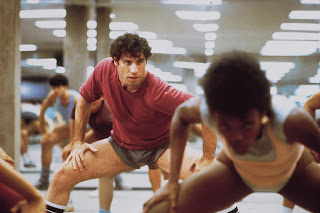
New York-based Rolling Stones investigative reporter Adam Lawrence (John Travolta) is attempting to secure an interview with businessman Joe McKenzie, who is under investigation for drug dealing. Concurrently Adam receives permission from his editor Mark Roth (Jann Wenner) to pursue a story about fitness clubs as the new singles bars. He travels to Los Angeles and visits the Sports Connection club, where he meets aerobics instructor Jessie Wilson (Jamie Lee Curtis).

She is not interested in granting Adam an interview because of a past bad experience with the press, but club regulars Sally (Marilu Henner) and Linda (Laraine Newman) are thrilled to be part of his story. Adam and Jessie start a romance, and McKenzie finally agrees to be interviewed, thrusting Adam into the middle of a high profile FBI investigation. He has to decide how to write both stories, and risks damaging his reputation and relationships.

Featuring endless scenes of women in leotards (with a few sprinkled men) jumping up and down, thrusting their hips, and gyrating their pelvises, Perfect is a mess. Director and co-writer James Bridges seems to know both his stories are unworthy of cinematic treatments, and so takes the easy way out by parking his cameras at the gym and sweating it out. One of the many problems is that all the extras bouncing in the aerobics classes already appear quite fit rather than working their way to fitness, an obvious Hollywoodian choice. A generic and forgettable soundtrack does not help.

The McKenzie plot never progresses beyond cursory headlines before suddenly occupying centre stage in a final, incongruous act. The revelation that fitness clubs are a mingling place for singles with over-clocked hormones starts and ends with a shrug. Not newsworthy and far from a basis for big screen drama, it is no surprise when the magazine fumbles the supposed exposé into a sordid hack job.

The film is saved from a total loss by the two photogenic stars. John Travolta and Jamie Lee Curtis both exude cool charisma and provide good visual distraction as they grapple with an asinine script. Travolta's Adam Lawrence is exceptionally poorly written, falling into the huge gap between sensitive and contemptible. Curtis is provided with a half-decent back-story and convinces as an energetic and confident instructor riding the wave of a fitness craze.

Perfect expends enormous physical energy, but stays in one place.


All Ace Black Movie Blog reviews are here.

Saturday, 11 January 2020

Movie Review: In A Valley Of Violence (2016)


A budget western, In A Valley Of Violence seeks a Spaghetti Western vibe but offers a clunky and feeble script stacked with overly familiar elements.

Mysterious drifter Paul (Ethan Hawke) and his dog Abbie are heading to Mexico to escape a dark past full of violence. They tangle with a drunk preacher (Burn Gorman) before riding into the small and sparsely populated town of Denton. Local hardhead Gilly Martin (James Ransone) resents Paul's presence and earns a humiliating punch in the face for his troubles.

Gilly's fiancee Ellen (Karen Gillan) and her younger sister Mary-Anne (Taissa Farmiga) run the local hotel. The talkative Mary-Anne takes a liking to Paul, but he is mostly silent and brooding. Gilly's father is Marshal Clyde Martin (John Travolta), and he asks Paul to quietly leave town. But the deeply insulted Gilly and three goons catch up with Paul to seek revenge, resulting in plenty of bloodshed.

The opening credit sequence is an effective and nostalgic ode to Spaghetti Westerns enlivened by a Jeff Grace music score. The dog Abbie is exceptionally well trained and steals every scene she is in. But these are just about the only positives offered by In A Valley Of Violence.

Writer and director Ti West appears to be operating with limited resources, the entire film effectively constructed from about a dozen scenes, most of them achingly prolonged well past the point of effectiveness to scratch out a 99 minute feature. The town of Denton consists of 10 residents, background extras an out of reach luxury in this valley.

Also lacking is any sense of originality. This is a straightforward revenge western where the bad guys are bad, the good guy is escaping a dark past, and the dog angle is lifted straight from John Wick. The writing is rudimentary, West quick to snatch at unearned epic moments. The humour is welcome and sometimes sharp, but also uneven and as the climax approaches, the attempted laughs clash with the prevailing tone.

Ethan Hawke is decent within the confines of the material despite a scattershot backstory consisting of vaguely defined incidents. John Travolta is unsure what to do with the role of a Marshal with one wooden leg and one dense but dangerous son. James Ransone is shallow as the villain of the piece, and both Karen Gillan and Taissa Farmiga are treated as irritating afterthoughts.

In A Valley Of Violence is the place to find tired western cliches in search of a better project.


All Ace Black Blog Movie Reviews are here.


Movie Review: Primary Colors (1998)


A political drama laced with humour, Primary Colors is an inside look at the raging turmoil within a fledgling election campaign.

Political activist Adrian Lester (Henry Burton) is drawn to the campaign of charismatic candidate Jack Stanton (John Travolta), a governor from an unfancied southern state making an unlikely run for the Democratic presidential nomination. Stanton is a seemingly genuine and idealistic people-person with a love for education reform. He is also a hopeless womanizer with a chequered past.

His wife Susan (Emma Thompson) is involved in the campaign, and Lester joins slobby strategic advisor Richard Jemmons (Billy Bob Thornton) and organizer Daisy Green (Maura Tierney) to bring some operational discipline. When allegations of Stanton's past infidelities are made public, the team turns to researcher Libby Holden (Kathy Bates) to investigate and preempt other skeletons in the closet. Meanwhile Governor Fred Picker (Larry Hagman) emerges as an unexpected dark horse opponent in the nomination race.

Inspired by Bill Clinton's campaign that culminated in his winning the United States Presidency in 1992, Primary Colors is half of a good movie. Director Mike Nichols and writer Elaine May adapt the 1996 book by Joe Klein (initially published anonymously), with Lester the fly-on-the-wall not quite aware how he is being sucked into his first presidential campaign. What he finds on the inside is disorganized chaos barely held together by a ramshackle team, but also a candidate radiating winning charm. Nichols excels in setting the context, introducing the characters and conveying the exhausting nature of a nascent campaign, clueless but enthusiastic workers always on the go, fighting fires and snatching sleep in cars, planes and nondescript motel rooms.

The film's second half shifts to the grind of gathering ammunition for the mudslinging wars. The focus moves away from the Stantons and towards Libby Holden, and the film loses most of its momentum. The narrative works its way to an almost quaint dilemma: the Stanton's outward idealism clashing with the ready appeal of dirty politics when Jack is being subjected to an intense smear campaign. His opponent Governor Picker is the convenient test case, and May chooses a too-easy target to aim at. A high price is incurred as Stanton searches for his moral compass, Primary Colors trying hard to have it both ways by leaving victims on the sidelines.

John Travolta imitates Clinton's mannerisms and excels in walking the fine line where it's always perfectly unclear whether the candidate genuinely cares or is just brilliant at pretending. Emma Thompson as his wife Susan is not given enough to do, her juggling act to keep both tolerance and ambition in the air frequently unconvincing. Billy Bob Thornton and Kathy Bates are colourfully dramatic but also almost cartoonish. Burton suffers in the role of a supposed protagonist who does little other than experience what others are instigating.

Primary Colors is never less than vivid. While the packaging sparkles, the inside machinations are not always as pretty.


All Ace Black Blog Movie Reviews are here.


Saturday, 24 March 2018

Movie Review: Look Who's Talking (1989)


A romantic comedy, Look Who's Talking offers standard fare enhanced by a likeable couple and the expressed thoughts of a baby.

In New York City, Mollie (Kirstie Alley) is an accountant, deeply in love with her client Albert (George Segal), the only trouble being that Albert is already married and just stringing Mollie along. He anyway gets her pregnant, although Mollie tells her mom Rosie (Olympia Dukakis) that she chose artificial insemination. On the day of the delivery Mollie has to scramble to the hospital in a taxi driven by the scrappy James (John Travolta).

Baby Mikey (voice of Bruce Willis) is born, and Mollie goes on a quest to try and find a suitable father, without much success. James continues to hang around Mollie, offering babysitting services, and gradually they grow close.

Written and directed by Amy Heckerling, Look Who's Talking provides the novelty of a baby who can share his thoughts, with Bruce Willis mailing in a relatively wooden voice role. However, the talking baby trick eventually and not surprisingly wears off, particularly as Mikey ages into a toddler.

Look Who's Talking remains mainly watchable thanks to the two central characters, the dynamic between Mollie and James seasoned on a low fire as Mollie desperately searches for a father and ignores the most obvious option available to her. John Travolta triggered one of many career upticks by portraying the streetsmart James and having fun with his own screen image, and Kirstie Alley threatened big screen stardom in an appealing role as the frazzled Mollie.

Heckerling peppers her film with enough good laughs to sustain momentum, starting with detailed what-happens-during-conception imagery. Mollie is good at imagining worst-case-scenario futures with the magnified faults of the men she's dating. The pseudo-psychological babble of the highly unreliable Albert also helps in the comedy department, as does mom Rosie's pragmatically unimaginative advice on affairs of the heart.

None of which means the film is anything except utterly predictable, with the ever-popular frantic chase ending that brings the two lovers into each other's arms. It doesn't matter who's doing the talking, a rom-com is a rom-com.


All Ace Black Blog Movie Reviews are here.


Saturday, 27 January 2018

Movie Review: Basic (2003)


A military whodunnit, Basic twists itself into an unfathomable knot.

In Panama, former Army Ranger Tom Hardy (John Travolta) is recruited by his friend base commander Colonel Bill Styles (Tim Daly) to help the inexperienced Captain Julia Osborne (Connie Nielsen) conduct an investigation. Hardy and Osborne are tasked with interrogating the only two survivors from a disastrous live fire training mission deep in the Panama jungle during a hurricane that left Master Sergeant Nathan West (Samuel L. Jackson) dead along with several other trainees.

The two survivors are Sergeant Dunbar (Bran Van Holt) and the wounded Second Lieutenant Levi Kendall (Giovanni Ribisi). Hardy quickly gets them both to talk, and a story emerges of the hated West being killed in the field and the trainees turning on each other. But Dunbar and Kendall differ on all the details prompting Hardy to suspect there is more to the story. Eventually the base's medical doctor Peter Vilmer (Harry Connick, Jr) is also dragged into the investigation.

The last film directed by John McTiernan before legal troubles consumed his life, Basic is a muddled mess. The idea of investigating a military incident from multiple perspectives is not new, with Courage Under Fire a recent (and much better) example. In Basic, a lot of the already chaotic in-field action is drowned by the sounds of a roaring hurricane, and coupled with jerky editing and indistinct soldiers running around the jungle, the incident at the heart of the film is rendered uninteresting.

Back at the base where Hardy and Osborne are conducting their investigation, it is quickly clear that this is a film where the story will change every ten minutes, with the previous version of events erased and recast with every retelling. By the time the final baffling and barely explained twist to the twist to the twist arrives just before the credits roll, what happened in the jungle and why is tossed into the large bucket labeled "whatever".

Meanwhile the relationship dynamics between the by-the-book Julia and the freewheeling Tom never convince, and enough rules are broken during the investigation to lock up all the cast members for life.

Basic tries to assemble a military puzzle but scatters the pieces all over the muddy jungle floor.


All Ace Black Blog Movie Reviews are here.


Wednesday, 1 March 2017

Movie Review: Broken Arrow (1996)


A straightforward action flick, Broken Arrow sets its sights on blowing things up and sticks to its agenda of expensive pyrotechnics attached to a cheap story.

Major Vick Deakins (John Travolta) and Captain Riley Hale (Christian Slater) of the US Air Force are tasked with flying a B-3 Stealth Bomber equipped with two nuclear missiles on a test mission over the Utah desert. Deakins is disgruntled with his career and has secretly masterminded a plot to steal the bombs and demand a large sum for their return.

Hale survives Deakins' attempt to kill him, and after the bomber crashes in the desert, the race is on to recover the nukes. Deakins has assembled a large and well equipped team of henchman to help with his plan, while Hale teams up with resourceful Park Ranger Terry Carmichael (Samantha Mathis). Meanwhile government agent Giles Prentice (Frank Whaley) is dispatched from Washington DC to assess the unfolding situation, while Colonel Max Wilkins (Delroy Lindo) tries to assemble a force to assist Hale.

Directed by John Woo, Broken Arrow is a a mindless action movie unconcerned with logic, characters or any semblance of plot progression. The only objective is to destroy hardware, and Woo blows up helicopters (many helicopters), planes, trains, trucks and a copper mine at regular intervals. If there is one certainty in Broken Arrow, it is that every piece of equipment introduced on the screen will be a flaming wreck before the credits roll.

In between, thousands of bullets are exchanged in chaotic firefights, as secondary characters are efficiently perforated while Deakins, Hale and Terry of course survive effectively unscathed to make it to the grand finale.

John Travolta does his best to exude some elements of cool evil, but even he struggles to make a mark among all the detonations. The rest of the cast members stick to plastic mode, neither Christian Slater nor Samantha Mathis emerging with any credit.

The true heroes are the stunt performers, and Broken Arrow features someone falling down a hill, off a bridge, out of a helicopter or thrown from a train at the same regularity as all those explosions.

Woo knows his way around filming action scenes and the movie looks great, but that's all. The script by Graham Yost is satisfied with broad brush strokes to define a most rudimentary plot and superficial characters, and then stands back from providing any depth. The result is a loud, boisterous and quite silly game of chase the bombs in the desert.


All Ace Black Blog Movie Reviews are here.


Wednesday, 14 September 2016

Movie Review: Saturday Night Fever (1977)


The story of a young man who rules the disco floor but otherwise has little of meaning going on in his life, Saturday Night Fever is a majestic dance drama.

In Brooklyn, 19 year old Tony Manero (John Travolta) works at a paint store and still lives with his bickering parents. But on Friday and Saturday nights, Tony is the king of the local 2001 Odyssey dance club. Tony runs with a group of friends, including Joey, Double J and the naive Bobby C. Local girl Annette (Donna Pescow) desperately wants Tony to be her man and dance partner for an upcoming competition. Tony initially agrees and they start practicing, but he resists her sexual advances. As soon as he spots newcomer Stephanie Mangano (Karen Lynn Gorney) on the club dance floor, Tony becomes obsessed with her and eventually they team up as dance partners.

Stephanie is working at a talent agency across the river in Manhattan and looks down on Tony's unambitious Brooklyn life, only gradually warming up to him. Meanwhile there is trouble on the home front when Tony's brother Frank Jr. (Martin Shakar) unexpectedly quits the priesthood. There is also turmoil within Tony's group of friends, with Bobby C. getting his girlfriend pregnant, and the guys skirmishing with a rival group of neighbourhood kids. With the dance competition drawing near, Tony's life reaches a crossroads, with all his relationships at a crisis point.

Directed by John Badham, Saturday Night Fever is a seminal film, transforming Travolta into an overnight sensation and exquisitely capturing the disco culture just as it exploded into the mainstream. Mixing irresistible dance scenes at the 2001 Odyssey Club with a story of lost youth, bleak prospects and general disenchantment, the film delivers street level grime punctuated by the alternative world of dance enlivened by vivid lights, and the juxtaposition works brilliantly.

The film's seductive music features songs by the Bee Gees and others, and is one of the all-time most famous and successful movie soundtracks. Stayin' Alive, Night Fever, How Deep Is Your Love, and More Than A Woman, all by the Bee Gees, plus If I Can't Have You by Yvonne Elliman became international hits and remain indelibly linked with the disco era.

Several of the film's scenes are the stuff of legend, firmly entrenched in the cultural zeitgeist. Tony's walk down the sidewalk carrying a can of paint opens the film and sets the stage, Badham frequently focusing on his classy shoes and slinky legs to show a natural dancer's grace in movement. The first time that Tony and his friends, known as "the faces", enter the club, the crowd parts to salute the local heroes, Tony suddenly in his element and his palace, all the petty troubles of the real world forgotten.

And when he takes to the dance floor Tony demonstrates why he dominates. Travolta's dancing, captured with slinky finesse by Badham's cameras, is all about sexy agility and an abundance of confidence, his tall, sinewy physique transforming the dance floor into his arena, where others are welcome but only at his pleasure. There is a magical dimension to the scenes on the dance floor, the combination of Travolta, the music and the lighting achieving intoxicating heights of enchantment.

The dramatic scenes are equally effective, with Tony's domestic world a nightmare of endless arguments within a dysfunctional working class Italian-American family. The dangerous high jinks on the cables of the Verrazano-Narrows Bridge are also memorable, with the first round registering the exuberance of indestructible youth, and the second visit revealing how low the psyche can sink when the real world closes in.

Travolta at 23 years old owns the film, radiating star charisma and finding Tony's angst at entering early adulthood with an undefined future. He receives able support from Donna Pescow and Karen Lynn Gorney as Annette and Stephanie. Prescow nails the hopeless girl who will do anything to grab the attention of the local legend, including devaluing herself into abject humiliation. Gorney makes a huge impression as the girl desperate to prove that she can do better than what life in Brooklyn has to offer, and even more desperate to tell all of Brooklyn about her exploits in Manhattan, real or not.

Hypnotic, authentic and infectious, Saturday Night Fever is scorching hot.


All Ace Black Blog Movie Reviews are here.


Sunday, 3 January 2016

Movie Review: Get Shorty (1995)


A comedy gangster thriller, Get Shorty throws everything at the screen with plenty of attitude, but finally gets muddled enough to lose its own vibe.

Chili Palmer (John Travolta) works as a collector on behalf of loan sharks, and manages to insult Miami Beach mobster Ray "Bones" Barbone (Dennis Farina). But when Chili's boss Momo dies suddenly, he finds himself employed by Bones, and his first assignment is to track down dry cleaner Leo Devoe (David Paymer) who owes Bones money and has committed insurance fraud. Chili tracks Leo from Las Vegas to Los Angeles, and along the way picks up another assignment to collect an outstanding loan from Z-movie producer Harry Zimm (Gene Hackman).

Zimm is dreaming of producing a big-league script, and is using starlet Karen Flores (Rene Russo) to try and get her former husband and movie star Martin Weir (Danny DeVito) interested in starring. Chili is a fan of films and fancies himself as a producer, and starts to sweet-talk his way into the deal. Meanwhile Zimm has big problems with limousine company owner Bo "Cat" Catlett (Delroy Lindo) and his henchman Bear (James Gandolfini), a veteran stuntman. Zimm owes Cat money for an unproduced film, and Cat wants to either collect or get a cut of Zimm's new project. Cat himself is tangling with Colombian drug lords, with a $500,000 payment from Cat to the Colombians sitting in an airport locker, under the close scrutiny of federal drug enforcement agents.

An adaptation of an Elmore Leonard novel directed by Barry Sonnenfeld, Get Shorty has obvious intentions to build on the success of 1994's Pulp Fiction. With multiple overlapping story lines, a script more witty than real, Travolta in fine form as a likable criminal and violence never far from everyone's mind or intention, Get Shorty lines up all the requisite elements. The film is fun, sharp and exudes a confidence that mostly comes from the attractively hip and uncommonly cerebral Chili Palmer character, but it's also a film too packed and too short for its own good.

The Scott Frank screenplay takes plenty of shots at the movie industry, including the running theme that nobody seems to care enough to actually read the much coveted script of Zimm's dream project. Chili has his own story in mind inspired by the fugitive Leo, and he seems to assume that as a self-appointed producer, his thoughts will work their way into the script.

Get Shorty eventually buckles under its own weight. Bette Midler makes a rather late appearance as the widow of the screenwriter, Colombia drug lords enter the picture, Bones makes his way to Los Angeles, people start getting beat up while other characters die untimely deaths, and rather than driving towards a satisfying ending, the film gets away from both Sonnenfeld and Frank. The ending is abrupt, almost as if the money ran out, leaving story debris scattered all over the place and sacrificed for the sake of a cheap laugh.

While Travolta is smooth, Hackman, DeVito, Russo and Midler play their roles almost strictly for dry laughs. Lindo and Gandolfini go the other way but reach the same destination, hissing with intensity that borders on comical.

Moderately amusing, Get Shorty is ultimately overstuffed and truncated.


All Ace Black Blog Movie Reviews are here.

Saturday, 3 October 2015

Movie Review: The Thin Red Line (1998)


A lyrical World War Two drama, The Thin Red Line explores the psychology of soldierhood in the context of the Guadalcanal campaign. The film mixes intense battle action with slow moving, narration-driven introspection scenes to create a unique but not always successful experience.

A collection of soldiers are thrust into battle when the United States mounts an invasion of Guadalcanal to halt the Japanese plans to control the south Pacific. The men include Witt (Jim Caviezel), who is thoughtful and philosophical about the war's purpose and always one step away from wandering off on unauthorized leave; Welch (Sean Penn) a no-nonsense down to earth soldier's soldier; and Staros (Elias Koteas), a Captain who cares about his men, perhaps too much.

The hard-driving Lieutenant Colonel Tall (Nick Nolte) is the local commander, and he is eager to make up for lost time after being passed over for promotions throughout his career. Captain Gaff (John Cusack) is Tall's loyal second-in-command. The soldiers engage in fierce combat to dislodge the Japanese from a strategic hilltop, and then push on towards the Japanese rear positions. But territory is gained at a high cost, and each man has to deal with the chaos of war in his own way.

At times, The Thin Red Line represents war as wall paper with a soundtrack of pensive poetry. The visuals may be impressive, and the narration a morose and thoughtful reflection of soldiers' thoughts, but the pace, particularly in the opening and closing 45 minutes, is as close to watching paint dry as a movie can get. Terrence Malick directs with his trademark disregard for what may be popular, opting instead to focus on the beauty of a Pacific paradise being invaded by the ugliness of war. With a running time of close to three hours, the film occasionally rewards patience, but also tests it to the limit.

The action scenes, when they come, are heart-pounding, all the more so thanks to the contrast with the languid pace of the set-up. The middle of The Thin Red Line is an absorbing, meat-grinder of a battle in three phases. The US soldiers are first pinned down and picked off by unseen Japanese troops dug into the hillside. The middle phase finds a small group of soldiers charging at the key Japanese fortification to try and force a breakthrough. The final phase involves a rout of the Japanese
rear lines.

Malick matches Spielberg's Saving Private Ryan (also from 1998) in capturing the agony and ecstasy of war, the pulsating kill-or-be-killed calculus quickly disposing of human pauses once the battle is joined. This is a war film that is not afraid to show fighting men as confused, terrified and error-prone. When heroes do step forward, they do stand out, although in their rush to claim glory, commanders like Tall also find ways to cheapen the achievements earned on the battlefield.

Less successful is the attempt to humanize the soldiers. Despite the mammoth running length, there are just too many individuals cluttering up the front lines, and too many actors given too little to do. With Malick endlessly focusing his cameras on wildlife and still life, the soldiers are shortchanged into insignificance. The likes of Adrien Brody, Woody Harrelson, John C. Reilly and Jared Leto are reduced to little more than extras in the context of a three hour film. John Travolta and George Clooney are each on screen for about 30 seconds. Nick Nolte, Jim Caviezel, Sean Penn and, to lesser extent, John Cusack are treated marginally better, but the film is definitely stained with the mark of name actors slipped into meaningless roles to try and salvage box office.

The movie offers up two half-hearted character conflict points, and they are both overdrawn. Tall and Staros clash about battle tactics, with Staros refusing  to obey orders that would have put his men in harm's way. The stand-off between the two men is prolonged to the point of exhaustion. Meanwhile, in a bizarre chase for dramatic tension that goes nowhere, the loyal Gaff dares to demand from Tall that the men be supplied with water as they fight. Ponderously spouted narration about the futility of war does not make up for the lack of genuine narrative substance.

Flawed as it is, The Thin Red Line is a worthwhile and cerebral addition to the catalogue of war epics that care more about damage caused than territory gained. The film may choose aesthetics over content, but it never loses sight of the losses on all sides.


All Ace Black Blog Movie Reviews are here.


Wednesday, 8 July 2015

Movie Review: Face/Off (1997)


An innovative present-day science fiction thriller, Face/Off packs crackling kinetic energy into the story of a long-running feud between an international terrorist and an FBI agent.

FBI Agent Sean Archer (John Travolta) has been pursuing terrorist Castor Troy (Nicolas Cage) for a long time. Six years prior, Castor tried to assassinate Archer, but succeeded only in killing his young son Michael instead. Now Archer appears to have the upper hand: an FBI trap at a small airport results in the apparently mortal wounding of Castor and the capture of his brother Pollux (Alessandro Nivola), but not before Castor hints that a massive bomb has been hidden and activated somewhere in Los Angeles. Castor is kept alive at a covert government medical facility.

To trick the imprisoned Pollux into revealing the location of the bomb, a secret plan is hatched: Castor's face will be peeled off and attached to Archer, whose own face will stored for later reattachment. The plan appears to work, Archer (with Castor's face) tricks Pollux into giving away the bomb's location. But all goes awry when Castor wakes up, summons his allies, and attaches Archer's face onto his head. Castor (with Archer's face) takes over Archer's job and household, including sleeping with Archer's wife Eve (Joan Allen). Archer has to find a way to reclaim his identity, rescue his family, save his life and destroy the rampaging Castor.

Director John Woo not only conjures up an imaginative science fiction adventure, but also creates one of the most thrilling action films of the late 1990s. Written by Mike Werb and Michael Colleary,Face/Off is understandably silly when it comes to the science, but the premise is put to good use. Woo uses the face exchange between mortal enemies as a starting point for a non-stop fun ride featuring no end of chases, bullet-drenched shoot-outs and general mayhem, all stylistically filmed with balletic elegance. This is an action film where all the action scenes are lovingly constructed with artistic choreography, the horizontal leap-and-shoot a favourite tactic, only surpassed by the higher difficulty level of the horizontal leap-twist-and-shoot.

At a length of 139 minutes, Face/Off is pretty long for what is fundamentally a two-person duel. Woo stretches out his action scenes with the care of a creator unable to trim his lovingly-conceived achievement. While understandable given the quality on display, the film almost becomes too much of a good thing, and also means that Archer and Castor emerge as really horrible marksmen. They take hundreds of shots at each other throughout the movie, and neither the ace FBI agent nor the renowned terrorist cover themselves in glory when it comes to accuracy.

John Travolta and Nicolas Cage each get two characters to sink their teeth into, and both actors have rarely been better. When the actors switch roles and have to pretend to be their characters' worst nightmare, they excel in contrasting manners. Cage (as Archer with Castor's face) has to hide his horror and disgust at taking on the appearance of the man who killed his son. Travolta (as Castor with Archer's face) is barely able to conceal the delight of a heartless terrorist now able to further torment the family of his nemesis.

Joan Allen as the long suffering wife provides able support, and Gina Gershon has a smallish but pivotal role as a member of Castor's entourage who provides an unlikely opportunity for Archer to regain his identity. Dominique Swain rounds out the cast as Jamie, Archer's rebellious daughter who has to deal with her dad's stunning behavioural transformation.

The climax, when it comes, is a classic mano-a-mano confrontation featuring a wild motor boat chase, several massive explosions, and an assortment of truly stunning stunts. Face/Off is a face-off with epic ambitions to achieve the spectacular, and covers itself in the glory of two worthy rivals refusing to yield even when they see the world through new eyes.


All Ace Black Blog Movie Reviews are here.


Thursday, 28 May 2015

Movie Review: Killing Season (2013)


A personal revenge story set in the aftermath of the Bosnian war, Killing Season updates an old concept into a new setting but otherwise dissolves into tiresome and gory territory.

Benjamin Ford (Robert De Niro) was a member of the NATO ground forces that intervened to end the war in Bosnia. Ford's unit liberated a prison death camp and captured Serbian soldiers belonging to the feared Scorpions militia. The NATO soldiers summarily and extrajudicially execute the Scorpions with bullets to the back of the head, but Emil Kovač (John Travolta), the man shot by Ford, survived.

Years later Ford is living in the seclusion of a remote cabin in Tennessee's Appalachian Mountains. In Belgrade, Kovač buys information that reveals Ford's identity, and sets off to find and seek revenge on the man who shot him. Pretending to be a big game hunter Kovač contrives a chance meeting with Ford and initially pretends to befriend the American, inviting him to join his hunt. But Ford soon realizes that he is the prey, and the two men are embroiled in a deadly game of torture, interrogation and survival far away from civilization.

Simplifying a global conflict down to a man-on-man duel is an old cinematic premise and there is limited new material to work with in the sparse Evan Daugherty script, so Killing Season goes looking for fresh angles in the blood-drenched corners of the forest. Director Mark Steven Johnson unfortunately steers the film into a horror ride of inhumanity, the two men taking turns to inflict extremes of pain and suffering.

Ford and Kovač have no qualms about resorting to the worst abuses and most barbarous methods, from arrows in the mouth (surprisingly survivable) to upside down hangings (worse than it sounds) and lemonade-and-salt (rather than water) boarding (weirder than it sounds). The film becomes an ordeal to be survived rather than a cerebral experience to be enjoyed. The meaningful interaction between the men about war, its impact on the men and how they are much more alike than different is decent, but has been seen before in many other and better films. The substantive dialogue occupies a grand total of perhaps seven out of the 91 minutes of running time.

A subplot about Ford's estrangement from his son's family is undercooked to the point of irrelevance. With therefore nothing else going on except two men conducting a private war, Travolta and De Niro have to be good, and the two veterans deliver committed performances. Travolta carries a thick Serbian accent throughout, and it sounds authentic if quite difficult to penetrate. De Niro, around 69 at the time of filming is surprisingly physical and agile.

Killing Season goes looking for big game, but only finds a couple of reliable warhorses.


All Ace Black Movie Blog reviews are here.

Sunday, 4 August 2013

Movie Review: Pulp Fiction (1994)


One of the best and most influential films ever made, Pulp Fiction reboots cinema with an injection of cultured adrenaline. Director Quentin Tarantino speeds past all limits of wild action and scathing humour, and finds on the other side a hip movie that redefines cool as a collision between smart irony and bloody gore.

Vincent: And you know what they call a Quarter Pounder with Cheese in Paris?
Jules: They don't call it a Quarter Pounder with Cheese?
Vincent: Nah, man, they got the metric system. They wouldn't know what the fuck a Quarter Pounder is.
Jules: What do they call it?
Vincent: They call it a "Royale with Cheese."
Jules: "Royale with Cheese."
Vincent: That's right.
Jules: What do they call a Big Mac?
Vincent: A Big Mac's a Big Mac, but they call it "Le Big Mac."

In a non-linear narrative, the film consists of several loosely related stories that take place over the course of one day. Vincent (John Travolta) and Jules (Samuel L. Jackson) are assassins who do the dirty work for crime lord Marsellus (Ving Rhames). They pay a visit to the apartment of the criminal Brett (Frank Whalley), who has betrayed Marsellus and is holding on to a briefcase containing a mysterious glowing substance.

Meanwhile, Marsellus has made arrangements for his wife Mia (Uma Thurman) to be chaperoned by Vincent during a night on the town. Mia is a drug addict who can get herself into trouble, and after she and Vincent enjoy a meal and a dance at Jack Rabbit Slim's 1950s-themed restaurant, they head back to Mia's house where she does, indeed, get herself into a whole heap of trouble.

Marsellus is also fixing a boxing fight by paying has-been fighter Butch (Bruce Willis) to take a dive. Instead, Butch double crosses Marsellus and sets about escaping town with the help of girlfriend Fabienne (Maria de Medeiros). But first he has to retrieve his most precious possession, the gold watch left to him by his father. Butch and Marsellus literally collide in the street, resulting in a shared nightmare of an experience in the basement of a little pawn shop of horrors.

Finally, an incredible escape from death convinces Jules that divine intervention has provided him with a second chance at life, and he decides to re-evaluate his purpose. After he and Vincent clean up an unfortunate bloody mess at the house of their friend Jimmie (Tarantino) with the help of The Wolf (Harvey Keitel), they encounter a robbery, with low-life criminals "Pumpkin" (Tim Roth) and "Honey Bunny" (Amanda Plummer) wildly trying to hold up the customers at a restaurant. Jules has to decide when, and how, he will start a new life of solving problems without killing people.

Jules (to Brett): What does Marsellus Wallace look like?
Brett: What?
Jules: What country are you from?!
Brett: What?
Jules: "What" ain't no country I ever heard of! They speak English in "What"?!
Brett: What?
Jules: English, motherfucker! Do you speak it?!
Brett: Yes.
Jules: Then you know what I'm saying.
Brett: Yes.
Jules: Describe what Marsellus Wallace looks like.
Brett: What...?
Jules: [points gun directly in Brett's face] Say "what" again! Say! "what"! again! I dare you! I double-dare you, motherfucker! Say "what" one more goddamn time!
Brett: He-he's black.
Jules: Go on.
Brett: He's bald.
Jules: Does he look like a bitch?
Brett: What?
Jules: [shoots Brett in the shoulder; Brett screams] DOES...HE...LOOK...LIKE...A BITCH?!
Brett: No!
Jules: Then why'd you try to fuck him like a bitch, Brett?
Brett: I didn't.
Jules: Yes, you did. Yes, you did, Brett. You tried to fuck him. And Marsellus Wallace don't like to be fucked by anybody except Mrs. Wallace. You read the Bible, Brett?
Brett: Yes.
Jules: Well, there's this passage I've got memorized, sorta fits the occasion. Ezekiel 25:17? "The path of the righteous man is beset on all sides by the iniquities of the selfish and the tyranny of evil men. Blessed is he who in the name of charity and good will shepherds the weak through the valley of darkness, for he is truly his brother's keeper and the finder of lost children. And I will strike down upon thee with great vengeance and furious anger those who attempt to poison and destroy my brothers. And you will know my name is the Lord... [pulls out his gun and aims it at Brett] ...when I lay my vengeance upon thee."

An independent production written by Tarantino and Roger Avary, Pulp Fiction is a cerebral comedy set against the background of excessive violence. The movie occupies an alternate reality where violence is routine, gory and disproportionate. But for most of the people who occupy this world, the violence is as much a part of their life as oxygen, and they don't as much as blink when the bullets are flying and the bodies are falling. Vince, Jules, Marsellus and Butch expect to live violently and die violently, and they carry on with the business of living while the living is good, conversing deeply about trivialities, and holding sentimental values against a background that is only surreal to others.

Indeed, the turning point for Jules is when the rules of his world are violated. He should be dead; which he accepts. He does not die; which he has difficulty with. And so he decides that he needs to try and step out of the world of bloodshed and into an alternative life where death is an exception, not a profession. Of course, Jules is actually just trying to join the world of normalcy, but for him, it's a grand fork in the tree of life.

The genius of Pulp Fiction resides in the utterly normal conversations, banter and items holding the characters together, before, during and after the extraordinary blood-letting. Pumpkin and Honey Bunny openly debate the advantages and disadvantages of robbing various targets before deciding on a whim to hold up the place where they are having a meal. On their way to Brett's apartment, Vince and Jules have a long conversation about the differences between Europe and the United States, including what a Quarter Pounder with Cheese gets to be called in Paris. They also dissect the appropriateness of Marsellus' actions in dropping a foe from a fourth floor balcony because he gave Mia a foot massage.

The dinner shared between Vince and Mia is filled with the getting-to-know-you awkwardness of a first date that will never lead to a second. The fact that Vince is an assassin and Mia is the drug addicted wife of his mobster boss is irrelevant to their conversation about Mia's brief acting career, which peaked with a failed television pilot.

Mia: Don't you hate that?
Vincent: Hate what?
Mia: Uncomfortable silences. Why do we feel it's necessary to yak about bullshit in order to be comfortable?
Vincent: I don't know. That's a good question.
Mia: That's when you know you've found somebody really special: you can just shut the fuck up for a minute and comfortably share silence.

And Butch's entire life is spinning on the dial of a tiny gold watch, delivered to him when he was a child by his Dad's colleague (Christopher Walken, in an unforgettable single-scene role). The agony of what his Dad went through pricks Butch enough to find his spine, and that same watch will alter his fate and lead to the most unlikely of initially unwanted encounters with Marsellus. The dead man in the boxing ring, the assassin that Butch has to dispose of, and the horror in the basement of the pawn shop: they are all overshadowed by that small watch.

Prior to Pulp Fiction, Bruce Willis had suffered through a series of high-priced flops, while John Travolta was considered a has-been, reduced to two Look Who's Talking sequels. Willis and Travolta were celebrated for their roles as Butch and Vince, Willis demonstrating that he is capable of more than just John McClane, and Travolta discovering a whole new persona as a man capable of storing evil, humour and sensitivity in equal measures. Travolta was nominated for a clutch of acting awards, including the Best Actor Academy Award, and Pulp Fiction made appearances by big-name stars in smaller independent productions cool, a trend that never subsequently waned.

The rest of the cast is uniformly excellent, with Jackson and Thurman creating in Jules and Mia two enduring characters, while Harvey Keitel's The Wolf is likely the best in his long like of distinguished supporting roles.

Jimmie: I can't believe this is the same car.
The Wolf: Well, let's not start sucking each other's dicks quite yet.

Tarantino creates an almost unfair number of images and scenes that have become classics among fans of filmdom, and lines of dialogue that are essential cultural icons. The instantly recognizable suits favoured by Vince and Jules; Jules unloading his biblical tirade at Brett; Vince and Mia dancing; Butch encountering an assassin in his home; the entire sequence with The Wolf; and Butch choosing which weapon to take back into battle at the pawn shop.

Marsellus: I'm gonna get medieval on your ass.

Pulp Fiction is an immense achievement, a film as light on its feet as it is deep in its impact, at once a celebration and recreation of all that the movies can offer.

Fabienne: Who's Zed?
Butch: Zed's dead, baby. Zed's dead.


All Ace Black Blog Movie Reviews are here.