Showing posts with label Sally Field. Show all posts

Tuesday, 23 December 2025

Movie Review: The Way West (1967)


Genre: Western  
Director: Andrew V. McLaglen  
Starring: Kirk Douglas, Robert Mitchum, Richard Widmark, Sally Field  
Running Time: 122 minutes  

Synopsis: In 1843, former politician William Tadlock (Kirk Douglas) leads a caravan of families heading from Missouri to Oregon in search of a better life. Tadlock recruits the experienced but reluctant Dick Summers (Robert Mitchum) as the main guide and scout for the expedition. The travelers include Lije and Rebecca Evans (Richard Widmark and Lola Albright) and their teenaged son Brownie. He develops a crush on free-spirited Mercy McBee (Sally Field), although she sets her eyes on an older man trapped with a frigid wife. On the long trail to Oregon, the caravan experiences natural hazards, skirmishes with the Sioux tribe, and inter-personal rivalries.

What Works Well: This Harold Hecht production adapts A.B. Guthrie Jr.'s book into is an ambitious and sprawling cinematic experience filled with magnanimous cinematography. Loosely based on the actual Great Migration, director Andrew V. McLaglen finds highlights in an impromptu hanging, a river crossing, a trek through the desert, and finally an audacious descent into a ravine. Although they rarely need to stretch beyond the confines of pre-defined characters, Kirk Douglas (driven and unempathetic), Robert Mitchum (laid back as ever), and Richard Widmark (tightly coiled) ensure an abundance of star power.

What Does Not Work As Well: This is a choppy and episodic adventure, with limited character evolutions and no narrative focus beyond the obvious "get to Oregon!" objective. And with a large number of cast members competing for time and space with oxen, mules, horses, and wagons, none of them achieve compelling depth. Mercy McBee's sexual escapades threaten to derail the caravan into sordid home wrecker and union-of-convenience territory.

Key Quote:
Lije (discussing whether or not to do battle with the Sioux): I guess we'll have to fight, Dick.
Dick: Well, all right, but some of us are gonna have to settle for a piece of ground a little short of Oregon.


All Ace Black Movie Blog reviews are here.

Saturday, 20 September 2025

Movie Review: Two Weeks (2006)


Genre: Dramedy  
Director: Steve Stockman  
Starring: Sally Field, Ben Chaplin, Julianne Nicholson, Thomas Cavanagh  
Running Time: 102 minutes  

Synopsis: Suffering from terminal cancer, Anita (Sally Field) is placed under home palliative care, and her grown children gather to provide support in her final days. Keith (Ben Chaplin) is a Hollywood actor, Barry (Thomas Cavanagh) is a businessman, Emily (Julianne Nicholson) is the responsible daughter, and Matthew (Glenn Howerton) is the disrespected youngest sibling. Tears mix with laughter as the siblings navigate their mother's health, moods, final wishes, and each other.

What Works Well: This standard family-coping-with-death drama appreciates moments of healthy humour, highlighted by the intervention of a less-than-effective Rabbi and one misfit spouse. Sally Field is reliably perfect as Anita surrenders to her final few days, and straight-to-the-audience flashbacks animate the role as a healthier Anita responds to her son Keith's from-behind-the-camera prodding. Elsewhere the four siblings' different personalities, levels of responsibility, and methods of coping are sharply drawn.

What Does Not Work As Well: None of the important clear-the-air conversations ever seem to happen, the aversion to difficult resolutions perhaps realistic but contributing to a narrative happy to amble along in blissful avoidance. A final let-it-all-out emotional release is just too contrived.

Key Quote:
Barry (to Keith): I've never been thrown out of a grocery store.


All Ace Black Movie Blog reviews are here.

Friday, 17 May 2024

Movie Review: Not Without My Daughter (1991)


Genre: Drama Thriller  
Director: Brian Gilbert  
Starring: Sally Field, Alfred Molina  
Running Time: 116 minutes  

Synopsis: In 1984, American Betty Mahmoody (Sally Field) is living in Michigan with her Iranian-born husband Moody (Alfred Molina) and their young daughter Mahtob. Although Betty feels Iran is unsafe, Moody is desperate to visit his relatives and they embark on a two week trip. They find Moody's family consumed by zealotry, but Moody anyway announces his intentions to stay permanently in Iran, effectively abducting his wife and daughter. Betty desperately seeks to flee the clutches of her increasingly fanatical husband, but insists on not leaving her daughter behind.

What Works Well: Based on actual events as chronicled in Betty Mahmoody's book, this is a tense real-life thriller driven by fervor, a version of kidnapping, and a cacophonic culture clash. Director Brian Gilbert recreates the chaos of street-level Tehran as a fully animated and disorienting milieu, and Sally Field embraces the challenge of portraying a woman discovering inner strength after her life is stolen. Equally effective, Alfred Molina embarks on a brooding descent into cultural backwardness. 

What Does Not Work As Well: The running time could have been trimmed or rebalanced to avoid repetitive notes within Betty's ordeal. Almost all the secondary Iranian characters are wooden cut-outs: neither the angry extremists nor the kind helpers are defined or justified in any meaningful way.

Conclusion: Prisons without bars may be the most difficult to escape from.


All Ace Black Movie Blog reviews are here.

Saturday, 13 January 2024

Movie Review: Punchline (1988)


Genre: Drama  
Director: David Seltzer  
Starring: Sally Field, Tom Hanks, John Goodman  
Running Time: 122 minutes  

Synopsis: In New York City, Lilah Krystick (Sally Field) is a housewife and amateur stand-up comic. Although she is awkward on stage and rarely delivers laughs, she still performs regularly at the Gas Station club. Financially struggling fellow comic Steven Gold (Tom Hanks) is the club's rising star, but under family pressure to pursue a medical career. Lilah's husband John (John Goodman) wants her to focus on being a wife and mother, but she is determined to pursue comedy and strikes up a friendship with Steven.

What Works Well: Director and writer David Seltzer demonstrates courage to craft a serious drama within the world of comedy. While the better stand-up routines contain laughs, the focus is on pathos, hustle, and the specter of failure. Under the stewardship of proprietor Romeo (Mark Rydell), the Gas Station club roster of comedians consists of mostly awful performers eking out a heckled living. Even for a talented comic like Steven Gold, the pathway to discovery is far from certain, and the resultant emotional strain provides Tom Hanks with a latitude of desperation. Refreshingly, the unbalanced would-be romance between Steven and Lilah sprouts in the shadow of thorns.

What Does Not Work As Well: By definition the tone suffers from gyrations between awkwardness, laughter, and trepidation, while Seltzer indulges most scenes for longer than necessary.

Conclusion: The struggles and sadness residing within laughter.


All Ace Black Movie Blog reviews are here.

Sunday, 11 August 2019

Movie Review: Mrs. Doubtfire (1993)


A cross-dressing comedy, Mrs. Doubtfire showcases the talents of Robin Williams but otherwise relies on obvious humour and simplistic emotional hot buttons.

In San Francisco, Daniel Hillard (Robin Williams) is a fun-loving actor married to interior designer Miranda (Sally Field). Daniel adores his three kids, teenagers Lydia (Lisa Jakub) and Chris (Matthew Lawrence) and the younger Natalie (Mara Wilson). After a raucous birthday party all but wrecks the house, Miranda decides she can no longer tolerate Daniel's juvenile antics and initiates divorce proceedings. He loses child custody and is heartbroken.

When Miranda advertises for an after-school housekeeper Daniel adopts the elaborate disguise of an elderly British nanny, calls himself Mrs. Doubtfire and secures the job, gaining the opportunity to see his kids a few hours each day. Ironically, Mrs. Doubtfire is tidy and responsible, and both Miranda and the kids are thrilled with her presence and homely advice. But life gets more complicated when Miranda starts to explore a romance with rich client Stu Dunmeyer (Pierce Brosnan), and Daniel pursues a real career opportunity as a children's television show host.

A comedy tailor made to unleash Robin Williams' comic excesses, Mrs. Doubtfire is two hours of accents, impersonations, and unconstrained and barely filtered jokiness. Most of it is funny, but little of it is sophisticated. Director Chris Columbus is happy to allow Williams to run loose, and makes no attempt to rein in his star.

The result is a broad and vivid comedy riding on the coattails of a simple concept, Williams in drag pretending to be a prim and proper English nanny. The plot evolves marginally to Daniel's determined efforts to disrupt ex-wife Miranda's new romance while scrambling to land a real job. Without ever getting serious about anything other than a father's love for his children, the film waves in passing at several themes including the devastating impact of divorce and the evolving nature of couplehood.

It all comes to a climax at a restaurant scene where Daniel has to be in both his real and adopted personas at the same time, and Columbus rumbles through this interminable sequence with the elegance of a dancing bear.

Nevertheless, there is no questioning Williams' talent to extract laughs out of any situation, nor his commitment to the role. He disappears under layers of clothes and makeup to bring Mrs. Doubtfire to life, and once he inhabits her bodysuit, wig and face, Williams creates and sustains a memorable and convincing dotty housekeeper. But despite all the juvenile physical humour and flapping of arms, the running time is too long, and the primary gag of Daniel having to frantically change clothes in short order to fool the right people at the right time is overused.

Mrs. Doubtfire sets the energy level at eleven, but it flares in all the obvious directions.


All Ace Black Blog Movie Reviews are here.


Thursday, 6 July 2017

Movie Review: Where The Heart Is (2000)


A drama about life and love, Where The Heart Is finds most of the right notes in the story of an underprivileged young woman determined to carve a life for herself.

Seventeen years old, penniless and pregnant, Novalee Nation (Natalie Portman) is abandoned by her scummy boyfriend Willy Pickens (Dylan Bruno) at a Sequoyah, Oklahoma WalMart. The kindly Thelma Husband (Stockard Channing), a recovering alcoholic, extends a welcoming hand, but with nowhere to go Novalee surreptitiously starts to sleep at the WalMart by night while wandering around the community during the day. She meets store photographer Moses Whitecotton (Keith David) as well as town librarian Forney Hull (James Frain), an awkward young man whose college education was interrupted.

Novalee gives birth to a daughter she calls Americus, with Forney instrumental in the midnight delivery at the WalMart. While recovering at the hospital she meets nurse Lexie Coop (Ashley Judd), a vivacious unmarried mother of four who easily attracts all the wrong men. Meanwhile, Willy heads to Nashville in search of a music career and connects with talent agent Ruth Meyers (Joan Cusack). After an unsavory encounter with her no-good mother Lil (Sally Field), Novalee moves in with Thelma to start assembling something that resembles a life, and there are plenty of ups and downs ahead in the pursuit of happiness.

An adaptation of the Billie Letts novel of the same name, written for the screen by Lowell Ganz and Babaloo Mandel, and directed by Matt Williams, Where The Heart Is establishes a methodical one-crisis-per-10-minutes pace and does not stray far from the formula. And yet the film executes its mandate with admirable proficiency, and wins its audience with a heartfelt and well-intentioned portrayal of the human spirit hard at work.

Films populated entirely by relatively poor people are few and far between, and there is no knight in shining armour or rich saviour of any kind in Where The Heart Is. Nor is this a class warfare story glamorizing the poor but morally upright masses. Rather, this is a tale of gaining inches in the marathon of life. Novalee starts with literally nothing and the deck stacked against her, and works her way to something through sheer force of will and an always positive disposition.

Along the way she meets women of the same ilk, Thelma and Lexie fighting their own battles (against various addictions and insufferable men respectively) but just as determined as Novalee to fight back on their own terms of kindness.

Williams energetically works the film through the obstacle course of abandonment, poverty, abuse, natural disasters and awkward relationships, sprinkling enough small wins and moments of love and laughter to ensure Novalee always has the motivation and glimmers of hope to carry on. The outcome is a film that despite its sentimentality capably mirrors life's ups and downs.

All of 18 at the time of filming, Natalie Portman holds the film together and convincingly portrays Novalee from 17 to 22, adding textures of experience as the character ages. Ashley Judd is equally irresistible as Lexie, smiling at a life that serves her up a succession of adorable children but also a series of less than useless sperm donors.

Where The Heart Is finds a place that is honest and comfortably familiar, rich soil to help a young woman grow.


All Ace Black Blog Movie Reviews are here.


Saturday, 15 October 2016

Movie Review: Places In The Heart (1984)


A feel good drama, Places In The Heart celebrates the human spirit through the simple story of a widow determined to thrive.

Rural Texas in 1935, the depth of the Great Depression. Edna Spalding (Sally Field) is suddenly widowed when her police officer husband is accidentally shot and killed by a drunk, leaving her to care for their large farm and two young children. Edna receives moral support from her sister Margaret (Lindsay Crouse), who does not know that her husband Wayne (Ed Harris) is carrying on a passionate affair with married local woman Viola (Amy Madigan).

Threatened with foreclosure by banker Mr. Denby (Lane Smith), Edna accepts help from drifter Moses (Danny Glover), a black man who claims that he can create a revenue-generating cotton plantation on her farm. Edna also takes in the blind Mr. Will (John Malkovich) as a boarder to raise some money. Despite the price of cotton plummeting, enormous pressure to sell the farm, rampant community racism against Moses, and nature's fury, Edna pushes ahead, determined to not give up on her land or her family.

Directed and written by Robert Benton, Places In The Heart is a slice of rural life, where the struggle for economic survival shatters class, race, and gender divides. The film may be a hopelessly optimistic parable in its portrayal of a woman in the 1930s staring down the depression, the bankers, the racists, physical disabilities and mother nature to turn her life around, but there is no denying the uplifting and well-intentioned energy coursing through Edna's story.

With beautiful period sets and Néstor Almendros cinematography glorifying the landscape, the film plays with themes of trust and betrayal. Once her husband is killed Edna is forced to trust first Moses, a drifter and thief, and then Mr. Will, a blind man much more likely to be a hindrance than a help. They will need to prove their worth, and the film revels in contrasting Moses and Will's contributions to Edna's life with the individuals who should be her more natural allies: healthy white men in the form of the banker Mr. Denby and the cotton merchant W.E. Simmons (Jay Patterson).

Benton's script includes a substantial subplot involving the illicit affair between Wayne and Viola, at the expense of Edna's sister Margaret. The story of a marriage under tremendous stress adds to the texture of the community and the themes of trust and betrayal, and Viola's fury at Wayne's continued affection for his wife contributes an uncommon cutting edge. But Edna's story of endurance never fully meshes with the turmoil in her sister's life, and the two plots occasionally trip over each other.

Sally Field won her second Best Actress Academy Award for her portrayal of Edna, and its a solid enough performance, more robust than spectacular. Field reaches an early highlight when Edna is forced to confront punishing her young son, a distasteful duty previously performed by her husband. Field captures the horror of a mother coming to terms with what it means to physically abuse a child, ticking off one more thing that will now change in her family's life.

Wisely, Benton is capable of removing the rose coloured glasses when needed. While Edna's journey carries an eternally positive trajectory, the film avoids the temptation to neatly tie up all the loose ends. There are troubles aplenty scattered in the unforgiving southern landscape, and the only certainty is continued interaction between what is sincerely labelled good and evil. Places In The Heart ends with a beautifully mystical moment, an unlikely gathering where human judgement is deferred in favour of a greater communion.

Breathing deeply from the complexities and mysteries of life, Places In The Heart emits a warm, soft glow.


All Ace Black Blog Movie Reviews are here.


Thursday, 5 May 2016

Movie Review: Hello, My Name Is Doris (2015)


A comedy about an unlikely winter-spring relationship, Hello, My Name Is Doris features Sally Field in fine form and offers astute commentary about societal rules and expectations.

In New York City, the elderly Doris Miller (Field) is single, lonely, and dealing with the recent death of her mother. A leftover from a bygone era, Doris works unnoticed in the accounting department of a hip fashion design firm. Her friend Roz (Tyne Daly) and her brother Todd (Stephen Root) try to help her move on after mom's death, but what really perks Doris up is the sudden appearance of the hunky and much younger John Fremont (Max Greenfield), a new addition at the office.

Doris develops an uncontrollable crush on John and imagines a steamy romance. With the help of Roz's niece, 13 year old Vivian (Isabella Acres), she creates a fake Facebook account, befriends John and starts trying to get his attention, and eventually succeeds in meeting him socially at a music concert. Doris falls in with a hip young crowd, her eccentric wardrobe and old fashioned honesty making her popular within John's circle, but a potential case of mismatched expectations awaits.

Directed by Michael Showalter, produced on a shoestring budget, and filmed in less than a month, Hello, My Name Is Doris is a pleasant surprise within the confines of its ambition. Without ever scaling any profound heights of comedy or drama, what could have easily been a cheesy made-for-television level production is instead classy and effective. The script by Showalter and Laura Terruso deals sensitively but also pragmatically with issues of ageism, sexuality at an older age, the trauma of loss, and life's regrets.

The film delves into territory rarely explored on the screen. Older people can fall in lust, develop crushes, and enjoy the freedom of allowing the imagination run riot with sexual fantasies. When vulnerable they can also scheme, be underhanded and go to extremes just in pursuit of a potential mate. The movie does not shy away from the awkwardness of a much older woman chasing after a younger man, and despite plenty of humour treats the subject seriously. Doris is a grieving woman looking for an escape, and after a century of older men chasing younger women on the screen, she is ready to turn the tables with her distinctive charms.

The film also asks questions about the line between acceptance and exploitation. Doris is readily and non-judgmentally accepted as a member of a youthful group of friends. But is she genuinely welcome or just a curiosity and a mascot? And does she really want to run in such a group or is she using them to prove her hip credentials to John?

Sally Field is up for the challenge and brings plenty of courage to the role. Field does not shy away from some of the more ridiculous situations, and embraces Doris' kooky wardrobe. The supporting cast is rather bland, with young Isabella Acres emerging with the most promise as Vivian introduces Doris to the tricks of social media. Peter Gallagher gets a couple of scenes as an inspirational life coach and author who motivates Doris to pursue her passion.

Doris is getting on in age, but she is young at heart, ready to love, and flashes a warm smile.


All Ace Black Blog Movie Reviews are here.


Saturday, 26 March 2016

Movie Review: Forrest Gump (1994)


A comedy-drama about the American dream in the 20th century, Forrest Gump is an irresistible romp through pop culture history with one simpleton who is always in the right place at the right time.

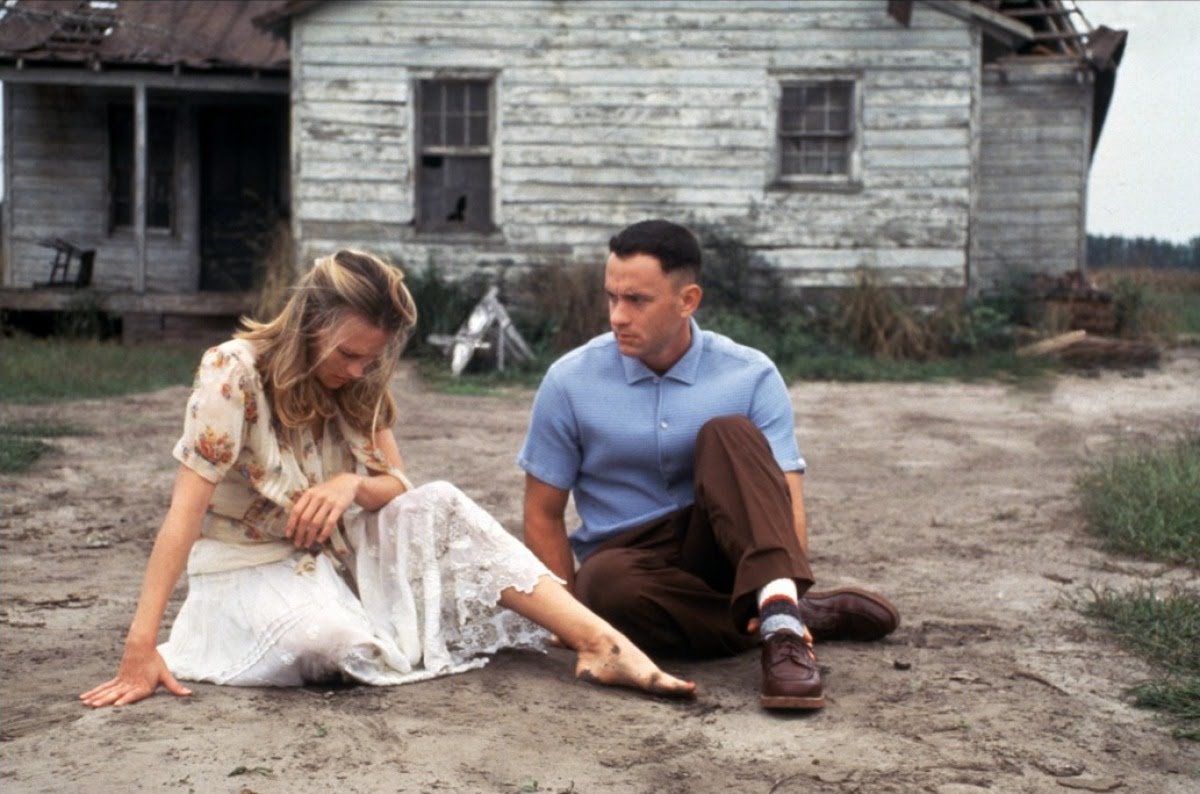
The film is mostly told in flashback, with Forrest Gump (Tom Hanks) sitting at a bus stop recounting his story to a succession of strangers next to him. Born in rural Alabama, Forrest has a low IQ of 75, but his mother (Sally Field) does all she can to make sure he feels normal and gets a decent education. As a child Forrest is hampered by a bent spine, and his only friend is Jenny, an almost angelic schoolmate growing up in an abusive household.

While avoiding bullies, Forrest discovers that he can outrun anyone, and his speed becomes his ticket to a college education, where he becomes a star if clueless football running back. He then joins the Army and serves a tour in the Vietnam War, where he meets Lieutenant Dan Taylor (Gary Sinise) and fellow Alabaman Bubba Blue (Mykelti Williamson), a wannabe shrimp fisherman. Forrest's simple outlook on life help him to become a battlefield hero, and after the war he finds success first as a table tennis champion and then as a shrimp businessman. All the time Forrest tries to maintain contact with Jenny (Robin Wright), the one love of his life, as she joins the cultural revolution and struggles to overcome the shadow of her childhood.

An Eric Roth screenplay adaptation of a Winston Groom novel directed by Robert Zemeckis, Forrest Gump is an easy to digest lesson in the art of seizing the sometimes ridiculous opportunities of life. Forrest remains true to core principles derived from a rural upbringing and a saint of a mother, and reaps the benefits from always doing well for others. Both funny and poignant but never demanding, the film is a smooth balm of reassurance that the American dream works even for idiots, as long they carry good intentions and retain human values.

Riding a steady Tom Hanks performance that mixes naive whimsy with the positivity emanating from believing the best about every situation, the film paints with the broad brush of nostalgia from the 1960s and 1970s. Forrest somehow finds himself over a 20 year period an unlikely hero on the college football field, in the Vietnam jungle, in the thick of the Cold War, in the world of business, and helping to define the cultural zeitgeist. It does not take a genius to positively shape global events much less the lives of others, and in the process of contributing to history, Forrest becomes a regular and celebrated guest at the White House. In an early deployment of clever CGI, Hanks as Gump is seamlessly inserted into many historical film reels, interacting with the likes of Presidents Kennedy and Nixon.

Despite a longish running time of over 140 minutes, Zemeckis never lingers on any one chapter. Highlights include the childhood scenes with Forrest's mother doing everything she needs to do to get him enrolled in school, and an epic Vietnam War firefight that sets the stage for Forrest's heroics and long-term future business success and friendship with Lieutenant Dan. Late in the film Forrest simply goes for a run; a really, really long run to leave the past behind and come to terms with the thing called life.

The impossible, long-distance candle of love that Forrest holds for Jenny ties the film together. Forrest unwittingly ends up a winner at everything that he doesn't intend to do, but his singular intention to win her love proves to be the toughest challenge of his life. Robin Wright brings Jenny to soulful life with plenty of angelic pragmatism, a victim of abuse whose life was spun into the wrong orbit at an early age and never quite recovered. Forrest Gump succeeds not only as a story of a man who rises above his lowly station to achieve remarkable success; but also because it lingers on the heartache of a woman severely damaged in childhood, struggling to hang on despite the constant devotion of her one true friend.


All Ace Black Blog Movie Reviews are here.


Wednesday, 31 December 2014

Movie Review: Eye For An Eye (1996)


A mother's vigilante justice drama, Eye For An Eye works hard to raise a sweat but remains just one notch above TV movie fare.

Karen and Mack McCann (Sally Field and Ed Harris) have two daughters, teenager Julie (Olivia Burnette) and the much younger Megan (Alexandra Kyle). On the day of Megan's birthday, a home intruder violently rapes and kills Julie. Detective Joe Denillo (Joe Mantegna) arrests lowlife delivery man Robert Doob (Kiefer Sutherland), and with strong DNA evidence linking him to the crime, a conviction appears likely. But Doob escapes justice on a technicality and is released, infuriating Karen.

She joins a victim support group where she befriends the sympathetic Angel Kosinsky (Charlayne Woodard), and secretly starts plotting to take justice into her own hands. She tracks Doob's movements and begins to suspect that he is about to rape and murder again. In desperation, Karen turns to a group of grieving parents who appear to be facilitating vigilante justice, including Sidney Hughes (Philip Baker Hall). But Karen will learn that extracting revenge is much more difficult than she imagined.

Directed by John Schlesinger and adapted from the Erika Holzer novel, Eye For An Eye has above-average talent working with below average material. The urbanite victim frustrated by the justice system and deciding to turn to vigilantism is at least as old as Charles Bronson in Death Wish (1974). That movie and all its sequels and imitators, including women revenge fantasies in such fare as Ms. 45 (1981), squeezed the concept dry a good 15 years before Eye For An Eye.

The film does try, and Schlesinger raises the violence quotient by ensuring that the two rape and murder scenes are harrowing and painful to watch. Forcing Karen McCann to listen-in over a cell phone as her daughter is assaulted adds to the sense of a parent's helplessness and increases the justification for her fury. Sally Field dominates the film and delivers a committed performance, while Kiefer Sutherland does his part by creating in Robert Doob a truly hate-worthy piece of white trash, a psychopath driven by the basest animal instincts to copulate and kill. Doob taunting Karen and Mack in the courtroom after the case against him is thrown out is a classic piece of despicable behaviour.

But the weaknesses of the material are quickly apparent. This is a film in which nothing will be known about Doob's backstory, and most of the strong supporting cast is wasted. Ed Harris, Joe Mategna and Beverly D'Angelo (as Karen's business partner) are derivative characters reduced to the shallowest of line readings, and several potentially interesting sub-stories featuring Angel and Sidney are abandoned when convenient.

Eye For An Eye is predictable revenge fare, arriving late to the party and leaving next to no impression.


All Ace Black Blog Movie Reviews are here.


Tuesday, 8 October 2013

Movie Review: Steel Magnolias (1989)


A dramatic comedy with an engaging ensemble cast, Steel Magnolias is a talkfest that covers a lot of ground, but rarely achieves any significant forward momentum.

In small town Louisiana, Shelby Eatonton (Julia Roberts) suffers from severe diabetes, but is preparing to get married. Her mother Mary Lynn, better known as M'Lynn (Sally Field), is close to her daughter, and worries that Shelby's life may be in danger if she ever decides to try and have children. M'Lynn's friends are the town's hairdresser Truvy (Dolly Parton), the local wealthy sophisticate Clairee (Olympia Dukakis), and the slightly off-kilter, always frazzled Louisa, better known as Ouiser (Shirley Maclaine).

Truvy is married to the frequently absent Spud (Sam Shepard), while Ouiser has a long-running feud with M'Lynn's husband Drum (Tom Skerritt). A newcomer to the group is the young Annelle (Daryl Hannah), who gets a job at Truvy's salon despite a seemingly dark past. The women spend a lot of time talking and helping Shelby prepare for her big day. After marrying Jackson (Dylan McDermott), Shelby does indeed get pregnant, and delivers a healthy child. Meanwhile, Annelle goes through a wild period before finding religion. And suddenly, M'Lynn's world is rocked by tragedy.

Steel Magnolias is an adaptation of the play by Robert Harling, which he wrote to help cope with the real-life loss of his sister to diabetes. And the movie carries a sincere heart, depicting real women coping with the joys and tears of the real world to the best of their abilities, supporting and comforting each other through the bad times, and celebrating the good times together. In between they gossip a lot, poke fun at each other, and talk through all the issues in their lives and throughout the town.

As a women's view of middle class life in a quaint small southern town, there is little that is missing from Steel Magnolias, but the charm of life drifting by is also the film's weakness. Director Herbert Ross cannot find much impetus to push the narrative forward. Other than the central relationship between M'Lynn and Shelby, the rest is just so much fluff, and as the story waits for something to happen, the fluff gets fluffier and grows to fill all the corners of the screen. Truvy, Clairee, Ouiser and Annelle occupy a lot of time and space, but ultimately contribute very little, and their stories are truncated at both ends, their true purpose limited to just being friends of M'Lynn.

Harling and Ross do find success in opening up the play and expanding the set of characters. Outdoor scenes add colour, and many husbands and boys are introduced. Although they inject some testosterone into the flowing rivers of estrogen, Steel Magnolias remains solidly a women-dominated film, the likes of Spud, Drum and Jackson mostly serving as comic relief or dissolving into the furniture.

The cast is uniformly good, Sally Field unleashing a couple of emotional hurricanes towards the end, while Julia Roberts is more understated in facing her challenges. Dolly Parton, Olympia Dukakis and Shirley MacLaine compete for screen time in fairly one-dimensional roles, while Daryl Hannah goes through all sorts of transformations without ever quite being sure what she is doing in the movie. Hannah does, however, hit one high note opposite Field, with the two women standing at the epicentre of M'Lynn's tragedy.

A sweet visit with some great actresses, Steel Magnolias is always pleasant and sometimes poignant, if never profound.


All Ace Black Blog Movie Reviews are here.


Monday, 30 September 2013

Movie Review: Murphy's Romance (1985)


A simple love story, Murphy's Romance delivers vanilla entertainment in a wholesome package that alternates between old-fashioned and trite. Sally Field and James Garner are more about comfort than passion, two pros delivering proficient performances without ever stretching.

Thirty-something single-mom Emma (Field) and her son Jake (Corey Haim) have been buffeted by life, and drive up to a small rural Arizona town to attempt another new start. Resourceful and independent but struggling to secure a bank loan, Emma meets widower Murphy Jones (Garner), nominally the local grocery store owner but also the heart and soul of the town. Full of wisdom and edgy serenity, Murphy lives according to his own rules, and everyone respects him for it.

Murphy, who is much older than Emma but never reveals his age, gives her a helping hand to launch a business caring for horses, and they start to get close. But when Emma's ex-husband Bobby Jack (Brian Kerwin) shows up broke and looking to leech off Emma's fledgling success, Murphy realizes that he has competition in his languid pursuit of Emma's heart.

Murphy's Romance is nothing if not pleasant, an amiable Winter - Summer relationship that builds up at a slow but enjoyable pace. But despite all the personality offered by Field and Garner, there is no hiding how thin the material is. The humour is mild, the drama lukewarm, and for long stretches the movie resembles Norman Rockwell paintings set in slow motion, the polite folks of small town America witnessing a couple falling in love, and not much more.

Director Martin Ritt looks around to find tension but finds little to work with. The introduction of ex-husband Bobby Jack as a disruptive elements is too predictable, and even then the search for feel-good charm wins out: Bobby Jack's more unsavoury traits are balanced out by his earnest efforts to make a good impression. Any potential for a down and dirty fight over Emma's heart is abruptly resolved as Bobby Jack is unceremoniously shuffled out of the movie.

Murphy's Romance is left with two agreeable if unspectacular central performances. Field tones her girl-next-door sweetness in favour of some appreciated world weariness. Garner is easily the best thing in the movie, the character of Murphy Jones having long since sorted what matters from what does not in his life, and Garner is a perfect fit to dispense Murphy's wisdom in small, unobtrusive drops. Murphy's Romance may be a bit dull, but at least Murphy's insight is sharp.


All Ace Black Blog Movie Reviews are here.