Showing posts with label Judi Dench. Show all posts

Tuesday, 4 November 2025

Movie Review: 84 Charing Cross Road (1987)


Genre: Biographical Drama  
Director: David Jones  
Starring: Anne Bancroft, Anthony Hopkins, Judi Dench  
Running Time: 100 minutes  


Synopsis: In 1971, New-York-based writer Helene Hanff (Anne Bancroft) visits London for the first time, with the now-closed bookstore at 84 Charing Cross Road her primary destination. A long flashback reveals her history with the store. In 1949, literature lover Helene is frustrated with the limited selection of rare books in New York, and writes to London booksellers Marks & Co. The store's manager Frank Doel (Anthony Hopkins) answers, and in addition to supplying books, the correspondence evolves into a years-long letter-writing friendship. Helene also gradually establishes correspondence with Frank's wife Nora (Judi Dench) and his dedicated staff.

What Works Well: Based on Helene Hanff's book, this is a simple and heartwarming story of old-fashioned, long-distance, across-the-ocean friendship. Director David Jones and writer Hugh Whitmore successfully overcome the challenge of creating a screenplay from an exchange of letters, and initially lean heavily on contrasting post-war period vibes, Helene's New York bustling with promise while Frank's grey London struggles with war's aftermath. Anthony Hopkins conveys layers of emotions with the merest of glances, while Anne Bancroft compensates with over-animation.

What Does Not Work As Well: This is a deeply personal story with limited broad appeal beyond aficionados of obscure book trivia. After the premise is set, the second half starts to drag despite the accelerating timeline, and the exchanges surrender to repetitive and perfunctory tones. Helene's friends and Frank's co-workers are never more than props.

Key Quote:
Helene (in a letter responding to Frank): I hope "madam" doesn't mean over there what it means over here.


All Ace Black Movie Blog reviews are here.

Saturday, 15 June 2024

Movie Review: Jane Eyre (2011)


Genre: Romantic Mystery Drama  
Director: Cary Joji Fukunaga  
Starring: Mia Wasikowska, Michael Fassbender, Jamie Bell, Judi Dench, Sally Hawkins, Imogen Poots  
Running Time: 120 minutes  

Synopsis: In 1800s England, a distressed Jane Eyre (Mia Wasikowska) leaves the Thornfield Hall estate of Edward Rochester (Michael Fassbender) and finds shelter with clergyman St. John (Jamie Bell). In flashbacks, Jane's story is revealed. She was an orphan when her evil aunt Mrs. Reed (Sally Hawkins) dispatched her to a grim residential school. Upon graduation, she became the governess at Thornfield, where she met kindly housekeeper Mrs. Fairfax (Judi Dench) and gradually fell in love with the passionate, brooding, and wealthy Rochester. But he not only harbours a dark secret, but may also be interested in marrying Blanche Ingram (Imogen Poots).

What Works Well: Writer Moira Buffini adapts Charlotte Brontë's classic novel with elegance, and packs Jane Eyre's many adventures into a brisk two hours. Drama, romance, mystery, danger, and passion mingle as Jane navigates each hurdle on her own terms, never losing sight of her worth and the basics of right and wrong. The central romance may lack sizzle but is held together by shadows of tragic pasts, and director Cary Joji Fukunaga relies on candlelight to emphasize mystery-filled interiors loaded with the presence of the unseen. Adriano Goldman's cinematography makes excellent use of the rugged and windswept English countryside. 

What Does Not Work As Well: Jane and Edward progress from verbal sparring to thorny romance in a hurry, and as Rochester's notional counterpart, Jamie Bell struggles to find the right tone as St. John.

Conclusion: This quest for happiness goes through foreboding chambers.


All Ace Black Movie Blog reviews are here.

Saturday, 7 May 2022

Movie Review: Chocolat (2000)

A tender drama with sprinkles of humour and romance, Chocolat is a playful story about the winds of change.

The setting is 1959 in rural France. Life in the small riverfront village of Lansquenet centres around the church, and the mayor Comte de Reynaud (Alfred Molina) ensures long-held traditions are respected. Free-spirited expert chocolatier Vianne Rocher (Juliette Binoche) and her young daughter Anouk drift into town. Vianne rents vacant premises in the town square from the crusty Armande (Judi Dench) and dares to open her chocolate shop in the middle of Lent. 

The Comte is not impressed by the unmarried mother causing a stir in his community, but Vianne sets out to win hearts through her chocolate creations, and befriends Armande, who is on bad terms with her daughter Caroline (Carrie-Anne Moss). Vianne also helps Josephine (Lena Olin), who is stuck in an abusive marriage. The arrival of a band of river gypsies led by Roux (Johnny Depp) further disrupts the town, and Reynaud increases his efforts to drive those he deems undesirable out of town.

An adaptation of the Joanne Harris book, Chocolat is a whimsical experience. Director Lasse Hallström and writer Robert Nelson Jacobs craft a fairly predictable but still enjoyable light-hearted drama with a fairy-tale ethos. Aided by winning performances and an isolated but still vibrant locale, Vianne's adventures carry transformational themes into intimate encounters.

While never overbearing, serious issues infuse the drama with substance, with a focus on women at life's various stages. The elderly Armande is clinging to vivacious ideals despite a serious health crisis, while Josephine is the community's prospective outcast, a woman veering towards irrationality due to abuse. Both stories use poignancy to affirm a woman's right to break loose of expectations, especially when suffering.

More broadly, Vianne representing secular modernity clashing with religious traditions. She shuns local conventions, and later Roux joins her as a free spirit equally dismissive of the old ways. Although Vianne makes no attempt to bridge the divide, Hallström unquestionably - and rather simplistically - aligns his sympathies with the winds of renewal, and portrays the Compte as an antagonistic relic.

But delving deeper, Vianne's chocolate recipes and backstory are derived from ancient Mayan traditions, and so also carry the weight of history, but from a different culture and another corner of the world. Chocolat becomes an intriguing contrast between two keys to the heart, both mystical, but at least superficially incompatible.

In addition to the central stories featuring Armande and Josephine, Vianne's chocolates help one couple regain a sexual spark, and encourage one man (and his dog) to pursue a romance with a widow (Leslie Caron), both side-stories adding moments of levity. The performances merge with the impish mood, Juliette Binoche setting the tone for the women-dominated cast by knowingly investing in confections as gateways to the soul. Chocolat tilts to the sweet side, but is nevertheless irresistible.


All Ace Black Movie Blog reviews are here.

Saturday, 5 March 2022

Movie Review: Belfast (2021)

A coming of age drama with sparks of humour, Belfast is a child's view of The Troubles in Northern Ireland, but more profoundly a lyrical reflection on a family's warmth and sense of belonging.

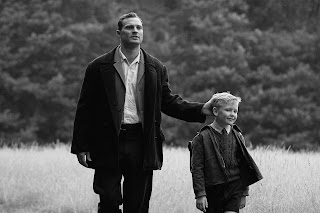
In 1969, nine-year-old Buddy (Jude Hill) is living with his Protestant family in a mixed Belfast neighbourhood. Their street is attacked by a Protestant mob eager to evict Catholic families. But the neighbours want no part of the religious conflict and erect makeshift barricades to dissuade troublemakers. British troops move into the area, adding tension to the streetscape. At school, Buddy has a crush on his classmate Catherine, and gets advice on love and academics from his grandfather Pop (Ciaran Hinds), who is still very much in love with Granny (Judi Dench). 

Buddy witnesses The Troubles adding strain on his parents Ma (Caitriona Balfe), who holds the house together, and Pa (Jamie Dornan) who is often away at work sites in England. Pa is convinced the family should relocate to get away from the threat of violence, but Ma believes Belfast is home and her family would be unwelcome strangers anywhere else. Local troublemaker Billy Clanton (Colin Morgan) ups the pressure on Pa to support the Protestant cause, while Buddy gets dragged into a shop-lifting escapade and then a more serious rioting incident.

Written and directed by Kenneth Branagh, Belfast is a semi-autobiographical recollection of childhood, similar in style and tenderness to John Boorman's Hope and Glory and Alfonso Cuarón's Roma. Here The Troubles create a backdrop and an influence but without dominating young Buddy's life. Branagh cuts through externalities to arrive at what matters most to a child: the home environment and the tone set by parents.

Firmly entrenched in middle class, Ma and Pa are having troubles of their own. The spectre of financial pain related to unpaid back-taxes hangs over the household. Pa is frequently away for weeks at a time, and his perspective from outside Belfast allows him to better understand Northern Ireland's grim prospects. His resolve to leave hardens with exotic Vancouver and Sydney joining England as prospective destinations. Ma's entire life is invested in Belfast, and these faraway places may as well be on the moon.

The idea of uprooting can be traumatic, but children are also resilient, and Branagh captures the multiple concerns of a busy child's life. As the debate between Pa and Ma gains an edge, it's not so much the topic that worries Buddy: just the fact that all is not well between his parents is a source of anxiety. Pop and Granny are always ready with the soothing balm of wisdom, and Buddy's other concerns include winning the attention of cute and brainy classmate Catherine and deciding whether or not to start participating in street-level mischief.

Through it well, Buddy catches film snippets on television, and the local movie theatre is the most exciting family outing. The child's nascent and wide-eyed love of the movies trickles all the way down from Granny, who anyway can't stop talking in the theatre. Branagh uses black and white cinematography to evoke the past, with just a few splashes of colour as exclamation points. The framing is often exquisite: almost every scene is meticulously constructed to emphasize symmetry or perspective, underlining Buddy's unique lens. 

The performances are uniformly good without being flashy. Caitriona Balfe is quietly effective in demonstrating the enormous impact of a steadfast mother, and Ciaran Hinds establishes Pop as a memorably caring presence. The film rotates around Buddy, and Branagh ensures Jude Hill is simply endearing. Finally here is a child who is a child, curious, awkward, observant, and astute, but never precocious or mouthy.

The film's most poignant moments radiate love. The crusty spark between Pop and Granny remains in evidence, but the displays of romance between Ma and Pa, when they stop bickering and pause to appreciate each other and rekindle passion, are simply sublime. The Troubles may be a dark cloud in the Belfast sky, but a family's rock solid parental foundation is eternal.


All Ace Black Movie Blog reviews are here.

Sunday, 21 November 2021

Movie Review: Red Joan (2018)

A World War Two spy drama, Red Joan is an attractive period piece but rarely delves beneath surface gloss.

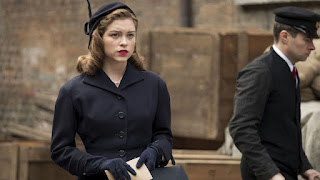
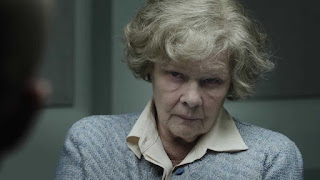
In the year 2000, the elderly Joan Stanley (Judi Dench) is arrested in England and charged with spying for the Soviet Union. Her son Nick (Ben Miles), a lawyer, supports her through multiple interrogation sessions. In flashbacks her story is revealed, starting at Cambridge University in the late 1930s where a young Joan (Sophie Cookson) is studying physics. She befriends student communist sympathizers including the vivacious Sonya (Tereza Srbova), her cousin Leo Galich (Tom Hughes) and their friend William (Freddie Gaminara). 

Joan and Leo embark on a romance. When the war starts she secures a job as an assistant to researcher Max Davis (Stephen Campbell Moore) in Britain's top secret program to develop atomic weapons. When Leo relocates to Canada, Joan starts a romance with Max, although he is married. With the research program making progress and the USSR desperate to obtain atomic bomb technology, Leo re-emerges and pressures Joan to pass documents to the communists, with Sonya as the go-between.

Directed by Trevor Nunn and written by Lindsay Shapero, Red Joan is loosely inspired by the real-life story of Melita Norwood. The film always looks polished but lacks big-screen grandeur. With the war as a backdrop, events move briskly between chapters propelled by the frantic scientific work to win the atomic bomb research race. Tension between the allies and the dynamic of young people entering the real world in the midst of a crisis add a crackle of intensity.

The modern day scenes are set in sparse white-walled interrogation rooms, Judi Dench as the elderly Joan being grilled by humourless intelligence agents. Dench brings sorrowful intensity as she recalls wartime adventures and romances, but her performance bumps against the limits of a role not far from serving as token bookends to the real story being told.

The wartime scenes are a glossy recreation of a turbulent time, Joan blossoming within an exciting anything-goes milieu, first in an august academic setting then in a war where Soviets are allies, communism is a great transformational hope, and life could end at any moment. Sophie Cookson brings an appealing wide-eyed naivete to the role, but unfortunately for a woman at the drama's heart, she is portrayed as talented at physics, but poor in selecting her friends and judging people, and easily manipulated into ill-conceived romances.

After the war ends and the inquiry starts into the document leaks, the film loses momentum. Shapero takes a half-hearted stab at excusing the traitor as a global benevolence ambassador, Joan's justification for shipping atomic bomb secrets to the Soviets simplified to spreading knowledge as a deterrence strategy. It's a barely credible stance, and here it goes unchallenged. Red Joan is easy to enjoy, and just as easy to pass on.


All Ace Black Movie Blog reviews are here.

Wednesday, 12 August 2020

Movie Review: The Chronicles Of Riddick (2004)

A science fiction action movie and sequel to 2000's Pitch Black, The Chronicles Of Riddick cannot overcome a sparse plot made worse by hyperactive editing. 

Five years after the fun events of Pitch Black, fugitive Riddick (Vin Diesel) is tracked down by bounty hunter Toombs (Nick Chinlund). Riddick travels back to the planet Helion Prime to reconnect with Imam (Keith David), and also meets spectral presence Aereon (Judi Dench). Both appeal for his help to resist the evil Necromongers, who invade planets with overwhelming force and kill anyone who refuses to convert to their twisted religion.

Riddick may be one of the last surviving Furyans, a warrior race feared by the Necromongers. But the attack on Helion Prime is quick and decisive, and Riddick is captured by the Necromonger leaders including Lord Marshal (Colm Feore), Commander Vaako (Karl Urban), and his ambitious wife Dame Vaako (Thandie Newton). Riddick makes an escape to the fiery prison planet Crematoria, hoping to free the prisoner Kyra (Alexa Davalos), previously known as Jack. But bounty hunters, the guards of Crematoria, and the pursuing Vaako will all pose a challenge.

The character of Riddick as a white-eyed outsider highly skilled in combat and ever ready with a smart quip is rich with promise, and director David Twohy occasionally threatens to make good use of a steam-punk influenced visual style. But otherwise, The Chronicles Of Riddick is a boring mess. Instead of latching on to a plot the film gets bogged down in a few long, drawn out and unexciting chase-and-escape set-pieces, overdependent on CGI and resorting to cheap - almost childish - stunts including a useless battle with oversized cougar-like creatures.

With non-existent or hasty character introductions, the preponderance of outlandish costumes, and names like Underverse, Necromongers, Vaako and the Purifier, the film teeters dangerously close to Dune levels of pompous cluelessness. Vin Diesel as Riddick limits his acting to dropping dry one-liners and either taking off or putting on his shades about once every three minutes. Meanwhile, the combat action scenes are micro-fragmented into utter incomprehensibility by a hack editing job.

The climactic across-the-terrain run ahead of a deadly sunrise on the planet Crematoria delivers a few moments of splendour, and Thandie Newton's Lady MacBeth-inspired lust for power emerges as the one character arc that may have been worth exploring. But The Chronicles Of Riddick unfortunately jettisons potential and wraps itself in choppy gimmickry.


All Ace Black Blog Movie Reviews are here.

Monday, 13 July 2020

Movie Review: Victoria And Abdul (2017)


A drama with hints of humour, Victoria And Abdul chronicles the unique relationship between the aging monarch and the Indian who rises to prominence in her court.

It's 1887, and India is under British rule. In Agra, Abdul Karim (Ali Fazal) is a lowly government clerk. He is plucked from obscurity and selected to present Queen Victoria (Judi Dench) with a ceremonial medal as part of her Golden Jubilee celebrations. Along with fellow Indian Mohammad Bakhsh (Adeel Akhtar), Abdul travels to England and participates in an elaborate state dinner. Victoria is in poor health, exhausted and resentful of all the duties of her role. 

Eye contact with Abdul triggers her curiosity and she demands he join her staff. He impresses with his confidence and she taps into his knowledge to better understand the culture of India before promoting him to Munshi, or personal teacher. Abdul starts instructing the Queen on the Urdu language, and she insists he relocate his family to England. However, Victoria's close relationship with a Muslim Indian is perceived by some as scandalous, and her inner circle of influential men, including her son Bertie (Eddie Izzard) and doctor James Reid (Paul Higgins), start plotting against Abdul.

Based on a true story uncovered and researched by author Shrabani Basu, Victoria And Abdul explores the Queen's friendship with a man who rose from humble visiting servant to close confidant in the final years of her reign. Directed by Stephen Frears, the film is a traditional story of a stranger in a strange land, here elevated to the highest reaches of Empire with the added zing of a cultural divide.

The Lee Hall screenplay explores the central complex relationship between Victoria and Abdul in careful textures, starting with mutual respect and admiration but evolving into something more, an unstated passionate tension somewhere between her motherly love and his reverential devotion. 

Although this is a story about two people, the Queen emerges as the more compelling character. Victoria's arc start as an emotionally and physically drained monarch, depressed enough to welcome the boost from the visiting tall Indian with a glint in his eye. She strides into progressive territory, demonstrating openness to learning about Indian and Muslim culture, and setting herself apart from her family, politicians and inner circle by staunchly defending Abdul against racially motivated denunciations.

Judi Dench is a dominant presence, and the film rides on her performance. Victoria's steely determination to stare down detractors cuts through the sometimes repetitive scenes, Dench revelling in the role of a self-aware and resolute ruler. Ali Fazal is fine as Abdul Karim, but suffers from limited definition, and his presence fades in the final act as Frears focuses on the distasteful efforts to undermine the distinguished Indian.

The old-fashioned storytelling is enlivened by a luxurious visual feast. The various royal abodes burst to life, and both the interior banquets halls, brimming with hundreds of staff members, and the exquisitely landscaped exteriors reflect the lavish Empire lifestyle. 

A simple story bathed in opulence, Victoria And Abdul salutes the audacity to lock eyes and the courage to influence hearts.


All Ace Black Blog Movie Reviews are here.


Sunday, 19 April 2020

Movie Review: J. Edgar (2011)


A biography of the legendary FBI Director, J. Edgar sparkles in patches but otherwise wallows in the greyness of a secretive personality.

In a rather clumsy narrative device, most of the film's events unfold in flashback as Hoover (Leonardo DiCaprio) recounts key events to a young agent. In 1919, Hoover's mentor Attorney General Palmer narrowly escapes an assassination attempt. Placed in charge of finding the perpetrators, Hoover establishes his reputation at the Bureau of Investigation by clamping down on criminals he perceives as anarchists and communist agitators. Even as he matures Hoover remains deeply influenced by his domineering mother Anna Marie (Judi Dench). He romantically pursues secretary Helen Gandy (Naomi Watts) but she only wants to focus on her career and becomes his permanent confidential assistant.

The 1932 kidnapping of celebrity aviator Charles Lindbergh's baby son grabs the nation's attention, and Hoover argues for increased money and resources for a politically independent national crime fighting agency. In 1935 he is appointed the first head the new Federal Bureau of Investigation, and proceeds to create a professional organization using increasingly scientific methods to combat crime. New college graduate Clyde Tolson (Armie Hammer) is one of the agents recruited by Hoover, leading to a lifelong friendship - and more - between the two men. As his career progresses Hoover builds a collection of secret files, and uses his knowledge of sordid personal details to maintain his grip on power under a succession of United States Presidents.

Hoover was in charge of the FBI and its predecessor agency from 1924 until his death in 1972, a total of 48 years. Dedicated to crime fighting and an expert at consolidating power and navigating around politicians, Hoover was an enigma, a master at keeping and using secrets, and as such a most difficult man to decipher.

Director Clint Eastwood, working from a script by Dustin Lance Black, has a go at finding the human being behind the legend. Despite a mammoth length of 140 minutes, the film is only partially successful. Eastwood bathes the screen in the grey and pale brown of government bureaucracy, and initially gives about equal time to crime fighting and personal insights. But when tackling Hoover's character, J. Edgar first suggests an overbearing mother with her claws deep in her son's psyche then sinks too far and too deep into the mud of the relationship between Hoover and Tolson.

Rumours of Hoover's homosexuality have long swirled around his legacy, and here Eastwood portrays a deep friendship and long-lasting companionship, underpinned by Hoover resisting the expression of a present love, leaving Tolson more tortured than content until it's too late.

Regardless of how much truth resides in this version of the relationship between the two men, the lovers' subplot becomes the overriding obsession of the film, dramatically detracting from any other aspect of Hoover's life. In the film's final act professional machinations at the FBI are relegated to interruptive snippets, the crime fighting almost forgotten. And overall, after the Lindbergh case Eastwood generally loses interest in the FBI's activities and how Hoover shaped them in favour of some quick and dirty arrest recreations and conversations about secret files used to cow Presidents into staying out of Hoover's hair.

The film requires Hoover, his assistant Helen Gandy and Tolson to age about half a century, with a decision made to have DiCaprio, Watts and Hammer play the characters throughout. It's a huge ask from the makeup department, and they generally fail. DiCaprio can play young but as an old man is never anything other than DiCaprio in bad old man makeup. Hammer suffers mightily, his aging transforming him into a survivor of a cinematic zombie apocalypse, and that's before a severe health crisis befalls the character. Watts emerges with the least amount damage, her aging portrayed relatively realistically and with grace.

With unmistakable quality on both sides of the camera J. Edgar sustains its weight, but not without evidence of sagging.


All Ace Black Blog Movie Reviews are here.


Saturday, 25 January 2020

Movie Review: Nine (2009)


A musical drama, Nine explores middle age creative block in a story about a film director and the women in his life.

Rome, 1965. Famed Italian director Guido Contini (Daniel Day-Lewis) is supposed to start shooting his next movie, but has no script and no ideas. Haunted by the failure of his two most recent films, he escapes to an Anzio hotel to try and find inspiration. He lies to his wife Luisa (Marion Cotillard) and is joined by his mistress Carla (Penélope Cruz). Costume designer Liliane (Judi Dench) tries to help, while Guido has visions of his mother (Sophia Loren) and memories of his childhood, when he was entranced by prostitute Saraghina (Fergie).

After reporter Stephanie (Kate Hudson) tries to seduce Guido, the last opportunity for a creative boost may be his regular leading lady Claudia Jenssen (Nicole Kidman). But with Luisa's patience with her philandering husband finally running out, salvaging Guido's latest project will prove difficult.

An adaptation of the play by Arthur Kopit which in turn was inspired by Fellini's (1963), Nine enjoys a stellar cast but is hampered by uninspired music and a consistently dour tone. The songs by Maury Yeston feature lyrics where clunky competes with obvious, and while Rob Marshall directs with panache, the script co-written by Michael Tolkin and Anthony Minghella gives him limited material to work with.

The film is entirely bogged down by Guido's doldrums and never generates narrative momentum. The tone is set early, the film structured as one-woman-at-a-time singing about her influence over the deeply flawed and egotistical director. Mistress, wife, confidant, mother, prostitute-from-childhood, muse: nothing helps him gain traction on his latest project, but he never misses an opportunity to light another cigarette.

The cast members bring a mix of interesting accents to the singing, for example Day-Lewis singing in an Italian clip, raising curious questions as to why anyone would sing in a language other than their mother tongue when entirely alone.

But despite several structural weaknesses, Nine benefits from a sparkling cast in good form. Guido is probably one of Day-Lewis' easier characters to embody, but he brings his reliable depth and dedication to the role. The many women rotating in his orbit are brought to life by energetic performances from Penélope Cruz, Marion Cotillard, Nicole Kidman, and Judi Dench, although none of them receive substantial screen time.

In an awkward role obviously bolted on to the movie adaptation, Kate Hudson appears unsure what her character is supposed to be doing, but delivers Cinema Italiano with plenty of verve. The better musical numbers also include Cruz's seductive A Call From The Vatican and Cotillard's angry Take It All.

Nine carries a haughty self-rating, but is more of a middling effort.


All Ace Black Blog Movie Reviews are here.


Saturday, 20 July 2019

Movie Review: Notes On A Scandal (2006)


A drama about loneliness and lust, Notes On A Scandal is a compact and explosive examination of two women suffering through different forms of desperation.

In London, Barbara Covett (Judi Dench) is nearing retirement as a history teacher at a tough school. Lonely and never married, she confines her deepest thoughts to her diary. At the start of the school year Barbara spots new art teacher Sheba Hart (Cate Blanchett) struggling to deal with raucous student behaviour, and befriends her. Sheba is married to the much older Richard (Bill Nighy) and returning to work after taking 10 years off to care for her son Ben, who has Down's Syndrome.

Just as their friendship is solidifying, Barbara discovers Sheba having an affair with 15 year old student Steven Connolly (Andrew Simpson). Sheba admits all the details of the passionate affair to Barbara and pleads with her to delay telling the administration until after Christmas. But Barbara has other plans, and assures Sheba her secret is safe as long as Sheba breaks off the relationship with Steven.

The serious issue of loneliness among the elderly is rarely tackled on film, and Notes On A Scandal rectifies the omission with relish. Barbara is a fascinating character to place at the middle of any story, and Judi Dench brilliantly captures the complexity of a lonely but proud woman drowning in dwindling expectations, her mind justifying the creeping dark shadow of manipulative and stalking behavior.

Zoë Heller's book is adapted into an efficient 91 minute screenplay by Patrick Marber, and director Richard Eyre makes potent use of every scene. Driven by Philip Glass' soundtrack and without any dawdling the film breathes deeply from a school environment beset by a teachers' mood of prevalent resignation and hormonally-driven students who would rather be anywhere else. Any hint of an optimistic narrative about an inspirational teacher helping even one student rise above is stomped into the grey concrete, and Notes On A Scandal sets off to uncover the thriving weeds of selfish immorality growing between the cracks.

If Barbara is the silent hunter hiding behind the proper stiff mannerisms of an unloved but respected veteran, Sheba is the wispy newcomer escaping a stressful home environment overrun with childcare responsibilities. She was a 20 year old ingenue student when she wrecked Richard's first marriage, and now she is incurably attracted to her own affair with a toyboy. Sheba's indiscretion renders her hopelessly vulnerable and exposed to Barbara, and the two women are soon locked in an impossible embrace of dependence.

Blanchett remarkably matches Dench's performance with her own rendition of a woman slowly cut adrift from rational behaviour, Blanchett convincingly occupying Sheba's fragile head space as she risks family and career.

The third act does veer towards a couple of overclocked meltdowns, but overall Notes On A Scandal maintains focus on the insidious damage caused by the yawning gap between hope and reality. Barbara and Sheba may be a generation apart, but they are on the same emotional collision course.


All Ace Black Blog Movie Reviews are here.


Sunday, 10 June 2018

Movie Review: Murder On The Orient Express (2017)


An ensemble murder mystery set on board a train, Murder On The Orient Express assembles plenty of talented performers and strands them in the snow.

It's 1934, and after finishing an assignment in Jerusalem, celebrated Belgian detective Hercule Poirot (Kenneth Branagh) travels to Istanbul and boards the Orient Express on the way to London. Businessman Edward Ratchett (Johnny Depp) is also on the train, and tries to hire Poirot as a bodyguard, but the detective finds Ratchett distasteful and refuses. Ratchett is soon found dead in his compartment, stabbed multiple times. With the train stuck in the snow and awaiting a rescue crew, Poirot has to investigate and solve the murder.

The suspects from among the fellow passengers include the stern Princess Dragomiroff (Judi Dench) and her traveling companion Pilar (Penélope Cruz), society lady Caroline Hubbard (Michelle Pfeiffer), Doctor Arbuthnot (Leslie Odom Jr.), rude German Gerhard Hardman (Willem Dafoe) and governess Mary Debenham (Daisy Ridley). Poirot discovers that Ratchett is really the criminal known as Cassetti, who was involved in the shocking abduction and killing of the child Daisy Armstrong years prior, a murder that shocked America. Plenty of people want Cassetti dead, including many who happen to be on the train.

Directed by Branagh with a script by Michael Green, the adaptation of the celebrated Agatha Christie novel is old fashioned, out of touch and out of place. A far cry from the classic 1974 version, this unnecessary remake never finds a groove and stumbles around searching for the right platform. Devoid of drama, tension, mood or memorable characters, the film falls flat.

The large cast is remarkably underutilized, the actors and actresses reduced to glorified cameos. With too much time spent on Poirot's introspective angst, the plot details are often pulled from nowhere, the detective regularly making sweeping discoveries and conclusions based on very little. Too many facts and explanations are then crammed into an unsatisfying ending, any emotional impact behind the murder and the motive well and truly lost in the snowy Yugoslav mountains.

Branagh deploys fluid camera movement to try and break out of the train's confines, but the CGI for the external shots of the train snaking through the terrain is cheesy and overused.

Poirot’s over-elaborate moustache, featuring multiple waves on either end, is disconcerting, and wedges itself as an annoying traveling companion. Among the many crimes on display, the obtrusive facial hair is most deserving of painful plucking.


All Ace Black Blog Movie Reviews are here.


Thursday, 12 June 2014

Movie Review: A Room With A View (1985)


An adaptation of the E.M. Forster novel about a young British woman falling in love with a free-spirited man, A Room With A View is a gorgeous coffee-table movie, with beautiful costumes, scenery and performances making up for a thin plot and slow pacing.

It's the early 1900s. On a trip to Florence with her chaperon and older cousin Charlotte (Maggie Smith), the young and curious Lucy Honeychurch (Helena Bonham Carter) meets fellow British vacationer George Emerson (Julian Sands), a rather strange and passionate young man traveling with his talkative father Mr. Emerson (Denholm Elliott). Lucy and George witness a scuffle between two local men that turns into a murder, and George comes to Lucy's assistance when she faints from the excitement. They are gradually attracted to each other, and on a subsequent trip to the Italian countryside they share a spontaneous and sexy kiss, much to Charlotte's horror.

Upon returning home to the English countryside, Lucy has a suitor waiting in the stuffy form of Cecil Vyse (Daniel Day-Lewis). Lucy is content to go down the road of marrying Cecil, until fate intervenes and the Emersons move in as tenants at a nearby house in Lucy's neighbourhood, reigniting the potential for romance between Lucy and George.

One of the biggest successes for the duo of director James Ivory and producer Ismail Merchant, A Room With A View is a lush exercise in visually rich romance. Ivory makes almost every scene an idyllic painting to remember, with opulent colours, breathtaking views and lavish costumes. From the plazas of Florence to the fields of rural Italy and onto the English countryside, A Room With A View is as much an artistic feast for the eyes as it is a narrative for the heart.

The plot itself is slight, and unfolds at a leisurely pace. The romance between Lucy and George is based on little except coincidence and the thrill of the illicit, and there is nothing in the script by Ruth Prawer Jhabvala to explain why the feisty Lucy and the rather distracted George should actually enjoy each other's company.

More interesting are the three secondary characters. Charlotte carries a look of perpetual mild panic, unable to control Lucy and witnessing an eruption of lust. The senior Mr. Emerson always has something to say and is never shy about saying it, occupying the centre of every conversation. And Cecil Vyse is the definition of stuffiness, the antithesis of Lucy and an easy man to discard in the chase for adventurous romance.

With an undercurrent of dry humour, A Room With A View pokes fun at Victorian attitudes towards morality lingering in the early part of the 20th century. Lucy and Charlotte agree to never mention the kiss between Lucy and George, no so much to protect Lucy's character but rather Charlotte's reputation for allowing the kiss to happen. And the film outlines British haughtiness towards Italians, who are perceived by Charlotte and her fellow older aged travellers as little better than wild natives.

The performances are note perfect, Helena Bonham Carter providing a bright spark of rebellion for Lucy to play with, while Maggie Smith finds every possible expression of worry, given that Charlotte needs them all. Judi Dench makes a relatively brief appearance as English author Eleanor Lavish, touring Italy for inspiration.

A Room With A View is distinguished entertainment, making up with decorum what it lacks in excitement.


All Ace Black Blog Movie Reviews are here.


Friday, 6 June 2014

Movie Review: The Best Exotic Marigold Hotel (2012)


A thoughtful comedy about new beginnings in the twilight of life, The Best Exotic Marigold Hotel tackles themes of growing old, starting over, and dreaming at any age.

Seven British pensioners come to a crossroads in life. Evelyn (Judi Dench) finds herself a widow, her husband having left her nothing but a mountain of debt. Douglas and Jean Ainslie (Bill Nighy and Penelope Wilton) reach retirement age and find themselves poor, having invested badly. Muriel (Maggie Smith) is a retired house cleaner and a racist. She needs hip replacement surgery but can't afford to pay her way out of a six month wait. Graham (Tom Wilkinson) suddenly calls time on his career as a judge. Norman (Ronald Pickup) is a lifelong womanizer now finding it increasingly difficult to attract new lovers. Madge (Celia Imrie) has had a succession of failed marriages, and is still looking for the perfect rich man.

They all make the trek to the Best Exotic Marigold Hotel, a resort in Jaipur, India with marketing material much better than the dilapidated reality. The hotel is run by the young and energetic Sonny (Dev Patel), who dreams big but is unable to look after the details necessary to manage a business. Sonny is in love with Sunaina (Celia Imrie), much to the disapproval of his mother (Lillete Dubey). Evelyn finds a job at the call centre where Sunaina works, Douglas and Jean find themselves quietly drifting apart, Muriel has her surgery and encounters her own reflection in the hotel's silent cleaner. Graham looks for a long lost lover, while Norman and Madge continue their search for lust and marriage respectively. Meanwhile, Sonny struggles to keep the hotel financially viable and his mother at bay.

Directed by John Madden with a soft touch and deliberate pacing, The Best Exotic Marigold Hotel combines wry humour with an exploration of options after life closes the obvious doors. Each one of the seven British characters has arrived at an unexpected fork in the road and is seeking a new window to open. But here the similarities end, and after gathering at the hotel, their journeys will take them in different and unexpected directions. There are occasional interactions and overlaps between various pairs, but this is film about personal discoveries rather than collective experiences.

There are past loves to be found, previously unknown strengths to be discovered, hard attitudes to overcome, and weaknesses to be confronted. New chapters in life are started, others are eternally closed, and some stale relationships finally dissolve. The Ol Parker screenplay (based on a Deborah Moggach book) maintains a steady state of evolution, and keeps the surprises coming to ensure an enjoyably unpredictable experience.

The screen time is almost evenly divided between the stories, but gradually Maggie Smith's layered portrayal of the overtly racist Muriel forms the central cultural bridge in the film. The wheelchair bound Muriel travels to India to take advantage of the affordable medical care provided by people that she looks down upon. Her journey encounters its twist when Muriel finds herself staring down at the servant that she used to be, and she cannot fail to empathize. It's the start of an awakening that will progress with Muriel pursuing her passion to run a big house in a culture that she will learn to embrace.

Tom Wilkinson's Graham looking for the first love of his life is prominent early on, while the story of the Ainslies finally having to confront each other with no boring careers to hide behind gains in prominence in the latter half of the film. The local adventures of Sonny dreaming big while being hopelessly incompetent at the details is probably an impersonation of his country. His love for Sunaina against his mother's wishes is cute and modernized in its sexual liberation, but finds a rather trite ending.

As can be expected from a cast of British screen veterans, the performances are uniformly excellent, and Madden controls most of his urges to meander into stereotypical scenes of India the exotic. Much like its guests, The Best Exotic Marigold Hotel is filled with quirky secrets to discover, and the sense of grand history is rivalled only by the unmistakable sentiment that no matter the age of the structure, the future can still overcome the disappointments of the past.


All Ace Black Blog Movie Reviews are here.


Tuesday, 3 June 2014

Movie Review: Shakespeare In Love (1998)


A flighty fantasy about Shakespeare falling in love and getting a boost of inspiration to write Romeo And Juliet, Shakespeare In Love is a witty Elizabethan romantic comedy somewhat overburdened with riff raff.

In sixteenth century London, celebrated playwright William Shakespeare (Joseph Fiennes) is suffering from writer's block while trying to finish a new comedy to be called Romeo and Ethel, the Pirate's Daughter. The wealthy Viola de Lesseps (Gwyneth Paltrow) admires Shakespeare's work and disguises herself as "Thomas Kent" to audition and win a role in the play. Shakespeare eventually discovers that Kent is Viola, and they start a passionate private affair, despite Viola being readied to marry the financially broke but nevertheless insufferable Lord Wessex (Colin Firth).

His impossible love for Viola unleashes all of Shakespeare's emotions, and he writes the play at an amazing pace, transforming it from a comedy to the aching doomed romance of Romeo And Juliet. In public Viola maintains the persona of Thomas Kent as the play gets ready for the grand opening. But the lovers' secret is about to be revealed, and it will take the intervention of Queen Elizabeth (Judi Dench) to sort out the tangled web of romance, deception, and the outrage of a woman playing a woman's role on the London stage.

Shakespeare In Love is saddled with plenty of peripheral characters contributing a cacophony of noise and colour. While they do add depth, they also add quite a volume of clutter, over-complicating a simple love story and creating no shortage of distractions.

Philip Henslowe (Geoffrey Rush) is the struggling owner of The Rose theatre, Richard Burbage (Martin Clunes) is his rival and owner of The Curtain theatre, Ned Alleyn (Ben Affleck) is a smug actor, Hugh Fennyman (Tom Wilkinson) is a financier turned wannabe actor, and Christopher 'Kit' Marlowe (Rupert Everett) is the other celebrity London playwright. They all get prominent but ultimately inconsequential roles, and are joined by the Queen's officials, an army of theatre actors, and a healthy selection of upper society at the estate of Viola's parents, all milling in and out of every other scene, dressed in expansive costumes and sucking focus and energy away from the central story and bloating the film to over two hours.

Director John Madden does much better when he zooms in on Shakespeare and Viola, and teases out a tender love story between the romantic playwright and the poetry-loving young woman from a well-to-do family. Joseph Fiennes and Gwyneth Paltrow find an immediate chemistry, and the temperature only rises as they start a steamy affair despite Viola's impending marriage to Lord Wessex. The script, by Marc Norman and Tom Stoppard, has fun with plenty of side references to many of Shakespeare's plays, but the core focus is on the power of deep love to unlock passionate inspiration, and this is where the film excels. Viola becomes Shakespeare's muse, in a celebration of romance unleashing genius.

Fiennes is filled with the coiled energy of an artist on the cusp of brilliance, waiting for the spark to light his fire. Paltrow won the Best Actress Academy Award for combining rebellion against societal norms with a spirited intensity to pursue the love of a poet. Colin Firth and Ben Affleck deliver relatively cold supporting performances, Firth unable to break out of the confines of a small man demanding an obedient wife, while Affleck just stands around unconvincingly in an attempt to increase interest among American audiences.

Madden successfully creates a bustling London of the 1500s, and does not shy away from external scenes. The streets are populated with throngs of residents going about their business, London an animated mess of normal people occupied by life.  Only Queen Elizabeth's plundering presence disrupts the working class surroundings, Judi Dench winning the Best Supporting Actress Academy Award for a couple of scenes worth of ham.

Shakespeare In Love won the Best Film Academy Award for 1998, surprisingly selected ahead of Saving Private Ryan. It remains one of the Academy's most embarrassing moments, a ridiculous victory for crass Award campaigning at the expense of true cinematic greatness. But while Shakespeare In Love may not have been the best film of its year, it is a classy and enjoyably witty romantic fable.


All Ace Black Blog Movie Reviews are here.


Monday, 13 January 2014

Movie Review: Casino Royale (2006)


The most significant reboot in the history of the James Bond franchise, Casino Royale takes the series back to its origins and emerges with one of the best entries in the storied adventures of the British spy. With Daniel Craig taking over the role by the scruff of the neck, Casino Royale is serious, violent, involving, action-packed and emotional.

James Bond (Craig) earns his double-0 licence to kill designation by eliminating a British traitor in Prague. His next assignment is in Madagascar, where he chases a suicide bomb-maker all the way into a foreign embassy, causing an embarrassing diplomatic incident. Despite protestations of outrage from M (Judi Dench), Bond tracks down clues retrieved from the bomb-maker's cell phone to Bahamas-based criminal Alex Dimitrios (Simon Abkarian), who does the dirty work for terrorist master banker Le Chiffre (Mads Mikkelsen). Bond seduces Dimitrios' wife Solange (Caterina Murino) and extracts information allowing him to thwart another bomber targeting Miami airport.

Bond's interference causes the terrorist financial empire to wobble, so Le Chiffre arranges a high-stakes, $100 million poker game at Casino Royale in Montenegro. Bond is inserted into the game with the purpose of bankrupting Le Chiffre, and teams up with Vesper Lynd (Eva Green), a Treasury Department agent safeguarding the $10 million entry fee. Local contact Mathis (Giancarlo Giannini) and the CIA's Felix Leiter (Jeffrey Wright) are also at the game. Bond and Vesper gradually fall in love, while Le Chiffre proves to be a formidable poker opponent. But as the game unfolds even Le Chiffre is being threatened by his terrorist clients, while Bond has to guard against murder attempts and potential betrayals from all sources.

Bond: You worry you won't be taken seriously.
Vesper: Which one can say of any attractive woman with half a brain.
Bond: True. But this one overcompensates by wearing slightly masculine clothing. Being more aggressive than her female colleagues. Which gives her a somewhat prickly demeanor, and ironically enough, makes it less likely for her to be accepted and promoted by her male superiors, who mistake her insecurities for arrogance. Now, I'd have normally gone with "only child," but, umm, you see, by the way you ignored the quip about your parents...I'm going to have to go with "orphan."
Vesper: All right...by the cut of your suit, you went to Oxford or wherever. Naturally you think human beings dress like that. But you wear it with such disdain, my guess is you didn't come from money, and your school friends never let you forget it. Which means that you were at that school by the grace of someone else's charity: hence that chip on your shoulder. And since you're first thought about me ran to "orphan," that's what I'd say you are.

A reasonably close adaptation of Ian Fleming's book of the same name, Casino Royale introduces Bond as a rookie killer, and quite enjoying his first few tastes of dishing out death. He attitude is bullish, his methods messy, and his longevity prospects are dim. Daniel Craig gives the role its roughest treatment yet, his Bond primarily physical, brazen and committed.

Bond: Vodka martini.
Bartender: Shaken or stirred?
Bond: Do I look like I give a damn?

Casino Royale's one fault is stretching out some scenes to a length beyond what is absolutely necessary. The chase in Madagascar, admittedly featuring terrific parkour stunts, and the action sequence at Miami airport could both have used a trim. And the interlude between the end of the confrontation with Le Chiffre and the climax in Venice does meander through a few too many romantic travelogue shots. The result is a 144 minute film that could have been tightened up by shedding about 15 minutes.

But overall, New Zealand director Martin Campbell delivers a tough-as-nails, violent and edgy film, fed by an undercurrent of Bond's still unrefined rage, a new found lust to kill, and an unexpected romance. The opening credit sequence sets the tone by losing the naked lady silhouettes, and Chris Cornell of Soundgarden and Audioslave fame contributes the uncompromising theme song You Know My Name, with lyrics that confront Bond's profession like never before:

Arm yourself because no one else here will save you
The odds will betray you and I will replace you
You can't deny the prize it may never fulfill you
It longs to kill you, are you willin' to die?
The coldest blood runs through my veins
You know my name

The song brilliantly find its echo in the film's final line of dialogue, a piece of audaciously symmetrical, and historically fulfilling film making.

Throughout the film, and in no uncertain terms, Campbell and screenwriters Neal Purvis, Robert Wade and Paul Haggis announce the end of Bond's long-standing frolic with fluff. All the recent excesses of the series are dispensed with. The lame jokes and one-liners are gone, there are no tech gimmicks or ridiculous gizmos, the CGI effects are kept in control, the principal villain is quietly dangerous without any bombast, even the product placements are manageable, while the dialogue is uniquely sharp for a Bond adventure

M: You don't trust anyone, do you, James?
Bond: No.
M: Then you've learnt your lesson. Get back as soon as you can. We need you.
Bond: Will do.
M: If you do need time...
Bond: Why should I need more time? The job's done..and the bitch is dead.

Casino Royale kicks up the violence to explicit levels that the series has rarely encountered, with many of the deaths preceded by prolonged struggles to emphasize how difficult it is to kill an opponent. A quite horrific torture scene, Bond strapped naked to a chair with the seat hollowed out, receiving repeated blows from a knotted rope to the most tender part of his body, erases all remaining vestiges of the old, harmless Bond adventures.

And what most defines Casino Royale is the affecting romance between Bond and Vesper, the spy learning some eternal lessons about his heart, his life, his profession and his destiny from the first serious love of his life. Eva Green deserves enormous credit for bringing to life Vesper as a sparring partner who earns the right to be loved by Bond, their scene together in the shower perhaps the single most emotionally captive moment in the history of the Bond series.

Mr. White (a powerful and mysterious terrorist organizer): Hello?
Bond: Mr. White? We need to talk.
Mr. White: Who is this?
[White is suddenly shot in the leg. He screams in pain. He drags himself toward the house. He looks up to see Bond with an assault weapon]
Bond: The name's Bond. James Bond.

Dealing from a new deck and not afraid to go all in, Casino Royale is a straight flush.


All Ace Black Blog Movie Reviews are here.


Friday, 3 January 2014

Movie Review: Philomena (2013)


A small, personal story with far-reaching resonance, Philomena starts with docile human interest and ends with a scathing look at the insidious social norms that cause long-term damage.

Martin Sixsmith (Steve Coogan) is a former BBC journalist and political advisor who has lost his job after falling foul of the latest government scandal. With no immediate job prospects, he reluctantly accepts an assignment to research and write a human interest story. He meets Philomena Lee (Judi Dench), an elderly but sparkly woman desperate to uncover the fate of her son. As a teenager Philomena became pregnant out of wedlock and as a "fallen woman" moved into Roscrea convent, where she gave birth to a son she named Anthony, and signed away any rights to the child. She worked as an indentured servant until the nuns gave Anthony away for adoption by a wealthy couple. Philomena never saw her son again.

Now, almost 50 years later, she desperately wants to know if he ever thought about her, or about his Irish roots. Martin and Philomena visit the convent but get no help from the current supervisor Sister Claire (Cathy Belton). Acting on a tip that the nuns used to sell the children to couples in the United States, they travel to Washington DC where Martin identifies Anthony as Michael Hess, a now deceased lawyer and political advisor to Presidents Reagan and Bush. Although Philomena is devastated that her son is dead, she is determined to know more about him by meeting his friends. Her journey will reveal the secrets that her son had to contend with, before ending at a most unexpected but shockingly familiar destination.

An old fashioned road trip movie, Philomena starts as a mother searching for her son but ends with a more sweeping if backwards looking indictment of actions from a different era. The script, by lead actor Steve Coogan and Jeff Pope, takes rather broad shots at religion and specifically at what amounts to the trade in children practiced by Irish convents. While the tolerant character of Philomena herself presents a more balanced counterpoint, director Stephen Frears does tilt towards the cheap shots by failing to present a more balanced context of the choices that a young, single and pregnant woman would have faced in 1950s Irish society.

In what is effectively a two character study, both Steve Coogan and Judi Dench are exceptional, delivering understated performances to bring to life two imperfect but well-meaning and extremely likable characters. Coogan plays Sixsmith as scarred by his unceremonious dumping from government, his natural journalist's mistrust now heightened to new levels of disengagement from caring. Dench combines the gentle pain of a mother realizing that time is running out for solving the one great mystery in her life, with the slightly nutty talkativeness that comes from a lifetime reading bad books and worse newspapers.

Philomena draws much of its power from the interplay between Philomena and Martin. She was sheltered by the nuns, and despite everything still appreciates the positive influence of the Catholic church, refusing to be openly critical, and finding justifications for the actions of the convent. He does not believe in God, let alone the value of any form of organized religion, and his caustic journalistic attitude creates a thick layer of skepticism in the face of any possible good intentions by the nuns.

It is the combination of both attitudes that finally brings this journey to its conclusion, Martin's abrasive anger barging down the doors, but Philomena's more accommodating attitude walking through the archway of history to find solace, not anger. And not surprisingly, it is the circumspect mother, rather than the jaded journalist-politician, who possesses the wisdom of the ages.


All Ace Black Blog Movie Reviews are here.


Saturday, 14 September 2013

Movie Review: My Week With Marilyn (2011)


Another sacrifice at the altar of Marilyn Monroe obsession, My Week With Marilyn offers a captivating Michelle Williams performance, but not much else of interest.

It's 1957, and Marilyn Monroe (Williams), the biggest movie star in the world, arrives in London to film what would become The Prince And The Showgirl, a lightweight comedy with Laurence Olivier (Kenneth Branagh) and Sybil Thorndike (Judi Dench). Amidst the predictable media storm, young Colin Clark (Eddie Redmayne) lands a job as Third Assistant Director on the production, essentially an errand boy to satisfy Olivier's whims. Clark is eager and enthusiastic, and starts a tentative relationship with wardrobe assistant Lucy (Emma Watson). Meanwhile, his position on the set provides him with a front row seat as the production stutters to a start.

Monroe is with her newly minted third husband Arthur Miller (Dougray Scott), but their relationship appears cold. She is much more dependent on her acting coach Paula Strasberg (Zoë Wanamaker), whose role is to protect Monroe's fragile self esteem. Olivier's wife Vivien Leigh (Julia Ormond) is gracious enough but keeps a wary eye on her husband. With filming in turmoil and Monroe's frequent late arrivals to the set infuriating Olivier, Miller abruptly abandons his new wife and heads back to the US. Monroe turns to Clark for comfort, the superstar and the third assistant director raising eyebrows as they start to spend time together, despite the objections of Monroe's business partner Milton H. Greene (Dominic Cooper).

My Week With Marilyn is based on two (!) books by Colin Clark chronicling his limited interaction with Monroe, and the movie cannot shake the nagging sentiment that this is one temporarily starstruck man milking a short experience for all its worth. And while there may be an interesting story here about the ease with which hypercharisma can distort reality, director Simon Curtis does not help by portraying the time that Marilyn and Clark spent together as an almost mystical ideal romance.

This may have been how a mesmerised Clark remembered events; it simply comes across as one man emotionally drowning within the allure of an incredibly beautiful but deeply troubled woman, and mistaking her ability to influence all men for something resembling a whirlwind relationship. More pointedly exploring the difference between what Clark felt and what actually happened would have made for a much more interesting movie.

Instead we get a princess and the pauper fairy tale, complete with the prolonged montage sequence of the couple touring Windsor Castle and Eton College, and then skinny dipping. At best Monroe was furious that her husband abandoned her, desperate for company, irrational due to constant pill popping, and found the most naive sap to baby sit her ego. But the Adrian Hodges script treats the week as a magical coming together of two souls, and the saccharine taste just doesn't convince.

Stretching the shallow events of one week to a respectable movie length means that every detail is prolonged past its reasonable level of importance. Ironically, the scenes revealing the struggles of filming a movie with an erratic Marilyn are more interesting, Curtis capturing the continuous tension created by an unstable star, frequently late to the set and trying to pretend that the role requires great insight and preparation, while in fact she sleeps off her latest fistful of pills.

My Week With Marilyn does offer an affecting Michelle Williams turn as Monroe, or at least she nails the mannerisms of Monroe's public persona. Williams immediately erases the line between actress and subject, and dances along all the octaves of a highly strung, enormously talented, and incredibly famous woman, struggling with self confidence at one end of the scale and effortlessly deploying her irresistible sex-drenched charms at the other.

Branagh is less successful as Olivier, never appearing at ease in the role and unable to shed the act and find the actor. Judi Dench brings plenty of class as Sybil Thorndike, but she effectively disappears halfway through the film. Redmayne is firmly stuck in family theatre territory, where the fact that he is acting - almost always with a smile! - overshadows everything else that he is trying to convey.

Williams alone makes the film worth watching, and her performance raises the production from cheap television movie to a tolerable film experience. Never mind My Week With Marilyn; the 100 minutes with Michelle are what matter.


All Ace Black Blog Movie Reviews are here.