Showing posts with label Cher. Show all posts

Sunday, 27 July 2025

Movie Review: Silkwood (1983)


Genre: Biographical Drama  
Director: Mike Nichols  
Starring: Meryl Streep, Kurt Russell, Cher, Craig T. Nelson, Fred Ward, Diana Scarwid  
Running Time: 131 minutes  

Synopsis: It's the 1970s in Oklahoma, and Karen Silkwood (Meryl Streep) is a technician at a manufacturing plant for plutonium rods. Her co-workers include her partner Drew (Kurt Russell) and best friend and housemate Dolly (Cher). Training and safety standards at the plant are lax, and employees are frequently exposed to radiation, although most of them are just happy to have a job. A union decertification effort and several contamination scares prompt Karen to become active in trying to improve safety, placing her in conflict with both management and co-workers.

What Works Well: Based on actual events, this is an in-depth look at blue collar life, with Meryl Streep excelling in the conflicted, lived-in role of a would-be whistleblower. Far from glamourizing Karen Silkwood, director Mike Nichols and writers Nora Ephron and Alice Arlen create a warts-and-all portrait of a working class woman engaged in the daily grind of a thankless job, bruised by a divorce and separation from her kids, and enjoying a relationship with Drew and the ups and downs of a friendship with Dolly. Once she starts to care about safety at work, her already ramshackle home life starts to disintegrate, testing all her commitments. 

What Does Not Work As Well: The balance tilts heavily towards domestic issues, reducing Karen's search for answers at the plant to a few scenes of note-taking and cabinet searching. The perspectives of co-workers are short-changed into traditional cold shouldering, while management (heartless) and union (self-serving) leaders are painted with singular colours.

Key Quote:
Drew: Sweetheart, it's like you're two people. I'm in love with one of them. But the other one is just...
Karen: ...a real pain in the ass.


All Ace Black Movie Blog reviews are here.

Sunday, 8 May 2022

The Movies of Cher


All movies starring Cher and reviewed on the Ace Black Movie Blog are linked below:


All Ace Black Movie Blog reviews are here.
The Movie Star Index is here.

Monday, 21 December 2020

Movie Review: Suspect (1987)

A second-rate courtroom drama, Suspect suffers from far-fetched character behaviour, stilted dialogue and uninspired performances.

In Washington DC, respected senior judge Justice Lowell (Thomas Barbour) shockingly takes his own life. Soon after, Justice Department clerk Elizabeth Quinn (Katie O'Hare) is found murdered. The main suspect in the Quinn case is homeless hobo Carl Wayne Anderson (Liam Neeson), a Vietnam War veteran rendered deaf and dumb by post-war afflictions.

Overworked public defendant Kathleen Riley (Cher) is assigned to defend Carl, with Judge Helms (John Mahoney) presiding at the trial and Charlie Stella (Joe Mantegna) prosecuting. Enterprising milk industry lobbyist Eddie Sanger (Dennis Quaid) is on the jury and starts discretely helping Kathleen by uncovering evidence that could prove Carl's innocence. Kathleen and Eddie also start to get attracted to each other, threatening the integrity of the trial.

While the talent on both sides of the camera suggests a quality production, Suspect never convinces. Writer Eric Roth scrounges for obscure ideas and arrives at a slick lobbyist deciding, for never explained reasons but maybe having something to do with irritation at being unable to avoid jury duty, to play amateur detective, contaminating the trial not just by colluding with the public defendant but also pursuing her romantically.

Elsewhere the accused Carl Anderson as a deaf and dumb victim of an uncaring society is an interesting angle, but director Peter Yates is never quite able to navigate to a place where the disabilities are just a plot enhancement and not a cinematic hindrance. Liam Neeson, by not saying a word, elevates himself above most of the rest of the material. 

As for the larger conspiracy surrounding Elizabeth Quinn's death, Riley and Sanger eventually uncover corruption from years past involving powerful people, although not powerful enough to remove incriminating evidence from a filing cabinet drawer accessible to any lowly clerk.

The courtroom verbal sparring borders on bland, both Cher and a disinterested Joe Mantegna defaulting to conviction-free blank line readings and fake over-emoting. A couple of badly executed and tension-free action scenes are thrown in, including Cher running around in an empty building with an assailant in pursuit for what seems like an eternity. The very next day she is back in the courtroom, but really, with a rushed and raucous ending flattening all remaining plot credibility, she need not have bothered.


All Ace Black Blog Movie Reviews are here.

Saturday, 28 July 2018

Movie Review: Mamma Mia! Here We Go Again (2018)


A musical sequel celebrating more of ABBA's tunes, Mamma Mia! Here We Go Again manages to easily outperform the original.

On an idyllic Greek island 10 years after the events of the first film, Sophie (Amanda Seyfried) is planning the grand reopening of the hotel Bella Donna, now named in memory of her mother (Meryl Streep) who passed away a year earlier. Sophie's marriage to Sky (Dominic Cooper) has hit a road bump, and her mother's former bandmates Tanya (Christine Baranski) and Rosie (Julie Waters) arrive to cheer her up. Sam (Pierce Brosnan) is the only one of her three "dads" in attendance, with Harry (Colin Firth) and Bill (Stellan Skarsgård) tied up in prior engagements.

In flashback, the adventures of young Donna (Lily James) after graduating from college are recalled. Eager to escape from her mother, Donna travels the world, meets the young and flustered Harry (Hugh Skinner) in Paris and then adventurous sailor Bill (Josh Dylan) in Greece. Upon arriving at the island, Donna falls for the dishy Sam (Jeremy Irvine). She has quick affairs with all three, but is soon alone on the island, carving out her new life only to discover she is pregnant. Back in the present, Sophie's plans for a celebration are disrupted by the weather and plenty of unexpected party attendees.

While it was admittedly a low bar to step over, Here We Go Again is an effortlessly better movie than its clunky predecessor. Directed and written by Ol Parker, the sequel is freed from the stage musical, and also delves deeper into the ABBA catalogue. This proves to be a blessing: with less emphasis on singalong moments, Here We Go Again not only demonstrates the remarkable breadth of the Swedish group's talent but focuses more on plot, characters and storytelling, and the result is a much more engaging viewing experience.

Also working in the film's favour is the split between two stories: Sophie's present-day sorrow at losing her mother and determination to celebrate her memory are made so much more powerful and poignant with the flashback scenes of Donna as a young vivacious woman finding herself and influencing the lives of three men in quick succession. Despite being full of music and telling two stories, Here We Go Again clocks in under two hours, Parker demonstrating admirable restraint and stopping every scene and musical number before excess creeps in.

Despite the flightiness, many creaky moments, acknowledged silliness and prevalent self-awareness, Parker manages to scale some emotional heights. Early on Sophie and Sky sing One Of Us oceans apart but together through some beautifully fluid camera and editing work. Past the halfway mark a small flotilla arrives at the island to the timeless tune of Dancing Queen, injecting the film with a large dose of nostalgic jubilation. And the affecting climax features a genuinely tender reunion of mother and daughter across a generation to the tune of My Love, My Life.

The talented Lily James as the young Donna adds immeasurably to the film, and shares the load with Amanda Seyfried, both actresses knowing their way around delivering a song with conviction but without pretensions. Streep gets just the one song, but absolutely crushes it. Cher appears late on, voice intact but otherwise a walking (barely) advertisement about the perils of Botox and plastic surgery.

Mamma Mia! Here We Go Again is fun, frivolous and silly, all as expected, but unexpectedly also quite decent.


All Ace Black Blog Movie Reviews are here.


Saturday, 16 February 2013

Movie Review: Moonstruck (1987)


A romantic comedy set amidst a colourful Italian family in New York, Moonstruck embraces the magic of love while poking playful fun at men, women, and the undefinable ties that bind them.

Thirty-something widow Loretta Castorini (Cher) lives with her parents Cosmo and Rose (Vincent Gardenia and Olympia Dukakis) and Cosmo's eccentric dog-loving dad (Feodor Chaliapin, Jr.) in a multi-level New York apartment. To get on with her life, Loretta agrees to marry the well-meaning but boring Johnny Cammareri (Danny Aiello), although they don't really love each other. Meanwhile, Cosmo is carrying on an affair and ignoring Rose.

When Johnny travels to Palermo to visit his dying mother, Loretta meets Johnny's estranged brother Ronny (Nicolas Cage). The two brothers have not talked to each other for five years: the deeply passionate Ronny blames Johnny for an industrial accident that left his hand mangled and resulted in his fiancée leaving him. With an unusually large moon hovering over New York, there is an immediate attraction between Loretta and Ronny, they sleep together, and go on a grand date to the opera at the Lincoln Centre. With Johnny on his way back from Italy, Cosmo still cheating on Rose, and Rose enjoying the attentions of university professor Perry (John Mahoney), the family's loves and tribulations come to a head over the breakfast table.

Moonstruck exists in a pleasant dreamy state, where the pull of the moon means everything is possible, fundamental questions can be asked, and fate stands at a multi-pronged fork. The love adventures of the Castorini family float in on a bewitching mist as real as an exaggerated moon that seems to last for days.

The parallels between Loretta and her parents is a big part of the movie's charm. Moonstruck is not just about Loretta; it is also about Rose and Cosmo, the rich, Academy Award winning John Patrick Shanley script more interested in the eternal themes of romance that span generations. In as much as Loretta is a widow, Rose may as well be, with Cosmo taking her for granted and engaged in a full-fledged romance with his mistress. Rose finds a potential new relationship with Perry just as Loretta is discovering passion with Ronny. And while Loretta needs to find the courage to break the news to Johnny that she is now in love with his brother, Rose has to find the courage to draw the line for Cosmo.

And Rose gets to ask all the difficult questions, wanting to understand why Cosmo would stray, why Perry could possibly be interested in her, and why both Johnny and Ronny are lusting after her daughter.

Rose: Why do men chase women?
Johnny: Well, there's a Bible story... God... God took a rib from Adam and made Eve. Now maybe men chase women to get the rib back. When God took the rib, he left a big hole there, where there used to be something. And the women have that. Now maybe, just maybe, a man isn't complete as a man without a woman.
Rose: [frustrated] But why would a man need more than one woman?
Johnny: I don't know. Maybe because he fears death.
[Rose looks up, eyes wide, suspicions confirmed]
Rose: That's it! That's the reason!
Johnny: I don't know...
Rose: No! That's it! Thank you! Thank you for answering my question!

Love and life become intertwined, re-enforcing and justifying each other within each generation. Loretta comes to life upon meeting Ronny and rewards herself with a youthful make-over, just as Cosmo believes he is prolonging his youth by keeping his seductive skills sharp, while Rose receives a sudden reinvigorating jolt thanks to Perry's interest.

The central performances are sympathetic without succumbing to excessive emotional overload, director Norman Jewison finding the balance where hearts can flutter without theatrical melodramatics, despite the vigorously pumping Italian blood.

Cher has the longest character arc, from willing to settle for the stability of boredom to happily embarking on a journey of passion. Cher won the Best Actress Academy Award by giving Loretta realistic residence between grounded and fanciful, realizing that time is ticking and opportunities for risks are fading. Olympia Dukakis was also triumphant at the Academy Awards for Best Supporting Actress, as she provides Rose with plenty of dignity but only a slowly emerging strength to reclaim her husband's attention.

Nicolas Cage and Vincent Gardenia are colourful but a bit more predictable, Cage filling Ronny with pent-up rage and combustible, opera-loving sensitivity, Gardenia in comparison quiet in his abdication of a meaningful family role, more interested in leading a discrete life of betrayal.

Men and women will forever struggle to define their relationships, but a large, low moon over Manhatten certainly helps to pull confused hormones in the right directions.


All Ace Black Blog Movie Reviews are here.


Wednesday, 14 March 2012

Movie Review: The Witches Of Eastwick (1987)


A metaphor for big trouble in romance land, The Witches Of Eastwick is a devilish romp through the New England countryside. Carrying echoes of the Salem witch trials, the adaptation of John Updike's novel is superficially about the devil seducing three lonely women, but is really about three women and one man getting a seemingly ideal opportunity to live the perfect romance, and learning to regret it.

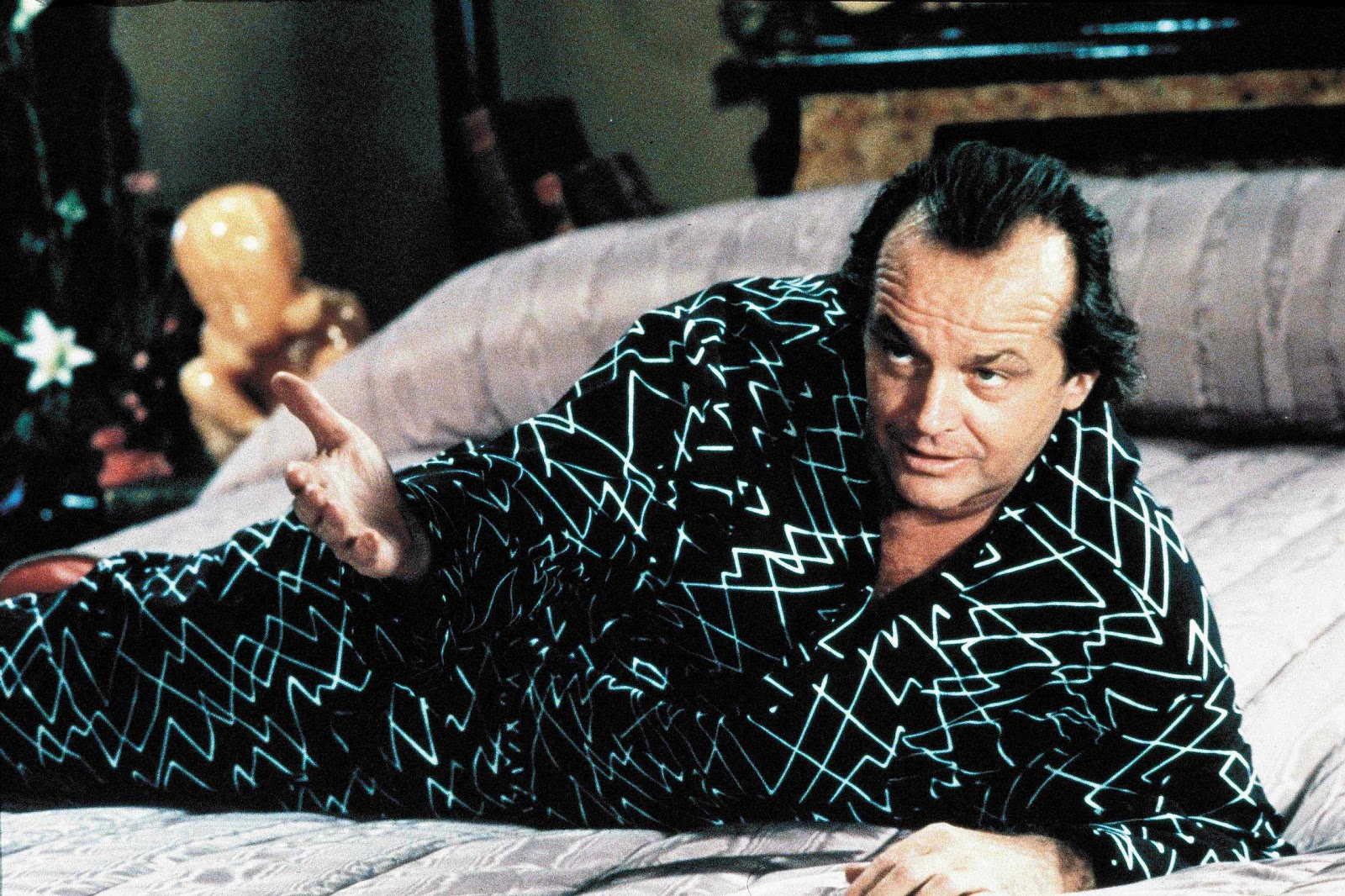
In the quaint town of Eastwick, three women friends have to survive after being abandoned by the men in their lives. Alex (Cher) is an artist and single mother; Jane (Susan Sarandon) is an uptight and childless music teacher; and Sukie (Michelle Pfeiffer) is a journalist with six kids. Over a not insubstantial amount of wine, the women describe their ideal man, and wish him into existence: the suave, mysterious, and apparently very rich Daryl Van Horne (Jack Nicholson) suddenly materializes in Eastwick, purchases the most expensive property, and proceeds to knock the town on its ear.

Van Horne has little trouble seducing the three women by preying on their emotional needs and desires, and soon he is sleeping with all three -- simultaneously. But Daryl is immediately identified as evil by Felicia (Veronica Cartwright), the wife of Eastwick's newspaper owner Clyde (Richard Jenkins). Felicia's ranting turns the town against the amorous quartet, transforming Alex, Jane and Sukie into social outcasts. The ladies have to find a way to reclaim a semblance of a normal life, and preferably make Daryl disappear as effectively as they conjured him up.

The Witches Of Eastwick is a comic commentary about relationships that are too good to be true, the danger of wishes becoming reality, and the societal stresses on unusual romances. Setting aside the supernatural frills, Alex, Jane and Sukie stumble upon the man of their dreams, but he turns out to be bad for their broader social lives. To survive, the women have to first shun Daryl and then try to destroy him. From his perspective Daryl works his way into a coveted male fantasy, a simultaneous romance with three willing and gorgeous women. And yet his failure to convince society at large of his good intentions proves to be his undoing.

Nicholson may have three ladies lined up against him, but they are no match for his presence. Daryl Van Horne provides Nicholson with another perfect character to unleash his intense madness, and he dominates as the smooth Lothario able to talk his way into the heart of any woman while barely bothering to conceal his egotistical intentions. Nicholson is at his best with characters who could not care less what anyone else thinks, and Van Horne needs no excuse and no permission to use an entire town for his selfish needs. Director George Miller knows that with Nicholson at his peak there is little point in providing competition, and in most of his scenes Nicholson as Van Horne sucks all attention away from anything and anyone else appearing in the frame.

Cher, Pfeiffer and Sarandon have to share time opposite Nicholson, and while none of them disappoint, the need to distribute screen minutes damages the opportunity to shine. Sarandon makes the best impression with her transformation from mousy music teacher to a raven-haired, free-spirited seductress. Cher and Pfeiffer are functional without being memorable.

The Witches Of Eastwick loses control towards the end, with a brief but still unnecessary orgy of special effects detracting from the characters and the drama. Just like the subject matter of men, women, and relationships, The Witches Of Eastwick does not have all the right answers, but it nonetheless has fun trying to find them.


All Ace Black Blog Movie Reviews are here.


Saturday, 18 December 2010

Movie Review: Burlesque (2010)


The folks running the Cliches Are Us store in Hollywood would have closed the shop and put up the Sold Out sign after Burlesque breezed through.

The naive but spunky and talented country gal who goes to the big city.  The dishy bartender who helps her out. The legendary former star yearning for the glory days. The current prima donna performer who will do anything to keep all up-and-comers down. The heartless investor who wants to redevelop the area and end everyone's dreams.  They all occupy the stages and corners of Burlesque, a nightclub film where every idea is welcome as long as it has already been chewed up and spit out in a dozen other movies.

The screenplay, by director Steven Antin with dubious help from others, works hard and succeeds magnificently in avoiding any original scenes, characters, or plot developments.

While Christina Aguilera is appealing enough as the bright-eyed newcomer angling for her chance at the big time, Cher moves with the robotic grace allowed by mechanical joints and every inch on her skin carries the fragility of reconstitution.

The song and dance numbers on the confined nightclub stage are the main focus of the film, and entertaining as these are, Burlesque quickly becomes one endless loop of music videos filmed on the same set.  Antin at least shows some flair in capturing a cabaret feel, and combines the required brisk editing with enough finesse to respect and showcase the dancers' efforts.

If Aguilera wants to look forward to a career in film, she needs to quickly find projects that highlight her talents without the stink of re-digested tripe.


All Ace Black Movie Reviews are here.