Showing posts with label John Saxon. Show all posts

Saturday, 28 March 2026

Movie Review: The Swiss Conspiracy (1976)


Genre: Thriller  
Director: Jack Arnold  
Starring: David Janssen, Senta Berger, John Saxon, Ray Milland, John Ireland, Elke Sommer, Anton Diffring  
Running Time: 83 minutes  

Synopsis: In Geneva, former US Justice Department official David Christopher (David Janssen) is hired by bank president Hurtil (Ray Milland) to investigate a blackmail plot targeting five bank clients. The victims include the alluring Denise Abbott (Senta Berger), tough Chicago crime boss Hayes (John Saxon), and shady Texas businessman McGowan (John Ireland). Meanwhile, bank Vice President Benninger (Anton Diffring) and his lover Rita (Elke Sommers) may be suspects with means and a motive. As Christopher investigates, the dead bodies start to accumulate, drawing the attention of Police Captain Frey (Inigo Gallo).

What Works Well: The Swiss locations and slick production values provide scenic backdrops, and the complex story rewards attention by delving into sordid secrets hiding behind anonymous bank accounts and stone facades of respectability. Director Jack Arnold mixes action scenes with plot advancements and a mutual seduction, and throws in a couple of red herrings to extend the guessing game all the way to a decent mountaintop climax. The supporting cast contributes an interesting character actor in every role. 

What Does Not Work As Well: David Janssen lumbers through the action with little finesse but many shirt buttons undone. A few of the chase scenes go on for longer than needed, and the final plot explanations are unleashed in a frantic flurry. A couple of Ferraris engage in a high speed duel that unfortunately has nothing to do with the plot. Seemingly extensively damaged, one of the Ferraris emerges unscathed in the very next scene.

Key Quote:
Denise (to David Christopher): I'll change into something less comfortable.


All Ace Black Movie Blog reviews are here.

Saturday, 18 March 2017

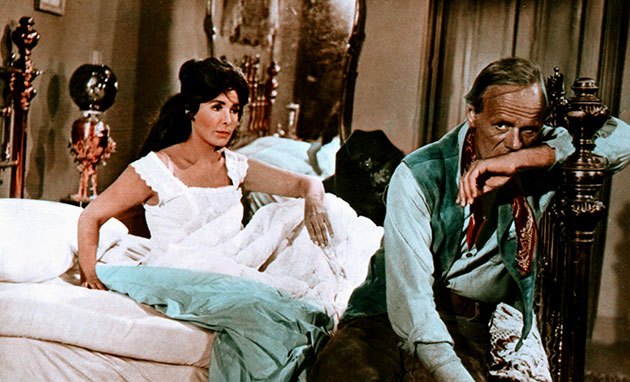
Movie Review: Death Of A Gunfighter (1969)


A second-rate Western, Death Of A Gunfighter strives for earnest intensity but lacks the talent, skill, or depth to deliver.

The setting is the town of Cottonwood Springs, Texas, in the early 1900s. Progress is coming, the railroad has arrived in town, horseless carriages are starting to appear on the road, and the city elders want to attract more business. Standing in the way is Marshal Frank Patch (Richard Widmark), who has held the job for 20 years and knows all the town's dirty secrets and scandals. Patch still settles disputes the old way, and proceeds to shoot dead a drunk and depressed man, albeit in self defence.

City council members and business leaders, including Mayor Chester Sayre (Larry Gates) and the smarmy Lester Locke (Carroll O'Connor), try to convince Patch to quit on his own terms, but he is too stubborn and too proud to listen. County Sheriff Lou Trinidad (John Saxon) arrives in town to try and arrest Patch, but is rebuffed and bloodied by the Marshal. The town elders have to decide whether or not to resort to more violent methods to end the reign of their long-term protector.

The first film credited to non-existent director Alan Smithee, Death Of A Gunfighter started under Robert Totten and finished under Don Siegel, after Totten had a falling out with star Richard Widmark. Totten was mostly a television director, and Death Of A Gunfighter has the plastic, staged look and feel of a slightly glorified TV movie. The premise of the passing of the old west is simple and stale, the execution ponderous, and with the ending given away in the title, precious little drama is generated.

Once the conflict is established between Marshal Patch and the townsfolk, the script stalls. There are rudimentary attempts to create a dynamic between Patch and a young man who hero worships the Marshal, and a lukewarm long-term romantic relationship with local woman Claire Quintana (Lena Horne, in a rare dramatic role) stutters in the background. Another father-son pairing enters and exits the fray with only the outlines of a relationship sketched in. None of the subtexts move past the perfunctory.

Meanwhile, Richard Widmark tries too hard to carry the weight of the film, grimacing fiercely at the injustice of it all and allowing Patch's increasingly irrational stubbornness to dominate. John Saxon wanders in from a whole other movie only to get beaten up by Patch in short order, but Saxon does enough with the character to suggest the film would have only been better with a bigger role for Lou Trinidad. Other than Carroll O'Connor ensuring baddie Lester Locke drips mean connivance, the other conspirators against Patch remain poorly defined.

Death Of A Gunfighter is a lightweight exercise in bundling old genre themes into an unfortunately bland rehash.


All Ace Black Movie Blog reviews are here.

Thursday, 8 November 2012

Movie Review: A Nightmare On Elm Street (1984)


A small horror film that spawned a long running franchise, A Nightmare On Elm Street introduces a memorable villain and juices up the spooky thrills with a blast of gory special effects. The movie offers little that is genuinely new, but the packaging and context are fresh enough to make an impression.

Nancy, Glen, Tina and Rod are four teen aged friends living on a quiet suburban street. They gradually realize that they are suffering from the same nightmare, where a murderous man with burned skin and steel finger extensions, later revealed to be Freddy Kruger (Robert Englund), attempts to murder them. Nancy (Heather Lagenkamp) gets the uneasy sense that if Freddy succeeds in killing them in the nightmare, they also die in real life. After Tina (Amanda Wyss) and Rod (Nick Corri) have sex, Tina falls asleep and becomes Freddy's first victim, slashed to death in a bloodbath. The innocent Rod is held as the main suspect in Tina's murder.

Nancy and Glen (Johnny Depp), her tentative boyfriend and neighbour, realize that they have to stay awake in order to stay alive, and they start taking stimulants to avoid sleeping. In his prison cell Rod does fall asleep and is hanged by Freddy. Nancy's father Don (John Saxon) is the local police lieutenant and does not believe her theory about nightmares causing death, but her alcoholic mother Marge (Ronee Blakley) eventually reveals a dark secret from the past involving Freddy. Nancy and Glen then try to set up a final showdown to end the nightmares.

Following on from Halloween (1978) and Friday The 13th (1980), A Nightmare On Elm Street was the third cheap-to-make slasher movie that resulted in numerous sequels. Costing $1.8 million and earning back more than $26 million, A Nightmare On Elm Street helped establish New Line Cinema as a production studio and provided director Wes Craven with his first significant mainstream hit.

It likely does not need to said that the acting is stiff and just one level above an amateur high school production, the dialogue (also by Craven) is juvenile and contrived, and the characters are stereotypically boring and many exist primarily for the purpose of being dispatched by Freddy.

All this is a given, yet A Nightmare On Elm Street endears itself by playfully having fun with the theme of nightmares disrupting real life, the past intruding onto the present, the sins of the parents haunting their children, and teens learning that fears can be confronted. The admittedly thin and ultimately inexplicable psychological context nevertheless adds a welcome shine to what would otherwise be a rehashing of any Halloween or Friday The 13th flick.

Despite plenty of stock "gotcha" jumping-from-the-shadows horror staples, Craven also loads A Nightmare On Elm Street with a heavy dose of style and entertaining special effects, including a killing on the ceiling, a hanging rope coming to life, a bottomless bathtub, and a gooey staircase. The bells and whistles enhance the nightmarish qualities of the film and add to the is-it-real-or-is-it-a-dream tension.

Johnny Depp made his inauspicious debut in A Nightmare On Elm Street, and in a bland performance he mostly tries not to fall asleep, fails every time, and ultimately pays the ultimate price, triggering a gushing  eruption of blood that is more about surreal wonderment than horror. John Saxon does his reputation no favours by displaying the emotions and intelligence of a plank. Heather Lagenkamp as the teenager suffering the most at the hands of Freddy is merely adequate, and despite the film's success her career quickly sank into the abyss of intermittent guest appearances on nondescript television shows.

Robert Englund gave Freddy enough of a personality to create a lasting imprint on the horror genre, Freddy a combination of a twisted nightmare character and contorted cartoonish fun. Englund made a career out of reprising the role in the many sequels, as Freddy became the mainstay and focal point of the series.

Ironically, Craven wanted a tidier ending that closed the door on sequels. But in a triumph of crass commercialism over schlock art, New Line insisted on a twist ending that launched Freddy into immortal sequel heaven. A Nightmare On Elm Street is one small and rather clever slasher film, the series is one giant leap backwards into endless repetition.


All Ace Black Blog Movie Reviews are here.


Tuesday, 3 July 2012

Movie Review: The Electric Horseman (1979)


A mild romance wrapped in an anti-authoritarian message, The Electric Horseman is a rather tepid third teaming of Robert Redford and Jane Fonda. The film makes its point early, and then struggles to find much momentum on the way to an obviously contrived scenario of opposites attracting.

Retired former rodeo champion Sonny Steele (Redford) is the national spokesperson and commercial face for a breakfast cereal peddled by a major corporation. To cash his cheque, Sonny has to stay sober enough to briefly ride a horse around in circles at country fairs, dressed in a hideous outfit featuring strings of lights. The CEO (John Saxon) has grander plans to expand market share by using the thoroughbred horse Rising Star as another company selling point.

At a corporate convention in Las Vegas to unveil the horse to the gathered media, Steele discovers that Rising Star is being mistreated and injected full of drugs. He decides to free the horse from its fate, and causes a stir by riding away on the Strip and into the desert. With the authorities desperately looking for Steele and the precious horse, television reporter Hallie Martin (Fonda) is the first to track him down and get his story.

The Electric Horseman takes plenty of shots at corporations milking celebrities to peddle product, and delivers an equal number of insults to has-beens who prolong their earnings by accepting endorsement cheques from the highest bidders. The anti-corporate message is the focus of the first half, but only a back-drop for the second half, which settles into standard romance fare between the simpleton cowboy with a cause and the urbane reporter seeking a story. Of course they start off as adversaries with nothing in common and plenty of fabricated tension, but gradually she falls for his spell.

Fonda essentially repeats her television reporter role from The China Syndrome, her other 1979 film. But rather than uncovering a dangerous conspiracy that could unleash a nuclear disaster, in The Electric Horseman she tracks down an ageing cowboy determined to set a horse free.  For the Fonda persona, it's an obvious downgrade in reporter assignments, but this does not prevent Fonda from munching into the role with the steadfast belief that the world should care deeply about one overpriced horse and a washed up cowboy.

Redford fares better as Sonny Steele, an early recruit into the ranks of corporate sell-outs. The problem with Steele is that he is all too aware that he has sold out, and is more than ready to drown his sorrow in the bottle. But whereas he does not mind his name becoming a joke, he draws the line at a thoroughbred horse having to suffer the ignominy of representing corporate greed. Redford finds the edge where a former champion wakes up from his slumber to champion a new cause, and combines the rough with the well-meaning to overcome his adversaries with wit and wisdom.

Director Sydney Pollack and cinematographer Owen Roizman make the most out of a Las Vegas that hosts sleazy suits and their slick profit motives, and they excel in capturing the scenic countryside as Sonny and Hallie make their way to the canyon where Rising Star is to be released. Most of the second half of The Electric Horseman is a walk-and-ride slow journey through attractive scenery, allowing plenty of time for romance to blossom, and the film at least looks good as it kills the time with not much really happening.

Valerie Perrine as Sonny's ex-wife, Wilford Brimley as a rancher who helps Sonny escape, and Willie Nelson as an old and eccentric friend make spot appearances and add some colour.

The Electric Horseman is comfortable in its predictability, harmlessly vanilla in its delivery, and with just enough star power to keep the horse amblin' along.


All Ace Black Blog Movie Reviews are here.


Monday, 11 July 2011

Movie Review: Enter The Dragon (1973)


A low budget classic, Enter The Dragon was Bruce Lee's final complete movie before his untimely death, and a milestone in Hollywood's brief flirtation with martial arts action thrillers. Enter The Dragon cost $850,000 and is estimated to have earned more than $90 Million world-wide. Lee's death would put an untimely end to any mainstreaming of a martial arts movie star until the arrival of Jackie Chan (who briefly appears in Enter The Dragon) half a generation later.

Lee (Bruce Lee) is an exceptional martial arts student at the Shaolin temple. He is selected by mysterious Hong Kong government-types to infiltrate the island base of the evil Han (Shih Kien), a former Shaolin student who has sullied the name of the temple by turning to crime: he specializes in drugs, human trafficking and prostitution. Lee is given an added incentive to seek personal revenge: in flashback it is revealed that Han and his bodyguard O'Hara (Robert Wall) were responsible for the death of Lee's sister.

Lee travels to the island pretending to be a contestant in a martial arts competition hosted by Han, and along the way he meets fellow contestants Roper (John Saxon), a gambler in trouble with loan sharks, and Williams (Jim Kelly), who is on the run from the cops. After the three are offered their choice of female companionship, Lee kills O'Hara and starts snooping around the island, Williams is killed by Han, and Roper kills Han's most fearsome fighter, Bolo.

When the prisoners on the island are released and take on Han's numerous henchmen, the hordes of chaos are unleashed and it's everyone against everyone. It is left up to Lee to chase down Han and force a final, memorable confrontation to the death.

Influential and frequently imitated in the same vein as A Fistful Of Dollars, Enter The Dragon made Bruce Lee an international star, despite his mysterious death. He dominates the film with a brooding, wiry physique made of highly-strung and finely toned muscles. Lee choreographed the fight sequences, and they are the undoubted highlights of the film, ballet with undisguised brutal power.

The rest of the performances by a cast aspiring to Grade B status, and the pedestrian directing by Robert Clouse, are fully consistent with a low budget action movie hoping for nothing better than left-over James Bond fans. Instead, the likes of John Saxon and Jim Kelly gained screen immortality by playing their role in an accidental, and ridiculously enjoyable, classic.


All Ace Black Blog Movie Reviews are here.