Showing posts with label Holly Hunter. Show all posts

Sunday, 10 September 2023

Movie Review: Copycat (1995)


Genre: Serial Killer Thriller
Director: Jon Amiel
Starring: Sigourney Weaver, Holly Hunter, Dermot Mulroney, Harry Connick Jr., Will Patton
Running Time: 123 minutes

Synopsis: In San Francisco, criminal psychologist Dr. Helen Hudson (Sigourney Weaver) is suffering from agoraphobia a year after narrowly surviving a brutal assault by serial killer Daryll Lee Cullum (Harry Connick Jr.). With Callum now in prison, Inspector MJ Monahan (Holly Hunter) and her partner Inspector Reuben Goetz (Dermot Mulroney) seek Helen's help to capture a new serial killer preying on women. Hudson deduces the assailant is copying the methods of famous serial killers from the past, but there is also a more sinister motive behind the killings.

What Works Well: László Kovács' classy cinematography enhances slick production values, and director Jon Amiel keeps the action moving and never far away from the next thrill. The excellent duo of Sigourney Weaver (sophisticated but traumatized) and Holly Hunter (whipsmart but jaded) are complemented by a sinister and unhinged Harry Connick Jr. performance. Dr. Hudson's house is an architectural beauty and almost makes agoraphobia an attractive proposition. 

What Does Not Work As Well: Most of the plot details do not withstand retrospective scrutiny, the killer's identity is at first vague then irrelevant, and a side-plot involving MJ's ex-romantic interest Inspector Nicoletti (Will Patton) is only irritating. Given the narrative intentions, the psychotic Daryll Lee Callum deserved much more visible involvement.

Conclusion: Superficially attractive but substantively lacking a cutting edge.


All Ace Black Movie Blog reviews are here.

Saturday, 26 February 2022

Movie Review: Crash (1996)

A weird drama about sexuality fuelled by a fascination with car accidents, Crash pretends to have something important to say but fails to articulate. 

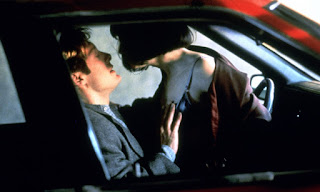
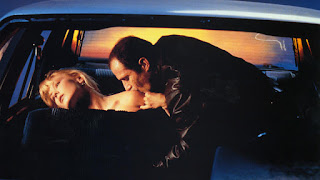
In Toronto, film producer James Ballard (James Spader) has an open marriage with Catherine (Deborah Kara Unger), and they both enjoy kinky sex with each other and with strangers. James is hurt in a head-on car collision and forced to recuperate at a hospital. He is strangely aroused by the idea and reality of vehicular carnage, and is soon having car sex with Dr. Helen Remington (Holly Hunter), who was in the other car involved in the crash. 

James, Catherine, and Helen are drawn into the strange orbit of Vaughan (Elias Koteas), a man obsessed with scars and death. In front of a live audience, Vaughan theatrically recreates famous car crashes that claimed celebrity lives. His entourage also includes Gabrielle (Rosanna Arquette), who needs braces to support severely damaged legs. A pernicious mix of arousal, sexual coupling, dangerous driving, and road crashes irresistibly draws the group together.

In adapting the J.G. Ballard book, director and writer David Cronenberg deserves some credit for going out there and looking for something new within the dark recesses of the adult human psyche, and his cast join him for a raw journey into a bizarre world. Filmed with an aloof, cold core dominated by mechanical eroticism, highways scarring cities, and traffic dominating the landscape, Crash invents a sexual fetish and runs with it.

The problem is that beyond the shock of the premise, the story has nowhere to go. The circle forming around the whacko Vaughan is too far gone to ever pause and generate sympathy. The characters are undefined and stuck in an emotional void only satisfied by pushing deeper into the invented space where crashes, scars, and sex come together. Not surprisingly the audience is left behind, somewhere between bewildered and exasperated by the incessant coupling and the concept of crunched automobiles as aphrodisiacs.

In the absence of a traditional narrative, the large blanks can be filled with any explanation. Pick from humanity subsumed by machines, crashes as metaphors for the human imperative to come together, a symbiotic cycle of machine damage causing human scars both physical and mental, and the uncomfortably close distance between flirting with death and creating life. It's all up for grabs, but all profound attempts at psycho analysis are, at best, bent out of shape.


All Ace Black Movie Blog reviews are here.

Wednesday, 1 September 2021

Movie Review: Living Out Loud (1998)

A romantic comedy-drama, Living Out Loud explores middle-aged loneliness and regrets. Alternating between morose and humorous, the film settles for the vagaries of middle ground.

In New York City, Judith (Holly Hunter) discovers her husband Robert (Martin Donovan), a celebrated surgeon, cheating with a younger doctor. They divorce, and Judith, a trained nurse, plunges into loneliness, now wealthy but single. 

Pat (Danny DeVito) is the elevator operator in her building. He is divorced and has just lost his daughter to cancer. He is also a gambler and having trouble repaying his debts. His brother Philly (Richard Schiff) runs a bar, but Pat is too proud to accept working as a bartender.

In a surreal encounter, Judith shares a kiss with a mysterious man (Elias Koteas) she bumps into at the nightclub where Liz Bailey (Queen Latifah) performs. She also starts a friendship with Pat. He quickly gets attached and seeks a romance; but Judith is not sure what she wants.

Written and directed by Richard LaGravenese, Living Out Loud is more cerebral than the typical romantic comedy. This an exploration of life's cross-roads for two disappointed adults, where the mistakes of the past are undeniable and the future unclear. Potential love and pursuits of lust are part of the agenda, but only as accessories to overwhelming self-doubt.

LaGravenese does not aim for easy answers or quick resolutions. Judith and Pat will only stumble their way out of the doldrums, and in fact may have trouble even defining what they want next. And accepting the uncertainty is part of the journey, especially for Judith. Beset by anxieties, questioning who she is and how she got here, and still capable of irrational eruptions in ex-husband Robert's presence, Judith's step one is getting re-acquainted with herself.

And her quest finds a highlight through the friendship with nightclub singer Liz, who convinces Judith to join her at an all-female after-hours club. In a fluid and frisky sequence, Judith takes the first steps of the rest of her life on the dance floor.

DeVito co-produced and his role is less interesting. Pat is good at talking about getting things done but most effective at gambling away his money. He is far from a good fit for Judith, but oblivious to the gap between them. Thanks to her pragmatism their romance never gets going, which is a realistic outcome but also detrimental to the film.

Stylistically LaGravenese sprinkles brief imaginary scenes from Judith's frazzled head into the structure, slyly casting doubt on what is real and what is not. When the objective is to push life's big reset button, fantasies are part of the process.


All Ace Black Movie Blog reviews are here.

Monday, 17 July 2017

Movie Review: O Brother, Where Art Thou? (2000)


A satirical comedy inspired by Homer's The Odyssey, O Brother, Where Art Thou? features some enjoyable episodes but is a mostly fragmented exercise of scattered ideas looking for a purpose.

The setting is Mississippi during the 1930s with the Great Depression still lingering. Three convicts escape from a chain gang and set out across the countryside. The wordy and cerebral Ulysses Everett McGill (George Clooney) claims to have buried stolen treasure before being incarcerated. His fellow escapees are the tightly wound Pete Hogwallop (John Turturro) and the rather dim Delmar O'Donnell (Tim Blake Nelson).

As they barely stay one step ahead of the chasing posse, the trio encounter various obstacles and characters, including Pete's cousin "Wash" Hogwallop (Frank Collison), crazed bank robber Baby Face Nelson (Michael Badalucco), three distracting singing sirens, guitarist Tommy Johnson (Chris Thomas King) who claims to have sold his soul to the devil, incumbent Governor Menelaus "Pappy" O'Daniel (Charles Durning), and dangerous Bible salesman Daniel "Big Dan" Teague (John Goodman). The Ku Klux Klan also make an appearance before Ulysses catches up with his wife Penny (Holly Hunter), who is just about ready to abandon him.

Written and directed by the Coen brothers Joel and Ethan, O Brother, Where Art Thou? transposes the ancient Greek poem to the American rural south, suffering under the strain of an economic depression and the sweltering heat. It's all played for laughs, the actors over-emoting at will and most of the dialogue exchanges featuring Ulysses Everett McGill's over-elaborate prose and the stupefied reactions of his chainmates.

The film's pacing cannot be faulted, as each episode lasts about 10 minutes before the next, generally unrelated adventure kicks off. Whether hit or miss, nothing lingers for too long. The better sub-plots feature the trio of prisoners recording an impromptu hit song at an early-era radio station, and an enchanted encounter with the seductive sirens in the forest. Less successful is the run-in with Bible salesman Big Dan, while the chapters featuring Governor O'Daniel seem to rotate in a singular circle.

Wide open landscapes, appealing cinematography and an interesting colour palette that often evokes the photographs of the era maintain interest, while the period-specific folk music often moves to the foreground to provide a soulful kick.

Towards the end the film threatens to completely unravel, a case of too many marginal ideas thrown at the screen and sliding to the bottom due to a lack of cohesion. O Brother, Where Art Thou? is inspired by great literature, but achieves only modest success.


All Ace Black Blog Movie Reviews are here.


Sunday, 9 July 2017

Movie Review: The Big Sick (2017)


A romantic comedy based on true events, The Big Sick provides laughs, warmth and honest emotions in the story of a cross-cultural love.

In Chicago, Kumail (Kumail Nanjiani, playing himself) is a struggling stand-up comic, the son of Pakistani immigrants. His mother Sharmeen (Zenobia Shroff) is determined to find him a future wife from the Pakistani community, but Kumail independently starts a relationship with all-American girl Emily (Zoe Kazan), and keeps her a secret from his family. When Emily learns that she may not be welcome in Kumail's culture, she breaks off their relationship.

Soon afterwards Emily is stricken with a mysterious serious illness, hospitalized and placed into a medically induced coma while an army of doctors try to devise a treatment plan. Kumail is irresistibly drawn to the hospital, where he meets Emily's parents Terry and Beth (Ray Romano and Holly Hunter). Initially suspicious of Kumail's presence and motives, gradually they warm up to him. However, Emily still faces a challenge to overcome her illness, while Kumail has to confront his parents and sort out his cultural identity.

Co-written by Nanjiani and his wife Emily Gordon, directed by Michael Showalter and co-produced by Judd Apatow, The Big Sick is both timeless and modern. The true story of love straddling a cultural divide resonates  across the ages with the charming echo of everything from Romeo and Juliet to Roman Holiday, and in The Big Sick it is presented through the prism of the melting pot called America in the high heat setting of the 21st century.

Only the first third of the film has romance as its focus. Kumail and Emily meeting, breaking down barriers and forging a bond (despite both claiming that they have no interest in a long-term relationship) is a gateway to introducing the characters and the context of a society where diversity is the norm. Nanajiani and Gordon as the writers do not shy away from laying bare the awkwardness, hesitancy and missteps that give every relationship its uniqueness.

With Emily spending a large part of the rest of the movie in a coma, the heart of the film shifts to the relationship between Kumail and the two sets of parents, and he has work to do on both fronts. With his own parents Kumail is living a lie, playing along with their conservative culture and Sharmeen's dedicated agenda to arrange a partner, while in reality he has no intentions of honouring their traditional wishes. Ironically, it is only when Kumail starts to understand the hurt he is causing to one prospective but outspoken Pakistani bride that his awakening starts.

Even more complex is the morass Kumail navigates with Terry and Beth. As an ex-boyfriend of their daughter, from a foreign culture and with vague career prospects, Kumail is initially the last person Terry and Beth want to deal with their daughter in a coma and fighting for her life. But some of the sturdiest bridges are built under extreme duress, and the gradual thawing of the relationship between the young comic and the distressed parents comes with humour, unexpected support, and genuine affection.

Kumail's life as a stand-up comic and his motley crew of fellow comedians waiting for their big break provide plenty of colour and opportunity for laughs. The drama in Kumail's personal life clashes with his professional need to make his audience forget their troubles, adding to the film's emotional resonance.

Clocking in at just over two hours, the film is a bit longer than it needs to be, and all three acts pre-hospital, in-hospital and post-hospital would have benefitted from some trimming. But this is minor quibble. With compassion and a smile, The Big Sick celebrates the best of what everyone can do: see past superficial differences, persevere in pursuit for what really matters, and overcome adversity.


All Ace Black Blog Movie Reviews are here.


Saturday, 25 February 2017

Movie Review: Always (1989)


A bland fantasy romance, Always has the wrong cast embarrassingly over-emoting their way through a banal story.

Pete Sandich (Richard Dreyfuss) and his pal Al Yackey (John Goodman) are aerial firefighters, experts in dropping retardant on raging forest fires from converted World War Two era bombers. A risk-taking daredevil in the sky, Pete has a long-term relationship with Dorinda Durston (Holly Hunter), a fellow pilot who works mostly as a dispatcher. She loves him and wants him to stop flying, but he cannot bring himself to express his love and insists that flying is his life.

Pete dies in an aerial mishap after saving Al's life, and the angel Hap (Audrey Hepburn, as elegant as ever in her final screen role) guides his spirit back to earth. His spectral mission is to be the inspiration for handsome pilot Ted Baker (Brad Johnson), who wants to earn his aerial firefighting wings to win Dorinda's love. Pete finds himself torn between helping his protege and still pining for the love of his life.

A remake of 1943's A Guy Named Joe and one of director Steven Spielberg's rare but comprehensive misfires, Always lands with a dull thud. Nothing works: the jokes are juvenile, the romance is not even close to being convincing, the casting is atrocious, and almost every scene is extended well past its usefulness as the movie lumbers its way to a completely unnecessary running length of over two hours.

Spielberg falls into the trap of wanting every little event to be grand and goes looking for Meaningful Moments at every turn, the John Williams score inflating the emotions to laughable levels. The drama and tension, whether in the sky or back on earth, are contrived and appear targeted towards a child audience.

Resetting the story from the original existential World War Two conflict to the much more mundane territory of fire fighting in the middle of nowhere severely undermines the drama and the characters, with the actors comprehensively defeated by the material and ham-fisted tone. Richard Dreyfus and Holly Hunter are lost for purpose and share no chemistry. Dreyfus turns on full braggart mode, making Pete singularly boring and unattractive. Hunter, a most down-to-earth actress, struggles to play an ethereal inspiration. John Goodman essentially plays a caricature, and Brad Johnson has the screen presence of a white wall.

Always aims for a flighty fantasy, but stalls on the taxiway, belching putrid smoke.


All Ace Black Blog Movie Reviews are here.


Monday, 21 November 2016

Saturday, 16 April 2016

Movie Review: Raising Arizona (1987)


A madcap comedy, Raising Arizona aims for a loony vibe and often achieves it. The parenting misadventures of a petty thief and his ex-cop wife are wildly unpredictable and sometimes quite hilarious.

Herbert "Hi" McDunnough (Nicolas Cage) can't drive past a convenience store without thinking of holding it up. Since he never uses live ammunition, he receives a succession of short prison sentences. Every time he is arrested he catches sight of booking officer Edwina, known simply as Ed (Holly Hunter). He finally times it right, proposes and marries her on one of his stints outside the jail cell. Hi and Ed settle down to a life of crime-free domesticity, but soon find out that she cannot conceive, and Ed slumps into an aggravated state of depression.

When the media announce that discount furniture king Nathan Arizona (Trey Wilson) and his wife Florence have given birth to quintuplets, Hi and Ed decide that the Arizonas have more children than they can handle, and they go ahead and steal one of the infants. They try to create a true family unit, but uncouth prison escapees and brothers Gale and Evelle Snoats (John Goodman and William Forsythe) invite themselves and disrupt the peace. Soon Hi's boss Glen (Sam McMurray), his wife Dot (Frances McDormand) and their brood of unruly children add to the chaos, while heavily armed demon Leonard Smalls (Randall "Tex" Cobb), also known as the lone biker of the apocalypse, starts to track down the missing baby to claim the reward money.

The second film directed by Joel and Ethan Coen after 1984's Blood Simple, Raising Arizona is a dramatic change of gears. The Coens demonstrate versatility by switching from film noir crime to loopy screwball comedy. Set in an unnamed small town near the desert with Hi and Ed aiming to live the idyllic trailer park lifestyle, Raising Arizona is about chasing the American Dream, but in all the wrong directions. The film is fast, funny and features some blistering set-pieces.

Halfway through, the Coen's conjure up a 10 minute sequence of pure farce that deserves a pedestal in the comedy hall of fame. Hi cannot fight the urge to rob a late-night market, but now something of a dad, his target is a free bag of Huggies diapers. What follows is a nutty chase involving a police squad car, gun-toting store clerks, a pack of excited dogs, a simpleton of a pick-up driver, with a furious Ed and her infant in the car burning rubber and wondering whether Hi deserves to be abandoned or rescued.

Other highlights include Glen and Dot's children running riot, while every scene that features motorcyclist Leonard Smalls exudes hysterically mythical evil on two wheels, one step away from dishing out destruction to any living thing.

Raising Arizona's comedy style is in-your-face, emphasized by a whole lot of screaming. This is not sophisticated humour, and while most of it works, it also gets overwhelming. Quite a few scenes involve characters with their mouths open wide and just hollering at maximum lung power. With plenty of people around him given free reign to go over-the-top, Nicolas Cage pulls back and often allows Hi to relax as the most laid back person in the room. Holly Hunter is a bundle of nerves, Ed wondering where the pathway to fulfillment resides, but certain that it involves having a child.

Beneath all the madness is a tale of unlikely love, Hi and Ed acting on an undeniable attraction and desperate to settle down to a simple life and just build a family. Through thick and thin they stand by each other, sort of, and baby Arizona gives them a new purpose and an opportunity to view each other through a fresh lens. Even the ammunition-free robber and the nerdy small town ex-cop deserve their opportunity to pursue happiness.


All Ace Black Blog Movie Reviews are here.


Friday, 29 August 2014

Movie Review: Broadcast News (1987)


A dazzling foray into the exacting world of nightly television news, Broadcast News is triumphant combination of pragmatic drama, humour, and romance set in a charged workplace.

At a high profile Washington DC network television station, Aaron Altman (Albert Brooks) is a well-regarded journalist still hoping for a chance to take over the anchor chair. His best friend is producer Jane Craig (Holly Hunter), who is equally smart and career driven, but suffering from stress due to an unbalanced life of all work and no play.

Aaron and Jane believe in the old-fashioned principles of news being about the news and not about celebrities and pretty faces. Their world is rocked when handsome dunce Tom Grunick (William Hurt) is hired as the new anchor for the nightly news show. With a background in sports and no understanding of world affairs, Tom is Aaron and Jane's worst nightmare. But Tom does prove himself to be a good anchor, and despite herself, Jane falls in love with him, threatening her friendship with Aaron. With the station in an upheaval due to impending staff cuts, the professional and personal lives of Aaron, Jane and Tom are thrown into turmoil.

Written and directed by James L. Brooks, Broadcast News is one of the smartest movies to come out of the 1980s, with crisp dialogue, episodes of broad humour, and ultimately a human-centred drama about ordinary lives subjected to high stress in an evolving industry.

The spiritual sequel to Network (1976), Broadcast News is an equally excellent trip through the world of television news. But while Network was still all about fighting the good fight against news yielding to commercial interests, Broadcast News understands that the fight is lost and nobody cares. The barbarians are inside the gate, and Aaron goes as far as likening Tom to the devil himself, disguised as a handsome charm merchant, taking over in front of the camera to satisfy aesthetic sensibilities despite knowing nothing about journalism. Meanwhile, when Jane stands up to give a rousing talk about defending the principles of good newscasts, the audience of fellow journalists cannot empty the room fast enough.

Broadcast News is also smart enough to give the devil his due. When Aaron turns to Tom for tips on how to succeed in front of the camera, Tom is suddenly is in his element, and yes, the uninformed simpleton knows what it takes to be a star anchor. Aaron finally realizes that being the high profile face of the news is an altogether different profession than being a journalist, and his dream of both finding and presenting the news is a generation too old.

In addition to presenting an inside look at the exhilarating world of assembling a nightly news show, Brooks enjoys serving up his tasty romantic triangle, and takes a thoughtful stance on the parallels between love and life. In an example of dazzling writing and directing, the most romantic scene has nothing to do with physical closeness. Jane and Tom connect as he successfully anchors emergency coverage of an emerging crisis in real time, Jane producing the segment, communicating with Tom through an earpiece, and pushing the buttons that make it all work.

The cerebral Jane ultimately falls for the dishy Tom in a hurry, leaving the earnest Aaron sidelined in friendship hell. And if even Jane can be seduced by style over substance, there is nothing left to defend: the news industry stands no chance, and has to offer up the pizazz to maintain the love of an audience much less intelligent than Jane.

Albert Brooks and Holly Hunter deliver the definitive performances of their careers. Brooks gives Aaron the caustic voice of brains over beauty, the smartest kid in the room still not quite understanding that it takes a lot more than smarts to succeed. Hunter never had a better role than Jane, written by Brooks at the most well-rounded character in the film. Hunter perfectly occupies the space where the studiously organized Jane even schedules her crying breaks, and otherwise rolls through her career with a voracious appetite that leaves hardly any room for a personal life but plenty of opportunities for spectacular successes in the production booth.

William Hurt has possibly the most difficult role, and plays Tom as a self-aware handsome face, under no illusions that career doors are opening due to superficial reasons. But among the three lead characters, Tom is perhaps the most in tune with where the television industry is headed. If he ever had any illusions he has long since replaced them with a willingness to ride the wave running in his favour.

Robert Prosky as the executive producer of the news show and Jack Nicholson as the network's star self-aggrandized New York-based anchor provide weighty support. Lois Chiles and Joan Cusack round out a terrific cast.

Brainy, lively, and playful, Broadcast News is a ratings winner.


All Ace Black Blog Movie Reviews are here.


Tuesday, 7 February 2012

Movie Review: The Firm (1993)


A sprawling legal epic, The Firm is a smart thriller that veers away from the excesses of the genre in favour of emphasizing the human drama. An extraordinarily deep cast succeeds in maintaining interest over the 150 minutes of running length.

The Firm has a simple premise with complex details. Young Harvard law school graduate Mitch McDeere (Tom Cruise) has his pick of job offers from all the top law firms, but the boutique Memphis firm of Bendini, Lambert and Locke make him an offer he can't refuse. Lured by a high salary, a large house and a luxury car, Mitch moves to Memphis with his wife Abby (Jeanne Tripplehorn). The firm assigns senior lawyer Avery Tolar (Gene Hackman) to mentor Mitch, and soon they are jetting off to the Cayman Islands to provide tax advice to shady characters. Mitch is seduced at the beach by a local beauty, an encounter that yields conveniently compromising photos that the firm can use against him as needed.

Mitch soon learns the firm mostly provides money laundering services to the mob. When two lawyers are blown up for planning to quit, FBI agent Wayne Terrance (Ed Harris) starts sniffing around, and Mitch is fingered as a potential inside man who can collect the evidence to bring the corrupt lawyers down. With head of security (Wilford Brimley) and his henchmen on his tail, Mitch has to plan the destruction of his employer while saving his career.

The Firm's drama centres around the conflict between three characters, brought to life by Cruise, Tripplehorn and Hackman. The relationship between Mitch and Abby McDeere is the first casualty of the firm's dominance, Mitch's long hours proving to be the lesser evil as the true nature of the client list is revealed and Mitch falls for the oldest trick in the book on the sandy beaches of the Cayman Islands. While Cruise and Tripplehorn make for a believable young couple, with Cruise's intense eyes working in his favour as the driven idealistic lawyer, Tripplehorn is slightly less convincing as Abby, both the role and the movie slightly exceeding her range.

As the McDeere marriage buckles, Avery is nurturing his relationship with Mitch, mentoring him in the fine art of tax evasion and smoothly sliding him into the role of the mob's lawyer. Hackman was born to play roles like Avery Tolar, the manipulative maverick who applies his own rules and plays both sides against the middle. The Firm makes its way to an interesting crossroads by ultimately matching Abby with Avery in a dangerous encounter pivotal to Mitch's survival, with both Abby and Avery risking everything, albeit in different ways, for the sake of Mitch's career.

Director Sydney Pollack surrounds Cruise, Tripplehorn, and Hackman with a stellar cast of stalwarts. Hal Holbrook, Wilford Brimley, Ed Harris, Holly Hunter, David Strathairn and Gary Busey flesh out every secondary character and help carry the load of a convoluted but sturdy story.

Too often, movie adaptations of legal thrillers degenerate into a rapidly mounting body count and stock chase scenes, chucking all reality to one side. While The Firm does not avoid all the pitfalls, it sidesteps most of them. The screenplay team of David Rabe, Robert Towne and David Rafiel deserve credit for adapting John Grisham's novel into a coherent movie that places characters ahead of stunts. The Firm keeps Mitch, Abby and Avery at centre stage, insecurities as prominent as abilities, and none of them suddenly develop the powers of secret agents.

At the core of The Firm is a young lawyer using his legal skills and intellect to find a way out the mess that he finds himself in, a welcome celebration of brains over brawn.


All Ace Black Blog Movie Reviews are here.