Showing posts with label Clive Owen. Show all posts

Saturday, 7 February 2026

Movie Review: Killer Elite (2011)


Genre: Action Thriller  
Director: Gary McKendry  
Starring: Jason Statham, Robert De Niro, Clive Owen, Dominic Purcell  
Running Time: 116 minutes  


Synopsis: In 1980, hitman Danny (Jason Statham) quits the killing business after coming face-to-face with the young son of his latest victim. He relocates to Australia and becomes romantically involved with Anne (Yvonne Strahovski). A year later Danny's partner Hunter (Robert De Niro) is held hostage by an Arab sheik, forcing Danny back into action. To secure Hunter's freedom, Danny has to find and kill three ex-SAS members responsible for killing the Sheik's three sons. Danny assembles a team including Davies (Dominic Purcell) and Meier (Aden Young), but ex-SAS soldier Spike (Clive Owen) is deployed by the shadowy Feathermen organization to disrupt Danny's mission.

What Works Well: Inspired by real events surrounding the Dhofar Rebellion, this action thriller reaches for a deeper context than typical efforts while still enjoying well-staged and stunt-heavy action scenes. Set in Oman and England, Danny's exploits cut across Cold War Middle East tensions, deniable military engagements, the battle to control oil reserves, and deposed ruler vendettas. A further layer of complexity is introduced by the need to stage the killings as accidents, and Spike emerging as an atypical counterweight to Danny, cut from the same cloth and as much a pawn as all guns for hire. Dominic Purcell's lackadaisical Davies adds irreverent presence.

What Does Not Work As Well: Robert De Niro is an afterthought in an underdeveloped role, and the attempts at character depth (primarily through Danny's relationship with Anne) are superficial. The bone-crunching hand-to-hand combat scenes yield remarkably minor bruising for the survivors, and the late plot revelations meld into a muddle of murky agendas.

Key Quote:
Danny: War isn't over until both sides say it is.


All Ace Black Movie Blog reviews are here.

Saturday, 27 April 2024

Movie Review: Derailed (2005)


Genre: Romantic Crime Drama Thriller  
Director: Mikael Håfström  
Starring: Clive Owen, Jennifer Aniston, Vincent Cassel  
Running Time: 106 minutes  

Synopsis: In the Chicago area, marketing executive Charles Schine (Clive Owen) is married to school teacher Deanna (Melissa George) and father to diabetic teenager Amy (Addison Timlin). On the train into town he meets fellow commuter Lucinda Harris (Jennifer Aniston), and they are attracted to each other. Just as they are about to consummate their affair, criminal Philippe LaRoche (Vincent Cassel) bursts into their hotel room, stealing their money, beating Charles senseless, and raping Lucinda. But worse is to come for Charles, as Philippe starts blackmailing him for large sums of money.

What Works Well: In this cautionary tale about the hazards of infidelity, writer Stuart Beattie constructs a hectic, high-pressure environment to nudge Charles towards danger. Financial pressure, under-performance at work, a busy schedule eroding his time with wife Deanna, and an ill child all contribute to one lapse in judgment. But that's all it takes, and once LaRoche sinks his claws into the vulnerable would-be philanderer, all that Charles holds dear is threatened. Clive Owen and Jennifer Anniston are an appealing lead couple, but Vince Cassel steals the spotlight as a brute of a villain. A couple of narrative twists contribute to a gripping final act.

What Does Not Work As Well: A few unlikely logic leaps are required to make the plot work. 

Conclusion: A smooth ride towards well-crafted perils.


All Ace Black Movie Blog reviews are here.

Wednesday, 29 June 2022

Movie Review: Gosford Park (2001)

A comedy of manners combined with a frivolous mystery, Gosford Park is overstuffed with ill-defined characters floundering for a purpose.

In rural England of 1932, the high-society family and friends of the wealthy William McCordle (Michael Gambon) and his wife Lady Sylvia (Kristin Scott Thomas) gather at an estate for a pheasant shoot. The attendees include Hollywood film producer Morris Weissman (Bob Balaban) and actor Ivor Novello (Jeremy Northam). The house is run by the butler Jennings (Alan Bates) and housekeeper Mrs. Wilson (Helen Mirren), overseeing a large group of servants including housemaid Elsie (Emily Watson).

Many of the attendees have reasons to dislike each other, and William is threatening to cut-off the income of several family members with stressed finances. His targets include Lady Sylvia's aunt Constance (Maggie Smith), who is accompanied by her bright but inexperienced maid Mary (Kelly Macdonald). Other servants in attendance include valets Robert Parks (Clive Owen) and Henry Denton (Ryan Phillippe). Midway through the gathering a murder is committed, and Inspector Thompson (Stephen Fry) gets involved.

Directed by Robert Altman and written by Julian Fellowes, Gosford Park is intended as an observational exercise focusing on the upstairs/downstairs social structure of England between the wars. With dialogue consisting of nothing but gossip, inane small talk, and snippets of conversations, the film drifts without power then starts to sink under the weight of about 28 characters vying for space. With incoherent introductions buried under a torrent of names and titles, it's impossible to map out who is who. Unsurprisingly, all the characters remain essentially undefined or at best caricatures.

On the margins, talk emerges of a dark past involving illegitimate children and an orphanage, and a murder occurs. But Fellowes and Altman don't really care about the mystery elements: the crime generates about as much concern as one of the pheasants shot out of the sky. The subsequent investigation is dismissive, Inspector Thompson walking in from an Agatha Christie novel then walking out again having achieved nothing.

The set designs and costumes are impressive, and the strictly hierarchical class structure of money, titles, shallowness, and gossip upstairs, contrasted with servants (with their own hierarchy), hard work, and more gossip downstairs, is notionally interesting. But in this house, both levels are overflowing with uninteresting and irrelevant people irritating each other for an agonizingly long 137 minutes.


All Ace Black Movie Blog reviews are here.

Wednesday, 15 December 2021

Movie Review: Trust (2010)

A drama about the devastating impacts of child grooming, Trust is the uncompromising tragedy of a family torn apart by an insidious assault.

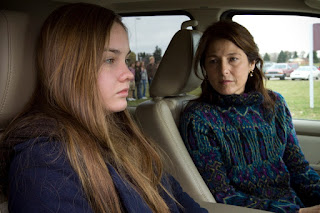
In Chicago, Annie Cameron (Liana Liberato) is a 14 year-old high school student and member of the school's volleyball team. She comes from a middle class family, supported by her dad Will (Clive Owen) and mom Lynn (Catherine Keener). 

Through a teen chat on-line portal, Annie is in communication with Charlie, who claims to be a 15 year-old volleyball player at another school. Their contact develops into a friendship then an on-line romance, although Charlie continuously obfuscates about his real age. Through flattery and sexual chat, Annie is increasingly attracted to the now clearly older stranger. She agrees to meet him at the mall, and when Charlie (Chris Henry Coffey) shows up, he appears to be in his mid-30s. He nevertheless sweet-talks her into a sexual encounter. 

Annie's best friend Brittany (Zoe Levin) alerts the school that Annie has been raped. Will and Lynn's lives are shattered. The FBI's Doug Tate (Jason Clarke) starts to investigate, while hospital counselor Gail Freedman (Viola Davis) supports Annie. But although Charlie has broken contact, Annie does not think of herself as a victim, and instead believes her assailant truly loves her.

Directed by David Schwimmer (from television's Friends) and written by Andy Bellin and Robert Festinger, Trust is often painful to watch. The process of grooming is portrayed with a sense of searing dread, and Annie's trusting descent into the clutches of a predator is a stab into the heart of a supposedly safe, secure, and supportive middle class household.

A well-adjusted 14 year old with typical body image and fitting-in anxieties is still susceptible to a master manipulator. By the time Annie finds herself in a scuzzy motel room in her underwear, she is convinced Charlie not only deeply loves her, but is the only adult who values and understands her. What follow after the assault is, if possible, more disturbing. Multiple fissures crack open the family unit's foundation, Annie now hostile towards adults she perceives as destroying her love life.

Trust is as much about the parents as the child. Annie's father Will is crushed that his supposedly bright daughter ignored all the red flags and did not turn to him for advice, and his anger explodes when he is exposed to her record of sexting with Charlie. Flustered, he haphazardly turns to everything from predator-hunting vigilante groups to gun stores, straining his marriage. 

As a quiet drama, Trust leans heavily on the cast, and Clive Owen and Liana Liberato are both excellent at opposite ends of a fragile father-daughter dynamic. They deliver deeply moving performances conveying tension, passive-aggressiveness, anguish, and distress.

The narrative harnesses impressive dramatic strength, but a few of weaknesses surface. The FBI appears oblivious that Charlie was on full view in a shopping mall supposedly full of surveillance cameras, and their initial post-assault response of pressuring the victim to reconnect with her assailant is markedly under-prepared. Will's macho-man antics at a school volleyball game are unnecessary.

Although Annie's unexpected moment of reckoning arrives courtesy of agent Tate's investigation, repairing all the ruptured familial bonds will be a slow and painful process. Trust makes no attempts to reassemble all the broken pieces, and instead underlines frustration and uncertainty as lingering outcomes of heinous violation.


All Ace Black Movie Blog reviews are here.

Saturday, 19 June 2021

Movie Review: Croupier (1998)

A casino drama, Croupier is a compact story emphasizing ambience and observation to create a smoky mood of bubbling corruption and conflicted morality.

In London, Jack (Clive Owen) is an aspiring but penniless writer originally from South Africa. His father Jack Sr. (Nicholas Ball), a small-time hustler, arranges a job for him as a croupier at a casino managed by Reynolds (Alexander Morton). Jack is good at running the roulette and blackjack tables and uses the customers and other croupiers as inspiration to start writing again. He spots various contraventions of casino policies, including croupier Matt (Paul Reynolds) gambling and liaising with shady types. 

Jack's relationship with girlfriend Marion (Gina McKee), a store detective, suffers when he has a fling with croupier Bella (Kate Hardie). Then his job becomes much more complicated when regular customer Jani (Alex Kingston), also from South Africa and now seemingly owing a lot of money to the wrong people, offers him a lot of cash to enable a theft at the casino.

The actual plot of Croupier does not matter very much. In fact, the casino heist, muddily explained and botched in execution, only appears to be the most relevant narrative trajectory. Within the crisp 94 minutes director Mike Hodges and writer Paul Mayersberg are more interested in a character study and a dive into psychology at the shallow end of the smart pool. Jack therefore narrates with a fascination for the human condition, interrupting his words with his true thoughts as an atmosphere of deadened nothingness wafts over the lives and loves of unmotivated souls going through the same motions but hoping for different outcomes.

The casino manager Reynolds admits his joint is neither high-end glitz nor backroom scuzziness, just middle-of-the-road blandness. And so Jack gets to observe middle-of-the-road people come and go, metronomically losing money, a bit of graft here and there, but without high-roller pizzazz nor bedraggled desperation. Enough is going on to light the bulb of writing inspiration, and Jack creates super-cool alter ego Jake to embody his thoughts and emerge as the hero of his novel.

But Jack is not enduring a mediocre life and working in a mediocre facility by accident, and neither Jack nor Jake are as smart as they think they are. Others will have their say before the curtain rises on unlikely puppet masters, and unexpected rewards are found behind anonymous covers.

Clive Owen cruises through Croupier somewhere between comatose, bemused, and resigned, with enough behind his tired eyes and wry mouth to suggest hidden abilities happily squandered. Where money is willingly lost on games stacked in favour of the house, the only winners are those able to walk away from both sides of the table.


All Ace Black Movie Blog reviews are here.

Saturday, 12 June 2021

Movie Review: Shoot'Em Up (2007)

A jocular action film, Shoot'Em Up embraces Bugs Bunny cartoon sensibilities in a manic save-the-baby adventure. With non-stop impetus and an irrepressible attitude, this is a thrill ride to savour.

In the middle of the night, carrot-munching loner Smith (Clive Owen) sticks his nose in other people's business by attempting to protect a pregnant woman running from a horde of assassins. She gives birth, but is then killed. Smith escapes with the baby, and becomes the target of Hertz (Paul Giamatti), who is intent on eliminating the infant.

Smith connects with lactating prostitute Donna (Monica Bellucci), who reluctantly agrees to help look after the newborn they now call Oliver. Hertz starts to uncover Smith's elite military background and assembles an army of goons to hunt him down. Smith has to shoot his way out of numerous jams while keeping Donna and Oliver safe. He also uncovers a baby-killing conspiracy involving an evil gun-manufacturing company and a shady political gambit.

Clocking in at a mere 86 minutes, Shoot'Em Up is breathlessly fun and ridiculously entertaining. Writer and director Michael Davis unapologetically parks logic at the door and conjures up a series of outrageous set-pieces, all delivered with panache and feasting on an endless supply of bullets and bad guys.

And several highlights represent brilliant action filmmaking, combining jaw-dropping stuntwork with spirited music and pointed editing. Hertz's army of similarly-dressed men invades Smith's walk-up apartment, and the shoot-out that follows is an adrenaline rush set to Motorhead's Ace Of Spades. Later, Smith drops out of an aircraft, and an exhilarating aerial free-fall battle follows. Back on the ground, wise use of seat belts is demonstrated in a high speed head-on crash. And just for good measure, Davis finds a way to combine yet another shoot-out with an energetic sex session.

The plot propelling the madness is just as knowingly outrageous, having something to do with a secret baby factory, an ailing political candidate, and the gun lobby. None of it is intended to make sense, and it doesn't. Meanwhile, Smith's background is revealed in droplets to colour-in a fittingly damaged protagonist. Clive Owen and Paul Giamatti enjoy themselves in gleeful performances, and cut through the carnage with the symmetrical respect of a cartoon anti-hero and his indestructible nemesis.

The guiltiest of guilty pleasures, Shoot'Em Up fires at will and scores perfect insanity.


All Ace Black Movie Blog reviews are here.

Saturday, 4 August 2018

Movie Review: Words And Pictures (2013)


A romantic drama, Words And Pictures explores two damaged souls finding salvation in each other, but all the literary pretensions cannot conceal the film's predictable foundations.

Jack Marcus (Clive Owen) is a washed-up English teacher at the upscale Croydon College in Maine. Once a marginally famous published author, he is now increasingly dependent on the bottle to get through the day. The College administration start proceedings to review his performance with a strong inclination to terminate him. His students include the studious Emily (Valerie Tian) and Cole (Josh Ssettuba), and the mischievous Swint (Adam DiMarco).

Dina Delsanto (Juliette Binoche) arrives at Croyden as the new Fine Arts teacher. Once a famous artist, she is now hobbled by rheumatoid arthritis and increasingly bitter about her declining abilities. Jack and Delsanto clash about the value of written literature relative to the visual arts, and their academic rivalry re-ignites his passion for teaching. Emily is particularly inspired by Dina, but has to deal with a bullying episode. Although Dina and Marcus develop a mutual attraction, his drinking leaves him susceptible to self-destructive behaviour.

Directed by Fred Schepisi and written by Gerald Di Pego, Words And Pictures attempts a relatively cerebral take on romamce, and targets a more mature audience. This is a love story in an academic milieu featuring grown-ups hauling plenty of real-world luggage and finding a new spark on life thanks to a professional rivalry. The dialogue is rich with prose espousing the virtues of the written word (from Marcus) and the beauty of the image (from Delsanto), and while initially fresh, the sparring exhausts itself relatively early. Di Pego also falls into a trap of his own making, Marcus' silly game of trading multisyllabic words in alphabetical order overstaying its welcome by about one hour and five syllables.

The two central characters are in midst of suffering when they meet, and a grizzled weariness permeates the film as an antidote to romance flimsiness. Marcus is drinking heavily and in full descent into don't care mode, with dismissal the next logical step. Delsanto (as he insists on calling her) is relocating from the glamour of New York City to the relative backwater of a Maine prep college, her arthritis increasing dictating her art.

Competing for the hearts of the same students, he tries to shape up, dry out and re-energize the student literary magazine, and she attempts to reinvent her painting style and ignite Emily's passion. Both will stumble and take backward steps along the journey, and their clash and tentative efforts towards self-improvement maintain a modicum of narrative interest. Clive Owen and Juliette Binoche are never less than serviceable, but the roles hardly demand a stretch.

All the secondary and supporting cast are short-changed and generally abandoned. Emily is first subjected to a too-quickly forgotten bullying incident and then a truncated art mentorship, and she is the only student provided with any kind of meaningful screen time.

Words And Pictures has both elegant words and pretty pictures, plus also plenty of bland faux artistry.


All Ace Black Movie Blog Reviews are here.

Saturday, 30 September 2017

Movie Review: Sin City (2005)


An adaptation of Frank Miller's graphic novels, Sin City is an artistically stunning anthology crime thriller. With every frame a stylistic triumph, the film jolts the comics to life, ironically in a grim and crime-infested city where life is cheap and hope goes to die.

After a brief prologue featuring an assassin (Josh Hartnett) and his target (Marley Shelton) at a rooftop party, the film features three loosely related stories, with the adventure of detective John Hartigan (Bruce Willis) split into two chapters. With his heart close to failing, Hartigan is about to retire, and as a final mission sets off to rescue 11 year old Nancy Callahan (Makenzie Vega) from child killer Roark Junior (Nick Stahl). Hartigan's partner Bob (Michael Madsen) tries to convince him not to go through with it, but Hartigan is determined to end his career with a bang. The film's final major chapter returns to this story, with Junior identified as the son of Senator Roark (Powers Booth), and a grown-up Nancy (Jessica Alba) still in peril.

In the second story, ugly brute Marv (Mickey Rourke) is enchanted by prostitute Goldie (Jaime King), but finds her dead in his bed after a night of passion. Marv bruises his way through town to identify the killer, a revenge quest that involves his parole officer Lucille (Carla Gugino) and Goldie's twin sister Wendy. The trail leads Marv to maniac cannibal Kevin (Elijah Wood), who is protected by the all-powerful Cardinal Patrick Henry Roark (Rutger Hauer).

The third story takes place in Old Town, where a group of prostitutes rule the streets. Gail (Rosario Dawson) is their leader, and her man is Dwight McCarthy (Owen Wilson). When a gang of thugs led by corrupt cop "Jackie Boy" Rafferty (Benicio del Toro) first intimidate Shellie (Brittany Murphy) and then Gail's girls, a bloodbath ensues, with silent martial arts expert Miho (Devon Aoki) having a field day. The carnage destroys the fragile balance between the working girls and the cops. An epilogue again features the return of the assassin, as well as Becky (Alexis Bledel), one of Gail's girls.

Co-directed by Frank Miller and Robert Rodriguez with Quentin Tarantino credited as a special guest director, Sin City is a visual feast of cinematic artistry. Filmed in black and white but with isolated splashes of vivid colours, the film dives into the deep end of adult graphic novel territory, where extreme violence is a shortcut to every problem and every scene threatens to end with a gory punctuation mark.

To survive for any length in this milieu, the men possess superhuman strength, and the women use a combination of weaponry and seduction to carve out their territory. Heads are routinely bashed or severed and body parts are chopped off for fun: Sin City has no pretense of law and order and film is not for the faint of heart.

Across all its stories, Sin City easily lands its punches on traditional targets: politicians and priests are the symbols of corruption hiding behind dirty veils of authority, literally spawning and protecting generations of evil and mayhem. Prostitutes (Goldie, Gail and her entourage), cynical but honest goons (Marv), righteous killers (Miho) and honest cops willing to bend the rules (Hartigan) are the heroes of Miller's world.

Men propelled into action to protect or avenge women, who may or may not need help, is a prevailing theme powering the film. Hartigan's final mission is to rescue Nancy; Marv will tear up the town in memory of the only woman who was ever nice to him; and Dwight risks his life to try and save the ladies of Old Town from annihilation.

The Old Town segment is relatively the weakest, Dwight and the gaggle of girls tangling with Jackie Boy never quite clicking as individual characters worthy of attention, and a few too many mob and mercenary baddies show up to muddle the objective. Jackie Boy himself and the dialogue-challenged Miho emerge as the most memorable contributors, which probably wasn't the intent.

In contrast, the Marv story works best and is delivered as pure cinematic gold. The relentless revenge quest of a most ugly man perfectly fits the film's dank soul, his indestructible forward momentum cutting a swath through sin city and all the way to its religious core. Mickey Rourke as Marv has never been better, transformed into a half-monster yet with his damaged moral compass somehow still functioning.

Slick, hyperkinetic and cynical to a fault, Sin City is an enthralling experience.


All Ace Black Blog Movie Reviews are here.


Saturday, 8 April 2017

Movie Review: Children Of Men (2006)


A shockingly plausible dystopian vision of the near future, Children Of Men is a stunningly executed drama thriller filled with a grim pessimism and just the faintest spots of human hope.

It's 2027, and the world has descended into anarchy. For unknown reasons all women are infertile, and the last human birth occurred 18 years prior. England is trying to maintain a semblance of civility but is ruled by an authoritarian, anti-immigration regime struggling to contain a terrorist campaign waged by a resistance group calling themselves The Fishes. Former activist turned bureaucrat Theo Faron (Clive Owen) is contacted by his ex-wife Julian Taylor (Julianne Moore) for help. She is a leader within the resistance movement, and her group has stumbled upon illegal immigrant Kee, who is shockingly pregnant.

Julian wants Theo to escort Kee to the coast and the safety of a shadowy group known as The Human Project. Despite help from Julian's second-in-command Luke (Chiwetel Ejiofor), it's quickly apparent that the mission is compromised. Theo and Kee seek refuge with his only friend Jasper Palmer (Michael Caine), as the more militant members of the resistance recognize the symbolic value of Kee and decide to exploit her to whip up a full fledged rebellion.

An adaptation of the P.D. James book directed and co-written by Alfonso Cuarón, Children Of Men is masterpiece of despondency. The film stares at a future at once familiar and terrifying, and does not even pretend to offer much belief that things can or will get better. This is a story of people crushed by a combination of environmental and human-made catastrophes, a chilling reminder that there are no inherent guarantees that civilization will always move forward.

Cuarón draws a line under the vision by deploying a distinctive colour palette dominated by depressing greys and sickly green-browns. From the concrete buildings to the dark skies and unhealthy rural landscapes, nature appears to have turned off its happiness mode and imposed a blanket of gloom over England. The people respond in turn with a resigned surrender, the purpose of life no longer clear when life itself can no longer be created.

Working with cinematographer Emmanuel Lubezki and co-editor Alex Rodríguez, Cuarón creates majestic illusions of long single-take scenes. The camera work is fluid, the action choreographed with uncommon artistry. The final, most outstanding seemingly unedited sequence is nothing short of breathtaking, more than 6 minutes of Theo moving through a chaotic battle scene, trying to find Kee as government troops battle the rebels in a grim urban landscape, finally moving into a large building populated by huddled and terrified illegal immigrants trying to survive the mayhem.

Children Of Men is Theo's story, but the reawakening of his activist roots is juxtaposed with a background that tells the broader drama of human wretchedness, raising the question as to whether there is anything worth saving. Kee's pregnancy may be a one-off or a glimmer of light, but the carnage on the streets of London, supposedly still under government control but nevertheless gripped by bombings, the misery of people stacked into cages and the military commanding the streets, asks whether humans deserve a second chance.

Clive Owen delivers one of his finest performances, his weathered face a perfect fit for the downcast government employee reluctantly nudged back into a conflict he very much wanted to leave in his past. Michael Caine adds the only touch of irreverent animation, Jasper Palmer a bit too old to care, living off happier memories and present drugs to see out his tenure.

Children Of Men looks into the human mirror, and finds the meticulous darkness of the soul.


All Ace Black Blog Movie Reviews are here.


Sunday, 8 January 2017

Movie Review: Blood Ties (2013)


A good brother - bad brother cop drama, Blood Ties features a superlative cast but is undermined by an overwhelming lack of originality and chemistry.

It's the 1970s in New York City, and police officer Frank Pierzynski (Billy Crudup) arrests criminal Anthony Scarfo (Matthias Schoenaerts) and reignites a romantic relationship with Scarfo's wife Vanessa (Zoe Saldana). Meanwhile Frank's brother Chris (Clive Owen) is released from prison and despite an uneasy brotherly dynamic, Frank tries to help Chris go straight. Chris accepts a job at an auto garage, reconnects with his wife Monica (Marion Cotillard), and establishes a new relationship with Natalie (Mila Kunis).

Frank and Chris were brought up by their father Leon (James Caan) after their mother abandoned the family. Leon is now physically ailing and just wants the brothers to get along. But Chris is soon sucked back into a life of crime and gets involved in gangland murders and armed heists, placing Frank in the awkward position of having to pursue his brother. Meanwhile Scarfo is stewing in jail, plotting revenge against Frank.

Directed by Guillaume Canet as a remake of French film in turn adapted from a French novel, Blood Ties labours its way towards offering nothing new. All the ingredients are there, from the gritty 1970s New York setting to the conflicted characters living in the shadows of emotional damage built up over a lifetime of disappointments and betrayals. But the film lands with a dull thud of inertness, the performers almost seeming disinterested, the script never building a head of steam, and a general sense of ennui suffocates the movie.

Which is unfortunate, since the cast is full of talent. Clive Owen, Billy Crudup, Zoe Saldana, Marion Cotillard, Mila Kunis, James Caan and Matthias Schoenaerts should enliven any film. But the screenplay, co-written by Canet and James Gray, is unable to locate an adequate spark. The interactions remain dull and subdued, Frank and Chris too often squabbling, sulking and wrestling like children. Scarfo hisses stereotypical evil and the women suffer most in being unable to justify why they are hanging around this assortment of losers. James Caan tries his best to inject some dynamism but errs on the side of overcooking the father trying too hard to make up for the flaws of the past.

The few action scenes are well executed, and Canet does succeed in capturing the spirit of a grainy, crime-infested New York filled with over-sized cars transporting villains from one sleaze-infested neighbourhood to another. Blood Ties has the look, but it only serves as reminder that almost everything else is missing.


All Ace Black Blog Movie Reviews are here.


Friday, 13 November 2015

Movie Review: The Rich Man's Wife (1996)


A floundering damsel-in-distress thriller, The Rich Man's Wife is an incompetent mess. Despite the presence of Halle Berry and Clive Owen, the story of a woman accused of planning the murder of her husband barely rises above bad TV movie standards.

Josie (Berry) is being interrogated by police detectives, and the movie unfolds as one long flashback. Josie's marriage to hard-drinking businessman Tony (Christopher McDonald) is in trouble, with both of them having affairs on the side. Her lover is Jake (Clive Owen), a restaurant owner frustrated at waiting for Josie to leave Tony. In an attempt to reignite the passion in her marriage, Josie suggests to Tony a vacation getaway, and they head to a secluded cabin in the woods. But Tony's business interferes, he return to the city and she stays behind, feeling angry and abandoned.

At the local bar Josie meets and flirts with the rough-around-the-edges local man Cole (Peter Greene), and after drinking heavily, she suggests that she would not mind seeing her husband dead. Cole suggests that he may be able to oblige. Josie is horrified, and then has to fend off Cole when he tries to rape her. She returns to the city and tries to mend the relationship with Tony, but all goes wrong when Cole re-emerges, guns down Tony, and starts to extort Josie.

Directed and written by Amy Holden Jones, The Rich Man's Wife fails on all counts. By starting the movie with Josie safe and sound albeit in police custody, she is effectively shielded from any serious harm throughout the flashback. Therefore all the scenes that throw her into danger lose most of their dangerous bite. But the trouble with the film runs much deeper. The script is simply inept, with lines of dialogue at the juvenile level, and the story never shakes the stench of a really cheap Strangers On A Train rip-off.

The characters are provided with the shallowest of backstories, if at all, and this is a film where every logical course of action by Josie is studiously avoided in favour of the worst possible decision to get herself into deeper trouble.

Jones tries to have it all ways with her heroine, portraying Josie as a victim, a seductress, an adulteress, and a conniver. Despite Halle Berry's decent efforts, the mix simply does not work, and Josie never evolves into a credible woman. A final-scene supposed twist in the tail involving lover Jake's ex-wife Nora (Clea Lewis) is stunningly misguided, and makes matters much worse for the characters' credibility. The three supporting male performances by Greene as the sneering bad guy, Owen as the sensitive lover and McDonald as the over-stressed husband, are strictly stereotypical.

The Rich Man's Wife gives the impression of having started life as a bad network TV movie-of-the-week premise. Despite adding a couple of violent scenes and two promising stars in Berry and Owen, the film falls far short of rising above what should have been its natural habitat.


All Ace Black Blog Movie Reviews are here.