Showing posts with label Paul Dano. Show all posts

Saturday, 24 February 2024

Movie Review: Dumb Money (2023)


Genre: Comedy Drama  
Director: Craig Gillespie  
Starring: Paul Dano, Shailene Woodley, Seth Rogen, Vincent D'Onofrio  
Running Time: 104 minutes  

Synopsis: During the Covid pandemic, YouTuber Keith Gill (Paul Dano), better known as Roaring Kitty, spots what he believes is the undervalued stock of the company GameSpot, which is heavily shorted by Wall Street experts including hedge fund manager Gabe Plotkin (Seth Rogen). Keith invests more than $50,000 and shares the tip with his followers, who start to buy the stock. Communicating on Reddit forums and trading commission-free on the Robinhood app, retail investors drive up the stock price in a buying frenzy. Keith is suddenly very wealthy, and everyone awaits his next move.

What Works Well: This true David versus Goliath story highlights seismic shifts in stock market dynamics, as social media and the breaking down of barriers-to-entry allow small investors to challenge traditional wisdom. The story carries it's own power, deploying doses of humour, never lingering in one place for too long, and using multiple perspectives to convey chaotic ripple effects during surreal lockdown times. Shailene Woodley as Keith's wife adds pragmatism from the sidelines. 

What Does Not Work As Well: Both the soundtrack and the dialogue opt for vulgarity over wit, dramatically cheapening the storytelling. By chasing after many small stories (a couple of college students, a nurse, a GameSpot store employee, Keith's brother and parents, the Robinhood entrepreneurs, and several Wall Street types are all wedged in), none of the characters are afforded much depth and the overarching narrative is lost in the cacophony. The celebratory premise is ambushed in the financial canyon of an artificially inflated stock price, where retail investors experience a pyrrhic victory in the mad dash to the exit.

Conclusion: Plenty of zest undermined by inelegant execution.


All Ace Black Movie Blog reviews are here.

Saturday, 4 March 2023

Movie Review: The Fabelmans (2022)


Genre: Coming Of Age Drama
Director: Steven Spielberg
Starring: Michelle Williams, Paul Dano, Seth Rogen, Gabriel LaBelle
Running Time: 151 minutes

Synopsis: In 1952, married couple Mitzi and Burt Fabelman (Michelle Williams and Paul Dano) are raising their family in New Jersey. Mitzi sacrificed a piano career for her family, while Burt is a computer design engineer. Both are close friends with Burt's work colleague Bennie (Seth Rogen). Their young son Sammy is dazzled by movie making, and Mitzi encourages his passion. Burt gets a new job and the family moves to Phoenix, where teenaged Sammy (Gabriel LaBelle) joins the boy scouts and develops his amateur moviemaking skills. Through the camera lens Sammy awakens to his parents as people, and another family move, this time to California, beckons.

What Works Well: Steven Spielberg's semi-autobiographical story, co-written with Tony Kushner, uses humour and pathos to chart a heartwarming journey into adulthood. A trio of personal discoveries nurture the softly glowing narrative: an awakening to the love of filmmaking, here portrayed with a wacky mix of talent and bravado; the realization that parents are fault-filled adults but no less capable of pure love; and the transformative yet understated power of astute storytelling, underlined in a third act that thrives almost as a film within a film. Spielberg sustains remarkable consistency by ensuring Sammy's experiences are tightly wound around the family unit. Michelle Williams shines as the mother hiding an ocean of unmet expectations, and newcomer Gabriel LaBelle delivers a winning performance as the budding young man. Judd Hirsch's short but wall-shaking appearance as the legendary Uncle Boris is unforgettable.

What Does Not Work As Well: As a minor quibble, Sammy's sisters could have been afforded more prominence.

Conclusion: An epic yet easily accessible achievement, projecting deeply personal episodes into universal experiences.


All Ace Black Movie Blog Reviews are here.

Sunday, 28 November 2021

Movie Review: Knight And Day (2010)

A humorous spy action thriller, Knight And Day demands brain dis-engagement then provides a fun dose of non-stop adventure.

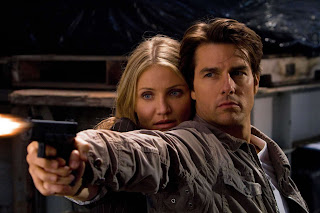
June Havens (Cameron Diaz) restores classic cars for a living. While catching a flight to attend her sister's wedding, she bumps into Roy Miller (Tom Cruise). On the plane he subdues a team of assassins and crash lands into a cornfield. June realizes Roy is a CIA agent and she is now mixed-up in his wild world.

Roy has seized a small perpetual energy battery developed by genius scientist Simon Feck (Paul Dano), to prevent his evil ex-partner agent John Fitzgerald (Peter Sarsgaard) from selling it to an international arms dealer. But Fitzgerald has convinced his boss CIA Director Isabel George (Viola Davis) that Roy has gone rogue. In the globe-trotting adventure that ensues, Roy has to keep June and Simon safe while revealing Fitzgerald's motives and ensuring the battery does not fall into the wrong hands.

Directed by James Mangold and written by Patrick O'Neill, Knight And Day is a glitzy frolic. While undoubtedly entertaining as an almost old-fashioned star vehicle for Cruise and Diaz, this is also an artificial and relatively soulless exercise, often overpowered by special effects and lacking in anything resembling character depth.

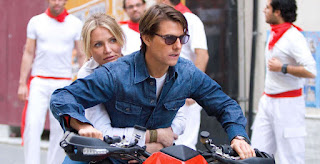
The plot is a classic and most basic MacGuffin escapade, a new and barely explained perpetual energy battery enough of a device to instigate numerous chases around the globe. The logic holes are glaring, but the set-piece highlights are plentiful and spiked with humour, including the fight on the plane followed by a raucous crash landing, a stunt-filled freeway chase and shootout, and a re-invention of the running with the bulls. All are well executed despite erring on the side of bloat, Mangold using a running joke about Roy drugging June to get her out of jams as a shortcut to not even bother with some of the narrow escapes. Cruise again throws himself into the stunt work to enhance the awe factor.

In terms of performances, Cruise and Diaz are celebrities enjoying themselves while trading on their pre-established personas and unburdened by the need to act. So little is revealed about Roy and June they may as well be glossy magazine cut-outs thrown onto the same page. Paul Dano, Peter Sarsgaard, and Viola Davis are wasted with even broader sketch strokes.

Knight And Day has all the planes, trains, automobiles, and motorcycles to create a festival of flashy kinetics, the toys plentiful even if the heart is missing.


All Ace Black Movie Blog reviews are here.

Wednesday, 11 December 2019

Movie Review: Swiss Army Man (2016)


A drama and adventure about an unlikely friendship forged in the pursuit of rescue, Swiss Army Man is a challenging journey into the disorienting recesses of mental illness.

Hank (Paul Dano) is stranded alone on an island. About to hang himself out of desperation, he notices a corpse (Daniel Radcliffe) washed up on the beach. With the dead body emitting a regular stream of farts, Hank rides the corpse like a jet ski to the relative shelter of an undefined wooded area, where scattered trash signals nearby civilization and the opportunity for salvation. Hank cannot bring himself to abandon the corpse, and they take shelter together in a cave.

The dead body helps Hank again by vomiting out a stream of drinkable fresh water, and then starts to communicate, adopting the name Manny and the persona of a naive but well-meaning friend. Hank introduces Manny to the picture of a dream woman called Sarah on his cell phone, leading to discussions about masturbation, confidence and Hank's difficult and repressed upbringing. Within his pants Manny's penis springs to action and starts pointing the way out of the forest. Hank carries his friend through the difficult wooded terrain, with Sarah's house as the intended destination.

At face value Swiss Army Man is dumbfounding and more than irritating. The film requires tolerance of a talking, water-emitting corpse that can launch itself like a rocket, endless conversations about masturbation, pop psychology discussions related to dysfunctional parenting, a fart routine repeated too many times, and a penis-as-compass. Hank also appears unable to navigate out of relatively easy terrain, and instead gets distracted by rudimentary role playing related to a singular encounter with an unattainable girl.

Co-directors and co-writers Daniel Scheinert and Daniel Kwan make none of it easy or rationally accessible, laying out events in a stubborn approximation of a dissonant reality where everything appears grounded but actually nothing is. Swiss Army Man works better as a searing exploration of a catastrophic mental illness and severe personality disorder, a representation of the world as only the traumatized and scarred Hank sees it. The final act reveals the very few clues as Hank's physical location is suddenly clarified and Sarah (Mary Elizabeth Winstead) and a few other characters come into focus.

Most of the film features Paul Dano and Daniel Radcliffe in a ghastly world of their own, and both actors pull off exceptionally difficult roles. Dano hints at the emotional distress corroding Hank, while Radcliffe gently normalizes the macabre concept of an animated corpse with humour and a surrender to an alternative reality.

Swiss Army Man demands a willingness to accept an incongruous sense of existence. It's a hazardous entertainment experience, but also a courageous one.


All Ace Black Blog Movie Reviews are here.


Saturday, 2 February 2019

Movie Review: Youth (2015)


A low-key drama reflecting on life, Youth toys with many deep themes but never quite commits.

Fred Ballinger (Michael Caine) is a retired classical music composer and orchestra conductor, vacationing at an exclusive Swiss spa with longtime friend Mick Boyle (Harvey Keitel), a film writer and director. Fred's daughter Lena (Rachel Weisz) arranged the spa vacation and is in a serious relationship with Mick's son. Fred is content to focus on quiet relaxation and otherwise do nothing, and rebuffs attempts by the Queen's representative to perform at a royal celebration. Mick still hopes to write and direct a film with his frequent collaborator actress Brenda Morel (Jane Fonda).

Other guests at the spa include actor Jimmy Tree (Paul Dano), who is resentful the public knows him only for his most frivolous role, an exceptionally overweight former star footballer, and a beauty queen. As the vacation progresses Fred expresses his sorrow at the loss of his wife, Lena freely admits her disappointment in her father before encountering a shock of her own, and Mick struggles to finish his screenplay before coming to terms with the status of his career.

Set almost entirely within a lavish upscale resort nestled in the scenic alps, Youth is full of rich visuals and piercing artistry. Director and writer Paolo Sorrentino is as interested in capturing stunning images as he is in recounting a story, and the film is frequently punctuated by exquisitely rendered tableaux featuring people and places almost suspended in time. Many of the creative shots focus on tertiary characters and have little to do with the main characters.

As for the content, Youth is more about commentary and exposition than traditional plot points. Life-long friendship, tension between father and daughter, recognizing the essence of retirement, and reflecting on life's achievements, losses and regrets are the prominent themes. The threads are only loosely tied together, and Sorrentino is happy to vaguely wave at the glistening recollection of youth from the opposite end of life's journey as a unifying concept.

With both Fred and Mick at the twilight of life, there is precious little space for characters arcs, and so the film settles for soulful backward glances. Eschewing flashbacks, Sorrentino relies on his cast to convey the past through the words and actions of the present. Michael Caine is more comfortable with a soulful role celebrating the great compositions and performances in Fred's memory. Harvey Keitel is required to stray just a bit too far from his traditional level of comfort in hardened roles.

Despite light touches of humour acting as a spice, the abundant creative imagery prolongs the running time to over two hours, and Youth inevitably suffers from slow pacing. The eclectic guests overstay their welcome, but they look good doing it.


All Ace Black Blog Movie Reviews are here.


Tuesday, 11 September 2018

Movie Review: Gigantic (2008)


An independent romantic comedy, Gigantic is subdued to the point of disappearing within itself.

Brian (Paul Dano) is a quiet mattress salesperson, and in his personal life waiting for approval to adopt a baby from China. After selling an expensive mattress to loudmouth businessman Al (John Goodman), Brian meets Al's daughter Harriett (Zooey Deschanel), who goes by the nickname Happy.

They start a relationship, but while he is quick to fall in love, she is unsure what she wants in life, leading to conflict. His parents (Jane Alexander and Edward Asner) try to be supportive. Meanwhile, a homeless man (Zach Galifianakis) regularly stalks and attacks Brian for no reason.

An independent production directed and co-written by Matt Aselton, Gigantic has the singular objective to portray a timid romance between a quirky couple. From the awkward pauses to the just-slightly-off dialogue and halting interactions, everything Brian and Happy do fits into the category of a nerdy, unsure and definitely-not-hip couple.

And that's about it. The 98 minutes contain precious little of note, Aselton padding the movie with multiple episodes featuring a rampaging homeless man who must signify something important in Brian's psyche. The few moments of good humour (usually courtesy of John Goodman) are more than counterbalanced by some out-of-place vulgarity (also usually courtesy of Goodman).

As for Brian and Happy, they go through the standard rom-com ups and downs, the adopt-a-Chinese-baby side quest rarely anything more than a slightly puzzling distraction. And the romance unfolds at an attitude mellow enough to easily induce a long sleep on one of Brian's mattresses (which many characters go ahead and do anyway).

Paul Dano and Zooey Deschanel are the perfect representatives for the we-are-so-not cool-that-we-are-cool set and take the material as far as it goes, which it turns out is not very far. But they will travel the short distance, you know, hesitantly.


All Ace Black Blog Movie Reviews are here.


Tuesday, 20 June 2017

Movie Review: Meek's Cutoff (2010)


A ponderous Western, Meek's Cutoff recreates life on the trail, and mostly reveals how boring it must have been.

It's 1845, in Oregon. A small group of travelers, including couples Emily and Solomon Tetherow (Michelle Williams and Will Patton) and Thomas and Millie Gately (Paul Dano and Zoe Kazan), is crossing hostile, desert-like territory, led by renowned guide Stephen Meek (Bruce Greenwood). Despite the women being confined to a subservient role, Emily begins to voice her opinion that Meek is actually lost. With the group running low on water, the sense of unease increases as day after day they move slowly through arid terrain and a succession of nondescript ridges.

The group dynamics change when they capture a lone Indian (Rod Rondeaux) who had been stalking them. The Indian cannot speak English, but may offer them a way to water, or may lead them into an ambush. Meek favours killing him, but Emily insists that he live. The travelers carry on, this time following the native, unsure of their fate.

An independent production directed by Kelly Reichardt, Meek's Cutoff is inspired by real events, and fully invests in a sense of realism. This is a slow-moving journey that starts and ends on the trail, with limited character definition and an emphasis on the physical rigours of opening up the west by walking across uncharted lands. Filmed in an old-fashioned boxy 4:3 aspect ratio, there is little plot to speak of, the people remain mostly sketches, and on-screen events consist mostly of people moving slowly across barren terrain. The six bulls pulling the three wagons are given almost as much prominence as the humans.

While there is educational value in accurately portraying the ordeals of the frontier, as a cinematic viewing experience Meek's Cutoff lacks almost everything necessary for engagement. The travelers are barely distinguishable, the repetitive drudgery is grinding, many scenes of dialogue are intentionally inaudible, and a good one third of the film takes places at night in barely-lit scenes. It's almost as though Reichardt sets out to make the 104 minutes as tiresome as possible to elicit sympathy for her group of migrants.

An indicative sequence has Emily needing to fire two musket shots into the air as a signal. This being 1845, the musket requires an elaborate procedure to reload. Emily's entire cumbersome multi-step method to load the powder, ready the gun and fire the second shot is captured by Reichardt's static camera over what seems like an eternity to make the point that firing more than one shot was no easy matter. Informative, but hardly inspirational.

Meek's Cutoff offers a few points of interest, but insufficient redeeming features to ease the slow motion agony on both sides of the screen.


All Ace Black Blog Movie Reviews are here.


Saturday, 1 October 2016

Movie Review: Ruby Sparks (2012)


A comic drama with plenty to say about the essence of romantic relationships, Ruby Sparks delves into the interface between idealized obsession and love, and goes looking for the ingredients required for successful couplehood.

Los Angeles-based writer Calvin Weir-Fields (Paul Dano) is rich, alone, and suffering severe writer's block. At 19 Calvin was proclaimed a genius and was sitting on top of the best seller charts with his debut book. Now 10 years later, he may already be a has-been. His father recently died and his girlfriend walked out on him, and other than his dog Scottie, he mainly interacts with his brother Harry (Chris Messina) and psychiatrist Dr. Rosenthal (Elliott Gould).

Calvin starts to have vivid dream of an idealized girlfriend, and Rosenthal encourages him to write what he sees. Calvin gets a burst of creativity and creates the persona of Ruby Sparks on paper. He is then shocked when Ruby (Zoe Kazan) appears as his real, in-the-flesh perfect live-in girlfriend, representing everything he had written. Better still, Calvin can fully define Ruby's personality and behaviour by adding sentences to his manuscript. After an initial ideal period of romance, he introduces her to Harry, his mother Gertrude (Annette Bening) and her artist boyfriend Mort (Antonio Banderas). But Calvin has a dour, self-obsessed personality, and Ruby starts to withdraw from him.

An independent production co-directed by Jonathan Dayton and Valerie Faris and written by Kazan (Elia's granddaughter), Ruby Sparks is a clever story of attachment and the fundamental search for happiness. Disguised as a comedy, featuring plenty of laughs and a superficial resemblance to Stranger Than Fiction, Ruby Sparks is much more interested in mastering a stunning head fake as it steers in darker directions. Calvin's story is about the distinction between loving yourself and loving another, and once Kazan shines the spotlight on her real intentions, the film delivers a devastating, soul searching blow to any facile definitions of the perfect mate.

With its brave mix of humour and unsettling intensity, Ruby Sparks received a limited release and barely found an audience. On the surface this is a comedy about an ideal perky girlfriend coming to life, an adolescent wish-fulfillment fantasy. But Kazan sprinkles the early scenes with hints of trouble ahead, the comedy laced with poison waiting to percolate. Calvin's abject loneliness is not conducive to functioning as a couple. A victim of too much too soon, he pushes away the label of genius but also hears it too often. In his visits to Dr. Rosenthal, he has to hold onto a toy bear. And his insistence on using an old fashioned typewriter is funny, but also smacks of illusions of grandeur.

Trouble starts when Ruby starts to drift away from Calvin, and he takes back to the typewriter to describe what he needs from her. In a stark demonstration of be careful what you wish for and the futile search for solutions through others to fundamental problems that reside within, Calvin cannot get it right. Whether he describes Ruby as fully attached to him or possessing an independent spirit, she can't deliver the fulfillment he craves. With the relationship on the rocks, a devastating encounter with Calvin's former girlfriend is a proverbial blow to his head.

The scene where Calvin is finally forced to confront his failings is emotionally devastating and almost agonizing to watch. The man with full control over another but no control over his narcissism has absolutely nothing to offer except the ability to deliver impassioned pain.

Paul Dano's screen persona of slightly worrisome intensity is perfectly suited to Calvin, and Dano creates a complex character, superficially nothing more than a little bit different, but churning through plenty of agony beneath the surface. Kazan has an equally difficult task and does not shy away from it. Ruby transitions from a perfect creation to a functioning woman influenced by Calvin's behaviour, and Kazan guides Ruby as she repeatedly chooses fundamental human free will anchored by the starting points set on Calvin's typewriter.

A courageously original take on the dynamics of romance, Ruby does create a blistering spark.


All Ace Black Blog Movie Reviews are here.


Saturday, 27 August 2016

Movie Review: Little Miss Sunshine (2006)


A road trip comedy, Little Miss Sunshine offers up a contemporary family dealing with a unique brand of turmoil. Both funny and poignant, the film succeeds by staying close to reality and true to its message.

The Albuquerque family of Richard and Sheryl Hoover is in disarray. Richard (Greg Kinnear) is a fledgling motivational speaker trying to secure a book deal for a hokey 9-step self improvement program. The frazzled Sheryl (Toni Collette), struggling to keep the family functional, picks up her brother Frank (Steve Carrell) from the hospital after he tried to kill himself over after a failed relationship. Frank is a homosexual professor of literature and an expert on the French author Proust.

Sheryl: I'm so glad you're still here.
Frank: Well, that makes one of us.

The Hoover's teenaged son Dwayne (Paul Dano) is severely antisocial, reads Nietzche, and has taken a vow of silence until he achieves his dream of entering flight school. Seven year old and slightly portly daughter Olive (Abigail Breslin) is thrilled to learn that she has qualified to enter the Little Miss Sunshine child beauty pageant, but this means that the family will have to travel to Redondo Beach, California. Richard's dad Edwin (Alan Arkin) lives with the Hoovers after having been kicked out of a retirement home. He is a curmudgeonly, foul-mouthed and disruptive presence, but is helping Olive prepare her routine for the pageant's skills competition. Edwin also dabbles in heroin.

Grandpa (Edwin): Every night it's the fucking chicken! Holy God Almighty! Is it possible, just once, we could get something to eat for dinner around here that's not the goddamned fucking chicken?

The family piles into their VW Van and embarks on the 800 mile road trip to California. Along the way not much will go according to plan: car trouble will slow down their progress; grandpa Edwin will encounter a significant mishap; Richard will finally receive news about his book deal, necessitating a quick detour to Scottsdale; the surly Dwayne will discover an unwelcome truth; and Frank will have to survive an awkward encounter with old acquaintances. As Olive's pageant draws closer, the family dynamics undergo dramatic changes.

[after being persuaded to go on the trip, Dwayne writes]
Frank: [reading Dwayne's writing] "Ok, but I'm not going to have any fun." Yeah, well, we're all with you on that one, Dwayne.

An independent film written by Michael Arndt and directed by the husband and wife team of Jonathan Dayton and Valerie Faris, Little Miss Sunshine is the little film that could. With a brilliant cast, well-defined characters and no shortage of funny moments, the road trip where everything can go wrong becomes a journey about a family rewiring all its connections. Filled with moments of delicious awkwardness and character-driven humour, the film achieves and sustains an irresistible tone of irreverent merriment.

The film is a compact 101 minutes, and Dayton and Faris nail the pacing. The film never descends into farce, nor does it ever get bogged down in the many familial dramas. The balance is perfect, the comedy and drama working together, the frustrations mounting as the laughs accelerate.

Dwayne [writes] Please don't kill yourself tonight.
Frank: Not on your watch; I wouldn't do that to you.
Dwayne [writes] Welcome to Hell.
Frank: Thank you, Dwayne. Coming from you, that means a lot. Goodnight.

The theme throbbing at the heart of the film is about the strength of family ties, where problem issues can be extremely annoying but also superficial, and real strength resides in pushing together in the same direction. The VW van conspires to remind the Hoovers of the value of teamwork by losing its clutch early and necessitating a push start after every stop, the image of individuals forced to push together becoming the enduring image of the road trip. Later Richard and Dwayne will encounter severe disappointments while Edwin's unique misadventure threatens to derail the entire trip. The light and innocent touch of Olive becomes the most tender of unifying causes and a reason to believe in a better tomorrow.

None of the turmoil is lost on Frank, who serves as a recovering observer. Now he gets a front seat (or middle seat) to a family swimming in chaos, but also learning to stick together and not give up despite setbacks. Frank evolves from morose to a supportive role as he discovers that even he can provide caring at crucial moments.

Dwayne: I wish I could just sleep until I was eighteen and skip all of this, high school, everything.
Frank: Do you know who Marcel Proust is?
Dwayne: He's the guy you teach.
Frank: Yeah. French writer. Total loser. Never had a real job. Unrequited love affairs. Gay. Spent 20 years writing a book almost no one reads. But he's also probably the greatest writer since Shakespeare. Anyway, he, uh, he gets down to the end of his life, and he looks back and decides that all those years he suffered, those were the best years of his life, 'cause they made him who he was. All those years he was happy? You know, total waste. Didn't learn a thing. So, if you sleep until you're 18-- ah, think of the suffering you're gonna miss. I mean high school? High school-- those are your prime suffering years. You don't get better suffering than that.

Little Miss Sunshine features a cast that could not have been more perfect. Abigail Breslin leads the way as the wide eyed, curious, talented and extremely grounded child navigating her way through the minefield of family emotions. Greg Kinnear has never been better, while Toni Collette delivers another stunning performance as the mother trying to anchor a flailing household. Paul Dano is a perfect fit for the dangerously tortured Dwayne, while Steve Carrell and Alan Arkin provide strong support and expert comic timing.

The family comes to terms that unique individuals make the whole richer, a lesson that hits home at the pageant. We have to let Olive be Olive is Sheryl's rallying call, and the young girl goes on to unintentionally outdo all the hypocrisy on display, her family right behind her on the imperfect stage of life.

Police Officer Martinez: Okay, you're out. On the condition that you never enter your daughter in a beauty pageant in the state of California, ever again... ever.
Frank: I think we can live with that.


All Ace Black Blog Movie Reviews are here.


Monday, 2 May 2016

Movie Review: There Will Be Blood (2007)


An epic oilman drama, There Will Be Blood is an engrossing character study with an astonishing subject matter. The fictional story of Daniel Plainview delves into the psyche of men brilliant enough and mad enough to independently create new industries out of nothing.

The film starts in 1898, with Plainview (Daniel Day-Lewis) mining a single hole in the New Mexico desert, looking for any precious mineral. By 1902, with a few men now working with him, he discovers oil in California. One of his men is a single dad and dies in a work accident. Daniel adopts the infant, known only as D.W., as his own. By 1911 Daniel is travelling the state and expanding his burgeoning oil business by persuading farmers to sell their land. Daniel uses D.W. to portray a wholesome family-man image.

Acting on a tip Daniel sets his sights on the rugged, rocky and remote property owned by the Sunday family near Little Boston. He reaches a deal with the patriarch Abel, but finds his son Eli (Paul Dano) quite a handful. Eli wants proceeds from the land sale to start his own church, and gets his way. Daniel ties up all the land around the Sunday property and is soon running a major drilling operation, looking for the elusive first oil strike.


Eli gets his church up and running as well. The two men don't get along, but both are eventually successful. Daniel does suffer several tragedies, and Eli attributes the mishaps to Daniel's refusal to respect Eli's church. With the oil business booming, Daniel remains fiercely independent, and his stubbornness will both help and hinder his prospects of getting his enormous oil supplies to market.

Directed and written by Paul Thomas Anderson as an adaptation of the Upton Sinclair book Oil!, There Will Be Blood is an audacious story of crooked business and suspect religion, nation building by deceit and soul seduction by chicanery, two sides of the same coin inspiring the transformation of rural America.

The film clocks in at 158 minutes, and its a continuously enthralling viewing experience. Anderson moves through the years quickly, and punctuates the film with powerful landmark events, including frequent, sudden work site mishaps as the rudimentary oil industry gets off the ground. An innovative Jonny Greenwood soundtrack contributes to the mood of civilization evolving into the industrial age where hitherto unimaginable riches are possible, and souls are now in need of more impassioned cleansing to wipe away the creeping greed.

The film uses an economy of words and the majesty of image, courtesy of cinematographer Robert Elswit, to create an astounding aesthetic. There Will Be Blood is about wide open spaces ready to be subjugated by men with grand ambition and the ability to sweet talk others out of land, money and the future. Anderson allows Daniel Plainview and Eli Sunday to represent themselves with no added commentary, and in the process avoids passing judgement. Neither the obsession with oil as a new business nor the creeping influence of pseudo religion as a vehicle for controlling the impressionable are presented as good or bad.

Plainview's traits include steely determination, a deep reservoir of stubbornness, and a talent for sweet-talking. He is a force of nature unleashed on the landscape, and neither the people nor the natural resources will be the same once Plainview and his ilk roll through. Anderson allows Eli Sunday fewer scenes to make his mark, but these are enough. Eli gets into his groove with passionate sermons complete with wide-eyed theatrics to represent devil banishment and fake healing, and his congregation eats up his babble as quickly and easily as they follow Plainview to the dream of riches.

Daniel Day-Lewis devours the film in one of his outstanding performances. His aura is dominant and overpowering, and Day-Lewis ensures that what Plainview doesn't gain by persuasion he obtains through intimidation. Remarkably, Day-Lewis is matched by Paul Dano, who was a late replacement for the role of Eli Sunday. Dano creates a low-key, surreptitious presence, erupting into life in his sermons but otherwise claiming the fake moral high ground in Eli's own pursuit of building wealth through worship.

There Will Be Blood ends with a confrontation for the ages, a scene of magnificent score settling and retribution, two ruthless men locking horns and representing the ultimate battle between the brain and the heart. Both happen to be corrupted beyond salvation, but that will not stop plenty of blood from being spilled.


All Ace Black Movie Blog Reviews are here.

Monday, 6 July 2015

Movie Review: Love And Mercy (2014)


A tender biography of musician Brian Wilson, Love And Mercy explores two episodes in the life of the Beach Boys' songwriter: as a young talent at the peak of his creative process, and 20 years later as an older man struggling to find love and regain his footing in the world.

The film unfolds in parallel narratives. In the mid-1960s, the Beach Boys are at the peak of their popularity. After suffering a panic attack, the band's inspiration and main songwriter Brian Wilson (Paul Dano) abandons the latest tour and returns to the studio to write and prepare the recording of the album Pet Sounds. Despite creating a wildly innovative sound, Wilson faces a mountain of criticism for veering towards a more serious musical direction and abandoning the band's successful formula of simple and fun surf tunes.

In the second narrative, it's the 1980s, and an older Wilson (John Cusack) meets Cadillac saleswoman Melinda Ledbetter (Elizabeth Banks). They start a romance but Melinda soon discovers that Brian is a deeply distressed man, suffering under the controlling hand of Dr. Eugene Landy (Paul Giamatti). Landy manipulates Wilson emotionally and keeps him on a steady diet of medications. Melinda has to decide how badly she wants to fight for the chance to salvage a true relationship.

Directed by Bill Pohlad, Love And Mercy closely follows the facts and unveils the ups and downs of superstardom, as expectations collide with personal ambition to create emotional train wrecks. The film is excellent at capturing a deeply personal drama as the young Wilson fights the demons of his upbringing and the desire of his bandmates to keep churning out hits. Instead he unleashes his instrumental and harmonic creativity with some substantial help from mind-altering substances, a decision that cements his status as a genius songwriter and sows the seeds of his decline.

The more modern narrative is almost equally compelling. Wilson the grown man is a shadow of his former self. Years of drug abuse led him into the clutches of Doctor Landy, and smelling a big pay day, Landy assumed control of Wilson's life. The romance between Wilson and Melinda is handled with the maturity that comes when adults carrying plenty of luggage fall in love, and the strength of their nascent bond becomes the foundation on which Melinda will decide to make her unlikely stand.

Pohlad recreates a carefree 1960s filled with parties, music and the heady promises spawned by early success. The film's best moments are in the studio, as Wilson works with experienced session musicians to bring his ideas to life, Love And Mercy a rare film that invests the time to show the hard work behind seemingly effortless creativity. The film peaks with Wilson and the band conjuring up the single Good Vibrations, an iconic song that defined the band and its generation. Good Vibrations was the massive hit that wasn't on Pet Sounds, but it could only have been created in the album's wake.

The 1980s segments are good, but just a bit less inspired. Landy emerges as a smarmy villain, and the battle for Wilson's soul between the evil doctor and the well-intentioned Melinda is still remarkable for being true. But the resolution is rushed, Pohlad's admirable dedication to tell two stories finally catching up with him and the 121 minutes of running time.

Both Paul Dano and John Cusack are excellent in portraying Brian Wilson at very different stages of his life. Dano creates a wide-eyed artist still not quite realizing neither the enormity of his talent nor the trouble he is hurtling towards. Cusack is all about Wilson as damaged goods, a fervent spirit still residing deep in his heart but for the moment concealed by years of abuse, both self-inflicted and dished out by the likes of Landy. Elizabeth Bank is a revelation as Melinda Ledbetter, a woman who has to convince herself that she has the inner strength to both love and fight for a passionate artist in trouble.

Love And Mercy treats its subject with deserved respect, a slice of musical history that transcends an over-hyped industry to celebrate an often overlooked prodigy.


All Ace Black Blog Movie Reviews are here.