Showing posts with label Chloë Grace Moretz. Show all posts

Wednesday, 24 December 2025

Movie Review: Oh. What. Fun. (2025)


Genre: Christmas Comedy  
Director: Michael Showalter  
Starring: Michelle Pfeiffer, Felicity Jones, Chloë Grace Moretz, Denis Leary, Jason Schwartzman, Eva Longoria  
Running Time: 108 minutes  

Synopsis: Every year, Houston housewife Claire (Michelle Pfeiffer) hosts the perfect Christmas family gathering, but she does all the work and feels under-appreciated, including by her husband Nick (Denis Leary). Eldest daughter Channing (Felicity Jones) has a family of her own and is emotionally neglected by her mom. Middle daughter Taylor (Chloë Grace Moretz) cannot sustain a relationship, while youngest child Sammy (Dominic Sessa) has just been dumped. Claire's family ignore her hints to nominate her for a "mother of the year" television show award, and when they all rush to a Christmas event and leave her behind, she snaps.

What Works Well: The focus on the often unsung work that mothers do to organize and host family events is laudable, and a few laughs work their way into this dysfunctional family's antics. The high quality cast is well above the bland material.

What Does Not Work As Well: The script leans into multiple vacuous cliches, from "keeping up with the Joneses" (Claire has impossibly perfect neighbours) to a grown woman craving recognition on a cheesy television show (Eva Longoria is the host). The family members cannot communicate without arguing, shouting, or insulting each other, and the absence of any genuine warmth or love undermines all the pat and predictable "hug it out" resolutions.

Key Quote:
Claire: Why does Saint Nick get all the credit?


All Ace Black Movie Blog reviews are here.

Saturday, 12 August 2023

Movie Review: Brain On Fire (2016)


Genre: Medical Drama
Director: Gerard Barrett
Starring: Chloë Grace Moretz, Carrie-Anne Moss, Richard Armitage, Tyler Perry, Jenny Slate
Running Time: 95 minutes

Synopsis: Susannah Cahalan (Chloë Grace Moretz) is a 21-year-old reporter at the New York Post. She starts to suffer from trance-like moments and hallucinations, and her symptoms worsen to constant headaches and disorientation, impairing her ability to function. Her co-worker Margo (Jenny Slate) and boss Richard (Tyler Perry) are exasperated, while her divorced parents Rhona and Tom (Carrie-Anne Moss and Richard Armitage) and boyfriend Stephen (Thomas Mann) try to help. Doctors misdiagnose Susannah's worsening symptoms as caused by exhaustion until Dr. Souhel Najjar (Navid Negahban) agrees to investigate her case.

What Works Well: The adaptation of Cahalan's autobiographical book raises awareness about a previously little-known brain inflammation illness, and the potential dangers of misdiagnosing physiological ailments as psychosis or schizophrenia. In the central role, a capable Chloë Grace Moretz generates sympathy and conveys the agony of a happily functioning life crashing against an inexplicable condition.

What Does Not Work As Well: Writer and director Gerard Barrett decides to focus most of the film on the slow onset of symptoms, from brief moments of dysfunction to seizures and a full-on catatonic state. The medical answer already resides in the title, but only the final 10 minutes are dedicated to a rushed diagnosis and resolution. It's almost as though only the less interesting first half of the story made it to the screen.

Conclusion: Educational, but dwells for too long in the patient waiting area.


All Ace Black Movie Blog reviews are here.

Sunday, 20 February 2022

Movie Review: 500 Days Of Summer (2009)

A sweet but ultimately still fickle romantic comedy, 500 Days Of Summer enjoys an amiable couple, hip music, and a scattered structure.

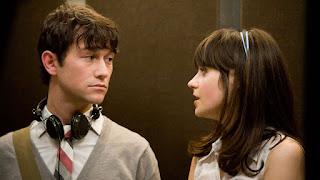
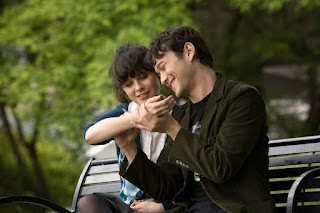
Working at a small greeting card company in Los Angeles, Tom (Joseph Gordon-Levitt) spots Summer (Zooey Deschanel), the new office assistant. They bond over music and he expresses interest in a relationship, but she does not believe in love and just wants to be friends, although after a few outings they start enjoying moments of intimacy. Summer encourages Tom to pursue his passion for a career in architecture.

As the relationship goes through ups and downs, Tom remains more invested than Summer. Exasperated by her mixed signals and the undefined nature of their relationship, his work suffers and he seeks advice from his young sister Rachel (Chloë Grace Moretz) and best friend McKenzie (Geoffrey Arend). A break-up and potential reunion beckon.

An independent production with a simple story of boy meets girl, boy loves girl, boy maybe loses girl, 500 Days Of Summer is made to appear more intriguing with plenty of time hopping. Tom and Summer's story takes place over 500 days presented non-linearly, every scene introduced by a number between 1 and 500. Director Marc Webb also rides good chemistry between a winsome, low-key couple played with appealing brightness by Gordon-Levitt and Deschanel.

Adding to the chic quotient is an eccentric soundtrack celebrating non-mainstream musicians (including The Smiths) popular among the throngs eager to be labeled non-mainstream, the independent if questionable attitude underlined by Summer proclaiming Ringo as her favourite Beatle. Another brow-raising cultural oddity emerges through expressed appreciation for architectural landmarks in Los Angeles.

Writers Scott Neustadter and Michael H. Weber otherwise navigate typical relationship challenges including a mismatch in commitment levels, twangs of jealousy, and misaligned communication styles. But try as it might, 500 Days Of Summer cannot escape most of the genre's contrivances, and Summer's "just friends with occasional benefits" stance is a rickety foundation from the outset. A misguided scene featuring the random public shouting of a body part name is cringey bad, and the final chapter is weak, contaminated by deceitful behaviour unbecoming of friends. 

With a mix of good days, bad days, and weird days, the outcome is bang on average.


All Ace Black Movie Blog reviews are here.

Wednesday, 6 January 2021

Movie Review: Greta (2018)

A psychological suspense drama, Greta delivers creepy enjoyment despite some clunky moments.

In New York City, Frances (Chloë Grace Moretz) is a twentysomething transplanted Bostonian who recently lost her mother and is enduring a strained relationship with her father. She works as a restaurant server and lives with her friend Erica (Maika Monroe). Frances finds an elegant handbag on the subway system and returns it to its owner, the elderly and lonely piano teacher Greta Hideg (Isabelle Huppert).

Frances starts a friendship with Greta and learns her husband has passed away and her daughter is away studying music in Paris. The two women establish a warm bond and Frances ignores Erica's warning that she may be getting too emotionally close to Greta as a substitute mother. But when Frances stumbles upon a creepy discovery in the older woman's closet, everything changes.

Starting off as a placid story about loss, loneliness and friendship, Greta gradually works its way towards Hitchcockian suspense bordering on horror territory. Director Neil Jordan co-wrote the script with Ray Wright, and demonstrates patience to introduce Frances, Greta and Erica as well-rounded characters, enhancing the emotional impact once peril is unleashed.

From the moment Frances awakens to evidence of deception, the tension mounts steadily with small acts of menacing harassment pointing to a deeply disturbed psyche. Jordan keeps the settings intimate, Greta's apartment a perfect trinket-laden psychological labyrinth, the subway system tunnels not offering any reprieve. Frances is nudged into a densifying web of trouble, Greta busily weaving an inescapable emotional and physical trap to try and fill the void in her soul.

Despite the delectable mood of dread, Jordan cannot avoid a few clunky moments and implausible character actions. On more than one occasion Frances passes up disengagement opportunities and makes blatantly ill-considered decisions solely designed to prolong the tension and sink her deeper into trouble. And Greta's behaviour unravels rather quickly towards flighty territory, testing internal consistency.

But bolstered by three excellent central performances, Greta survives the bumps. Isabelle Huppert expertly works towards the darkest corners of a twisted mind, and Chloë Grace Moretz finds the right notes as a victim experiencing the hazardous underbelly of innocent benevolence. Maika Monroe is a sharp presence as the trusty friend instinctively aware of the big city's inherent risks. The three leads are supported in small roles by Colm Feore as Frances' father and Stephen Rea as a private investigator.

In surreptitious style, Greta surveys the scope of friendship: from suffocation to salvation.


All Ace Black Blog Movie Reviews are here.

Wednesday, 6 May 2020

Movie Review: Hugo (2011)


A love letter to the origins of movie making, Martin Scorsese's Hugo is a story of loss and wondrous discovery through the eyes of children.

The setting is Paris in the early 1930s. 12 year old Hugo (Asa Butterfield) is an orphan living in the Montparnasse train station, operating the large clocks while evading the orphan-hunting station Inspector (Sacha Baron Cohen). Hugo idolized his father (Jude Law), and together they were fixing an old automaton when dad died in a fire. Hugo continues work on the automaton by stealing components from the toy store of the surly Papa Georges (Ben Kingsley).

After Papa catches the young boy in the act, Hugo meets the toy-seller's adventure-loving goddaughter Isabelle (Chloë Grace Moretz) and introduces her to the joy of watching movies. Together they finish fixing the automaton, and it reveals a visual clue related to legendary French filmmaker Georges Méliès. Hugo and Isabelle must now understand the clue's significance, a quest that introduces them to film historian René Tabard (Michael Stuhlbarg) and Papa's wife Jeanne (Helen McCrory).

The most un-Scorsese movie made by Martin Scorsese, Hugo is a child-friendly unabashed salute to the early days of cinema and the magical spell cast by moving pictures on the young and old. The healing properties of the flickering screen, from lifting spirits to changing life trajectories, are captured with loving affection through the experiences of curious children intent on finding adventure.

The film is slow to start, as Scorsese uses young Hugo (a vibrant Asa Butterfield) as an entry point to the grand world of a bustling train station. With frequently fluid and exploratory camerawork, Montparnasse is revealed as a public place teaming with travelers and workers, but also a private refuge where Hugo is stranded after the death of his father and disappearance of his uncle (the Dickinsian Ray Winstone). He uses his wits and talent to survive, inexorably drawn to the shop of Papa Georges to surreptitiously secure parts needed to repair the automaton.

Once Hugo befriends Papa's goddaughter Isabelle (Chloë Grace Moretz nailing the mischievous book lover with a penchant for over elaborate words) and the automaton reveals its secret, the film gains unstoppable nostalgic momentum. The past and the present come together to chart a new future, and Scorsese taps into a deep river of admiration for his industy's pioneers.

The film features several nods to the earliest achievements placed on film, including Train Pulling into a Station (Hugo's setting is no coincidence), Harold Lloyd's Safety Last! (neither are the clocks) and Georges Méliès's A Trip To The Moon. Meanwhile, the automaton central to the story is familiar from Metropolis.

Hugo is not without its faults. The film unnecessarily extends beyond two hours, with a few too many scenes of the Inspector and his dog chasing kids around the station. The whimsy factor sometimes trips into overindulgence, Scorsese seemingly entranced by the hidden maze of hallways connecting all the gears operating the station clocks.

But with a distinctive visual style, the transformative power of creativity easily rises to the top. Despite confinement to the forgotten corners of a train station, Hugo still uncovers the gateway to new worlds through the projector's flicker.


All Ace Black Blog Movie Reviews are here.


Sunday, 10 September 2017

Movie Review: Clouds Of Sils Maria (2014)


A life imitates art imitates life drama, Clouds Of Sils Maria offers layers of emotional discourse but remains narrowly constrained within a deeply personal story.

Maria Enders (Juliette Binoche) is a middle-aged Europe-based star actress going through an ugly divorce. With help from her ever-present assistant and friend Valentine (Kristen Stewart), Maria is on her way to Switzerland to accept an award on behalf of reclusive writer Wilhelm when the shocking news arrives that he has committed suicide.

Years earlier Maria had become a star playing an 18-year old provocative character called Sigrid who seduces middle aged mentor and businesswoman Helena in the Wilhelm-penned play Maloja Snake (a reference to stunning cloud formations through the Alp mountains). Now director Klaus Diesterweg (Lars Eidinger) wants Maria to take on the role of Helena in a reworking of the play, opposite brash up-and-coming American starlet Jo-Ann Ellis (Chloë Grace Moretz) as Sigrid.

Taking up residence Wilhelm's house in the magical settlement of Sils Maria deep in the Swiss Alps, Maria struggles to emotionally prepare for the role of Helena. Val helps her with line readings, but a rift starts to emerge between the two women, Val expressing admiration for Jo-Ann's in-your-face talent and lifestyle and Maria trying to adapt to being the older woman.

Directed and written by Olivier Assayas at Binoche's suggestion, Clouds Of Sils Maria contains parallels with Binoche's experiences at it exposes what goes on behind the curtains of a star performer's life. This is both the film's appeal and its limitation. For all its fly-on-the-wall, vulnerabilities-laid-bare credentials, for very long periods the script defaults to a two-person talkfest, Maria and Val engaged in cerebral conversations about the past and the present, revealing the plot of Maloja Snake through line readings as Maria struggles to face her present and future and let go of her ingenue past.

The rehearsal scenes intentionally meld the lines between Helena / Sigrid and Maria / Val, and it's often pleasantly unclear what is a play and what is real life. To the extent that these scenes work at all is testimony to two flowing performances from Binoche and Stewart, heartily recruited as volunteer comrades representing their age groups.

The broader applications of the dialogue to Maria's life, actresses' dimming wattage and appeal as middle age takes hold in a merciless industry, inter-generational divides and more broadly the rapidly changing role of women from young disruptors to mature victims of disruption are all compelling. But these are themes that reside between the lines of Clouds Of Sils Maria. The film is to be commended for triggering conversations; in itself, the viewing experience sometimes resembles watching paint dry.

Ethereal elements creep into the story's final act, Maria facing up to her prospects and letting go of the past, in some cases literally. Clouds Of Sils Maria sits heavy in the sky, a largely private battle between provocative and pretentious.


All Ace Black Blog Movie Reviews are here.


Saturday, 9 September 2017

Movie Review: Dark Places (2015)


A crime thriller mystery melding the past with the present, Dark Places has a promising, brooding premise but flubs the resolution.

The film takes place in two timelines: 1985, when a notorious crime happened, and the present day. In 1985, eight year old Libby Day is the only survivor of a Kansas farmhouse massacre that kills her two sisters and her mother. Based on young Libby's confused and fractured testimony, her teenaged brother Ben, a heavy metal music fan who dabbled in Satanism, is convicted.

In 2015, Libby (Charlize Theron) has wasted her life doing nothing and living off the charity of others. Now nearly broke, she accepts an offer from amateur murder sleuth Lyle Wirth (Nicholas Hoult) to research the real story of what happened at the Kansas farmhouse. Libby visits Ben (Corey Stoll) in prison for the first time and starts to piece together the events preceding the murders.

Prior to the massacre Libby's mother Patty (Christina Hendricks), divorced from the sleazeball Runner (Sean Bridgers), was struggling to make ends meet, while Ben was spending time with his older girlfriend Diondra (Chloë Grace Moretz) and criminal hardhead Trey Teepano. Ben was also facing accusations of sexually abusing young girls, including Krissi Cates. The grown up Libby tries to track down Diondra, Krissi and Trey among others to finally understand what really happened and why.

Based on the book of the same name by Gillian Flynn (of Gone Girl fame), Dark Places builds up a satisfying head of steam as the past and present story of Libby Day is revealed. Director Gilles Paquet-Brenner actually plays in three time zones, adding in increments a jerky recreation of the night of the murders, mostly from the muddled perspective of young Libby, to the two main narratives.

And there are enough subtle riddles about the events of the night to create a rich atmosphere of evil, and open up possibilities for motives and villains. Many family members, friends, associates and hangers on had reasons to unleash violence on the fateful night. At the centre of the mayhem then and still suffering now, Libby has to decide how much she wants to care, and whether poking away at the scars of the past is worth the emotional pain.

But the narrative thrust starts to unravel the closer Paquet-Brenner gets to his conclusion, and in some ways the story picks the weakest path towards resolution. The ending is rushed and jumbled, and in many ways inconsistent with some of the more determined character traits that the film invests in.

The choice for the two lead actresses gets in the way. Charlize Theron and Christina Hendricks don't do anything wrong; they are simply too glamorous for their roles, and have to work back from the starting line to convince as rural, poor and borderline white trash folks. Theron spends the entire movie covering her hair and eyes under a baseball cap in an unsuccessful attempt to get into the skin of a woman with nothing going for her except an offer for a few paltry bucks from true-life murder nerds.

As for Lyle Wirth and his club of amateur crime solvers, they fade out of the story after contributing a base level of interesting irritation.

Dark Places launches into a captivating and twisty mystery, but flubs the landing.


All Ace Black Blog Movie Reviews are here.


Saturday, 14 January 2017

Tuesday, 3 January 2017

Movie Review: Laggies (2014)


A romantic comedy set in the world of aimless adults who have failed to launch, Laggies (also known as Say When) lives down to its heroine's ethos and never gets going.

Ten years after graduating from high school, Megan (Keira Knightley) still has no job, no direction in life, and is not yet married to her high school sweetheart Anthony (Mark Webber). With Megan's best friend Allison (Ellie Kemper) tying the knot, Anthony gathers up the courage to propose but Megan cannot commit, and things get worse when she catches her father (Jeff Garlin) cheating on her mother.

Megan meets teenager Annika (Chloë Grace Moretz) and the two become unlikely friends. Instead of attending a self-help seminar, Megan decides to hide out at Annika's house for a week to reset her life's priorities. She meets Annika's single dad Craig (Sam Rockwell), a caustic divorce lawyer, and gradually a relationship develops between them, complicating Megan's friendship with Annika and her supposed commitment to Anthony.

Directed by Lynn Shelton, written by Andrea Seigel and set in Seattle, Laggies is a mundane affair, far from offering anything new to the world of romantic comedies, and more tedious than most in portraying an aimless protagonist waiting for the world to happen around her. With lies and alcohol as trigger points for most of what happens in her life, Megan is generally unlikable, and Keira Knightley's over-animated performance does not help. The concept of an adult hiding out in a teenager's bedroom as an escape from life stretches the bounds of what is cute even for this genre.

The better moments arrive courtesy of Sam Rockwell having fun as an acerbic lawyer cross-examining a stowaway in his daughter's bedroom, and Chloë Grace Moretz delivering another promising performance as a teenager charting her tentative course into the world of adulthood and not necessarily admiring all the behaviour she observes.

Laggies meanders along to the requisite resolution, everything patched up superficially to justify the sappy ending, although this is one case where thanks to the rampant immaturity on display it's easy to imagine arguments and separations soon after the credits fade.


All Ace Black Blog Movie Reviews are here.


Sunday, 9 October 2016

Movie Review: The Equalizer (2014)


A polished action thriller, The Equalizer offers plenty of style and an immersive Denzel Washington performance, but also a limited premise stretched over an unnecessarily long running time.

In Boston, former CIA operative Bob McCall (Denzel Washington) lives a lonely quiet life, works at a home improvement store, and still grieves the loss of his wife. Most nights he is unable to sleep and whiles away the hours at a 24/7 diner, where young prostitute Alina (Chloë Grace Moretz) is also a regular. Bob and Alina strike up conversations and become friends of sorts. When Alina gets badly roughed up by her Russian mobster pimp, Bob hunts down the den of gangsters and kills five bad guys in 28 seconds.

Unfortunately, the dead Russians are part of a much larger criminal cartel controlled by the Moscow-based Pushkin (Vladimir Kulich) and involved in bribery, corruption and extortion on a national scale. Pushkin dispatches his top henchman Nicolai (Marton Csokas) to find out who killed his men. Nicolai teams up with corrupt police officer Frank Masters (David Harbour), and they start to hunt down McCall to seek revenge.

Directed by Antoine Fuqua and based on the 1980s television series, The Equalizer oozes with  elegance. While the story is standard fare involving hissing Russian villains and an incredulously indestructible hero, Fuqua's weapon is Denzel Washington in fine form. Together director and star create enough depth in the central character to elevate the film above the merely ordinary.

McCall suffers from a combination of obsessive compulsive disorder, insomnia, and leftover depression from his wife's death. These ailments are hinted at on the margins of the film, creating enough of a tantalizing taste that this is a person with a rich emotional history worth spending time with, despite his loner tendencies.

Fuqua's best and worst attributes are revealed in the two highlight action scenes. McCall's cool invasion of the gang hangout to eliminate the scum responsible for Alina's agony is a masterpiece of build-up and execution. But later McCall has to deal with a dozen or so heavily armed goons in a home improvement warehouse store. That scene is both prolonged to the point of exhaustion and starts to resemble a slasher film parody, with McCall taking down his enemies one by one with an assortment of power tools rigged into weapons of death.

Marton Csokas provides a sturdy enough counterpoint to Washington, but Chloë Grace Moretz is shortchanged as she disappears from the film for a very long time. Melissa Leo and Bill Pullman appear in one scene as McCall's former colleagues from his prior life with the CIA.

The Equalizer is effective in what it does, but it does relatively little and for too long.


All Ace Black Blog Movie Reviews are here.


Tuesday, 16 August 2016

Movie Review: Texas Killing Fields (2011)


A bleak crime drama, Texas Killing Fields offers a moody atmosphere, but is undermined and ultimately sunk by a cluttered and wayward script.

In Texas City, the body of a brutally murdered young woman is discovered. Detectives Mike Souder (Sam Worthington) and Brian Heigh (Jeffrey Dean Morgan) start to investigate. Meanwhile Detective Pam Stall (Jessica Chastain) is responsible for the surrounding rural area, notorious for the high number of murdered and missing women dating back to the 1970s. Pam also has a missing woman case on her hands and calls for help from Brian and Mike, the latter being her former husband.

Complicating life for the detectives is concern for Anne Sliger (Chloë Grace Moretz), a young teenager living with her white trash single mother Lucie (Sheryl Lee) and older brother Eugene (James Hebert). Lucie is a local whore of sorts, and the menacing Rhino (Stephen Graham) appears to move into her house to help himself to a piece of her action.

Mike wants to focus his effort on the Texas City murder, while Brian, a deeply religious man, is more inclined to widen the investigation to help Pam and include the surrounding swampy fields. Mike zeroes in on pimps Levon (Jon Eyez) and Rule (Jason Clarke) as potentially involved in murder, while Brian enlists the services of a phone company contact to try and triangulate the origins of cell phone calls linked to the murders. The detectives soon find themselves being taunted and drawn into a deadly game with the mysterious killer.

Inspired by real events and directed by Ami Canaan Mann (daughter of Michael Mann), Texas Killing Fields throws plenty of characters and events of the screen, but fails to make any of them count. Three detectives, four creepy possible villains, several victims, many crime scenes, plus a few side-plots: there is plenty going on, and unfortunately none of it captivates. The film is stylishly assembled and the lead performances are professional enough, but the final product is badly let down by a confused script and poor execution.

The film is written by Don Ferrarone and it does appear that in trying to create a dramatic fictional narrative, the enormity of the real life agonies and tragedies of the Texas Killing Fields along Interstate 45 overwhelmed the writing. The resultant tone is simply off. Somehow, the most important debate presented in the film is whether Mike and Brian should or should not help Pam, who is outside their jurisdiction. On multiple occasions Mike berates Brian for venturing into the hinterlands instead of sticking close to home. With everything going on, it's a stupefying issue to repeatedly waste screen time on.

Meanwhile, we learn precious little about Mike, Brian and Pam, except that they are grim faced, dour and fairly snappy with each other. The ashes of the relationship between Mike and Pam just scatter in the wind, serving no purpose. Similarly Brian's religious fervor is introduced and forgotten.

The murder suspects fare much worse. Levon, Rule, Rhino and Eugene must be despicable characters because they scowl at the camera, have tattoos, and generally look the way pedophiles and pimps are supposed to. They remain prototypical bad guys with no backstory. Even less is known about the murder victims and their families. And then Mann throws into the mix even more peripheral characters in the form of prostitutes and runaway kids, who drift in and out of various scenes and serve to further distract from a focus that is never found.

With Worthington, Morgan and Chastain stuck in angry detective mode, it is left to Chloë Grace Moretz and Sheryl Lee to deliver the most affecting performances in relatively small roles. Moretz is steady, her vulnerability representing potential victims who come from hopelessly broken homes. Lee is the stand-out performer as Lucie, a woman so far gone into desperation that she routinely kicks her daughter out of the house to better serve her sleazy clients.

Despite earnest intentions and no shortage of talent, Texas Killing Fields is messier than grasslands trampled by an unruly herd, and a regrettably wasted opportunity.


All Ace Black Movie Blog reviews are here.

Saturday, 6 September 2014

Movie Review: If I Stay (2014)


A simple love story with an ethereal layer examining the value of life, If I Stay is affectionate without breaking through to any deep levels of emotional connectedness.

Mia Hall (Chloë Grace Moretz) is a high schooler and talented cellist in Portland, Oregon. She lives at home in a loving family consisting of with her dad Denny (Joshua Leonard), mom Kat (Mireille Enos), and younger brother Teddy. Mia is going through a turbulent relationship with Adam Wilde (Jamie Blackley), a guitarist one year older and the leader of an up-and-coming local rock band.

On a family outing, the Halls are involved in a horrific car crash, and all are transferred to hospital, fighting for their lives. Mia is in a coma, and her spirit is suspended between life and death, a silent but anguished witness to the frantic activity at the hospital. In flashback, the story of her passionate romance with Adam is recounted, including the tentative beginnings, the joyous blossoming, and the tender physical closeness. As they both face the prospects of continued success in their chosen fields of music, their relationship is strained. Back at the hospital, Mia has to decide if life is worth the challenges that come with living.

If I Stay is a simple story of teenage love wrapped up in a metaphysical state of suspension between life and death. The film is overflowing with good intentions, but succeeds in being mostly pleasantly average.

Most of the drama delves into the details of humdrum first love between the popular guy and the self-conscious serious girl. The Shauna Cross script (adapting the Gayle Forman book) doesn't seem to know what to do with the more interesting life or death choice facing the comatose Mia. Too many of the hospital scenes degenerate into Mia aimless running down hallways, silently debating whether to walk into the bright light, and passively observing as the doctors, nurses and visitors fuss around her bed-ridden body.

Fortunately, director R. J. Cutler has a few good elements to play with, and he puts them to good use. Mia's family dynamic is refreshingly stable, with a quirky modern background. Dad is an ex-drummer in a garage band who gave up the fading dream of stardom and settled down as a teacher to provide stability for his kids. Mom is a travel agent not beyond phoning in sick to enjoy a snow day with her family. Mia is an ordinary teenager, talented at the cello and facing an early choice between the Julliard school of music and staying close to Adam, himself frequently on the road.

Music plays a big part in If I Stay, and Cutler magically weaves the sounds of life into the story while avoiding obvious obtrusiveness. Music is in Mia's blood, although her chosen instrument is not what her parents may have anticipated, while music is Adam's salvation. The snippets of music from both their lives move the story forward, the performances of Adam's band nudging him towards a break-out record deal and Mia's dedication to the cello culminating in a spiritual performance when it matters most.

The setting of Portland and the surrounding beauty of the Northwest (filming actually took place in and around Vancouver, British Columbia) also conveys middle class normalcy, a naturally beautiful but unglamourous place where people grow-up, live their dreams, fall in love, and sometime unexpectedly die.

The film rides on the young shoulders of Chloë Grace Moretz, and she is fully up to the task. While sometimes struggling against the creakier aspects of the script, Moretz puts on a fine show as a quiet yet confident teenager, a bit self-conscious, eager to break out of her tender shell and yet not swept up by the notoriety of dating the coolest up-and-coming musician in town. Blackley as Adam is an adequate combo of edgy, talented, ambitious, and compassionate, while Stacy Keach shows up as Grandpa and contributes plenty of grizzled presence.

Heartfelt without being taxing, If I Stay is worth sticking around for.


All Ace Black Blog Movie Reviews are here.