Showing posts with label Sam Rockwell. Show all posts

Monday, 14 October 2024

Movie Review: The Best Of Enemies (2019)


Genre: Biographical Drama  
Director: Robin Bissell  
Starring: Sam Rockwell, Taraji P. Henson, Anne Heche, Bruce McGill  
Running Time: 133 minutes  


Synopsis: The setting is Durham, North Carolina in 1970, with the schools still segregated. C.P. Ellis (Sam Rockwell) is the local leader of the Ku Klux Klan, while Ann Atwater (Taraji P. Henson) is a black rights organizer. When a black school is damaged by fire, a community debate erupts on whether to allow the black students to attend a white school. Bill Riddick (Babou Ceesay) is recruited to organize a community charette and cajoles C.P. and Ann into the co-chair roles, exposing the two adversaries to opposing perspectives.

What Works Well: Based on actual events, writer and director Robin Bissel crafts a tense but hopeful drama of simmering racial conflict. Under the shadow of a virulent white supremacist culture intent on protecting the status quo, C.P. and Ann co-exist in the realm of economic stress, the search for belonging, and caring for family. The school debate becomes a catalyst to seek commonalities, the community's core evolved enough to gather and argue within a civilized process. C.P.'s journey is more profound, Sam Rockwell's every gesture and glance a study in conflicted complexity.

What Does Not Work As Well: The running time would have benefited from a 15 minute trim, and some of the sermonizing is delivered with straight-to-the-camera bluntness. Ann Atwater is often portrayed as just angry, and her backstory is shortchanged in favour of emphasis on C.P.'s reality.

Key Quote:
Ann (to C.P.): Same God made you, made me.


All Ace Black Movie Blog reviews are here.

Friday, 7 April 2023

Movie Review: Heist (2001)


Genre: Crime Thriller
Director: David Mamet
Starring: Gene Hackman, Danny DeVito, Delroy Lindo, Sam Rockwell, Rebecca Pidgeon
Running Time: 109 minutes

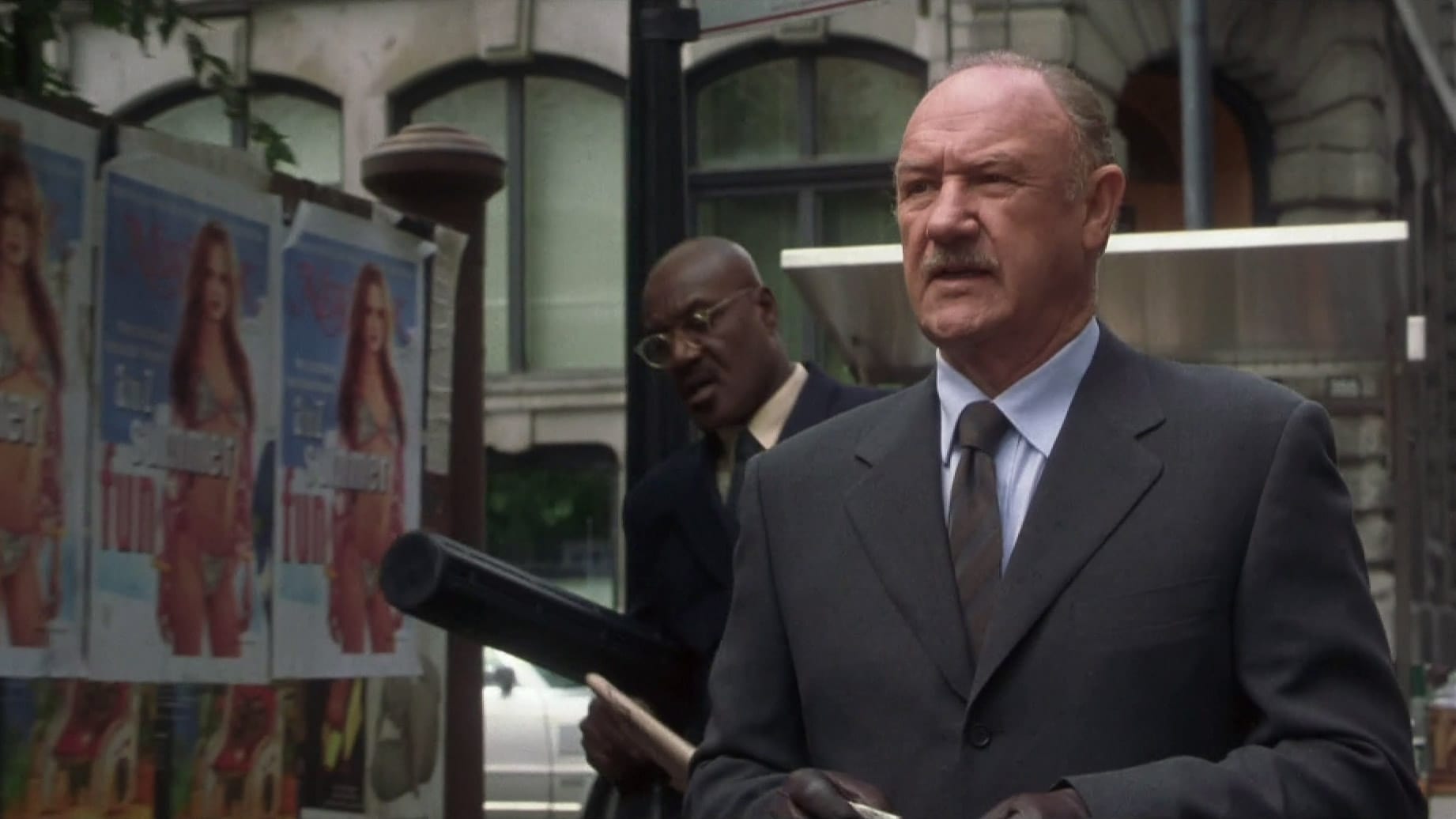
Synopsis: A specialist in high-value heists, Joe (Gene Hackman) leads a gang consisting of wife Fran (Rebecca Pidgeon) and long-time associates Bobby (Delroy Lindo) and Pinky (Ricky Jay). After his face is exposed during a jewelry store robbery, Joe seeks to retire but has a falling out with criminal financier Mickey (Danny DeVito). He is pressured to proceed with a gold heist and forced to include Mickey's nephew Jimmy (Sam Rockwell) in the plan. 

What Works Well: David Mamet directs with cold efficiency, the dialogue lines are packed with zing, and the action scenes are coiled with tension. Gene Hackman is dependably cerebral.

What Does Not Work Well: The remarkably obscure plot details enable limitless opportunities for requisite backstabbing and double-crossing, which means all the displayed actions and motivations are immediately labeled dubious. The characters remain stubbornly superficial, with Danny DeVito phoning in his performance. The plot is riddled with logic gaps and the final act unravels into an anything-goes muddled mess.

Conclusion: The quest for postured cleverness sacrifices plot fundamentals.


All Ace Black Movie Blog reviews are here.

Friday, 1 July 2022

Movie Review: The Assassination Of Jesse James By The Coward Robert Ford (2007)

A melancholy western, The Assassination Of Jesse James By The Coward Robert Ford traces events leading to the death of the famous outlaw. 

In Missouri of 1881, 19-year-old Robert Ford (Casey Affleck) sidles up to the outlaw Jesse James (Brad Pitt) and his older brother Frank (Sam Shepard). Jesse is all of 34 years old but already a legend, celebrated in local comics as a Robin Hood-type southern hero standing up to the unionists. But now the decimated James gang is reduced to seeking help from any local bandits, opening the door for Robert and his brother Charley (Sam Rockwell).

Other hangers-on and wannabes include scuzzy relatives and friends like Wood Hite (Jeremy Renner) and Dick Liddil (Paul Schneider). Battling insomnia and internal demons, Jesse is in a state of constant agitation and finds it difficult to trust anyone. But he is revered by Robert, who is equal parts star-struck and ambitious beyond his talents. As jealousies and tensions tear the gang apart, Jesse's options narrow, and Robert ponders his next move.

In addition to the long-winded title only marginally summarizing 160 minutes of cinema into 10 words, the adaptation of Ron Hansen's 1983 historical novel suffers from a few other problems. This is a story of outlaws plotting against outlaws, thieves and murderers turning against each other and settling scores in slow motion. Allies and enemies are one and the same, and in each other's company they either sleep lightly, or not at all. With none of the characters deserving of sympathy, the plot is an emotional slog until everyone meets their deserved comeuppance. 

The pacing is slow, the dialogue exchanges are perforated by ponderous gaps, and the overall mood is of grave predeterminism, the characters seemingly aware of the outcome having no doubt read the full title. Women are essentially non-existent in this story. Mary-Louise Parker and Zooey Deschanel show up on the margins, but have no more than ten words to say. Important characters like Frank James just drop out without explanation. And despite the mammoth length, writer and director Andrew Dominik still resorts to wordy narration, demonstrating a lack of confidence in the on-screen material.

But some strong positives do maintain interest. Roger Deakins' cinematography is often spellbinding, and the music (by Nick Cave and Warren Ellis) adds soulful possibilities. Dominik's prose, once finally articulated between the pregnant pauses, is often achingly lyrical. And despite the epic scope, ultimately the drama distills to an intimate psychological showdown between two men. 

The study of hero-worship is superb, Robert Ford a restless kid entranced by Jesse James and dreaming of achieving similar exploits - maybe by replacing his hero. The dynamic between the two men is often electric, Dominik teasing out the danger of lies and the importance of reading silence and observing body language. Brad Pitt and Casey Affleck deliver engrossing performances full of restless agitation, bringing to life two men testing confidence limits as they toy with death.

The Assassination Of Jesse James By The Coward Robert Ford is frustratingly overblown and self-aggrandizing. It is also absorbing, visually captivating, and brilliantly well-acted.


All Ace Black Movie Blog reviews are here.
Monday, 11 October 2021

Movie Review: Richard Jewell (2019)

A biographical drama about a simple man thrust into the national spotlight for all the wrong reasons, Richard Jewell examines the perils of over-zealousness.

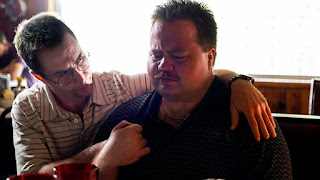
In 1986, Richard Jewell (Paul Walter Hauser) is a mail delivery clerk at an Atlanta law firm. Attorney Watson Bryant (Sam Rockwell) shows some compassion towards Richard, who is overweight and awkwardly over-intrusive, but also respectful of government institutions and planning a law enforcement career.

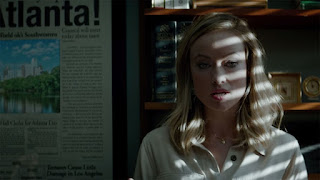
Ten years later Richard remains positive despite being fired from a campus security job for overstepping boundaries. Still living with his mother Bobi (Kathy Bates), Richard secures an Olympic Games security guard position and is assigned to Centennial Park where crowds gather for nightly concerts. FBI agent Tom Shaw (Jon Hamm) and ambitious Atlanta Journal-Constitution reporter Kathy Scruggs (Olivia Wilde) are also covering events at the park.

During a concert Richard spots a suspicious package, raises the alarm, then helps move crowds away. The bomb explodes, causing casualties, but Richard's actions save lives. Initially hailed a hero, the FBI soon suspect Richard is the bomber with a personal glory motive. The suspicions are leaked to Kathy and she splashes the story on the newspaper's front page, turning Richard's life into a living hell. He reaches out to Watson, the only lawyer he knows, for help.

Based on real events, Richard Jewell is the tragedy of a well-meaning ordinary man caught in a maelstrom. Written by Billy Ray and directed by Clint Eastwood, the film maintains focus on Jewel, revealing a kind if slightly tactless personality, always seeking to serve even if his methods veer towards pushy. He achieves a moment of genuine heroism; it's snatched from him by officious incompetence.

Richard displays a life-long streak of over-eagerness. But the damage is caused by the toxic combination of an incompetent investigation adopting underhanded tactics, the unconstrained ambition of a newspaper willing to reveal the name of a suspect with no corroboration, and finally senseless media hordes respecting no boundaries and engaging in character assassination and conviction by innuendo before Jewell is even charged (he never was). 

The FBI's agent Tom Shaw is a composite, and Eastwood skips past the agency's detective work beyond suspecting the wrong man. Kathy Scruggs is the real journalist who ran with the story based on a leak, and here she deploys naked seduction in pursuit of a career-making story.

At 129 minutes, this is a weighty drama, and the pacing falters after the cloud of suspicion settles on Bobi's house. The subsequent defensive actions and fight-backs are orchestrated by lawyer Watson Bryant as Richard takes a back seat, his respect for law and order rubbing against the government-instigated wrath against him. But thanks to an elegant Paul Walter Hauser performance, Richard Jewell enshrines the legacy of a man who did right, only for others to fumble their responsibilities.


All Ace Black Movie Blog reviews are here.

Tuesday, 6 July 2021

Movie Review: The Way Way Back (2013)

A coming of age dramedy, The Way Way Back dives into the pool of introverted teenaged gawkiness to discover the birth pangs of emerging maturity.

Duncan (Liam James) is a quiet 14 year old, suffering through the getting-to-know-you phase with Trent (Steve Carell), the oily new boyfriend of his mother Pam (Toni Colette). Trent's older teenaged daughter Steph (Zoe Levin) is happy to ignore Duncan. The quartet head to Trent's summer vacation home near Cape Cod, where they meet vivacious neighbour Betty (Allison Janney) and her teenaged daughter Susanna (AnnaSophia Robb). 

Trent and Pam start spending long hours with Trent's friends Kip and Joan (Rob Corddry and Amanda Peet), who own a pleasure boat. Left on his own and feeling like a complete misfit, Duncan wanders towards the cheesy Water Wizz water park where he meets carefree manager Owen (Sam Rockwell) and his co-worker/maybe girlfriend Caitlin (Maya Rudolph). Duncan's summer adventures start to improve when Owen takes him under his wing and Susanna attempts a friendship, but Trent's nauseating smarminess is never far away. 

Co-written and co-directed by Nat Faxon and Jim Rash in their debut, The Way Way Back is a tender poke at that one memorable growing-up summer when misery, company and emotional growth collide. While the themes, incidents and overall mood of awkward bemusement bordering on despair are not necessarily new, Faxon and Rash mush enough cringey and hopeful moments together to build well-rounded characters.

Duncan is a mostly silent adolescent caught in the treacherously funny terrain between kid and adult, with that inherent perceptive child's ability to see right through Trent's facade and into his rotten core. That mom Pam is not ready to acknowledge her new boyfriend is a scumbag only makes Duncan more miserable, along with the indignity of being the only person having to wear a flotation device on the boat.

But a summer of long days also offers unexpected opportunities for positive encounters. Owen is a man jealously safeguarding his inner teenager's attitude towards life, and recognizes that Duncan just needs a nudge of belief and surrogate fatherhood to break out of his shell. Meanwhile Susanna is attempting to avoid getting blown away by the hurricane generated by her mom Betty, and sees Duncan as a calm harbour worth exploring.

Faxon and Rash create a modest middle class beachside community teetering between fading small town charm and suburban dullness, a place where every family is broken, breaking, or patched-up, and the dilapidating water park still attracts a crowd although the beach is minutes away. In this milieu Sam Rockwell is the standout performer, having a blast as a caring man perfecting the couldn't-care-less schtick. Liam James speaks volumes with pained expressions of emotional torture and few words. Steve Carell oozes barely disguised toxins, while Allison Janney allows easily excitable neighbour Betty to take flight.

The Way Way Back zooms through the twists and turns of water park tubes, dark places to navigate on the way to a bright new splash.


All Ace Black Movie Blog reviews are here.

Wednesday, 18 November 2020

Movie Review: Jojo Rabbit (2019)

A coming of age fantasy adventure set at the end of World War Two, Jojo Rabbit is an inventive story of a child's awakening as the world crumbles.

As Berlin braces for a final battle towards the end of the war, Jojo (Roman Griffin Davis) turns ten and is eligible to join the Hitler youth. He fantasizes that Hitler (Taika Waititi) is his intermittent kooky companion. Jojo is the only surviving child of single mom Rosie (Scarlett Johansson), who secretly advocates against the Nazi party. Jojo attends a training camp run by the cynical Captain Klenzendorf (Sam Rockwell), where he learns he is not capable of violence and earns the nickname Jojo Rabbit.

But everything changes when Jojo stumbles upon Elsa (Thomasin McKenzie), a Jewish girl stashed by Rosie in a secret room within the walls of their house. Indoctrinated by anti-Jewish hatred Jojo is initially as shocked and hostile as a ten year old can be, but gradually the two start to communicate.

An irreverent satire with a warm heart, Jojo Rabbit bravely combines the violent death throes of a fascist regime with a tender story of a boy who may yet find salvation. Director Taika Waititi also co-produced and wrote the screenplay (in addition to playing Hitler), and with wicked humour and edgy encounters seeks the rebirth of the next generation from the ashes of disaster.

Visually, Waititi's aesthetic carries echoes of Wes Anderson's joyful symmetry and vivid colours, but with more perspective depth. Berlin is recreated as devoid of fighting-aged men, a city still spouting regime slogans while awaiting a doomsday fate.

A deft touch is required to tease laughs out of tragedy, and Waititi find the perfect balance. Moments of trauma are all around Jojo: anti-regime advocates are hung in the local square, mean looking dressed-in-black Jew hunters invade and search his house, and the final battle for Berlin features the needless slaughter of bumbling women, children and the elderly duped into a futile fight. The film not only finds the ludicrous underbelly of a world gone mad, but also provides young Jojo with a way out.

His evolving relationship with Elsa forms the warm heart of the story, and here Waititi excels in barbed exchanges puncturing a rotten regime's pitiful embrace of irrational hatred. Elsa emerges as not just a representative of all who suffered, but also a courageous defender of innocence and a harbinger of a different future, while drawing a path for Jojo to stay safe and survive the awful present.

The two young cast members accept the challenge of carrying the acting load. Roman Griffin Davis and Thomasin McKenzie are soulfully captivating as adults-in-the-making navigating their way in a reality ruined by their elders. Scarlett Johansson, Sam Rockwell, and Rebel Wilson provide penetrating support.

Funny, profound, but most of all acerbic, Jojo Rabbit hops to brilliance.


All Ace Black Blog Movie Reviews are here.

Tuesday, 4 February 2020

Movie Review: A Single Shot (2013)


A suspense drama, A Single Shot explores themes of guilt and despair as one flawed man's life is forever changed by a moment of carelessness.

John Moon (Sam Rockwell) lives alone in a mobile home, deep in the woods. While poaching a deer he inadvertently shoots and kills a young woman. He hides her body then stumbles upon an abandoned ramshackle encampment where he finds and keeps a box full of seemingly stolen cash.

Hoping to patch up his marriage to Jess (Kelly Reilly), John follows the advice of his frequently drunk friend Simon (Jeffrey Wright) and reaches out to lawyer Pitt (William H. Macy), who is eager to ask questions more awkward than his wardrobe. Jess is not interested in a reconciliation and appears to be hanging out with the wrong types. John's loneliness and sense of guilt are further stressed when he finds himself under threat from creepy criminals Obadiah (Joe Anderson) and Waylon (Jason Isaacs), who want their cash back.

A backcountry drama, A Single Shot luxuriates in barely comprehensible accents and a hostile environment where tough terrain, uncompromising townfolk and seedy ex-cons co-mingle uneasily. The raw material threatens a potentially cold and calculating human-centred thriller, but director David M. Rosenthal is unable to harness the available elements into a satisfying whole.

The culprit is a weak script written by Matthew F. Jones as an adaptation of his own book. While John Moon is a compelling enough central character and Sam Rockwell brings him to life in an appropriately moody performance, most of the film's events are suspect. Moon is subjected to a campaign of intimidation that makes no sense upon just rudimentary examination, and the bad guys in the form of Obadiah and Waylon look the part but are otherwise devoid of context.

The third act defaults to plenty of violence and blood-letting, although Rosenthal does find a poignant resolution which almost salvages the entire film. After John stumbles into an opportunity to make symmetrical amends with an act of agonizing heroism, the burden of guilt nevertheless conspires to have the final say.


All Ace Black Blog Movie Reviews are here.


Monday, 3 February 2020

Movie Review: Confessions Of A Dangerous Mind (2002)


A biography contaminated by an attention-seeking juvenile imagination, Confessions Of A Dangerous Mind undermines itself with frivolous distractions.

It's the early 1980s and Chuck Barris (Sam Rockwell) is despondent and holed-up in a New York hotel room, refusing to open the door for long-term girlfriend Penny (Drew Barrymore). He starts writing his memoirs, chronicling his often futile pursuit of women. By the late 1950s television is a burgeoning industry and Chuck conceives of The Dating Game, although the networks initially reject the idea. He finds domestic bliss with Penny but refuses to consider marriage.

Chuck's memoirs also contain a fictional narrative about his life as a CIA-trained Cold War assassin. Recruited by the mysterious Byrd (George Clooney), Barris is assigned targets in various European cities, and meets fellow agents Patricia (Julia Roberts) and Keeler (Rutger Hauer). When The Dating Game finally takes off, Chuck uses his chaperon cover to complete his CIA missions. An assignment goes wrong in West Berlin, but Chuck finds huge success with a string of tacky television shows.

Chuck Barris left an imprint on the world of cheap television catering to the lowest common denominator and helping create a foundation for the later abominations of reality TV. Despite a seemingly boorish and self-absorbed personality he may provide the basis for an interesting story, but it's not on display in Confessions Of A Dangerous Mind.

First-time director George Clooney adapts Barris' autobiographical book but keeps all the hokum about a double-life as a secret agent. Big chunks of the film are therefore preoccupied with an alternative fictional reality, but unlike compelling dramas like A Beautiful Mind, Barris' fantasies dangle as unaddressed vestiges of a troubled psyche, cratering his real story. Meanwhile, his actual life is dealt with in a perfunctory manner, Clooney and screenwriter Charlie Kaufman unable to colour in the man behind the garish shows.

Clooney overcompensates with an infusion of style, the assassination scenes underlining fictionality with a combination of absurd humour and film noir shadings. Meanwhile Sam Rockwell throws himself into the role, fractured and frenzied as it is, in a performance that cries out for more narrative depth and less superficial glitz. Julia Roberts and Rutger Hauer add star power but are wasted in stock secret agent characterizations.

Barris may have had a mind dangerous to himself and to unsuspecting cultural victims of his television shows, but his so-called confessions are best forgotten.


All Ace Black Blog Movie Reviews are here.


Saturday, 5 January 2019

Movie Review: Vice (2018)


A biography of former US Vice President Dick Cheney, Vice is too glib for its own good and ultimately an inelegant hack job.

A prologue shows Cheney (Christian Bale) hustled into a White House safe room during the September 11 2001 terrorist attacks and issuing an order to shoot down any threatening aircraft. The film then starts with Cheney as a blue collar worker in Wyoming circa 1963, more interested in getting drunk and starting fights than supporting his wife Lynne (Amy Adams). She issues an ultimatum, he shapes up, and by 1969 is a White House intern assigned to Donald Rumsfeld (Steve Carell).

A savvy politician and advisor to President Nixon, Rumsfeld teaches Cheney the ropes. By the 1980s Cheney himself is elected to Congress as a Wyoming representative and in the Reagan and Bush Senior eras establishes his power base as an influential Republican politician. Lynne and Dick are supportive when their daughter Mary announces she is gay. He retires from public life and becomes CEO of Halliburton, living a wealthy and comfortable life. Until George W. Bush calls, asking Cheney to be his running mate in the 2000 presidential election.

Director Adam McKay hit the bull's eye with 2015's The Big Short, skewering the 2008 financial crisis with a brash and irreverent style. But while The Big Short was based on an excellent book, McKay himself wrote Vice, and his more outlandish tendencies are unconstrained, stepping out of bounds early and often.

"We tried our f***cking best", proclaims the bro-level opening credit in reference to the difficulty portraying Cheney's secretive life, and faux-credits start to roll with a musical flourish halfway through the film, as the Cheneys enjoy their idyllic life before the vice presidency comes calling. Dick and Lynne are portrayed exchanging Shakespearean prose as he mulls over the possibility of accepting Bush's offer. By the end of the film, everything from the inner city opioid crisis to global warming, passing through the international refugee crisis, has been laid at Cheney's feet.

More troublesome is McKay's inability to bring anything new to understanding his subject. Even for those just vaguely familiar with Cheney's reputation as a shady right-wing politician will learn precious little from Vice. His transformation from blue collar bumpkin to White House intern happens off-screen, as does his ascendancy to Halliburton's top ladder. Whatever events shaped his thinking and policies, dark as they are, are left unattended.

Instead McKay's introduces an undefined narrator, and then dallies for many minutes on irrelevant heart surgery and fishing details (Cheney hooks and reels in his political targets, presented in colour-by-numbers with monosyllabic instructions for the slower members of the audience).

The better moments include the two scenes of interaction with Bush, as Cheney senses his opportunity to move close to the nexus of power, and a menacing Christian Bale performance, making use of a jaw dropping physical transformation and Darth Vader as inspiration. Amy Adams and Sam Rockwell are largely wasted and reduced to sideshows, both slowly disappearing from relevance.

Vice takes aim at an easy target, but misses with a combination of insolence and arrogance.


All Ace Black Blog Movie Reviews are here.


Friday, 11 May 2018

Movie Review: Moon (2009)


A science fiction film, Moon sets up an intriguing premise based on isolation, but follows up with silly conspiracy elements that flounder in space.

In the future, Lunar Industries is a major company harvesting solar energy stored in rocks on the dark side of the moon and launching the resulting power-packed canisters back to Earth. The mining operation is mostly automated, and Sam Bell (Sam Rockwell) is the only technician on-site, contracted to spend three years at the moon command centre to oversee operations. Sam's only company is the robot GERTY (voice of Kevin Spacey), who controls the facility.

With his three years almost up, Sam is forlorn and starting to suffer from delusions. He is also frustrated that the main communications channel with Earth is inoperable, and the company does not seem to be in a hurry to fix it. The video transmittals back and forth with his wife Tess (Dominique McElligott) are recorded and days late, adding to his sense of loneliness. When Sam ventures out to the mining fields to inspect a harvesting machine he suffers a crash, triggering a shocking discovery about Lunar Industries' work practices.

Moon's one significant twist arrives relatively early, and revealing it would defang the little bit of interest offered by the film. Sufficient to say that the Nathan Parker script, from a story by Duncan Jones, hinges on generating outrage around the use of technology that appears to be much closer to fruition and perfection than mining the sun's energy from the dark side of the moon and zipping it back to Earth.

As Sam Bell gets to grip with what the film, breathlessly, insists is a sinister conspiracy, director Duncan Jones loses his grip and the experience becomes a tiresome exercise in misdirected indignation. The pace is slow, the running time tedious even at just 97 minutes, and Jones struggles to find new content for much of the second half before resorting to a hackneyed climax.

What remains is a well-intentioned, limited budget independent science fiction film, filled with stark imagery both inside the control centre and on the moon's surface as the gigantic machinery silently goes about its business.

From a performance perspective the film is essentially a one-man show, and Sam Rockwell fills the screen with the alienation of a man left alone for too long, with only an infuriatingly compliant robot for company. Sam is at emotional capacity dealing with a busted communications system, unresolved tension with his wife back on Earth, and separation from his young daughter. Things do get both more interesting and more dangerous for him after the extraordinary post-crash revelation, but despite the excellent central performance Moon chooses the wrong orbit to follow, and gets lost in a narrative vacuum.


All Ace Black Blog Movie Reviews are here.


Tuesday, 16 January 2018

Movie Review: Three Billboards Outside Ebbing, Missouri (2017)


A social drama and comedy, Three Billboards Outside Ebbing, Missouri is a sharp story about grief, lashing out, and unintended consequences.

Seven months after the unsolved rape and murder of her teenaged daughter, the deeply bitter Mildred (Frances McDormand) buys advertising space on three billboards on a quiet rural road, calling out Chief Willoughby (Woody Harrelson) for the lack of any arrests. Married to Anne (Abbie Cornish) and a father of two young daughters Willoughby is well-respected by the small community. He is also suffering from terminal cancer.

The billboards cause a backlash, and Mildred's son Robbie (Lucas Hedges) and ex-husband Charlie (John Hawkes) are among many upset by her actions. Only a few friends, including the dwarf James (Peter Dinklage), stand by her. Dixon (Sam Rockwell) is one of Willoughby's officers. Still living with his mom, he is quick to lose his temper and harbours barely concealed racist tendencies. The billboards drive him to the edge, and tensions escalate. But with Mildred refusing to back down, events spiral in unexpected directions.

Written and directed by Martin McDonagh, Three Billboards provides biting commentary on life's volatility, and delights in feinting to one side before jumping to a previously unforeseen path. Just as soon as the narrative appears to settle down to a routine story of awakening and redemption, the stunningly sharp curves emerge, and the story shoots off into a succession of often jaw-dropping twists.

A dark rollercoaster tone forces humour and tragedy to brilliantly and uncomfortably rub shoulders, McDonagh tightly coupling life's absurdities with the inevitabilities of appalling human failings. Everything that can be expected to unfold does not, and everything that does happen is unexpected. And yet entrenched societal forces dig in, unmoved and not interested in yielding to any amount of grief, anger or levity.

The film plays with themes of justice deserved and demanded, hypocrisy in the face of responsibility, and the fragile layer of community civility cracking under a tenacious scratch. Ebbing is an economically depressed community aware of its faults but more than willing to overlook them for the pretense of harmony. Mildred's three billboards upset the apple cart, for a while not much will be the same, but in Ebbing nothing will fundamentally change.

The rural backwater setting ensures that there are no distinguished bright lights amongst the characters. While Mildred is the protagonist supposedly deserving of sympathy, McDonagh drops early hints that she is very much part of her blue collar community, her anger concealing but not eliminating her penchant for trouble. Mildred's billboard stunt is not an out-of-character action, but rather in keeping with a woman quite happy to punch back hard against whatever displeases her, including a mouthy daughter. The revelations about Mildred's true self arrive as painful and unsettling shocks, and provide the film with enormous power.

Mildred along with Chief Willoughby and officer Dixon create a trio of memorable and richly drawn characters as the interplay between the angry mother, the sick police chief and the racist cop creates the film's labyrinthine foundation. McDonagh succeeds in demonstrating the fallacies of first impressions and teases out the capacity for transformative change.

Frances McDormand evokes the ghost of her greatest role in Fargo and delivers an immense performance fuelled by acidic acrimony. Woody Harrelson and Sam Rockwell have rarely been better, and share screen time with help from an elegantly shocking inter-character baton handoff.

The supporting characters add plenty of colour and context. Mildred's son Robbie offers an alternative window onto his mother's life, while ex-husband Charlie and his 19 year old girlfriend Penelope (Samara Weaving) offer both menace and some of the best comic moments. The ad agency salesperson Red Welby (Caleb Landry Jones), the dwarf James, a local priest, and a potpourri of police officers with various personalities bring the community to vibrant life.

Thorny, disquieting, challenging and unforgettable, Three Billboards Outside Ebbing, Missouri is a dazzling achievement.


All Ace Black Blog Movie Reviews are here.