Showing posts with label John Mahoney. Show all posts

Sunday, 19 December 2021

Movie Review: Primal Fear (1996)

A crime and courtroom drama, Primal Fear boasts a satisfyingly convoluted case brought to life by a terrific cast and one spectacular debut.

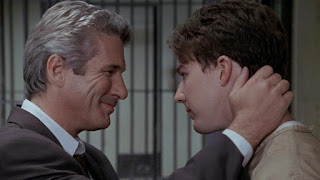
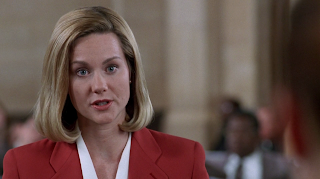
In Chicago, the respected Archbishop Rushman (Stanley Anderson) is brutally murdered. The police quickly arrest altar boy Aaron Stampler (Edward Norton) as he is escaping from the scene covered in blood. Celebrity defence lawyer Martin Vail (Richard Gere) offers his services to Aaron pro bono. Prosecutor Janet Venable (Laura Linney), one of Martin's ex-lovers, is assigned to the case, with a mandate from her boss District Attorney John Shaughnessy (John Mahoney) to secure a conviction and the death penalty.

The prosecution's case against Aaron is strong but lacks a motive. Martin interviews the stuttering, soft-spoken Aaron, and determines the simple young man from Kentucky is incapable of murder. Martin recruits psychologist Dr. Molly Arrington (Frances McDormand) to evaluate Aaron, while his team uncover several plots swirling around the Archbishop, including a politically-driven land development deal and evidence of sexual impropriety. In the courtroom of Judge Shoat (Alfre Woodard), Martin and Janet square off, but in an already complicated and high-profile case, surprises await them both. 
An adaptation of the William Diehl novel directed by Gregory Hoblit, Primal Fear is a richly textured drama. Packed with revelations, the plot finds new twists at regular intervals, and despite plenty of artistic freedoms stays just on the right side of cinematically credible. The Archbishop's murder is only the starting point, and before long sub-plots related to corrupt business deals, pedophilia, and personality disorders merge into a grand, multi-faceted mystery.

Of course some of the detours are elaborate distractions to cast doubt and open new avenues of potential guilt and innocence, prolonging the fundamental guessing game around Aaron's role. The altar boy as an innocent victim caught in the wrong place at the wrong time is Martin's thesis for the defence, but Aaron could also have been a pawn in much larger game, or holding his own difficult-to-uncover motive. 

In his big screen debut, Edward Norton's performance as the hesitant, deferential, and scared Aaron is a stunning bolt of lightning. But then Martin and Dr. Arrington delve further into the defendant's psyche and reveal much more to his character, and Norton moves to a higher level of dominance, evolving into a formidable and unpredictable presence.

The rest of the cast is packed with talent, Richard Gere infusing Martin Vail with plenty of depth and arrogant confidence in the central role. In contrast Laura Linney struggles with a choppy definition of prosecutor Janet Venable, often caught in unconvincing demonstrations of tough mannerisms.

At 130 minutes, Primal Fear goes on, and along with writers Steve Shagan and Ann Biderman, Hoblit could have tightened the pacing. A foot race involving another alter boy with something to hide is wholly unnecessary, some of the courtroom shenanigans could have been truncated, and the sexual tension between Martin and Janet is overplayed and loops in repetitive circles.

But Primal Fear is an overall gripping legal thriller. The courtroom manoeuvres maintain a pointed level of drama as intersecting battles of wits and wills play out, some plain to see, others just plain devious.


All Ace Black Movie Blog reviews are here.

Tuesday, 26 September 2017

Movie Review: In The Line Of Fire (1993)


A thriller set in the world of Secret Service agents protecting the President, In The Line Of Fire mixes good action with plenty of character depth and cerebral touches.

In Washington DC, Frank Horrigan (Clint Eastwood) is an aging Secret Service agent, still traumatized by his inability to prevent the Kennedy assassination. Frank investigates evidence at a nondescript apartment suggesting a potential assassin on the loose, and starts to receive taunting phone calls from a man calling himself Booth (John Malkovich), who openly admits to planning a kill the current President. Secret Service Director Sam Campagna (John Mahoney) places Frank back on the security detail surrounding the President, who is in the midst of a re-election campaign.

Frank works with his partner Al D'Andrea (Dylan McDermott) and fellow agent Lilly Raines (Rene Russo) to keep the President safe and try to uncover Booth's true identity. But Frank's age and emotional demons get in the way and White House staff get tired of his temper and over-eager actions. Despite setbacks Frank doggedly pursues the shadowy Booth, who has a dark background of his own.

Directed by Wolfgang Petersen, In The Line Of Fire is a well-paced cat and mouse game between two damaged opponents, with bursts of action matched by thoughtful interludes designed to flesh out Frank's past and present emotional condition. The film succeeds due to its significant investment in Frank as a flawed warrior, the last Secret Service agent from the day Kennedy was killed still on active duty.

Booth pushes Frank's buttons, and the film derives as much enjoyment from their psychologically riveting phone conversations as from their kinetic on-the-ground chase scenes. The phone calls are a chess game of taunt and counter-taunt, filled with clues, traps and cryptic signposts, the killer-to-be enjoying the game only so long as it is close. And when it's time to turn up the heat Peterson knows how to deliver breathless action, with one rooftop chase landing at an excellent climax, hunter and hunted in a most ironic clutch.

Once Booth's identity is revealed another layer of scar tissue is added, the boomerang of government actions coming home to roost. Although the killer is a chilling menace throughout thanks to John Malkovich's blood curdling performance and some terrific disguises, the Jeff Maguire script could have invested more time to delve into his damaged psyche. And the romance elements between Frank and Lilly are stuttering at best, the 24 year age difference between Eastwood and Russo not helping.

Eastwood is much better away from any notions of love. In The Line Of Fire allows him to do what he does best: spit bullets as the angry lone wolf working within the system, fighting to save the incompetents from themselves, able to match wits with a maniac because he is unafraid to unleash his own inner fiend.


All Ace Black Blog Movie Reviews are here.


Friday, 7 April 2017

Movie Review: Say Anything...(1989)


A quirky teen romantic drama with plenty of heart and some humour, Say Anything... is a refreshingly different perspective on the turbulence of young love.

High school is coming to an end, and free-spirited average student Lloyd Dobler (John Cusack) has decided to pursue the beautiful and super smart class valedictorian Diane Court (Ione Skye). Beyond dabbling in kickboxing Lloyd has no idea what he wants to do in life, while Diane's future has been carefully crafted by her father Jim (John Mahoney), and includes relocating to Europe to take advantage of a prestigious college fellowship.

Nevertheless Lloyd and Diane start dating and develop a serious relationship, bordering on love. Jim is generally unsupportive of his daughter's new friend. But then Jim is suddenly accused of tax fraud and embezzlement through his seniors' care home business, Diane's life starts to unravel and Lloyd is caught in the turmoil.

The directorial debut of Cameron Crowe (who also co-wrote the film) is an engaging teen romance that finds a natural tone and avoids most of the subgenre's contrived traps. Much of the credit goes to Crowe's writing, which seeks to create two real young people, both uncertain, tentative and yet possessing the courage of youth to explore what appears to be unlikely.

This is a teen movie where Lloyd's best friends are two girls (Corey and D.C., brought to life by Lili Taylor and Amy Brooks), there are no body fluid jokes or gross pranks, no evil school principles, or indeed, any antagonists. Lloyd does not even have any competition for Diane's heart.

Instead the central conflict resolves around the perfect future of success carefully crafted for Diane by her father Jim. Lloyd enters the picture as figure of disruption from Jim's perspective, and again Crowe demonstrates a welcome maturity: rather than exhibiting any domineering behaviour, the father's response is surprisingly mute, his resistance a sophisticated mix of passive aggressiveness and preying on Diane's feelings of guilt.

Diane and Lloyd share the background of broken homes, although neither is deprived or unhappy. As a child Diane had to choose between her father and mother when they separated, while Lloyd has been deposited at his sister's house (an uncredited real sister, Joan Cusack), a single mom herself suffering through a broken relationship. Lloyd's household mission is to try and cheer up his sister while fully enjoying playing uncle to her young son.

John Cusack was already moving into more adult roles but here perfects his cool outsider student persona, and is the best thing about the film. Cusack allows Lloyd's unique identity to propel his audacity, exploiting the character's lack of a life plan to best effect and nailing the iconic boom-box-in-the-air ode to love moment. Ione Skye is adequate as Diane, while John Mahoney gets one of his most prominent big screen roles, adding to the sense of realism as a protective but not naive father.

With plenty to say about life unfolding in untidy directions, Say Anything... speaks with understated eloquence.


All Ace Black Blog Movie Reviews are here.


Monday, 5 December 2016

Movie Review: Flipped (2010)


A coming-of-age tentative romance, Flipped is a tender story of first crush told with warmth and heart but without straying too far from the familiar path.

It's the early 1960s, and grade eight student Bryce Loski (Callan McAuliffe) cannot shake the attentions of his classmate and across-the-street neighbour Juli Baker (Madeline Carroll). The young but precocious Juli had first set eyes on Bryce six years earlier when the Loskis moved into the community, and she made it her mission in life to win his affection. Always less mature and uncertain how to behave, Bryce had rebuffed her at every opportunity. Now at 14 years old, Juli is beginning to blossom into a young adult, and gains local prominence by trying to protect a beautiful neighbourhood tree from the chainsaw.

The Bakers are a relatively poor family, with Juli's free spirited artist father Richard (Aidan Quinn) dedicated to funding the expensive private health care of his retarded brother. Bryce's grandfather Chet (John Mahoney) moves in with the Loskis and acts as a catalyst and counterweight to Bryce's boorish father Steven (Anthony Edwards). After Bryce manages to unwittingly insult Juli in an incident involving eggs and backyard chickens, Chet sets about building bridges with Juli, her unique spirit reminding him of his recently deceased wife. With both Juli and Bryce learning hard truths about their families, their potential friendship hangs in the balance.

Flipped is pleasantly sweet, sometimes poignant and with its heart firmly throbbing towards nostalgia. But there is also no denying that the film is not much more than three back-to-back episodes of The Wonder Years television show. Flipped introduces he said, she said narration of the same incidents to contrast Bryce and Juli's perspectives, but otherwise the film ploughs very familiar territory: coming of age in the 1960s, the exaggerated traumas of life in junior high school, and early experiences in understanding the greater world.

Director and co-writer Rob Reiner is a safe pair of hands. The decision to relocate Wendelin Van Draanen's young adult novel from the early 1990s to the early 1960s opens up the film's appeal to a wider audience, the wistful pull of the early 1960s still holding strong resonance. The actual events that drive Juli and Bryce towards various points of conflict are the types of episodes that build early personal adulthood memories. The beautiful neighbourhood tree is threatened; Juli cares deeply, Bryce not so much. Juli wins a science fair competition, much to Bryce's chagrin. She reaches out to the entire neighbourhood with fresh egg donations; Bryce's family haughtily reject the gesture, disgusted by the Bakers' backyard.

It is left to wise old head Chet to cut past the social barriers and spot in Juli the emergence of a remarkable young woman. Bryce's mom Patsy (Rebecca De Mornay) follows up with an invitation to dinner that is another turning point in the growing up process, exposing Bryce for the fist time to his father's true colours. And gradually Reiner builds his way to a respectful resolution, as Bryce clumsily but doggedly seeks the inflection point between child and adult.

Although some snippets of the crystallizing adult world, including Juli's retarded uncle, are dealt with in just the right amount, Reiner leaves many other sub-plots in frustratingly poor condition. Bryce's father Steven casts a long shadow over the family, but the film only pokes at his repressed frustrations and then leaves him suffering. Grandpa Chet is a key catalyst, but drops out unceremoniously. And both Bryce and Juli have interesting siblings who deserved bigger roles.

Madeline Carroll is excellent as Juli, demonstrating a good emotional range and nailing the traumas of adolescence. Callan McAuliffe as Bryce has less to do and comes across as more wooden. Aidan Quinn, Rebecca De Mornay, John Mahoney, Penelope Ann Miller and Anthony Edwards provide the supporting case with a welcome gloss.

Flipped is gentle and pleasingly engaging, but leaves no lasting impact.


All Ace Black Blog Movie Reviews are here.


Sunday, 2 October 2016

Movie Review: Barton Fink (1991)


A dramatic comedy about writer's block, Barton Fink successfully gets into the head of a fledgling writer but stretches the concept to incredulous extremes.

In New York City of 1941, writer Barton Fink (John Turturro) achieves success with a new Broadway play and is celebrated as a rising star of the literary world. Despite espousing idealistic views of writing for the masses, Fink accepts a high-paying assignment to write screenplays in Hollywood and relocates to Los Angeles. His new employer is Jack Lipnick (Michael Lerner), boss of Capitol Pictures, who pretends to adore writers before assigning Fink to write a script for a lowbrow wrestling drama starring Wallace Beery.

Fink takes up residence in a derelict room at the cavernous but sparsely populated Hotel Earle, and struggles mightily with writer's block. The distractions include noise from adjoining rooms, peeling wallpaper, a singular picture of a girl on the beach, and talkative insurance salesman Charlie Meadows (John Goodman), who occupies the room next door. Extremely lonely and desperate to converse with another writer, Fink connects with W. P. Mayhew (John Mahoney), a legendary author now reduced to a state of perpetual drunkenness. Mayhew's secretary Audrey Taylor (Judy Davis) proves to be a better companion. With a deadline for delivering the script looming, there is a new major shock ahead for the hopelessly blocked Fink.

Written and directed by Joel and Ethan Coen, Barton Fink is an odd exercise, apparently a diversionary exercise the Coens used as break from the intensity of Miller's Crossing. Filled with salutes to written and cinematic landmarks, the film contains plenty to admire both aesthetically and intellectually, and hits at dead centre the intended target topic of writer's block. But only so much can be built around a white empty page that stares back. Desperate for variety the film veers towards a madcap tone, and a final third that is more amusing than effective.

The best moments are by far set at the Hotel Earle, an eerily empty place forgotten by time and carrying echoes of that most famous writer's block hangout, The Overlook Hotel from The Shining. But Barton's journey is not one of madness, rather just a banana skin where his idealistic spoutings slip on an inability to listen to the common man and a quick soul sell. The peeling wall paper, the pesky mosquito, the noisy neighbours, the incessant heat, and that darned too perfect picture on the wall do nothing except conspire to prevent Barton from writing.

John Turturro does what is necessary in the grey title role, the screen portrayal of an introverted writer struggling to find words by definition a rather thankless task.

Less interesting are the surrounding characters. W.P. Mayhew is not so much the inspiration Barton hoped to find but rather the ultimate victim of writer's block, a man with a destiny to meet his fate at the bottom of the bottle every single day. John Goodman is excellent as Charlie Meadows, a salesman who starts out as an irritant, evolves into a friend and companion, and then transforms into something else entirely as the script slips out of control.

Judy Davis as Audrey Taylor does not get a chance to register as much of anything, her obvious role as writer's muse truncated to serve a needless detour towards mystical mystery territory. Steve Buscemi as the hotel clerk and Tony Shalhoub as a movie producer get small supporting roles.

Undoubtedly thought provoking, Barton Fink offers plenty of talking points but is an ultimately less than cohesive experience.


All Ace Black Blog Movie Reviews are here.