Showing posts with label Herbert Marshall. Show all posts

Saturday, 4 June 2022

Movie Review: The Letter (1940)

A crime mystery, The Letter surrounds a devious woman with an exotic locale and noir aesthetics.

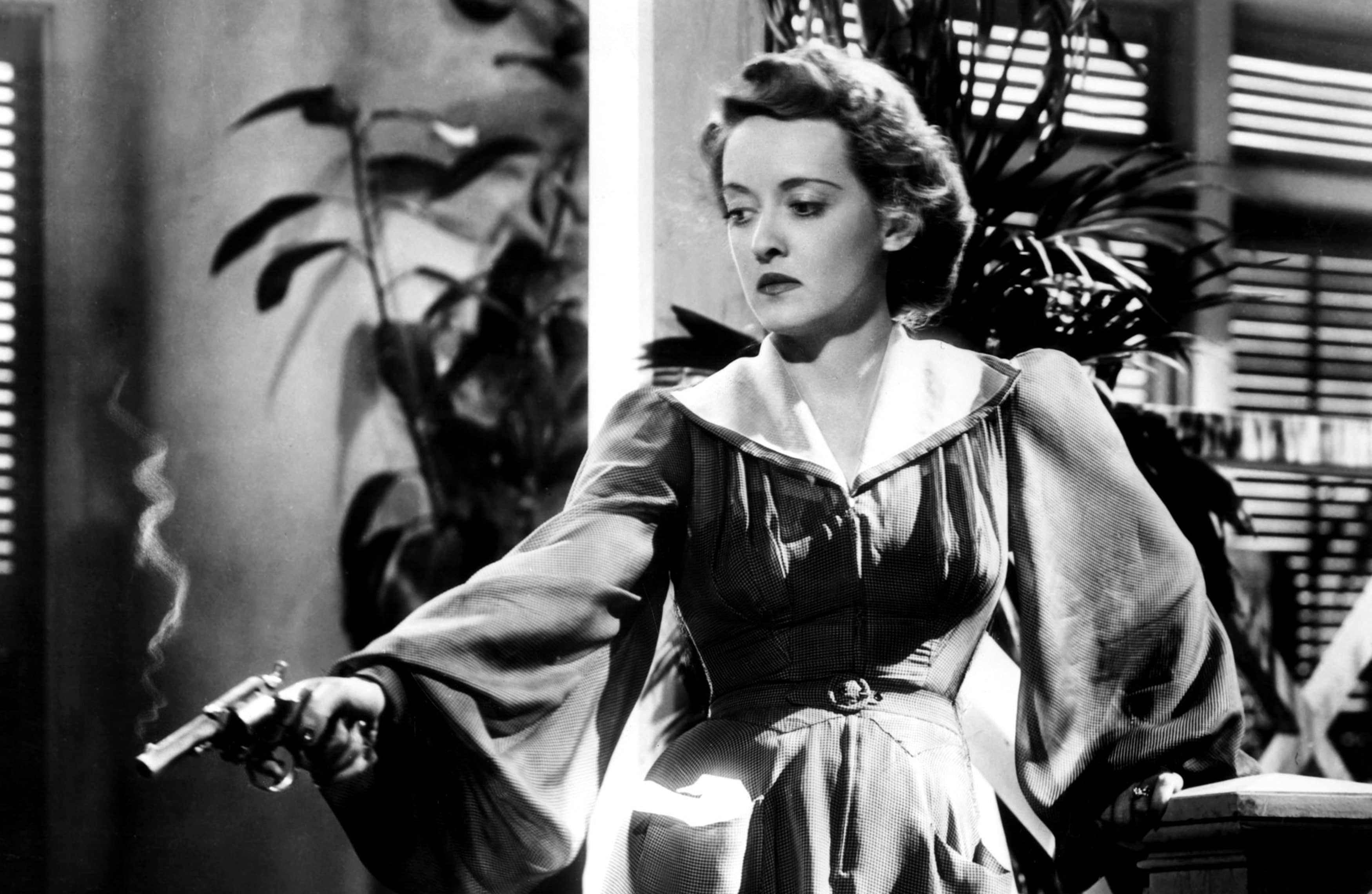
Late at night on a Singapore rubber plantation, Leslie Crosbie (Bette Davis) shocks the local workers by calmly emptying a pistol into her visitor Mr. Hammond. Leslie is the wife of the plantation manager Robert (Herbert Marshall), who rushes back from a work site to be with his wife. Leslie explains to her husband and their lawyer Howard Joyce (James Stephenson) she shot and killed her unexpected guest after a physical altercation as she fended off his unwanted advances.

Leslie awaits her trial, with Howard confident he will secure her release by proving she acted in self defence. But then he becomes aware of new evidence: Leslie wrote a letter inviting Hammond to her house on that fateful night, a fact she conveniently skipped in her recollection of events leading to the shooting. Now Mrs. Hammond (Gale Sondergaard) is in possession of the letter, and threatening to expose Leslie's lies.

Based on a W. Somerset Maugham play, The Letter draws tension from a central character both sympathetic and calculating. Bette Davis dominates as Leslie Crosbie, introduced in the very first scene as ruthlessly capable of killing, and not satisfied with just felling her victim but pumping all available bullets into him. She composes herself and has a good story to tell a worried husband and astute lawyer: her victim was imposing himself on her and did not take no for an answer.

From that stark opening writer Howard E. Koch and director William Wyler craft a tasty mystery built on lies, threats, and immorality. Wyler creates a moody nighttime Singaporean vibe filled with horizontal shadows and stark lights as Leslie meets her match in the spectral Mrs. Hammond, and drags the lawyer Howard towards unprofessional conduct to try and bury damaging evidence. Meanwhile Howard's ever-smiling assistant Ong Chi Seng (Sen Yung) orchestrates a dangerous game of blackmail leading to a labyrinthian Chinatown district and a crushing East is East cross-cultural demonstration of power.

The revelations of treacherous secrets are accompanied by impressive but overdone shots of dark clouds rolling over the moon, and Wyler encourages Davis' wide-eyed over-dramatizations. The final act is still potent, but also reaches for hyperbolic representations of all-devouring guilt assuming station at the soul's doorstep. Despite favoring symbolic showmanship over subtlety, The Letter effectively exposes the dead-end of insincerity, written words more powerful than the gun.


All Ace Black Movie Blog reviews are here.

Wednesday, 11 November 2020

Movie Review: Four Frightened People (1934)

A jungle survival adventure, Four Frightened People is a fitful and ultimately just inane story about coping with adversity.

The bubonic plague spreads among passengers on-board a ship sailing off the Malayan coast. Four of the travellers decide to take matters into their own hands, jumping into a small lifeboat and fleeing to a nearby jungle island.

The four are Judy Jones (Claudette Colbert), a meek and dowdy geography teacher, Mrs. Mardick (Mary Boland), a jovial socialite with interest in empowering women to control birth rates, Arnold Ainger (Herbert Marshall), an introverted chemist, and Stewart Corder (William Gargan) a loudmouth celebrity newspaperman.

On the island they connect with English speaking native Montague (Leo Carrillo), who offers to guide them to safety on a three day trek across the terrain. But he is soon lost, and the group is stranded for weeks in the jungle. They have to contend with dangerous wildlife, hostile tribes, and interpersonal rivalries, resulting in shifting power dynamics and explosions of lust and love.

A choppy mix of survival drama, attempted comedy and commentary on the human condition, Four Frightened People never finds a firm footing and is often busy shooting itself in the foot. Despite weeks lost in the jungle (filmed on location in Hawaii), the women never lose their make-up, and indeed Judy Jones just becomes more ravishing with the passing days. The men never lose weight, and late in the adventure somehow everyone finds form-fitting, and frequently changing, outfits to wear.

Director and producer Cecil B. DeMille, in one of his decidedly less epic outings, is most interested in Judy's transformation from docile and helpless to confident and alluring, survival in the jungle jumbling all civilized human attributes and allowing Judy the freedom to find the lioness within. Her nude shower in a waterfall (a very long shot with a body double) is the final trigger for Arnold and Stewart to notice she is, indeed, a woman. A monkey conveniently runs off with her tattered clothes, a cue for the costume department to conjure up a succession of well-tailored figure-hugging leopard skins, because a nude Claudette Colbert is sufficient inspiration for a journalist and a chemist to hunt and skin a leopard. 

Elsewhere the women's shrieks are loud and frequent, encounters with snakes and tribals unleashing high decibel emoting. The humour comes courtesy of Mary Boland's unflappable attitude as Mrs. Mardick maintains her sense of self and eventually turns a native village into her women's education headquarters. 

Somewhere a blundering love triangle erupts with the boorish and easily excitable Stewart losing out to the more sensitive Arnold in winning Judy's heart. And for all her burgeoning confidence and awakened sexuality, Judy still dissolves into a puddle of sentimentality at the thought of a man committing to her.

Four Frightened People is bad enough to be enjoyable for fun, any sense of logic lost in the jungle along with everything else.


All Ace Black Blog Movie Reviews are here.
Sunday, 14 October 2018

Movie Review: The Painted Veil (1934)


A drama about adultery and atonement, The Painted Veil is bogged down by stiff execution.

The initial setting is Austria. After her younger sister gets married, Katrin (Greta Garbo) feels the pressure and hastily agrees to wed the earnest but uncharismatic Dr. Walter Fane (Herbert Marshall). He loves her, but she is ambivalent. They relocate to China, where Walter is quickly preoccupied with fighting a cholera epidemic.

The neglected Katrin is charmed by British diplomat Jack Townsend (George Brent), who is himself married but unabashedly lusts after Katrin. She cannot resist his charms, and with Walter intent on pursuing the inland source of the worsening epidemic, Katrin's marriage is soon in a heap of trouble.

Directed by Richard Boleslawski and based on a W. Somerset Maugham story, The Painted Veil offers a dependable Greta Garbo performance and a decent recreation of Chinese locations on the MGM backlot.

But otherwise this is a stodgy drama about a cold marriage, infidelity and attempted redemption, with unconvincing performances by Herbert Marshall and George Brent. The cholera sub-plot could have added some intrigue, but is poorly handled. Somehow Dr. Fane takes on the role of dictative commander and social disruptor, issuing orders to the Chinese military. Walter is eventually undone by his own preposterous actions, and it's not in the film's favour that his consequent punishment appears richly deserved.

Garbo lights up the screen whenever she is on it, draping her co-stars in long shadows, but she is not helped by a character who demonstrates ill judgment at every turn. The noisy recreations of Chinese culture, festivals, rural hardship and epidemic-induced panic are passable as an exotic distraction from the dull plot.

The Painted Veil cannot hide Garbo's transcendent talent, but neither can she lift the drama above the doldrums.


All Ace Black Blog Movie Reviews are here.

Monday, 13 November 2017

Movie Review: Foreign Correspondent (1940)


A World War Two thriller, Foreign Correspondent overcomes some war time propaganda stiffness thanks to epic espionage showpieces expertly crafted by director Alfred Hitchcock.

It's 1939, and hard-nosed reporter John Jones (Joel McCrea) is chosen by the editor of the New York Globe newspaper to head to Europe, cut through the diplomatic drivel and determine if war is indeed imminent. In London, Jones interviews key diplomat Van Meer (Albert Basserman) but can get little useful information out of him. Jones also meets Stephen Fisher (Herbert Marshall), who runs a for-peace advocacy group, and falls in love with Fisher's activist daughter Carol (Laraine Day).

Moving on to Amsterdam, Jones finds himself witness to a shocking assassination and a cover-up, and stumbles onto a nefarious enemy agitator cell hiding out at a rural windmill. As the war drums beat louder, he teams up with fellow reporter ffolliott (George Sanders, playing a character with two "f"s and no capitals in his surname) to try and uncover the work of enemy agents in western Europe, and Jones himself becomes a target.

After a slowish start to establish the premise, director Hitchcock transforms Foreign Correspondent into an unrelenting spy adventure movie. In his second Hollywood production after Rebecca, many of the director's soon-to-be signature themes emerge. Jones is a man plunged into events greater than he could have imagined, vast conspiracies are unfolding behind veneers of respectability, and the bad guys are quick to resort to innovative assassination methods to get the job done and cover their tracks.

Foreign Correspondent features several highlights signalling Hitchcock's emerging mastery of the polished and playful suspense set-piece. The Amsterdam staircase assassination scene and subsequent escape, starting on foot amongst a sea of black umbrellas and evolving into a car chase, is the film's startling pivot point. Quickly afterwards, Hitchcock unspools a tense hide-and-seek game inside a windmill, filled with clever touches including an uncooperative overcoat and unforgiving machinery.

The director then hits his stride. Jones has to extricate himself from an upper-floor hotel room with two assassins waiting inside. But this is only a prelude to another deliciously taut encounter with a covert killer-for-hire (Edmund Gwenn), this time culminating at the top of a cathedral observation tower, and another gasp-inducing punctuation mark of a climax.

Remarkably, Hitchcock is far from done. The film ends with a prolonged climax featuring a spectacular plane crash into the water, and then a rescue and still more clever duplicity onboard a neutral American ship. After Jones' epic survival saga on land, air and sea, the film's appeal for American involvement in the war emerges as a short but powerfully effective piece of propaganda.

A large part of the film's appeal is the wealth of characters and events that make it onto the screen. Hitchcock populates every scene with details and people who may or may not prove to be relevant, but keep the eye and mind engaged. From Jones being provided with the clumsy pseudonym Huntley Haverstock to the wide-eyed Latvian diplomat seemingly hovering on the edge of every encounter, there is always something going on just to the side of the main plot.

Before dedicating most of his career to Westerns, Joel McCrea was a versatile actor, and he is surprisingly effective as Jones. He gives the central character a sharper edge compared to Hitchcock's later reliance on the more rounded personas of Cary Grant and James Stewart. Herbert Marshall and George Sanders provide potent support, both men scheming their way in and out of trouble, and indeed in the second half of the film the dynamic between Fisher and ffolliott takes some of the load off Jones.

Hitchcock's McGuffin in this case is career diplomat Van Meer, Albert Basserman bringing to life a frustrating obfuscator harbouring valuable secrets that could tip the balance of power in the event of war.

Foreign Correspondent is an entertaining milestone, creating the how-to template for powering an absorbing plot with a high voltage current of suspense.


All Ace Black Blog Movie Reviews are here.