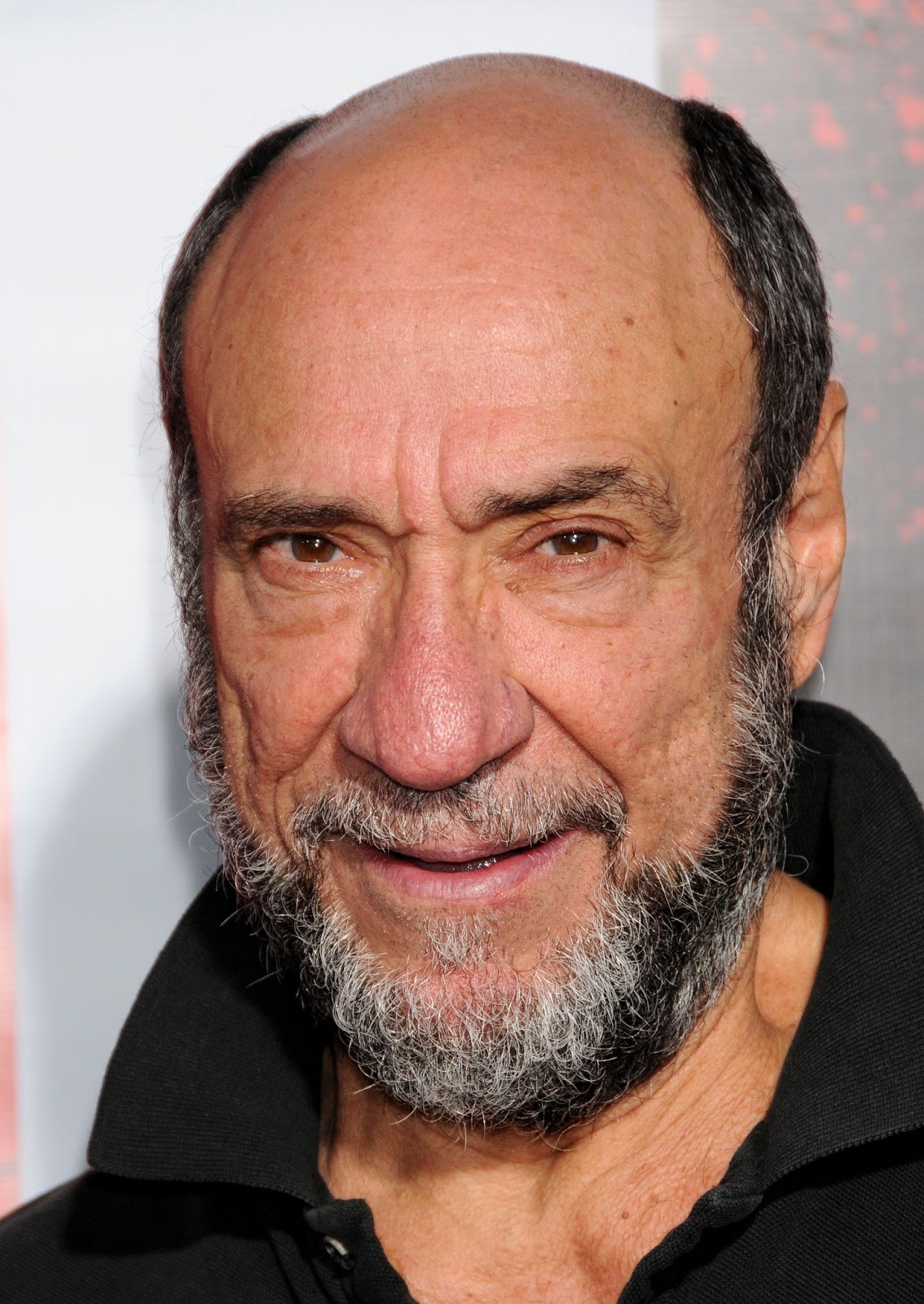
Showing posts with label F. Murray Abraham. Show all posts
Friday, 25 December 2015
Movie Review: An Innocent Man (1989)
A prison and revenge drama, An Innocent Man features some harrowing life-behind-bars scenes, but is otherwise clunky and poorly written.
In Long Beach, California, Jimmie Rainwood (Tom Selleck) is a respected aircraft maintenance crew chief, happily married to Kate (Laila Robins). Undercover narcotics detectives Mike Parnell (David Rasche) and Danny Scalise (Richard Young) are celebrated for their frequent drug busts, but in reality are corrupt officers not beyond planting evidence and profiting by skimming from the drugs they seize.
Acting on a muddled tip from a drug dealer, Mike and Danny mistakenly invade Jimmie's house, a bungled operation that ends with Jimmie shot and wounded. To cover up their blunder, the officers plant a gun and drugs in Jimmie's house. He is falsely charged and convicted for shooting at the officers and dealing in narcotics, and sent to prison for six years. Jimmie finds life behind bars tough to handle, and he is threatened by competing black and white supremacist gangs. He finally turns to long-term convict Virgil (F. Murray Abraham) for help. With Virgil's guidance Jimmie learns what it means to toughen up to survive. Once released on parole, he will have to decide how to seek revenge on the men who ruined his life.
About half of An Innocent Man is set in prison, and the film is at its best in portraying life in hell for a wrongly convicted man. Director Peter Yates gets into his stride, and creates for Jimmie the stickiest of dilemmas. He has to accept either humiliation or violence, choices that are equally abhorrent for a decent and well-respected middle class family man. The script by Larry Brothers creates a prison ecosystem where racial divides are alive and thriving, the inmates make and enforce jungle rules, the prison guards are next to useless, and men like Jimmie can choose a side, prove their brutality, or get badly hurt.
The relationship between Jimmie and Virgil is forged in captivity, and should have been the highlight of the film. But the limits of the script are exposed, and what could have been a friendship born out of hardship is glossed upon in a few mediocre scenes. The character of Virgil is rich with possibilities that remain unexplored, with F. Murray Abraham underutilized.
If the scenes in prison are at least interesting if not completely fulfilling, the film falls apart outside the walls of confinement. The opening act is listless and features one of the worst attempts at courtroom drama put to film. From a drug dealer testimony being accepted at face value to the planted gun not receiving any scrutiny, the case against Jimmie Rainwood would and should have been torn to shreds by any competent lawyer, but here there is a rush to convict that serves the plot but is simply ridiculous. Worse still is the final act, with the revenge theme kicking in and an ill-conceived and convoluted plot being hatched that ends with a wild shoot-out in a failed attempt to satisfy fans of mindless action.
Tom Selleck doesn't do much to prove that he had any big-screen potential, and pales in the few scenes next to Abraham. In the supporting cast David Rasche makes for an entertaining late 1980s villain, hamming it up as a charismatic but near-psychotic corrupt cop who believes his own invincibility hype.
While not a total loss, An Innocent Man is guilty of a piddling performance while on parole.
All Ace Black Blog Movie Reviews are here.
Labels:
F. Murray Abraham,
Film Review,
Movie Review,
Tom Selleck
Wednesday, 23 December 2015
Movie Review: Inside Llewyn Davis (2013)
A folk music character drama with comic shadings, Inside Llewyn Davis explores the Greenwich Village music scene of the early 1960s through the story of one struggling musician having a really bad week.
It's New York City in 1961. Llewyn Davis (Oscar Isaac) is a marginal folk singer who occasionally performs at the Gaslight club. Llewyn is penniless, homeless, sleeps on friends' couches, and has still not recovered from the trauma of his performing partner's suicide. Llewyn accidentally lets loose the house cat of his friends the Gorfeins, then learns that his recently released solo album is selling poorly or not at all. His week gets much worse when he finds out that his married friend Jean (Carey Mulligan) is pregnant, and the child may or may not be his.
Llewyn gets no help from his agent, but does get a break from Jean's husband Jim (Justin Timberlake), who connects him with singer Al Cody (Adam Driver), and the trio record a novelty space-themed folk song. Desperate for cash upfront, Llewyn forgoes any future royalties. He decides to travel to Chicago to personally meet legendary producer Bud Grossman (F. Murray Abraham). On the way he shares a surreal car trip with overbearing jazz musician Roland Turner (John Goodman) and lyricist/driver Johnny Five (Garrett Hedlund). The meeting with Grossman does not go as planned, and Llewyn starts to question his dedication to a career in music.
Directed by the Coen brothers Joel and Ethan, who also co-wrote the script with Scott Rudin, Inside Llewyn Davis works best as a dark comedy that probes at the heart of dreams of music success. The mood is bleak, the prospects poor, and its quickly apparent that everyone other than Llewyn Davis is already aware that he has a bright future behind him. Still he persists, ignoring with increasing difficulty the signs that it may be time to pack it in.
Despite the preponderance of humour, the film sets an overall sad mood reflective of artists struggling to make ends meet. Washed-out colours dominate, both mimicking and mocking Llewyn's life of couch surfing in nondescript apartments while scratching out a living by borrowing money and bumming cigarettes from any available source. The film also resonates with the messiness of real life by keeping several threads loose. The novelty song royalties are a tantalizing decision point, a side-story of a former girlfriend, now in Akron, is left dangling on an exit ramp, and Jean's pregnancy presents another imperfect puzzle to grapple with.
While the film runs an efficient 105 minutes, the plot is quite slight and the Coens at times do struggle to find something else to go wrong for their unfortunate protagonist. The return trip from Chicago includes an unnecessary midnight shock on an isolated snowy stretch of road, there is an obvious side-trip to visit an invalid father, and the film is littered with a few too many complete renditions of folk songs that eat up minutes and slow the film right down.
Much better is the segment with John Goodman as the boorish fellow traveller to Chicago Roland Turner, a bellicose know-it-all who can't stop talking, and is both exceedingly annoying and extremely funny. In keeping with the film's disposition, both Turner and his side-kick Johnny Five are unceremoniously ejected from Llewyn's journey.
Oscar Isaac delivers a break-out performance and effortlessly holds the film together. His interpretation of Llewyn captures the uneasy co-existence of determination to persist with gradual realization that maybe he's just not good enough to make it. Isaac unleashes quiet intensity and cynical resignation in equal doses
When everything that can possibly go wrong does so and them some, including that troublesome cat repeatedly escaping and at the most inconvenient times possible, it may be time to take stock. But a week will pass before Llewyn Davis sees the writing on the back alley walls of Greenwich Village.
All Ace Black Blog Movie Reviews are here.
Thursday, 30 July 2015
The Movies Of F. Murray Abraham
All movies starring F. Murray Abraham and reviewed on the Ace Black Movie Blog are linked below:
Serpico (1973, uncredited)
The Prisoner Of Second Avenue (1975)
All The President's Men (1976)
Scarface (1983)
Amadeus (1984)
An Innocent Man (1989)
The Bonfire Of The Vanities (1990, uncredited)
Dead Man Down (2013)
Inside Llewyn Davis (2013)
The Grand Budapest Hotel (2014)
The Phoenician Scheme (2025)
Labels:
F. Murray Abraham
Monday, 19 May 2014
Movie Review: The Grand Budapest Hotel (2014)
A quirky comedy with a mystical visual style, The Grand Budapest Hotel celebrates the faded glories of the past through a warped satirical lens.
After several quick flashbacks within flashbacks, it's the late 1960s and the unidentified Author as a Young Man (Jude Law) is seeking inspiration by spending time at the picturesque mountaintop Grand Budapest Hotel, now well past its best days, in the mythical country of Zubrowka. He meets the legendary owner of the hotel Zero Moustafa (F. Murray Abraham), and over dinner the elderly Moustafa recounts the story of how he came to own the hotel.
The main story is set in the 1930's with the hotel in its prime. The young Zero (Tony Revolori) secures a job as a lobby boy, and the hotel's concierge Monsieur Gustave H. (Ralph Fiennes) takes Zero under his wing. Gustave effectively runs every detail of the hotel's operation. He also looks after the sexual and emotional satisfaction of many rich and elderly women who come to the hotel specifically to seek Gustave's services, including Madame Céline Villeneuve Desgoffe-und-Taxis, or Madame D. for short (Tilda Swinton). The only contact with the hotel's reclusive owner is through a lawyer known as Deputy Vilmos Kovacs (Jeff Goldblum).
With the winds of war blowing through Zubrowska, grim faced soldiers, including a group led by Inspector Henckels (Edward Norton), begin to stomp their authority through the land, and the era of luxurious living starts to draw to a close. Madame D. mysteriously dies, and her complicated will assigns to Gustave the precious painting Boy With Apple, much to the surprise and disgust of her son Dmitri (Adrien Brody). Gustave finds himself accused of murder and imprisoned, and it's up to Zero and his girlfriend Agatha (Saoirse Ronan) to help Gustave escape and avoid Dmitri's savage assassin J.G. Jopling (Willem Dafoe). A madcap chase across the mountains ends back at the hotel, where Zero's destiny will be decided.
Director Wes Anderson adopts a purely whimsical style, and recounts the story with an exaggerated flair that mimics animation's acute symmetry. The film often looks like a hand-drawn fairytale for adults, with the hotel as the centrepiece awash in vivid reds, purples and yellows, but almost every other location, from Madame D.'s mansion to a remote monastery, is staged with bombast.
Anderson populates his vision with a pretty wild array of characters, almost every role (including some extras) occupied by a star, and all the performers given free reign to rise to the fustian surroundings. Other than Gustave, there is no attempt to convey nuance. Norton, Brody and Dafoe jump at the screen with inflated menace, while Revolori and Ronan are wide-eyed and fairly quiet pure goodness. Harvey Keitel, Bill Murray, Owen Wilson, Tom Wilkinson and Bob Balaban are among those who make brief appearances.
Ralph Fiennes as Gustave does the heavy lifting, representing the essence of a fading era and his general disgust at the changing times. Anderson gives his unlikely hero a progressive shine in his kind treatment of the immigrant outsider Zero, but otherwise Gustave represents a societal class that will not survive what looks like a fascist takeover of the country, where the hotel's opulence will be subverted by the state's heavy boot. Fiennes gives a spirited performance, brushing against the film's extravagance but keeping Gustave as the most relatable member of a dimming era.
The sprawling story takes a backseat to the nostalgic theme of beautiful times coming to an end. With the abundant acting talent at his disposal, Anderson weaves a complex narrative that is frequently witty with lament, but that also sometimes slips into the unnecessarily ridiculous. It's a fine balance to bemoan bygone times with clever wit, and episodes of wild chases down mountain slopes disrupt the film's generally tender tone.
The Grand Budapest Hotel may be a bit too unwieldy to allow every corner to remain exquisitely maintained, but it is definitely worth a stay.
All Ace Black Blog Movie Reviews are here.
Tuesday, 14 February 2012
Movie Review: Amadeus (1984)
One of the grandest and most lavish movies ever created, Amadeus is a riveting story of artistic intrigue set in the suddenly captivating world of classical music.The movie is told in flashback, with an old Antonio Salieri (F. Murray Abrham) in a mental hospital recounting his tale to a visiting priest. Salieri was the resident court composer for Emperor Joseph II (Jeffrey Jones) in the thriving Vienna of the late 1700s. Competent but relatively uninspired, Salieri was living his dream of being the most respected composer in the land until a young and playful Wolfgang Amadeus Mozart arrived from Salzburg and caused a storm in the music world.
Salieri is torn between absolute admiration for Mozart's sheer brilliance and abject despair at the gulf in talent between them. Salieri perceives Mozart as God's instrument to personally mock him, and turning away from religion he commits to destroying the young composer's career and life. Mozart marries Constanze (Elizabeth Berridge) and despite producing magnificent music struggles to make a living, with Salieri using his considerable influence to block every opportunity that Mozart has for success. Mozart also suffers through a difficult relationship with his demanding father Leopold (Roy Dotrice). In poor health and descending into grovelling poverty, Mozart is susceptible to Salieri's growing evil intentions.
F. Murray Abraham delivers a performance of immense intensity as Antonio Salieri, a man who believes that God is toying with him by demonstrating his failings through Mozart's effortless genius. As the old Salieri in the hospital recounting his story, Abraham dances on the edge of insanity as he finds his mediocrity ultimately amusing. In the flashbacks Salieri is the king of his music domain, having to react to a sudden threat from an unlikely source. Abraham allows the manipulative scheming to register above his ears, smiling as he hatches a plot to counter pure talent with concealed evil.
Tom Hulce brings Mozart to life as a man-child, fully aware of his prodigious talent but unable to make the leap into adult behaviour. With a high-pitched childish laugh, Hulce's Mozart is hyperactive, presumptuous and insolent, and like many geniuses unable to comprehend the limitations of mere mortals. Elizabeth Berridge, a very late replacement for Meg Tilly as Constanze, struggles somewhat to rise to her surroundings, but enjoys a few appealing coquettish moments when she pauses from her incessant demands for Mozart to make more money.Amadeus is ultimately about the power of music, and Forman on several occasions touches sublime heights in describing the spell of perfect compositions, with Abraham entering infectious trance-like states in describing Salieri's overwhelming awe at experiencing Mozart's compositions. Another scene captures the agony and ecstasy of the creative process, Mozart and Salieri collaborating to write music, Mozart a fountain of stunningly original ideas, Salieri desperately capturing them before they slip away.
Amadeus deservedly dominated the Academy Awards, winning in eight categories including Best Film, Best Actor (Abraham) and Best Director. Much like the music of Mozart, Amadeus effortlessly entertains, educates, and mesmerises with a flawless artistic touch of magic.
All Ace Black Blog Movie Reviews are here.
Subscribe to:
Posts (Atom)