Showing posts with label Greer Garson. Show all posts

Tuesday, 21 July 2020

Movie Review: Goodbye, Mr. Chips (1939)


An affecting drama, Goodbye, Mr. Chips traces the multi-decade career of a beloved teacher.

It's the start of the academic year at the Brookfield all-boys public boarding school (established: 1492) in England. For the first time in 58 years, the hugely popular 83 year old Mr. Chipping (Robert Donat), fondly known as Chips, misses the opening day assembly due to a cold. In flashback, he recalls his career.

Chipping arrives at the school as the newest Master in 1870 to teach ancient languages. He finds it difficult to exert his authority and barely survives his first day. Over the years he builds a reputation as an effective teacher but also a shy and humourless loner. As Senior Master he has expectations to be promoted to House Master, but is passed over due to his lack of rapport with the boys.

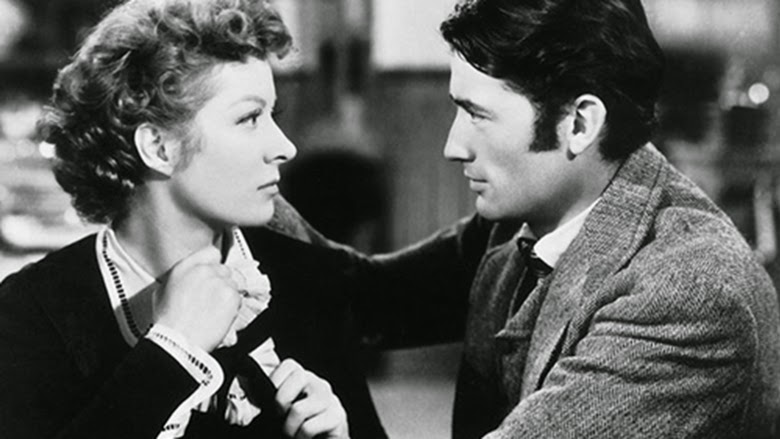
Fellow teacher Max Staeffel (Paul Henreid) convinces Chips to vacation in Europe, and on a misty mountain hike in Austria he meets and falls in love with Katherine Ellis (Greer Garson). They get married and she has a huge influence on Chips, teasing out his hidden sense of humour and helping him develop genuine affection for the students. As Chips becomes a popular campus figure, tragedy, triumph and a world war await.

An adaptation of the James Hilton novella, Goodbye, Mr. Chips is a bittersweet journey through a humble life. The film is a salute to teachers who leave an indelible positive mark and earn the respect of generations of students (and multiple generations from the same families). The screenplay by R.C. Sherriff, Claudine West, and Eric Maschwitz elegantly frames the narrative as one long flashback, pausing at milestone moments in Chips' life and marking the passage of time with the daily roll-call of students announcing themselves with a tip of a hat.

Sam Wood directs with a firm hand and maintains focus on the central character. The film spans 58 years, and Chips is in almost every scene. In an illustration of loneliness accompanying longevity and legendary achievement, no other character overlaps with him for more than a few years. Chipping's memories are his true companions, the countless boys he helped to nurture into men creating an extended family.

The small incidents and seemingly casual decisions that profoundly shape a life is a constant theme. As an 83 year old man Chips is known to his contemporaries as a good-humoured, kind-hearted institution, happy to invite his students for conversation, tea and cake. None are aware of Staeffel's insistence that Chips join him on vacation, the chance mountaintop encounter with Katherine, her sharp perception of what lies hidden within the shy, hesitant young teacher, and her subsequent nudging of her man out of his shell, allowing him to blossom into an effective and rounded educator.

At just 34 years old, Robert Donat disappears into the makeup of Mr. Chips and delivers an unforgettable performance filled with poignant moments reflecting on a life well lived. In her big screen debut, Greer Garson makes potent use of limited screen time, instilling in Katherine a frisky determination powered by womanly subterfuge.

Ultimately Goodbye Mr. Chips highlights remarkable normalcy. Chips is everyman, evolving slowly thanks to the kind influence of others, riding out the disappointments, opportunities (not always easily welcomed) and joys of life with stamina and an even temperament. His legacy is built over time, on layers of experience, pain and delight.


All Ace Black Movie Blog reviews are here.

Friday, 13 March 2015

The Movies Of Greer Garson


All movies starring Greer Garson and reviewed on the Ace Black Blog are linked below:

Goodbye, Mr. Chips (1939)


Pride And Prejudice (1940)


Mrs. Miniver (1942)


Madame Curie (1943)


Mrs. Parkington (1944)


The Valley Of Decision (1945)


Julius Caesar (1953)


All Ace Black Blog Movie Reviews are here.
The Index of Movie Stars is here.


Tuesday, 10 March 2015

Movie Review: Mrs. Parkington (1944)


A sprawling family drama and a grand love story, Mrs. Parkington offers intrigue among the filthy rich and a sweet story of a life-long romance between a simple girl and a swashbuckling entrepreneur.

The Parkingtons are one of New York's richest families. 84 year old matriarch Susie Parkington (Greer Garson) presides over vast wealth, having survived the death of her long-time husband Major Augustus Parkington (Walter Pidgeon). At a Christmas gathering the extended family members reveal themselves to be a fractured, lazy, greedy and back-stabbing bunch. Things are so bad that Susie's great granddaughter Jane (Frances Rafferty) wants to flee the country with fiancĂ© Ned Talbot (Tom Drake), because Ned has uncovered rampant corruption while working as an accountant at the business of Jane's father Amory Stilham (Edward Albert).

While Susie ponders what to do to help Jane and keep Amory out of prison, in flashbacks she recalls her own history and humble beginnings. Born and raised in a small Nevada town, Susie was working at her mother's boarding house when the Major, a flamboyant businessman, rode into town and swept her off her feet. Once in New York, Susie quickly adapted to her husband's upper class social circles with the help of Baroness Aspasia Conti (Agnes Moorehead). Aspasia always loved the Major, but also became close friends with Susie. Through the ups and downs of business cycles, Susie proved herself a worthy partner to the Major, tolerating his wandering eye, defending her marriage, and setting the Major back on the right course when he veered towards cruel and vexatious business practices. Back in the present, Susie has to apply the lessons learned from a lifetime with the Major to sort out her family's latest crisis.

Directed by Tay Garnett, Mrs. Parkington is lavish old-fashioned film-making. This is an enjoyable and memorable romp through the years and within the luxuriously decorated halls of the Parkington mansion. The rags to riches story of Susie's life with the Major serves as an attractive backdrop to the current rich-are-awful narrative. The past and the present come together as Susie draws on a combination of her extraordinary experience, down-to-earth character and the Major's influence to chart a rescue path for her extended family.

Not everything about Mrs. Parkington works quite as well as intended. Garson's make-up at age eighty-four is only partially convincing, and her performance as an old woman is also never quite credible. The film also ekes out a final chapter of the flashback story in England, with Susie traveling to the old country to rescue the Major from the amorous clutches of Alice, Duchess de Brancourt (Gladys Cooper). Susie gets help from none other than the jovial Edward, Prince of Wales (Cecil Kellaway). It's a lively affirmation of Susie's persistence in loving the Major while saving him from his own poor judgement, but the episode arrives quite late in the proceedings and unnecessarily stretches the film to over two hours.

Other scenes work much better, and a particular highlight is an extravagant dinner party that the Major throws to celebrate Susie's first pregnancy. Little goes according to plan, and Garnett creates a tragicomic disaster of a social gathering as the evening unravels, setting the Major off on a vindictive war path.

Greer Garson and Walter Pidgeon add immensely to the appeal of Mrs. Parkington, as their on-screen chemistry again clicks effortlessly. Beyond all the dramas past and present, this is a story of an enduring love and the woman who made it work despite all her husband's foibles. Garson is at her luminous best, a mischievous glint in her eye hinting at how far ahead of the Major she is in thinking about both of their futures. Pidgeon wears the bombastic cloak of the rich and confident, a self-made man who augments his wealth with loads of ego. He gives Susie the nickname Sparrow in honour of a bird he once saved, but she will return the favour and save his soul more than once. Together they make for a most imperfect perfect couple.

In support, Agnes Moorehead delivers a most engaging against-type performance as Aspasia, silent lover of the Major but nevertheless friend to Susie. Peter Lawford, Dan Duryea, and Hugh Marlowe contribute small roles.

Mrs. Parkington is a heartwarming story of one woman's rise to meet life's challenges, good and bad, in the only way she knows how: with honesty, humility, perseverance and a positive spirit.


All Ace Black Blog Movie Reviews are here.


Monday, 9 March 2015

Movie Review: Madame Curie (1943)


A biography of Marie Curie from her student days to world renowned fame, Madame Curie finds drama and romance in the exalted world of scientific discovery.

Paris, in the 1890s. At the prestigious Sorbonne, Marie Sklodowska (Greer Garson) is a high achieving student from Poland, planning to finish her scientific degree and return to her homeland. Her talent and dedication are noticed by Professor Perot (Albert Bassermann), and he places her in the laboratory of physicist Pierre Curie (Walter Pidgeon), a renowned but rather shy researcher. As the months pass, Marie and Pierre grow fond of each other as colleagues, and she meets his parents (Henry Travers and Dame May Whitty). Finally Pierre hesitantly proposes marriage and Marie agrees. It's a match based on logic, compatibility and affection rather than passion and love.

Intrigued by the findings of another colleague who discovered that some rocks seemingly radiate their own energy, Marie starts to investigate the phenomenon. With Pierre's help she is able to detect the theoretical existence of a new element, termed radium. The Sorbonne reluctantly provides the Curies with a rudimentary shed as a headquarters to continue their research, but isolating radium to conclusively prove its existence will be much more difficult than anticipated, testing Marie's patience and scientific talent to the limit.

Madame Curie is a relatively unique achievement: a film about a scientist that also manages to embrace the topic of science. Directed by Mervyn LeRoy and adapted from Eve Curie's book, the movie spends a fair amount of time looking over the shoulders of Marie and Pierre as they nudge their experiments and research towards success, with progress made in sometimes incalculably small increments. The highlights of the film are tied to Marie Curie's scientific achievements, and LeRoy respects his audience to understand the scientific quest and methods deployed.

Narrator James Hilton helps at critical junctures by adding context to the scenes of scientific discovery, and LeRoy captures the frustration, toil, creativity, patience, and moments of brilliance that combine to crack stubborn mysteries. Every failure is a successful confirmation of a method or hypothesis that does not work, and Marie's genius emerges in the form of persistently thinking up new alternatives to test on the convoluted path to success. However, Madame Curie does suffer from a few contrived "Eureka!" moments, Marie either staring into space or gawking at the stars and solemnly revealing some serious milestone. The theatricality is unnecessary and equivalent to a triple underline plus an exclamation mark.

Better is the portrayal of the dynamic between Marie and Pierre. Madame Curie is a warm celebration of a marriage of equals, built on trust, collaboration and mutual respect. It is a refreshing representation of a fully functioning union where love blossoms deep into a relationship initially built on intellect. Greer Garson and Walter Pidgeon, coming off their success in Mrs. Miniver and into the third of what would be eight on-screen collaborations, contribute immeasurably to the success of the film. After the initial awkward courtship phase between Pierre and Marie, the comfortable charisma of Garson and Pidgeon as a couple serves as an easy gateway into the world of science. Both were nominated for Academy Awards, as was the film.

Respectful, educational and entertaining, Madame Curie is a fitting tribute to a remarkable woman.


All Ace Black Blog Movie Reviews are here.


Tuesday, 17 February 2015

Movie Review: Pride And Prejudice (1940)


An adaptation of Jane Austen's classic novel, Pride And Prejudice is an enchanting romance, combining sparkling touches of humour with clever commentary about men and women engaged in pitched battles of attraction across class lines.

The time is England circa 1830, and the village of Meryton is abuzz with news of the arrival of the rich and eligible Mr. Bingley (Bruce Lester), his sister Caroline (Frieda Inescort) and his even more rich and more eligible friend Mr. Darcy (Laurence Olivier). Particularly interested in the newcomers is Mrs. Bennet (Mary Boland), who is raising five girls, and none of them are yet married.

Mrs. Bennet: Look at them! Five of them without dowries. What's to become of them?
Mr. Bennet: Yes, what's to become of the wretched creatures? Perhaps we should have drowned some of them at birth.

Mr. Bingley quickly sets his eyes on eldest daughter Jane (Maureen O'Sullivan), and that relationship flourishes. But Darcy carries the condescending attitude of the very rich, and although he expresses interest in wooing the headstrong Elizabeth Bennet (Greer Garson), she wants nothing to do with his arrogance.

Elizabeth: At this moment it's difficult to believe that you're so proud.
Mr. Darcy: At this moment it's difficult to believe that you're so prejudiced.

Darcy and Elizabeth dance around their mutual attraction, often clashing and repelling each other. Meanwhile there is trouble in the Bennet household, where due to the lack of male heirs the estate is being inherited by the distasteful Mr. Collins (Melville Cooper). He also sets his eyes on proposing to Elizabeth. But a ruinous scandal appears to strike the family when younger sister Lydia (Ann Rutherford) runs off with an unscrupulous military man, seemingly destroying Elizabeth's chances of ever finding happiness.

As directed by Robert Z. Leonard, Pride And Prejudice does everything right in adapting the book to the screen. The story is simplified, entire characters and events from the novel are deleted, and the narrative is streamlined to fit into a compact package that clocks in at just under two hours. The primary focus is maintained on Elizabeth and Darcy, although the secondary characters contribute plenty of entertaining support.

The screenplay by Aldous Huxley and Jane Murfin is based on the Helen Jerome dramatization for a stage production, and the crisp dialogue exchanges contribute to a film where clever wit comes to the fore. Leonard also does a remarkable job of expanding the film's scope with numerous locations, settings and outdoor scenes, creating a rich visual experience to complement the exuberant dresses on display. The wardrobe design deserves a special mention, as Pride And Prejudice is a showcase of women's fashions from around 1830. The hats and dresses are memorable for their ridiculous sizes and flourishes, often dwarfing the actresses.

The story celebrates women's independence, as represented by the proud, headstrong, outspoken and exceptionally smart Elizabeth. A remarkable character for 1940, never mind 1830, Elizabeth stands up for herself and for her family, and is willing to give up a very rich potential husband unless she is assured that he will marry her for all the right reasons. Greer Garson brings Elizabeth to life with a winning combination of civil strength and self-belief. Laurence Olivier is more stiff, in keeping with Darcy's rigid adherence to the rules of behaviour manufactured for the most wealthy.

Elizabeth: Oh, if you want to be really refined, you have to be dead. There's no one as dignified as a mummy.

All around Elizabeth are others who are more traditionally engaged in the courtship dance of the times, and the film shines in portraying the ridiculous protocols, customs and attitudes of English men and women looking for their life mates. In a class-obsessed society, the upper classes want to look down their noses at the middle class riffraff, but can't help but follow their hearts even if it means holding their figurative noses to mingle with ordinary folk.

Caroline Bingley: Entertaining the rustics is not as difficult as I feared. Any simple, childish game seems to amuse them excessively.

Pride And Prejudice is a brisk romp through the world of romantic quests in difficult societal terrain, a place where eras change, but the complexities and pitfalls stay the same.


All Ace Black Blog Movie Reviews are here.


Wednesday, 10 September 2014

Movie Review: The Valley Of Decision (1945)


A sprawling romance set amidst Pittsburgh's steel industry, The Valley Of Decision is epic in scale and ambition, and well-served by a committed Greer Garson performance.

It's the late 1800s in Pittsburgh, and Mary Rafferty (Garson) is hired as a housemaid by the Scott family, owners of a major steel mill. William Scott (Donald Crisp) is the head of the family, his wife Clarissa (Gladys Cooper) runs a lavish household, while their son Paul (Gregory Peck) is passionate about the business. Paul's sister Constance (Marsha Hunt) is spoiled, impulsive, and looking to marry a rich man of her own.

Mary's father Pat (Lionel Barrymore) has an uncontrollable hatred for the Scotts, whom he blames for the industrial accident that left him in a wheelchair. Nevertheless, Mary quickly earns the respect of the family with her committed and no-nonsense attitude. Mary and Paul share an immediate attraction, and although they do fall in love, the gulf in class between the wealthy scion and the lowly maid means that any serious relationship is likely doomed, particularly with Paul seemingly destined to marry his childhood sweetheart Louise (Jessica Tandy). Mary also gains the deep trust and gratitude of Clarissa, and becomes a close friend to Constance.

Over the years and in the constant shadow of the smoke stacks, the family goes through many struggles, including challenges with introducing technological innovations, Constance's sudden marriage to an Englishman, and a dispute between workers and management that turns violent. Paul's love for Mary endures, but finding happiness together proves elusive.

An adaptation of the Marcia Davenport novel, The Valley Of Decision is a grand love story with a rich cast of characters, an impressive backdrop of industry, an undercurrent of class struggles, and an absorbing breadth of events. Under the guidance of director Tay Garnett's steady hand, the two hours of running time fly by, as the well-rounded characters prove engaging and relatable.

With so much going on the film invariably suffers from a few moments that fall flat, and some of the emotions are either truncated or simplistic. But whenever events threaten to overwhelm The Valley Of Decision, the depth of characters and the bonds forming between them prove to be unshakeable foundations. Mary shares meaningful and separate connections with Paul, Clarissa and Constance, giving the film three anchors to build around.

And even the supporting characters add plenty of substance, the old warriors William Scott and Pat Rafferty carrying the burdens of generations past, while plant foreman Jim Brennan (Preston Foster) and Paul's brothers William Jr. (Dan Duryea) and Ted (Marshall Thompson) play key roles in the family's destiny.

Despite the human focus, The Valley Of Decision does not lose sight of the business and social contexts. The script by John Meehan and Sonya Levien invests an impressive amount of time on manufacturing and labour issues at the steel mill, Paul a hands-on future owner keen to move with the times. The Scotts are a determined but potentially sympathetic business owners, as Paul pushes his father towards offering better working conditions for the striking workers. Not all goes according to plan, and the family suffers its share of losses and disappointments.

Greer Garson positively shines as Mary Rafferty, bringing to the role confidence, determination, and courage. Garson is able to convey love coupled with wisdom, and the unique empathetic traits that would allow a housekeeper to gain the trust and admiration of the family she serves. Gregory Peck establishes his strong screen persona as Paul, a good man not afraid of setting an example by breaking down barriers and building meaningful relationships with the less fortunate.

With Lionel Barrymore as the caustic Pat helping himself to large bites of the scenery to chew on, it is left to Marsha Hunt to deliver the other stand-out performance as Constance. She evolves from entitled and rich to entitled and struggling, while forming a genuinely warm bond with Mary, a deep friendship that would unexpectedly prove to be vital for the Scotts' future. The business may be steel and smoke, but ultimately, it is people who determine the destiny of any venture.


All Ace Black Blog Movie Reviews are here.


Thursday, 22 May 2014

Movie Review: Mrs. Miniver (1942)


World War Two through the eyes of a British middle class family, Mrs. Miniver eloquently captures the resiliency of civilians in the face of adversity.

Kay Miniver (Greer Garson) lives with her architect husband Clem (Walter Pidgeon) in the fictional village of Belham, a suburb of London. With the winds of war blowing across Europe, the Minivers carry on a normal suburban life, looking after their two young children Toby and Judy while eldest son Vin (Richard Ney) attends college. When Vin comes home for a visit, he starts a relationship with local girl-next-door Carol Beldon (Teresa Wright), the granddaughter of the haughty Lady Beldon (Dame May Whitty).

Britain finally declares war on Germany. Vin joins the Royal Air Force, while Clem helps to organize local civil defence efforts. When the Battle Of Britain erupts Kay and Clem have to spend long nights in their front yard cramped underground shelter, comforting Toby and Judy, listening to the continuous sounds of air raids, bombs, and anti-aircraft guns. Clem is recruited to help in the Dunkirk evacuation, news from Vin is often patchy, and Kay has a harrowing encounter with an unexpected visitor. Still life goes on, the romance between Vin and Carol becomes ever more serious, and Lady Beldon is unhappy to be challenged at the local gardening competition. The war eventually arrives at Belham's doorstep, and the Minivers are not spared their share of carnage.

Conceived as an inspirational film to bring home to an American audience the suffering of the British, Mrs. Miniver started filming before the US joined the war but was released after Pearl Harbour. The film became a rallying call and a symbol of the civilian war experience, families and communities coming together to stand up to a common enemy and support their fighting men. It is also a heartfelt portrait of war's ripple effects on civilians far from the front lines.

A film about war but without any battle scenes, Mrs. Miniver's appeal lies in its astounding normalcy. Director William Wyler takes his time and dedicates the first 30 minutes to life before the war. Kay and Clem are portrayed as a loving but quite ordinary middle class couple, occupied by work, shopping, over-spending, and dealing with the challenges of their children and neighbours. The Minivers are no heroes, but they will need to act heroically when their life is disrupted by a global conflict, and their heroism lies largely in carrying on with life as best as possible.

When death becomes a daily possibility, the war heightens the importance of emotional attachments, as the family gets tightly packed into the confined shelter, and the romance between Vin and Carol gets condensed into a hurried courtship and accelerated talk of marriage. Ironically the war makes the family stronger and more resilient, decisions are made quickly and every moment is enjoyed and celebrated with a mixture of defiance and pathos.

And Wyler gradually brings the strands of society together into a stronger whole. Working class, middle class and upper class come together to create a united home front, the gardening show providing a metaphor not just for life carrying on, but for the blurring of previously divisive lines as a country unites against a common enemy.

Mrs. Miniver deservedly scooped six Academy Awards, including Best Film, Best Director, Best Actress for Garson, and Best Supporting Actress for Wright. It has stood the test of time, and remains a moving portrayal of what it means to Keep Calm and Carry On.


All Ace Black Movie Blog reviews are here.

Monday, 24 February 2014

Movie Review: Julius Caesar (1953)


A sincere adaptation of the Shakespeare play, Julius Caesar adheres to stage rules but still finds the passion at the heart of the story of intrigue and betrayal among Rome's elite.

After defeating Rome's enemies, Julius Caesar (Louis Calhern) is at the height of his power, and the expectation is that the Senate will offer him the position of Emperor for life. Afraid that Caesar is becoming too ambitious and placing his personal glory ahead that of Rome, a group of noblemen plot an assassination. Cassius (John Gielgud) is the ring leader, and he invites the well respected Brutus (James Mason) to join the conspiracy, appealing to Brutus' love of Rome's ideal model of governance.

After agonizing over the decision, Brutus joins the band of assassins, and Caesar is stabbed to death on the Ides of March. At the insistence of Brutus, and despite Cassius' unease, the killers spare the life of Caesar's loyal companion, the athletic Mark Antony (Marlon Brando). Antony pretends to be resigned to the will of the conspirators, but he uses his charisma and spectacular skills in oration to turn the public against the assassination, triggering a brutal battle for power.

If Shakespeare needs to be filmed, it's likely best to do it this way: a stellar cast, lavish sets, and top production values. This takes away, somewhat, from lingering questions as to why the ancient Romans may choose to speak in 16th Century English. The trouble with Julius Caesar, as with any faithful movie adaptation of classic theatre, is the confines of dialogue written to dominate, where characters don't so much converse as trade volleys of soliloquies. This is forgivable in the cozy setting of the stage, but comes across as exceedingly stiff on the modern and expansive format of film.

Julius Caesar overcomes these challenges as best at it could, thanks to Brando, Mason and Gielgud all delivering committed performances. Mason finds all of Brutus' intellectual self-doubt and higher purpose in defending Rome's reputation even at the cost of the ultimate betrayal. Gielgud is pure conspiratorial evil, his brooding Cassius the head of the plot but smart enough to acknowledge the importance of bringing Brutus into the fold. And Brando enjoys his one mammoth scene, roaring with rage to shake Romans out of their slumber and spark the civil war to oust the conspirators.

Joseph L. Mankiewicz directs with appropriate reverence to the source material, packing the play into a tidy 121 minutes, and finding impressive-looking sets to stage the action. However, some of the dialogue is delivered breathlessly quickly, which does not help to convince that the characters are actually thinking before reciting their prose.

Almost totally wasted are Deborah Kerr as Brutus' wife Portia, and Greer Garson as Caesar's wife Calpurnia. MGM likely wanted a star in every key role, but Kerr and Garson each get exactly one relevant scene, and then they both comprehensively disappear from the action, leaving the men behind to battle over the soul of Rome.

Which is maybe just as well, as women are less likely to ever justify or condone the sordid backstabbing at the heart of the story. Riding the quality of the epic source material all the way to a bloody conclusion filled with perforated peers, Julius Caesar is a potent parable of power and politics.


All Ace Black Blog Movie Reviews are here.