Saturday, 21 September 2024
Movie Review: Lone Star (1952)
Saturday, 13 January 2024
Movie Review: Larceny, Inc. (1942)
Saturday, 22 July 2023
Movie Review: Scandal Sheet (1952)

All Ace Black Movie Blog reviews are here.
Saturday, 17 September 2022
Movie Review: Night People (1954)
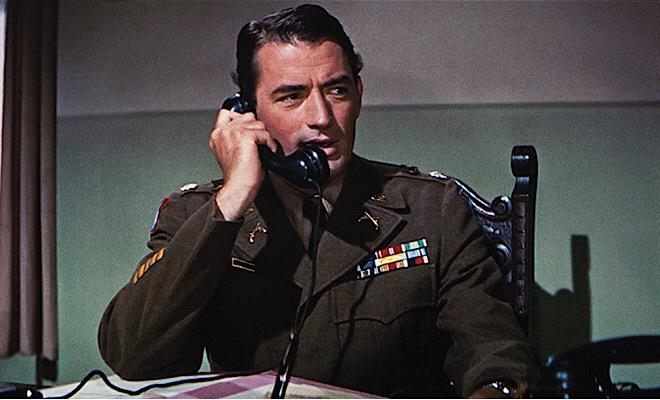
In the post-war divided city of Berlin, American soldier John Leatherby (Ted Avery) is kidnapped by Soviet agents. Lieutenant Colonel Steve Van Dyke (Gregory Peck) is in charge of negotiating his release, and learns through his well-connected East German source (and former lover) "Hoffy" Hoffmeir (Anita Björk) that the Soviets want a swap. Meanwhile, the kidnapped soldier's father Charles Leatherby (Broderick Crawford), a well-connected businessman, arrives in Berlin demanding action.
The Soviets want to trade Leartherby for the elderly Schindlers, a husband-and-wife couple. Frau Schindler (Jill Esmond) is now a nightclub piano player, and her blind husband was a German officer during the war. They are both sure to face torture or death if handed to the Soviets. Van Dyke grapples with the morality of handing two German citizens to the Soviets to free an American soldier, and his task gets more complex when more deceptions come to light.
Despite being mostly set in nondescript governmental offices and hospital rooms, Night People is wastefully filmed in CinemaScope. The technology is a mismatch with the subject matter: the needless widescreen expanse punctures what should have been the drama's intensity.Nevertheless, producer, director and writer Nunnally Johnson just about rescues decent entertainment from the imagery's far-flung corners. The intrigue surrounding the missing soldier and the echoes of the Second World War still resonating around Berlin provide a good foundation for a spy drama. Gregory Peck is reliably stoic and self-confident as the man entrusted with rescuing a messy situation, and Broderick Crawford adds the bluster of a father pushing for simplistic solutions. The cast is rounded out by Rita Gam as Van Dyke's capable assistant, along with support roles for Walter Abel, Buddy Ebsen and Peter van Eyck.
But Johnson is happy to talk rather than walk his way through the complexities of the Cold War, and too many critical events take place off screen. The film entirely ignores events happening in East Berlin, robbing the plot of counterpoints. Plenty of words are used to describe one of Van Dyke's key Soviet contacts being compromised, and many more words are used to try and describe the Schindlers' backstory. Actually showing these events would have resulted in a richer experience.
The details of the third act are best left unscrutinized. Van Dyke's resolution can only result in an escalation of subsequent enemy action, and why the Soviets didn't just kidnap the Schindlers instead of bargaining for them remains a mystery. Night People posits a good scope, but at the wrong scale.
All Ace Black Movie Blog reviews are here.
Saturday, 23 September 2017
Movie Review: When The Daltons Rode (1940)
A raucous western, When The Dalton Rode is historically suspect but packs action, stunts, extras, comedy and romance into a thrilling package.
On his way to Guthrie, lawyer Tod Jackson (Randolph Scott) stops in Coffeyville, Kansas and inquires about his childhood friends the Daltons. Soon he stumbles upon Bob Dalton (Broderick Crawford) who is the local Marshal, and his brothers Grat (Brian Donlevy), Ben (Stuart Erwin), and Emmett (Frank Albertson) and their Ma (Mary Gordon). Tod also meets and quickly falls in love with local girl Julie (Kay Francis), before finding out that she is Bob's girlfriend.
Along with family friend Ozark Jones (Andy Devine), the Daltons are pushed into taking the law into their own hand when the evil Kansas Land and Development Company threatens their property and Ben is accused of murdering a surveyor. With Bob as the gang leader the Daltons take to the hills and become notorious outlaws, robbing a succession of banks and trains in several states. Meanwhile Julie is left behind, very much in love with Tod but unable to give up on Bob.
Only loosely inspired by actual events, When The Dalton Rode joins the stream of movies from the era taking a sympathetic look at famous western outlaws. After a slow opening half an hour, director George Marshall kicks the action into gear and the remainder of the brisk 82 minutes of running time is genuinely impressive.
Once the Daltons turn into a gang, the action is unrelenting, and the set pieces are very well staged. When The Daltons Rode is particularly notable for the frequency and quality of stunts, including a perfect Yakima Canutt under-the-stagecoach special, several leaps from horses onto trains, with an exclamation mark featuring a succession of horses and riders galloping off a moving train.
Not satisfied by the breathless thrills, Marshall throws in plenty of humour, almost all of it courtesy of Andy Devine's Ozark character, who is incongruously a magnet for the ladies. The comedy always threaten to border on the ridiculous, but Marshall and Devine conspire to consistently land the jokes on the right side of funny and sometimes hilarious, a memorable pie-on-a-wagon moment taking home the cake.
Marshall also deploys throngs of extras in several teaming crowd scenes of prodigious power. An unruly courthouse melee and a mob near-lynching are executed with unusual raw intensity, cinematographer Hal Mohr allowing his cameras to get up close and personal with the carnage of angry men - and some women - pushing and shoving with intent.
All the focus on the wild antics of the Daltons does mean that the two notable stars take a back seat for most of the film. Tod Jackson and Julie are more framing devices than central characters, and here are used to ensure that empathy can be parked with two people who stand for good. The romantic chemistry evaporates early with a telling moment at the end of the film where an old codger mistakes Tod and Julie for brother and sister. Randolph Scott and Kay Francis grin and bear it, Scott never even wearing a gun and allowing himself to be frequently victimized. Broderick Crawford gradually takes over the film in an impressively aggressive performance as Bob Dalton.
When The Daltons Rode may be a sympathetic and fictional portrayal of murderous outlaw thugs, but it is nonetheless a rollicking good time.
All Ace Black Blog Movie Reviews are here.
Friday, 27 May 2016
Movie Review: Born Yesterday (1950)
A romantic comedy bundled into an anti-corruption civics lesson, Born Yesterday boasts a stellar Judy Holliday performance but is otherwise loud, stage-bound and simplistically trite.
Harry Brock (Broderick Crawford) is an unsophisticated and loudmouthed New Jersey-based scrap metal tycoon. He arrives in Washington DC with his lawyer Jim Devery (Howard St. John) to arm-twist corruptible congressmen into bending upcoming legislation in his favour. Accompanying Harry is his long-time girlfriend Billie (Holliday), who is attractive but uneducated enough to allow herself to be used by Harry and Jim to hide questionable business transactions under her name.
Journalist Paul Verrall (William Holden) interviews Harry, and then at Jim's suggestion Paul is hired to improve Billie's level of sophistication and her conversational skills to help her better integrate into higher social circles. Billie starts to read the newspaper and absorb all that Washington DC has to offer, while getting crash lessons from Paul on democracy, the law and the ethics of the founding fathers. With her awakening she begins to dislike her role in Harry's questionable deals, and at the same time an attraction evolves between her and Paul, threatening Harry's entire business empire.
Broderick Crawford barks his lines with the uncouth manner of a junkyard dog, Judy Holliday deploys the high-pitched, heavily accented tone of designated trashy airheads, and William Holden sleepwalks through the film with the air of straight arrow righteousness. As directed by George Cukor, this play adaptation is loud, shouty and stage-bound, with a few good chuckles that hit the mark. Billie's education and growth holds some interest, but once it starts her transformation is a singularly linear and predictable journey.
Recreating her on-stage success, Holliday's performance saves the film. She demonstrates a deft comedic touch and impeccable timing, with tiny gestures and pauses to convey Billie's limited brain whirring away at maximum speed to catch up with her surroundings. She nabbed the Best Actress Academy Award ahead of Bette Davis and Anne Baxter (both for All About Eve) and Gloria Swanson (for Sunset Boulevard). Her costars suffer in comparison. Crawford's schtick gets tiresome quickly and Holden almost disappears into the wallpaper.
Stylistically Born Yesterday generally settles for being a well-filmed play. Most of the events take place in the spacious multi-suite hotel wing occupied by Harry Brock. Cukor attempts to break the monotony by inserting some outdoor scenes of Billie exploring the capital, but these never rise beyond the perfunctory and come across as a tourism campaign.
Eleven years after Mr. Smith Goes To Washington exposed movie audiences to what the world of politics is really like, Born Yesterday somehow tries to hang on to a quaint idealism. The film's key message is that government is mostly good, and while there may be a few loose elected officials who can be corrupted, the real problem lies with scoundrels like Harry Brock. It's a fanciful stance that both hampers the film and dates it into a bygone era.
Born Yesterday offers decent enjoyment thanks to a terrific central performance, but it is also shallow in content and confined in location.
All Ace Black Blog Movie Reviews are here.